More like Hellstrom's Hive
anchored on:science fictionnorth americacontemporarytensesurveillancetotalitarianism+2 more
but
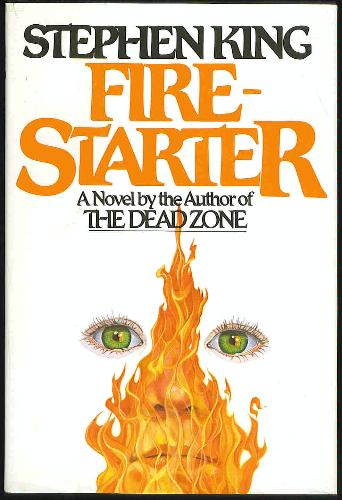
- Firestarter
Stephen Kingstandalone novel1980
similar byscience fictioncontemporarytensenorth america+3 more
WorldCat: Innocence and beauty ignite with evil and terror... First, a man and a woman are subjects of a top-secret government experiment designed to produce extraordinary psychic powers. Then, they are married and have a child. A daughter. Early on the daughter shows signs of a wild and horrifying force growing within her. Desperately, her parents try to train her to keep that force in check, to 'act normal'. Now the government wants its brainchild back for its own insane ends.
- City of Cain
Kate Wilhelmstandalone novel1974
similar byscience fictioncontemporarytensesurveillancetotalitarianismnorth americaunderground & caves
Publisher: "Peter Roos cannot help knowing the thoughts of those around him. A rare physical condition has given him that power. Now he has ''heard'' about the government's secret plan to give up control of America to the military - to build an underground city for themselves in the event of a nuclear attack. Unfortunately for Roos, the government knows he knows. And the project's sponsors - including his senator brother - have no choice."
- The Andromeda Strain
series2 books1969
similar byscience fictioncontemporarytensesurvival+1 more
Michael Crichton's 1969 novel The Andromeda Strain follows a team of scientists racing to contain a lethal extraterrestrial microorganism that crash-lands in Arizona, told in the clinical, document-driven style that helped establish the techno-thriller genre. Daniel H. Wilson's authorized 2019 sequel The Andromeda Evolution revisits the same threat five decades later. Together the two books form a two-part outbreak story separated by a fifty-year gap in publication.
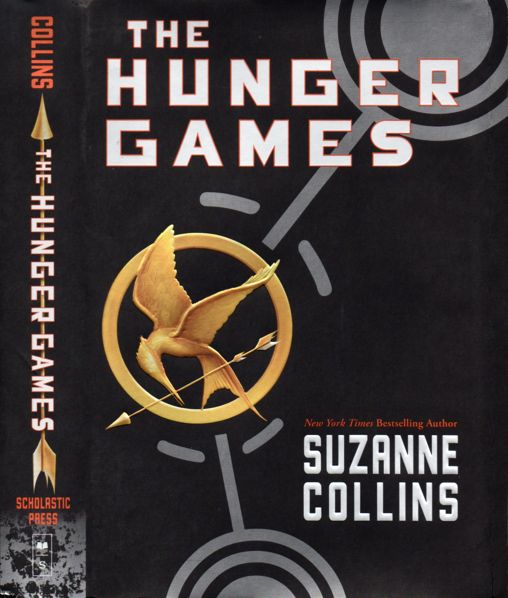
- The Hunger Games
series3 books2008
part of The Hunger Games Universe
similar byscience fictiontensetotalitarianismnorth americasurvival
The Hunger Games is a series of young adult dystopian novels written by American author Suzanne Collins. The series consists of a trilogy that follows teenage protagonist Katniss Everdeen, as well as two prequels. The Hunger Games universe is a dystopia set in Panem, a post-apocalyptic North American country consisting of the wealthy Capitol and 12 districts in varying states of poverty. As punishment for rebellion, the Capitol hosts an annual battle royale competition called The Hunger Games. Each of the 12 districts must send two children between the ages of 12 and 18 to participate, and the last surviving child is dubbed the victor.
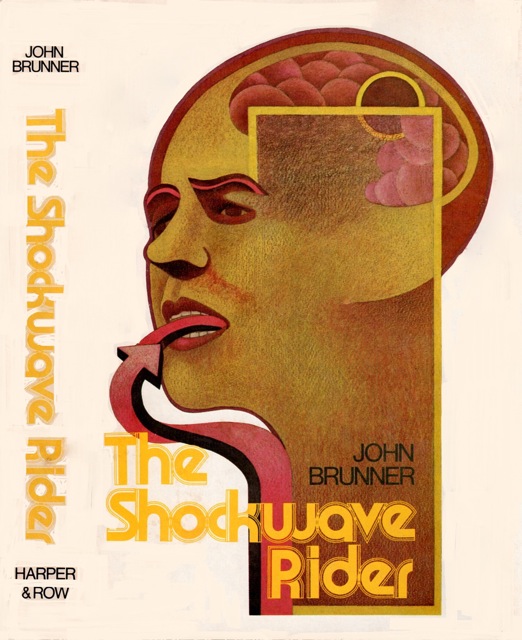
- The Shockwave Rider
John Brunnerstandalone novel1975
similar byscience fictiontensesurveillancetotalitarianismnorth america
The Shockwave Rider is a science fiction novel by John Brunner, originally published in 1975. It is notable for its hero's use of computer hacking skills to escape pursuit in a dystopian future, and for the coining of the word "worm" to describe a program that propagates itself through a computer network. It also introduces the concept of a Delphi pool, perhaps derived from the RAND Corporation's Delphi method – a prediction market on world events which bears close resemblance to DARPA's controversial and cancelled Policy Analysis Market.
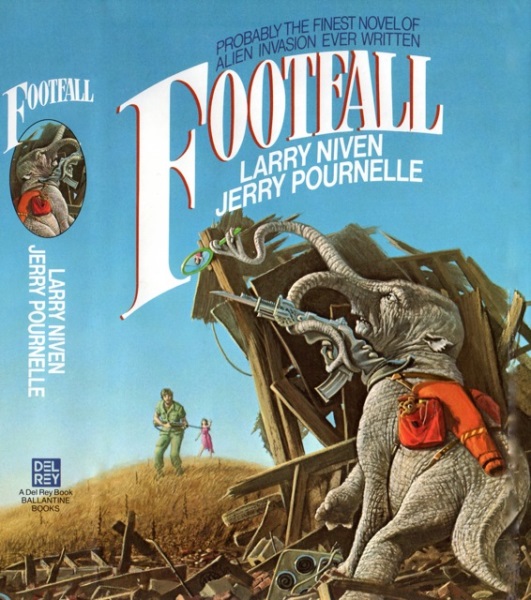
- Footfall
Larry Niven & Jerry Pournellestandalone novel1985
similar byscience fictioncontemporarytensenorth americasurvival
When aliens travel to Earth from Alpha Centauri, differences between alien and human psychology result in an unprovoked invasion, and the resulting resistance results in the aliens' use of a devastating weapon.
- The Santaroga Barrier
Frank Herbertstandalone novel1968
similar byscience fictioncontemporaryeerienorth america+1 more
Santaroga seemed to be nothing more than a prosperous farm community. But there was something . .. different . .. about Santaroga. Santaroga had no juvenile delinquency, or any crime at all. Outsiders found no house for sale or rent in this valley, and no one ever moved out. No one bought cigarettes in Santaroga. No cheese, wine, beer or produce from outside the valley could be sold there. The list went on and on and grew stranger and stranger.Maybe Santaroga was the last outpost of American individualism. Maybe they were just a bunch of religious kooks... Or maybe there was something extraordinary at work in Santaroga. Something far more disturbing than anyone could imagine. (Publisher's blurb)
- Midnight
Dean R. Koontzstandalone novel1989
similar byscience fictioncontemporarytensenorth americagenetic engineeringsurvival
A wealthy tech entrepreneur, intending to create superhumans by infecting them with nanotech to assist their physical and mental abilities, picks a California town as his secret pilot project, but things go terribly wrong.
- Under the Dome
Stephen Kingstandalone novel2009
similar byscience fictioncontemporarytensenorth americasurvival
A small town in Maine finds itself suddenly cut off from the outside world by an impenetrable barrier, and the clash of personalities of the trapped people takes its inexorable devastating course.
- The Running Man
Stephen Kingstandalone novel1982
similar byscience fictiontensetotalitarianismnorth americasurvival+1 more
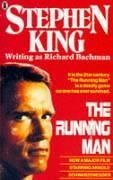
The Running Man is a dystopian thriller novel by American writer Stephen King, first published under the pseudonym Richard Bachman in 1982 as a paperback original. It was collected in 1985 in the omnibus The Bachman Books. The novel is set in a dystopian United States during the year 2025, in which the nation's economy is in ruins and world violence is rising. The story follows protagonist Ben Richards as he participates in the reality show The Running Man, in which contestants win money by evading a team of hitmen sent to kill them.
- Southern Reach Trilogy
series4 books2014
similar byscience fictioncontemporaryeerie+4 more
The Southern Reach Series is a series of novels by the American author Jeff VanderMeer first published in 2014—Annihilation, Authority, Acceptance, and Absolution. The series takes its name from the secret agency that is central to the plot. In 2013, Paramount Pictures bought the movie rights for the series, and a film adaptation of Annihilation was made with Alex Garland as writer-director. The film was released in 2018. The most recent book in the series, Absolution, was released on 22 October 2024.
- Dreamcatcher
Stephen Kingstandalone novel2001
similar byscience fictioncontemporarytensenorth americasurvival
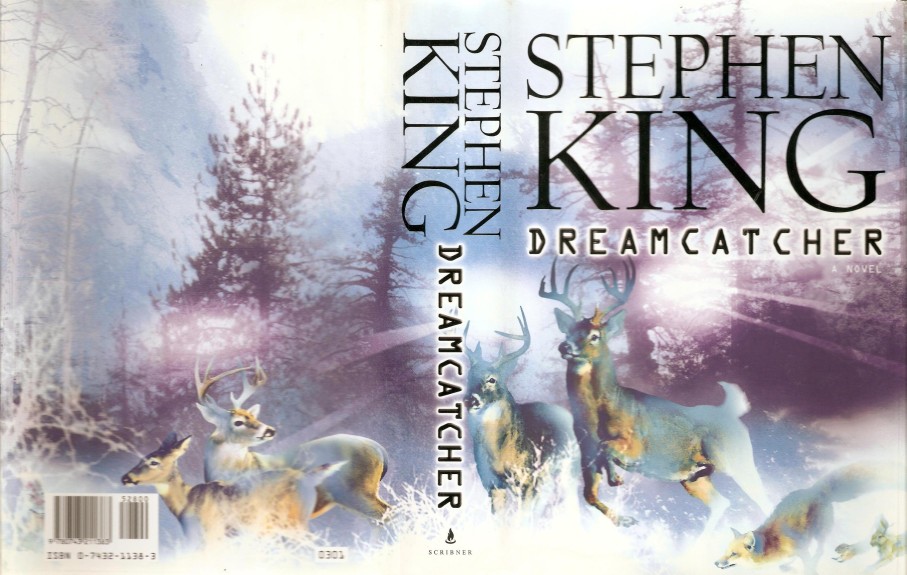
Dreamcatcher is a 2001 science fiction horror novel by American writer Stephen King, featuring elements of body horror, suspense and alien invasion. The book, written in longhand, helped the author recuperate from a 1999 car crash, and was completed in half a year. According to the author in his afterword, the working title was Cancer. His wife, Tabitha King, persuaded him to change the title. A film adaptation was released in 2003.
- The Hunger Games Universe
universe5 books2008
Start hereThe Hunger Games · Start here
similar byscience fictiontensetotalitarianismnorth americasurvival
Panem, they call it now — a nation raised on the drowned bones of North America, a glittering Capitol ringed by twelve districts it once starved into obedience. Every year the Capitol collects its debt in children: two tributes from each district, drawn by lottery, dropped into an engineered arena, and made to kill one another on live television while the whole country is required to watch. This is the Hunger Games — entertainment, punishment, and government at once. Suzanne Collins tells it in a compact, unified body of work. The founding trilogy — The Hunger Games, Catching Fire, and Mockingjay — follows Katniss Everdeen, a girl from the coal-mining District 12 who volunteers in her sister's place and becomes something the Capitol never scripted. Two prequels reach back into the same machinery: The Ballad of Songbirds and Snakes traces a young Coriolanus Snow long before he is President, and Sunrise on the Reaping returns to District 12 a generation ahead of Katniss. Begin with the trilogy, in order — it is Katniss's voice, close and present-tense, that makes Panem breathe, and the prequels land hardest once you know how her story ends. Beneath the spectacle sits one steady, uncomfortable question: who profits when we agree to look away.
- Little Brother
series7 books2008
similar byscience fictioncontemporarytensesurveillancenorth america+1 more
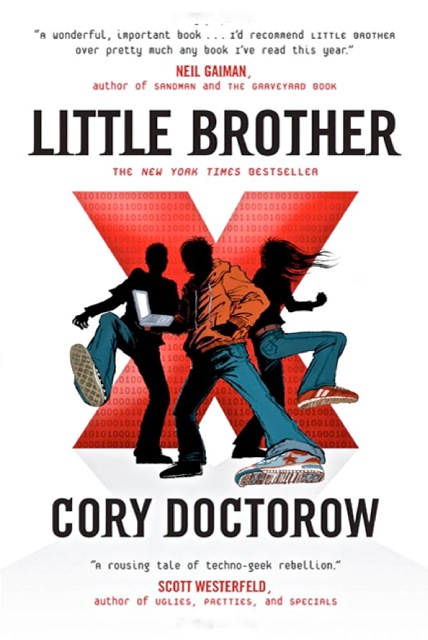
Cory Doctorow's Little Brother follows Marcus, a San Francisco teenager who builds a covert mesh network, the Xnet, to organize resistance after the Department of Homeland Security uses a terrorist attack as pretext for mass surveillance and civil-rights violations. Homeland continues Marcus's fight years later, and Attack Surface completes the trilogy; a companion story, 'Lawful Interception,' and other short pieces extend the same near-future world. Throughout, the series doubles as a working explanation of the surveillance and cryptography tools its characters use.
- Invasion
Robin Cookstandalone novel1997
similar byscience fictioncontemporarytensenorth americagenetic engineering+1 more
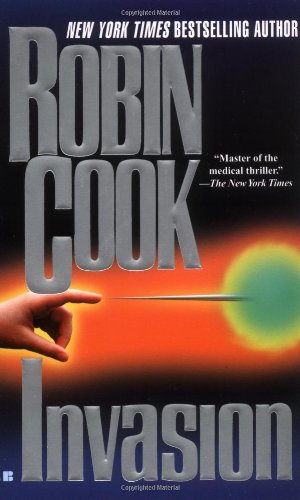
Earth is bombarded from space by small disks which, in addition to having powerful physical armaments, when handled activate latent viral DNA which causes humans to mutate into alien beings; a small group recognize the danger and attempt to develop a biological counterweapon.
- The Terminal Man
Michael Crichtonstandalone novel1972
similar byscience fictioncontemporarytensenorth america
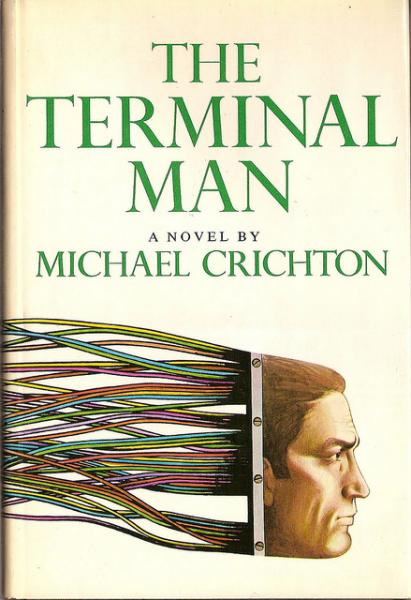
The Terminal Man is a novel by American writer Michael Crichton. It is his second novel under his own name, his 12th overall, and is about the dangers of mind control. It was published in April 1972 and also serialized in Playboy in March, April, and May 1972. In 1974, it was made into a film of the same name.
- The Tommyknockers
Stephen Kingstandalone novel1987
similar byscience fictioncontemporaryeerienorth america+1 more
The Tommyknockers is a 1987 science fiction horror novel by Stephen King. The novel is an excursion into the realm of science fiction for King, as the residents of the Maine town of Haven gradually fall under the influence of a mysterious object buried in the woods. King has since soured on The Tommyknockers, describing it as "an awful book", due to his drug addiction while writing the novel, though acknowledges the story's potential: "There's really a good book in here, underneath all the sort of spurious energy that cocaine provides, and I ought to go back." A miniseries adaptation was released in 1993.
- Night Chills
Dean R. Koontzstandalone novel1976
similar byscience fictioncontemporarytensenorth americasurvival+1 more
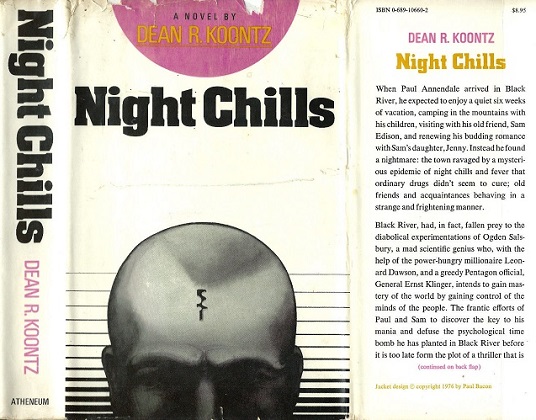
A single father and his 2 children, along with the father's love interest and her father, stumble upon a plot to perfect mind control via scientific means and must stop it before it is extended to everyone in the world.
- Watchers
Dean R. Koontzstandalone novel1987
similar byscience fictioncontemporarytensenorth americagenetic engineeringsurvival
This probably qualifies as a science-based adventure rather than a science fiction novel. The premise, and only speculative fiction element, is that a U.S. government funded laboratory creates a golden retriever that's as intelligent as a human for use in intelligence gathering and also creates a monkey hybrid that's intended for a military police dog role and as a killing machine on battlefields. The animals escape and the story plays out as a straight adventure novel with a good chunk of romance thrown in.
- Transhuman
Ben Bovastandalone novel2014
similar byscience fictioncontemporarytensenorth americagenetic engineering+1 more
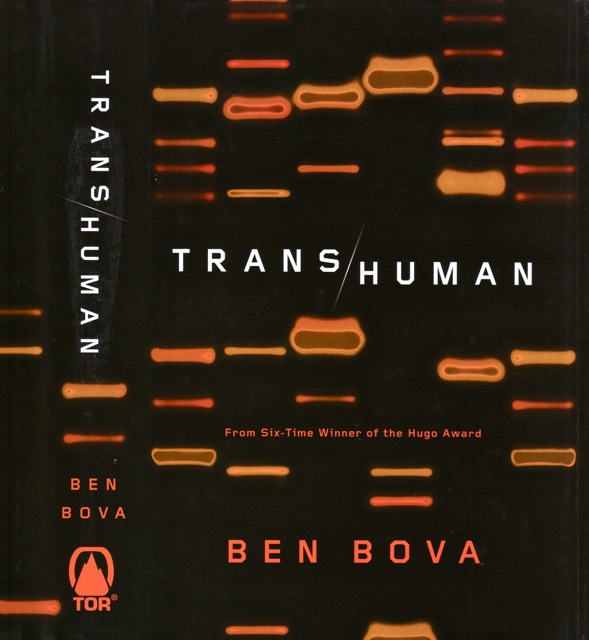
"Luke Abramson, a brilliant cellular biologist who is battling lung cancer, has one joy in life, his ten-year-old granddaughter, Angela. When he learns that Angela has an inoperable brain tumor and is given less than six months to live, Abramson wants to try a new enzyme, Mortality Factor 4 (MORF4), that he believes will kill Angela's tumor. However, the hospital bureaucracy won't let him do it because MORF4 has not yet been approved by the FDA. Knowing that Angela will die before he can get approval of the treatment, Abramson abducts Angela from the hospital with plans to take her to a private research laboratory in Oregon. Luke realizes he's too old and decrepit to flee across the country with his sick granddaughter, chased by the FBI. So he injects himself with a genetic factor that will stimulate his body's production of telomerase, an enzyme that has successfully reversed aging in animal tests. As the chase weaves across the country from one research facility to another, Luke begins to grow physically younger, stronger. He looks and feels the way he did thirty or forty years ago. Yet his lung cancer is not abating; if anything the tumors are growing faster. And Angela is dying"--
- Phantoms
Dean R. Koontzstandalone novel1983
similar byscience fictioncontemporarytensenorth americaunderground & cavessurvival
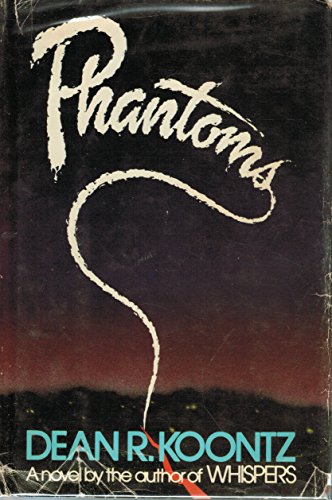
A doctor and her young sister find all the residents of their town have been brutally slaughtered by a giant intelligent synctial organism millions of years old, whose periodic emergences from its underground lair to feed cause events ranging from mass disappearances to mass extinctions. In order to defeat it and save humanity, they must outwit it.
- Dhalgren
Samuel R. Delanystandalone novel1975
similar byscience fictioncontemporaryeerienorth america+1 more
Dhalgren is a 1975 science fiction novel by American writer Samuel R. Delany. It features an extended trip to and through Bellona, a fictional city in the American Midwest cut off from the rest of the world by an unknown catastrophe. It is number 33 on the 20th Century's Greatest Hits: 100 English-Language Books of Fiction list.
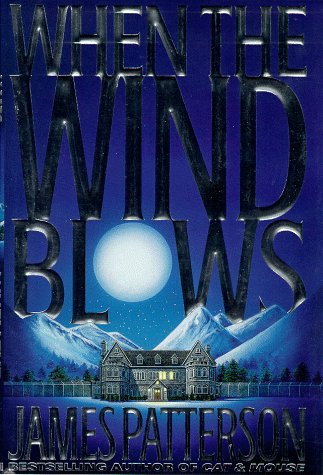
- When the Wind Blows
series2 books1998
similar byscience fictioncontemporarytensenorth americagenetic engineeringsurvival
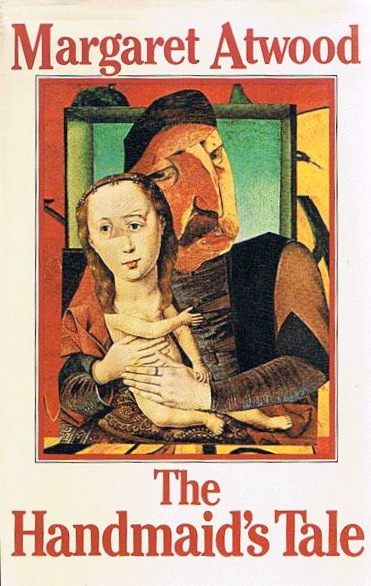
- The Handmaid's Tale
series3 books1985
similar byscience fictiontensetotalitarianismnorth america+1 more
The Handmaid's Tale is Margaret Atwood's 1985 novel set in Gilead, a totalitarian theocracy that has overthrown the United States and forces fertile women into reproductive servitude as Handmaids; it is narrated by one such woman, Offred. Atwood returned to the world in her 2019 sequel The Testaments, set fifteen years later and narrated by three women, including the regime's Aunt Lydia. Together the two novels move from Gilead's grip on power toward the first cracks in it.