More like Hijack
but
- Moties
series4 books1974
part of CoDominium
similar byscience fiction+2 more
Larry Niven and Jerry Pournelle's The Mote in God's Eye (1974) depicts humanity's first contact with an alien species, the Moties, set within the far-future interstellar setting of Pournelle's codominium future history. The Gripping Hand continues that first-contact crisis years later, and Outies, written by J. R. Pournelle, carries the story forward into a new generation. Together the three books trace an escalating encounter between human and Motie civilizations within the codominium universe.
- Future History
series42 books1939
completed
similar byscience fiction+1 more
The Future History is a series of science fiction stories written by American author Robert A. Heinlein (1907–1988). It describes a projected future of the human race from the middle of the 20th century through the early 23rd century. The term Future History was coined by John W. Campbell Jr. in the February 1941 issue of Astounding Science Fiction. Campbell published an early draft of Heinlein's chart of the series in the May 1941 issue.
- Company Wars
series7 books1981
part of Alliance-Union Universe
similar bytensescience fiction+1 more
Company Wars gathers the novels C. J. Cherryh set during the breakaway conflict between Earth's colonial Company and the newly independent Union, within her wider Alliance-Union future history. Anchored by the Hugo Award-winning Downbelow Station, the books follow different ships, stations, and crews caught on either side, from merchanter traders to military spacers, rather than a single continuing cast. Read in any order, they build up a picture of the political and economic pressure that reshapes Cherryh's larger Alliance-Union universe.
- Cities in Flight
series10 books1950
completed
similar byscience fiction+1 more
Cities in Flight is a four-volume series of science fiction novels and short stories by American writer James Blish, originally published between 1950 and 1962, which were first known collectively as the "Okie" novels. The series features entire cities that are able to fly through space using an anti-gravity device, the spindizzy. The stories cover roughly two thousand years, from the very near future to the end of the universe. One story, "Earthman, Come Home", won a Retro Hugo Award in 2004 for Best Novelette. Since 1970, the primary edition has been the omnibus volume first published in paperback by Avon Books. Over the years James Blish made many changes to these stories in response to points raised in letters from readers.
- Solar Queen
series7 books1955
similar byspaceshipscience fiction+1 more
Andre Norton's Solar Queen novels follow the crew of a free-trader starship under Captain Jellico as they scrape by hauling cargo and making first contact on the fringes of settled space. The first three books appeared in the 1950s; Norton returned to the series decades later and, from the 1990s on, completed it in collaboration with P. M. Griffin and Sherwood Smith. Across its seven novels the series keeps its ensemble trading-crew premise rather than following one continuous plot.
- Icarus (Timothy Zahn)
series7 books1999
similar byscience fiction+1 more
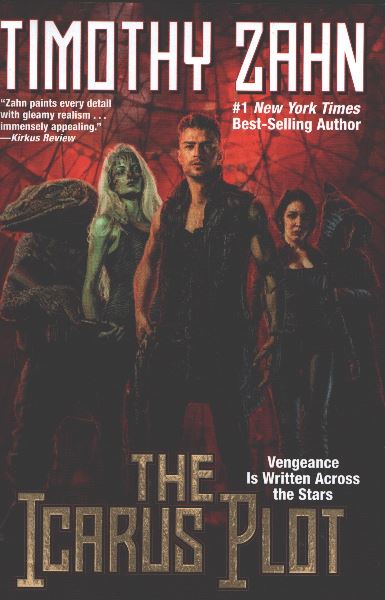
Timothy Zahn's Icarus series began as a standalone science-fiction thriller, The Icarus Hunt, following a freighter crew smuggling mysterious cargo while a saboteur hides among them. More than two decades later Zahn returned to the same ship and captain for a run of direct sequels starting with The Icarus Plot, extending the mystery of the vessel and its crew across several further books. The later novels form a continuous series in a way the original standalone never anticipated.
- Pandora
series4 books1966
similar byscience fiction+2 more
The Pandora Sequence opens with Frank Herbert's solo novel Destination: Void, in which a starship crew must jury-rig a working artificial consciousness after their vessel's control systems fail. Bill Ransom co-writes the three novels that follow, carrying the survivors to the world Pandora, where they must contend with both a manipulative machine intelligence and the planet's own hostile ecology. Across its four books the series moves from a claustrophobic ship-bound crisis to a generations-long struggle over faith, control, and survival on a dangerous new world.
- Space Beagle
series5 books1939
completed
similar byspace explorationtensespaceshipscience fiction
The Voyage of the Space Beagle is a 1950 fix-up novel by A. E. van Vogt, stitched together from four previously published pulp stories into a single continuous account of the exploration ship Space Beagle's encounters with a series of dangerous alien life forms. Its episodic, crew-versus-monster structure reads as a loose sequence of adventures rather than one continuous plot.
- Pushing Ice
Alastair Reynoldsstandalone novel2005
similar byspace explorationtensespaceshipscience fiction
When Saturn's moon Janus suddenly takes off into interstellar space, an ice mining spaceship sent to investigate finds itself swept along into distant space until it ends up trapped in a gigantic alien structure, wherein the crew must prepare to reside for the foreseeable future.
- Thousand Worlds
series24 books1971
similar byscience fiction
George R.R. Martin's Thousand Worlds is a loose future-history setting he used for several of his 1970s-80s stories and novels, encompassing human interstellar colonization and encounters with older, stranger civilizations. Dying of the Light, A Song for Lya and the novella Nightflyers are among its best-known entries, sharing background rather than continuing characters or plot.
- Ender's Shadow
series5 books1999
part of Ender's Game Universe
similar bytensescience fiction
Orson Scott Card's Ender's Shadow retells the events of Ender's Game from the perspective of Bean, a physically stunted but ferociously intelligent street child recruited into the same Battle School program as Ender Wiggin. It launches the Shadow series, which follows Bean and other secondary Battle School characters into the political aftermath of the Formic Wars back on Earth, running parallel to and eventually past the timeline of Card's main Ender Quintet.
- Ender Wiggin
series14 books1977
part of Ender's Game Universe
similar byscience fiction+1 more
Orson Scott Card's Ender's Game (1985, expanded from his 1977 novella) follows child prodigy Andrew "Ender" Wiggin as he is recruited into a military training program built to prepare Earth's defenses for an anticipated third war against an insectoid alien species known as the Formics. The saga continues years later through Speaker for the Dead and Xenocide, following an older Ender as he confronts the moral weight of his role in that earlier conflict, and concludes the core arc in Children of the Mind, with Ender in Exile filling in the years between the first two books. Set within the wider Ender's Game universe, the series shifts from military coming-of-age story to slower, more philosophical science fiction as it progresses.
- Tom Corbett Space Cadet
series11 books1952
similar byscience fiction+2 more
The Tom Corbett, Space Cadet novels (eight books published 1952-1956 by Grosset & Dunlap) follow cadets training at the Space Academy for the Solar Guard, moving between the academy, their training ship the Polaris, and assorted alien worlds. The books were ghostwritten under the house name Carey Rockwell, with rocket scientist Willy Ley credited as technical advisor, tying the series to the 1950s Tom Corbett television franchise it was spun off from.
- David Ryerson
series2 books1958
completed
similar byspace explorationtensespaceshipscience fiction
The Enemy Stars follows the crew of a faster-than-light survey ship stranded far from home after their matter-transmission drive is damaged, forced to keep the vessel and each other going across a voyage that will outlast some of them. Poul Anderson's 1959 novel was originally serialized as We Have Fed Our Sea-, a title drawn from Kipling. It stands alone rather than part of a series; David Ryerson is one of the ship's crew.
- Flood
series6 books2008
similar byscience fiction+3 more
In Stephen Baxter's Flood, sudden seismic upheaval releases immense reservoirs of water trapped deep beneath Earth's crust, and sea levels begin climbing far faster than anyone can adapt to, forcing a handful of survivors to watch coastlines and then continents disappear. The 2009 sequel, Ark, follows a parallel thread of people who instead gamble everything on a desperate escape from the drowning planet. Together the two books trace roughly a half-century of civilizational collapse and reinvention as dry land runs out.
- Unwise Child
Randall Garrettstandalone novel1962
similar bytensespaceshipscience fiction+1 more
"When a super-robot named Snookums discovers how to build his own superbombs, it becomes obvious that Earth is by no means the safest place for him to be. And so Dr. Fitzhugh, his designer, and Leda Crannon, a child psychologist acting as Snookums' nursemaid, agree to set up Operation Brainchild, a plan to transport the robot to a far distant planet. "... once into space, the Branchell becomes the scene of some frightening events—the medical officer is murdered, and Snookums appears to be the culprit. Mike the Angel indulges himself in a bit of sleuthing, and the facts he turns up lead to a most unusual climax." (From Project Gutenberg's version of the 1962 Doubleday edition, published 2007.)
- Exiles (Ben Bova)
series3 books1971
completed
similar byscience fiction+1 more
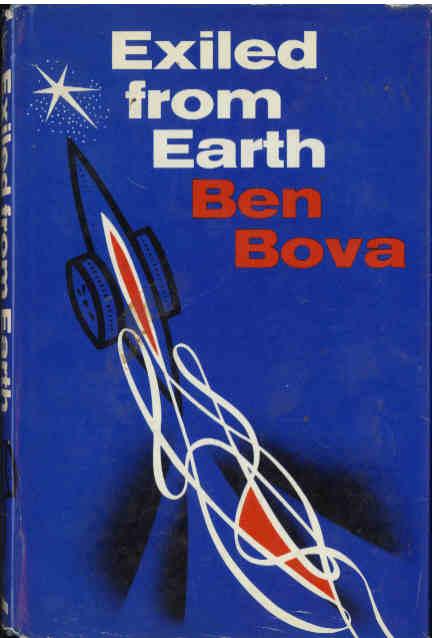
Ben Bova's Exiles trilogy — Exiled from Earth, Flight of Exiles, and End of Exile — follows a group of people exiled from Earth aboard a starship, forced to search for a new home for later generations. Published in the early 1970s and catalogued partly under children's fiction, the trilogy was aimed at younger as well as adult science-fiction readers.
- Beyond the Frontier
series5 books2011
part of The Lost Fleet
similar byscience fiction+2 more
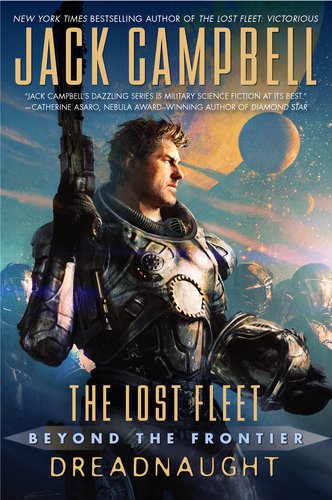
Jack Campbell's Beyond the Frontier is a continuation of his Lost Fleet series, returning to fleet commander John "Black Jack" Geary after his earlier, century-spanning ordeal helped save the Alliance from its long war with the Syndicate. Dreadnaught, Invincible, Guardian, Steadfast, and Leviathan send Geary's fleet outward past explored space, where interstellar politics shift from Alliance-Syndicate rivalry toward contact with unknown, more dangerous forces. It keeps the original series' emphasis on realistic fleet tactics and command decision-making under uncertainty.
- Jumper
series6 books1992
similar bytensescience fiction
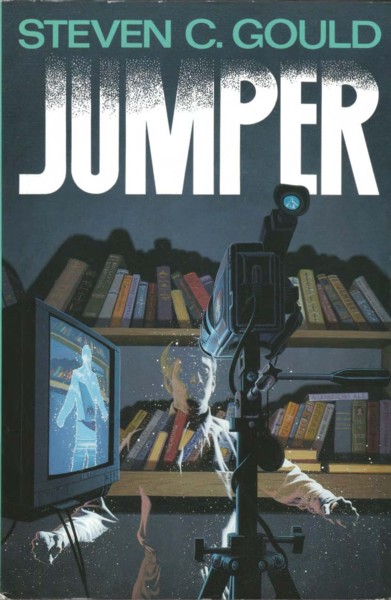
Jumper follows David Rice, a teenager who discovers he can teleport anywhere he's been and uses the power to escape an abusive home, only to find that ability alone doesn't solve the harder problems of finding his absent mother, building an honest relationship, or staying off the radar of people who'd exploit him. Steven Gould's series continues across Reflex, Impulse, and Exo, later following his and his wife's daughter as a second-generation jumper. A 2008 film loosely adapted the first novel.
- Diving Universe
series34 books2005
similar byscience fiction+2 more
Kristine Kathryn Rusch's Diving universe follows Boss, a deep-space wreck diver who salvages ancient derelict ships for a living, after an early dive draws her into a decades-old mystery involving a lost empire and stealth technology that can trap the unwary. The series has grown into a long-running sequence of novels and story collections built around that central discovery.
- Thunder and Lightning
series4 books2003
completed
similar byspace explorationscience fiction+2 more
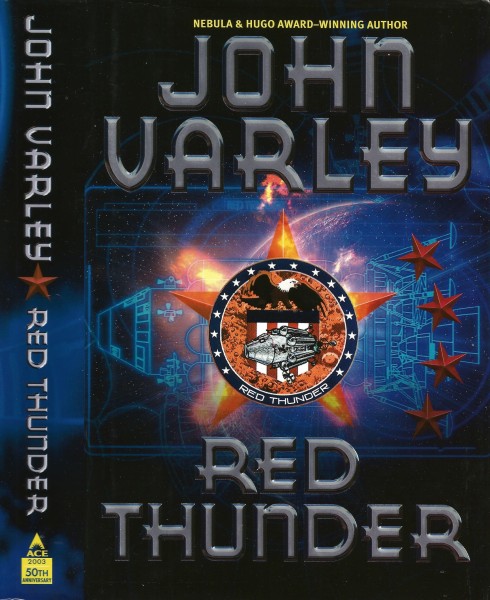
John Varley's Thunder and Lightning books follow the Broussard family across two generations as a backyard fusion-power breakthrough turns an eccentric Florida inventor's homemade spacecraft into the opening move of an independent human expansion to Mars and beyond. Red Thunder and Red Lightning follow the first generation's improvised trip to Mars; Rolling Thunder and Dark Lightning pick up decades later with their descendants.