More like Human Error
anchored on:science fiction
but
- Forge of God
series2 books1987
completed
similar byscience fictiontense+3 more
The Forge of God (1987) is Greg Bear's science fiction novel about Earth's discovery that it is the target of an incomprehensible, overwhelming alien attack, following scientists and ordinary people as they try to understand what is destroying the planet. Its 1992 sequel, Anvil of Stars, follows a group of young survivors sent on a mission of interstellar retaliation, continuing directly from the first book's ending.
- The Light of Other Days
Arthur C. Clarke & Stephen Baxterstandalone novel2000
similar byscience fictiontenseour worldnear future+2 more
An industrialist devises a technique to use tiny wormholes as light pipes to enable viewing of any event anywhere; and subsequently it becomes possible to use them to view any event in the past as well. The effects on society are enormous.
- Foundation Universe
universe123 books1940
Start hereFoundation · Start here
similar byscience fiction+2 more
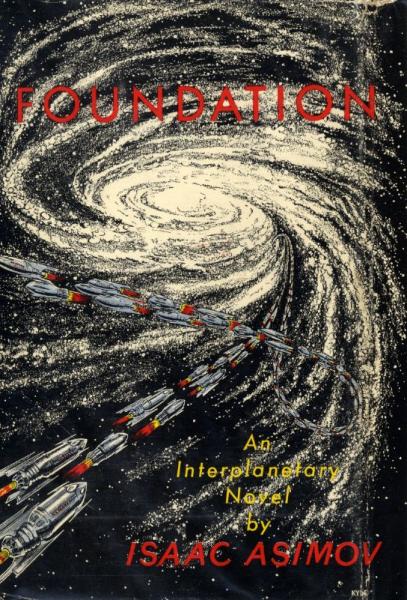
There is a science that reads the future of quadrillions the way an astronomer reads the orbits of stars. It is called psychohistory, and its equations foresee something the ruling Galactic Empire cannot admit: the throne is rotting, and thirty thousand years of barbarism are coming. One man, Hari Seldon, cannot stop the fall. He can only shorten it — by seeding a Foundation of scholars at the rim of the galaxy, a fragile institution built to carry knowledge across the dark and cut the interregnum to a single millennium. This is a universe told in the register of history itself: the long view, the calm of deep time, empires measured in centuries and men measured against them. The spine is Asimov's original trilogy — Foundation, Foundation and Empire, Second Foundation — followed decades later by the sequels Foundation's Edge and Foundation and Earth and the prequels Prelude to Foundation and Forward the Foundation. Late in life Asimov braided this in with his other future histories: the Robot novels of detective Elijah Baley and his humaniform partner R. Daneel Olivaw (The Caves of Steel, The Naked Sun, The Robots of Dawn, Robots and Empire) and the early Galactic Empire novels (Pebble in the Sky and its kin), until one continuous chronicle ran from the first thinking robots to the Second Empire. Other hands extend it — the Second Foundation Trilogy by Gregory Benford, Greg Bear, and David Brin, and shared-world spinoffs such as Robot City — so the corpus sprawls beyond a single author's tidy shelf. What distinguishes it is that the drama is intellectual: crises resolved by insight, nerve, and dialogue rather than fleets and blades, each turn hinging on the hidden logic of the Seldon Plan. Begin where readers have always begun — with Foundation, and the original trilogy in publication order. The rest opens outward from there.
- The Fall Revolution
series4 books1995
similar byscience fiction+5 more
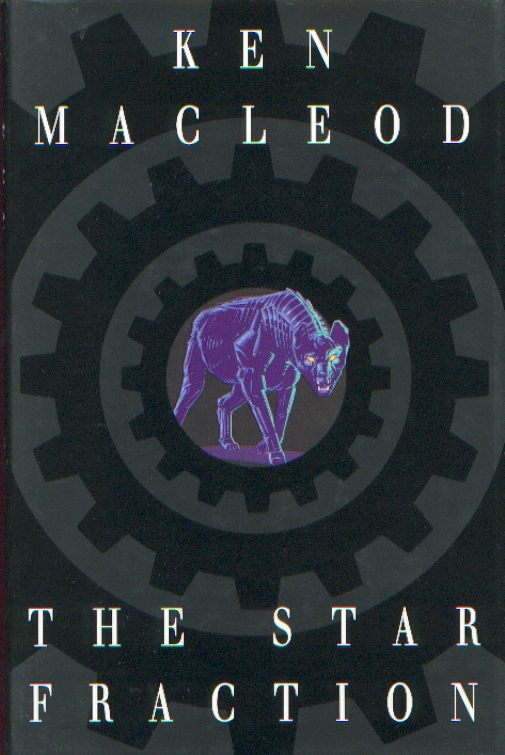
Ken MacLeod's Fall Revolution sequence opens with The Star Fraction (1995), his Arthur C. Clarke Award-nominated debut set in a fractured near-future Britain where a functioning anarchist microstate and rival revolutionary factions vie for power. The four connected novels — continuing through The Stone Canal, The Cassini Division, and The Sky Road — each stand largely alone while tracing overlapping characters and politics across a shared future history, later collected in the omnibus volumes Fractions and Divisions.
- Earth
David Brinstandalone novel1990
similar byscience fictiontenseour worldnear future+1 more
Earth is a 1990 science fiction novel by American writer David Brin. The book was nominated for the Hugo and Locus Awards in 1991.
- Bridge Trilogy
series4 books1990
similar byscience fictionnear future+3 more
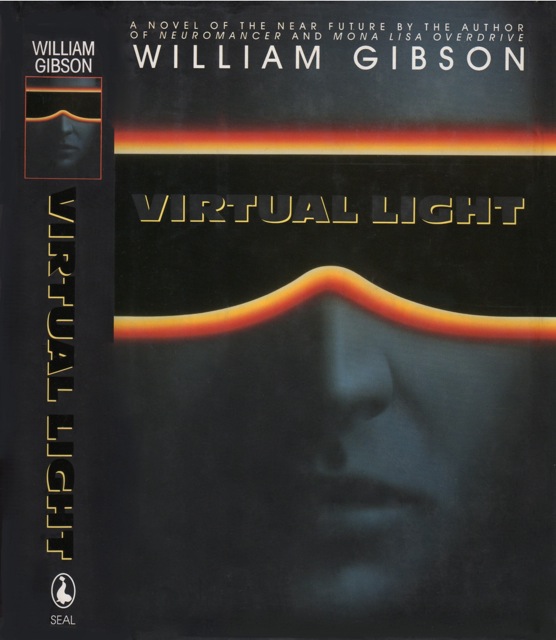
The Bridge trilogy is a series of novels by William Gibson, his second after the successful Sprawl trilogy. The trilogy comprises the novels Virtual Light (1993), Idoru (1996) and All Tomorrow's Parties (1999). A short story, "Skinner's Room", was originally composed for Visionary San Francisco, a 1990 museum exhibition exploring the future of San Francisco.
- H. G. Wells' War of the Worlds
universe65 books1898
Start hereThe War of the Worlds · Start here
similar byscience fiction+2 more
No one would have believed, in the closing years of the nineteenth century, that human affairs were being watched keenly and closely from the timeless worlds of space. And then the cylinders fell. H. G. Wells' War of the Worlds opens in the quiet of the Surrey commons, where a falling star proves to be the first Martian craft — and from the pit rise the towering tripods, the Heat-Ray, the choking Black Smoke and the creeping red weed, wielded by minds that regard mankind much as we regard the creatures we boil for supper. This is invasion rendered as natural disaster: cold, methodical, and vast beyond argument. Wells' 1898 novel is the seed; everything else grows from that Martian soil. The catalogue gathers direct sequels and continuations alongside a wide field of other hands. In War of the Worlds: Global Dispatches the invasion is retold across the whole planet through the eyes of Twain, Verne, Tolstoy, Lowell and Kipling; in the Manly Wade and Wade Wellman crossover, Sherlock Holmes, Watson and Professor Challenger take the field against the machines; and Scott Washburn's Great Martian War stretches the fighting into a decades-long alternate history of steam, artillery and grinding attrition. It is a loose shared world — no single decreed sequence, many voices answering one calamity. What sets this world apart is its refusal of heroics: the invaders fall not to generals but to the smallest things of Earth, humbling and indifferent. Begin, always, with Wells' original novel — it is short, and it is the ground every later book stands upon. From there follow your appetite: Global Dispatches for the panorama, the Holmes campaign for adventure, Washburn for the long war.
- Blade Runner Universe
series6 books1968
similar byscience fictionnear future+3 more
Philip K. Dick's 1968 novel Do Androids Dream of Electric Sheep? follows bounty hunter Rick Deckard as he tracks escaped androids through an irradiated, near-abandoned San Francisco, using the hunt to probe questions of empathy and what separates human from machine. The novel became the basis for Ridley Scott's 1982 film Blade Runner, and Marvel Comics later published an illustrated adaptation of that film. Together the two trace the story's path from prose original to screen and comic-page adaptation.
- BZRK
series3 books2012
similar byscience fictiontensenanotechnologyour worldnear future+1 more
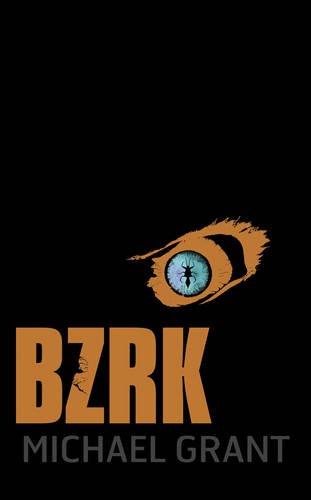
BZRK is a book series written by Michael Grant. The series consists of four books: BZRK, BZRK II: Reloaded, BZRK III: Apocalypse and BZRK: Origins. The series follows the interaction between two warring factions. On one side Charles and Benjamin Armstrong, owners of the Armstrong Fancy Gifts Corporation have a goal to turn the world into their version of utopia. The only people who can stop them are a group of teenagers with the codename BZRK. In 2011, Grant's BZRK had a multimedia online debut with gaming, apps and social media tie-ins beginning six months before the book's publication.
- Jenny Casey
series4 books2004
similar byscience fictiontensenear future+3 more
Elizabeth Bear's Jenny Casey trilogy opens with Hammered (2004), her debut novel, which won the Locus Award for Best First Novel. It continues across Scardown and Worldwired, completing the story of its title character across three volumes published through 2006.
- Nexus 5
series3 books2012
similar byscience fictiontenseour worldnear futureartificial intelligence+1 more
Nexus opens Ramez Naam's postcyberpunk trilogy in 2040 with scientist Kaden Lane, who works on Nexus, an experimental nano-drug that lets human minds be networked and reprogrammed, and finds himself caught between government and corporate interests once the technology's implications become clear. The trilogy continues through Crux and Apex, following the same central conflict over who controls the technology. Nexus tied for Best Novel at the 2014 Prometheus Awards and Apex won the 2015 Philip K. Dick Award.
- The Turing Option
Harry Harrison & Marvin Minskystandalone novel1992
similar byscience fictiontenseour worldnear futureartificial intelligence+1 more
Classic SF Harry Harrison enthralls with the discovery, loss and re-discovery of AI. Quaint but fairly accurate predictions of modern computing power. 24 style presentation.
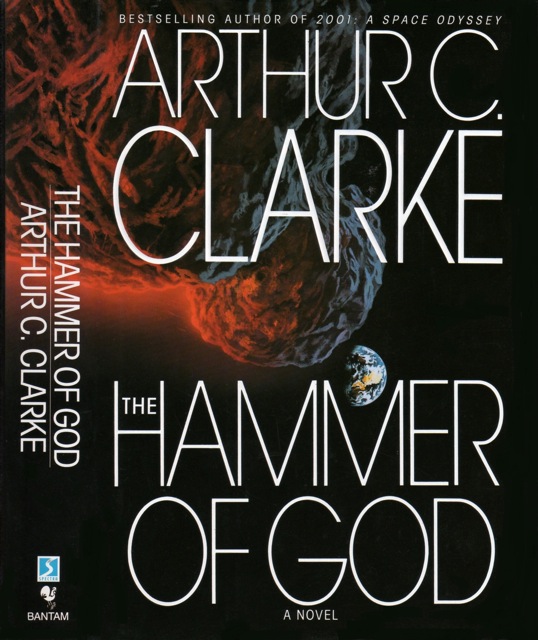
- The Hammer of God
Arthur C. Clarkestandalone novel1993
similar byscience fictiontensenear future+2 more
The Hammer of God is a science fiction novel by Arthur C. Clarke originally published in 1993. Set in the year 2109, it deals with the discovery of an asteroid to be on course to collide with Earth and depicts the mission for deflecting the asteroid by using fusion thermal rockets.
- Ocean / Galactic Center
series12 books1972
similar byscience fiction+3 more
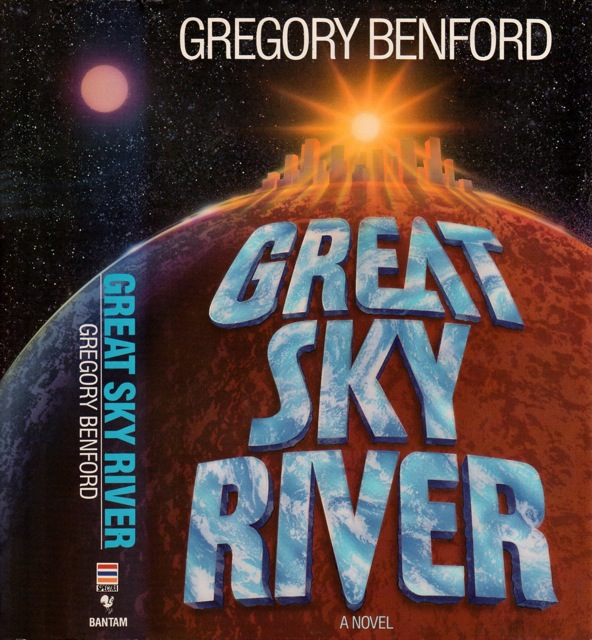
The Galactic Center Saga is a series of books by author Gregory Benford detailing a galactic war between mechanical and biological life.In the Ocean of Night (1977) — 1977 Nebula Award nominee, 1978 Locus Award nominee Across the Sea of Suns (1984) Great Sky River (1987) — 1988 Nebula Nominee Tides of Light (1989) — 1990 Locus Award nominee Furious Gulf (1994) Sailing Bright Eternity (1996) "A Hunger for the Infinite" a novella published in the anthology Far Horizons
- Mother of Storms
John Barnesstandalone novel1994
similar byscience fictiontenseour worldnear future+1 more
From the flaps of the Tor first edition: "It is 2028. A strike to destroy an illegal Arctic weapons cache has a catastrophic side effect. Massive amounts of energy are liberated from the polar ice, suddenly warming the Earth's climate. In the middle of the Pacific, a gigantic hurricane thousands of miles across is forming, larger than any in human history. A storm with winds of supersonic speed. A storm that changes direction at whim. A storm that refuses to die. A storm so vast it spawns dozens more in its wake... Blinded by intrigue, expedience, and greed, the world's politicians and power brokers have ignored the killer storms threat until it is too late. Already the death toll is in the tens of millions, as it savages the Pacific coast, while its devil's brood of smaller storms are wreaking havoc across the face of the planet. While the survivors scramble for advantage, a handful of courageous men and women undertake a daring, desperate plan to save humanity from total destruction - a plan so visionary it may alter forever the future of the human race."
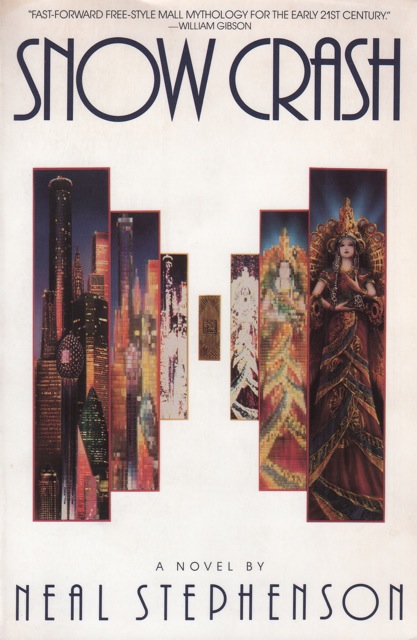
- Snow Crash
Neal Stephensonstandalone novel1992
similar byscience fictiontensenear future+1 more
Snow Crash is a 1992 science fiction novel by Neal Stephenson. Like many of Stephenson's novels, its themes include history, linguistics, anthropology, archaeology, religion, computer science, politics, cryptography, memetics, and philosophy.
- Greg Mandel
series5 books1993
similar byscience fictiontenseour worldnear future
Greg Mandel is a former special-forces soldier with a psychic 'gland' implant for reading emotions, working as a private investigator in a near-future Britain recovering from an authoritarian climate-crisis government. Peter F. Hamilton's original trilogy - Mindstar Rising, A Quantum Murder, The Nano Flower - follows his cases as ordinary detective work keeps sliding into conspiracies with much bigger stakes; The Suspect Genome revisits an older Mandel decades later. It was Hamilton's first fiction, blending noir detective plotting with hard SF.
- Library of America P. K. Dick Collection
series9 books1962
completed
similar byscience fictionnear future+1 more
- The Truth Machine Universe
series2 books1996
similar byscience fictionour worldartificial intelligence+3 more
- The Second Angel
Philip Kerrstandalone novel1998
similar byscience fictiontenseour worldnear future+2 more
Publisher's description: "A virus is decimating the population of Earth and the only defense is a blood transfusion. A plot is hatched to rob a blood bank on the moon and sell its untainted blood on the black market. An expensive operation, requiring lots of high tech, but it promises to earn a fortune."
- Blood Music
Greg Bearstandalone novel1985
similar byscience fictionnanotechnologyour worldnear future+1 more
Blood Music is a 1985 science fiction novel by American writer Greg Bear. It is an expanded version of a short story of the same title, originally published in the June 1983 issue of Analog and the winner of both the 1983 Nebula and 1984 Hugo awards for Best Novelette. The novel won the 1986 Prix Apollo Award, given to the best science fiction novel published in France during the preceding year, under the title La Musique du sang.
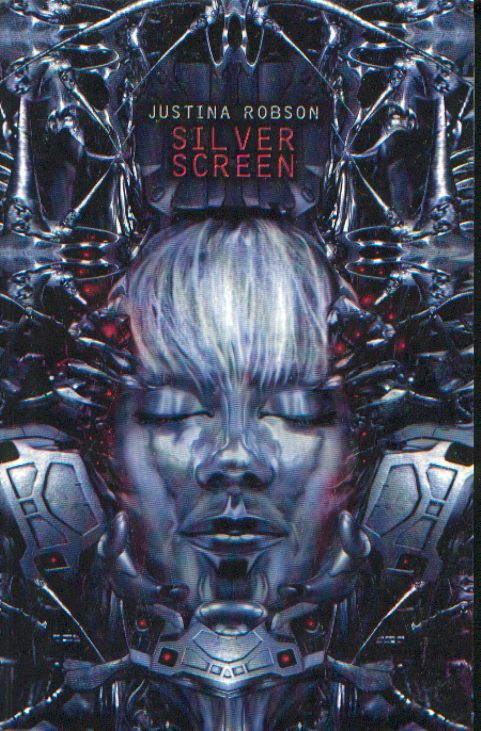
- Silver Screen
Justina Robsonstandalone novel1999
similar byscience fictionour worldnear futureartificial intelligence+2 more
Silver Screen is a science fiction novel by Justina Robson, first published by Macmillan in 1999. It features Anjuli O'Connell, employed as a psychologist to monitor an artificial intelligence named 901. She has a photographic memory and perfect recall. The story concerns events following the death of Roy Croft, Anjuli's colleague and friend. The book's themes include machine rights and evolution.