More like Hyperion
anchored on:science fictionframe storyother star systemsfar futuremysteriousspace opera+6 more
but
- Dune
series20 books1963
part of Dune Universe
similar byfar futureother star systemsscience fictionspace operafaith and religion+3 more
Frank Herbert's Dune Chronicles opens with 1965's Dune, set on the desert planet Arrakis where House Atreides takes control of the only source of the vital spice melange and young Paul Atreides is pulled into a struggle over its politics and religion. Herbert carried the story forward across five further novels — Dune Messiah, Children of Dune, God Emperor of Dune, Heretics of Dune, and Chapterhouse: Dune — following Paul's line over the following millennia, before Brian Herbert and Kevin J. Anderson later extended the saga. Many other editions of these six novels are omnibus and box-set repackagings rather than separate stories.
- Jean le Flambeur
series3 books2010
similar byfar futurechallengingscience fictionother star systemsspacevirtual realityspace operaartificial intelligence+1 more
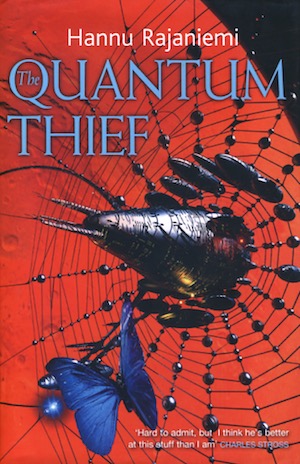
Jean le Flambeur is a master thief broken out of a virtual prison to pull off one more impossible heist, in a solar system reshaped by uploaded minds, post-human factions, and economies built on memory and privacy themselves. Hannu Rajaniemi's trilogy - The Quantum Thief, The Fractal Prince, The Causal Angel - is dense, idea-heavy hard SF that trusts readers to piece its future together from context rather than exposition.
- Ringworld
series5 books1970
part of Known Space
similar byfar futureother star systemsscience fictionspace operaspacespace exploration+1 more
The Ringworld series is a series of science fiction novels written by American author Larry Niven. It is part of his Known Space series of stories. Its backdrop is the Ringworld, a giant artifact 3 million times the surface area of Earth circling a star. The series is composed of four standalone science fiction novels, the original award-winning book and its three sequels:1970: Ringworld 1979: The Ringworld Engineers 1996: The Ringworld Throne 2004: Ringworld's Children
- Dune Universe
universe78 books1963
Start hereDune · Start here
similar byfar futurescience fictionother star systemsspace opera+1 more
Arrakis. Dune. The desert planet, where empire runs on a single substance: the spice melange, which folds space, prolongs life, and unlocks prescience, and which exists nowhere else in the known universe. Frank Herbert's saga is a meditation dressed as an adventure — feudal houses and a secret sisterhood, engineered messiahs and the patient ecology of a world without water, all turning on the terrible gravity of who commands the spice. It reads like scripture and schemes like a war room, ten thousand years hence, among people who have outlawed the thinking machine and made instruments of themselves instead. At its heart stand Herbert's original six — Dune, Dune Messiah, Children of Dune, God Emperor of Dune, Heretics of Dune, Chapterhouse: Dune — a single deepening arc across millennia, arguing the whole way between prophecy and free will. Around that spine his son Brian Herbert and Kevin J. Anderson have raised a vast prequel architecture: Prelude to Dune, tracing the great houses a generation before Paul; Legends of Dune, reaching back to the crusade that broke the machines; the Schools of Dune cycle on the founding of Bene Gesserit, Mentat, and Navigator; the Caladan Trilogy and Heroes of Dune filling years the originals left in shadow. Many hands, dozens of volumes, one desert. What sets Dune apart is its refusal of the simple: religion is manufactured, heroes are hazards, and the sand itself — worm, water, ecology — acts as a political power. Begin where the universe did, with Frank Herbert's Dune (1965), and read the original six in order; you need nothing else to feel the full weight. The prequels are a country to explore afterward, taken by era. Beginnings are delicate times.
- Heechee
series19 books1972
completed
similar byfar futurescience fictionother star systemsspacespace operaspace exploration+1 more
The Heechee Saga, also known as the Gateway series, is a series of science fiction novels and short stories by Frederik Pohl. The Heechee are an advanced alien race that visited the Solar System hundreds of millennia ago and then mysteriously disappeared. They left behind bases containing artifacts, including working starships, which are discovered and exploited by humanity.
- The Colors of Space
Marion Zimmer Bradleystandalone novel1963
similar byfar futureother star systemsmysteriousscience fictionspace operaspacespace exploration
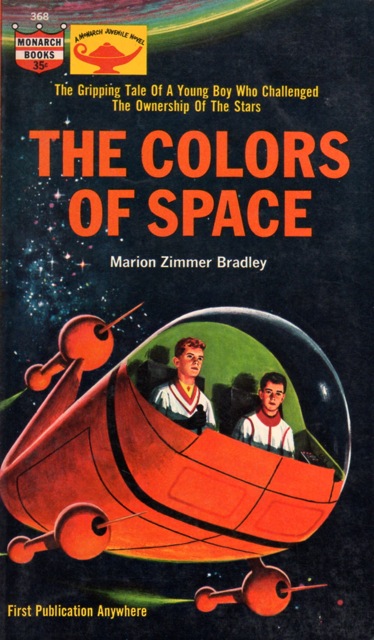
The Lhari seem peaceful and friendly, but they go to some lengths to protect their monopoly on faster-than-light travel. One young man is sent to discover their secrets.
- Singularity Sky
series2 books2003
similar byfar futurechallengingscience fictionother star systemsspace operaspaceartificial intelligence+1 more
Singularity Sky and its sequel Iron Sunrise are collectively known as the Eschaton novels, after the godlike posthuman intelligence that seeded human colonies across space on the condition they never attempt time travel or threaten causality - rules tested when a low-tech colony world is destabilized by a group calling itself the Festival. Charles Stross uses the setup for a mix of space opera, economics, and diplomatic intrigue.
- Culture
series15 books1987
completed
part of The Culture
similar byfar futurescience fictionspace operaartificial intelligence+3 more
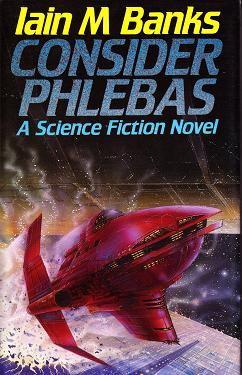
The Culture series is a science fiction series written by Scottish author Iain M. Banks and released from 1987 until 2012. The stories centre on The Culture, a utopian, post-scarcity space society of humanoid aliens and advanced superintelligent artificial intelligences living in artificial habitats spread across the Milky Way galaxy. The main themes of the series are the dilemmas that an idealistic, more-advanced civilization faces in dealing with smaller, less-advanced civilizations that do not share its ideals, and whose behaviour it sometimes finds barbaric. In some of the stories, action takes place mainly in non-Culture environments, and the leading characters are often on the fringes of the Culture, sometimes acting as agents of the Culture in its plans to civilize the galaxy. Each novel is a self-contained story with new characters, although reference is occasionally made to the events of previous novels.
- The Stars My Destination
Alfred Besterstandalone novel1956
similar byfar futuredarkscience fictionother star systemsspace operaspace+1 more
When a passing spaceship refuses to rescue the lone survivor from the drifting wreck of another ship, he dedicates his life to discovering who made that decision and exacting his revenge, in the process altering human history and his own character.
- Ender Wiggin
series14 books1977
part of Ender's Game Universe
similar byfar futurescience fictionother star systems+3 more
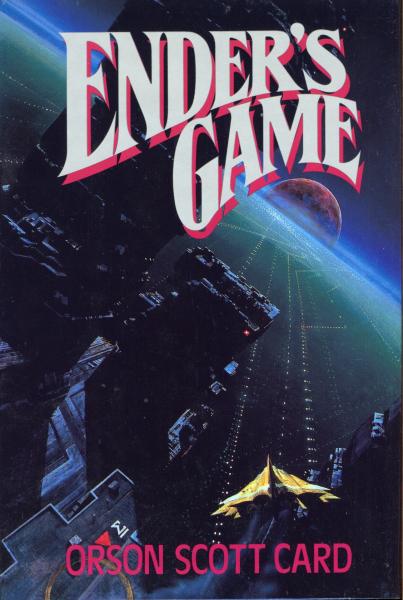
Orson Scott Card's Ender's Game (1985, expanded from his 1977 novella) follows child prodigy Andrew "Ender" Wiggin as he is recruited into a military training program built to prepare Earth's defenses for an anticipated third war against an insectoid alien species known as the Formics. The saga continues years later through Speaker for the Dead and Xenocide, following an older Ender as he confronts the moral weight of his role in that earlier conflict, and concludes the core arc in Children of the Mind, with Ender in Exile filling in the years between the first two books. Set within the wider Ender's Game universe, the series shifts from military coming-of-age story to slower, more philosophical science fiction as it progresses.
- Berserker (Fred Saberhagen)
series59 books1963
similar byfar futurescience fictionspace operaother star systemsspaceartificial intelligence+1 more
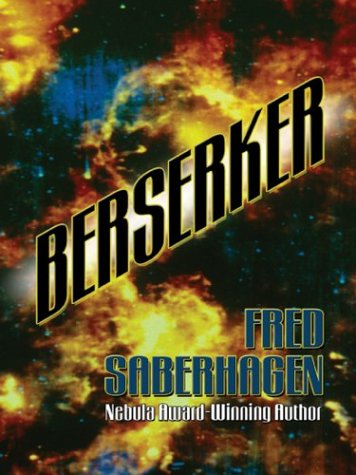
The Berserker series is a series of space opera science fiction short stories and novels by Fred Saberhagen, in which robotic self-replicating machines strive to destroy all life.
- Kefahuchi Tract Trilogy
series3 books2002
similar byfar futurechallengingscience fictionother star systemsspace operaspace+2 more
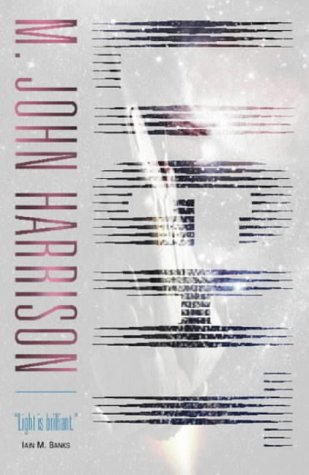
M. John Harrison's Kefahuchi Tract trilogy circles a strange, physics-breaking anomaly in deep space that draws scientists, smugglers, and drifters into its pull across different eras. Light moves between a near-future timeline and a far-future one drawn to the Tract itself; its sequel Nova Swing stays within one future period, where a fragment of the anomaly's altered space bleeds into the run-down port city of Saudade, giving the book a noir, Roadside-Picnic-like atmosphere; Empty Space concludes the sequence. The three novels share a setting and mood more than a continuous plot or cast.
- Moties
series4 books1974
part of CoDominium
similar byfar futureother star systemsscience fictionspace operaspace+1 more
Larry Niven and Jerry Pournelle's The Mote in God's Eye (1974) depicts humanity's first contact with an alien species, the Moties, set within the far-future interstellar setting of Pournelle's codominium future history. The Gripping Hand continues that first-contact crisis years later, and Outies, written by J. R. Pournelle, carries the story forward into a new generation. Together the three books trace an escalating encounter between human and Motie civilizations within the codominium universe.
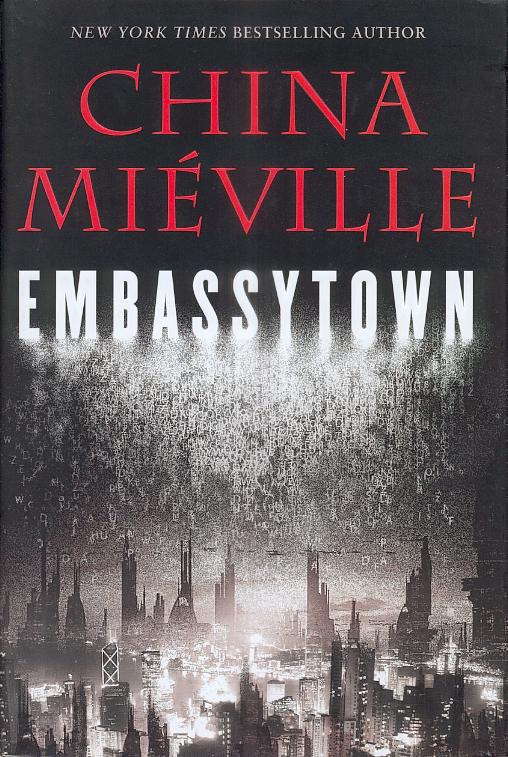
- Embassytown
China Miévillestandalone novel2011
similar byfar futureother star systemsmysteriouschallengingscience fictionspace+1 more
In the far future, humans have colonized a distant planet, home to the enigmatic Ariekei, sentient beings famed for a language unique in the universe, one that only a few altered human ambassadors can speak. Avice Benner Cho, a human colonist, has returned to Embassytown after years of deep-space adventure. She cannot speak the Ariekei tongue, but she is an indelible part of it, having long ago been made a figure of speech, a living simile in their language. When distant political machinations deliver a new ambassador to Arieka, the fragile equilibrium between humans and aliens is violently upset. Catastrophe looms, and Avice is torn between competing loyalties—to a husband she no longer loves, to a system she no longer trusts, and to her place in a language she cannot speak yet speaks through her.
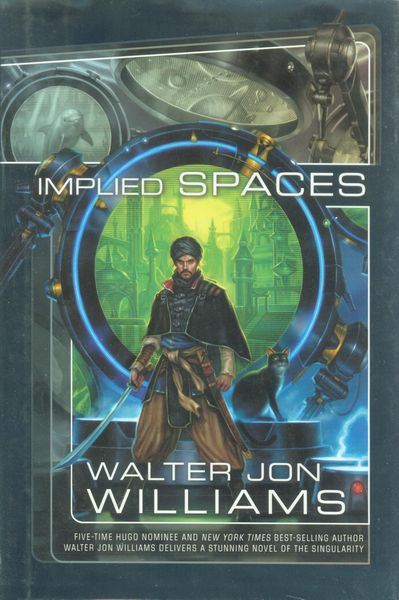
- Implied Spaces
Walter Jon Williamsstandalone novel2008
similar byfar futurechallengingscience fictionspace operaother star systemsspaceartificial intelligencevirtual reality
Implied Spaces is a 2008 space opera novel by American author Walter Jon Williams. It explores themes of transhumanism, artificial intelligence and ontology.
- Diaspora
Greg Eganstandalone novel1997
similar byfar futurechallengingscience fictionother star systemsspaceartificial intelligencespace exploration+2 more
Diaspora is a hard science fiction novel by the Australian writer Greg Egan which first appeared in print in 1997. It originated as the short story "Wang's Carpets" which originally appeared in the Greg Bear-edited anthology New Legends. The story appears as a chapter of the novel.
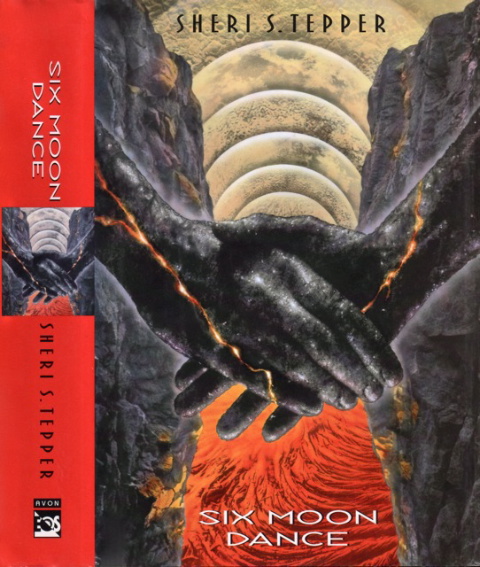
- Six Moon Dance
Sheri S. Tepperstandalone novel1998
similar byfar futureother star systemsmysteriousdarkscience fictionspace operaecological collapse+1 more
It was many years ago that humans came and settled the world of Newholme-cruelly bending the planet to their will; setting down roots and raising up cities and farms and a grand temple to their goddess.But now the ground itself is shaking with ever-increasing violence. And the Great Questioner, official arbiter of the Council of Worlds, has come to this isolated orb to investigate rumors of a terrible secret that lies buried deep within Newholme's past--a past that is not dead, not completely. And it will fall to Mouche, a beautiful youth of uncommon cleverness and spirit, to save his imperiled home by dicovering and embracing that which makes him unique among humans. For every living thing on newholme is doomed, unless Mouche can appease something dark and terrible that is coiled within...and surrender to the mysterious ecstatic revelry taht results when the six moons join.
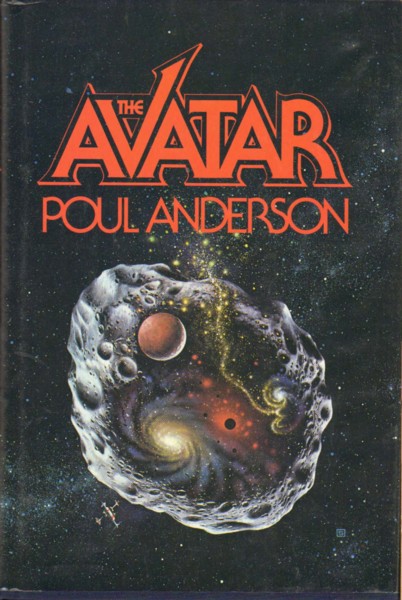
- The Avatar
Poul Andersonstandalone novel1978
similar byfar futuremysteriousscience fictionother star systemsspace operaspacespace exploration
After humanity discovers portals that transport a space vessel through time and space, a crew which has visited the planet of another species returns to Earth, only to find a political faction in power which seeks to conceal this knowledge in the name of social stability. With the aid of the political opposition, they escape and journey through the portal in search of knowledge, and perhaps even to meet those who created the portal system.
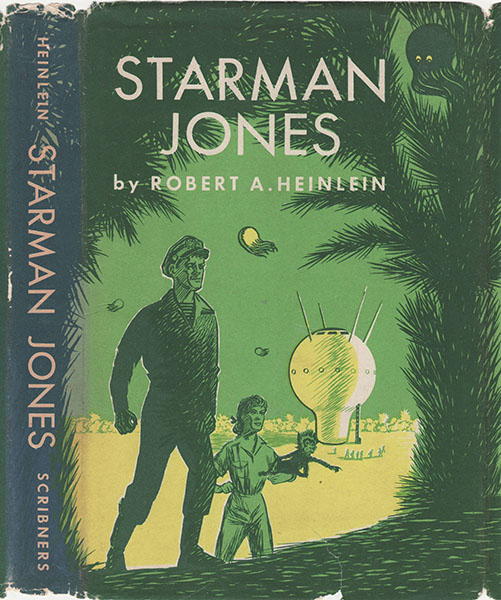
- Starman Jones
Robert A. Heinleinstandalone novel1953
similar byfar futurescience fictionother star systemsspace operaspacespace exploration+1 more
Starman Jones, a 1953 science fiction novel by Robert A. Heinlein, features a farm boy who wants to go to the stars. Charles Scribner's Sons published the book as part of the Heinlein juveniles series.
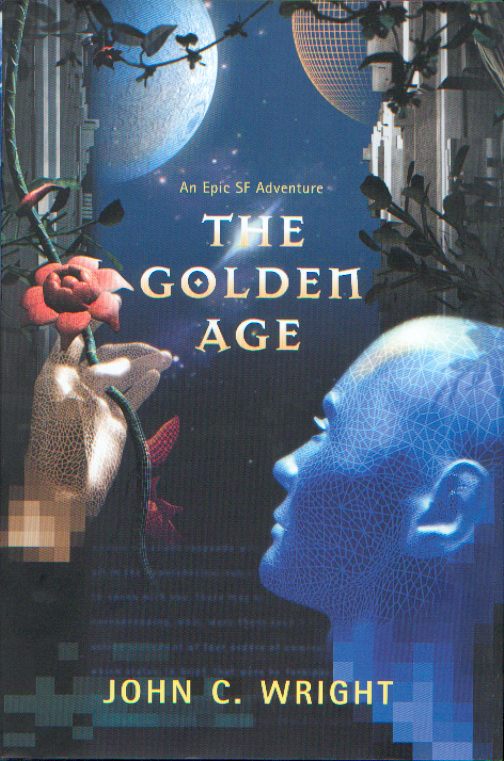
- The Golden Oecumene
series3 books2002
similar byfar futurescience fictionchallengingspaceartificial intelligencespace opera+5 more
The Golden Oecumene is a science fiction trilogy by the American writer John C. Wright. It consists of three books, The Golden Age, The Phoenix Exultant and The Golden Transcendence.
- The Companions
Sheri S. Tepperstandalone novel2003
similar byfar futureother star systemsmysteriousscience fictionspace operaspacespace exploration+1 more
Three planets in deep space were named by their human discoverers to reflect their environments: lush and foreboding Jungle, which swallowed up an exploratory team; Stone, phenomenally rich in rare ore; and Moss, the most enigmatic -- and dangerous -- of the trio.Joining her half-brother Paul, the famed linguist, on a two-person scientific expedition, Jewel Delis has come to Moss to observe the phenomenon of dancing light and to help decipher the strange musical "language" that accompanies it. But there are other mysteries alive on this exotic world covered in ever-shifting vegetation -- and something more than illuminations has enticed her away from a disastrously overpopulated homeworld to seek answers at the universe's unexplored edge. For Jewel herself is a question mark with a radical agenda that will put her at perilous odds with her planet's ruling powers -- and with the inscrutable alien races she encounters -- as she risks all for justice for the endangered beasts of the Earth.
- Thistledown
series5 books1978
completed
similar byfar futurescience fictionspacespace exploration+4 more
- Thorns
Robert Silverbergstandalone novel1967
similar byfar futuredarkscience fictionother star systemsspace operaspace+1 more
From the back cover of the Ballantine first edition: "Lona Kelvin - naive orphan. And at seventeen, mother of one hundred children. Minner Burris - starman. Whose butchered body had been put together by aliens, with artificial and alien replacements. Horror stalked just beneath the surface of these two lonely creatures. Duncan Chalk - a vulture, carrion eater of other people's emotions, feeding on pain, fear, anger, hatred, jealousy, terror; typifying in the appetites of his vast body the sick delight that millions took in the tragedies he skillfully arranged. Lona Kelvin - Minner Burris - Duncan Chalk - Surely the strangest triangle the worlds had ever seen."
- Ilium
series2 books2003
completed
similar byfar futurechallengingscience fictionspace operaartificial intelligencemultiple pov+3 more
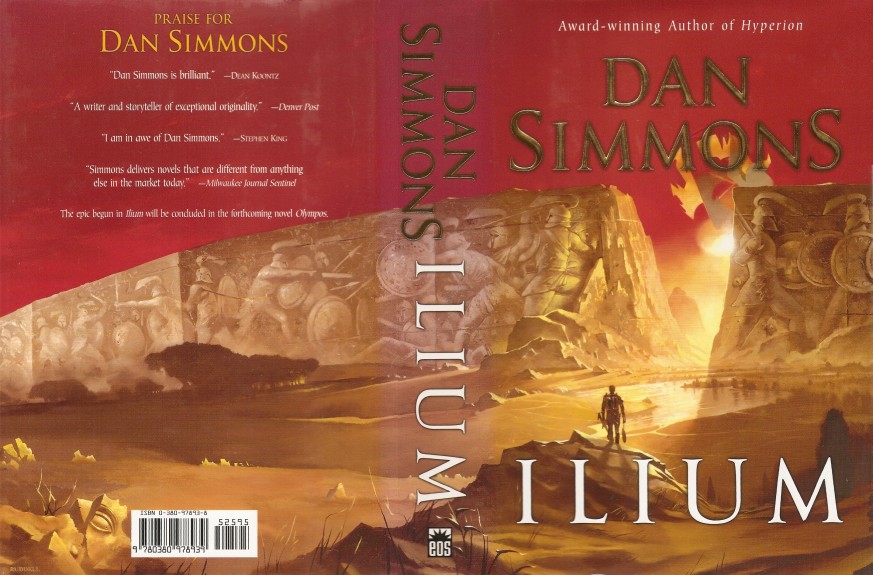
Ilium/Olympos is a series of two science fiction novels by Dan Simmons. The events are set in motion by beings who appear to be ancient Greek gods. Like Simmons' earlier series, the Hyperion Cantos, it is a form of "literary science fiction"; it relies heavily on intertextuality, in this case with Homer and Shakespeare as well as references to Marcel Proust's À la recherche du temps perdu and Vladimir Nabokov's novel Ada or Ardor: A Family Chronicle.