Loreful
HomeDiscover
Search series, authors…⌘K
Loreful

Reading orders for SF/F series and shared universes — with your place kept in every one.

Explore

UniversesSeriesWorksAuthorsAtlas

Help

FAQAboutSite map

Account & legal

Sign inCreate accountPrivacyTerms

Data

Built on ISFDB, Wikipedia, Wikidata and Open Library. Curated reading orders carry their reasoning on the page; the rest follow publication order. Data sources & licenses

© Loreful · data: ISFDB · CC BY

More like Impossible

but

Mood

The mood the book leaves you in.

  • The reading experience is propelled by journeys, exploration, and physical risk; excitement and forward momentum dominate over dread or introspection.
  • Joy and loss are deliberately mixed; the resolution grants characters something real while taking something else away, leaving warmth and sorrow together.
  • The book demands work from the reader — dense prose, difficult structure, unfamiliar ideas, or morally uncomfortable material — as part of its intended effect.
  • Grim events, cruelty, or despair dominate the atmosphere, and the book does not soften them with comfort or comic relief.
  • The atmosphere is quietly unsettling — wrongness, unease, and the uncanny pervade the book without necessarily escalating into overt horror.
  • The book is built to move the reader; character feeling is foregrounded and major scenes aim at a strong emotional response.
  • Humor is a primary aim and the prose plays for laughs — comic situations, wit, or dialogue produce sustained comedy, not occasional levity.
  • The book insists that things can improve; effort and decency are shown to matter, and the arc bends toward better outcomes even through hardship.
  • The book teaches as it goes — real facts, history, science, or craft are conveyed in enough depth that learning is part of the reading experience.
  • The overall register is cheerful and easygoing; stakes are kept gentle and the book avoids dwelling on pain or dread.
  • Withheld information drives the experience; the book sustains enigmas and secrets the reader wants resolved, whatever its genre.
  • The book is contemplative and inward-looking, giving more weight to thought, memory, and meaning than to external events.
  • Grief, loss, or melancholy set the dominant register, and the book lets sorrow stand rather than resolving it into comfort.
  • Sustained suspense is the point; the book keeps the reader braced for what happens next through danger, pressure, or impending revelation.
  • Playful invention and charm define the register — fanciful conceits, light absurdity, and a narration that delights in its own oddity.

About

What the story runs on.

  • Stories in which extraterrestrial beings are central — as characters, cultures, or the object of the plot.
  • Stories centered on wizards, mages, and other learned practitioners of magic as protagonists or masters.
  • Stories in which gods and deities act as characters — walking the world, meddling in mortal lives, or dying.
  • Stories structured as a quest — a journey undertaken to find, deliver, or destroy something of great import.
  • Stories in which a person from the ordinary world is carried into another world — through a portal, summoning, or death — and must live by its rules.
  • Stories in which staying alive against nature, catastrophe, or scarcity is the central problem.
  • Stories of growing up — a young protagonist crossing from childhood into adult knowledge and responsibility.
  • Stories about who a character truly is — self-discovery, doubled lives, and the search for a self.
  • Stories in which a buried family truth — hidden parentage, crimes, or shames — surfaces and reorders the present.
  • Stories driven by maneuvering for power — factions, conspiracies, and statecraft conducted in shadow.
  • Stories in which war itself is the subject — combat, occupation, and what warfare does to soldiers and civilians.
  • Stories organized around investigating a killing — the case, the clues, and the pursuit of the killer, in any genre's clothing.

Shelf

Where it sits in the library.

    • Fiction built on magic or other supernatural elements that have no scientific explanation.
    • Secondary-world fantasy at large scale, where the fate of nations or the world turns on the protagonists' struggle.
    • Fantasy set in a recognizably modern city or contemporary world where the supernatural intrudes on everyday life.
    • Fantasy that blends in horror's atmosphere and imagery, keeping a fantastical frame around grim or frightening material.
    • Action-driven fantasy following warriors or rogues with personal stakes against sorcerous threats, rather than world-spanning conflicts.
    • Fantasy set in a real historical period or a close analogue of one, with magic woven into the era.
    • Fantasy in which protagonists cross from the ordinary world into another world through a portal or similar passage.
    • Fiction that retells or reworks a traditional fairy tale in a new form or setting.
    • Fantasy drawing directly on myths, legends, and folklore, retelling them or building on their figures and logic.
    • Fantasy of ghosts, vampires, shapeshifters, psychics, and similar phenomena, usually set in an otherwise ordinary world.
    • Fiction mixing science-fictional trappings with overtly magical or impossible elements in one setting.
    • Speculative fiction of pervasive moral ambiguity, violence, and cynicism that rejects heroic conventions — fantasy and SF alike.
      • Fiction that extrapolates from science and technology — future societies, space travel, or speculative inventions — within at least nominally natural laws.
      • Science fiction of interstellar scope — starships, galactic polities, and adventure across star systems.
      • Science fiction committed to scientific rigor, where technical plausibility constrains the story.
      • Science fiction centered on armed forces and warfare, told largely from a military point of view.
      • Science fiction of networked, corporate-dominated near futures, pairing high technology with social decay.
      • Science fiction styled on nineteenth-century steam-powered technology, often in a Victorian or pseudo-Victorian setting.
      • Fiction depicting an oppressive or catastrophic society, presented as a warning.
      • Fiction set after civilization's collapse, following survivors in the ruins of the old world.
      • Fiction in which characters move between past and future, and the mechanics or consequences of that travel drive the plot.
      • Fiction exploring a world where a historical event went differently and history diverged from ours.
      • Science fiction about humanity's first encounter and communication with an alien intelligence.
      • Science fiction in which extraterrestrial forces attack or occupy Earth and humanity resists.
      • Fiction whose primary aim is to frighten or unsettle the reader through dread, menace, or the monstrous.
      • Horror of vast, indifferent, incomprehensible entities before which humanity is insignificant, in the Lovecraft tradition.
      • Horror of decaying houses, buried family secrets, and oppressive atmosphere in the Gothic literary tradition.
      • Horror centered on hauntings and the returning dead.
      • Horror located in the mind — paranoia, obsession, and unreliable perception rather than external monsters.
      • Horror defined by explicit, transgressive gore that refuses to cut away from violence.
      • Speculative fiction of the strange and uncanny that resists both natural explanation and standard genre categories.
      • Fiction organized around solving a crime or puzzle, typically following an investigator toward the identification of a culprit.
      • Crime fiction of moral ambiguity, fatalism, and hard-edged style, set among the corrupt and the doomed.
      • A mystery following the realistic routines of police work — forensics, interviews, and case-building.
      • Fast-paced fiction driven by imminent danger, pursuit, or high-stakes conspiracy, built to sustain tension.
      • A thriller of espionage — agents, tradecraft, and intelligence services in conflict.
      • A thriller driven by detailed contemporary or near-future technology, often military or scientific.
      • Fiction whose central plot is a romantic relationship and its development toward an emotionally satisfying resolution.
      • Romance in which one or both partners are supernatural beings, blending fantasy elements into the love story.
      • A fantasy-romance hybrid in which the romantic arc and the fantasy plot carry equal weight.
      • Fiction set in a real past period, where the historical setting materially shapes characters and events.
        • General and literary fiction emphasizing prose style, character interiority, or formal ambition over genre plot conventions.
        • Fiction that ridicules people, institutions, or society in order to criticize them.
        • Fiction that plays with narrative convention through metafiction, fragmentation, and self-reference.
        • Fiction propelled by journeys, exploration, and physical peril, where action and survival carry the plot.
        • Adventure fiction of ships and seafaring — naval engagements, voyages, and life at sea.
        • Fiction of the American frontier West — gunmen, ranchers, and lawmen, typically in the late nineteenth century.
        • Fiction centered on soldiers, campaigns, and the experience of warfare, historical or imagined.
          • Fiction written primarily to amuse, using comedic situations, wit, or parody as its organizing principle.
            • Fiction whose world runs on explicit game mechanics — levels, stats, and skills that characters can see and exploit.
              • Fiction about costumed or superpowered heroes and their conflicts with comparable villains.

              Practical

              How long a commitment, whether it stands alone, and whether it has finished.

              Tap a chip to ask for it · tap again to rule it out · once more to clear. Numbers show what would be left.

              • Cover of His Dark Materials Universe
                His Dark Materials Universe

                universe · 13 books · 1995

                Start hereHis Dark Materials · Start here

                similar byparallel universe

                In a world like ours and unlike it, every human soul walks outside the body in the shape of an animal — a daemon, who speaks, who cannot be lied to, and who settles into one fixed form only when childhood ends. This is the country of His Dark Materials: a company of parallel worlds across which an invisible dust of consciousness drifts down upon the waking mind; where a Church that calls itself the Magisterium would sooner sever a child's soul than let that Dust be understood; and where a golden instrument, the alethiometer, answers true questions for anyone with the patience to read it. Philip Pullman's design stands in two trilogies and a scatter of shorter tales. His Dark Materials — Northern Lights (published in America as The Golden Compass), The Subtle Knife, and The Amber Spyglass — carries Lyra Belacqua from the rooftops of a shadow Oxford across the borders between worlds. The Book of Dust returns to that same territory: La Belle Sauvage looks back to Lyra as an infant carried through a great flood, while The Secret Commonwealth follows her grown and less certain into adulthood, with a concluding volume closing the arc. Around them sit slim companion books — Lyra's Oxford, Once Upon a Time in the North, Serpentine — and Nicholas Wright's stage adaptation, made with Pullman's blessing. The register is grave and luminous at once, its title lifted from Milton and its quarrel drawn from Blake: a story that takes the side of curiosity, love, and the physical world against any authority that would forbid them. It reads as adventure — armoured bears, aeronauts, knife-cut windows between skies — yet reasons like philosophy. Begin with Northern Lights / The Golden Compass and read the first trilogy through before turning to The Book of Dust, which deepens everything the first has already made you feel.

              • Cover of His Dark Materials
                His Dark Materials

                series · 8 books · 1995

                part of His Dark Materials Universe

                similar byparallel universe

                His Dark Materials is a trilogy of fantasy novels by Philip Pullman consisting of Northern Lights, The Subtle Knife (1997), and The Amber Spyglass (2000). It follows the coming of age of two children, Lyra Belacqua and Will Parry, as they wander through a series of parallel universes. The novels have won a number of awards, including the Carnegie Medal in 1995 for Northern Lights and the 2001 Whitbread Book of the Year for The Amber Spyglass. In 2003, the trilogy was ranked third on the BBC's The Big Read poll.

              • Cover of The Gods Themselves
                The Gods Themselves

                Isaac Asimov · standalone novel · 1972

                similar byparallel universe

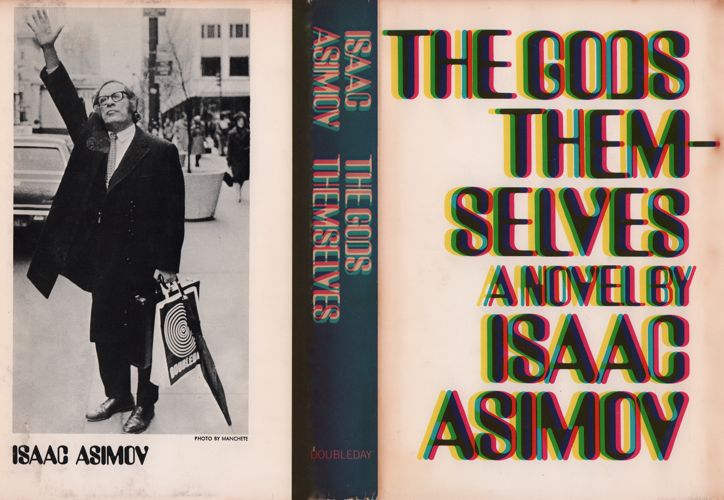
                The Gods Themselves is a 1972 science fiction novel written by Isaac Asimov, and his first original novel in fifteen years. It won the Nebula Award for Best Novel in 1972, and the Hugo Award for Best Novel in 1973.

              • T
                Thistledown

                series · 5 books · 1978

                completed

                similar by+1 more

              • Cover of Coraline
                Coraline

                series · 2 books · 2002

                similar byparallel universe

              • Cover of Chrestomanci
                Chrestomanci

                series · 12 books · 1977

                completed

                similar byparallel universe

                Chrestomanci, sometimes branded The Worlds of Chrestomanci, is a heptalogy of children's fantasy books written by British author Diana Wynne Jones, published from 1977 to 2006. In the context of the parallel universe setting of the books, Chrestomanci refers to both the British government office that is responsible for supervising the use of magic and Chrestomanci Castle in southern England, which is both residence and headquarters.

              • Cover of Talisman
                Talisman

                series · 4 books · 1984

                similar by+1 more

                Stephen King and Peter Straub's The Talisman follows twelve-year-old Jack Sawyer as he crosses between our world and the Territories, a parallel realm, on a cross-country quest to save his dying mother. The 2001 sequel Black House catches up with Jack decades later as a retired detective drawn into a serial-murder case in small-town Wisconsin that pulls the Territories back into his life. A third book, Other Worlds Than These, was announced in 2025 to complete the trilogy.

              • Cover of Ring Around the Sun
                Ring Around the Sun

                Clifford D. Simak · standalone novel · 1953

                similar byparallel universe

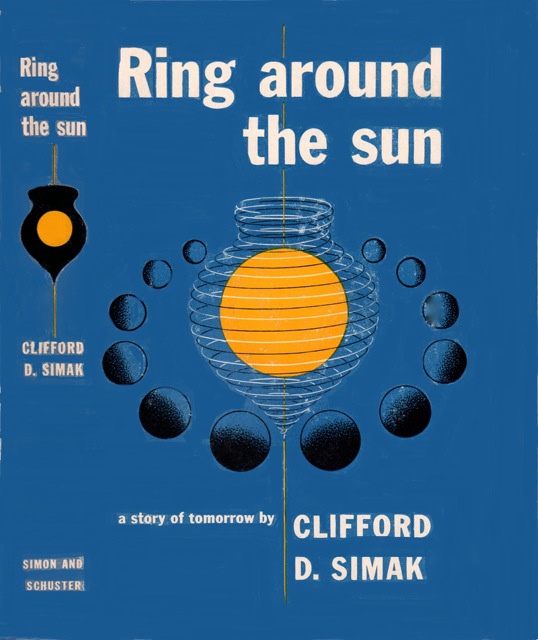
                Ring Around the Sun is a science fiction novel by American writer Clifford D. Simak. Its anti-urban and pro-agrarian sentiments are typical of much of Simak's work.

              • Cover of Men Like Gods
                Men Like Gods

                H. G. Wells · standalone novel · 1923

                similar byparallel universe

                Men Like Gods is a 1923 novel, referred to by the author as a "scientific fantasy", by English writer H. G. Wells. It features a utopia located in a parallel universe.

              • Cover of Apprentice Adept
                Apprentice Adept

                series · 7 books · 1980

                similar byparallel universe

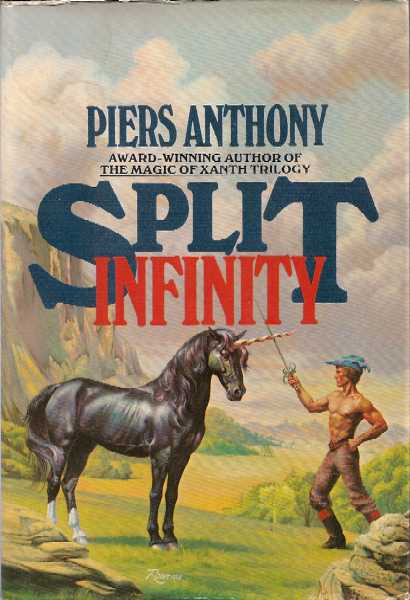
                Apprentice Adept is a heptalogy of fantasy and science fiction novels written by English American author Piers Anthony. The series takes place on Phaze and Proton, two worlds occupying the same space in two different dimensional planes. Phaze is a lush planet of magic, where Proton is a barren mining planet of science. As the series opens, each person born on Phaze and Proton has an alternate self living on the other world. But if a person on either world lacks a duplicate, he can cross to the other through an energy "curtain" that circumscribes each frame.

              • Cover of Whileaway
                Whileaway

                series · 4 books · 1972

                completed

                similar by+1 more

                Joanna Russ's The Female Man (1975) is a single feminist science fiction novel, not a multi-book series, built around four women from parallel timelines with very different gender arrangements. One of them, Janet, comes from Whileaway, an all-female utopian Earth ten centuries in the future where men died out in a plague; the other three come from realities closer to Russ's own, and their collisions are used to interrogate what womanhood and equality could mean under different social rules.

              • Cover of The Long Earth
                The Long Earth

                series · 7 books · 2012

                similar byparallel universe

                Terry Pratchett and Stephen Baxter's Long Earth series (five novels, 2012-2016) begins when a cheap, simple device called a Stepper lets people step sideways into a vast, possibly infinite chain of parallel Earths, none of which developed human civilization. The books follow a natural stepper and an AI that believes itself the reincarnation of a Tibetan repairman as they travel millions of steps out along the chain, encountering other hominid species and the dangers, ecological and social, of an endless open frontier.

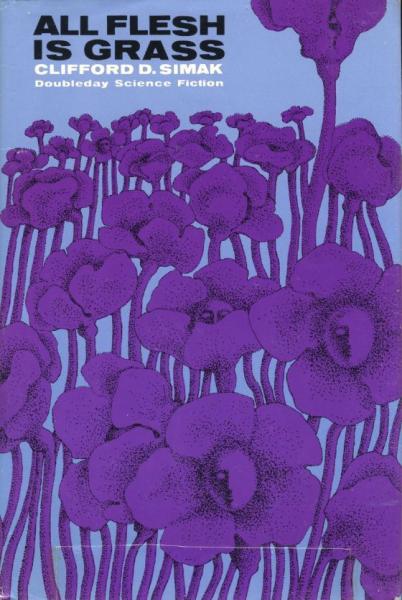
              • Cover of All Flesh Is Grass
                All Flesh Is Grass

                Clifford D. Simak · standalone novel · 1965

                similar by+1 more

                All Flesh is Grass is a science fiction novel by American author Clifford D. Simak, published in 1965. The book follows a small town in Wisconsin that is closed off from the outside world by a mysterious barrier, placed by extraterrestrial beings.

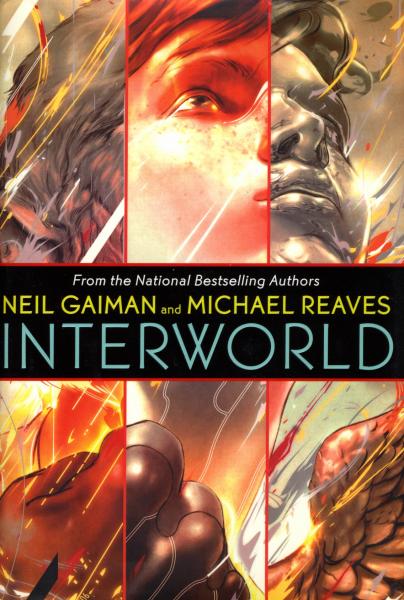
              • Cover of InterWorld
                InterWorld

                series · 3 books · 2007

                similar byparallel universe

                InterWorld follows Joey Harker, an ordinary teenager who discovers he can walk between parallel Earths and is recruited into a band of alternate versions of himself defending the multiverse from two rival forces, one of magic and one of science, that want to conquer every reality. Michael Reaves developed the story with Neil Gaiman, and Reaves's daughter Mallory Reaves co-wrote the two sequels. It's a fast-moving, portal-hopping adventure aimed at younger readers rather than a slow-burn epic.

              • Cover of Dark Matter
                Dark Matter

                Blake Crouch · standalone novel · 2016

                similar byparallel universe

                Jason Dessen, college physics professor, husband and father, is kidnapped and taken to a parallel universe where his counterpart had dedicated his life to inventing a method of traveling between an infinity of parallel universes.

              • Cover of The Disappearance
                The Disappearance

                Philip Wylie · standalone novel · 1951

                similar byparallel universe

                One ordinary moment, the world splits in two: every man on Earth finds every woman gone without a trace, and at the same instant every woman finds herself in a world emptied of men -- two parallel realities on the same planet, each population convinced the other has vanished. Philip Wylie follows both worlds afterward, one sliding into authoritarian collapse without women to share or restrain power, the other building something more equal and freer, using the split to interrogate mid-century assumptions about sex, marriage and the double standards separating what men and women were each allowed to be. A speculative novel years ahead of the feminist movement it anticipates.

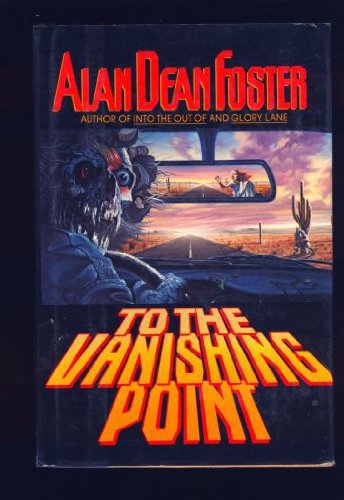
              • Cover of To the Vanishing Point
                To the Vanishing Point

                Alan Dean Foster · standalone novel · 1988

                similar byparallel universe

                A family from Los Angeles on the way to a Las Vegas vacation in a rented RV pick up a hitchhiking woman who claims to be on her way to heal the Spinner who creates the threads of the various realities, who is falling under the influence of Chaos.

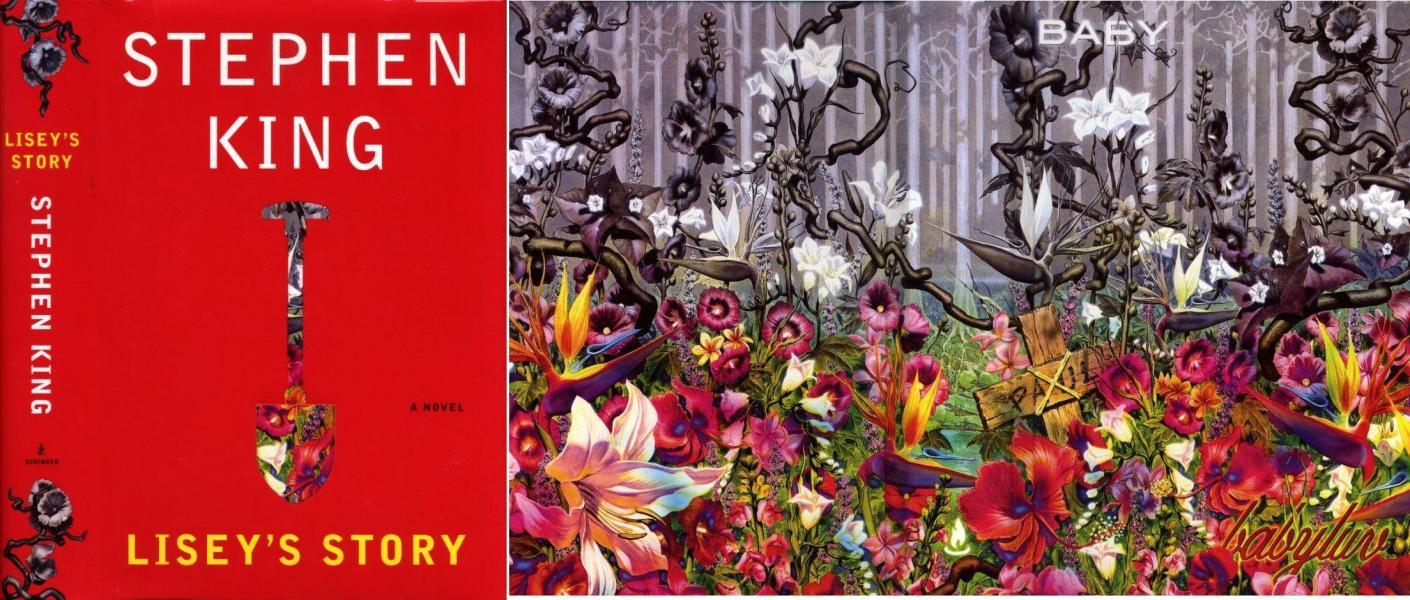
              • Cover of Lisey's Story
                Lisey's Story

                Stephen King · standalone novel · 2006

                similar byparallel universe

                When the widow of a successful author is targeted by a psychopath, she must make use of the ability to shift to a parallel world, which she learned from her husband.

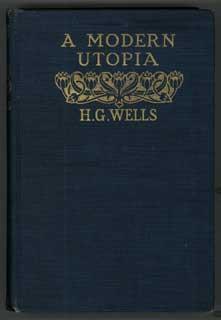
              • Cover of A Modern Utopia
                A Modern Utopia

                H. G. Wells · standalone novel · 1905

                similar byparallel universe

                Two travelers, an unnamed narrator and his skeptical companion, find themselves transported to a parallel world: a planet identical to Earth in geography and even population, down to duplicates of everyone they know, but shaped by a different history. There they examine a global order run by a voluntary elite called the Samurai, who try to hold together progress and stability without the coercion Wells thought inevitable in the utopias that came before his. Framed less as a story than as a philosophical travelogue, it is Wells's own argument with the utopian tradition, tested through the world he invents to make it.

              • Cover of The Merchant Princes
                The Merchant Princes

                series · 14 books · 2004

                similar byparallel universe

                The Merchant Princes is a science fantasy and alternate history series of nine novels by British writer Charles Stross. In the series, there exist a number of parallel worlds, all of which are on the same geographical Earth but with different societies at different points of development. Members of a certain bloodline can travel between these worlds along with their immediate possessions. The series largely follows Miriam Beckstein, a technology journalist raised in a familiar "normal" Earth, who discovers she was born in a parallel world and is a member of this bloodline. She quickly becomes entangled in political maneuvering and assassination plots with her estranged family. Miriam uses modern technology and investigative journalism to attempt to stay a step ahead.

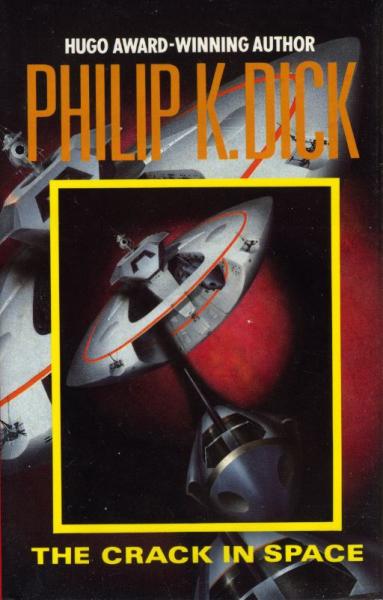
              • Cover of The Crack in Space
                The Crack in Space

                Philip K. Dick · standalone novel · 1966

                similar byparallel universe

                The Crack in Space is a 1966 science fiction novel by American writer Philip K. Dick. In the United Kingdom, it has been published under the title of the original novella, Cantata 140, published in the July 1964 issue of The Magazine of Fantasy & Science Fiction. This original title refers to the short title in English, Sleepers Awake, of J.S. Bach's Cantata BWV 140 and the novel's 'bibs', the millions sleeping in suspended animation. Both are based on the short story Prominent Author. The common elements are the Jiffi-scuttler transport device, the company, Terran Development, that manufactures it, and a summary of Prominent Author as an event of the past in chapter 2. The "crack in space" is a defect in Jiffi-scuttler operation that allows access to the Earth and to parallel Earths at various times and locations, beyond its intended use of providing near-instant transport between specific locations on the Earth in the present.

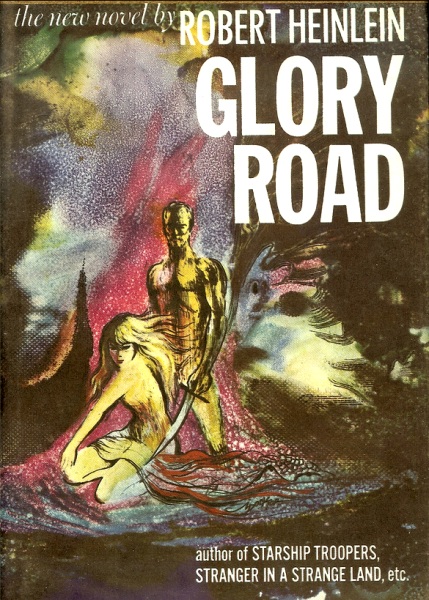
              • Cover of Glory Road
                Glory Road

                series · 2 books · 1963

                similar by+1 more

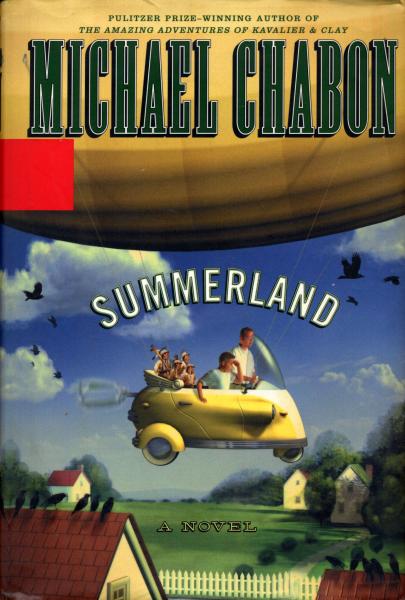
              • Cover of Summerland
                Summerland

                Michael Chabon · standalone novel · 2002

                similar byparallel universe

                Summerland is a 2002 fantasy young adult novel by American writer Michael Chabon. It is about young children who save the world from destruction by playing baseball, the central theme and symbol throughout the novel. Summerland weaves elements of a World Series, parallel-universe road trip, and a hero's odyssey. The book received mixed reviews; The New York Times called it "bewilderingly busy" and likened it to "the novelization of an animated action film".

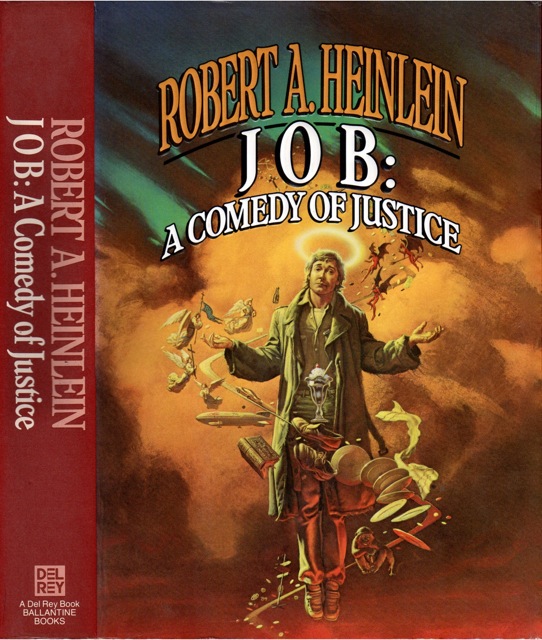
              • Cover of Job: A Comedy of Justice
                Job: A Comedy of Justice

                Robert A. Heinlein · standalone novel · 1984

                similar byparallel universe

                Job: A Comedy of Justice is a science fiction novel by American writer Robert A. Heinlein published in 1984. The title is a reference to the biblical Book of Job and James Branch Cabell's book Jurgen, A Comedy of Justice. It won the Locus Award for Best Fantasy Novel in 1985 and was nominated for the Nebula Award for Best Novel in 1984, and the Hugo Award for Best Novel in 1985.