More like Imprudence
anchored on:steampunkour world19th centuryfantasyshapeshiftersbritish isles+2 more
but
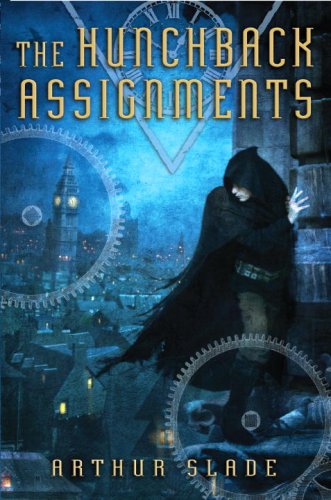
- Hunchback Assignments / Modo: Mission Clockwork
series5 books2009
similar by19th centurysteampunkshapeshiftersadventurous+1 more
- George Dower / Infernal Devices
series3 books1987
similar by19th centurysteampunk+4 more
K. W. Jeter's trilogy, whose 1987 original helped coin the term 'steampunk,' follows clockmaker George Dower as he's dragged into escalating Victorian conspiracies involving mechanical devices, secret societies, and inventions that shouldn't work but do. Infernal Devices, Fiendish Schemes, and Grim Expectations mix dark comedy with the gears-and-brass aesthetic the series helped establish before it had a name.
- Five Children Universe
series27 books1902
completed
similar byfantasybritish isles+3 more
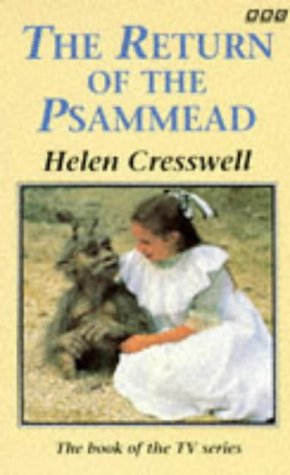
Two separate modern continuations of E. Nesbit's Psammead stories were written decades apart by different authors: Helen Cresswell's The Return of the Psammead (1992) brings the wish-granting sand fairy back for a new set of children, while Kate Saunders's Five Children on the Western Front (2014) follows the now-grown Lamb and his siblings as the First World War arrives, in a more somber sequel to Nesbit's original trilogy. Neither book is by Nesbit herself, and the two have no direct connection to each other beyond both drawing on her creation. Later writers have kept returning to Nesbit's premise long after her own trilogy ended.
- The Water-Babies
Charles Kingsleystandalone novel1863
similar bywhimsical19th centuryfantasybritish isles
The Water-Babies: A Fairy Tale for a Land-Baby is a children's novel by Charles Kingsley. Written in 1862–1863 as a serial for Macmillan's Magazine, it was first published in its entirety in 1863. It was written as part satire in support of Charles Darwin's On the Origin of Species. The book was extremely popular in the United Kingdom and was a mainstay of British children's literature for many decades. The book was selected by Julia Eccleshare as one of the 1001 Children's Books You Must Read Before You Grow Up (2009).
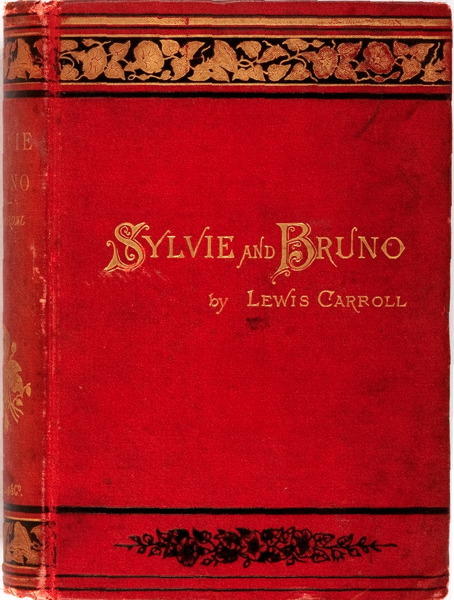
- Sylvie and Bruno
series4 books1867
completed
similar bywhimsical19th centuryfantasybritish isles+1 more
- James and the Giant Peach
Roald Dahlstandalone novel1961
similar bywhimsicalfantasyadventurousour world
James and the Giant Peach is a children's novel written in 1961 by British author Roald Dahl. The first edition, published by Alfred Knopf, featured illustrations by Nancy Ekholm Burkert. There have been re-illustrated versions of it over the years, drawn by Michael Simeon, Emma Chichester Clark, Lane Smith and Quentin Blake. It was adapted into a film of the same name in 1996 which was directed by Henry Selick, and a musical in 2010.
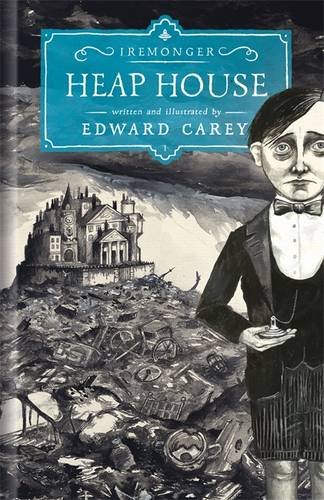
- The Iremonger Trilogy
series3 books2013
similar by19th centuryfantasyfamily secretsbritish isles+2 more
- The Prestige
Christopher Prieststandalone novel1995
similar by19th centuryfamily secretsour worldbritish isles+2 more
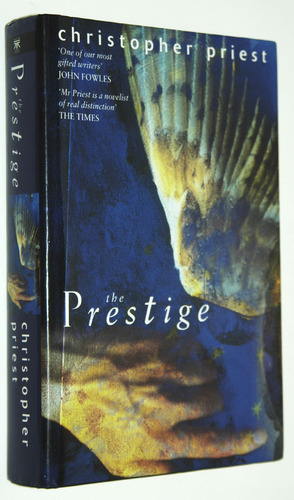
A magician called Borden (at least in private) writes his own version of his life as a magician. There's a lot of focus on a trick, where he seems to move across any width of stage in an instant, and on a feud with another magician, Angier. The account includes passages, where he can't decide what exactly to write, arguing with himself. 3 generations later a Borden (at least biologically) learns about his ancestor. He's also convinced, he somehow has a twin brother, who's happy about this development.
- The Little White Horse
Elizabeth Goudgestandalone novel1946
similar bywhimsical19th centuryfantasybritish isles
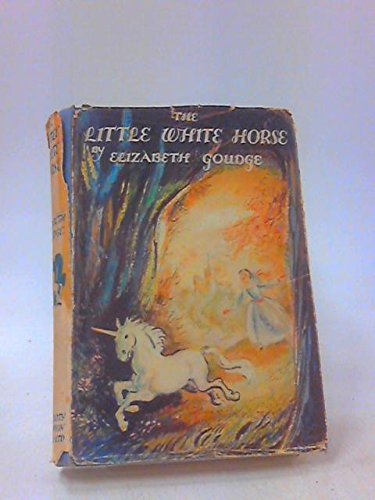
The Little White Horse is a low fantasy children's novel by Elizabeth Goudge, first published by the University of London Press in 1946 with illustrations by C. Walter Hodges, and Anne Yvonne Gilbert in 1992. Coward–McCann published a US edition next year. Set in 1842, it features a recently orphaned teenage girl who is sent to the manor house of her cousin and guardian in the West Country of England. The estate, village, and vicinity are shrouded in mystery and magic; the "little white horse" is a unicorn.
- The Hobbit
series2 books1937
completed
part of Tolkien's legendarium
similar bywhimsicalfantasyadventurous+1 more
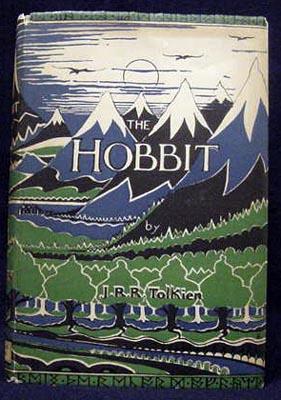
The Hobbit (1937) is J. R. R. Tolkien's children's fantasy novel following the reluctant burglar Bilbo Baggins, who joins a company of dwarves and the wizard Gandalf on a journey to reclaim treasure guarded by the dragon Smaug. It stands as a complete adventure on its own, but shares its setting with the rest of Tolkien's legendarium and leads into the events of The Lord of the Rings.
- The Sea Lady
H. G. Wellsstandalone novel1902
similar bywhimsical19th centuryfantasybritish isles
The Sea Lady is a fantasy novel by British writer H. G. Wells, incorporating elements of a fable. It was serialized from July to December 1901 in Pearson's Magazine before being published as a volume by Methuen. The inspiration for the novel came when Wells caught a glimpse of May Nisbet, the daughter of The Times drama critic, John Ferguson Nisbet, in a bathing suit during her visit to Sandgate. Wells had agreed to pay her school fees after her father's death.
- The Anubis Gates
series3 books1983
similar by19th centuryadventurousfantasybritish isles+1 more
The Anubis Gates is a single time-travel fantasy novel by Tim Powers, following a present-day academic who takes part in a time-travel experiment and ends up stranded in early nineteenth-century London. It won the Philip K. Dick Award in 1983 and the Science Fiction Chronicle Award the following year.
- The Bookman Universe
series6 books2010
similar by19th centurysteampunkpolitical intriguebritish isles+1 more
- Railsea
China Miévillestandalone novel2012
similar bywhimsicalfantasysteampunkadventurous
Railsea is a young adult novel written and illustrated by English writer China Miéville, and published in May 2012. Miéville described the novel as "weird fiction", io9 labelled its mix of fantasy and steampunk elements as "salvagepunk" and the story has been seen as an "affectionate parody" of Herman Melville's classic 1851 novel Moby-Dick, also drawing on Robert Louis Stevenson's adventure novels Treasure Island and Kidnapped.
- The Grey Horse
R. A. MacAvoystandalone novel1987
similar by19th centuryshapeshiftersfantasycolonialismbritish isles
Publisher's description: "Set against the colorful and magical backdrop of Ireland. It chronicles a time when the Irish people suffered under harsh English overlords who sought to destroy their culture and way of life. Into the Irish town of Carraroe, a magnificent, completely grey stallion appears. The horse brings with him the promise of better times and magical happenings, for he is actually the shaped-shifted form of Ruairi MacEibhir, journeyed to such a time of danger in order to win the hand of the woman he loves."
- The Difference Engine
William Gibson & Bruce Sterlingstandalone novel1990
similar by19th centurysteampunkpolitical intriguebritish isles
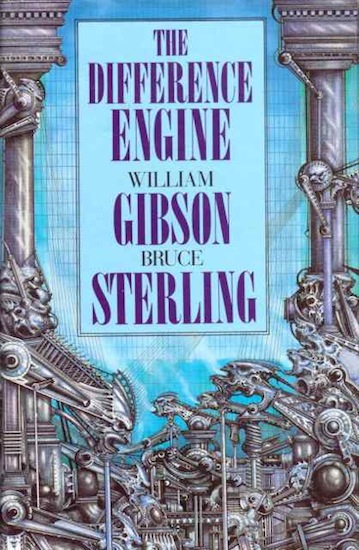
The computer age arrives a century early with Babbage's perfection of his 'analytical engine'. The industrial revolution is accelerated by the development of steam-driven cybernetic 'Engines'. An advanced Great Britain prepares to better the world's lot. An example of the 'steampunk' sub-genre of the cyberpunk movement.
- Temeraire
series48 books2006
similar by19th centuryfantasyadventurous+2 more
Temeraire is a series of nine alternate history fantasy novels written by American author Naomi Novik. The novels follow the adventures of Captain William Laurence and his dragon, the eponymous Temeraire, and reimagine events of the Napoleonic Wars with "an air force of dragons, manned by crews of aviators". His Majesty's Dragon, the first entry in the series, won the Compton Crook Award in 2007 and was nominated for the Hugo Award for Best Novel the same year. Temeraire: In the Service of the King, an omnibus volume collecting the first three novels, won the Locus Award for Best First Novel in 2007. Temeraire was nominated for the Hugo Award for Best Series in 2017.
- The Raven King
series13 books1996
similar by19th centurybritish isles+2 more
Susanna Clarke's Jonathan Strange & Mr Norrell reintroduces magic to an alternate nineteenth-century England, centering on the prickly rivalry between the two title magicians as they revive a lost English tradition. The linked collection The Ladies of Grace Adieu, which includes the earlier story "Mr Simonelli, or the Fairy Widower," explores the same magical history from other corners of England and refers back to the legendary Raven King, said to have created English magic centuries before. The two books share a setting and mythology rather than a single sequential plot.
- The Wonderful Visit
H. G. Wellsstandalone novel1895
similar bywhimsical19th centuryfantasybritish isles
The Wonderful Visit is an 1895 novel by H. G. Wells. With an angel—a creature of fantasy unlike a religious angel—as protagonist and taking place in contemporary England, the book could be classified as contemporary fantasy, although the genre was not recognised in Wells's time. The Wonderful Visit also has strong satirical themes, gently mocking customs and institutions of Victorian England as well as idealistic rebellion itself.
- Chrestomanci
series12 books1977
completed
similar bywhimsicalfantasybritish isles+1 more
Chrestomanci, sometimes branded The Worlds of Chrestomanci, is a heptalogy of children's fantasy books written by British author Diana Wynne Jones, published from 1977 to 2006. In the context of the parallel universe setting of the books, Chrestomanci refers to both the British government office that is responsible for supervising the use of magic and Chrestomanci Castle in southern England, which is both residence and headquarters.
- The Goblin Reservation
Clifford D. Simakstandalone novel1968
similar bywhimsicalfantasyadventurousour world
The Goblin Reservation is a 1968 science fiction novel by American writer Clifford D. Simak, featuring an educated Neanderthal, a biomechanical sabertooth tiger, aliens that move about on wheels, a man who time-travels using an unreliable device implanted in his brain, meeting a ghost, trolls, banshees, goblins, a dragon and even Shakespeare himself. The Goblin Reservation was a Hugo Award nominee in 1969 and was originally serialized in Galaxy Science Fiction magazine.
- Babel, or, The Necessity of Violence: An Arcane History of the Oxford Translators' Revolution
R. F. Kuangstandalone novel2022
similar by19th centuryfantasycolonialismour worldbritish isles
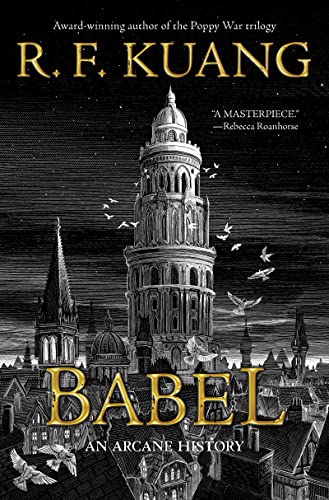
Babel, or The Necessity of Violence: An Arcane History of the Oxford Translators' Revolution is a 2022 novel of speculative fiction by R. F. Kuang set in a fantastical version of Oxford in 1830s England. Thematically similar to The Poppy War (2018–20), Kuang's first book series, the book criticizes British imperialism, racism and capitalism, and the complicity of academia, knowledge, and language in perpetuating and enabling them.