Loreful
HomeDiscover
Search series, authors…⌘K
Loreful

Reading orders for SF/F series and shared universes — with your place kept in every one.

Explore

UniversesSeriesWorksAuthorsAtlas

Help

FAQAboutSite map

Account & legal

Sign inCreate accountPrivacyTerms

Data

Built on ISFDB, Wikipedia, Wikidata and Open Library. Curated reading orders carry their reasoning on the page; the rest follow publication order. Data sources & licenses

© Loreful · data: ISFDB · CC BY

More like Imram

anchored on:fantasyverse novelmythic fantasyquestsfaith and religionat sea+1 more

but

Mood

The mood the book leaves you in.

  • The reading experience is propelled by journeys, exploration, and physical risk; excitement and forward momentum dominate over dread or introspection.
  • Joy and loss are deliberately mixed; the resolution grants characters something real while taking something else away, leaving warmth and sorrow together.
  • The book demands work from the reader — dense prose, difficult structure, unfamiliar ideas, or morally uncomfortable material — as part of its intended effect.
  • Grim events, cruelty, or despair dominate the atmosphere, and the book does not soften them with comfort or comic relief.
  • The atmosphere is quietly unsettling — wrongness, unease, and the uncanny pervade the book without necessarily escalating into overt horror.
  • The book is built to move the reader; character feeling is foregrounded and major scenes aim at a strong emotional response.
  • Humor is a primary aim and the prose plays for laughs — comic situations, wit, or dialogue produce sustained comedy, not occasional levity.
  • The book insists that things can improve; effort and decency are shown to matter, and the arc bends toward better outcomes even through hardship.
  • The book teaches as it goes — real facts, history, science, or craft are conveyed in enough depth that learning is part of the reading experience.
  • The book is designed to uplift and motivate, presenting perseverance or achievement in a way that invites the reader to aspire or act.
  • The overall register is cheerful and easygoing; stakes are kept gentle and the book avoids dwelling on pain or dread.
  • Withheld information drives the experience; the book sustains enigmas and secrets the reader wants resolved, whatever its genre.
  • The book is contemplative and inward-looking, giving more weight to thought, memory, and meaning than to external events.
  • The book works as comfort reading — low tension, a soothing pace, and an atmosphere the reader can unwind in.
  • Grief, loss, or melancholy set the dominant register, and the book lets sorrow stand rather than resolving it into comfort.
  • Sustained suspense is the point; the book keeps the reader braced for what happens next through danger, pressure, or impending revelation.
  • Playful invention and charm define the register — fanciful conceits, light absurdity, and a narration that delights in its own oddity.

About

What the story runs on.

  • Stories centered on witches and the practice of witchcraft — covens, hedge magic, familiars, and the witch's place in her community.
  • Stories in which gods and deities act as characters — walking the world, meddling in mortal lives, or dying.
  • Stories structured as a quest — a journey undertaken to find, deliver, or destroy something of great import.
  • Stories in which staying alive against nature, catastrophe, or scarcity is the central problem.
  • Stories of lovers kept apart by law, family, faith, or station, where the obstacle to love is the plot.
  • Stories in which a friendship — its making, testing, or loss — is the emotional center.
  • Stories of growing up — a young protagonist crossing from childhood into adult knowledge and responsibility.
  • Stories about who a character truly is — self-discovery, doubled lives, and the search for a self.
  • Stories in which belief, doubt, and religious life are the central subject, from crises of faith to life inside a religious community.
  • Stories in which a buried family truth — hidden parentage, crimes, or shames — surfaces and reorders the present.
  • Stories driven by maneuvering for power — factions, conspiracies, and statecraft conducted in shadow.
  • Stories in which war itself is the subject — combat, occupation, and what warfare does to soldiers and civilians.

Shelf

Where it sits in the library.

    • Fiction built on magic or other supernatural elements that have no scientific explanation.
    • Secondary-world fantasy at large scale, where the fate of nations or the world turns on the protagonists' struggle.
    • Fantasy set in a recognizably modern city or contemporary world where the supernatural intrudes on everyday life.
    • Fantasy that blends in horror's atmosphere and imagery, keeping a fantastical frame around grim or frightening material.
    • Action-driven fantasy following warriors or rogues with personal stakes against sorcerous threats, rather than world-spanning conflicts.
    • Fantasy set in a real historical period or a close analogue of one, with magic woven into the era.
    • Fantasy in which protagonists cross from the ordinary world into another world through a portal or similar passage.
    • Fiction that retells or reworks a traditional fairy tale in a new form or setting.
    • Fantasy drawing directly on myths, legends, and folklore, retelling them or building on their figures and logic.
    • Fantasy of ghosts, vampires, shapeshifters, psychics, and similar phenomena, usually set in an otherwise ordinary world.
    • Fiction mixing science-fictional trappings with overtly magical or impossible elements in one setting.
    • Low-stakes fantasy emphasizing comfort, community, and everyday pleasures over conflict and peril.
    • Speculative fiction of pervasive moral ambiguity, violence, and cynicism that rejects heroic conventions — fantasy and SF alike.
      • Fiction that extrapolates from science and technology — future societies, space travel, or speculative inventions — within at least nominally natural laws.
      • Science fiction of interstellar scope — starships, galactic polities, and adventure across star systems.
      • Science fiction committed to scientific rigor, where technical plausibility constrains the story.
      • Science fiction centered on armed forces and warfare, told largely from a military point of view.
      • Science fiction of networked, corporate-dominated near futures, pairing high technology with social decay.
      • Science fiction styled on nineteenth-century steam-powered technology, often in a Victorian or pseudo-Victorian setting.
      • Fiction depicting an oppressive or catastrophic society, presented as a warning.
      • Fiction set after civilization's collapse, following survivors in the ruins of the old world.
      • Fiction in which characters move between past and future, and the mechanics or consequences of that travel drive the plot.
      • Fiction exploring a world where a historical event went differently and history diverged from ours.
      • Science fiction about humanity's first encounter and communication with an alien intelligence.
      • Science fiction in which extraterrestrial forces attack or occupy Earth and humanity resists.
      • Fiction whose primary aim is to frighten or unsettle the reader through dread, menace, or the monstrous.
      • Horror of vast, indifferent, incomprehensible entities before which humanity is insignificant, in the Lovecraft tradition.
      • Horror of decaying houses, buried family secrets, and oppressive atmosphere in the Gothic literary tradition.
      • Horror centered on hauntings and the returning dead.
      • Horror located in the mind — paranoia, obsession, and unreliable perception rather than external monsters.
      • Horror built around the reanimated dead and survival amid their outbreaks.
      • Horror defined by explicit, transgressive gore that refuses to cut away from violence.
      • Speculative fiction of the strange and uncanny that resists both natural explanation and standard genre categories.
      • Fiction organized around solving a crime or puzzle, typically following an investigator toward the identification of a culprit.
      • A puzzle-first mystery that lays out clues so the culprit's identity can be deduced before the reveal.
      • Crime fiction of moral ambiguity, fatalism, and hard-edged style, set among the corrupt and the doomed.
      • A mystery following the realistic routines of police work — forensics, interviews, and case-building.
      • A gentle mystery with an amateur sleuth, a small community, and violence kept off the page.
      • A mystery set in a past era, where the investigation works within that period's methods and society.
      • Fast-paced fiction driven by imminent danger, pursuit, or high-stakes conspiracy, built to sustain tension.
      • A thriller of espionage — agents, tradecraft, and intelligence services in conflict.
      • A thriller centered on lawyers and the courtroom, where litigation carries the suspense.
      • A thriller driven by detailed contemporary or near-future technology, often military or scientific.
      • A thriller whose tension comes from mental states and manipulation between characters rather than external action.
      • Fiction whose central plot is a romantic relationship and its development toward an emotionally satisfying resolution.
      • Romance in which one or both partners are supernatural beings, blending fantasy elements into the love story.
      • A fantasy-romance hybrid in which the romantic arc and the fantasy plot carry equal weight.
      • Romance set in a past era, with courtship shaped by the period's society and manners.
      • Romance set in the present day, without supernatural or historical elements.
      • Fiction set in a real past period, where the historical setting materially shapes characters and events.
        • General and literary fiction emphasizing prose style, character interiority, or formal ambition over genre plot conventions.
        • Fiction in a realistic world where magical events occur and are treated as ordinary, in the tradition of Latin American literature.
        • Fiction that ridicules people, institutions, or society in order to criticize them.
        • Fiction of dreamlike, irrational imagery and logic that breaks from realistic representation.
        • Fiction that plays with narrative convention through metafiction, fragmentation, and self-reference.
        • Fiction propelled by journeys, exploration, and physical peril, where action and survival carry the plot.
        • Adventure fiction of ships and seafaring — naval engagements, voyages, and life at sea.
        • Fiction of the American frontier West — gunmen, ranchers, and lawmen, typically in the late nineteenth century.
        • Fiction centered on soldiers, campaigns, and the experience of warfare, historical or imagined.
          • Fiction written primarily to amuse, using comedic situations, wit, or parody as its organizing principle.
            • Multi-generational fiction following a family or dynasty across decades, with inheritance and kinship as the through-line.
              • Fiction whose world runs on explicit game mechanics — levels, stats, and skills that characters can see and exploit.
                • Fiction about costumed or superpowered heroes and their conflicts with comparable villains.

                Practical

                How long a commitment, whether it stands alone, and whether it has finished.

                Tap a chip to ask for it · tap again to rule it out · once more to clear. Numbers show what would be left.

                • Cover of Earthsea Cycle
                  Earthsea Cycle

                  series · 18 books · 1964

                  completed

                  part of Earthsea

                  similar byreflectivefantasy+2 more

                  The Earthsea Cycle, also known as Earthsea, is a series of high fantasy books written by American author Ursula K. Le Guin. Beginning with A Wizard of Earthsea (1968), The Tombs of Atuan (1970), and The Farthest Shore (1972), the series was continued in Tehanu (1990), and Tales from Earthsea and The Other Wind. In 2018, all the novels and short stories were published in a single volume, The Books of Earthsea: The Complete Illustrated Edition, with artwork by Charles Vess.

                • Cover of Phantastes
                  Phantastes

                  series · 4 books · 1858

                  similar byreflectivequestsfantasymythic fantasy

                • Cover of Grimus
                  Grimus

                  Salman Rushdie · standalone novel · 1975

                  similar byreflectivequestsfantasyotherworld

                  After drinking a mysterious fluid that grants him immortality, the young Axona man Flapping Eagle sets out on a centuries-long search for his vanished sister, drifting through identities and eras as the decades pass without aging him. The trail eventually leads him to a hidden dimension reachable through the Mediterranean, and to Calf Island, a refuge for immortals who have grown weary of endless life but cannot bring themselves to give it up, ruled by a strange and rigid order all its own. Salman Rushdie's first novel, an early, genre-inflected departure from the realism of his later, more famous work.

                • Cover of The Faerie Queene
                  The Faerie Queene

                  Edmund Spenser · standalone novel · 1590

                  similar byquestsfaith and religionfantasymythic fantasyverse novel

                  This extended epic poem deals with the adventures of knights, dragons, ladies in distress, etc. yet it is also an extended allegory about the moral life and what makes for a life of virtue.

                • Cover of Corbenic
                  Corbenic

                  Catherine Fisher · standalone novel · 2002

                  similar byreflectivequestsfantasymythic fantasy

                  It starts when Cal gets off the train at the wrong stop in the middle of the night, in the middle of nowhere. He's stranded. Following a muddy path leads him to a castle that appears to be deserted. But inside is Corbenic, a magnificent hotel filled with rich people preparing for a banquet—and Cal is their guest of honor. During the meal, he experiences a disturbing vision, but when he is asked to talk about what he has seen, he denies it. What if he's becoming crazy, like his mother? When Cal wakes the next morning, the elegant castle turns out to be nothing more than an abandoned ruin. But something inside him has changed—he now knows he needs to right the wrongs in his life. It will be a difficult journey, and if Cal achieves his goal, it will not be without cost. The first step—he must return to Corbenic.

                • Cover of Lilith
                  Lilith

                  George MacDonald · standalone novel · 1895

                  similar byreflectivefantasyotherworld

                  Lilith: A Romance is a fantasy novel by Scottish writer George MacDonald, first published in 1895. It was reprinted in paperback by Ballantine Books as the fifth volume of the Ballantine Adult Fantasy series in September 1969.

                • Cover of The Buried Giant
                  The Buried Giant

                  Kazuo Ishiguro · standalone novel · 2015

                  similar byreflectivequestsfantasy

                  The Buried Giant is a fantasy novel by the Nobel Prize–winning British writer Kazuo Ishiguro, published in March 2015.

                • Cover of Narnia
                  Narnia

                  series · 26 books · 1950

                  part of Narnia Universe

                  similar byfantasy+2 more

                  The Chronicles of Narnia is a series of seven portal fantasy novels by British author C. S. Lewis. Illustrated by Pauline Baynes and originally published between 1950 and 1956, the series is set in the fictional realm of Narnia, a fantasy world of magic, mythical beasts, and talking animals. It narrates the adventures of various children who play central roles in the unfolding history of the Narnian world. Except in The Horse and His Boy, the protagonists are all children from the real world who are magically transported to Narnia, where they are sometimes called upon by the lion Aslan to protect Narnia from evil. The books span the entire history of Narnia, from its creation in The Magician's Nephew to its eventual destruction in The Last Battle.

                • Cover of Eve
                  Eve

                  Wm. Paul Young · standalone novel · 2015

                  similar byfaith and religionfantasymythic fantasyotherworld+1 more

                  Eve is a 2015 Christian fantasy novel written by William P. Young.

                • Cover of The Pilgrim's Regress
                  The Pilgrim's Regress

                  C. S. Lewis · standalone novel · 1933

                  similar byreflectivequestsfaith and religionfantasy

                  The Pilgrim's Regress is a book of allegorical fiction by C. S. Lewis. This 1933 novel was Lewis's first published work of prose fiction, and his third piece of work to be published and first after he converted to Christianity. It charts the progress of a fictional character named John through a philosophical landscape in search of the Island of his desire. Lewis described the novel to his publisher as "a kind of Bunyan up to date," in reference to John Bunyan's 1678 novel The Pilgrim's Progress, recast with the politics, ideologies, philosophy, and aesthetic principles of the early 20th century. As such, the character struggles with the modern phoniness, hypocrisy, and intellectual vacancy of the Christian church, Communism, Fascism, and various philosophical and artistic movements.

                • Cover of The Great Divorce
                  The Great Divorce

                  C. S. Lewis · standalone novel · 1945

                  similar byreflectivefaith and religionfantasy

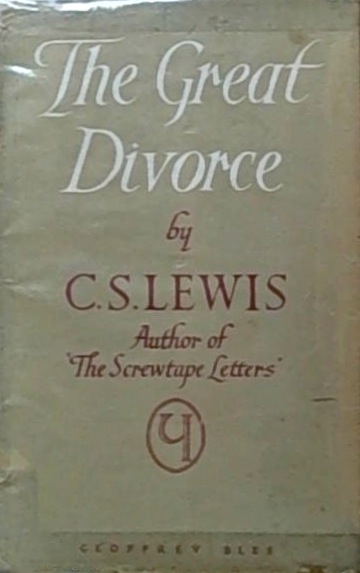
                  The Great Divorce is a novel by the British author C. S. Lewis, published in 1945, based on a theological dream vision of his in which he reflects on the Christian conceptions of Heaven and Hell.

                • Cover of The King of Elfland's Daughter
                  The King of Elfland's Daughter

                  Lord Dunsany · standalone novel · 1924

                  similar byfantasymythic fantasy+2 more

                  The King of Elfland's Daughter is a 1924 fantasy novel by Anglo-Irish writer Lord Dunsany. It is widely recognized as one of the most influential and acclaimed works in all of fantasy literature. Although the novel faded into relative obscurity following its initial release, it found new longevity and wider critical acclaim when a paperback edition was released in 1969 as the second volume of the Ballantine Adult Fantasy series.

                • Cover of Piranesi
                  Piranesi

                  Susanna Clarke · standalone novel · 2020

                  similar byreflectivefantasyotherworld

                  A man lives in a huge isolated labyrinthine building partially submerged in an ocean, together with another man and 13 skeletons, which is the only world he recalls.

                • Cover of Daughter of the Sea
                  Daughter of the Sea

                  Berlie Doherty · standalone novel · 1997

                  similar byreflectivefantasymythic fantasyat sea

                  While at sea during a freak storm near his island home in the far north, a fisherman finds a baby girl, and though he and his wife love her as their own, they realize that they may not be able to keep her from returning to the sea.

                • Cover of The Wood Beyond the World
                  The Wood Beyond the World

                  William Morris · standalone novel · 1894

                  similar byquestsfantasy+1 more

                  Young Walter, running away from an unhappy love story, starts a voyage towards unknown faraway countries, where visions lead him into a mysterious world beyond a wood. To try to break the enchantments Walter will have to rely, more than on strength, on cleverness and the help of a girl. [translated from uraniamania.com]

                • Cover of The Willing Spirit
                  The Willing Spirit

                  Piers Anthony & Alfred Tella · standalone novel · 1996

                  similar byquestsfaith and religionfantasymythic fantasy

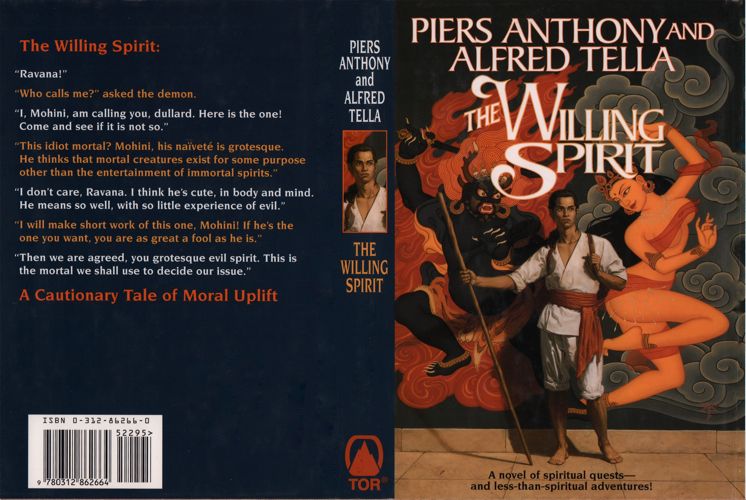
                  Hari, a remarkably well-set-up young lad, has spent his entire life in a small village with his pious widowed mother, and the purity of his soul is largely uncorrupted by worldly sophistication. But now, poised on the brink of manhood, he feels himself moved by strange new urgings -- urgings that will lead him far from the quiet life he has known. Though these stirrings are unfamiliar to him, virtuous Hari recognizes them for what they are: a hunger for spiritual enlightenment. As so many have before, he sets his feet upon the pilgrim's path, becoming a wanderer in search of true wisdom. But who can know the ways of the Gods, or foretell the twists of fortune? Unbeknownst to Hari, his quest has become the subject of a wager between two immortals: Mohini, a pulchritudinous Apsara; and the vilely demonic Ravana, who lusts after her.

                • Cover of The White Bone
                  The White Bone

                  Barbara Gowdy · standalone novel · 1998

                  similar byreflectivefaith and religionfantasy

                  The White Bone is a Canadian novel written by Barbara Gowdy and published by HarperCollins in 1999. It was nominated for the Scotiabank Giller Prize in 1998. Sometimes compared to Richard Adams's Watership Down, it is an adult fantasy story about animals—in this case, African elephants—in a realistic natural setting but given the ability to speak to one another throughout the book. Subsequently, the elephants are given anthropomorphized personalities and have created their own religion, folklore, and customs, all based on the author's research on elephant behavior.

                • Cover of The Last Unicorn
                  The Last Unicorn

                  series · 8 books · 1968

                  similar byfantasyquests+1 more

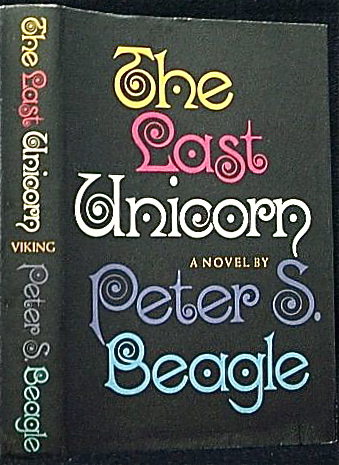
                  The Last Unicorn is Peter S. Beagle's 1968 fantasy novel about a unicorn who, believing herself the last of her kind, sets out to learn what became of the others. Beagle later returned to her world twice more: The Last Unicorn: The Lost Version prints an early draft of the original novel, and The Way Home (2023) collects two novellas continuing the story decades on. Together the books trace one novel's long afterlife rather than a conventional multi-book series.

                • Cover of The Bards of Bone Plain
                  The Bards of Bone Plain

                  Patricia A. McKillip · standalone novel · 2010

                  similar byreflectivequestsfantasy

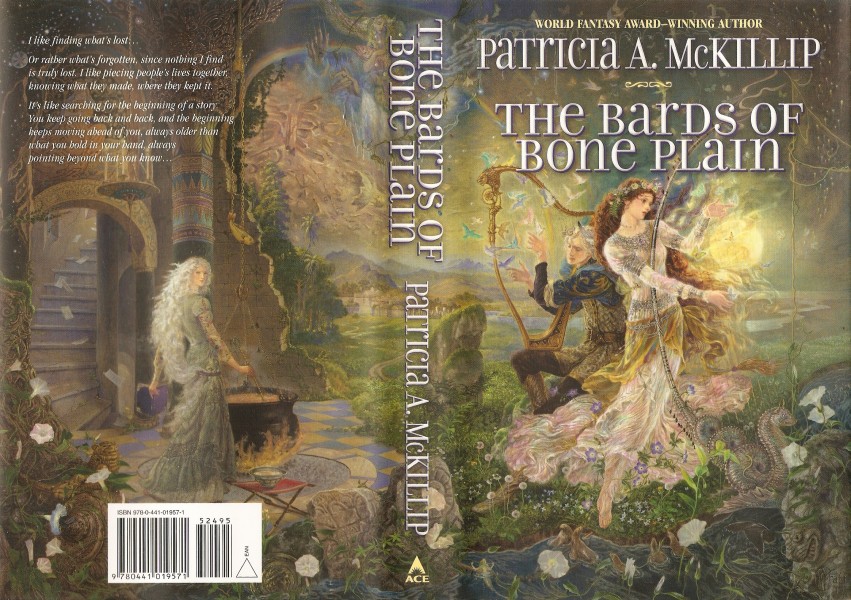
                  The Bards of Bone Plain is a fantasy novel by Patricia A. McKillip. It was first published in hardcover and ebook by Ace Books in December 2010, with a book club edition issued simultaneously with the Science Fiction Book Club and a trade paperback edition following December 2011. The first British edition was published in ebook by Gateway/Orion in December 2015.

                • Cover of Inferno
                  Inferno

                  series · 2 books · 1976

                  similar byfantasyfaith and religion+1 more

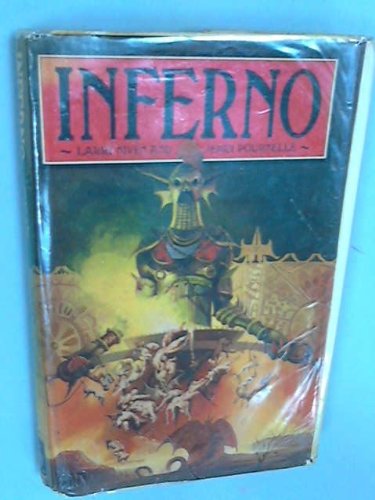
                  In Inferno, Larry Niven and Jerry Pournelle send a science fiction writer to his death and drop him into a modern-dress version of Dante's nine circles of Hell, where he must reason his way toward understanding why he has been damned. The 1976 novel was nominated for both the Hugo and Nebula awards, and the authors returned to the same character decades later in a sequel, Escape from Hell. Together the two books form a self-contained pair rather than an open-ended series.

                • Cover of Enchanted Pilgrimage
                  Enchanted Pilgrimage

                  Clifford D. Simak · standalone novel · 1975

                  similar byquestsfantasy+1 more

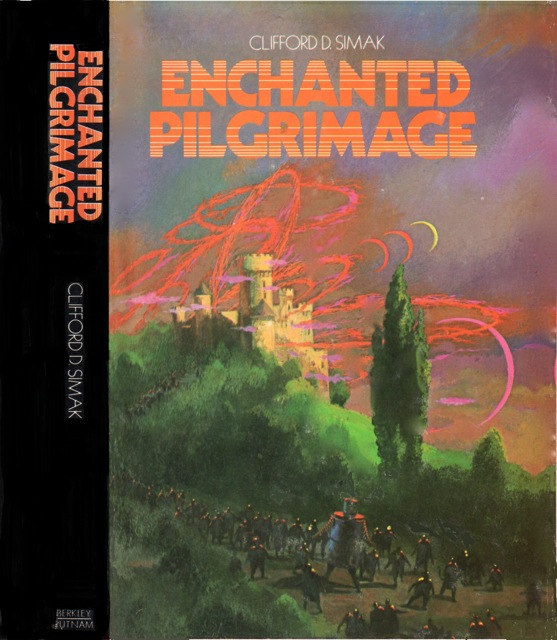
                  A scholar at a remote university stumbles onto a manuscript that hints at forgotten secrets buried in the Wasteland, a blighted region where magic and monsters still linger at the edge of an otherwise rational world. Setting out to track the manuscript's truth to its source, he gathers a company of odd fellow travelers along the way -- the kind of companions a quest like this tends to attract -- each with their own stake in what they might find. Clifford D. Simak folds his familiar pastoral, faintly melancholy tone into a full-blown fantasy quest, blending scholarly curiosity with old magic. A standalone fantasy novel by Clifford D. Simak.

                • Cover of The Pilgrim's Progress
                  The Pilgrim's Progress

                  John Bunyan · standalone novel · 1678

                  similar byreflectivequestsfaith and religionotherworld

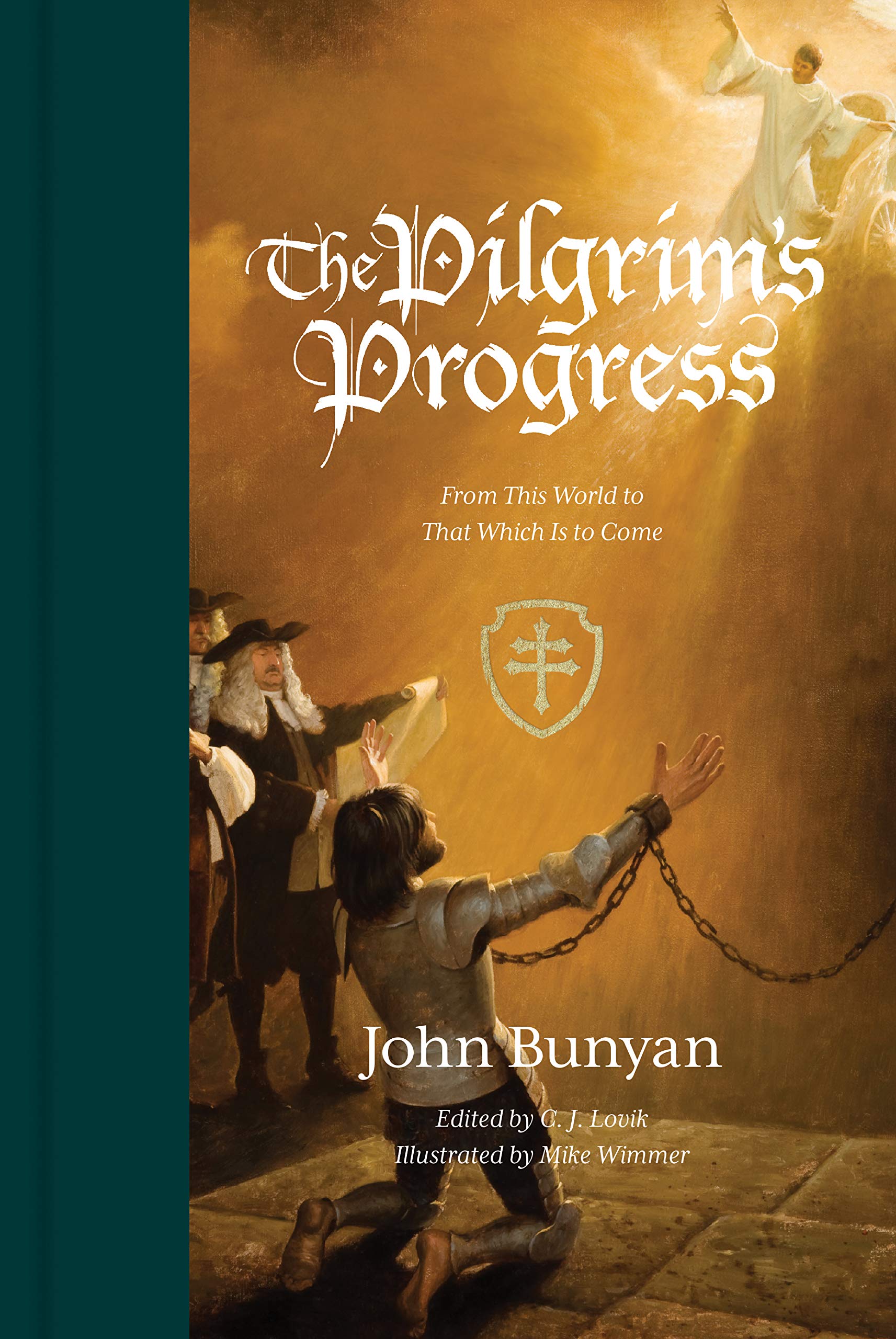
                  The Pilgrim's Progress from This World, to That Which Is to Come is a 1678 Christian allegory written by the English nonconformist preacher John Bunyan. It is commonly regarded as one of the most significant works of Protestant devotional literature and of wider early modern English literature. It has been translated into more than 200 languages and has never been out of print. It appeared in Dutch in 1681, in German in 1703 and in Swedish in 1727. The first North American edition was issued in 1681. It has also been cited as the first novel written in English. According to literary editor Robert McCrum, "there's no book in English, apart from the Bible, to equal Bunyan's masterpiece for the range of its readership, or its influence on writers as diverse as William Hogarth, C. S. Lewis, Nathaniel Hawthorne, Herman Melville, Charles Dickens, Louisa May Alcott, George Bernard Shaw, William Thackeray, Charlotte Brontë, Mark Twain, John Steinbeck and Enid Blyton." The lyrics of the hymn "To be a Pilgrim" are based on the novel.

                • Cover of Zimiamvian Trilogy
                  Zimiamvian Trilogy

                  series · 4 books · 1922

                  completed

                  similar byfantasy+1 more

                  The Zimiamvian Trilogy is a series of fantasy novels by English author E. R. Eddison.Mistress of Mistresses (1935) A Fish Dinner in Memison (1941) The Mezentian Gate (1958)

                • Cover of The Hobbit
                  The Hobbit

                  series · 2 books · 1937

                  completed

                  part of Tolkien's legendarium

                  similar byquestsfantasy

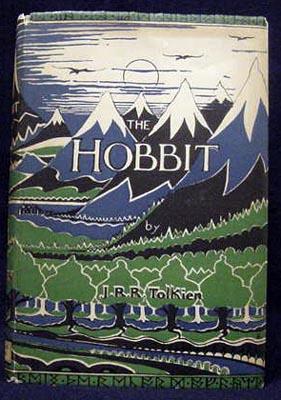
                  The Hobbit (1937) is J. R. R. Tolkien's children's fantasy novel following the reluctant burglar Bilbo Baggins, who joins a company of dwarves and the wizard Gandalf on a journey to reclaim treasure guarded by the dragon Smaug. It stands as a complete adventure on its own, but shares its setting with the rest of Tolkien's legendarium and leads into the events of The Lord of the Rings.