More like Incursion
anchored on:science fictionfar future
but
- Catteni Sequence
series5 books1970
completed
similar byscience fictionadventurousfar futureother star systemsaliens+3 more
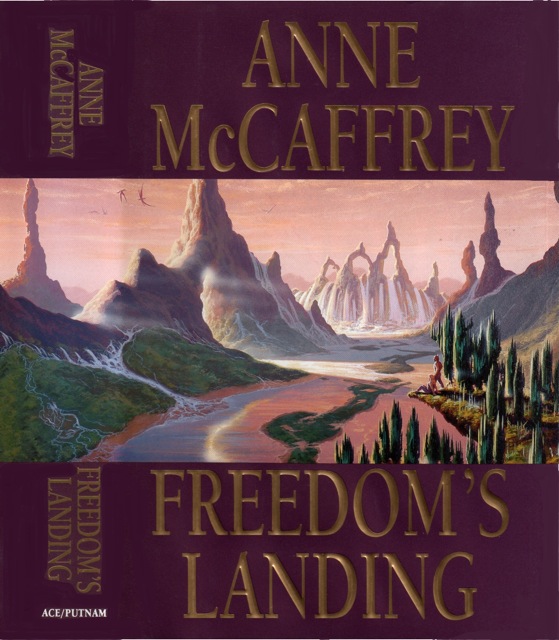
The Catteni series is a tetralogy of science fiction novels by American writer Anne McCaffrey. In this universe, humans are slaves of aliens, the humanoid Catteni. Woven through all four of the books are details of the relationship between Kristin Bjornsen, a former slave, and Zainal, a renegade Catteni.
- Uplift
series5 books1980
part of Uplift Universe
similar byscience fictionadventurousfar futureother star systemsaliensspace+1 more
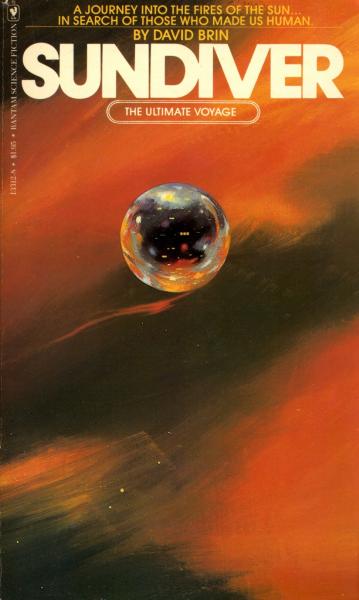
David Brin's Uplift trilogy opens with Sundiver, sending human explorers into the Sun itself, then follows a dolphin-crewed starship on the run from hostile aliens in Startide Rising and a fight over the colony world Garth in The Uplift War. The books sit inside Brin's wider Uplift Universe, built on the idea that spacefaring "patron" species genetically engineer younger "client" species into full sapience, with humanity an anomaly that reached the stars without a patron of its own.
- Deathworld
series4 books1960
completed
similar byscience fictionsurvivaladventurousfar futureother star systems+2 more
Deathworld is the name of a series of science fiction novels by American writer Harry Harrison, including the books Deathworld, Deathworld 2 and Deathworld 3, plus the short story "The Mothballed Spaceship". The central hero is a gambler who becomes involved with colonists of an extremely hostile planet.
- Empire of Man
series4 books2001
similar byscience fictionsurvivaladventurousfar futureother star systemswartensemilitary science fiction+1 more
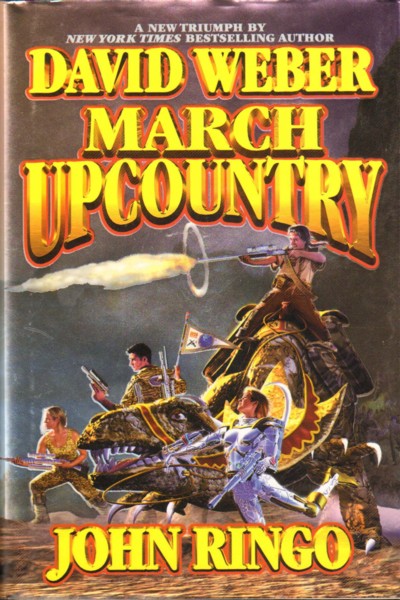
The Empire of Man is a series of science fiction books by David Weber and John Ringo published by Baen Books. It combines elements of space opera and military science fiction.
- Pax / Astra
series2 books1954
completed
similar byscience fictionsurvivaladventurousfar futuretense+2 more
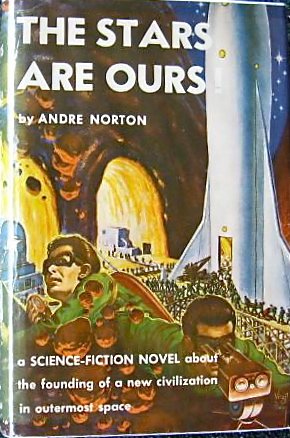
Andre Norton's The Stars Are Ours! (1954) and its sequel Star Born (1957) follow a group of scientists and their families who flee a repressive future Earth to colonize a distant world they name Astra, and then the next generation, who must contend with that world's original inhabitants. Star Flight appears to be a later omnibus or reissue rather than a third original novel.
- Tunnel in the Sky
Robert A. Heinleinstandalone novel1955
similar byscience fictionsurvivaladventurousfar futureother star systemstense+1 more
As the final test of a survivalist/explorer class, teenagers are dumped on an alien planet to use their skills while awaiting pickup. But something has gone wrong, and they find they are on their own.
- The Final Architecture
series6 books2021
similar byscience fictionadventurousfar futureother star systemsalienswartensespace+1 more
The Final Architecture is a series of science fiction novels by British writer Adrian Tchaikovsky. It contains the books Shards of Earth, Eyes of the Void, and Lords of Uncreation. The series focuses on a group of humans fighting against the mysterious Architects, who destroy inhabited planets. The series has been well-received critically, with Shards of Earth winning the 2021 BSFA Award for Best Novel. The entire series was a finalist for the 2024 Hugo Award for Best Series.
- Icerigger Trilogy
series3 books1974
part of Humanx Commonwealth
similar byscience fictionsurvivaladventurousfar futureother star systems+2 more
Alan Dean Foster's Icerigger trilogy, set in his Humanx Commonwealth universe, strands a group of characters on the frozen world of Tran-Ky-Ky, where they get pulled into the local population's fight against a destructive nomadic force. Much of the trilogy follows their overland journey by ice-sailing craft toward the planet's one interstellar outpost, a trek of roughly a year across the ice, as they help the natives survive along the way.
- Brion Brandd
series2 books1962
completed
similar byscience fictionsurvivalfar futureother star systems+2 more
Harry Harrison's Brion Brandd books are two loosely connected science fiction adventures: Planet of the Damned (1962), a Hugo Award finalist, and its later sequel Planet of No Return. Both follow the same troubleshooting protagonist sent to defuse crises on different alien worlds, but the two stories are self-contained rather than parts of one continuous plot.
- Heorot
series4 books1987
similar byscience fictionfar futureother star systems+4 more
Larry Niven, Jerry Pournelle and Steven Barnes's The Legacy of Heorot strands human colonists on an idyllic-seeming alien world where they discover apex predators -- grendels -- hidden beneath the surface, forcing them to fight for survival. Beowulf's Children continues the colony a generation later as the children born on the planet clash with their parents over how to live alongside the grendels, and a fourth book, Starborn and Godsons, returns to the settlement decades further on. It's hard-SF creature-horror crossed with generational colony drama.
- Uplift Universe
universe13 books1980
Start hereUplift · Start here
similar byscience fictionadventurousfar futureother star systemsaliensspace+1 more
No species, the Galactics insist, ever climbs to sapience alone. For a billion years the elder races have "uplifted" their chosen clients — reshaping some promising animal, gene by patient gene, into a thinking being, then binding it through long ages of indenture. Patron lifts client; client one day becomes patron; and every lineage traces back through the vast Galactic Library to the vanished Progenitors who began it all. Then a ragged band of primates arrives at the stars with no patron to claim them — wolflings, self-made, an affront to a hundred thousand years of law — and worse, these humans have already started uplifting neighbors of their own: the neo-dolphins and neo-chimpanzees of Earthclan. David Brin builds this galaxy across two trilogies. The first — Sundiver, the Hugo- and Nebula-winning Startide Rising, and the Hugo-winning The Uplift War — sends an expedition into the Sun, then follows the dolphin-crewed survey ship Streaker as it flees a discovery that sets fanatical star-clans at war, and a chimp-led resistance on an invaded colony world. The second sequence, Uplift Storm — Brightness Reef, Infinity's Shore, Heaven's Reach — descends to Jijo, a forbidden world where six fallen races hide as illegal settlers, and draws every loose thread toward a reckoning. Short fiction fills the margins. This is space opera with an ecologist's conscience: teeming with invented biologies, wry cross-species banter, and real unease about what we owe the minds we make. Begin with Startide Rising — the saga's beating heart, and readable on its own — or take Sundiver first and read straight through in publication order.
- Central Control
series2 books1953
completed
similar byscience fictionadventurousfar futureother star systemsspace+3 more
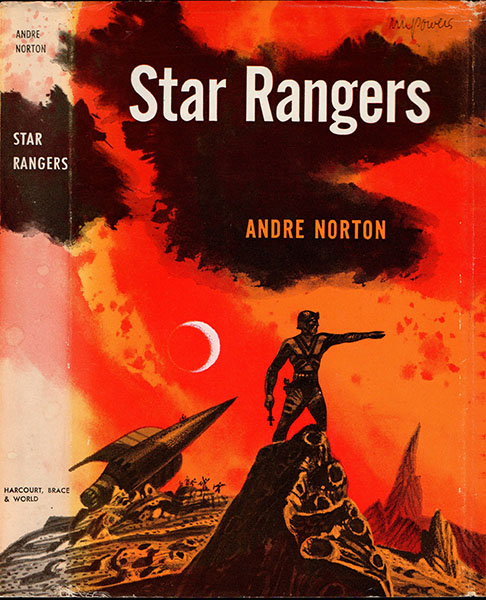
Andre Norton's Central Control novels are a loose future history that sketches the rise of a galactic empire through events echoing Norton's own reading of Terran history rather than following one continuing cast. Star Rangers follows the crew of a crashed Stellar Patrol scoutship who, after entangling themselves in a local rebellion on what seems an unknown world, discover they have found humanity's long-lost original homeworld, Terra. Star Guard and Star Soldiers extend the same shared background with their own separate stories.
- Skyward
series9 books2018
part of Cytoverse
similar byscience fictionfar futureother star systemsspace+4 more
On the ruined world of Detritus, humanity lives underground beneath near-constant aerial bombardment from an alien force called the Krell, and Spensa Nightshade wants nothing more than to fly a starfighter, despite her father's reputation as a coward who fled battle. Brandon Sanderson's Skyward follows her fight to earn her wings and clear her father's name, uncovering secrets about her own strange abilities and the planet's buried past across Starsight, Cytonic, and Defiant. Co-author Janci Patterson contributes companion novellas that widen the view to supporting characters.
- Moties
series4 books1974
part of CoDominium
similar byscience fictionfar futureother star systemsaliensspace+3 more
Larry Niven and Jerry Pournelle's The Mote in God's Eye (1974) depicts humanity's first contact with an alien species, the Moties, set within the far-future interstellar setting of Pournelle's codominium future history. The Gripping Hand continues that first-contact crisis years later, and Outies, written by J. R. Pournelle, carries the story forward into a new generation. Together the three books trace an escalating encounter between human and Motie civilizations within the codominium universe.
- Cities in Flight
series10 books1950
completed
similar byscience fictionfar futurespace+3 more
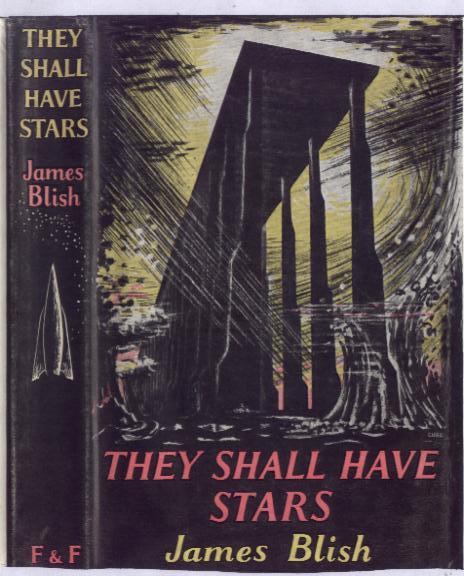
Cities in Flight is a four-volume series of science fiction novels and short stories by American writer James Blish, originally published between 1950 and 1962, which were first known collectively as the "Okie" novels. The series features entire cities that are able to fly through space using an anti-gravity device, the spindizzy. The stories cover roughly two thousand years, from the very near future to the end of the universe. One story, "Earthman, Come Home", won a Retro Hugo Award in 2004 for Best Novelette. Since 1970, the primary edition has been the omnibus volume first published in paperback by Avon Books. Over the years James Blish made many changes to these stories in response to points raised in letters from readers.
- Blackcollar
series3 books1983
similar byscience fictionfar futurewartensemilitary science fiction+4 more
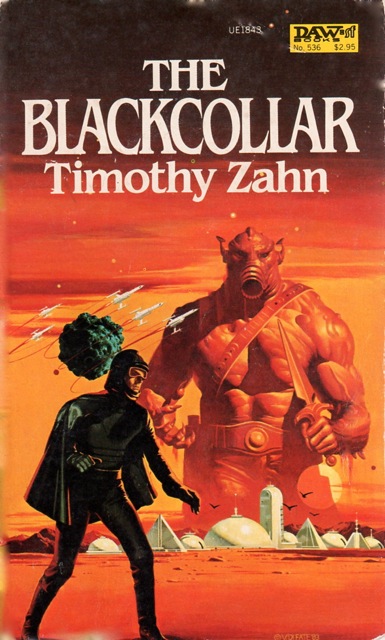
Timothy Zahn's Blackcollar trilogy, his debut work, follows survivors of Earth's underground resistance against the Ryqril, an alien empire that conquered the planet a generation earlier. The Blackcollars themselves are elite commando-agents trained before the invasion, presumed a spent, aging force until circumstances pull survivors back into action against their occupiers. The Backlash Mission and The Judas Solution continue the resistance's fight as the underground network is drawn deeper into interstellar politics beyond Earth.
- The Stars My Destination
Alfred Besterstandalone novel1956
similar byscience fictionsurvivaladventurousfar futureother star systemsspace
When a passing spaceship refuses to rescue the lone survivor from the drifting wreck of another ship, he dedicates his life to discovering who made that decision and exacting his revenge, in the process altering human history and his own character.
- Old Man's War
series16 books2005
similar byscience fictionadventurousfar futureother star systemswarspacemilitary science fiction+2 more
The Old Man's War series is a series of science fiction novels by John Scalzi. The first book in the series, Old Man's War, was first published in 2005 by Tor Books, and was nominated for the Hugo Award for Best Novel in 2006. In 2026 it was a finalist for the Hugo Award for Best Series.
- Vatta
universe10 books2003
Start hereVatta's War · Start here
similar byscience fictionadventurousfar futureother star systemstensespacemilitary science fiction+2 more
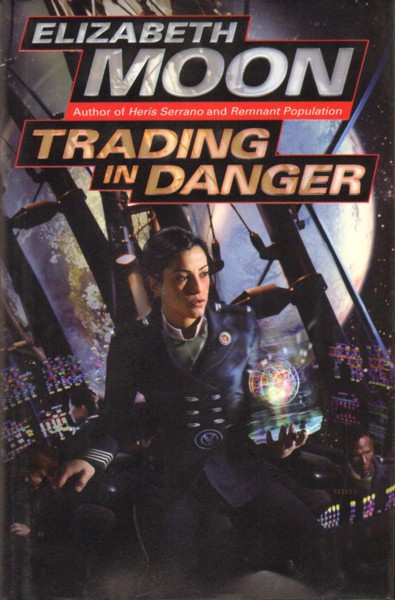
Get kicked out of the Academy and the family still hands you a ship. That is the arithmetic Kylara Vatta lives by. Born into Vatta Transport, Ltd. — a dynasty of interstellar traders who reckon their honor in delivered cargo and honored contracts — Ky wants a soldier's commission and gets a merchant hull instead. Then someone starts murdering her relatives and burning the ledgers, and the daughter learns that a trade fleet, armed and angry, is its own kind of war. This is military science fiction run on a merchant's books. The core cycle, Vatta's War, moves in five volumes — Trading in Danger, Marque and Reprisal, Engaging the Enemy, Command Decision, Victory Conditions — as piracy, a sabotaged faster-than-light communications network, and a scattered family push Ky from cautious captain to fleet commander. The later duology Vatta's Peace (Cold Welcome, Into the Fire) drops her, older and decorated, into a colder survival ordeal on her own homeworld. Moon writes clean, competent, procedural: supply lines and boarding actions, chains of command, the cost of a signature on a bad contract. Expect capable women, hard decisions costed to the last credit, and space combat that respects physics and paperwork alike. Begin at the beginning — Trading in Danger — and read straight through in publication order; the arc is chronological and cumulative, no side doors required.
- Of Man and Manta
series3 books1968
similar byscience fictionadventurousother star systemsfar futurealiens+2 more
Of Man and Manta is a trilogy of science fiction novels written by Piers Anthony. It consists of the three books: Omnivore (1968), Orn (1970), and 0X (1975).
- Beast Master
series5 books1959
similar byscience fictionfar futureother star systems+2 more
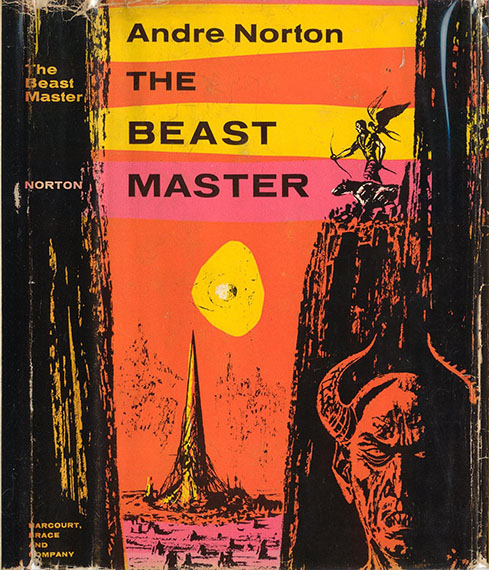
Andre Norton's Beast Master series follows Hosteen Storm, a Navajo veteran of an interstellar war who resettles an alien frontier world with a team of specially trained animals bonded to him by touch-telepathy. The original novels came from Norton in the late 1950s-60s; Lyn McConchie added further installments decades later, extending Storm's story on the frontier planet Arzor. It's frontier-adventure science fiction built around an unusual human-animal partnership.
- Space Beagle
series5 books1939
completed
similar byscience fictionadventurousfar futurealienstensespace+1 more
The Voyage of the Space Beagle is a 1950 fix-up novel by A. E. van Vogt, stitched together from four previously published pulp stories into a single continuous account of the exploration ship Space Beagle's encounters with a series of dangerous alien life forms. Its episodic, crew-versus-monster structure reads as a loose sequence of adventures rather than one continuous plot.
- Heechee
series19 books1972
completed
similar byscience fictionfar futureother star systemsaliensspace+1 more
The Heechee Saga, also known as the Gateway series, is a series of science fiction novels and short stories by Frederik Pohl. The Heechee are an advanced alien race that visited the Solar System hundreds of millennia ago and then mysteriously disappeared. They left behind bases containing artifacts, including working starships, which are discovered and exploited by humanity.
- Man-Kzin Wars
series84 books1986
part of Known Space
similar byscience fictionfar futureother star systemsalienswartensespacemilitary science fiction+1 more
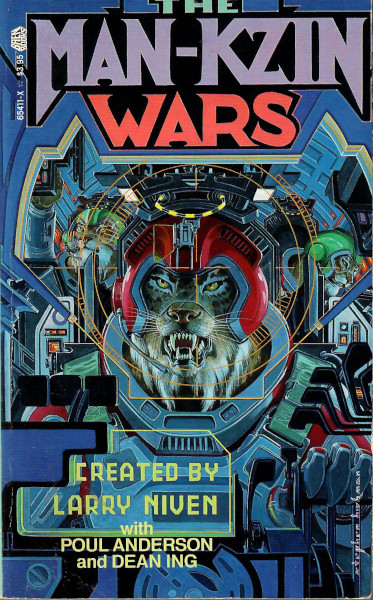
The Man–Kzin Wars is the name of a series of military science fiction anthologies as well as the name of the first book in the series. The short stories detail the eponymous conflicts between mankind and the Kzinti, set in Larry Niven's Known Space universe. However, Niven himself has written only a small number of the stories; most were written by other science fiction writers, as Niven opened this part of the Known Space to collaboration in the form of a shared universe. The cover art for the books in the series is created by Stephen Hickman.