More like Infinity Plus
anchored on:science fictionshort story cycle
but
- Stranger in a Strange Land
Robert A. Heinleinstandalone novel1961
similar byaliensscience fictionreflectiveidentityour worldchallengingnear future
Stranger in a Strange Land is a 1961 science fiction novel by the American author Robert A. Heinlein. It tells the story of Valentine Michael Smith, a human who comes to Earth in early adulthood after being born on the planet Mars and raised by Martians, and explores his interaction with and eventual transformation of Terran culture.
- Ender Wiggin
series14 books1977
part of Ender's Game Universe
similar byaliensscience fictionfar futureother star systems+3 more
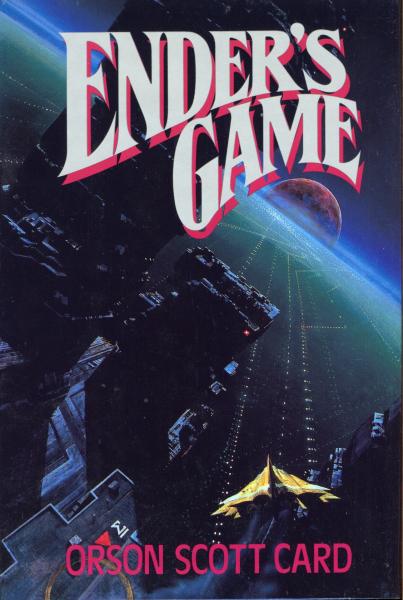
Orson Scott Card's Ender's Game (1985, expanded from his 1977 novella) follows child prodigy Andrew "Ender" Wiggin as he is recruited into a military training program built to prepare Earth's defenses for an anticipated third war against an insectoid alien species known as the Formics. The saga continues years later through Speaker for the Dead and Xenocide, following an older Ender as he confronts the moral weight of his role in that earlier conflict, and concludes the core arc in Children of the Mind, with Ender in Exile filling in the years between the first two books. Set within the wider Ender's Game universe, the series shifts from military coming-of-age story to slower, more philosophical science fiction as it progresses.
- F & SF Anniversary Anthologies
series8 books1960
similar byscience fictionshort story cyclefantasy+6 more
- The Hugo Winners
series15 books1962
similar byaliensscience fictionshort story cyclefar future+4 more
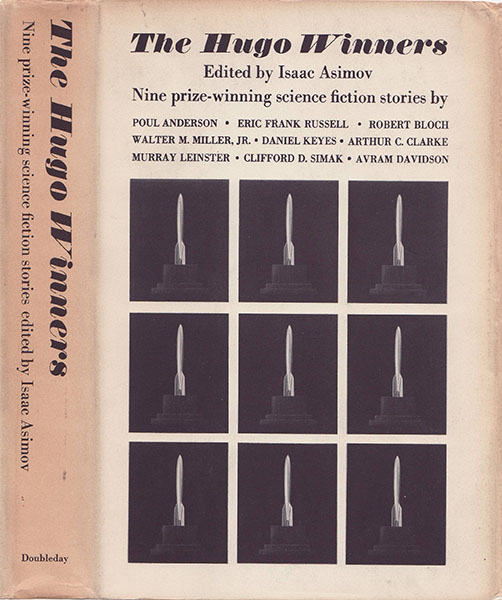
The Hugo Winners was a series of books which collected science fiction and fantasy stories that won a Hugo Award for Short Story, Novelette or Novella at the World Science Fiction Convention between 1955 and 1982. Each volume was edited by American writer Isaac Asimov, who wrote the introduction and a short essay about each author featured in the book. Through these essays, Asimov shared personal anecdotes, revealing the authors he was jealous of, and how other writers winning awards ahead of him made him angry. Additionally, he discussed his political beliefs, friendships, and his affinity for writers of "hard science fiction". The first two volumes were collected by Doubleday into a single book, which lacks a publishing date and ISBN.
- Hainish
series33 books1964
completed
similar byscience fictionreflectivefar futureother star systems+1 more
The Hainish Cycle consists of a number of science fiction novels and stories by Ursula K. Le Guin. The cycle is set in a future history that features civilizations of human beings on planets orbiting a number of nearby stars, including Terra ("Earth"); these humans are contacting each other for the first time and establishing diplomatic relations, as well as setting up a confederacy under the guidance of the oldest of the human worlds, the peaceful planet Hain. In this history, human beings did not evolve on Earth, but they were instead the result of interstellar colonies planted by Hain in the distant past, after which interstellar travel ceased for an extended period. Some of the human races have new genetic traits, a result of ancient Hainish experiments in genetic engineering; this includes people who can dream while awake, and a world of hermaphroditic people who only enter active sexuality once per month, not knowing which sex will manifest in them. In keeping with Le Guin's narrative approach, she uses varied social and environmental settings to explore the anthropological and sociological outcomes of human evolution in those environments. The author often discounted the characterization of a so-called "Hainish Cycle".
- Nebula Awards
series75 books1966
similar byscience fictionshort story cycle+6 more
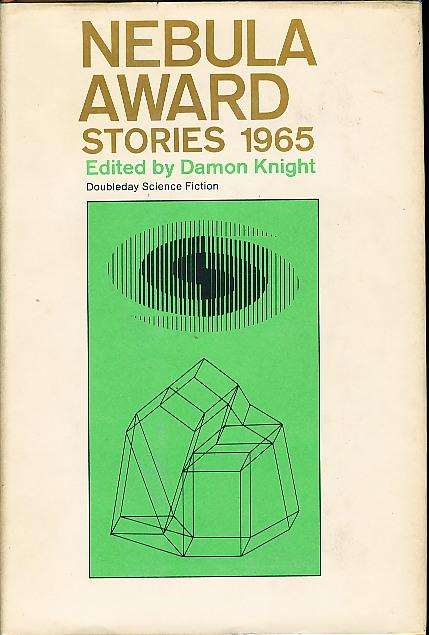
Nebula Award Showcase is a series of annual science fiction and fantasy anthologies collecting stories that have won or been nominated for the Nebula Award, awarded by the Science Fiction and Fantasy Writers of America (SFWA), a nonprofit association of professional science fiction and fantasy writers founded in 1965 by Damon Knight as the Science Fiction Writers of America.
- Culture
series15 books1987
completed
part of The Culture
similar byscience fictionartificial intelligencefar future+4 more
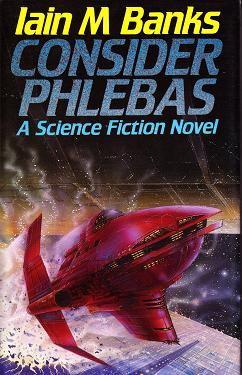
The Culture series is a science fiction series written by Scottish author Iain M. Banks and released from 1987 until 2012. The stories centre on The Culture, a utopian, post-scarcity space society of humanoid aliens and advanced superintelligent artificial intelligences living in artificial habitats spread across the Milky Way galaxy. The main themes of the series are the dilemmas that an idealistic, more-advanced civilization faces in dealing with smaller, less-advanced civilizations that do not share its ideals, and whose behaviour it sometimes finds barbaric. In some of the stories, action takes place mainly in non-Culture environments, and the leading characters are often on the fringes of the Culture, sometimes acting as agents of the Culture in its plans to civilize the galaxy. Each novel is a self-contained story with new characters, although reference is occasionally made to the events of previous novels.
- A Meeting with Medusa
series2 books1971
similar byaliensscience fictionreflectivespacechallengingfar futureother star systems+2 more
Arthur C. Clarke's A Meeting with Medusa follows an astronaut, badly injured in an earlier disaster, on a solo balloon expedition into Jupiter's atmosphere, where he encounters vast floating lifeforms unlike anything previously catalogued. Decades later, Stephen Baxter and Alastair Reynolds continued the story in The Medusa Chronicles, following the same protagonist across a much longer span of future history. The original novella won the 1972 Nebula Award.
- Childhood's End
Arthur C. Clarkestandalone novel1953
similar byaliensscience fictionreflectiveidentityour worldnear future
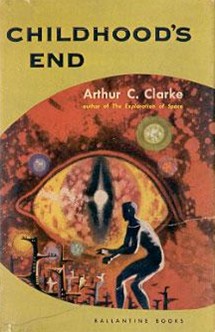
Childhood's End is a 1953 science fiction novel by the British author Arthur C. Clarke. The story follows a peaceful alien invasion of Earth by mysterious Overlords, whose arrival begins decades of apparent utopia under indirect alien rule, at the cost of human identity and culture.
- Time Odyssey
series3 books2003
similar byaliensscience fictionour worldspacefar future+2 more
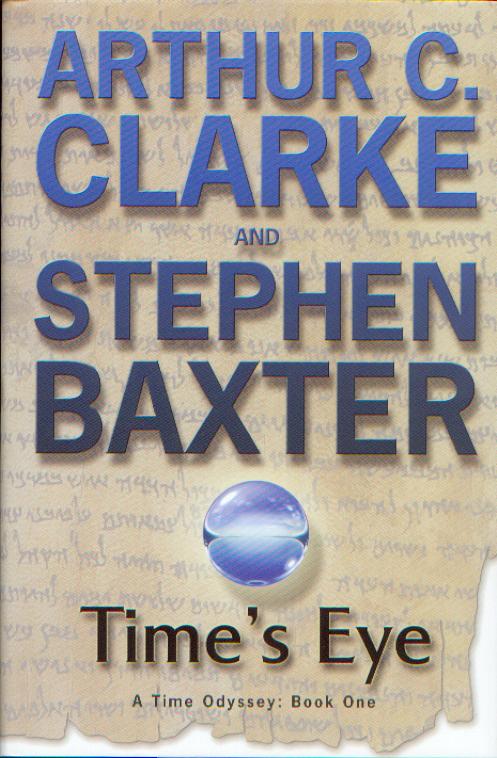
A Time Odyssey is a trilogy of science fiction novels co-written by Arthur C. Clarke and Stephen Baxter. As of 2008, the series consists of:Vol. 1 – Time's Eye Vol. 2 – Sunstorm Vol. 3 – Firstborn
- Foundation Universe
universe123 books1940
Start hereFoundation · Start here
similar byscience fictionfar future+4 more
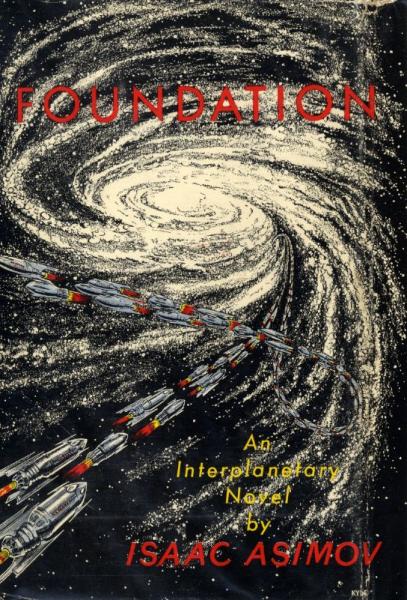
There is a science that reads the future of quadrillions the way an astronomer reads the orbits of stars. It is called psychohistory, and its equations foresee something the ruling Galactic Empire cannot admit: the throne is rotting, and thirty thousand years of barbarism are coming. One man, Hari Seldon, cannot stop the fall. He can only shorten it — by seeding a Foundation of scholars at the rim of the galaxy, a fragile institution built to carry knowledge across the dark and cut the interregnum to a single millennium. This is a universe told in the register of history itself: the long view, the calm of deep time, empires measured in centuries and men measured against them. The spine is Asimov's original trilogy — Foundation, Foundation and Empire, Second Foundation — followed decades later by the sequels Foundation's Edge and Foundation and Earth and the prequels Prelude to Foundation and Forward the Foundation. Late in life Asimov braided this in with his other future histories: the Robot novels of detective Elijah Baley and his humaniform partner R. Daneel Olivaw (The Caves of Steel, The Naked Sun, The Robots of Dawn, Robots and Empire) and the early Galactic Empire novels (Pebble in the Sky and its kin), until one continuous chronicle ran from the first thinking robots to the Second Empire. Other hands extend it — the Second Foundation Trilogy by Gregory Benford, Greg Bear, and David Brin, and shared-world spinoffs such as Robot City — so the corpus sprawls beyond a single author's tidy shelf. What distinguishes it is that the drama is intellectual: crises resolved by insight, nerve, and dialogue rather than fleets and blades, each turn hinging on the hidden logic of the Seldon Plan. Begin where readers have always begun — with Foundation, and the original trilogy in publication order. The rest opens outward from there.
- The Collected Stories of Philip K. Dick
series11 books1987
completed
similar byscience fictionshort story cycleidentityour world+5 more
The Collected Stories of Philip K. Dick is a collection of 118 science fiction stories by American writer Philip K. Dick. It was first published by Underwood-Miller in 1987 as a five volume set. See Philip K. Dick bibliography for information about the mass market reprints.
- Contact
Carl Saganstandalone novel1985
similar byaliensscience fictionreflectivecontemporaryour world+2 more
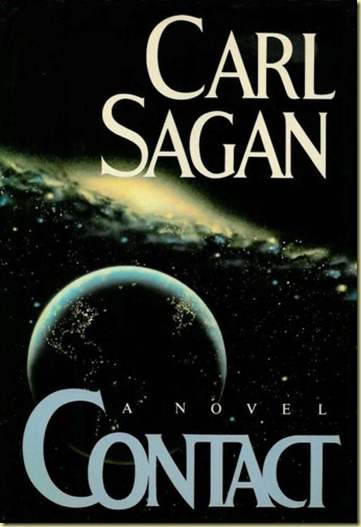
From the front flap of the Simon and Schuster first edition: For centuries humanity has dreamed of life and intelligence beyond the Earth; for decades scientists have searched for it in every corner of the sky; for years Project Argus, a vast, sophisticated complex of radio telescopes, has listened for a signal indicating the existence, somewhere in the universe, of extraterrestrial intelligence. Then, one afternoon, the course of human history is changed, abruptly and forever. The Message, awaited for so long, its very possibility doubted by so many, arrives. Contact has been made. Life, intelligence, someone, something beyond Earth, 26 light-years away, in the vicinity of the star Vega, is calling, beaming across space a wholly unexpected message to say that we are not - have never been - alone. In Contact, Carl Sagan, whose Cosmos enthralled millions of readers and television viewers, has brilliantly employed the freedom of fiction to imagine the greatest adventure of all - humanity's first encounter with other intelligent beings. But the novel is not only about contact between humans and extraterrestrials; it is also about contact, down here on Earth, with each other and ourselves. At its center is a brilliant scientist, Eleanor Arroway, director of Project Argos, who is the first to realize that chapter one of human history is over. It is she who is instrumental in decoding the Message - and in persuading world leaders not to treat it as a threat - she who finds her own life changed by the immense challenge of responding to the Message; she who finally journeys out to experience, in circumstances at once profoundly religious and scientific, the most fateful encounter in human history.
- Spin / Hypotheticals
series3 books2005
similar byaliensscience fictionreflectiveother star systemsnear future+3 more
One night, the stars vanish behind an opaque membrane that has sealed off the Earth, and inside it time runs so much slower than the universe outside that billions of years pass beyond the barrier for every year lived on the ground. Robert Charles Wilson's Spin follows three friends who grow up in the shadow of this event, as humanity scrambles to understand and survive it through desperate projects like terraforming Mars, while trying to make contact with the ancient machine intelligences responsible, the Hypotheticals. The trilogy continues in Axis and Vortex, widening the mystery across generations.
- Alpha (Robert Silverberg)
series9 books1970
similar byscience fiction+7 more
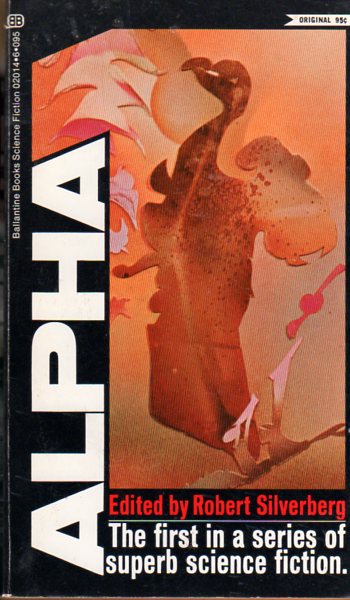
Alpha is a series of reprint science fiction anthologies edited by Robert Silverberg, published as paperback originals from 1970 to 1978 by Ballantine Books and Berkley Publishing. Ballantine published volumes annually from 1970 through 1974, while Berkley resumed the series with four volumes from 1976 through 1978. All five of the Ballantine volumes placed in the top ten in an anthology category in the annual Locus Poll, as did the final Berkley volume. Theodore Sturgeon and Gerald Jonas reviewed books in the series for The New York Times Book Review.Alpha 1 - Ballantine, September 1970; Corgi, December 1971 (UK) Alpha 2 - Ballantine, November 1971 Alpha 3 - Ballantine, October 1972 Alpha 4 - Ballantine, October 1973 Alpha 5 - Ballantine, August 1974 Alpha 6 - Berkley, April 1976 Alpha 7 - Berkley, July 1977 Alpha 8 - Berkley, November 1977 Alpha 9 - Berkley, October 1978
- The Complete Short Fiction of Clifford D. Simak
series18 books1956
completed
similar byscience fiction+6 more
- The Martian Chronicles
series30 books1946
completed
similar byscience fictionreflectivenear future+2 more
The Martian Chronicles (1950) is Ray Bradbury's fix-up novel, a chain of linked short stories following waves of settlers leaving a troubled Earth to colonize Mars and encountering its native Martians, before Earth itself is ultimately consumed by nuclear war.
- Teixcalaan
series2 books2019
similar byscience fictionreflectiveidentityfar futureother star systems+3 more
Arkady Martine's space opera duology follows Mahit Dzmare, ambassador from the small, independent Lsel Station, as she arrives in the vast Teixcalaanli Empire to investigate her predecessor's death and finds herself caught up in the empire's own succession crisis. A Memory Called Empire and A Desolation Called Peace pair court intrigue with Mahit's conflicted, outsider fascination with an empire she can't help admiring.
- The Best of All Possible Worlds Universe
series3 books2013
similar byaliensscience fictionreflectivefar futureother star systems+4 more
The Best of All Possible Worlds, the opener of this loose sequence by Karen Lord, follows survivors of a destroyed alien civilization as they search other worlds for compatible communities to join, told with more interest in culture and relationships than action. The Galaxy Game and The Blue, Beautiful World continue Lord's character-driven exploration of the same universe's societies, power politics, and cross-cultural understanding, without following a single continuous plot.
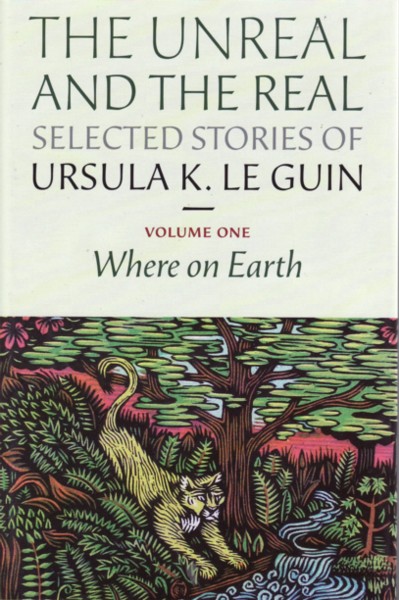
- The Unreal and the Real: Selected Stories of Ursula K. Le Guin
series2 books2012
completed
similar byreflectiveshort story cyclechallenging+6 more
- Chocky
series2 books1968
similar byaliensscience fictioncontemporarymysterious+2 more
Chocky (1968) is John Wyndham's science fiction novel about an eleven-year-old boy, Matthew, whose parents grow alarmed by his conversations with an unseen presence that feeds him unsettling insights into mathematics and human progress, building toward the reveal of what, or who, Chocky really is. Mark Daniel's Chocky's Challenge (1986), published after Wyndham's death, is an authorized continuation that carries the story forward.
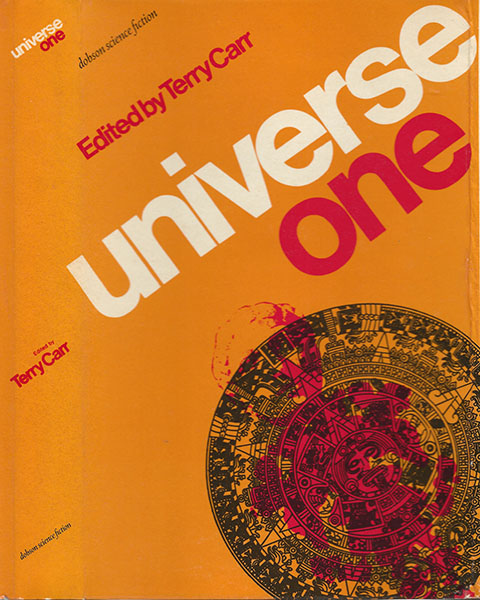
- Universe
series20 books1971
completed
similar byscience fictionshort story cycle+4 more
Universe was a series of seventeen annual science fiction anthologies edited by Terry Carr, later revived as a series of three biennial anthologies edited by Robert Silverberg and Karen Haber. It was initially published in paperback by Ace Books (1971–1972), with subsequent volumes published in hardcover by Random House (1973–1975), Doubleday, and Bantam Books (1992), and paperback by Popular Library, Zebra Books, Tor, and Bantam Spectra, successively. The last two volumes of the original series were issued in hardcover only, and the last volume of the revival in paperback only. British hardcover editions were published by Dennis Dobson (1971–1979) and Robert Hale (1982–1983).
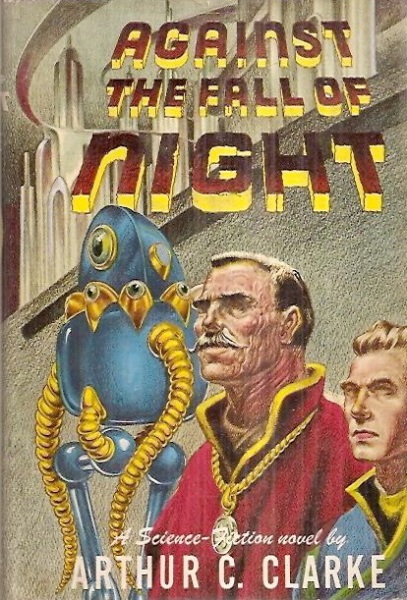
- Against the Fall of Night
series2 books1953
similar byscience fictionreflectivefar futureother star systems+1 more
Against the Fall of Night is Arthur C. Clarke's 1953 novel of a stagnant, climate-controlled city called Diaspar a billion years in Earth's future, where a young man named Alvin becomes the first in living memory to want to leave it. Clarke later rewrote the book more expansively as The City and the Stars, and in 1990 Gregory Benford wrote Beyond the Fall of Night, an authorized sequel continuing on from this original, shorter version's ending.