More like Interception Point
anchored on:science fiction
but
- Sprawl Trilogy
series10 books1981
similar bytensescience fictionnear future
The Sprawl Trilogy is William Gibson's foundational cyberpunk sequence: Neuromancer (1984), in which hacker Case is drawn into a high-stakes heist alongside an artificial intelligence and a damaged ex-soldier, followed by Count Zero (1986) and Mona Lisa Overdrive (1988), which widen the same near-future world of corporate power and networked cyberspace to new characters. Johnny Mnemonic, an early short story set in the same fictional milieu, predates the novels and introduces the courier Molly Millions before her role in the trilogy. Together these works established much of cyberpunk's visual and thematic vocabulary.
- H. G. Wells' War of the Worlds
universe65 books1898
Start hereThe War of the Worlds · Start here
similar byscience fiction+1 more
No one would have believed, in the closing years of the nineteenth century, that human affairs were being watched keenly and closely from the timeless worlds of space. And then the cylinders fell. H. G. Wells' War of the Worlds opens in the quiet of the Surrey commons, where a falling star proves to be the first Martian craft — and from the pit rise the towering tripods, the Heat-Ray, the choking Black Smoke and the creeping red weed, wielded by minds that regard mankind much as we regard the creatures we boil for supper. This is invasion rendered as natural disaster: cold, methodical, and vast beyond argument. Wells' 1898 novel is the seed; everything else grows from that Martian soil. The catalogue gathers direct sequels and continuations alongside a wide field of other hands. In War of the Worlds: Global Dispatches the invasion is retold across the whole planet through the eyes of Twain, Verne, Tolstoy, Lowell and Kipling; in the Manly Wade and Wade Wellman crossover, Sherlock Holmes, Watson and Professor Challenger take the field against the machines; and Scott Washburn's Great Martian War stretches the fighting into a decades-long alternate history of steam, artillery and grinding attrition. It is a loose shared world — no single decreed sequence, many voices answering one calamity. What sets this world apart is its refusal of heroics: the invaders fall not to generals but to the smallest things of Earth, humbling and indifferent. Begin, always, with Wells' original novel — it is short, and it is the ground every later book stands upon. From there follow your appetite: Global Dispatches for the panorama, the Holmes campaign for adventure, Washburn for the long war.
- Ender's Shadow
series5 books1999
part of Ender's Game Universe
similar byscience fictiontense
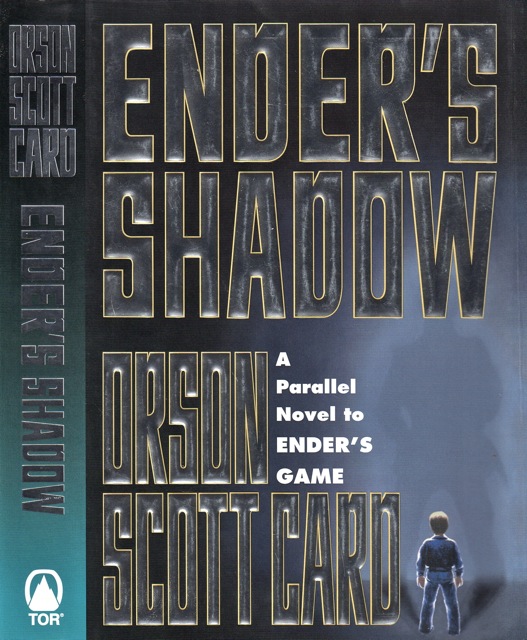
Orson Scott Card's Ender's Shadow retells the events of Ender's Game from the perspective of Bean, a physically stunted but ferociously intelligent street child recruited into the same Battle School program as Ender Wiggin. It launches the Shadow series, which follows Bean and other secondary Battle School characters into the political aftermath of the Formic Wars back on Earth, running parallel to and eventually past the timeline of Card's main Ender Quintet.
- Earth
David Brinstandalone novel1990
similar byscience fictiontensenear future+1 more
Earth is a 1990 science fiction novel by American writer David Brin. The book was nominated for the Hugo and Locus Awards in 1991.
- Foundation Universe
universe123 books1940
Start hereFoundation · Start here
similar byscience fiction
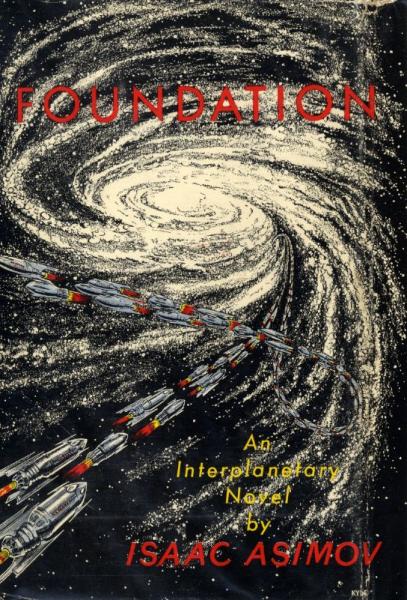
There is a science that reads the future of quadrillions the way an astronomer reads the orbits of stars. It is called psychohistory, and its equations foresee something the ruling Galactic Empire cannot admit: the throne is rotting, and thirty thousand years of barbarism are coming. One man, Hari Seldon, cannot stop the fall. He can only shorten it — by seeding a Foundation of scholars at the rim of the galaxy, a fragile institution built to carry knowledge across the dark and cut the interregnum to a single millennium. This is a universe told in the register of history itself: the long view, the calm of deep time, empires measured in centuries and men measured against them. The spine is Asimov's original trilogy — Foundation, Foundation and Empire, Second Foundation — followed decades later by the sequels Foundation's Edge and Foundation and Earth and the prequels Prelude to Foundation and Forward the Foundation. Late in life Asimov braided this in with his other future histories: the Robot novels of detective Elijah Baley and his humaniform partner R. Daneel Olivaw (The Caves of Steel, The Naked Sun, The Robots of Dawn, Robots and Empire) and the early Galactic Empire novels (Pebble in the Sky and its kin), until one continuous chronicle ran from the first thinking robots to the Second Empire. Other hands extend it — the Second Foundation Trilogy by Gregory Benford, Greg Bear, and David Brin, and shared-world spinoffs such as Robot City — so the corpus sprawls beyond a single author's tidy shelf. What distinguishes it is that the drama is intellectual: crises resolved by insight, nerve, and dialogue rather than fleets and blades, each turn hinging on the hidden logic of the Seldon Plan. Begin where readers have always begun — with Foundation, and the original trilogy in publication order. The rest opens outward from there.
- Ready Player One
series3 books2011
similar byscience fictionnear future+2 more
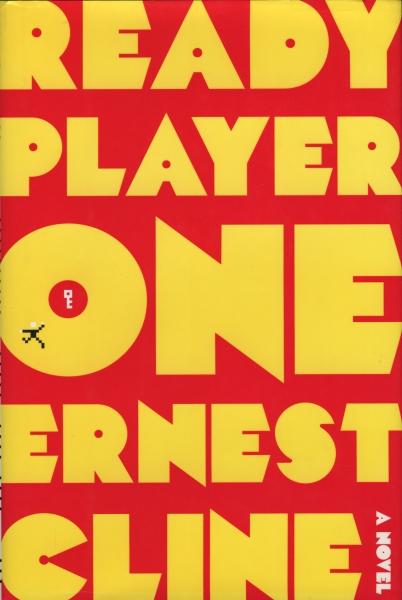
Ernest Cline's Ready Player One (2011) is set in a near-future dystopia where much of humanity escapes into the OASIS, a vast virtual-reality universe, and follows teenager Wade Watts as he chases an Easter egg hidden by the OASIS's late creator in a puzzle-based hunt worth a fortune. The 2020 sequel, Ready Player Two, picks up after Wade has gained control of the OASIS and follows him and his friends into a new quest built around a brain-computer interface the creator left behind.
- Colony
Ben Bovastandalone novel1978
similar byscience fictiontensespace stationnear future
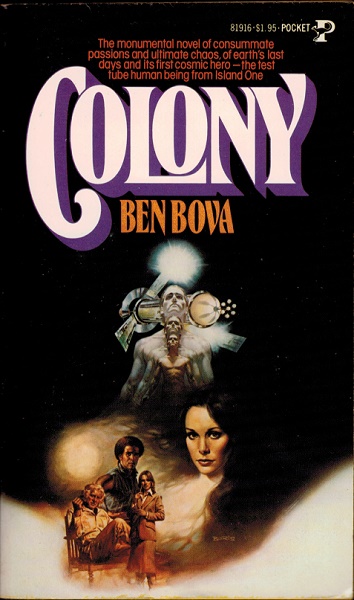
Colony continues the story Ben Bova began in Millennium, following astronaut-turned-administrator Chet Kinsman years later as the head of an orbiting space habitat that has become Earth's only real refuge from a planet buckling under overpopulation, food shortages and unrest. Getting a place in the habitat is a matter of life and death for millions who will never be chosen, and as Earth's governments grow more desperate to control or dismantle the colony outright, Kinsman has to decide how far he'll go to protect the world he's built off-world. Bova later folded both novels together into the omnibus The Kinsman Saga. Part of Ben Bova's Chet Kinsman series.
- Tripods
series4 books1967
completed
similar byscience fictiontensenear futureyoung adult
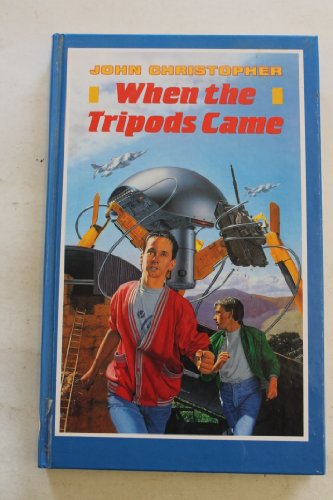
The Tripods is a series of young adult science fiction novels by John Christopher. The series takes place in a post-apocalyptic world where humanity is enslaved by "Tripods"—gigantic three-legged walking machines piloted by an alien race later identified as the "Masters". The first two books were the basis of a science fiction TV series, produced in the United Kingdom in the 1980s.
- To the Stars (Leinster)
series3 books1953
completed
similar byscience fictiontensenear future+1 more
Murray Leinster's Joe Kenmore trilogy follows a master machinist's son through the Cold War-era race to build and defend America's first space station, then a rescue tug, and finally a lunar outpost, in three techno-thriller adventures blending realistic 1950s spaceflight speculation with sabotage plots. Space Platform (1953) introduces Kenmore amid attempts to sabotage the orbital station project; Space Tug and City on the Moon carry the same hardware-focused approach into orbit and onto the Moon.
- Ender Wiggin
series14 books1977
part of Ender's Game Universe
similar byscience fiction+1 more
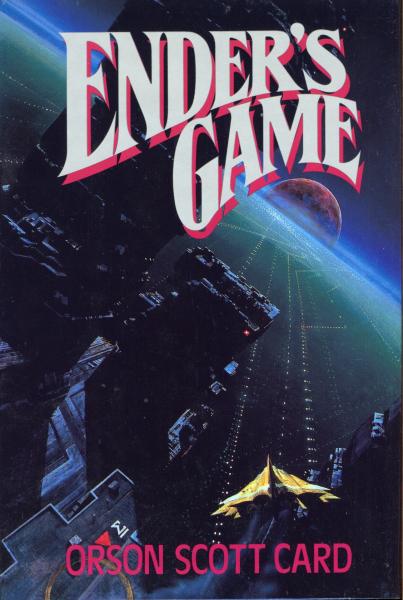
Orson Scott Card's Ender's Game (1985, expanded from his 1977 novella) follows child prodigy Andrew "Ender" Wiggin as he is recruited into a military training program built to prepare Earth's defenses for an anticipated third war against an insectoid alien species known as the Formics. The saga continues years later through Speaker for the Dead and Xenocide, following an older Ender as he confronts the moral weight of his role in that earlier conflict, and concludes the core arc in Children of the Mind, with Ender in Exile filling in the years between the first two books. Set within the wider Ender's Game universe, the series shifts from military coming-of-age story to slower, more philosophical science fiction as it progresses.
- Seveneves
Neal Stephensonstandalone novel2015
similar byscience fictiontensenear future+1 more
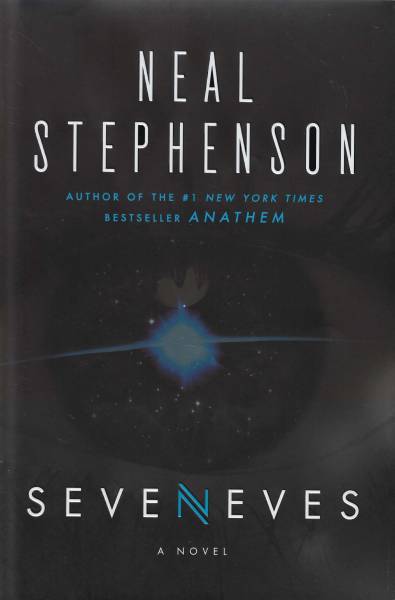
Seveneves is a science fiction novel by Neal Stephenson published in 2015. The story tells of the desperate efforts to preserve Homo sapiens in the wake of apocalyptic events on Earth after the unexplained disintegration of the Moon and the remaking of human society as a space-based civilization after a severe genetic bottleneck.
- Future History
series42 books1939
completed
similar byscience fiction+2 more
The Future History is a series of science fiction stories written by American author Robert A. Heinlein (1907–1988). It describes a projected future of the human race from the middle of the 20th century through the early 23rd century. The term Future History was coined by John W. Campbell Jr. in the February 1941 issue of Astounding Science Fiction. Campbell published an early draft of Heinlein's chart of the series in the May 1941 issue.
- Library of America P. K. Dick Collection
series9 books1962
completed
similar byscience fictionnear future
- Have Space Suit - Will Travel
Robert A. Heinleinstandalone novel1958
similar byscience fictiontensenear futureyoung adult
From the back cover of the Del Rey 9th printing: "Skyjacked - Everything happened at once. One minute Kip Russell was walking about in his own backyard, testing out an old space suit and dreaming about going to the moon - and the next he was out cold and the captive of an insidious space pirate. The whole thing seemed like a very bad dream until he discovered he wasn't the only prisoner on board. Then the reality of the situation became inescapable. He - along with the daughter of a world-renowned scientist and a beautiful creature from an alien planet - had been skyjacked by a monstrous extraterrestrial and they were on their way to the Moon... a journey toward a fate worse than death!"
- Maze Runner
series11 books2009
similar byscience fictiontensenear futureyoung adult
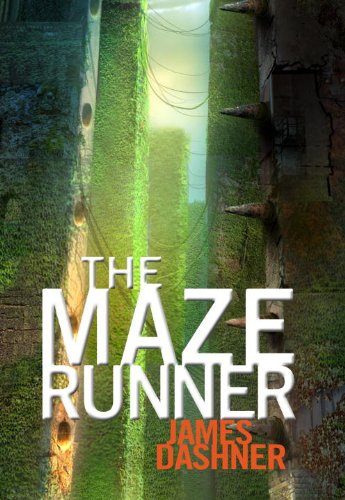
The Maze Runner is a series of young adult dystopian science fiction novels written by American author James Dashner. The series consists of the trilogy The Maze Runner (2009), The Scorch Trials (2010) and The Death Cure (2011), as well as two prequel novels, The Kill Order (2012) and The Fever Code (2016). A novella titled Crank Palace (2020) and a companion book titled The Maze Runner Files (2013) have also been released. A sequel trilogy in the series titled The Maze Cutter takes place 73 years following the events of The Death Cure and consists of the novels The Maze Cutter (2022), The Godhead Complex (2023), and The Infinite Glade (2025).
- Near Space
series30 books1988
similar byscience fictionnear future+1 more
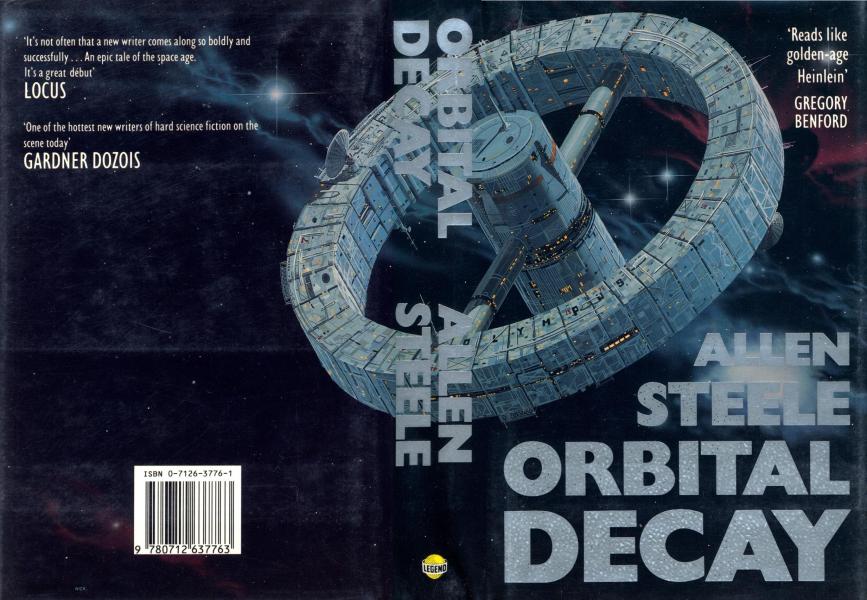
Allen Steele's Near Space novels are near-future, blue-collar hard SF set during the early decades of space industrialization, following working astronauts, engineers, and colonists rather than explorers or soldiers. Orbital Decay follows construction workers on an orbital satellite-assembly project who stumble into an espionage plot; later entries such as Clarke County, Space and Lunar Descent move outward to an orbital colony and a lunar mining operation. The loosely connected novels and story collections share a plausible, unglamorous near-future setting that predates Steele's later Coyote sequence.
- Gravity
Tess Gerritsenstandalone novel1999
similar byscience fictiontensespace stationnear future
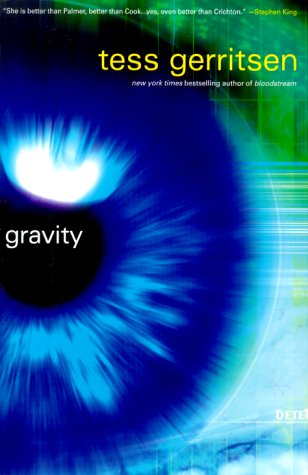
Medical thriller set aboard the International Space Station where astronauts are dying one by one from a mysterious disease. Dr Emma Watson is a research physician on a mission to study living organisms in space. But the mission aboard the space station turns into a nightmare.
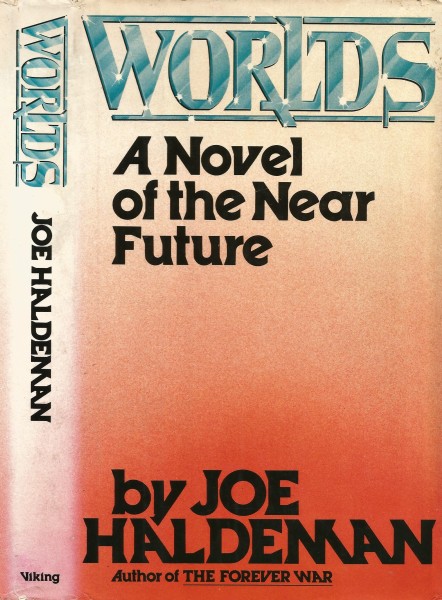
- Worlds (Joe Haldeman)
series3 books1981
similar byscience fictionnear future+2 more
Joe Haldeman's trilogy is set among the Worlds, a network of orbital satellite colonies whose half-million residents watch Earth tear itself apart in a devastating war. Beginning with Worlds and continuing through Worlds Apart and Worlds Enough and Time, the series follows New New York's Marianne O'Hara as she's forced to choose between staying to help Earth's survivors and leading her people toward a new home among the stars.
- Forever War
series10 books1972
similar byscience fiction+1 more
Joe Haldeman's The Forever War (1974) follows a soldier conscripted into a centuries-long interstellar war against the alien Taurans, using relativistic space travel so that months spent in transit correspond to years or decades passing back on Earth. Haldeman later returned to the same conflict in Forever Peace (1997), a thematically connected but separate story, and Forever Free (1999), a direct sequel set years after the original war's end. The first novel won the Hugo, Nebula, and Locus awards and is considered a foundational work of military science fiction.
- Aftermath (Charles Sheffield)
series2 books1998
completed
similar byscience fictiontensenear future+1 more
Charles Sheffield's Aftermath duology opens with a near-future Earth devastated by a nearby supernova's radiation, which knocks out electronics and forces survivors to rebuild without most modern technology. Starfire continues years later as a second, larger stellar threat approaches and humanity must recover enough capability to respond. Sheffield, a physicist by training, grounds both books in hard-science consequences of the disaster rather than treating it as mere backdrop.
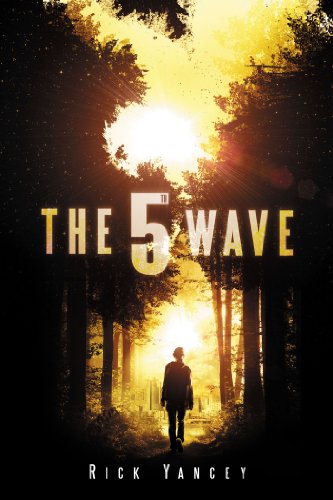
- The 5th Wave
series4 books2013
similar byscience fictiontensenear futureyoung adult
Rick Yancey's The 5th Wave opens after a series of escalating alien attacks has already devastated Earth's population and infrastructure, following sixteen-year-old survivor Cassie Sullivan as she searches for her younger brother while trying to work out who, among the remaining humans, can still be trusted. The trilogy is young-adult science fiction that treats its alien-invasion premise as a survival and paranoia story more than a war story.
- Blade Runner Universe
series6 books1968
similar byscience fictionnear future+1 more
Philip K. Dick's 1968 novel Do Androids Dream of Electric Sheep? follows bounty hunter Rick Deckard as he tracks escaped androids through an irradiated, near-abandoned San Francisco, using the hunt to probe questions of empathy and what separates human from machine. The novel became the basis for Ridley Scott's 1982 film Blade Runner, and Marvel Comics later published an illustrated adaptation of that film. Together the two trace the story's path from prose original to screen and comic-page adaptation.