More like Interference
anchored on:science fictionspace colonizationother star systemsfar futurefirst contactaliens
but
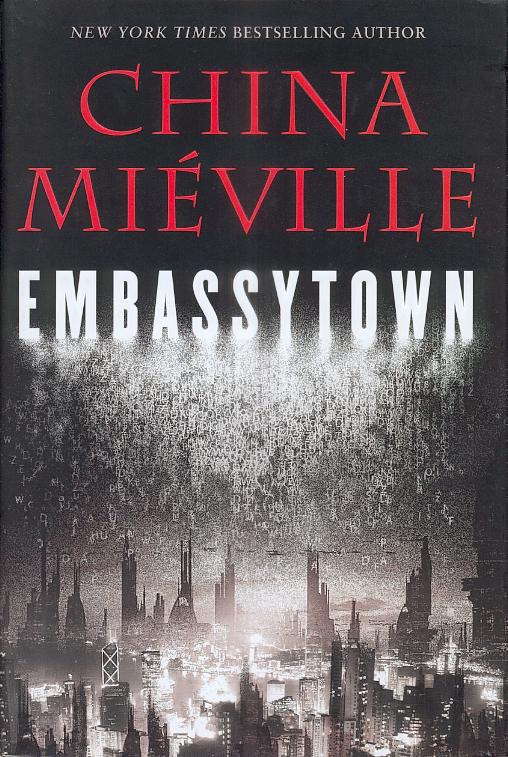
- Embassytown
China Miévillestandalone novel2011
similar byother star systemsfar futurescience fictionchallengingmysteriousaliensspace colonizationfirst contact
In the far future, humans have colonized a distant planet, home to the enigmatic Ariekei, sentient beings famed for a language unique in the universe, one that only a few altered human ambassadors can speak. Avice Benner Cho, a human colonist, has returned to Embassytown after years of deep-space adventure. She cannot speak the Ariekei tongue, but she is an indelible part of it, having long ago been made a figure of speech, a living simile in their language. When distant political machinations deliver a new ambassador to Arieka, the fragile equilibrium between humans and aliens is violently upset. Catastrophe looms, and Avice is torn between competing loyalties—to a husband she no longer loves, to a system she no longer trusts, and to her place in a language she cannot speak yet speaks through her.
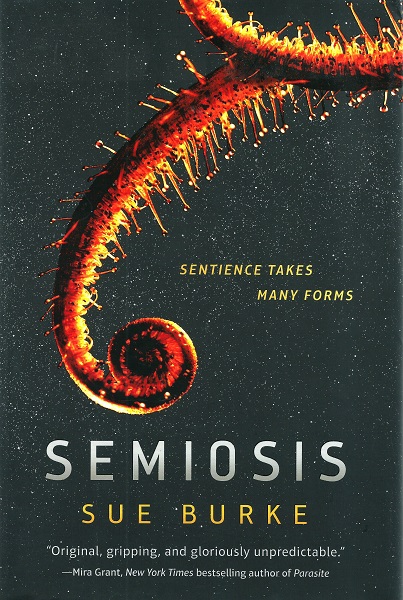
- Semiosis
series3 books2018
similar byother star systemsfar futurescience fictionspace colonization+3 more
Semiosis is Sue Burke's science fiction trilogy: Semiosis (2018), Interference and Usurpation. It follows generations of human colonists on an alien world forming an uneasy, evolving relationship with Stevland, a highly intelligent sentient plant, as the colony's survival comes to depend on cooperating with a fundamentally non-animal intelligence. The trilogy follows one continuous colony's history across decades of story time.
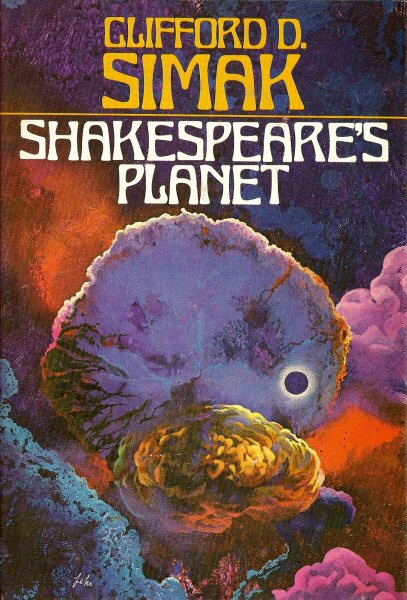
- Shakespeare's Planet
Clifford D. Simakstandalone novel1976
similar byother star systemsfar futurescience fictionmysteriousaliensfirst contact
Woken after a thousand-year voyage meant to find humanity a new home, Carter Horton finds his ship stranded for good, tended by the disembodied minds of three volunteers who gave up their bodies to fly it. Outside waits a world already crowded with strangers: a robot named Nicodemus, and an alien called the Carnivore who claims to have known a human, once, called Shakespeare, and to have arrived here through a tunnel across time. As more travelers arrive through that same tunnel, Horton has to work out what kind of planet he has actually landed on. A standalone novel from Clifford D. Simak.
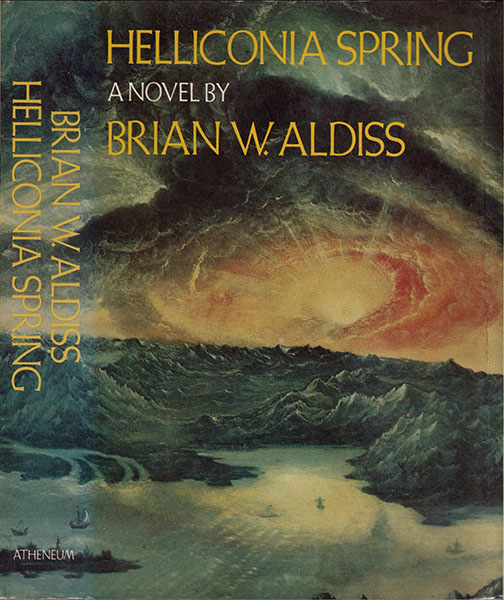
- Helliconia
series4 books1982
completed
similar byother star systemsfar futurescience fictionchallengingspace colonizationecological collapse+1 more
The Helliconia trilogy is a series of science fiction books by British writer Brian W. Aldiss, set on the Earth-like planet Helliconia. It is an epic chronicling the rise and fall of a civilisation over thousands of years as the planet progresses through its incredibly long seasons, which last for centuries.
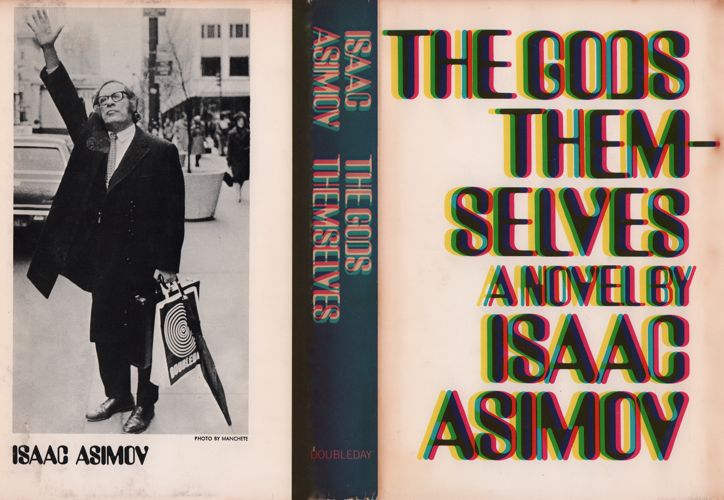
- The Gods Themselves
Isaac Asimovstandalone novel1972
similar byfar futurescience fictionchallengingother star systemsaliens+1 more
The Gods Themselves is a 1972 science fiction novel written by Isaac Asimov, and his first original novel in fifteen years. It won the Nebula Award for Best Novel in 1972, and the Hugo Award for Best Novel in 1973.
- Dune
series20 books1963
part of Dune Universe
similar byfar futureother star systemsscience fiction+1 more
Frank Herbert's Dune Chronicles opens with 1965's Dune, set on the desert planet Arrakis where House Atreides takes control of the only source of the vital spice melange and young Paul Atreides is pulled into a struggle over its politics and religion. Herbert carried the story forward across five further novels — Dune Messiah, Children of Dune, God Emperor of Dune, Heretics of Dune, and Chapterhouse: Dune — following Paul's line over the following millennia, before Brian Herbert and Kevin J. Anderson later extended the saga. Many other editions of these six novels are omnibus and box-set repackagings rather than separate stories.
- Masters of Everon
Gordon R. Dicksonstandalone novel1979
similar byother star systemsfar futurespace colonizationscience fictionmysteriousaliens
Jef Robini was heading for Everon with a highly controversial cargo. For eight years on Earth Jef had tried to rear the maolot cub which was the final legacy from his brother. But the maolot had failed to grow into the giant cat that was Everon's largest and most dangerous life-form. And now Jef was returning the creature to its natural home, the colonized planet of Everon. He knew the planet was barren. And that he'd have to fight to survive. But nothing had prepared him for the incomprehensible strangeness, the mind-blasting wonder of the true Masters of Everon.
- Moties
series4 books1974
part of CoDominium
similar byfar futurescience fictionother star systemsaliensfirst contact
Larry Niven and Jerry Pournelle's The Mote in God's Eye (1974) depicts humanity's first contact with an alien species, the Moties, set within the far-future interstellar setting of Pournelle's codominium future history. The Gripping Hand continues that first-contact crisis years later, and Outies, written by J. R. Pournelle, carries the story forward into a new generation. Together the three books trace an escalating encounter between human and Motie civilizations within the codominium universe.
- Ringworld
series5 books1970
part of Known Space
similar byother star systemsfar futurescience fictionaliens+1 more
The Ringworld series is a series of science fiction novels written by American author Larry Niven. It is part of his Known Space series of stories. Its backdrop is the Ringworld, a giant artifact 3 million times the surface area of Earth circling a star. The series is composed of four standalone science fiction novels, the original award-winning book and its three sequels:1970: Ringworld 1979: The Ringworld Engineers 1996: The Ringworld Throne 2004: Ringworld's Children
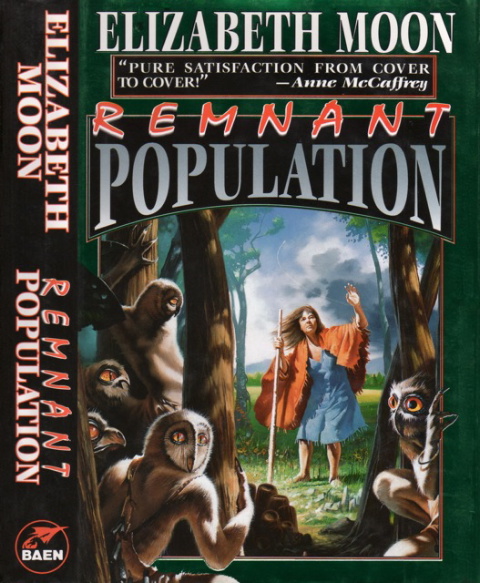
- Remnant Population
Elizabeth Moonstandalone novel1996
similar byother star systemsfar futurescience fictionaliensspace colonizationfirst contact
From the dust jacket front flap of the Baen first edition: Alone at last... People had always told Ofelia what to do; for once she was going to do what she wanted. She refused to get on the cryo ships, refused to leave the only world she could call home. And when they finally came for her, she hid, not that the authorities looked all that hard for one crazy old woman. Now Ofelia is alone, content to live with no more demands on her self or her time, the only remaining settler on an abandoned planet. The new settlers arrive. At first she fears that they have come to reoccupy the settlement she has come to think of as hers - but they land far away. And as Ofelia secretly listens, they are slaughtered to the last child by stone-age aliens no one knew were there. Now it will be up to Ofelia to save the aliens from Earth's wrath...
- Wess'har Wars
series7 books2004
similar byother star systemsfar futurescience fictionaliensfirst contactecological collapse+1 more
The Wess'har Wars series is a six-book science fiction novel series written by author Karen Traviss and is set several hundred years in the future. It involves humanity's contact with a number of alien species with conflicting interests and beliefs, while her central character, Shan Frankland, is caught in the middle of a coming conflict. The series has a focus on environmental impact. All six novels were published by Eos, an imprint of HarperCollins: City of Pearl, Crossing the Line, The World Before, Matriarch and Ally. The last book of the series, Judge was released on March 25, 2008.
- Incandescence
Greg Eganstandalone novel2008
similar byother star systemsfar futurescience fictionchallengingmysteriousaliens
Incandescence is a 2008 science fiction novel by Australian author Greg Egan. The book is based on the idea that the theory of general relativity could be discovered by a pre-industrial civilisation.
- Heechee
series19 books1972
completed
similar byfar futurescience fictionother star systemsaliens+1 more
The Heechee Saga, also known as the Gateway series, is a series of science fiction novels and short stories by Frederik Pohl. The Heechee are an advanced alien race that visited the Solar System hundreds of millennia ago and then mysteriously disappeared. They left behind bases containing artifacts, including working starships, which are discovered and exploited by humanity.
- Aurora
Kim Stanley Robinsonstandalone novel2015
similar byfar futurespace colonizationscience fictionchallengingother star systems+1 more
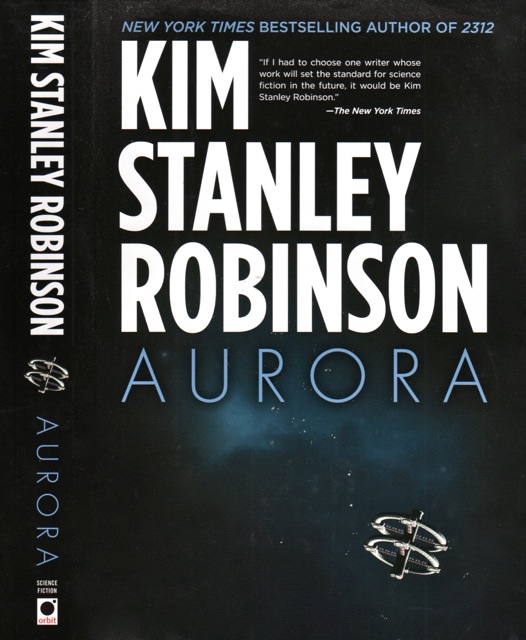
Aurora is a 2015 novel by American science fiction author Kim Stanley Robinson. The novel concerns a generation ship built in the style of a Stanford torus, traveling to Tau Ceti to start a human colony. The novel's primary narrative voice is that of the starship's artificial intelligence. Aurora was well received by critics.
- Ender Wiggin
series14 books1977
part of Ender's Game Universe
similar byfar futurescience fictionother star systemsaliens
Orson Scott Card's Ender's Game (1985, expanded from his 1977 novella) follows child prodigy Andrew "Ender" Wiggin as he is recruited into a military training program built to prepare Earth's defenses for an anticipated third war against an insectoid alien species known as the Formics. The saga continues years later through Speaker for the Dead and Xenocide, following an older Ender as he confronts the moral weight of his role in that earlier conflict, and concludes the core arc in Children of the Mind, with Ender in Exile filling in the years between the first two books. Set within the wider Ender's Game universe, the series shifts from military coming-of-age story to slower, more philosophical science fiction as it progresses.
- The Colors of Space
Marion Zimmer Bradleystandalone novel1963
similar byother star systemsfar futurescience fictionmysteriousaliens
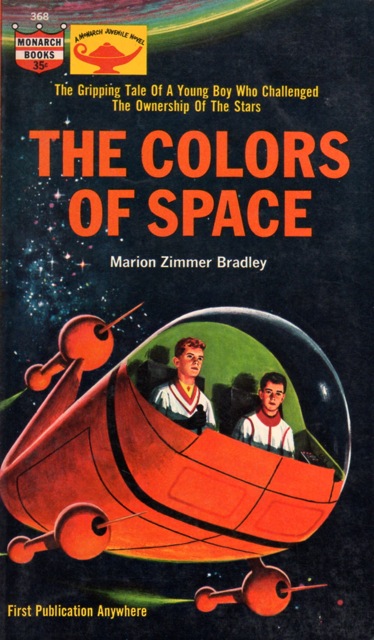
The Lhari seem peaceful and friendly, but they go to some lengths to protect their monopoly on faster-than-light travel. One young man is sent to discover their secrets.
- The Fifth Head of Cerberus
series4 books1972
similar byfar futurescience fictionother star systemsmysterious+1 more
- Learning the World
Ken MacLeodstandalone novel2005
similar byother star systemsfar futurescience fictionaliensspace colonizationfirst contact
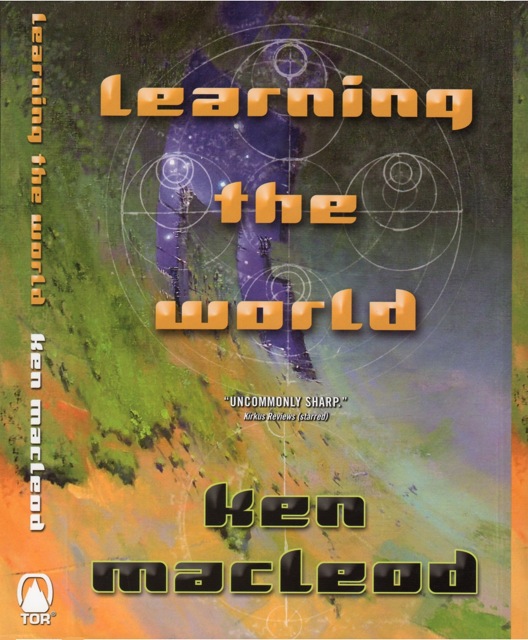
From the front flap of the Tor first printing: "Humanity has spread to every star within 500 light-years of its half-forgotten origin, coloring the sky with a haze of habitats. Societies rise and fall. Incautious experiments burn fast and fade. On the fringes, less modified humans get on with the job of settling a universe that has, so far, been empty of intelligent life. The ancient starship But the Sky, My Lady! The Sky! is entering orbit around a promising new system after a four hundred year journey. For its long-lived inhabitants, the centuries have been busy. Now a younger generation is eager to settle the system. The ship is a seed-pod ready to burst. Then they detect curious electromagnetic emissions from the system's Earth-like world. As the nature of the signals becomes clear, the choices facing the humans become stark. On Ground, second world from the sun, a young astronomer searches for his system's outermost planet. A moving point of light thrills, then disappoints him. It's only a comet. His physicist colleague Orro takes time off from trying to invent a flying-machine to calculate the comet's trajectory. Something is very odd about that comet's path. They are not the only ones for whom the world has changed. "We are not living in the universe we thought we lived in yesterday. We have to start learning the world all over again.""
- Infinity Beach
Jack McDevittstandalone novel2000
similar byother star systemsfar futurescience fictionmysteriousaliensfirst contact
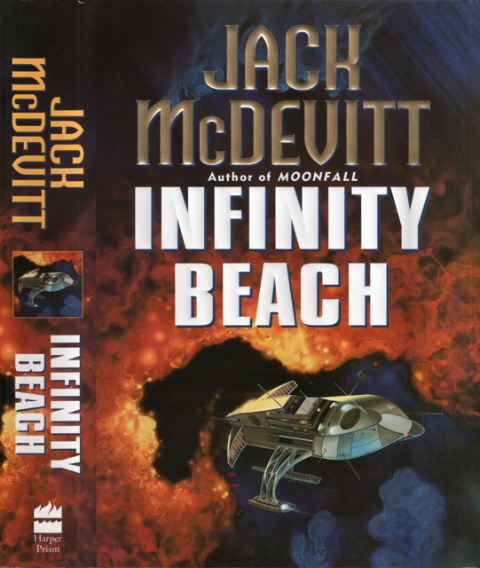
Infinity Beach is a 2000 science fiction novel by Jack McDevitt. It is a story of a first contact between human and alien civilizations.
- The Kassa Gambit
M. C. Planckstandalone novel2013
similar byother star systemsfar futurescience fictionaliensspace colonizationfirst contact+1 more
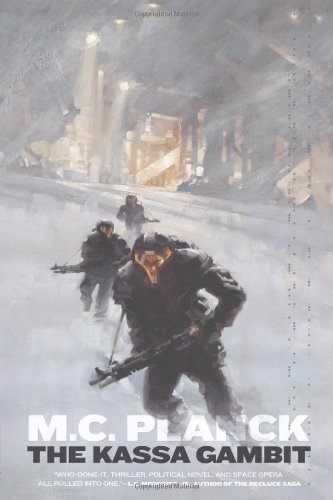
"Centuries after the ecological collapse of Earth, humanity has spread among the stars. Under the governance of the League, our endless need for resources has driven us to colonize hundreds of planets, all of them devoid of other sentient life. Humanity is apparently alone in the universe. Then comes the sudden, brutal decimation of Kassa, a small farming planet, by a mysterious attacker. The few survivors send out a desperate plea for aid, which is answered by two unlikely rescuers. Prudence Falling is the young captain of a tramp freighter. She and her ragtag crew have been on the run and living job to job for years, eking out a living by making cargo runs that aren't always entirely legal. Lt. Kyle Daspar is a police officer from the wealthy planet of Altair Prime, working undercover as a double agent against the League. He's been undercover so long he can't be trusted by anyone--even himself. While flying rescue missions to extract survivors from the surface of devastated Kassa, they discover what could be the most important artifact in the history of man: an alien spaceship, crashed and abandoned during the attack. But something tells them there is more to the story. Together, they discover the cruel truth about the destruction of Kassa, and that an imminent alien invasion is the least of humanity's concerns. "--
- Manseed
Jack Williamsonstandalone novel1982
similar byother star systemsfar futurespace colonizationscience fiction+2 more
In the decades since i've read this novel somehow i forgot almost everything about it, except the powerful force it had on me. However, the the following description from http://www.fictiondb.com/author/jack-williamson~manseed~117359~b.htm seems to match my long ago reading experience: Egan Drake was a wealthy but unhappy visionary who died early and left behind only a powerful dream. He proposed to spread Mankind among the stars. Then there was Megan Drake. She took her brother's vision and made it real. At the Raven Foundation's New Mexico headquarters, she gathered around her experts in astronautics, biology, computer science, defense, and fusion propulsion. The project was simple in design yet grandiose in its aim: a thousand tiny ships would crawl to the stars; each that landed on an Earth-type planet would produce several dozen colonists; each colonist would be a product of the genes derived from Megan and her experts. Every ship would manufacture cyborgs for repairs and self-protection. But much of the technology was new and untried; no one could predict what might really occur at a millennia-long journey's end if, say, a cyborg fell in love or aliens were met or...
- Starship Troopers
Robert A. Heinleinstandalone novel1959
similar byfar futureother star systemsscience fictionaliens+1 more
Starship Troopers is a military science fiction novel by American writer Robert A. Heinlein. Written in a few weeks in reaction to the US suspending nuclear tests, the story was first published as a two-part serial in The Magazine of Fantasy & Science Fiction as Starship Soldier, and published as a book by G. P. Putnam's Sons on November 5, 1959.
- The Gates of Eden
Brian Stablefordstandalone novel1983
similar byother star systemsfar futurescience fictionmysteriousaliensfirst contact
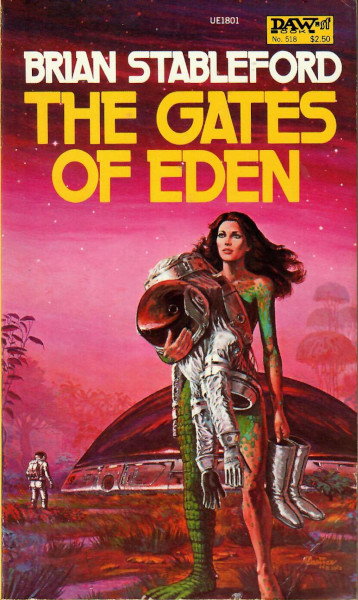
From the back cover of the DAW first edition: "Before the hyper-space vessels could go from planet to planet, stations had to be set up. And that meant manned spaceships cut off from Earth for decades. The explorer vessel Ariadne had gone toward galactic center and was considered lost - until its call was heard appealing for a xeno-biologist. Their new world was all swamp. As far as could be seen there was no intelligent species. Yet this was alarming because all inhabitable planets so far discovered had thinking inhabitants. But the nature of the planet's "people" turned out to be an enigma that had to be solved. For the alien biology there could spell doom to all the civilization of the stars... doom or a terrible unity!"
- Flies from the Amber
Wil McCarthystandalone novel1995
similar byother star systemsfar futurescience fictionmysteriousaliensspace colonizationfirst contact
From the back cover: FORTY LIGHT YEARS FROM EARTH -- the colonists on the world of Unua have somehow managed to keep civilization struggling on, despite twice daily earthquakes and technology lagging far behind that of the mother planet. But now an Unuan mining expedition has discovered an alien mineral they name centrokist -- a stone of incomparable beauty. Yet when the Earth scientists at last arrive to investigate, they find a phenomenon eclipsing the centrokist crystals. For this double-sunned solar system is nestled right next to a black hole. And waiting for them on the verge of the black hole's event horizon is an alien artifact that can't possibly exist!