More like Jedi Eclipse
anchored on:science fictionspace operaalienswargalactic scalefar future+5 more
but
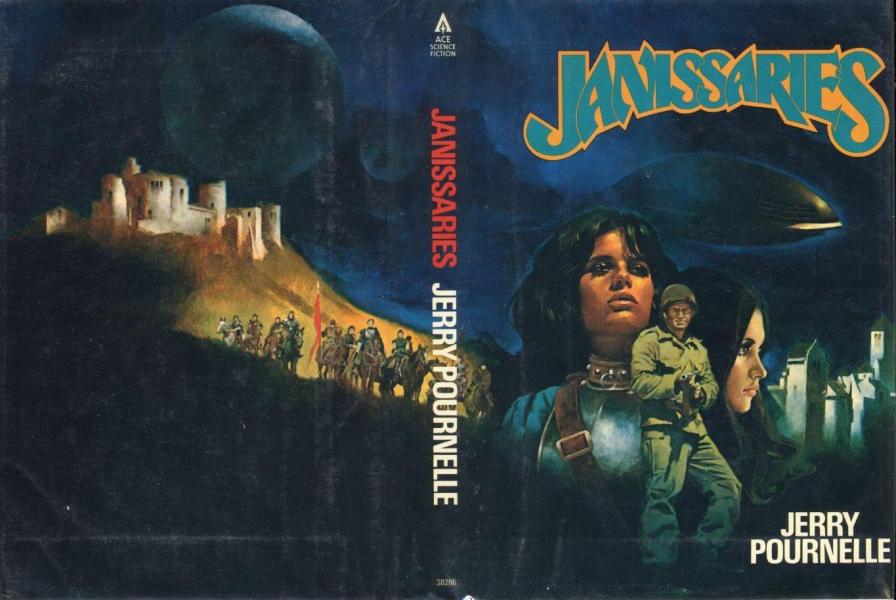
- Janissaries
series4 books1979
similar byfar futureadventuroustensewarscience fictionpolitical intriguemilitary science fiction+3 more
Janissaries are an American series of military and political-based science fiction novels are set in an interstellar confederation of races, in which humans are a slave race entrusted with military affairs and law enforcement. They were written by Jerry Pournelle, with Roland J. Green co-authoring the second two books.
- The Saga of Seven Suns Universe
series16 books2002
similar byfar futuretenseadventurousaliensscience fictionspace operawargalactic scale+3 more
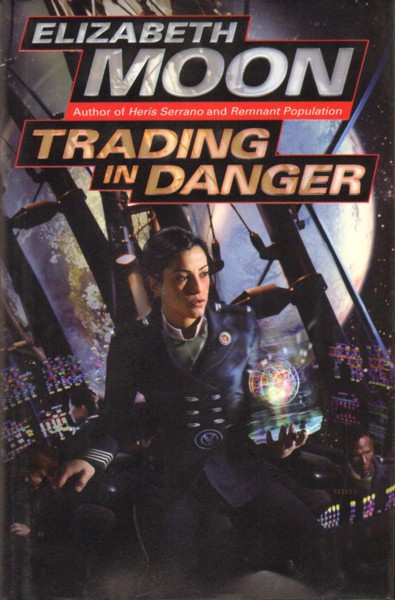
- Vatta's War
series6 books2003
part of Vatta
similar byfar futureadventuroustensescience fictionspace operawarpolitical intriguemilitary science fiction+1 more
Vatta's War is a science fiction series by American writer Elizabeth Moon, comprising five books: Trading in Danger (2003), Marque and Reprisal, Engaging the Enemy (2006), Command Decision (2007), and Victory Conditions (2008). They have been characterized as military science fiction similar in style to the works of Lois McMaster Bujold, David Weber and Walter Jon Williams.
- Honor Harrington
series14 books1993
part of Honorverse
similar byfar futuretensescience fictionwarspace operapolitical intriguemilitary science fictionspace+1 more
David Weber's Honor Harrington novels follow the title character's rise through the Manticoran navy in the 'Honorverse,' a space-opera setting built around Age-of-Sail-style naval combat, interstellar politics and a decades-long war between rival star nations. Beginning with On Basilisk Station, the core series runs to fourteen books, alongside spin-off subseries, prequels and shared-world anthologies also set in the Honorverse. It's one of the longest-running modern military science fiction series, published by Baen.
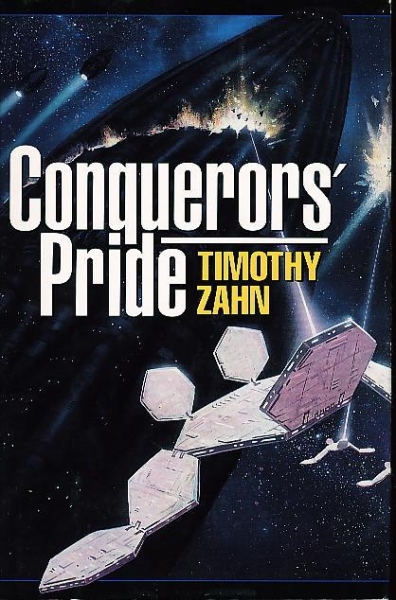
- Conquerors
series3 books1994
similar byfar futureadventuroustensealiensscience fictionwarpolitical intriguemilitary science fiction+2 more
Conquerors is Timothy Zahn's military science-fiction trilogy following human fighter pilots and their commanders through an interstellar war that neither side fully understands, told across Conquerors' Pride, Conquerors' Heritage, and Conquerors' Legacy. Zahn alternates perspective between the human and alien chains of command, using the shifting viewpoints to slowly unpick why the conflict started in the first place. It's contact-and-conflict SF built around miscommunication rather than straightforward invasion.
- Chanur
series7 books1982
part of Alliance-Union Universe
similar byfar futureadventuroustensealiensscience fictionpolitical intriguespace operaspace
The Chanur novels are a series of five science fiction novels, forming three separate stories, written by American author C. J. Cherryh and published by DAW Books between 1982 and 1992. The first novel in the series is The Pride of Chanur (1982), which was nominated for both the Hugo and Locus Awards in 1983. The Pride of Chanur, originally a stand-alone story, was followed by the Chanur's Venture trilogy, Chanur's Venture (1984), which was shortlisted for a Locus Award in 1985; The Kif Strike Back (1985) and Chanur's Homecoming (1986). These were followed by a later sequel, Chanur's Legacy (1992). The five novels were also published in two omnibus editions: the first three in The Chanur Saga in 2000 and the next two in Chanur's Endgame in 2007.
- Sten
series11 books1982
completed
similar byfar futureadventurousscience fictionspace operawarpolitical intriguemilitary science fictionspace+2 more
The Sten Chronicles, also called The Sten Adventures, are a series of eight military science fiction and space opera novels by Chris Bunch and Allan Cole published from 1982 to 1993. The series was originally published by Del Rey and then re-released by Orbit.
- Old Man's War
series16 books2005
similar byfar futureadventurousscience fictionwarmilitary science fictionspacespace opera+3 more
The Old Man's War series is a series of science fiction novels by John Scalzi. The first book in the series, Old Man's War, was first published in 2005 by Tor Books, and was nominated for the Hugo Award for Best Novel in 2006. In 2026 it was a finalist for the Hugo Award for Best Series.
- Fifth Imperium
series3 books1991
similar byfar futureadventuroustensescience fictionspace operaalienswarspace+2 more
David Weber's Fifth Imperium series opens with the discovery that Earth's Moon is in fact a disguised alien starship, the Dahak, that has orbited undetected for tens of thousands of years - a relic of the fallen Fourth Imperium, a multi-star civilization destroyed while defending against the genocidal Achuultani. Mutineers' Moon follows humanity's first contact with Dahak and the mutineers still aboard it; The Armageddon Inheritance and Heirs of Empire escalate from that discovery into interstellar war and dynastic politics as humanity inherits the old empire's legacy and its enemies. The three novels were later collected as the omnibus Empire from the Ashes.
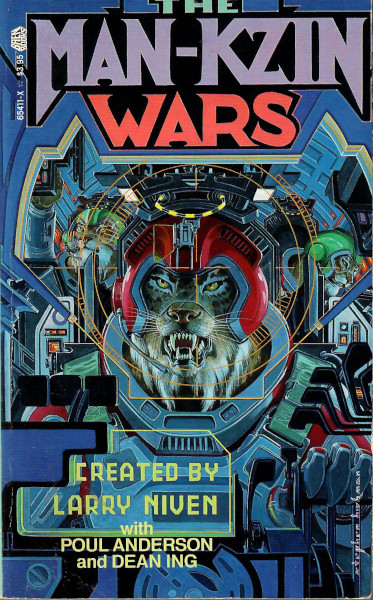
- Man-Kzin Wars
series84 books1986
part of Known Space
similar byfar futuretensealienswarscience fictionmilitary science fictionspace+2 more
The Man–Kzin Wars is the name of a series of military science fiction anthologies as well as the name of the first book in the series. The short stories detail the eponymous conflicts between mankind and the Kzinti, set in Larry Niven's Known Space universe. However, Niven himself has written only a small number of the stories; most were written by other science fiction writers, as Niven opened this part of the Known Space to collaboration in the form of a shared universe. The cover art for the books in the series is created by Stephen Hickman.
- Moties
series4 books1974
part of CoDominium
similar byfar futurescience fictionaliensspace operaspacepolitical intrigue+3 more
Larry Niven and Jerry Pournelle's The Mote in God's Eye (1974) depicts humanity's first contact with an alien species, the Moties, set within the far-future interstellar setting of Pournelle's codominium future history. The Gripping Hand continues that first-contact crisis years later, and Outies, written by J. R. Pournelle, carries the story forward into a new generation. Together the three books trace an escalating encounter between human and Motie civilizations within the codominium universe.
- The Final Architecture
series6 books2021
similar byfar futureadventuroustensealiensscience fictionspace operawarspace
The Final Architecture is a series of science fiction novels by British writer Adrian Tchaikovsky. It contains the books Shards of Earth, Eyes of the Void, and Lords of Uncreation. The series focuses on a group of humans fighting against the mysterious Architects, who destroy inhabited planets. The series has been well-received critically, with Shards of Earth winning the 2021 BSFA Award for Best Novel. The entire series was a finalist for the 2024 Hugo Award for Best Series.
- Hour of the Horde
Gordon R. Dicksonstandalone novel1970
similar byfar futureadventuroustensealiensscience fictionwarspace operamilitary science fiction+1 more
Annihilating everything before it, a horde of monstrous space travellers were advancing through the stars. And Earth lay in their route. To defend their home planets, the worlds that lay in the path of the monsters created a super defense force, asking each planet to contribute one especially talented warrior to help turn the invaders away. Miles Vander was Earth's man, but when he arrived at the rendezvous point he found that he was included in the special task force of the less civilized defenders. But in the contest of advanced nuclear weaponry and computer strategy, it turned out to be Vander's group that had the special independent qualities and the raw courage to meet the challenge most effectively. (from the back cover of the DAW Books first printing)
- Vatta
universe10 books2003
Start hereVatta's War · Start here
similar byfar futureadventuroustensescience fictionspace operaspacemilitary science fiction+2 more
Get kicked out of the Academy and the family still hands you a ship. That is the arithmetic Kylara Vatta lives by. Born into Vatta Transport, Ltd. — a dynasty of interstellar traders who reckon their honor in delivered cargo and honored contracts — Ky wants a soldier's commission and gets a merchant hull instead. Then someone starts murdering her relatives and burning the ledgers, and the daughter learns that a trade fleet, armed and angry, is its own kind of war. This is military science fiction run on a merchant's books. The core cycle, Vatta's War, moves in five volumes — Trading in Danger, Marque and Reprisal, Engaging the Enemy, Command Decision, Victory Conditions — as piracy, a sabotaged faster-than-light communications network, and a scattered family push Ky from cautious captain to fleet commander. The later duology Vatta's Peace (Cold Welcome, Into the Fire) drops her, older and decorated, into a colder survival ordeal on her own homeworld. Moon writes clean, competent, procedural: supply lines and boarding actions, chains of command, the cost of a signature on a bad contract. Expect capable women, hard decisions costed to the last credit, and space combat that respects physics and paperwork alike. Begin at the beginning — Trading in Danger — and read straight through in publication order; the arc is chronological and cumulative, no side doors required.
- Starship Troopers
Robert A. Heinleinstandalone novel1959
similar byfar futureadventurouswarscience fictionaliensmilitary science fictionspace+1 more
Starship Troopers is a military science fiction novel by American writer Robert A. Heinlein. Written in a few weeks in reaction to the US suspending nuclear tests, the story was first published as a two-part serial in The Magazine of Fantasy & Science Fiction as Starship Soldier, and published as a book by G. P. Putnam's Sons on November 5, 1959.
- Wolfling
Gordon R. Dicksonstandalone novel1969
similar byfar futureadventuroustensealiensscience fictionpolitical intriguespace operaspace
From the flaps of the Baen/SFBC edition: "Is Earth merely the lost colony of a superior race? - She was well over six feet tall, and beautiful in a sculpted, abstract way. She had skin the color of white onyx, and her eyes... her eyes were large and feline - a startling lemon yellow in color. She was the Princess Afuan, one of the High-born, and she had chosen the Earthman Kim Keil to return to the Throne World with her - for she had decided that his performance in the bull-ring might amuse the Emperor. She didn't know that Jim was a bull-fighter only by virtue of six months' intensive training, nor that the bull was programmed - his behavior following and impressively fierce but unswerving pattern. Jim was just another wolfling to Afuan - a lesser being from a backward colony world. Jim, however, was keenly aware that he was playing a role, one which might prove to be extremely dangerous. Up until 10 years earlier, when their first ship had reached Alpha Centauri, the people of Earth hadn't even known that the vast Empire of human-occupied worlds existed. The discovery had been a profound shock. Had we evolved independently? Or were we merely descendants of the Empire's first space pioneers - a lost colony found at last, perhaps with devastating consequences? That's what Jim Keil had to find out. Chosen from among numerous highly qualified candidates - an anthropologist trained, mentally and physically, beyond the limits of his profession - it was his mission to observe the Throne World and the High-born... to determine whether or not they posed a threat to Earth. One thing was apparent from the start. The High-born were superior beings - physically taller and stronger than other humans, endowed with faster reflexes, superior mental capacity... and extraordinary technological resources. Their contempt for the new wolfling in their midst was open, their intrigues complex. An enormous gulf separated the people of the Throne World from Earthlings. But that gulf was not so wide that Jim couldn't recognize an enemy when he met one. Clearly, if he remained merely a passive observer of the High-born, he'd never survive among them."
- The Jao Empire
series3 books2003
similar byfar futuretenseadventurousscience fictionspace operaaliensspace+4 more
- The Extra Man
E. C. Tubbstandalone novel1954
similar byfar futureadventuroustensealienswarscience fictionspace operamilitary science fiction+1 more
The galaxy is at war between the oxygen-breathing Terran Federation of worlds and the Ginzoes, chlorine-breathing aliens. An Earth ship is captured in battle by the Ginzoes, and its crew learns that the aliens have a newly developed catalyst. This can liberate chlorine from the sea -which, for the Ginzoes, would convert Terran worlds into suitable environments. The catalyst will be used unless the Terran Federation declares peace within fifty days. Fifty days to save Mankind...or fifty days to doom!
- RCN
series15 books1998
completed
similar byfar futureadventuroustensescience fictionspace operawarpolitical intriguemilitary science fiction+1 more
David Drake's RCN series follows Daniel Leary, an officer in the Republic of Cinnabar Navy, and Adele Mundy, a librarian who moonlights as a spy, across a run of standalone-but-connected novels beginning with With the Lightnings. Drake and reviewers alike have framed it as an SF version of Patrick O'Brian's Aubrey/Maturin novels, and it plays that way: political intrigue and shipboard command dynamics carry as much weight as the space battles. It's more character-driven than Drake's harder-edged Hammer's Slammers work.
- Guardian of Night
Tony Danielstandalone novel2012
similar byfar futureadventuroustensealiensscience fictionspace operawarmilitary science fiction+1 more
"Captain Arid Ricimer, an alien starship commander with integrity and a clever plan, attempts to defect to Earth with his officers and entire spaceship, a vessel that mounts a superweapon of almost unimaginable power. He's pursured by his former fleet, a force that has already devastated Earth and is poised to wipe out humanity from existence. Now Arid, along with his human allies, Captain Jim Coalbridge and alien analyst Lieutenant Commander Griff Leher must face down the forces of a tyrannical star empire"--
- Whipping Star
Frank Herbertstandalone novel1970
similar byfar futureadventurousaliensscience fictiongalactic scalepolitical intriguespace opera
From Amazon: In the far future, humankind has made contact with numerous other species: Gowachin, Laclac, Wreaves, Pan Spechi, Taprisiots, and Caleban, and has helped to form the ConSentiency to govern among the species. After suffering under a tyrannous pure democracy, the sentients of the galaxy find the need for a Bureau of Sabotage (BuSab) to slow the wheels of government, thereby preventing it from legislating recklessly. BuSab is allowed to sabotage and harass the governmental, administrative, and economic powers in the ConSentiency. Private citizens must not be harassed, and vital functions of society are also exempt. Jorj X. McKie is a born troublemaker who has become one of BuSab's best agents. Drafted for the impossible task of establishing meaningful communication with an utterly alien entity who defies understanding, McKie finds himself racing against time to prevent a mad billionairess from wiping out all life in the ConSentiency.
- Commonwealth Saga
series2 books2004
part of Commonwealth Universe
similar byfar futuretensescience fictionspace operaalienspolitical intrigue+3 more
The Commonwealth Saga is a series of science fiction novels by British science fiction writer Peter F. Hamilton. This saga consists of the novels Pandora's Star (2004) and Judas Unchained (2005). Hamilton has also written several books set in the same literary universe. Misspent Youth (2002) takes place 340 years before the events of Pandora's Star. The Void Trilogy, consisting of The Dreaming Void (2008), The Temporal Void (2009), and The Evolutionary Void (2010), takes place 1,200 years after the events of Judas Unchained; several of the main characters from Judas Unchained and Pandora's Star also appear in the Void trilogy.
- Shoal Sequence
series4 books2007
similar byfar futuretensescience fictionspace operaaliensspace+3 more
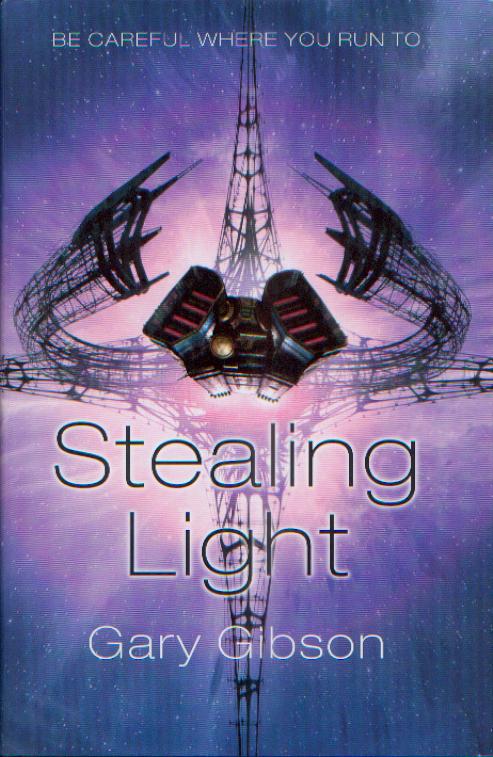
Gary Gibson's Shoal Sequence opens with Stealing Light, set two centuries into humanity's uneasy dependence on the Shoal, an alien race that alone holds the secret of faster-than-light travel. Military pilot Dakota Merrick, having witnessed the Shoal's atrocities, is drawn into events around a derelict starship that threaten to upend that arrangement across the four-book series.
- Troy Rising
series4 books2010
similar byadventuroustensefar futurescience fictionwarspace operaaliensmilitary science fiction+1 more
Troy Rising begins after an alien first-contact attempt nearly destroys Earth, prompting an entrepreneur to trade a valuable alien commodity in order to fund the construction of a massive orbital defense station guarding the planet from further attack. John Ringo's military science fiction trilogy, joined for a later volume by Gray Rinehart, follows the buildup and battles around that station as humanity arms itself against alien threats.