More like Jizzle
anchored on:science fictionour worldmid 20th centuryshort story cyclewhimsical
but
- The Goblin Reservation
Clifford D. Simakstandalone novel1968
similar byscience fictionwhimsicalour world+1 more
The Goblin Reservation is a 1968 science fiction novel by American writer Clifford D. Simak, featuring an educated Neanderthal, a biomechanical sabertooth tiger, aliens that move about on wheels, a man who time-travels using an unreliable device implanted in his brain, meeting a ghost, trolls, banshees, goblins, a dragon and even Shakespeare himself. The Goblin Reservation was a Hugo Award nominee in 1969 and was originally serialized in Galaxy Science Fiction magazine.
- Ring Around the Sun
Clifford D. Simakstandalone novel1953
similar byscience fictionmid 20th centuryour world+2 more
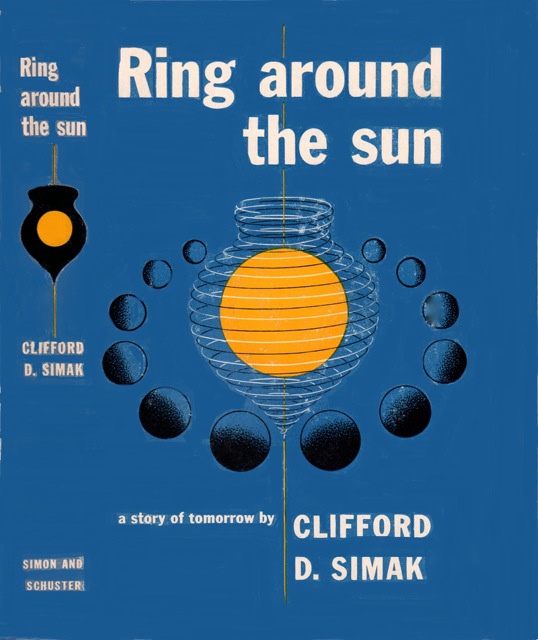
Ring Around the Sun is a science fiction novel by American writer Clifford D. Simak. Its anti-urban and pro-agrarian sentiments are typical of much of Simak's work.
- Cat's Cradle
Kurt Vonnegut & Jr.standalone novel1963
similar byscience fictionour worldmid 20th centuryfunny
Cat's Cradle is a satirical postmodern novel, with science fiction elements, by American writer Kurt Vonnegut. Vonnegut's fourth novel, it was first published on March 18, 1963, exploring and satirizing issues of science, technology, the purpose of religion, and the arms race, often through the use of morbid humor. The novel was nominated for the Hugo Award for Best Novel in 1964.
- The Black Cloud
Fred Hoylestandalone novel1957
similar byscience fictionour worldmid 20th century
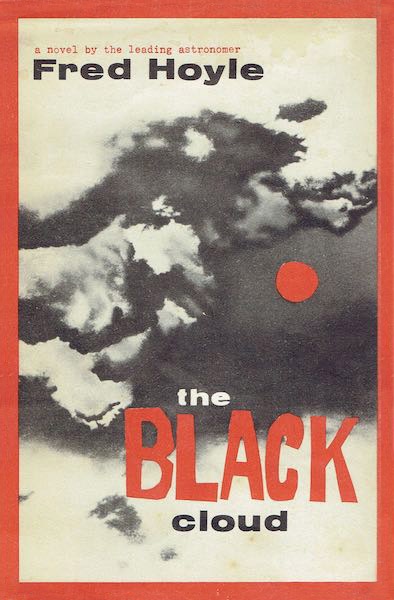
The Black Cloud is a 1957 science fiction novel by British astrophysicist Fred Hoyle. It details the arrival of an enormous cloud of gas that enters the Solar System and appears about to destroy most of the life on Earth by blocking the Sun's radiation.
- The Kraken Wakes
John Wyndhamstandalone novel1953
similar byscience fictionour worldmid 20th century
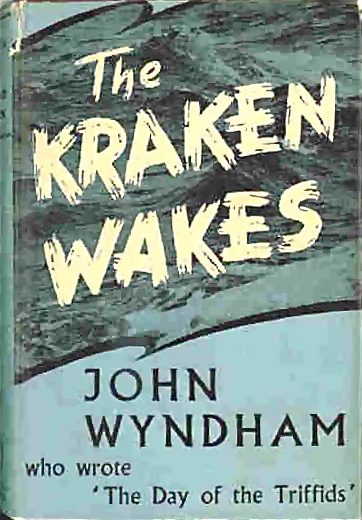
" Behind a spectacular meteor shower actually hides the beginning of an invasion by a mysterious and powerful alien race. Earth's life is disrupted by the attacks of extraterrestrials whose war machines, emerging from the depths of the oceans, seem indestructible. The coalitioned forces of the whole world are worthless, powerless in the face of the indecipherable and deadly plans of a superior intelligence, capable of bringing the entire planet to the brink of catastrophe" Goodreads May 20, 2022
- The Man Who Fell to Earth
Walter Tevisstandalone novel1963
similar byscience fictionour worldmid 20th century
The Man Who Fell to Earth is a 1963 science-fiction novel by American writer Walter Tevis. Published by Gold Medal Books as a paperback original, it was Tevis's second novel, following The Hustler. The novel follows Thomas Jerome Newton, an extraterrestrial from the drought-stricken planet Anthea, who comes to Earth hoping to build a spacecraft that can save the surviving members of his species.
- The Collected Stories of Philip K. Dick
series11 books1987
completed
similar byscience fictionour worldshort story cycle+2 more
The Collected Stories of Philip K. Dick is a collection of 118 science fiction stories by American writer Philip K. Dick. It was first published by Underwood-Miller in 1987 as a five volume set. See Philip K. Dick bibliography for information about the mass market reprints.
- More Than Human
Theodore Sturgeonstandalone novel1953
similar byscience fictionour worldshort story cyclepsychic powers
More Than Human is a 1953 science fiction fix-up novel by American writer Theodore Sturgeon. It is a revision and expansion of his 1952 novella Baby Is Three, which is bracketed by two additional parts written for the novel, "The Fabulous Idiot" and "Morality". It won the 1954 International Fantasy Award, which was also given to works in science fiction. It was additionally nominated in 2004 for a "Retro Hugo" award for the year 1954. Science fiction critic and editor David Pringle included it in his book Science Fiction: The 100 Best Novels.
- Eye in the Sky
Philip K. Dickstandalone novel1957
similar byscience fictionour worldmid 20th century
Eight visitors touring a particle-accelerator facility are caught in a catastrophic malfunction, a collapsing platform, a burst of radiation, that leaves them all unconscious. When protagonist Jack Hamilton, an engineer recently fired over Red Scare-era suspicions about his wife's politics, comes to, the world around him is subtly, then not so subtly, wrong: physics bends to fit one fellow victim's religious convictions, then to another's paranoid fears, as the group cycles through what turn out to be shared hallucinations built from each other's private belief systems. Philip K. Dick's early novel about how differently people actually see the same world.
- Slave Ship
Frederik Pohlstandalone novel1957
similar byscience fictionour worldmid 20th centurypsychic powers
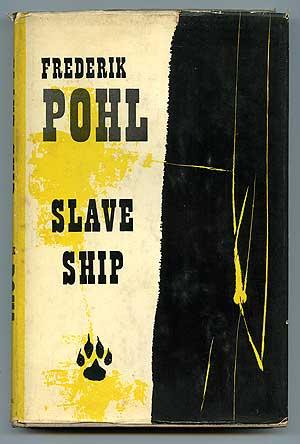
Slave Ship is a 1956 short science fiction novel by American writer Frederik Pohl, originally serialized in Galaxy. The scene is a world in the throes of a low-intensity global war, which appears to be an amplified representation of the Vietnam War, in which the U.S. was just beginning to be involved. The plot involves telepathy, speaking to animals, and, in the last few pages, an invasion by extraterrestrials.
- The Simulacra
Philip K. Dickstandalone novel1964
similar byscience fictionour worldrobots+1 more
The Simulacra is a 1964 science fiction novel by American writer Philip K. Dick. The novel portrays a future totalitarian society apparently dominated by a matriarch, Nicole Thibodeaux. It revolves around the themes of reality and illusionary beliefs, as do many of Dick's works. Additionally, it touches on Nazi ideology.
- The Death of Grass
John Christopherstandalone novel1956
similar byscience fictionour worldmid 20th century
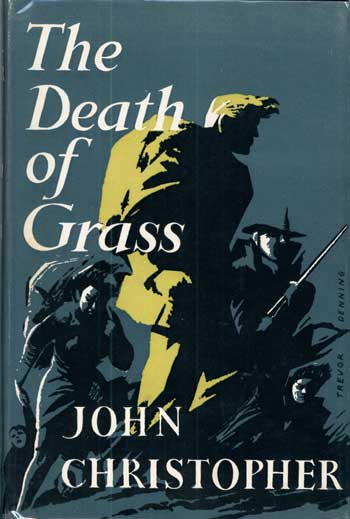
The Death of Grass is a 1956 post-apocalyptic science fiction novel written by the English author Sam Youd under the pen name John Christopher. The plot concerns a virus that kills off grass species, including rice and wheat. The Death of Grass was the first of several post-apocalyptic novels written by Youd. The novel was written in a matter of weeks and liberated him from his day job.
- Hitchhiker's Guide to the Galaxy
series16 books1979
part of The Hitchhiker's Guide to the Galaxy Universe
similar byscience fictionfunny+2 more
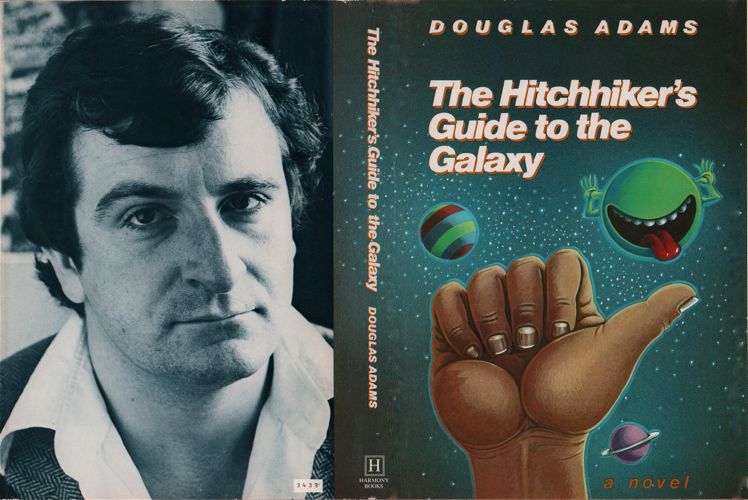
The Hitchhiker's Guide to the Galaxy is a comedy science fiction franchise created by Douglas Adams. Originally a radio sitcom broadcast over two series on BBC Radio 4 between 1978 and 1980, it was soon adapted to other formats, including both novels and comic books, a 1981 BBC television series, a 1984 text adventure game, stage shows and a 2005 feature film.
- Douglas Adams's Starship Titanic
Terry Jonesstandalone novel1997
similar byscience fictionwhimsicalrobotsfunny
At the heart of a galaxy of which we know nothing, the greatest, most advanced starship ever known has been built -- the Starship Titanic. It is fabulous, beautiful and technologically miraculous. On its maiden voyage it crashes into hyperspace and vanishes. The first you know of it is when you are sitting at home having a quiet evening in front of the TV and the most fabulous starship in the galaxy crashes into your home. You find your way on board (or not, if you just want to play the two min ute version of the game) and are confronted with an interior which resembles a mixture of the Ritz, the Chrysler Building, Tutankhamen’s tomb, and Venice. The ship is inhabited by traumatized robots, a lobotomized cyberintelligence, a frankly unhinged parrot and, as the ship takes off, taking you deep into unknown interstellar space, you realize that life on board as a third class passenger is going to be tough going. You find yourself in the grip of one of the most powerful forces known to modern man -- the desire for a free upgrade. Your task is to discover what has happened here, to reveal the deep conspiracy that lies behind this catastrophic failure, to repair the ship’s intelligence and guide the ship back home. To do this you will have to gain the trust of the robots, which you do the same way you would with anybody else -- by talking to them. State-of-the-art language technology lets you do this.
- Sirius: A Fantasy of Love and Discord
Olaf Stapledonstandalone novel1944
similar byscience fictionour worldmid 20th century
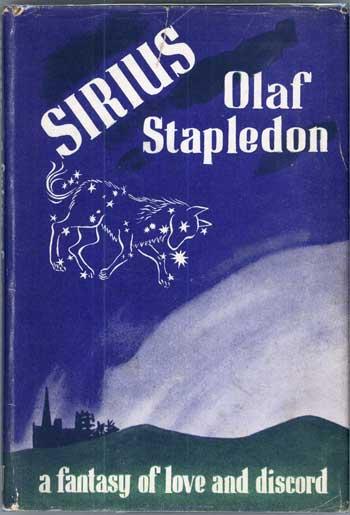
Sirius is a 1944 science fiction novel by the British philosopher and author Olaf Stapledon, whose title character is a dog named Sirius with humanlike intelligence. A sense of existential questioning suffuses the book, as the author delves into aspects of Sirius's psyche. The novel deals with many human issues through Sirius and his experiences, his unusual nature, his ideas and his relationships with humans. The characters go to great lengths to prevent Sirius from becoming a circus-type wonderdog, and instead, they seek to develop Sirius's character much like a family would create and foster that of a human child.
- What Entropy Means to Me
George Alec Effingerstandalone novel1972
similar byscience fictionwhimsicalour worldfunny
Doctor, watch out! As Dore stood by, he saw the Doctor backing slowly into the corner where he would meet his fate. Initially defending himself with a torch, the Doctor searched frantically for a new method of defense. The crimson mass is lunging forward using long, tentacle-like attachments: what is that thing? Slowly the subhuman blob comes in to focus, and Dore realizes . . . it's a colossal radish! This is a monster never before wrestled with; what are they going to do? After reading this vegetative tale, you won't look at your garden the same way again..
- Foundation Universe
universe123 books1940
Start hereFoundation · Start here
similar byscience fictionrobots+1 more
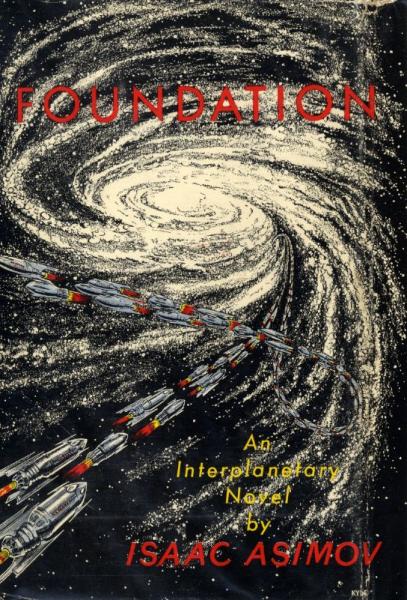
There is a science that reads the future of quadrillions the way an astronomer reads the orbits of stars. It is called psychohistory, and its equations foresee something the ruling Galactic Empire cannot admit: the throne is rotting, and thirty thousand years of barbarism are coming. One man, Hari Seldon, cannot stop the fall. He can only shorten it — by seeding a Foundation of scholars at the rim of the galaxy, a fragile institution built to carry knowledge across the dark and cut the interregnum to a single millennium. This is a universe told in the register of history itself: the long view, the calm of deep time, empires measured in centuries and men measured against them. The spine is Asimov's original trilogy — Foundation, Foundation and Empire, Second Foundation — followed decades later by the sequels Foundation's Edge and Foundation and Earth and the prequels Prelude to Foundation and Forward the Foundation. Late in life Asimov braided this in with his other future histories: the Robot novels of detective Elijah Baley and his humaniform partner R. Daneel Olivaw (The Caves of Steel, The Naked Sun, The Robots of Dawn, Robots and Empire) and the early Galactic Empire novels (Pebble in the Sky and its kin), until one continuous chronicle ran from the first thinking robots to the Second Empire. Other hands extend it — the Second Foundation Trilogy by Gregory Benford, Greg Bear, and David Brin, and shared-world spinoffs such as Robot City — so the corpus sprawls beyond a single author's tidy shelf. What distinguishes it is that the drama is intellectual: crises resolved by insight, nerve, and dialogue rather than fleets and blades, each turn hinging on the hidden logic of the Seldon Plan. Begin where readers have always begun — with Foundation, and the original trilogy in publication order. The rest opens outward from there.
- October the First Is Too Late
Fred Hoylestandalone novel1966
similar byscience fictionour worldmid 20th century
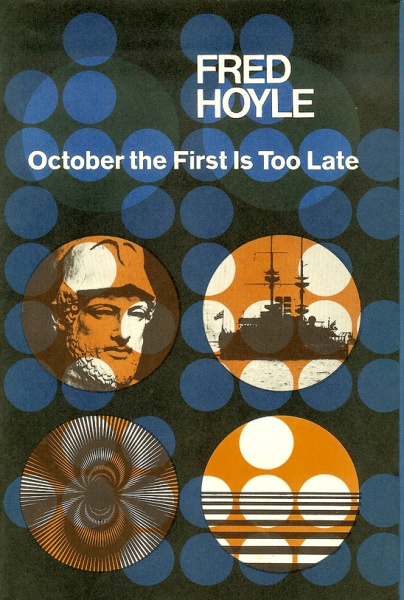
October the First is Too Late is a science fiction novel by astrophysicist Fred Hoyle. It was first published in 1966.
- The Disappearance
Philip Wyliestandalone novel1951
similar byscience fictionour worldmid 20th century
One ordinary moment, the world splits in two: every man on Earth finds every woman gone without a trace, and at the same instant every woman finds herself in a world emptied of men -- two parallel realities on the same planet, each population convinced the other has vanished. Philip Wylie follows both worlds afterward, one sliding into authoritarian collapse without women to share or restrain power, the other building something more equal and freer, using the split to interrogate mid-century assumptions about sex, marriage and the double standards separating what men and women were each allowed to be. A speculative novel years ahead of the feminist movement it anticipates.
- The House That Stood Still
A. E. van Vogtstandalone novel1950
similar byscience fictionour worldmid 20th century
A California estate lawyer takes a case involving a decaying mansion built atop a pre-Toltec stone structure, and discovers, following a secretive cult in the house, that the ancient foundation confers immortality on those who know how to use it. Drawn in through his attraction to a cult member, the lawyer learns the group possesses technology beyond its disguise, including spacecraft, and is preparing to relocate the house's stones off-world to escape a coming war. He finds himself trying to stop a catastrophe, expose an ancient secret, and win the woman's trust, all at once. A. E. van Vogt's blend of hardboiled mystery and cosmic science fiction.
- Out of Their Minds
Clifford D. Simakstandalone novel1970
similar byscience fictionwhimsicalour world
From the back cover of the first DAW printing: "Out of their minds and the force of their imagination, men have created countless beings, from demons and dragons and monsters of legend to story-book heroes and comic strip characters. What if their world were real - if vampires, devils and Don Quixote hobnobbed with Dagwood Bumstead and Charlie Brown. Such a world would have its fascinations... and its dreadful perils - if it existed. Horton Smith found out that it did exist... and that he was right in the middle of it!"