Loreful
HomeDiscover
Search series, authors…⌘K
Loreful

Reading orders for SF/F series and shared universes — with your place kept in every one.

Explore

UniversesSeriesWorksAuthorsAtlas

Help

FAQAboutSite map

Account & legal

Sign inCreate accountPrivacyTerms

Data

Built on ISFDB, Wikipedia, Wikidata and Open Library. Curated reading orders carry their reasoning on the page; the rest follow publication order. Data sources & licenses

© Loreful · data: ISFDB · CC BY

More like Judgment Day

anchored on:thriller & suspensespy thrillertensepolitical intrigueassassinsnorth america+1 more

but

Mood

The mood the book leaves you in.

  • The reading experience is propelled by journeys, exploration, and physical risk; excitement and forward momentum dominate over dread or introspection.
  • Joy and loss are deliberately mixed; the resolution grants characters something real while taking something else away, leaving warmth and sorrow together.
  • The book demands work from the reader — dense prose, difficult structure, unfamiliar ideas, or morally uncomfortable material — as part of its intended effect.
  • Grim events, cruelty, or despair dominate the atmosphere, and the book does not soften them with comfort or comic relief.
  • The atmosphere is quietly unsettling — wrongness, unease, and the uncanny pervade the book without necessarily escalating into overt horror.
  • The book is built to move the reader; character feeling is foregrounded and major scenes aim at a strong emotional response.
  • Humor is a primary aim and the prose plays for laughs — comic situations, wit, or dialogue produce sustained comedy, not occasional levity.
  • The book insists that things can improve; effort and decency are shown to matter, and the arc bends toward better outcomes even through hardship.
  • The book teaches as it goes — real facts, history, science, or craft are conveyed in enough depth that learning is part of the reading experience.
  • The book is designed to uplift and motivate, presenting perseverance or achievement in a way that invites the reader to aspire or act.
  • The overall register is cheerful and easygoing; stakes are kept gentle and the book avoids dwelling on pain or dread.
  • Withheld information drives the experience; the book sustains enigmas and secrets the reader wants resolved, whatever its genre.
  • The book is contemplative and inward-looking, giving more weight to thought, memory, and meaning than to external events.
  • The book works as comfort reading — low tension, a soothing pace, and an atmosphere the reader can unwind in.
  • Grief, loss, or melancholy set the dominant register, and the book lets sorrow stand rather than resolving it into comfort.
  • Sustained suspense is the point; the book keeps the reader braced for what happens next through danger, pressure, or impending revelation.
  • Playful invention and charm define the register — fanciful conceits, light absurdity, and a narration that delights in its own oddity.

About

What the story runs on.

  • Stories in which extraterrestrial beings are central — as characters, cultures, or the object of the plot.
  • Stories about venturing into space to explore — survey missions, astronauts, and the frontier of the unknown beyond Earth.
  • Stories structured as a quest — a journey undertaken to find, deliver, or destroy something of great import.
  • Stories in which staying alive against nature, catastrophe, or scarcity is the central problem.
  • Stories of lovers kept apart by law, family, faith, or station, where the obstacle to love is the plot.
  • Stories in which a friendship — its making, testing, or loss — is the emotional center.
  • Stories of growing up — a young protagonist crossing from childhood into adult knowledge and responsibility.
  • Stories about who a character truly is — self-discovery, doubled lives, and the search for a self.
  • Stories in which a buried family truth — hidden parentage, crimes, or shames — surfaces and reorders the present.
  • Stories driven by maneuvering for power — factions, conspiracies, and statecraft conducted in shadow.
  • Stories in which war itself is the subject — combat, occupation, and what warfare does to soldiers and civilians.
  • Stories organized around investigating a killing — the case, the clues, and the pursuit of the killer, in any genre's clothing.

Shelf

Where it sits in the library.

    • Fiction built on magic or other supernatural elements that have no scientific explanation.
    • Secondary-world fantasy at large scale, where the fate of nations or the world turns on the protagonists' struggle.
    • Fantasy set in a recognizably modern city or contemporary world where the supernatural intrudes on everyday life.
    • Fantasy that blends in horror's atmosphere and imagery, keeping a fantastical frame around grim or frightening material.
    • Action-driven fantasy following warriors or rogues with personal stakes against sorcerous threats, rather than world-spanning conflicts.
    • Fantasy set in a real historical period or a close analogue of one, with magic woven into the era.
    • Fantasy in which protagonists cross from the ordinary world into another world through a portal or similar passage.
    • Fiction that retells or reworks a traditional fairy tale in a new form or setting.
    • Fantasy drawing directly on myths, legends, and folklore, retelling them or building on their figures and logic.
    • Fantasy of ghosts, vampires, shapeshifters, psychics, and similar phenomena, usually set in an otherwise ordinary world.
    • Fiction mixing science-fictional trappings with overtly magical or impossible elements in one setting.
    • Low-stakes fantasy emphasizing comfort, community, and everyday pleasures over conflict and peril.
    • Speculative fiction of pervasive moral ambiguity, violence, and cynicism that rejects heroic conventions — fantasy and SF alike.
      • Fiction that extrapolates from science and technology — future societies, space travel, or speculative inventions — within at least nominally natural laws.
      • Science fiction of interstellar scope — starships, galactic polities, and adventure across star systems.
      • Science fiction committed to scientific rigor, where technical plausibility constrains the story.
      • Science fiction centered on armed forces and warfare, told largely from a military point of view.
      • Science fiction of networked, corporate-dominated near futures, pairing high technology with social decay.
      • Science fiction styled on nineteenth-century steam-powered technology, often in a Victorian or pseudo-Victorian setting.
      • Fiction depicting an oppressive or catastrophic society, presented as a warning.
      • Fiction set after civilization's collapse, following survivors in the ruins of the old world.
      • Fiction in which characters move between past and future, and the mechanics or consequences of that travel drive the plot.
      • Fiction exploring a world where a historical event went differently and history diverged from ours.
      • Science fiction about humanity's first encounter and communication with an alien intelligence.
      • Science fiction in which extraterrestrial forces attack or occupy Earth and humanity resists.
      • Fiction whose primary aim is to frighten or unsettle the reader through dread, menace, or the monstrous.
      • Horror of vast, indifferent, incomprehensible entities before which humanity is insignificant, in the Lovecraft tradition.
      • Horror of decaying houses, buried family secrets, and oppressive atmosphere in the Gothic literary tradition.
      • Horror centered on hauntings and the returning dead.
      • Horror located in the mind — paranoia, obsession, and unreliable perception rather than external monsters.
      • Horror built around the reanimated dead and survival amid their outbreaks.
      • Horror defined by explicit, transgressive gore that refuses to cut away from violence.
      • Speculative fiction of the strange and uncanny that resists both natural explanation and standard genre categories.
      • Fiction organized around solving a crime or puzzle, typically following an investigator toward the identification of a culprit.
      • A puzzle-first mystery that lays out clues so the culprit's identity can be deduced before the reveal.
      • Crime fiction of moral ambiguity, fatalism, and hard-edged style, set among the corrupt and the doomed.
      • A mystery following the realistic routines of police work — forensics, interviews, and case-building.
      • A gentle mystery with an amateur sleuth, a small community, and violence kept off the page.
      • A mystery set in a past era, where the investigation works within that period's methods and society.
      • Fast-paced fiction driven by imminent danger, pursuit, or high-stakes conspiracy, built to sustain tension.
      • A thriller of espionage — agents, tradecraft, and intelligence services in conflict.
      • A thriller centered on lawyers and the courtroom, where litigation carries the suspense.
      • A thriller driven by detailed contemporary or near-future technology, often military or scientific.
      • A thriller whose tension comes from mental states and manipulation between characters rather than external action.
      • Fiction whose central plot is a romantic relationship and its development toward an emotionally satisfying resolution.
      • Romance in which one or both partners are supernatural beings, blending fantasy elements into the love story.
      • A fantasy-romance hybrid in which the romantic arc and the fantasy plot carry equal weight.
      • Romance set in a past era, with courtship shaped by the period's society and manners.
      • Romance set in the present day, without supernatural or historical elements.
      • Fiction set in a real past period, where the historical setting materially shapes characters and events.
        • General and literary fiction emphasizing prose style, character interiority, or formal ambition over genre plot conventions.
        • Fiction in a realistic world where magical events occur and are treated as ordinary, in the tradition of Latin American literature.
        • Fiction that ridicules people, institutions, or society in order to criticize them.
        • Fiction of dreamlike, irrational imagery and logic that breaks from realistic representation.
        • Fiction that plays with narrative convention through metafiction, fragmentation, and self-reference.
        • Fiction propelled by journeys, exploration, and physical peril, where action and survival carry the plot.
        • Adventure fiction of ships and seafaring — naval engagements, voyages, and life at sea.
        • Fiction of the American frontier West — gunmen, ranchers, and lawmen, typically in the late nineteenth century.
        • Fiction centered on soldiers, campaigns, and the experience of warfare, historical or imagined.
          • Fiction written primarily to amuse, using comedic situations, wit, or parody as its organizing principle.
            • Multi-generational fiction following a family or dynasty across decades, with inheritance and kinship as the through-line.
              • Fiction whose world runs on explicit game mechanics — levels, stats, and skills that characters can see and exploit.
                • Fiction about costumed or superpowered heroes and their conflicts with comparable villains.

                Practical

                How long a commitment, whether it stands alone, and whether it has finished.

                Tap a chip to ask for it · tap again to rule it out · once more to clear. Numbers show what would be left.

                • Cover of The Manchurian Candidate
                  The Manchurian Candidate

                  Richard Condon · standalone novel · 1959

                  similar bynorth americatensethriller & suspensepolitical intrigueassassinsspy thriller

                  The Manchurian Candidate (1959), by Richard Condon, is a political thriller about the son of a prominent U.S. political family who is brainwashed into being an unwitting assassin for a Communist conspiracy. The novel has been adapted into a feature film twice; the first is The Manchurian Candidate (1962), which deals with anti-communist hysteria in U.S. politics, and the second is The Manchurian Candidate (2004), which deals with corporate interference in the U.S. government.

                • Cover of Libra
                  Libra

                  Don DeLillo · standalone novel · 1988

                  similar bynorth americatensepolitical intrigueassassinsthriller & suspense+1 more

                  Two disgruntled CIA agents decide that an unsuccessful assassination attempt on John F. Kennedy's life, one that can be linked to Fidel Castro, is the only way to put Cuba back into geopolitical play. They choose Lee Harvey Oswald as the instrument to put their plot in motion.

                • Cover of The Spook Who Sat by the Door
                  The Spook Who Sat by the Door

                  Sam Greenlee · standalone novel · 1969

                  similar bynorth americaspy thrillertensepolitical intriguethriller & suspense

                  The Spook Who Sat by the Door (1969), by Sam Greenlee, is the fictional story of Dan Freeman, the first black CIA officer, and of the CIA's history of training persons and political groups who later used their specialised training in gathering intelligence, political subversion, and guerrilla warfare against the CIA. The novel has been characterised as "part thriller, part satire and part social commentary". As described by The New Yorker, the title "alludes to the conspicuous deployment of the agency's one black officer to display its phony integration".

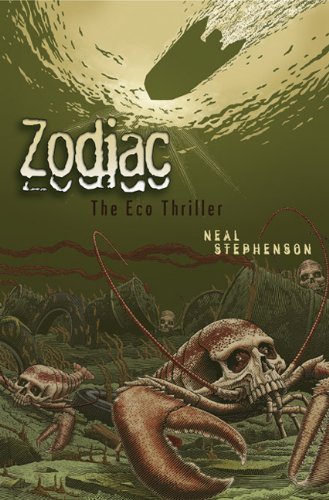
                • Cover of Zodiac: The Eco-Thriller
                  Zodiac: The Eco-Thriller

                  Neal Stephenson · standalone novel · 1988

                  similar bynorth americatensethriller & suspenseadventurouspolitical intrigue

                  Sangamon Taylor's a New Age Sam Spade who sports a wet suit instead of a trench coat and prefers Jolt from the can to Scotch on the rocks. He knows about chemical sludge the way he knows about evil -- all too intimately. And the toxic trail he follows leads to some high and foul places. Before long Taylor's house is bombed, his every move followed, he's adopted by reservation Indians, moves onto the FBI's most wanted list, makes up with his girlfriend, and plays a starring role in the near-assassination of a presidential candidate. Closing the case with the aid of his burnout roomate, his tofu-eating comrades, three major networks, and a range of unconventional weaponry, Sangamon Taylor pulls off the most startling caper in Boston Harbor since the Tea Party. As he navigates this ecological thriller with hardboiled wit and the biggest outboard motor he can get his hands on, Taylor reveals himself as one of the last of the white-hatted good guys in a very toxic world.

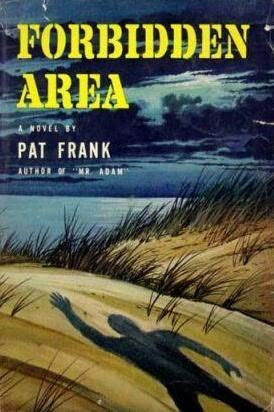
                • Cover of Forbidden Area
                  Forbidden Area

                  Pat Frank · standalone novel · 1956

                  similar bynorth americatensethriller & suspensepolitical intriguespy thriller

                  Forbidden Area is a 1956 Cold War thriller novel by Pat Frank. Its plot involves Soviet sleeper agents intended to sabotage the U.S. war effort, who have been trained by classical conditioning to have an American "cover identity" that they can remember as well as their own.

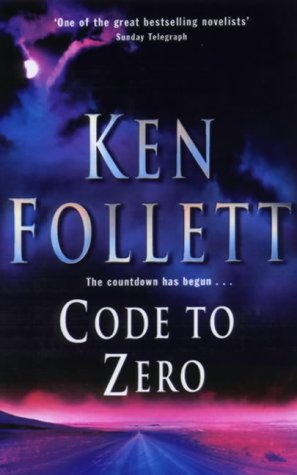
                • Cover of Code to Zero
                  Code to Zero

                  Ken Follett · standalone novel · 2000

                  similar bynorth americatensethriller & suspensepolitical intriguespy thriller

                  Code to Zero is a novel by the British author Ken Follett, published by Pan Macmillan. The story follows Luke, an amnesic who spends the duration of the book learning of his life, and slowly uncovering secrets of a conspiracy to hold the United States back in the space race.

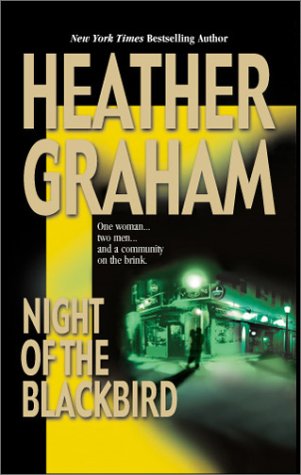
                • Cover of Night of the Blackbird
                  Night of the Blackbird

                  Heather Graham · standalone novel · 2001

                  similar bynorth americatensethriller & suspensepolitical intrigue+1 more

                  Moira Kelly has come home to Boston to celebrate St. Patrick's Day with family and friends. The last thing she expects to find in the family pub is the undercurrent of danger as talk turns to politics. All too quickly, Moira finds herself struggling with the anger of her old flame, Dan O'Hara, and the convictions of her new love, Michael McLean. Torn between them, she becomes a pawn in a conspiracy that promises to bring the violence and hatred of a different time and place to her own backyard.This passionate, close-knit community is harboring a traitor. And as the chilling acts of evil unfold around her, Moira must face the fact that a generation is not long enough to soften revenge.

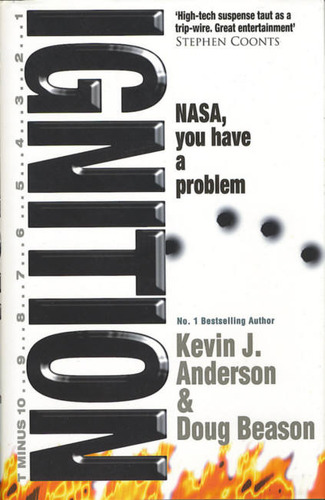
                • Cover of Ignition
                  Ignition

                  Kevin J. Anderson & Doug Beason · standalone novel · 1996

                  similar bynorth americatensethriller & suspense+2 more

                  From the front flap of the Forge first edition: "The launch of the shuttle Atlantis will make history. Another triumph for the space program and a political coup: a Russian cosmonaut is scheduled to perform the first spacewalk from an American unit. The checkout fail-safes are all go. The mission is proceeding like clockwork. The team of American and Russian astronauts are strapped in, the mission specialists in Houston see no hitches. No one knows the real danger... For as millions of viewers tune in to watch the countdown, there's nothing to indicate that what they're seeing is a prerecorded show. Terrorists have take over Launch Control at Cape Canaveral and are threatening to blow up the Atlantis in less than three hours - unless their demands are met. Only Colonel "Iceberg" Friese, the mission's former commander, invalided out with a broken foot, knows about the danger to his crew. Unknown to anyone, he's sneaked into the restricted zone. And now it's up to him to stop the clock before the countdown reaches... Ignition."

                • Cover of The Sum of All Fears
                  The Sum of All Fears

                  Tom Clancy · standalone novel · 1991

                  similar bynorth americatensethriller & suspensepolitical intriguespy thriller

                  The Sum of All Fears is a political thriller novel, written by Tom Clancy and released on August 14, 1991, as the sequel to Clear and Present Danger (1989). The main character Jack Ryan, who is now the Deputy Director of Central Intelligence, tries to stop a crisis concerning the Middle East peace process wherein Palestinian and former East German terrorists conspire to bring the United States and Soviet Union into a nuclear war. It debuted at number one on the New York Times bestseller list.

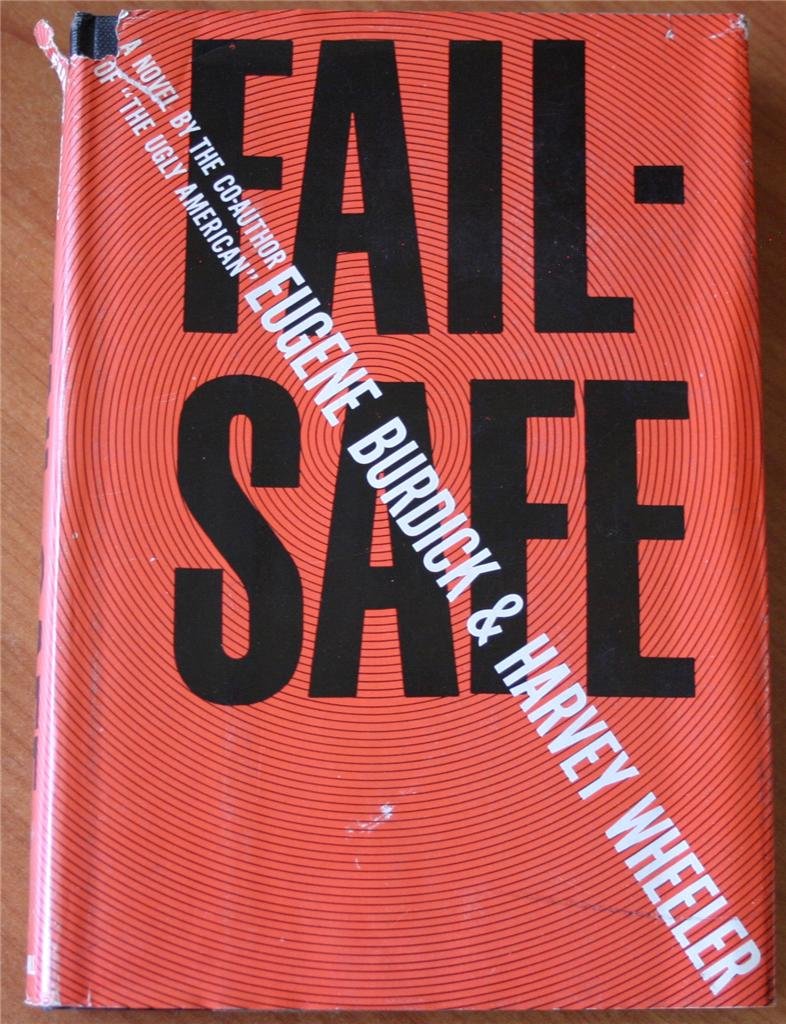
                • Cover of Fail-Safe
                  Fail-Safe

                  Harvey Wheeler & Eugene Burdick · standalone novel · 1962

                  similar bynorth americatensethriller & suspense+1 more

                  Fail-Safe is a bestselling American novel by Eugene Burdick and Harvey Wheeler. Expanded from Wheeler's short story "Abraham '59", it was initially serialized in three installments in the Saturday Evening Post on October 13, 20, and 27, 1962, during the Cuban Missile Crisis.

                • Cover of The Rick Keller Project
                  The Rick Keller Project

                  series · 2 books · 2014

                  similar bynorth americatensethriller & suspense+2 more

                • Cover of Jack McClure
                  Jack McClure

                  series · 1 book · 2008

                  similar bynorth americatensethriller & suspensepolitical intrigue

                  First Daughter opens Eric Van Lustbader's Jack McClure thrillers with a troubled ATF agent pulled into the President-elect's inner circle after the President-elect's daughter is kidnapped, forcing McClure to work the case in Washington while his own past complicates the investigation. Later novels keep McClure entangled in national-security conspiracies at the edges of American power. It is a contemporary political thriller rather than fantasy or SF.

                • Cover of Christopher Family Chronicles
                  Christopher Family Chronicles

                  series · 8 books · 1973

                  completed

                  similar bytensespy thrillerpolitical intriguethriller & suspense+2 more

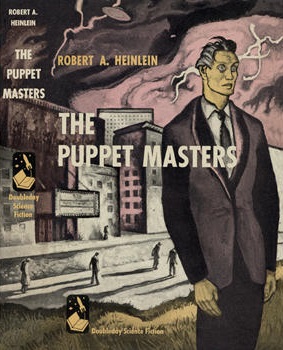
                • Cover of The Puppet Masters
                  The Puppet Masters

                  Robert A. Heinlein · standalone novel · 1951

                  similar bynorth americatense+2 more

                  Parasitical aliens attach themselves to human hosts and take over their bodies. Two spies are sent to find out what's happening, but the extent is much farther than they knew. With access to the humans' memories, the aliens quietly invade the government and start taking over.

                • Cover of The Montglane Service
                  The Montglane Service

                  series · 2 books · 1989

                  similar bytensethriller & suspensenorth americapolitical intrigue+1 more

                • Cover of The President's Vampire / Nathaniel Cade
                  The President's Vampire / Nathaniel Cade

                  series · 4 books · 2010

                  similar bynorth americatensethriller & suspensepolitical intrigue+1 more

                • Cover of Billy Summers
                  Billy Summers

                  Stephen King · standalone novel · 2021

                  similar bynorth americatensethriller & suspenseassassins

                  Billy Summers is a crime novel written by American author Stephen King, published by Scribner on August 3, 2021.

                • Cover of The Jesus Factor
                  The Jesus Factor

                  Edwin Corley · standalone novel · 1970

                  similar bynorth americatensethriller & suspensepolitical intrigue

                  The Jesus Factor is a 1970 conspiracy theory thriller novel by Edwin Corley based on the Manhattan Project of World War II and the bombing of Hiroshima and Nagasaki. It concerns issues relating to the "arms race" and the collective guilt of those involved with the bombings.

                • Cover of Assassin (Robert Ferrigno)
                  Assassin (Robert Ferrigno)

                  series · 3 books · 2006

                  similar bynorth americatensepolitical intrigueassassinsthriller & suspense

                • Cover of Miamigrad
                  Miamigrad

                  Jerry Ahern & Sharon Ahern · standalone novel · 1987

                  similar bynorth americatensethriller & suspensepolitical intriguespy thriller

                  Miami Beach is invaded by Soviet and Cuban forces. A former CIA agent and a KGB agent must work together to avert nuclear war.

                • Cover of Promises to Keep
                  Promises to Keep

                  George Bernau · standalone novel · 1988

                  similar bynorth americatensepolitical intriguethriller & suspense+1 more

                  From Wikipedia: An alternate history in which President John T. Cassidy (representing John F. Kennedy) survives the assassination attempt in Dallas, but is wounded in the head. The book deals with the political implications of an ambitious Vice President (Rance Gardner, representing Lyndon B. Johnson) who becomes Acting President thanks to a presidential letter signed by Cassidy that resembles the as-yet-unratified 25th Amendment.

                • Cover of Winter Kills
                  Winter Kills

                  Richard Condon · standalone novel · 1974

                  similar bynorth americatensepolitical intriguethriller & suspense+1 more

                  A thinly-veiled alternate history of the Kennedy assassination.

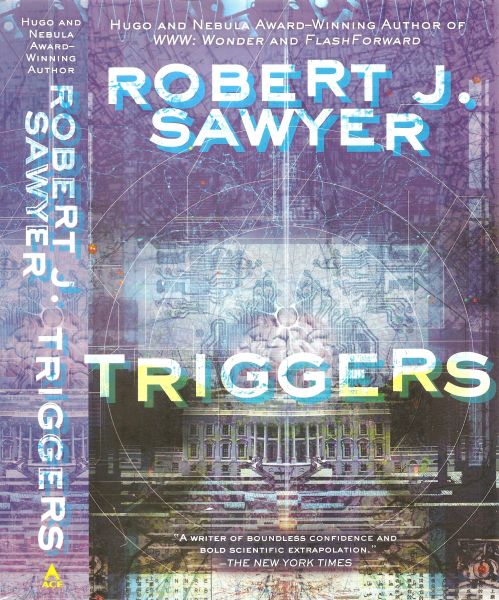
                • Cover of Triggers
                  Triggers

                  Robert J. Sawyer · standalone novel · 2012

                  similar bynorth americatensethriller & suspense+2 more

                  Triggers is a science fiction novel by Canadian writer Robert J. Sawyer. It was originally serialized in Analog.

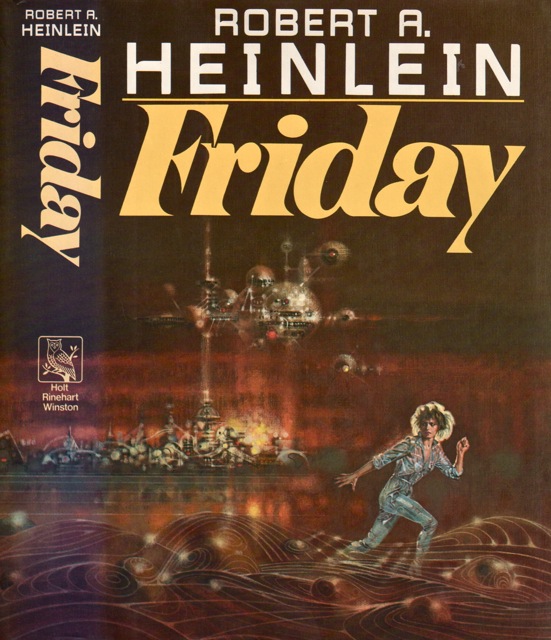
                • Cover of Friday
                  Friday

                  Robert A. Heinlein · standalone novel · 1982

                  similar bynorth americaadventuroustense+1 more

                  Friday is a 1982 science fiction novel by American writer Robert A. Heinlein. It is the story of a female "artificial person", the eponymous Friday, genetically engineered to be stronger, faster, smarter, and generally better than normal humans. Artificial humans are widely resented, and much of the story deals with Friday's struggle both against prejudice and to conceal her enhanced attributes from other humans. The story is set in a Balkanized 21st century, in which the nations of the North American continent have been split up into a number of smaller states.