More like Kash
anchored on:romancescience fictionother star systems
but
- Tunnel in the Sky
Robert A. Heinleinstandalone novel1955
similar byfar futureother star systemsscience fiction+2 more
As the final test of a survivalist/explorer class, teenagers are dumped on an alien planet to use their skills while awaiting pickup. But something has gone wrong, and they find they are on their own.
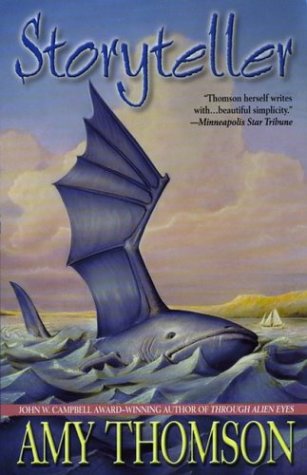
- Storyteller
Amy Thomsonstandalone novel2003
similar byfar futureother star systemsscience fictionromancespace+2 more
Storyteller is a book by Amy Thomson published in 2003 by Ace Books. The book follows the story of an orphan who is adopted by a storyteller, a member of the Storytelling Guild who travels the stars in a historian like capacity. In contrast to her earlier books which were very hard science fiction Storyteller was much more romantic, the novel focuses on themes such as longevity and environmentalism ignoring technological focus. One reviewer wrote "Some readers will find this book immensely touching. However, readers who prefer a harder edge are liable be put off by sentimentality, weak conflict and a too-readily resolved plot that smacks of wish fulfillment".
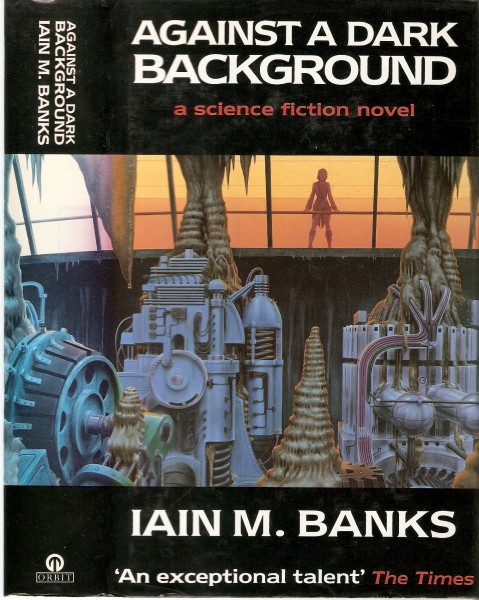
- Against a Dark Background
Iain M. Banksstandalone novel1993
similar byfound familyfar futureother star systemsscience fictionspace
The daughter of an impoverished noble house and her squad of soldiers become thieves of antiquities; long after their retirement and separation she must assemble them again in order to find and steal the most powerful weapon ever created, or pay with her life.
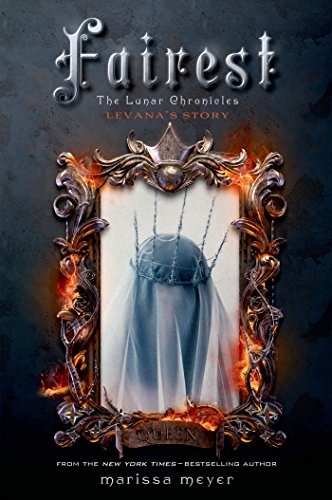
- Lunar Chronicles
series15 books2011
similar byfar futureother star systemsscience fiction+2 more
The Lunar Chronicles is a series of four young adult science fiction novels, a novella, and a short story collection written by American author Marissa Meyer and published by Feiwel & Friends. Each book entails a science fictional twist on a classic fairy tale, including "Cinderella", "Little Red Riding Hood", "Rapunzel", and "Snow White". Set in a futuristic world inhabited by various species and creatures, tensions are rising between Earth and its former colony Luna, while both attempt to manage an ongoing pandemic.
- The Great Migration Duology
series2 books2005
part of Liaden
similar byfar futureother star systemsscience fiction+3 more
- Catteni Sequence
series5 books1970
completed
similar byfar futureother star systemsscience fictionaliens+1 more
The Catteni series is a tetralogy of science fiction novels by American writer Anne McCaffrey. In this universe, humans are slaves of aliens, the humanoid Catteni. Woven through all four of the books are details of the relationship between Kristin Bjornsen, a former slave, and Zainal, a renegade Catteni.
- WondLa
series3 books2010
similar byfar futureother star systemsscience fictionaliens+1 more
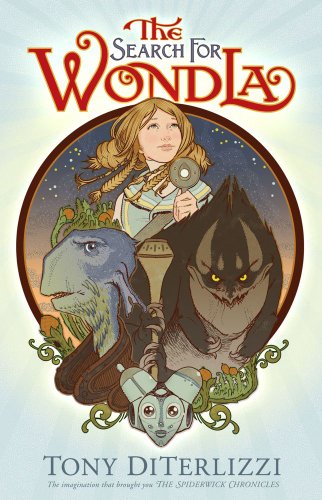
Tony DiTerlizzi's WondLa trilogy follows Eva Nine, a twelve-year-old girl raised in isolation underground by a robot guardian, who emerges onto a surface world populated by strange alien life and sets out to find others like herself. The Search for WondLa launches her journey, continuing through A Hero for WondLa and The Battle for WondLa.
- Starship Troopers
Robert A. Heinleinstandalone novel1959
similar byfar futureother star systemsscience fictionaliensspace
Starship Troopers is a military science fiction novel by American writer Robert A. Heinlein. Written in a few weeks in reaction to the US suspending nuclear tests, the story was first published as a two-part serial in The Magazine of Fantasy & Science Fiction as Starship Soldier, and published as a book by G. P. Putnam's Sons on November 5, 1959.
- Ender Wiggin
series14 books1977
part of Ender's Game Universe
similar byfar futureother star systemsscience fictionaliens+1 more
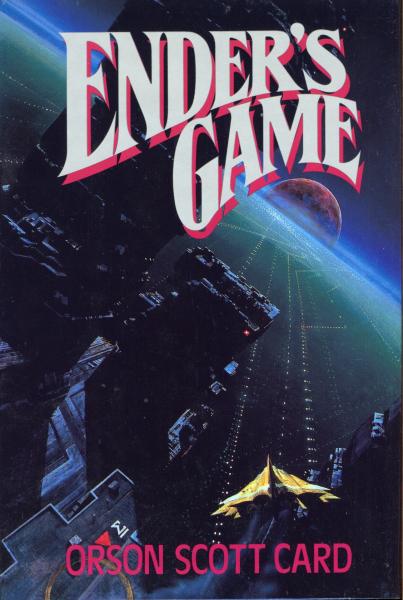
Orson Scott Card's Ender's Game (1985, expanded from his 1977 novella) follows child prodigy Andrew "Ender" Wiggin as he is recruited into a military training program built to prepare Earth's defenses for an anticipated third war against an insectoid alien species known as the Formics. The saga continues years later through Speaker for the Dead and Xenocide, following an older Ender as he confronts the moral weight of his role in that earlier conflict, and concludes the core arc in Children of the Mind, with Ender in Exile filling in the years between the first two books. Set within the wider Ender's Game universe, the series shifts from military coming-of-age story to slower, more philosophical science fiction as it progresses.
- Pip & Flinx
series18 books1972
part of Humanx Commonwealth
similar byfar futureother star systemsscience fictionaliensspace
The Pip & Flinx novels follow Flinx, a young man with an unusual, mysterious origin, and his ever-present animal companion Pip, across Alan Dean Foster's Humanx Commonwealth setting. Beginning with The Tar-Aiym Krang (1972) — chronologically the second entry, since Foster later filled in Flinx's earlier life — the series grew to fifteen novels published between 1972 and 2017, mixing planetary adventure with a slowly unfolding personal mystery.
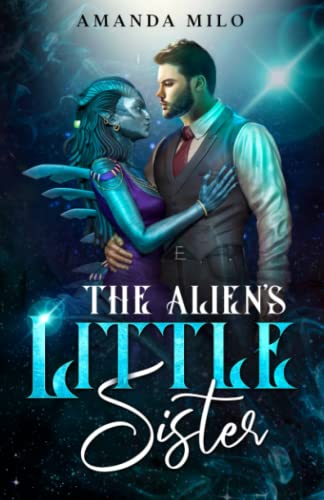
- The Alien's Little Sister
Amanda Milostandalone novel2020
similar byfar futureother star systemsscience fictionromance+1 more
- Ringworld
series5 books1970
part of Known Space
similar byfar futureother star systemsscience fictionaliensspace
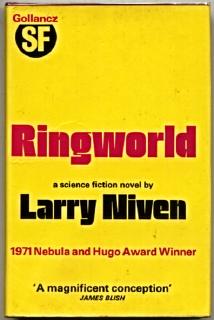
The Ringworld series is a series of science fiction novels written by American author Larry Niven. It is part of his Known Space series of stories. Its backdrop is the Ringworld, a giant artifact 3 million times the surface area of Earth circling a star. The series is composed of four standalone science fiction novels, the original award-winning book and its three sequels:1970: Ringworld 1979: The Ringworld Engineers 1996: The Ringworld Throne 2004: Ringworld's Children
- Winter's Orbit
series2 books2021
similar byfar futureother star systemsscience fictionmarriage of conveniencespace+1 more
- Agent of Change
series10 books1988
part of Liaden
similar byfar futureother star systemsscience fictionspace
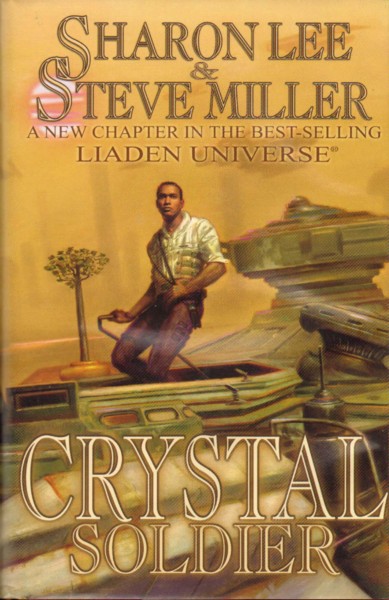
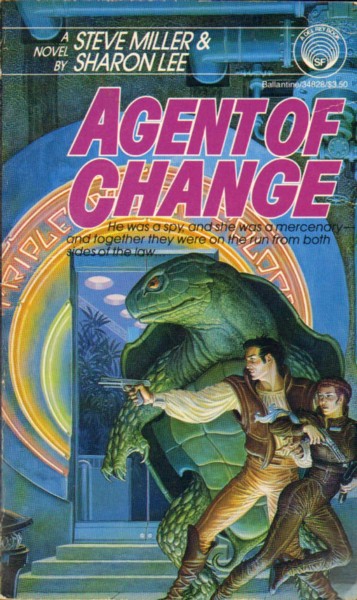
Agent of Change opens Sharon Lee and Steve Miller's long-running Liaden Universe sequence with Val Con yos'Phelium, a covert agent of the Liaden clans, and Miri Robertson, a mercenary soldier, forced into an uneasy alliance while fleeing assassins across space. It's the foundational quartet of a much larger set of novels blending space opera, clan intrigue, and a slow-burn partnership between its two leads. The series belongs to the wider Liaden universe, a shared future history of trade clans, mercenary companies, and human/alien contact spanning dozens of books.
- Hainish
series33 books1964
completed
similar byfar futureother star systemsscience fiction+1 more
The Hainish Cycle consists of a number of science fiction novels and stories by Ursula K. Le Guin. The cycle is set in a future history that features civilizations of human beings on planets orbiting a number of nearby stars, including Terra ("Earth"); these humans are contacting each other for the first time and establishing diplomatic relations, as well as setting up a confederacy under the guidance of the oldest of the human worlds, the peaceful planet Hain. In this history, human beings did not evolve on Earth, but they were instead the result of interstellar colonies planted by Hain in the distant past, after which interstellar travel ceased for an extended period. Some of the human races have new genetic traits, a result of ancient Hainish experiments in genetic engineering; this includes people who can dream while awake, and a world of hermaphroditic people who only enter active sexuality once per month, not knowing which sex will manifest in them. In keeping with Le Guin's narrative approach, she uses varied social and environmental settings to explore the anthropological and sociological outcomes of human evolution in those environments. The author often discounted the characterization of a so-called "Hainish Cycle".
- The Eye of the Heron
Ursula K. Le Guinstandalone novel1978
similar byfar futureother star systemsscience fiction+1 more
The Eye of the Heron is a 1978 science fiction novel by American author Ursula K. Le Guin which was first published in the science fiction anthology Millennial Women.
- Terro-Human Future History
universe48 books1952
Start hereFuzzy Sequence · Start here
similar byfar futureother star systemsscience fiction+1 more
History does not repeat, Piper's chroniclers are fond of saying — it rhymes, and it rhymes in iron. Reckon the years from the first atomic pile, 1942, Year One of the Atomic Era, and follow the ledger forward some six thousand years: out of a nuclear war that nearly ended everything, up through the Terran Federation and its reach into the stars, down again through collapse and a long neobarbaric dark, and back up into the enlightened empires that rise from the ruins. It is one continuous future history — not a plot but a chronicle, worlds and centuries sharing a single unbroken timeline. H. Beam Piper assembled it in pieces through the 1950s and 60s, novels and novellas bound by chronology rather than by recurring heroes. The anchors are Little Fuzzy, a courtroom argument over whether a small golden native of Zarathustra is a person; Space Viking, raid and revenge amid the wreckage of the interregnum; and the Federation-era Four-Day Planet, The Cosmic Computer, and Uller Uprising. The eras sort cleanly — Federation, the System States War, the Space Vikings of the long dark, the Empire. After Piper's death in 1964 other hands took up the ledger: John F. Carr, who arranged the short fiction into the chronological Federation and Empire collections and carried on the Tanith and Space Viking line, plus Wolfgang Diehr's Fuzzy sequels and Dietmar Arthur Wehr's additions. The register is sober and engineer-eyed — competent men solving hard problems, empires ruled by benign despots, the cool conviction that civilizations rise and fall to the same recurring script. It ranges from the sunlit warmth of the Fuzzy books to the cold steel of a Viking raid. Newcomers start with Little Fuzzy, the warmest and most self-contained, or with Space Viking.
- Interstellar Brides Universe
series30 books2016
similar byfar futureother star systemsscience fictionromance+1 more