More like Killer Pine
anchored on:science fictionour worldmid 20th centuryadventurousadventuresurvival+2 more
but
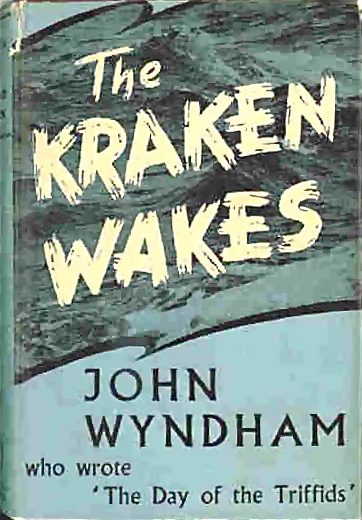
- The Kraken Wakes
John Wyndhamstandalone novel1953
similar bysurvivalmid 20th centuryscience fictionwartenseour world
" Behind a spectacular meteor shower actually hides the beginning of an invasion by a mysterious and powerful alien race. Earth's life is disrupted by the attacks of extraterrestrials whose war machines, emerging from the depths of the oceans, seem indestructible. The coalitioned forces of the whole world are worthless, powerless in the face of the indecipherable and deadly plans of a superior intelligence, capable of bringing the entire planet to the brink of catastrophe" Goodreads May 20, 2022
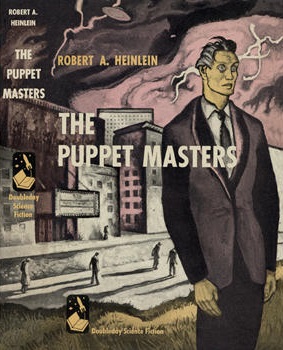
- The Puppet Masters
Robert A. Heinleinstandalone novel1951
similar bysurvivalmid 20th centuryscience fictiontensenorth america+1 more
Parasitical aliens attach themselves to human hosts and take over their bodies. Two spies are sent to find out what's happening, but the extent is much farther than they knew. With access to the humans' memories, the aliens quietly invade the government and start taking over.
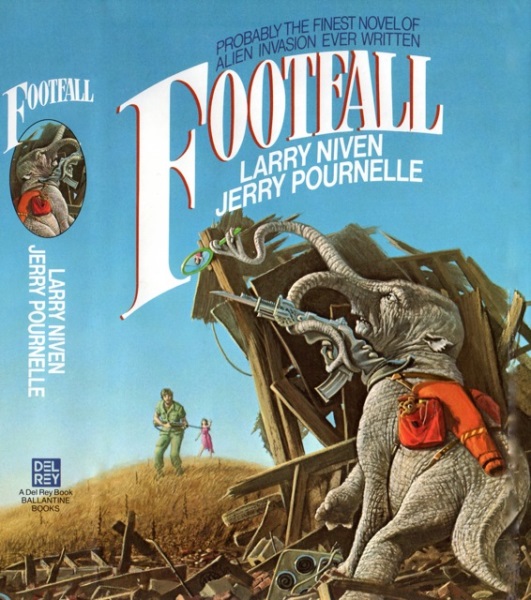
- Footfall
Larry Niven & Jerry Pournellestandalone novel1985
similar bysurvivalscience fictionwartenseour worldnorth america+1 more
When aliens travel to Earth from Alpha Centauri, differences between alien and human psychology result in an unprovoked invasion, and the resulting resistance results in the aliens' use of a devastating weapon.
- I Am Legend
Richard Mathesonstandalone novel1954
similar bysurvivalmid 20th centuryscience fictiontenseour worldnorth america
The last human survivor of the vampire epidemic has to maintain his defences against their onslaught, while attempting to research the cause and possibly solution to the plague. Robert Neville is the last living man on Earth... but he is not alone. Every other man, woman and child on the planet has become a vampire, and they are hungry for Neville's blood. By day he is the hunter, stalking the undead through the ruins of civilization. By night, he barricades himself in his home and prays for the dawn. How long can a man survive like this?
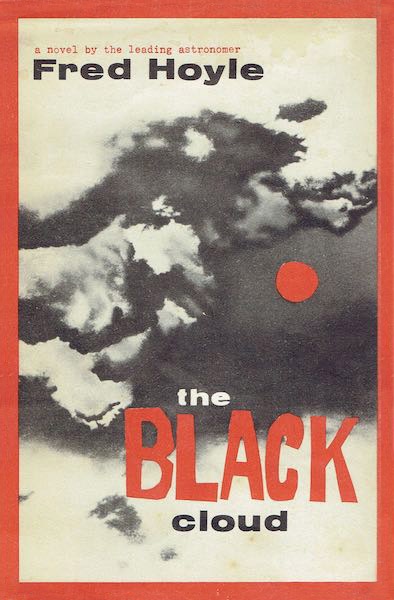
- The Black Cloud
Fred Hoylestandalone novel1957
similar bysurvivalmid 20th centuryscience fictiontenseour world
The Black Cloud is a 1957 science fiction novel by British astrophysicist Fred Hoyle. It details the arrival of an enormous cloud of gas that enters the Solar System and appears about to destroy most of the life on Earth by blocking the Sun's radiation.
- Alas, Babylon
Pat Frankstandalone novel1959
similar bysurvivalmid 20th centuryscience fictiontensenorth america
Classic novel of nuclear war and aftermath in rural Florida. From the back cover of a Bantam Pathfinder edition: "The day that the bomb dropped the thousands of years of "progress" that had covered the treacheries and weaknesses of ordinary man with a thin veneer of civilization were dissolved and melted like snow on the desert's dusty face. Then - the law of the jungle reigned but in the wreckage a few courageous survivors, men and women with the guts to have hope, were determined to build a new and better world on the ruins of the old. This is their story."
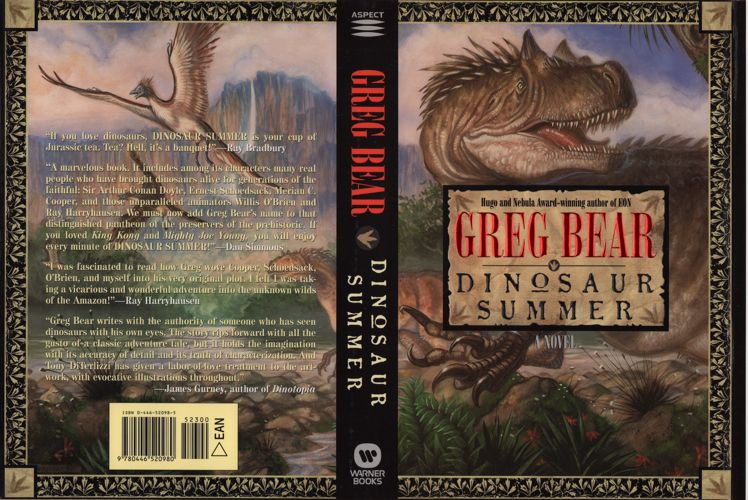
- Dinosaur Summer
Greg Bearstandalone novel1998
similar bysurvivalmid 20th centuryadventurousscience fictionadventuretense
From the flaps of the Warner first edition: "It's the year 1947, and nobody's interested in dinosaurs anymore. Less than fifty years after Professor Challenger's famed journey to the Lost World, America's last dinosaur circus is closing down... but the adventure of a lifetime is about to begin. In a dramatic change of pace, multiple Hugo and Nebula award-winning science fiction master Greg Bear, ... presents a lavishly illustrated thriller that is certain to become a new classic adventure beyond time... Peter Belzoni is dreading summer in Manhattan. Then his father, photojournalist Anthony Belzoni, offers the youth a job, a byline in National Geographic... and a trip to South America. For the Lothar Gluck Circus, once the world's foremost dinosaur attraction, had gone bankrupt. Left behind is a menagerie of avisaurs, centrosaurs, and ankylosaurs, as well as one large predatory raptor named Dagger. And now two filmmakers and the circus trainer plan to return the giants to the wild - with Peter and his dad chronicling the odyssey for Geographic. The task seems impossible. Many have died trying to bring beasts our of the Lost World, the plateau of El Grande in Venezuela, but nobody has ever attempted to transport nearly a dozen full-grown, multiton prehistoric creatures across continents, down rivers, through jungles, and up mountains that has been isolated for 70,000,000 years... The trek will strain the technologies of trains, cargo ships, barges, trucks... en route lurk robbers and hostile, trigger-happy soldiers... and each mile toward freedom excites Dagger toward an unstoppable primal killing frenzy. When the unthinkable threatens to strand Peter and the rest of the crew in an uncharted realm, four modern Americans will face all the unknown dangers, mysteries, and terrors of El Grande..."
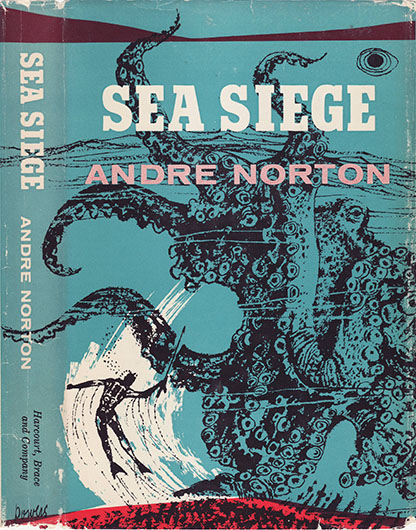
- Sea Siege
Andre Nortonstandalone novel1957
similar bysurvivalmid 20th centuryscience fictiontenseour world+1 more
On a bleak little island in the West Indies, Griff Gunston faces many questions. Why were so many small island cruisers adrift and abandoned? Why was the sea disease that Griff's scientist father was investigating radioactive. Why were the colonies of octopi growing larger and becoming so strangely organized and daring? Before the answers can be found, civilization blanks out. An atom bomb war has left the little group isolated. A danger from the ocean floor, a new type of intelligence is prepared to seize the world for itself. (adapted from the blurb accompanying the first edition)
- Lord of the Flies
William Goldingstandalone novel1954
similar bysurvivalmid 20th centurytenseour world+2 more
Lord of the Flies is the 1954 debut novel of British author William Golding. The plot concerns a group of prepubescent British boys who are stranded on an uninhabited island and their disastrous attempts to govern themselves that lead to a descent into savagery. The novel's themes include morality, leadership, and the tension between civility and chaos.
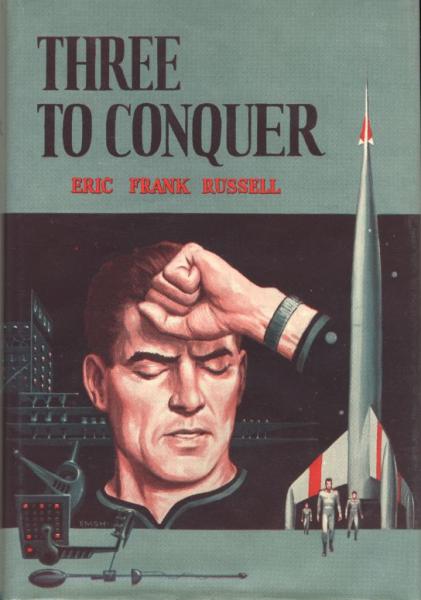
- Three to Conquer
Eric Frank Russellstandalone novel1956
similar bysurvivalmid 20th centuryscience fictiontenseour worldnorth america+1 more
Three to Conquer is a novel by Eric Frank Russell published in 1956.
- Watchers
Dean R. Koontzstandalone novel1987
similar bysurvivalscience fictionadventurousadventuretensenorth america
This probably qualifies as a science-based adventure rather than a science fiction novel. The premise, and only speculative fiction element, is that a U.S. government funded laboratory creates a golden retriever that's as intelligent as a human for use in intelligence gathering and also creates a monkey hybrid that's intended for a military police dog role and as a killing machine on battlefields. The animals escape and the story plays out as a straight adventure novel with a good chunk of romance thrown in.
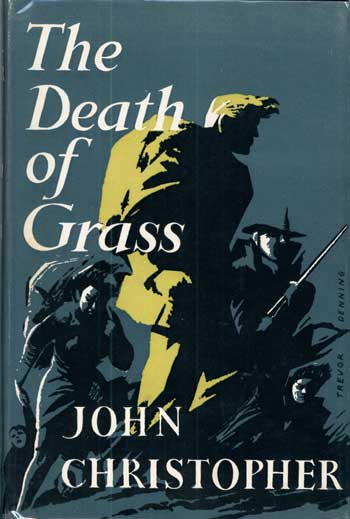
- The Death of Grass
John Christopherstandalone novel1956
similar bysurvivalmid 20th centuryscience fictiontenseour world
The Death of Grass is a 1956 post-apocalyptic science fiction novel written by the English author Sam Youd under the pen name John Christopher. The plot concerns a virus that kills off grass species, including rice and wheat. The Death of Grass was the first of several post-apocalyptic novels written by Youd. The novel was written in a matter of weeks and liberated him from his day job.
- Have Space Suit - Will Travel
Robert A. Heinleinstandalone novel1958
similar bysurvivalscience fictionadventuroustensenorth america
From the back cover of the Del Rey 9th printing: "Skyjacked - Everything happened at once. One minute Kip Russell was walking about in his own backyard, testing out an old space suit and dreaming about going to the moon - and the next he was out cold and the captive of an insidious space pirate. The whole thing seemed like a very bad dream until he discovered he wasn't the only prisoner on board. Then the reality of the situation became inescapable. He - along with the daughter of a world-renowned scientist and a beautiful creature from an alien planet - had been skyjacked by a monstrous extraterrestrial and they were on their way to the Moon... a journey toward a fate worse than death!"
- Z for Zachariah
Robert C. O'Brienstandalone novel1975
similar bysurvivalscience fictiontenseour worldnorth america+1 more
Sixteen-year-old Ann Burden, on an Amish family farm in an isolated valley, believes she is the only survivor of nuclear war and nerve gas. One day a man arrives in a "safe-suit" that he and others have recently developed.
- The Hunger Games
series3 books2008
part of The Hunger Games Universe
similar bysurvivalscience fictiontensenorth america+1 more
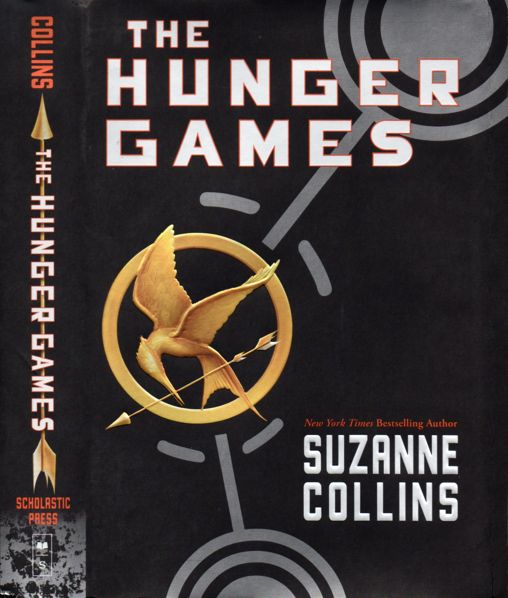
The Hunger Games is a series of young adult dystopian novels written by American author Suzanne Collins. The series consists of a trilogy that follows teenage protagonist Katniss Everdeen, as well as two prequels. The Hunger Games universe is a dystopia set in Panem, a post-apocalyptic North American country consisting of the wealthy Capitol and 12 districts in varying states of poverty. As punishment for rebellion, the Capitol hosts an annual battle royale competition called The Hunger Games. Each of the 12 districts must send two children between the ages of 12 and 18 to participate, and the last surviving child is dubbed the victor.
- Nerves
Lester del Reystandalone novel1956
similar bysurvivalmid 20th centuryscience fictiontensenorth america+1 more
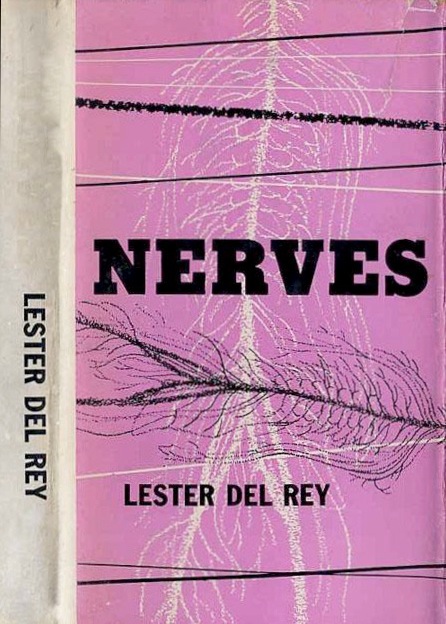
At the great atomic plant in Kimberly, a congressional committee makes a surprise inspection raising the level of the men's tension even higher than it has been. By midday there have already been minor accidents but in the giant nuclear converters which are at the heart of the project work goes on at desperate speed. Until converter Number four fails disastrously. Jorgenson, the supervisor of the technical team and his crew had been running through a new and unstable isotope when the walls of the reactor gave way. The process of fusion is suddenly out of control...and half a continent may be destroyed in a "peace-time" disaster which will not only sacrifice millions of lives but will destroy the possibility of controlled nuclear power forever.Jorgenson, the crew chief has survived the accident and is the only man who knows how to stop the runaway reactor. But Jorgenson is trapped inside that reactor, unable to communicate. He must be found and saved quickly in a desperate race...or risk the globe itself.
- Hungry City Chronicles / Mortal Engines
series5 books2001
part of Mortal Engines Universe
similar bysurvivalscience fictionwaradventurous+1 more
The Mortal Engines Quartet, also known as the Predator Cities Quartet, is a series of epic young adult science fiction novels by the English novelist and illustrator Philip Reeve. He began the first volume of the series, Mortal Engines, in the 1980s, and it was published in 2001. Reeve then published three further novels, Predator's Gold (2003), Infernal Devices (2005), and A Darkling Plain (2006).
- The Healer's War
Elizabeth Ann Scarboroughstandalone novel1988
similar bysurvivalmid 20th centuryscience fictionwarour world
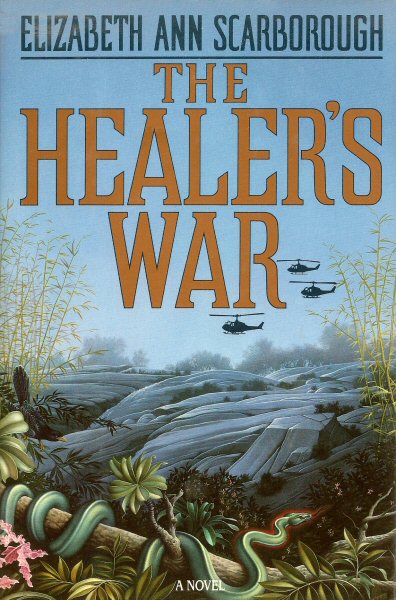
The Healer's War is a 1988 science fiction novel by American writer Elizabeth Ann Scarborough. It won the Nebula Award for Best Novel in 1989. The story is about a military nurse during the Vietnam War.
- Down to a Sunless Sea
David Grahamstandalone novel1979
similar bysurvivalscience fictionwartenseour worldnorth america
David Graham's Down to a Sunless Sea (1979) is a post-apocalyptic novel about a planeload of people during and after a short nuclear war, set in a near-future world where the USA is critically short of oil. The title of the book is taken from a line of the poem Kubla Khan by Samuel Taylor Coleridge.
- Time Storm
Gordon R. Dicksonstandalone novel1977
similar bysurvivalscience fictionadventuroustenseour world
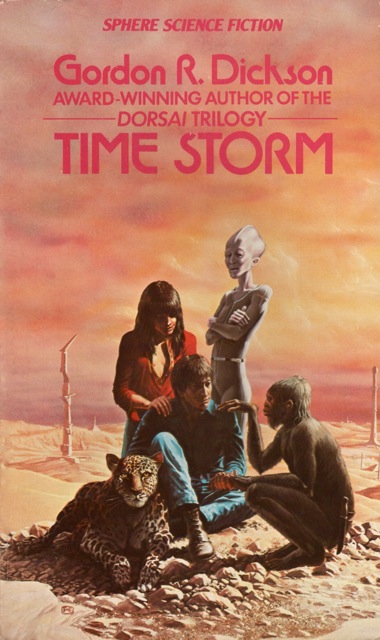
A time storm has devastated the Earth, and only a small fraction of humankind remains. From the rubble, three survivors form an unlikely alliance: a young man, a young woman, and a leopard. "A masterful science fiction story told by a masterful science fiction writer". -- Milwaukee Journal. A time storm strikes the Earth. The Earth remains, but different parts of the Earth are in different eras. Travel between the different zones is thought to be impossible. The main character, Marc Despard, resolves to fight the time storm. After some struggles, he assembles a small band of people, including one alien, to help him try to understand what has happened and to stop the time storm. He has 2 extraordinary relationships with a older teenaged girl who is speechless for the first part of the book (she was "struck dumb" by the time storm) and with, believe it or not, a leopard. Dickson's writing makes the extraordinary seem quite normal. Ultimately, after being harried by a Mad Max-like group of survivors, he uses a machine found in a different era of time to bring his small band of followers into the future so that he can find those who are trying to fight the time storm. He convinces those future beings that he is capable of fighting the time storm, and ultimately stops it, and gets the girl in the end.
- Empire of Man
series4 books2001
similar bysurvivalscience fictionadventurouswartense
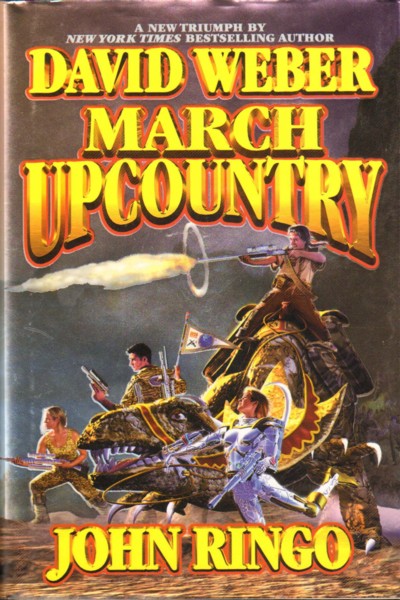
The Empire of Man is a series of science fiction books by David Weber and John Ringo published by Baen Books. It combines elements of space opera and military science fiction.
- Commander-1
Peter Georgestandalone novel1965
similar bysurvivalscience fictionwartenseour worldnorth america+1 more
Commander-1 is a 1965 novel by Welsh author Peter Bryan George and deals with the aftermath of a nuclear war between the United States, the Soviet Union and the People's Republic of China. It was George's last published work, with the author committing suicide in 1966.
- The Triffids
series3 books1951
similar bysurvivalscience fictionour world+2 more
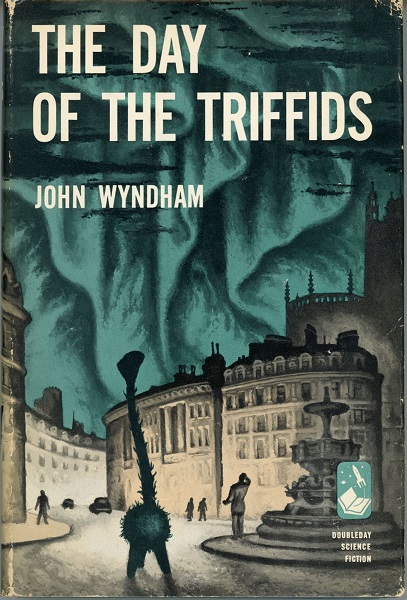
John Wyndham's The Day of the Triffids (1951) opens with a meteor-shower-like event that leaves most of Britain's population blind, throwing civilization into collapse just as triffids, an aggressive and mobile species of poisonous plant, become free to hunt the helpless survivors. Simon Clark's authorized sequel The Night of the Triffids (2001) picks up a generation later, narrated by the original protagonist's son as he confronts a new triffid-dominated world, and John Whitbourn's The Age of the Triffids extends the shared setting further still. Together the three novels form a loose post-apocalyptic trilogy built on Wyndham's original premise rather than a tightly plotted single story.
- The Final Countdown
Martin Caidinstandalone novel1980
similar bymid 20th centuryscience fictionwaradventuroustenseour worldnorth america+1 more
Amazon: December 7th, 1980. The United States Naval Carrier Nimitz is the finest warship in the world. She is carrying a nuclear payload that can level a continent. And a fleet of fighter jets that can deliver it. Her crew is a handpicked one - like Captain Matthew Yelland, who endured the torture of the Viet Cong and did not break. And Warren Lasky, the civilian "think-tank" who designed the warship to weather any battle. But a nightmare journey has brought her to a place where no amount of brains or courage can help. To a battle no man can win: Pearl Harbor December 7th, 1941.