More like Labyrinth
but
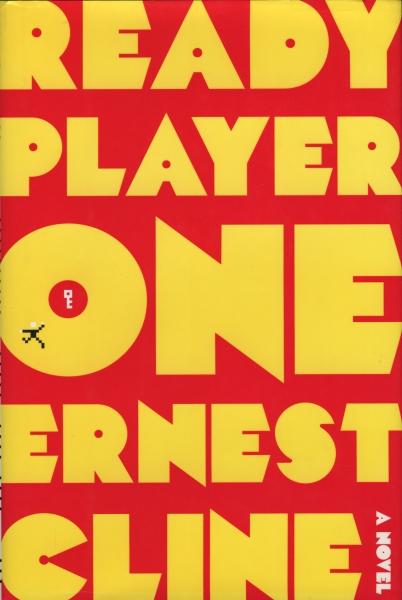
- Ready Player One
series3 books2011
similar byvirtual realityscience fiction+1 more
Ernest Cline's Ready Player One (2011) is set in a near-future dystopia where much of humanity escapes into the OASIS, a vast virtual-reality universe, and follows teenager Wade Watts as he chases an Easter egg hidden by the OASIS's late creator in a puzzle-based hunt worth a fortune. The 2020 sequel, Ready Player Two, picks up after Wade has gained control of the OASIS and follows him and his friends into a new quest built around a brain-computer interface the creator left behind.
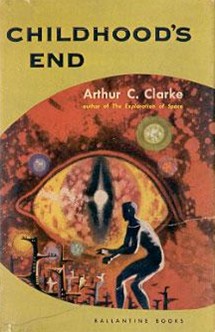
- Childhood's End
Arthur C. Clarkestandalone novel1953
similar byscience fiction+1 more
Childhood's End is a 1953 science fiction novel by the British author Arthur C. Clarke. The story follows a peaceful alien invasion of Earth by mysterious Overlords, whose arrival begins decades of apparent utopia under indirect alien rule, at the cost of human identity and culture.
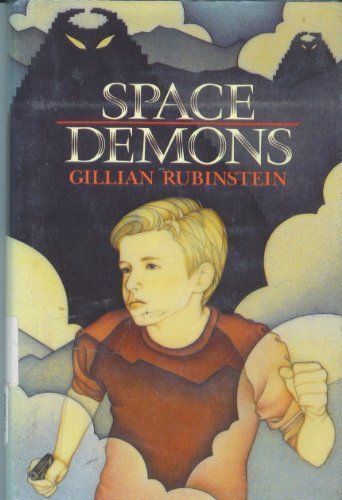
- Space Demons
series4 books1986
similar byvirtual realityscience fictionyoung adult+1 more
Gillian Rubinstein's Space Demons follows a group of Australian schoolkids drawn into a mysterious video game that starts pulling them physically into its world, with consequences that follow them home. The story continues across two more novels, Skymaze and Shinkei, following the same characters into further games.
- Sprawl Trilogy
series10 books1981
similar byvirtual realityscience fiction
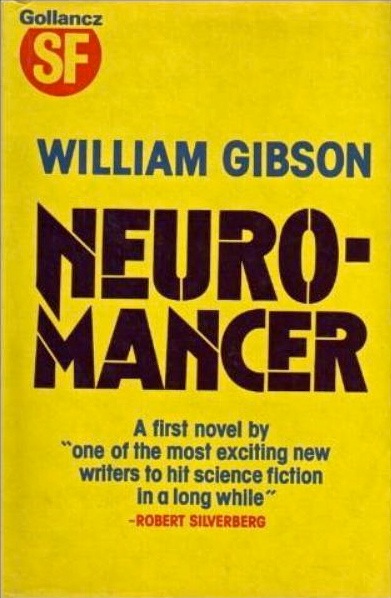
The Sprawl Trilogy is William Gibson's foundational cyberpunk sequence: Neuromancer (1984), in which hacker Case is drawn into a high-stakes heist alongside an artificial intelligence and a damaged ex-soldier, followed by Count Zero (1986) and Mona Lisa Overdrive (1988), which widen the same near-future world of corporate power and networked cyberspace to new characters. Johnny Mnemonic, an early short story set in the same fictional milieu, predates the novels and introduces the courier Molly Millions before her role in the trilogy. Together these works established much of cyberpunk's visual and thematic vocabulary.
- Hexwood
Diana Wynne Jonesstandalone novel1993
similar byyoung adultfantasy+2 more
Hexwood is a 1993 fantasy/science fiction novel for young adults, written by British author Diana Wynne Jones.
- Rasmussem Corporation Games
series3 books1991
similar byvirtual realityscience fiction+2 more
Vivian Vande Velde's Rasmussem Corporation Games books each drop a different protagonist into a malfunctioning virtual-reality game built by the fictional Rasmussem company, where the usual escape routes stop working and the stakes turn unexpectedly real. User Unfriendly, Heir Apparent, and Deadly Pink share the same premise and company rather than a continuing cast or plot. Vande Velde, an American children's and YA author, wrote the three books more than two decades apart.
- Feed
M. T. Andersonstandalone novel2002
similar byscience fictionyoung adult+1 more
Feed (2002) is a cyberpunk, satirical, dystopian, young-adult novel by M. T. Anderson, focusing on issues such as American hegemony, corporate power, consumerism, information technology, data mining, and environmental decline, with a sometimes sardonic, sometimes somber tone. From the first-person perspective of a teenaged boy, the book takes place in a near-futuristic American culture completely dominated by advertising and corporate exploitation, corresponding to the enormous popularity of internetworking brain implants called feeds.
- Kairos
series11 books1962
completed
similar byscience fictionyoung adult+1 more
The Time Quintet is a science fantasy series of five young adult novels written by American author Madeleine L'Engle and made up of A Wrinkle in Time (1962), A Wind in the Door (1973), A Swiftly Tilting Planet (1978), Many Waters (1986), and An Acceptable Time (1989).
- Richard Forthrast
series2 books2011
similar byvirtual realityscience fiction+1 more
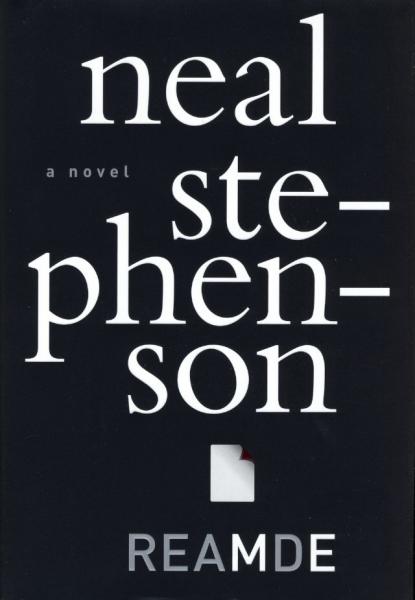
Neal Stephenson's Richard 'Dodge' Forthrast novels open with Reamde, a globe-spanning thriller that starts when ransomware inside an MMORPG economy pulls Richard's extended family into a real-world hostage crisis involving hackers, jihadists and Russian mobsters. The sequel Fall; or, Dodge in Hell shifts registers entirely, following Richard's digitally preserved mind after death into an afterlife simulation built from his scanned brain. The two books share a protagonist and family but differ sharply in genre and scale.
- Snow Crash
Neal Stephensonstandalone novel1992
similar byvirtual realityscience fiction
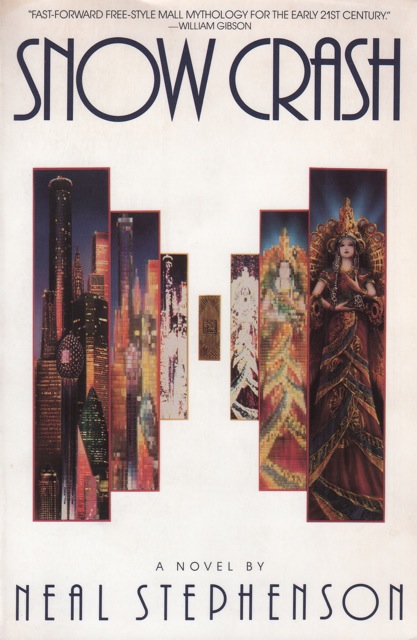
Snow Crash is a 1992 science fiction novel by Neal Stephenson. Like many of Stephenson's novels, its themes include history, linguistics, anthropology, archaeology, religion, computer science, politics, cryptography, memetics, and philosophy.
- Armada
Ernest Clinestandalone novel2015
similar byvirtual realityscience fictionyoung adult
Armada is a science fiction novel by Ernest Cline, published on July 14, 2015 by Crown Publishing Group. The story follows a teenager who plays an online video game about defending against an alien invasion, only to find out that the game is a simulator to prepare him and people around the world for defending against an actual alien invasion.
- Vurt
series4 books1993
similar byscience fiction+2 more
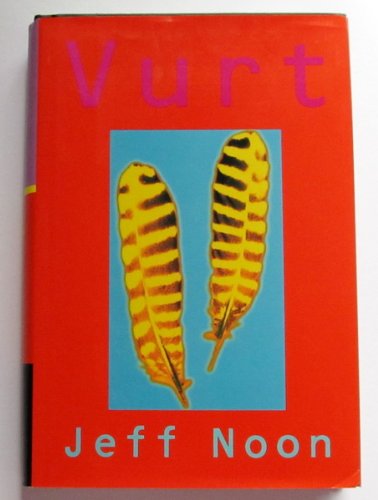
In Jeff Noon's alternate Manchester, an entire subculture has formed around Vurt: a hallucinogenic, colour-coded feather that plunges users into a shared alternate reality as vivid and dangerous as real life. Vurt follows Scribble and his gang, the Stash Riders, on a search for his sister, lost somewhere inside a Vurt trip gone catastrophically wrong. The sequel Pollen continues directly from its fallout, while Noon's other novels of the period, including Automated Alice and Nymphomation, circle the same fevered, drug-soaked version of the city.
- Johnny Maxwell
series4 books1992
similar byfantasy+2 more
The Johnny Maxwell trilogy follows an ordinary British teenager who keeps ending up at the center of small-scale, largely unglamorous brushes with the fantastic: an old arcade game that turns out to house a real alien fleet, a haunted cemetery, and a WWII bomb that displaces him in time. Terry Pratchett wrote it as a departure from Discworld, aiming his humor and social observation at a contemporary setting and a young teenage cast. Only You Can Save Mankind, Johnny and the Dead, and Johnny and the Bomb make up the sequence.
- Time Out of Joint
Philip K. Dickstandalone novel1959
similar byvirtual realityscience fiction
Time Out of Joint is a science fiction novel by American writer Philip K. Dick, first published in novel form in the United States in 1959. An abridged version was also serialised in the British science fiction magazine New Worlds Science Fiction in several installments from December 1959 to February 1960.
- The Mortality Doctrine
series4 books2013
similar byvirtual realityscience fictionyoung adult
The Eye of Minds opens James Dashner's Mortality Doctrine trilogy in a near-future where a teenage gamer is recruited to help stop a rogue hacker named Kaine who threatens mass destruction from inside the virtual world he haunts. Dashner has said he didn't intend the series as dystopian in the way of his Maze Runner books, though he saw it sharing their tone and spirit. The trilogy continues with The Rule of Thoughts and The Game of Lives.
- The Dream Master
Roger Zelaznystandalone novel1966
similar byvirtual realityscience fiction
The Dream Master (1966) is a science fiction novel by American writer Roger Zelazny, based on the novella He Who Shapes. Zelazny's original title was The Ides of Octember. He Who Shapes won the 1965 Nebula Award for Best Novella.
- For the Win
Cory Doctorowstandalone novel2010
similar byvirtual realityscience fictionyoung adult
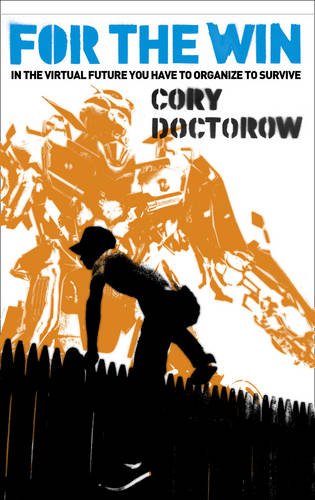
For the Win is the second young adult science fiction novel by Canadian author Cory Doctorow. It was released in May 2010. The novel is available free on the author's website as a Creative Commons download, and is also published in traditional paper form by Tor Books.
- Void Trilogy
series4 books2007
part of Commonwealth Universe
similar byscience fiction+1 more
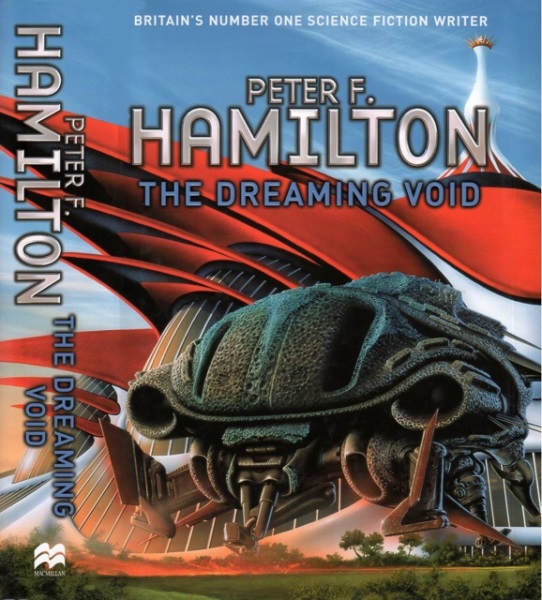
The Void Trilogy is a space opera series by British author Peter F. Hamilton. The series is set in the same universe as The Commonwealth Saga, 1,200 years after the end of Judas Unchained.
- The Light of Other Days
Arthur C. Clarke & Stephen Baxterstandalone novel2000
similar byscience fiction+1 more
An industrialist devises a technique to use tiny wormholes as light pipes to enable viewing of any event anywhere; and subsequently it becomes possible to use them to view any event in the past as well. The effects on society are enormous.
- Invitation to the Game
Monica Hughesstandalone novel1990
similar byvirtual realityscience fictionyoung adult
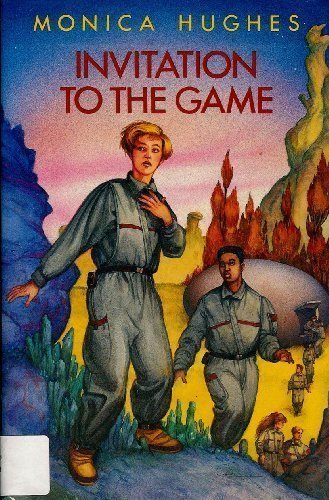
Invitation to the Game is a science-fiction book written by Monica Hughes. It has recently been published as The Game.