More like Last Bite
anchored on:contemporarynorth america
but
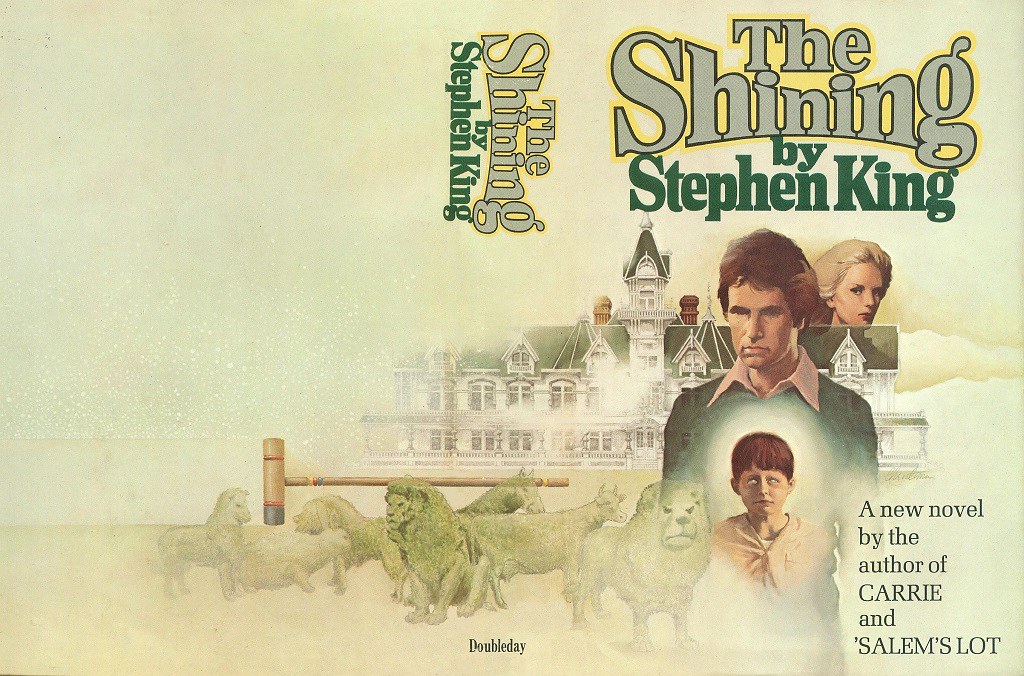
- The Shining
series5 books1977
similar bycontemporaryhorrornorth america+2 more
Stephen King's 1977 novel The Shining follows the Torrance family as winter caretakers of the isolated, malevolent Overlook Hotel, where father Jack is gradually consumed by the hotel's influence while his young son Danny's psychic "shining" draws its attention. Doctor Sleep (2013) picks up the story decades later, following Danny as an adult still marked by that childhood ordeal. Together the two form a horror duology spanning nearly forty years of real-world publication.
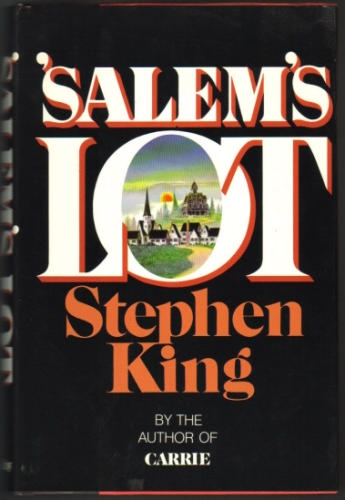
- Jerusalem's Lot
series3 books1975
similar byeeriecontemporaryhorrornorth americaour worldsmall town
Stephen King's 1975 novel 'Salem's Lot follows writer Ben Mears as he returns to his childhood town of Jerusalem's Lot, Maine, only to discover that its residents are being turned into vampires by a newly arrived stranger. It transplants Gothic vampire horror into a small New England community, tracking that community's collapse under a supernatural siege. It is a single, self-contained novel.
- If You Could See Me Now
Peter Straubstandalone novel1976
similar byeeriecontemporaryhorrorghost storiesnorth americaour world
If You Could See Me Now is a horror novel by American author Peter Straub. It is his third novel and his second work of gothic or supernatural fiction. The book was published by Jonathan Cape in June 1977 – the same London publisher who published Julia in 1976. Coward, McCann & Geoghegan published an American edition also in June 1977.
- Johnny Dixon and the Professor
series13 books1983
similar byeeriehorrornorth americacontemporary+1 more
Johnny Dixon is a fictional American boy featured in a series of twelve children's gothic horror novels, 1983 to 1999, written by John Bellairs or his successor Brad Strickland. In each book, 12-year-old Johnny and his group of friends face and overcome evil forces usually bent on ending the world. Alternatively, Johnny Dixon is the book series.
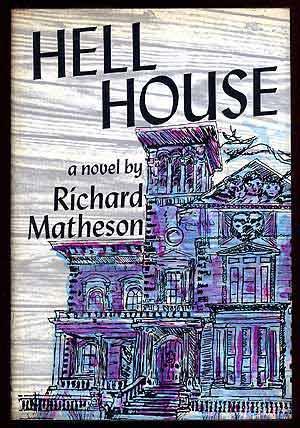
- Hell House
Richard Mathesonstandalone novel1971
similar byeeriecontemporaryhorrorghost storiesnorth america
A dying millionaire wants proof, once and for all, of what happens after death, and hires physicist-turned-parapsychologist Dr. Lionel Barrett to spend a week investigating the Belasco House in Maine -- a mansion so thoroughly associated with atrocity that it's known simply as Hell House, where every previous investigation has ended in death or madness. Barrett brings his wife Edith along with two mediums, the spiritualist Florence Tanner and Benjamin Franklin Fischer, survivor of an earlier disastrous visit, whose scientific skepticism and spiritualist convictions clash from the first night inside. Richard Matheson's haunted-house novel, later filmed as The Legend of Hell House.
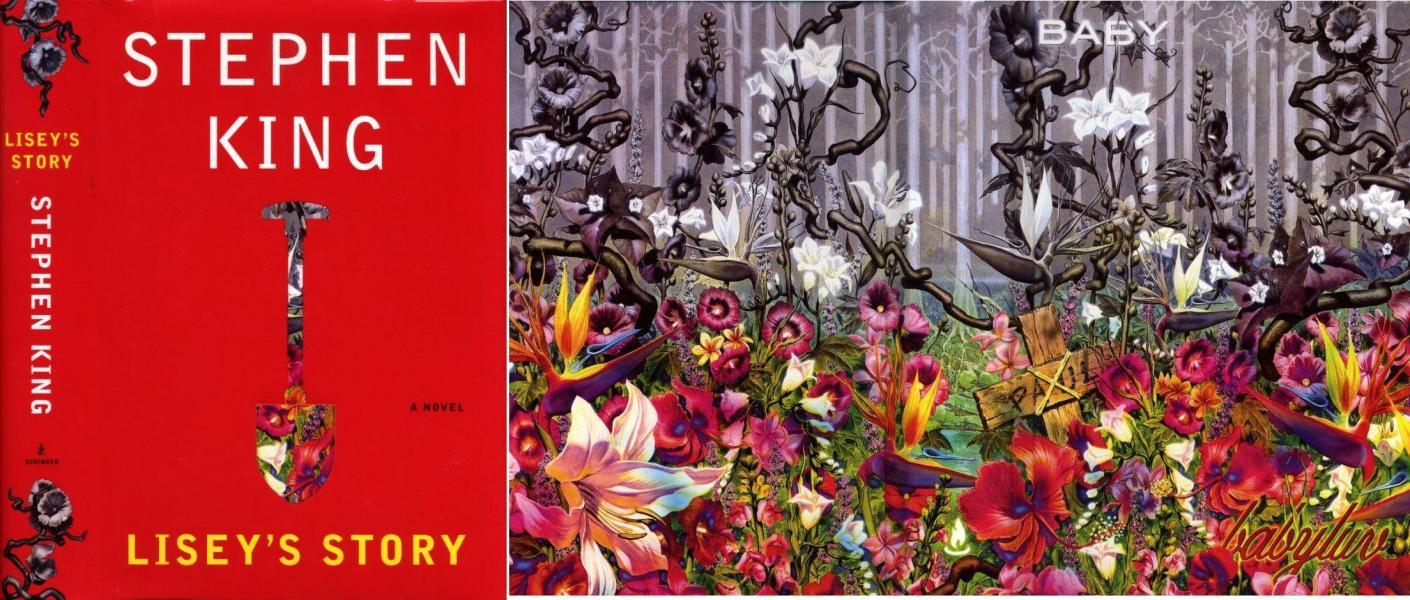
- Lisey's Story
Stephen Kingstandalone novel2006
similar byeeriecontemporaryhorrornorth america+1 more
When the widow of a successful author is targeted by a psychopath, she must make use of the ability to shift to a parallel world, which she learned from her husband.
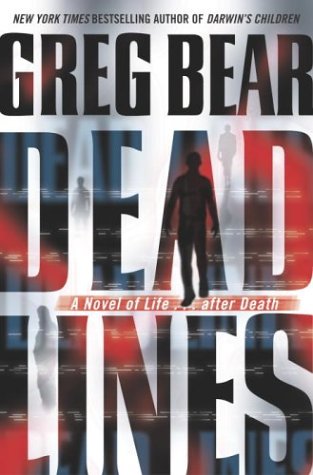
- Dead Lines
Greg Bearstandalone novel2004
similar byeeriecontemporaryhorrorghost storiesnorth americaour world
From the flaps of the Ballantine first edition: "For the last two years, Peter Russell has mourned the death of one of his twin daughters - who was just ten when she was murdered. Recent news of his best friend's fatal heart attack has now come as another devastating blow. Divorced, despondent, and going nowhere in his career, Peter fears his life is circling the drain. Then Trans comes along. The brainchild of an upstart telecom company, Trans is (as its name suggests) a transcendent marvel, a sleek, handheld interpersonal communication device capable of flawless operation anywhere in the world, at any time. "A cell phone, but not" - transmitting with crystal clarity across a newly discovered, never-utilized bandwidth... and poised to spark a new-technology revolution. When its creators offer Peter a position on their team, it should be a golden opportunity for him. If only he wasn't seemingly going mad. Everywhere Peter turns, inexplicable apparitions are walking before him or reaching out in torment. After a chilling encounter with his own lost child he begins to grasp the terrifying truth: Trans is a Pandora's box that has tapped into a frequency not of this world... but of the next. And now, via this open channel to oblivion, the dead have gained access to the living. For Peter, and for humankind, a long shadowy night of the soul has descended, bringing with it the stuff of a horrifying nightmare from which they may never awaken."
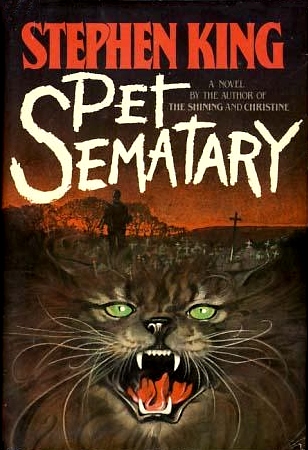
- Pet Sematary
Stephen Kingstandalone novel1983
similar byeeriecontemporaryhorrornorth americasmall town
Pet Sematary is a 1983 horror novel by American writer Stephen King. It tells the story of a family moving to Maine and settling closer to a pet cemetery in the woods, which is home to a terrifying force that brings death and sorrow. The novel was nominated for a World Fantasy Award for Best Novel in 1984, and adapted into two films: one in 1989 and another in 2019 as well as several spinoffs.
- The House on Moon Creek Avenue
E. Reyesstandalone novel2020
similar byeeriecontemporaryhorrorghost storiesnorth americaour world+1 more
● "Cindy is a twenty-one-year-old single mother, retail worker, and college student. She inherits her grandmother's home on Moon Creek Avenue after she passes away. At first, the home is comfortable, nostalgic of Cindy's childhood at nana's, and her daughter enjoys the home, too. But soon, ghosts randomly appear day and night, doors open and close, a streak of bad luck begins, Cindy and her daughter have unsettling nightmares, and Cindy's mental state is pushed to the edge. When Cindy's video recording of paranormal activity goes viral on social media, she gets the attention of famous ghost hunters. Without anywhere else to turn, Cindy accepts their help." ― paraphrased from this book's product page on Amazon.com as of 2024-09-26.
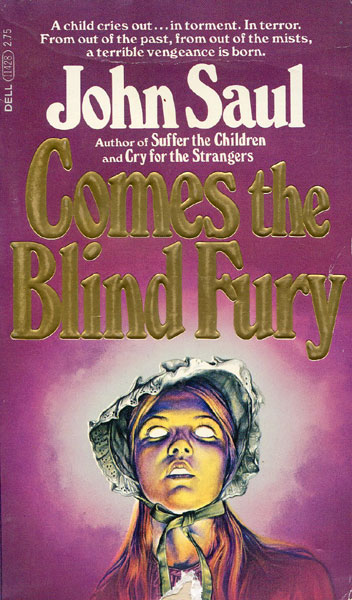
- Comes the Blind Fury
John Saulstandalone novel1980
similar byeeriecontemporaryhorrorghost storiesnorth americasmall town
WorldCat: When Michelle comes to visit on Paradise Point, she sees the hand of a blind girl who died a century ago, reaching out to her from the swirling mists.
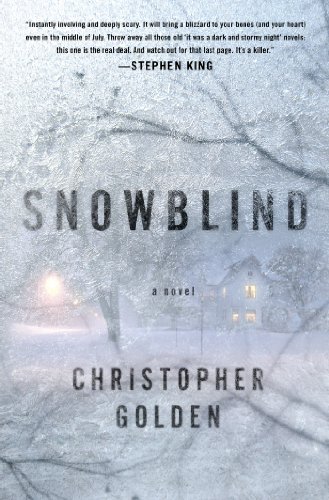
- Snowblind
Christopher Goldenstandalone novel2014
similar byeeriecontemporaryhorrorghost storiesnorth americasmall town
"SNOWBLIND is a thrilling contemporary ghost story with both horror and heart. The small New England town of Coventry is haunted by its memories of a deadly winter... in which loved ones were lost, families torn apart, and a town buried in a terrible blizzard. Now, twelve years later, the people plagued by their memories of that storm are haunted once again as a new storm approaches, promising to wreak new havoc. Old ghosts trickle back, and this storm will prove even more terrifying and deadly than the last. With richly textured characters, scarred and haunted by the ghosts of those they loved most, Snowblind reinvents the ghost story for today's world. Spellbinding in scope and rooted deeply in classic storytelling, Christopher Golden has written a chilling masterpiece that is the best work of his career and a standout supernatural thriller"--
- Coldheart Canyon
Clive Barkerstandalone novel2001
similar byeeriecontemporaryhorrornorth americaour world+1 more
Coldheart Canyon is a novel by Clive Barker, published in 2001 by HarperCollins. The story centers on Todd Pickett, a failing movie star, and Tammy Lauper, Todd's obsessive fan.
- Anna Korlov
series2 books2011
similar bycontemporaryhorrorghost stories+3 more
Kendare Blake's YA horror duology follows Cas Lowood, who has spent three years continuing his late father's work of hunting and dispatching violent ghosts, until he meets Anna, a ghost far more dangerous, and more sympathetic, than any he's faced. Anna Dressed in Blood and its sequel Girl of Nightmares follow Cas as his professional detachment gives way to a bond that complicates everything he thought he knew about his calling.
- White Smoke
Tiffany D. Jacksonstandalone novel2021
similar byeeriecontemporaryhorrorghost storiesnorth americasmall town
Marigold is running from ghosts. The phantoms of her old life keep haunting her, but a move with her newly blended family from their small California beach town to the embattled Midwestern city of Cedarville might be the fresh start she needs. Her mom has accepted a new job with the Sterling Foundation that comes with a free house, one that Mari now has to share with her bratty ten-year-old stepsister, Piper. The renovated picture-perfect home on Maple Street, sitting between dilapidated houses, surrounded by wary neighbors has its... secrets. That’s only half the problem: household items vanish, doors open on their own, lights turn off, shadows walk past rooms, voices can be heard in the walls, and there’s a foul smell seeping through the vents only Mari seems to notice. Worse: Piper keeps talking about a friend who wants Mari gone. But "running from ghosts" is just a metaphor, right? As the house closes in, Mari learns that the danger isn’t limited to Maple Street. Cedarville has its secrets, too. And secrets always find their way through the cracks.
- American Gods
series10 books1999
similar bycontemporaryour world+1 more
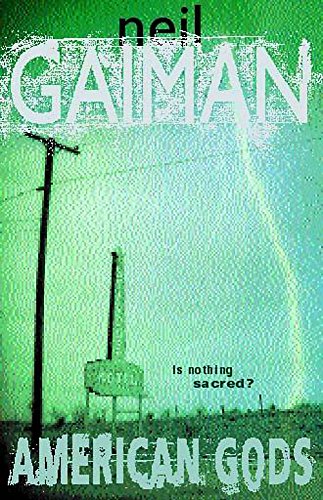
Neil Gaiman's American Gods (2001) follows Shadow Moon, an ex-convict who takes a job as bodyguard to a mysterious drifter who is secretly the Norse god Odin, and is drawn into a brewing conflict between the old immigrant gods of myth and the new gods of media, technology, and modern American life. Gaiman's 2005 novel Anansi Boys is set in the same mythological world and shares the trickster god Mr. Nancy, but follows a different protagonist and story, making it a loose companion rather than a direct sequel.
- Floating Staircase
Ronald Malfistandalone novel2010
similar byeeriecontemporaryhorrorghost storiesnorth americasmall town
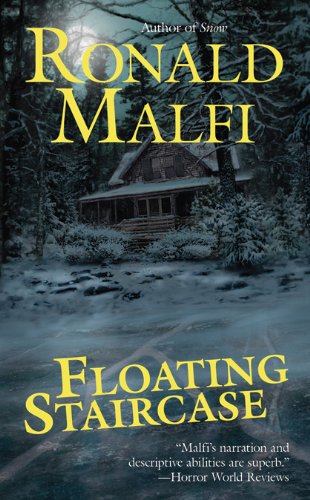
Floating Staircase is a ghost story/mystery novel by American writer Ronald Malfi. It was published in 2011 by Medallion Press, with a limited edition hardcover collectors edition from Thunderstorm Books, which contained an original author's "Afterward" not in the paperback novel. The novel was nominated by the Horror Writers Association for a Bram Stoker Award for Best Novel, and it won a Gold IPPY Award for best horror novel of 2011.
- Whispers from the Dead
Joan Lowery Nixonstandalone novel1989
similar byeeriecontemporaryghost storiesnorth americaour world+1 more
"Only Sarah senses the horror. The minute she steps through the door of her family's new home, she feels a smothering cold mist and hears the echo of a scream and a heartbreaking whisper in Spanish: "Help me!" Sarah feels compelled to find out who is trying to reach her. But can she uncover the mysteries of the past before terror strikes again?" — quoted from the back cover of the Laurel-Leaf paperback edition.
- Wildwood Road
Christopher Goldenstandalone novel2005
similar byeeriecontemporaryhorrorghost storiesnorth americaour world+1 more
Michael and Jillian Dansky seemed to have it all--a happy marriage, two successful careers, a bright future. But late one October evening, all that changed. Driving home from a Halloween masquerade, Michael momentarily nods off behind the wheel--and wakes to find nothing is the same.Standing by his car is the little girl he came within a breath of running down. She leads Michael to her "home," an empty house haunted by whispers, and sends him away with a haunting whisper of her own: "come find me." But in the weeks to follow, it's clear that someone--or some thing--doesn't want Michael to find her: ominous figures in grey coats with misshapen faces are following him everywhere. And then Jillian wakes one morning replaced by a cold, cruel, vindictive woman Michael hardly recognizes as his wife. Michael must now search not only for the lost girl, but for a way to find the Jillian he's always loved, and to do so he must return to where the nightmare began. Down an isolated lane where he'll find them, or die trying.From the Trade Paperback edition.
- Later
Stephen Kingstandalone novel2021
similar byeeriecontemporaryhorrorghost storiesnorth americaour world
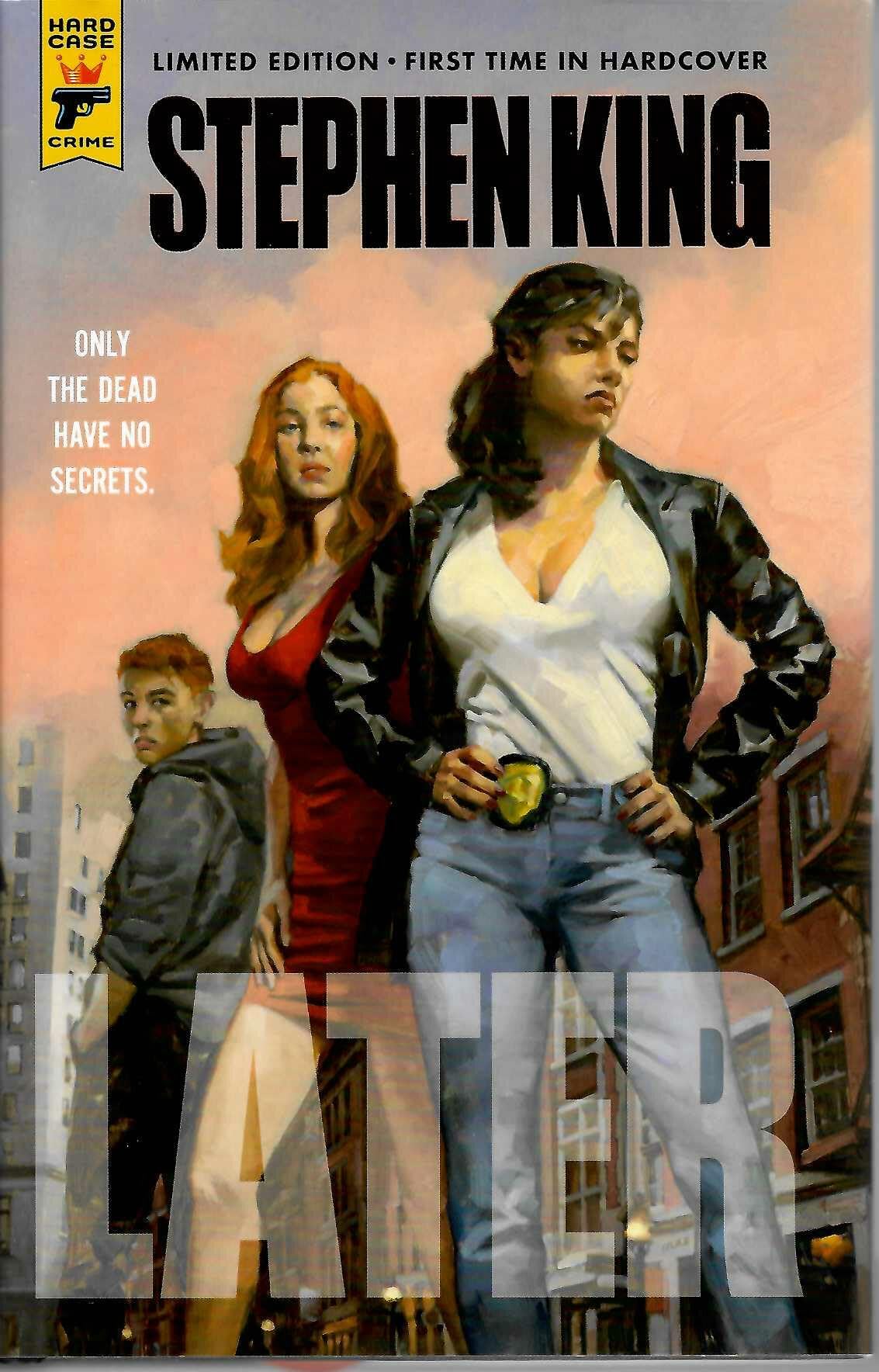
A young boy, with the power of seeing and talking with the recently deceased, and his single mother try to avoid personal and financial disasters.
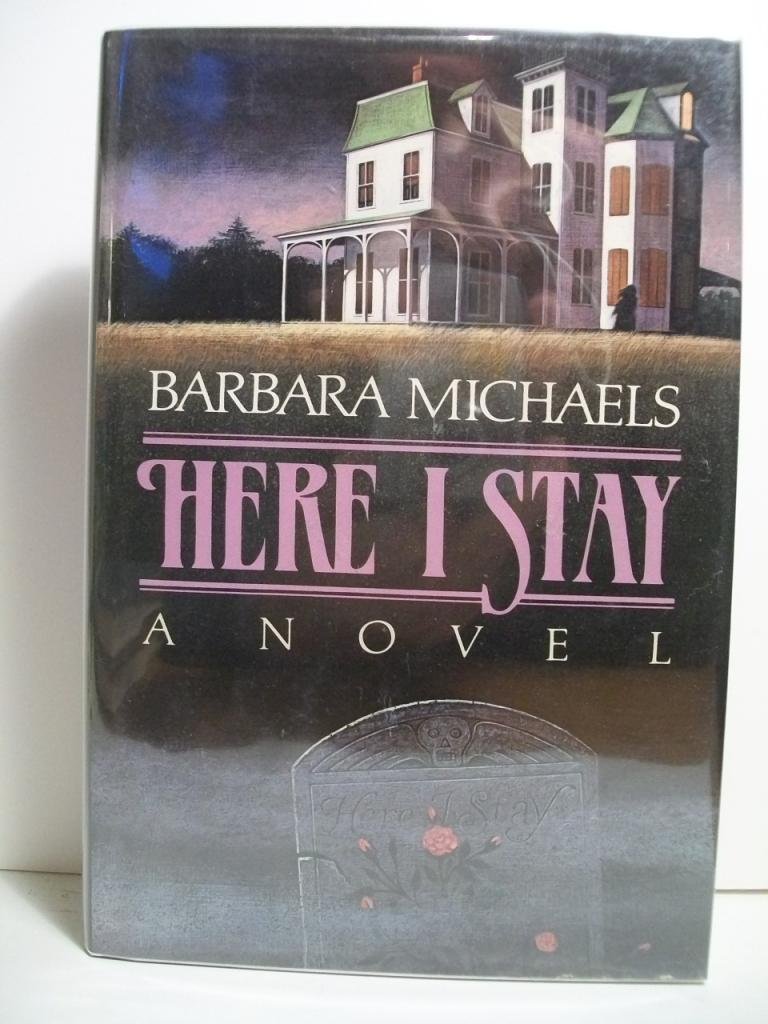
- Here I Stay
Barbara Michaelsstandalone novel1983
similar byeeriecontemporaryhorrorghost storiesnorth america
Andrea Torgesen is certain that hard work is exactly what her younger brother Jim needs to help him recover from the trauma of a serious car accident—and turning a decrepit old mansion into a beautiful country inn seems to be the perfect project. But unearthly voices and eerie visions haunt Jim from almost the first instant he sets foot in the dreary old house. And his strange obsession with a long-neglected graveyard is most troubling to his concerned sibling. There is evil in this place where the unthinkable is possible—a terrifying force that Andrea and Jim must confront . . . or forfeit their lives.
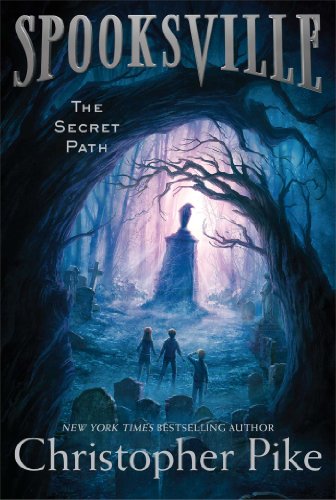
- Spooksville
series24 books1995
similar bycontemporaryhorrornorth americasmall town+1 more
Spooksville is a series of 24 children's horror fiction books by American writer Christopher Pike. All 24 books were first published between 1995 and 1998. The series is set in a remote town in the USA and revolves around the lives of five of its young inhabitants. Although intended for a younger audience than his adult and young adult literature, they contain some violence and may be considered unsuitable for younger children. A television series based on the books was commissioned and premiered on October 26, 2013, on the Hub Network.
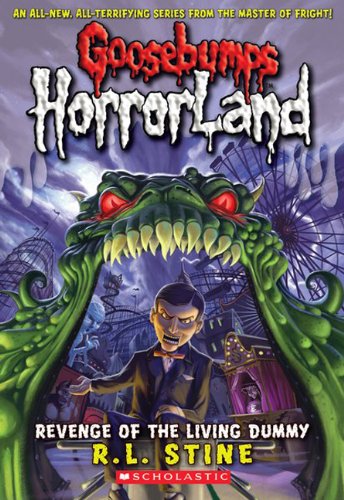
- Goosebumps
universe234 books1992
Start hereRevenge of the Living Dummy · The connected HorrorLand story
similar bycontemporaryhorrorour world+1 more
Reader beware — you're in for a scare. That promise has been kept, book after book, since a boy first knocked on the door of the Dead House and found the whole neighborhood grinning too widely. Goosebumps is R. L. Stine's carnival of small-town dread, where the horror is always sized just right for a kid: a haunted ventriloquist dummy, a camera that photographs disasters before they happen, a mask that won't come off, a basement that hums. Each book is its own self-contained nightmare, narrated by an ordinary boy or girl whose ordinary street has quietly turned against them — and every one snaps shut on a twist that pulls the rug out one last time before the lights come up. The shelf is deep. The original run of paperbacks gave way to Series 2000, then the branching, choose-your-doom gamebooks of Give Yourself Goosebumps, the story-collections Tales to Give You Goosebumps, and villain showcases in Most Wanted. HorrorLand strung the standalones into a single running arc set inside a monstrous theme park, and SlappyWorld and House of Shivers keep the lights flickering for new readers, hosted by Slappy, the wooden fiend who considers himself the star of the whole show. The tone is mock-scary and knowing — spooky enough to thrill, silly enough to laugh off before bed, always short and always cliffhung. No reading order binds them; open any cover. Newcomers usually meet the dummy first, in Night of the Living Dummy, or start where it all began, in Welcome to Dead House.