More like Lifemaker
anchored on:secondary world
but
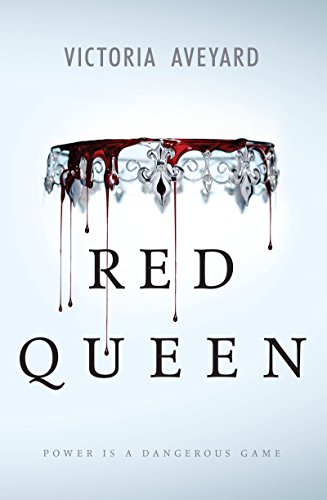
- Red Queen
series14 books2015
similar bydarksecondary worlddystopiatense+1 more
Red Queen is set in a world split between Reds, an oppressed servant class, and Silvers, a ruling class with superhuman abilities, where a Red girl discovers she has Silver-like powers of her own and is forced into the royal court to hide what she is. Victoria Aveyard's debut novel opens a four-book main sequence - Red Queen, Glass Sword, King's Cage, War Storm - plus the interstitial novella Cruel Crown and the epilogue novella Broken Throne. It's YA dystopian fantasy built around a class-based magic system and a slow-burn political rebellion.
- A Song of Ice and Fire
series14 books1996
part of World of Ice and Fire
similar bywardarksecondary world+1 more
A Song of Ice and Fire is a series of high fantasy novels by the American author George R. R. Martin. Martin began writing the first volume, A Game of Thrones, in 1991, and published it in 1996. Martin, who originally envisioned the series as a trilogy, has released five out of seven planned volumes. The most recent entry in the series, A Dance with Dragons, was published in 2011. Since then, Martin has been working on the sixth novel, titled The Winds of Winter. A seventh novel, A Dream of Spring, is planned to follow.
- Thomas Covenant the Unbeliever
series11 books1977
similar bydarksecondary world
The Chronicles of Thomas Covenant is a series of ten high fantasy novels written by American author Stephen R. Donaldson. The series began as a trilogy, The Chronicles of Thomas Covenant the Unbeliever. This was followed by another trilogy, The Second Chronicles of Thomas Covenant, and finally a tetralogy, The Last Chronicles of Thomas Covenant.
- Malazan
universe36 books1999
Start hereMalazan Book of the Fallen · Start here
similar bywardarksecondary world+1 more
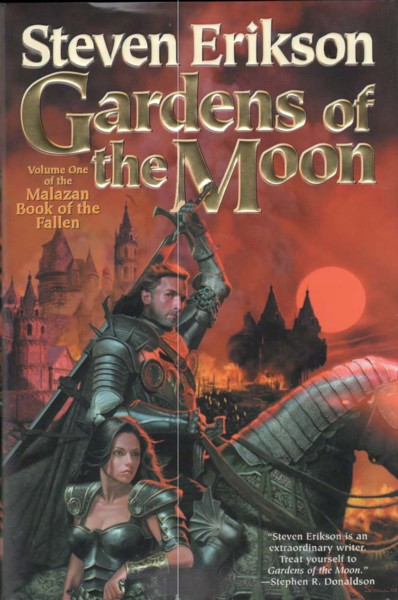
Pity the historian who tries to map this world; pity more the god who thinks he rules it. The Malazan Empire marches across continents on the boots of its common soldiers, and above them move Ascendants — mortals grown into something like gods, and gods worn thin as old coin. Magic is drawn from Warrens, roads of power threaded through reality; the dead keep their grudges; and every empire, however vast, is a wager against time. This is epic fantasy told from the mud, where a sapper cracking a joke weighs as much as an immortal settling a feud older than the human race. The world began as a tabletop campaign two friends built in the 1980s, and it still moves by two hands. Steven Erikson's ten-volume Malazan Book of the Fallen is the spine — Gardens of the Moon, Deadhouse Gates, Memories of Ice, on through The Crippled God — each book a near-standalone campaign that only later reveals how it locks together. Ian C. Esslemont walks the same years from a different vantage in his Novels of the Malazan Empire (Night of Knives, Return of the Crimson Guard onward). Around them stand the prequels: Erikson's Kharkanas Trilogy, archaic and elegiac, chronicling a doomed elder people, and Esslemont's brisker Path to Ascendancy, following two adventurers before they became legends. Erikson's Witness sequence carries the tale forward, and novellas of the genial necromancers Bauchelain and Korbal Broach supply the gallows comedy. Nothing is explained to you; comprehension is earned, and that is the pleasure. The themes run deep — compassion set against cruelty, the toll empires charge, civilizations that fall and are mourned. Begin where the saga does, with Erikson's Gardens of the Moon, and read the ten in publication order; the prequels are for the already-initiated. Trust that confusion is the price of entry.
- Malazan Book of the Fallen
series20 books1999
part of Malazan
similar bywardarksecondary world+1 more
The Malazan Book of the Fallen is a series of epic fantasy novels written by the Canadian author Steven Erikson. The series, published by Bantam Books in the U.K. and Tor Books in the U.S., consists of ten volumes, beginning with Gardens of the Moon (1999) and concluding with The Crippled God (2011). Erikson's series presents the narratives of a large cast of characters spanning thousands of years across multiple continents.
- The Circle of the World
universe29 books2006
Start hereThe Blade Itself · Start here
similar bysecondary world+2 more
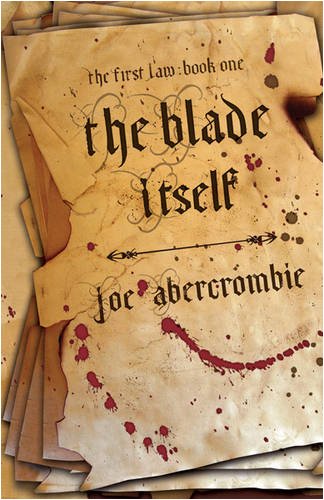
You want heroes? Best look elsewhere. The Circle of the World has kings and wizards and famous barbarians enough, but scratch any of them and you'll find a coward, a schemer, or a killer who's simply better at it than the rest. This is Joe Abercrombie's fantasy world: a grimy, blood-soaked continent where the fat and corrupt Union squats between the savage North and the scheming South, and where every noble cause turns out to have a knife hidden behind it. It opens with the First Law trilogy — The Blade Itself, Before They Are Hanged, Last Argument of Kings — following a crippled torturer with a razor wit, a weary Northman who would dearly like to stop fighting and can't, and a bald old wizard whose plans run older and colder than anyone guesses. Three self-contained standalones share the same ground and a familiar face or two: Best Served Cold takes its revenge across sunlit, murderous Styria; The Heroes crushes a whole war into three days over one worthless hill; Red Country rides the frontier. Short pieces (Sharp Ends) fill the gaps, and a generation on, the Age of Madness trilogy drags the old survivors into an age of factories, mobs, and revolution. What sets it apart is the honesty of its cynicism — close, sardonic points of view, gallows humour, and a flat refusal to let anyone stay clean. Violence carries a cost here; victory rarely settles anything; the wheel just turns and grinds someone new under it. Abercrombie recommends reading in publication order, and it's the right call: begin with The Blade Itself and let the world curdle around you. You have to be realistic about these things.
- The Lord of the Rings
series13 books1954
part of Tolkien's legendarium
similar bysecondary world+1 more
The Lord of the Rings is an epic high fantasy novel written by the English author and scholar J. R. R. Tolkien. Set in Middle-earth, the story began as a sequel to Tolkien's 1937 children's book The Hobbit but eventually developed into a much larger work. Written in stages between 1937 and 1949, The Lord of the Rings is one of the best-selling books ever written, with over 150 million copies sold.
- Shattered Sea
series4 books2014
similar bydarksecondary world+2 more
Shattered Sea is a young adult fantasy series written by the British author Joe Abercrombie. The trilogy was published by Del Rey in the United States and Harper Voyager in the UK.
- The Poppy War
series4 books2018
similar bywardarksecondary worldtense
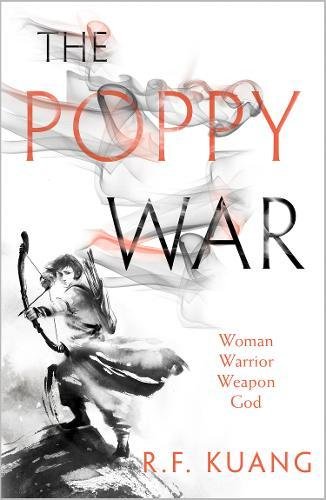
The Poppy War follows Rin, a war orphan who tests into an elite military academy and discovers a talent for shamanic power tied to a pantheon of vengeful gods. R. F. Kuang's trilogy reworks the Second Sino-Japanese War and its atrocities into an epic fantasy that grows darker and more morally compromised as it goes. It's told across The Poppy War, The Dragon Republic, and The Burning God.
- Forgotten Realms: The Legend of Drizzt
series39 books1988
part of Forgotten Realms
similar bysecondary world+3 more
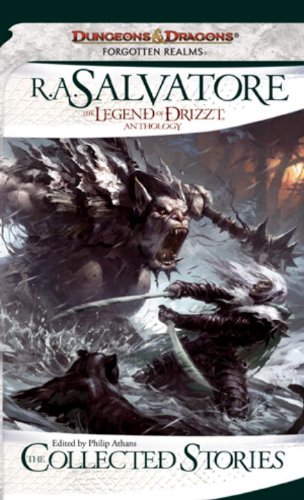
The Legend of Drizzt is a series of fantasy novels by R. A. Salvatore that began in 1988, and consists of 39 books as of August 15, 2023. They are based in the Forgotten Realms setting in the dimension of Abeir-Toril on the continent Faerûn in the Dungeons & Dragons universe currently published and owned by Wizards of the Coast. It combines the series The Dark Elf Trilogy, The Icewind Dale Trilogy, Legacy of the Drow, Paths of Darkness, The Hunter's Blades Trilogy, and other sets into an abridged compilation. Drizzt Do'Urden is the main character of most of the books.
- Hawkmoon
series7 books1967
part of Moorcock's Multiverse
similar bysecondary world+2 more
The History of the Runestaff is an omnibus collection of four fantasy novels by British writer Michael Moorcock, consisting of The Jewel in the Skull, The Mad God's Amulet, The Sword of the Dawn, and The Runestaff. Charting the adventures of Dorian Hawkmoon, a version of the Eternal Champion, it takes place in a far-future version of Europe in which the insane rulers of the Dark Empire of Granbretan are engaged in conquering the continent. Written between 1967 and 1969, it is considered a classic of the genre, and has proven highly influential in shaping subsequent authors' works.
- The Lotus War
series4 books2012
similar bydarksecondary world+3 more
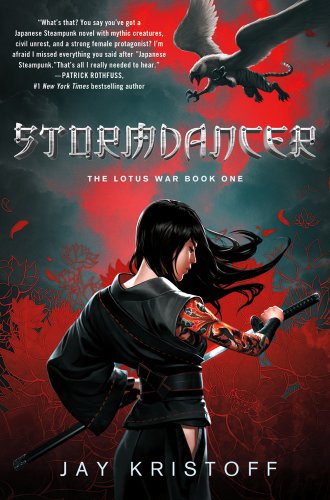
The Lotus War is Jay Kristoff's steampunk fantasy trilogy set in a pollution-choked, Japanese-inspired empire: Stormdancer (2012), Kinslayer and Endsinger, with the novella The Last Stormdancer as a coda. It follows a young woman who tames a griffin-like beast thought extinct, drawing her into a rebellion against the empire's oppressive Shogunate. It is a complete trilogy plus novella.
- An Ember in the Ashes
series4 books2015
similar bysecondary worldtense+2 more
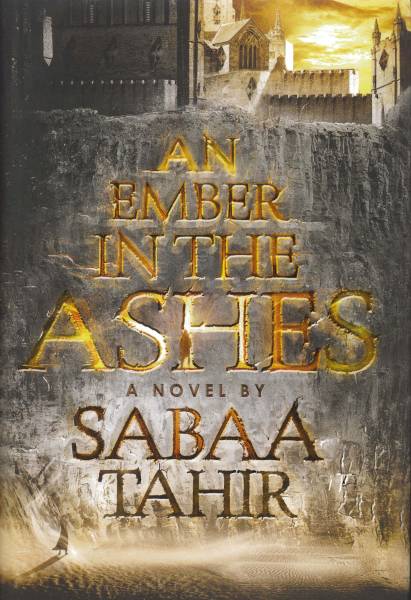
An Ember in the Ashes, set in a fantasy world modeled on ancient Rome, alternates between Laia, who spies on a brutal military academy for rebels in exchange for help freeing her imprisoned brother, and Elias, one of that academy's most skilled soldiers trying to break free of the empire he's been raised to serve. Sabaa Tahir's quartet, continuing through A Torch Against the Night, A Reaper at the Gates, and A Sky Beyond the Storm, follows the two toward a reckoning with the empire that trained one of them to enforce it.
- The Acacia Trilogy
series3 books2007
similar bywardarksecondary world+1 more
Acacia: The War with the Mein begins with an empire's ruling Akaran children fleeing after assassins from an exiled people kill their father, scattering the heirs into a wider world whose comfortable myths — and the drug trade and slavery underwriting the empire's peace — turn out to be far uglier than they were raised to believe. David Anthony Durham's trilogy, continuing through The Other Lands and The Sacred Band, follows the siblings as each confronts a different piece of the empire's hidden machinery.
- The Internment Chronicles
series5 books2013
similar bysecondary worlddystopiascience fictiontense+2 more
- The Hunger Games Universe
universe5 books2008
Start hereThe Hunger Games · Start here
similar bydarkdystopiascience fictiontense+1 more
Panem, they call it now — a nation raised on the drowned bones of North America, a glittering Capitol ringed by twelve districts it once starved into obedience. Every year the Capitol collects its debt in children: two tributes from each district, drawn by lottery, dropped into an engineered arena, and made to kill one another on live television while the whole country is required to watch. This is the Hunger Games — entertainment, punishment, and government at once. Suzanne Collins tells it in a compact, unified body of work. The founding trilogy — The Hunger Games, Catching Fire, and Mockingjay — follows Katniss Everdeen, a girl from the coal-mining District 12 who volunteers in her sister's place and becomes something the Capitol never scripted. Two prequels reach back into the same machinery: The Ballad of Songbirds and Snakes traces a young Coriolanus Snow long before he is President, and Sunrise on the Reaping returns to District 12 a generation ahead of Katniss. Begin with the trilogy, in order — it is Katniss's voice, close and present-tense, that makes Panem breathe, and the prequels land hardest once you know how her story ends. Beneath the spectacle sits one steady, uncomfortable question: who profits when we agree to look away.
- The Prison Healer
series3 books2021
similar bysecondary worldtense+2 more
Lynette Noni's YA trilogy follows Kiva Meridan, a teenage healer imprisoned in the brutal death camp of Zalindov, who is forced to stand trial by combat in another prisoner's place when a mysterious rebel movement upends the prison's order. The Prison Healer, The Gilded Cage, and The Blood Traitor follow Kiva out of the prison and into a wider conflict over the kingdom's throne, testing where her loyalties actually lie. It sits in the current wave of grim, trial-driven YA fantasy.
- The Hunger Games
series3 books2008
part of The Hunger Games Universe
similar bydarkdystopiascience fictiontense+1 more
The Hunger Games is a series of young adult dystopian novels written by American author Suzanne Collins. The series consists of a trilogy that follows teenage protagonist Katniss Everdeen, as well as two prequels. The Hunger Games universe is a dystopia set in Panem, a post-apocalyptic North American country consisting of the wealthy Capitol and 12 districts in varying states of poverty. As punishment for rebellion, the Capitol hosts an annual battle royale competition called The Hunger Games. Each of the 12 districts must send two children between the ages of 12 and 18 to participate, and the last surviving child is dubbed the victor.
- Lord of the Flies
William Goldingstandalone novel1954
similar bydarktense+3 more
Lord of the Flies is the 1954 debut novel of British author William Golding. The plot concerns a group of prepubescent British boys who are stranded on an uninhabited island and their disastrous attempts to govern themselves that lead to a descent into savagery. The novel's themes include morality, leadership, and the tension between civility and chaos.
- Dragon Age (Bioware RPG tie-in)
series21 books2009
similar bysecondary world+3 more
These tie-in novels expand BioWare's Dragon Age video game series into prose, mostly written by the games' own lead writers, and are set in the same dark-fantasy world of Thedas. The Stolen Throne and The Calling serve as prequels filling in the backstory of characters central to the first game, while later books such as Asunder and The Masked Empire tie more directly into the plots and politics of the sequels. They are written for players wanting deeper lore rather than as standalone entry points to the setting.
- Throne of Glass
series15 books2012
similar bysecondary world+2 more
Throne of Glass is a epic fantasy novel series by American author Sarah J. Maas, beginning with the entry of the same name, released on August 2, 2012. The story follows the journey of Celaena Sardothien, a teenage assassin in a corrupt kingdom with a tyrannical ruler, the King of Adarlan. As the story progresses, Celaena forms unexpected bonds and uncovers a conspiracy amidst her adventures. The series concluded with the eighth book in October 2018.
- Demon Cycle
series10 books2008
part of The Demon Cycle
similar bysecondary world+2 more
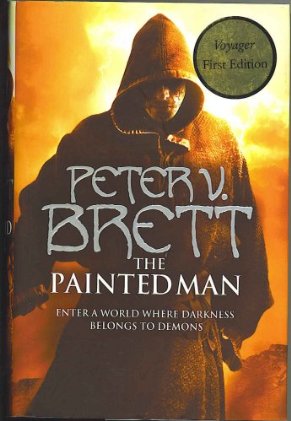
Peter V. Brett's Demon Cycle is set in a world where nightly demon attacks have driven humanity behind protective magical wards, following several point-of-view characters, including Arlen Bales and Leesha Paper, who each search for ways to fight back after centuries of retreat. The core story runs across five novels plus companion novellas.