More like Light
anchored on:science fictionfar futurespace operaidentityspaceother star systems+3 more
but
- The Stars My Destination
Alfred Besterstandalone novel1956
similar byidentityfar futurescience fictiondarkspace operaspaceother star systems
When a passing spaceship refuses to rescue the lone survivor from the drifting wreck of another ship, he dedicates his life to discovering who made that decision and exacting his revenge, in the process altering human history and his own character.
- Kefahuchi Tract Trilogy
series3 books2002
similar byfar futurescience fictionchallengingspace operaspaceother star systems+5 more
M. John Harrison's Kefahuchi Tract trilogy circles a strange, physics-breaking anomaly in deep space that draws scientists, smugglers, and drifters into its pull across different eras. Light moves between a near-future timeline and a far-future one drawn to the Tract itself; its sequel Nova Swing stays within one future period, where a fragment of the anomaly's altered space bleeds into the run-down port city of Saudade, giving the book a noir, Roadside-Picnic-like atmosphere; Empty Space concludes the sequence. The three novels share a setting and mood more than a continuous plot or cast.
- Citizen of the Galaxy
Robert A. Heinleinstandalone novel1957
similar byidentityfar futurescience fictionspace operaspaceother star systems
On a planet far distant from Earth, a lame beggar buys a young boy slave who has forgotten his origins. The beggar is more than he seems, and gives the boy an extensive education while employing him as an observer of activity in their city. Years later, the beggar is captured by the government, and the youth must escape the planet.
- The Margarets
Sheri S. Tepperstandalone novel2007
similar byidentityfar futurescience fictiondarkspace operaspaceother star systems+1 more
The Margarets marks the long-awaited return of one of the most respected authors in the sf community; a writer who has earned accolades and the admiration of every true aficionado of bold, brilliant, risk-taking speculative fiction. Sheri S. Tepper dazzles yet again with a powerful tale of ingenious survival and strange destiny.The only human child living in a human work colony on the Martian satellite Phobos, little Margaret Bain has devised a system for keeping the suffocating demons of boredom and loneliness at bay: She invents six imaginary companions, each an extension of her own personality, to play with. When the unproductive Phobos project is shut down, and after Margaret is forced to return to Earth with her parents, the child's other selves are lost to her. But they are not gone. Left behind, each one flourishes—refining its own persona, acquiring its own history—before ultimately dispersing to far-flung destinations throughout the universe.On a near-barren homeworld denuded by thoughtless-ness and chemistry, Margaret grows to adulthood and marries, despite the seemingly utter hopelessness of humanity's future. The Earth is so impoverished that its inhabitants must import water and other basic necessities of life—trading the only viable product the planet has left to offer . . . slaves. The time will come when Margaret must leave this world as well, expelled as part of a desperate survival plan millennia in the making—an astonishing scheme that will require her to gather together the many Margarets who are now scattered throughout the galaxy. The creator of the Margarets must now bring all her selves home . . . or watch her race perish.
- Imperial Radch
series7 books2012
part of Radchaai Universe
similar byidentityfar futurescience fictionspace operaother star systemsspace+1 more
Ann Leckie's Imperial Radch trilogy (Ancillary Justice, Ancillary Sword, Ancillary Mercy, 2013-2015) follows Breq, the sole surviving fragment of an AI that once inhabited both a troop-transport starship and dozens of soldier bodies, now alone and hunting for revenge inside the vast, expansionist Radch empire. Breq's quest widens across the trilogy into a conflict with the empire's own fractured ruler, and the books use her alien difficulty perceiving gender to unsettle the space-opera conventions around her.
- Embassytown
China Miévillestandalone novel2011
similar byidentityfar futurescience fictionchallengingspaceother star systems+1 more
In the far future, humans have colonized a distant planet, home to the enigmatic Ariekei, sentient beings famed for a language unique in the universe, one that only a few altered human ambassadors can speak. Avice Benner Cho, a human colonist, has returned to Embassytown after years of deep-space adventure. She cannot speak the Ariekei tongue, but she is an indelible part of it, having long ago been made a figure of speech, a living simile in their language. When distant political machinations deliver a new ambassador to Arieka, the fragile equilibrium between humans and aliens is violently upset. Catastrophe looms, and Avice is torn between competing loyalties—to a husband she no longer loves, to a system she no longer trusts, and to her place in a language she cannot speak yet speaks through her.
- Vacuum Flowers
Michael Swanwickstandalone novel1987
similar byidentityfar futurescience fictionchallengingspaceother star systems+2 more
Vacuum Flowers is a science fiction novel by American writer Michael Swanwick, published in 1987. It is an early example of the cyberpunk genre, and features one of the earliest uses of the concept of wetware.
- Dune
series20 books1963
part of Dune Universe
similar byfar futurescience fictionspace operaother star systems+2 more
Frank Herbert's Dune Chronicles opens with 1965's Dune, set on the desert planet Arrakis where House Atreides takes control of the only source of the vital spice melange and young Paul Atreides is pulled into a struggle over its politics and religion. Herbert carried the story forward across five further novels — Dune Messiah, Children of Dune, God Emperor of Dune, Heretics of Dune, and Chapterhouse: Dune — following Paul's line over the following millennia, before Brian Herbert and Kevin J. Anderson later extended the saga. Many other editions of these six novels are omnibus and box-set repackagings rather than separate stories.
- Takeshi Kovacs
series3 books2002
similar byidentityfar futurescience fictiondarkother star systems+1 more
Takeshi Kovacs is a former elite soldier turned freelance troubleshooter in a future where human consciousness can be digitized and transferred between bodies, or sleeves, making death an inconvenience for those who can afford new ones. Richard Morgan's trilogy - Altered Carbon, Broken Angels, Woken Furies - moves Kovacs through noir-inflected mysteries on different worlds, using the resleeving premise to interrogate class, violence, and what, if anything, survives a person's original body. It became the basis for a Netflix series.
- Imperial Galaxy
series2 books2012
similar byidentityfar futurescience fictionspace operaspaceother star systems
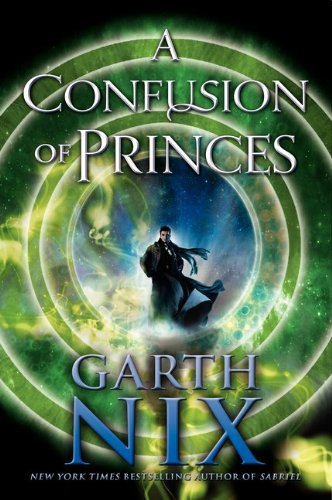
Prince Khemri has spent his life as one of ten thousand princes bred and trained by a sprawling galactic empire, expecting eventual rule -- until he learns just how disposable princes actually are, and how routinely they're assassinated by their own siblings. Garth Nix's A Confusion of Princes follows Khemri through the empire's ruthless military, its secret intelligence service, and a deadly, decades-long competition to determine who might one day take the throne. It's a single, self-contained space opera rather than an ongoing series.
- Saturn's Children
series3 books2008
similar byidentityfar futurescience fictionspacespace opera+3 more
Charles Stross's Saturn's Children (2008) is a space-opera tribute to late-period Robert A. Heinlein, set millennia after humanity has quietly gone extinct, in a solar system still run by the sentient robots humans left behind - including Freya, an android originally built for companionship who is pulled into interstellar intrigue. Neptune's Brood (2013) returns to the same posthuman-robot universe thousands of years later with an entirely new cast, shifting focus to the mechanics of slower-than-light interstellar finance and banking fraud. The two books share continuity rather than characters.
- The Madness Season
C. S. Friedmanstandalone novel1990
similar byidentityfar futurescience fictionspace operaspaceother star systems+1 more
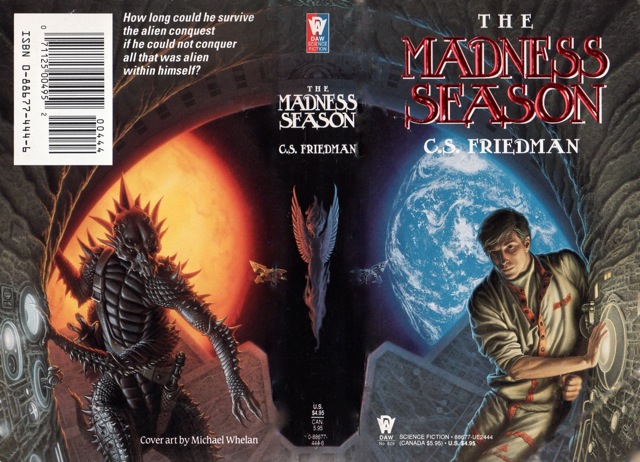
The alien within - He'd had so many names over the centuries, so many new identities that he could scarcely remember who he had originally been. Now his name was Daetrin, a name given by the alien conquerors of humankind, the Tyr. Three hundred years had passed since the Tyr conquered the people of Earth as they had previously overcome numerous races throughout the galaxy. In their victory they had taken the very heart out of the human race, isolating the true individualists, the geniuses, all the people who represented the hopes, dreams, and discoveries of the future, and imprisoning them in dome colonies on planets hostile to human life. There the Tyr, a race which itself shared a unified gestalt mind, had left these gifted individuals to work on projects which would, the conquerors hoped, reveal all of human kind's secrets to them. Yet Daetrin's secret was one no scientist had ever uncovered, for down through the years he had succeeded in burying it so well that he had even hidden his real nature from himself. But, taken into custody by the Tyr, there was no longer any place left for Daetrin to run, no new name and life for him to assume. Now he would at last be forced to confront the truth about himself - and if he failed, not just Daetrin but all humans would pay the price... (from the first page of the DAW Books first edition)
- Babel-17
Samuel R. Delanystandalone novel1966
similar byidentityfar futurescience fictionspace+2 more
Babel-17 is a 1966 science fiction novel by American writer Samuel R. Delany. Published by Ace Books in May 1966, it follows Rydra Wong, a poet and linguist recruited during an interstellar war to decipher a language connected to enemy sabotage. Her investigation reveals a language that shapes thought and can make its speakers unwitting saboteurs. Through Rydra's effort to understand and revise it, the novel explores communication, perception, identity, and translation.
- Jean le Flambeur
series3 books2010
similar byfar futurescience fictionchallengingspace operaspaceother star systemshard science fiction
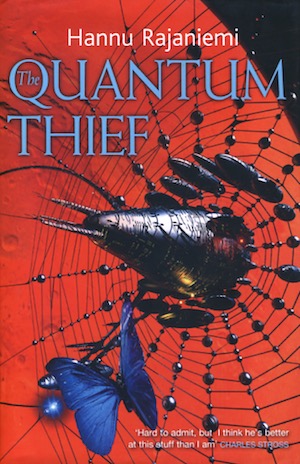
Jean le Flambeur is a master thief broken out of a virtual prison to pull off one more impossible heist, in a solar system reshaped by uploaded minds, post-human factions, and economies built on memory and privacy themselves. Hannu Rajaniemi's trilogy - The Quantum Thief, The Fractal Prince, The Causal Angel - is dense, idea-heavy hard SF that trusts readers to piece its future together from context rather than exposition.
- Dune Universe
universe78 books1963
Start hereDune · Start here
similar byfar futurescience fictionspace operaother star systems+1 more
Arrakis. Dune. The desert planet, where empire runs on a single substance: the spice melange, which folds space, prolongs life, and unlocks prescience, and which exists nowhere else in the known universe. Frank Herbert's saga is a meditation dressed as an adventure — feudal houses and a secret sisterhood, engineered messiahs and the patient ecology of a world without water, all turning on the terrible gravity of who commands the spice. It reads like scripture and schemes like a war room, ten thousand years hence, among people who have outlawed the thinking machine and made instruments of themselves instead. At its heart stand Herbert's original six — Dune, Dune Messiah, Children of Dune, God Emperor of Dune, Heretics of Dune, Chapterhouse: Dune — a single deepening arc across millennia, arguing the whole way between prophecy and free will. Around that spine his son Brian Herbert and Kevin J. Anderson have raised a vast prequel architecture: Prelude to Dune, tracing the great houses a generation before Paul; Legends of Dune, reaching back to the crusade that broke the machines; the Schools of Dune cycle on the founding of Bene Gesserit, Mentat, and Navigator; the Caladan Trilogy and Heroes of Dune filling years the originals left in shadow. Many hands, dozens of volumes, one desert. What sets Dune apart is its refusal of the simple: religion is manufactured, heroes are hazards, and the sand itself — worm, water, ecology — acts as a political power. Begin where the universe did, with Frank Herbert's Dune (1965), and read the original six in order; you need nothing else to feel the full weight. The prequels are a country to explore afterward, taken by era. Beginnings are delicate times.
- Six Moon Dance
Sheri S. Tepperstandalone novel1998
similar byidentityfar futurescience fictiondarkspace operaother star systems
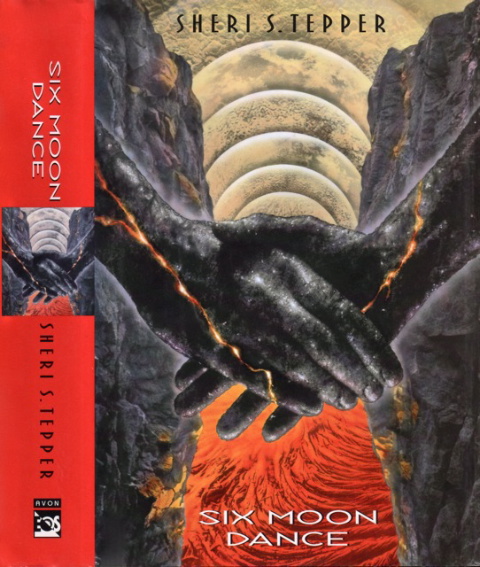
It was many years ago that humans came and settled the world of Newholme-cruelly bending the planet to their will; setting down roots and raising up cities and farms and a grand temple to their goddess.But now the ground itself is shaking with ever-increasing violence. And the Great Questioner, official arbiter of the Council of Worlds, has come to this isolated orb to investigate rumors of a terrible secret that lies buried deep within Newholme's past--a past that is not dead, not completely. And it will fall to Mouche, a beautiful youth of uncommon cleverness and spirit, to save his imperiled home by dicovering and embracing that which makes him unique among humans. For every living thing on newholme is doomed, unless Mouche can appease something dark and terrible that is coiled within...and surrender to the mysterious ecstatic revelry taht results when the six moons join.
- Redshirts
John Scalzistandalone novel2012
similar byidentityfar futurescience fictionspace operaspace
Redshirts is a postmodernist science fiction novel by John Scalzi that satirizes the tropes and narrative elements of Star Trek from the perspectives of several characters in a fictional TV show about the adventures of a starship and its crew who gradually become aware of their true nature.
- Teixcalaan
series2 books2019
similar byidentityfar futurescience fictionspace operaother star systems+1 more
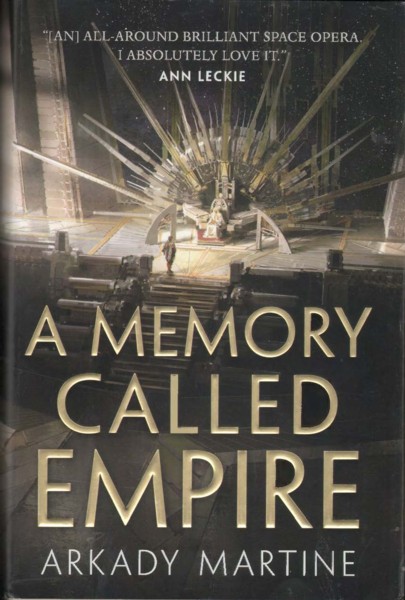
Arkady Martine's space opera duology follows Mahit Dzmare, ambassador from the small, independent Lsel Station, as she arrives in the vast Teixcalaanli Empire to investigate her predecessor's death and finds herself caught up in the empire's own succession crisis. A Memory Called Empire and A Desolation Called Peace pair court intrigue with Mahit's conflicted, outsider fascination with an empire she can't help admiring.
- Implied Spaces
Walter Jon Williamsstandalone novel2008
similar byfar futurescience fictionchallengingspace operaspaceother star systems+1 more
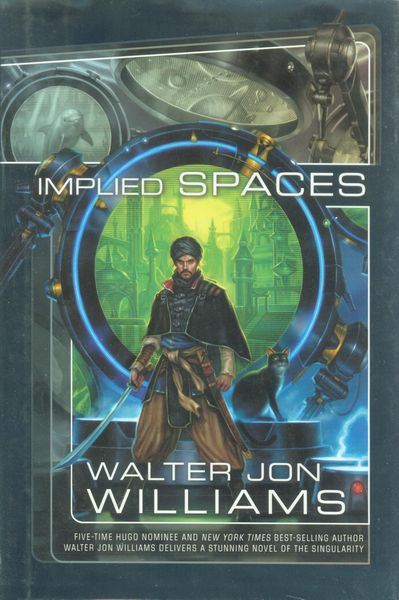
Implied Spaces is a 2008 space opera novel by American author Walter Jon Williams. It explores themes of transhumanism, artificial intelligence and ontology.
- The Einstein Intersection
Samuel R. Delanystandalone novel1967
similar byidentityfar futurescience fictionchallengingeerie
The Einstein Intersection is a 1967 science fiction novel by Samuel R. Delany. The title is a reference to Einstein's Theory of Relativity connecting to Kurt Gödel's Constructible universe, which is an analogy to science meeting philosophy. The original publisher, Ace Books, changed Delany's originally intended title from A Fabulous, Formless Darkness for commercial reasons.
- Triton
Samuel R. Delanystandalone novel1976
similar byidentityfar futurescience fictionchallengingother star systems
Trouble on Triton: An Ambiguous Heterotopia (1976) is a science fiction novel by American writer Samuel R. Delany. It was nominated for the 1976 Nebula Award for Best Novel, and was shortlisted for a retrospective James Tiptree, Jr. Award in 1995. It was originally published under the shorter title Triton.
- Singularity Sky
series2 books2003
similar byfar futurescience fictionchallengingspace operaspaceother star systems+1 more
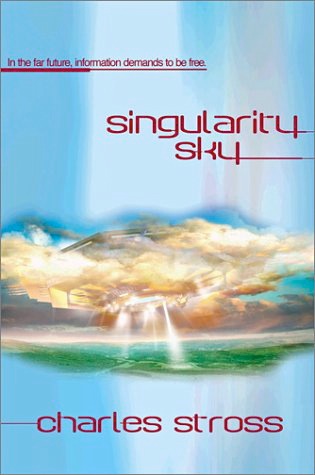
Singularity Sky and its sequel Iron Sunrise are collectively known as the Eschaton novels, after the godlike posthuman intelligence that seeded human colonies across space on the condition they never attempt time travel or threaten causality - rules tested when a low-tech colony world is destabilized by a group calling itself the Festival. Charles Stross uses the setup for a mix of space opera, economics, and diplomatic intrigue.
- The Four Lords of the Diamond
series4 books1981
completed
similar byidentityfar futurescience fictionspace operaother star systems
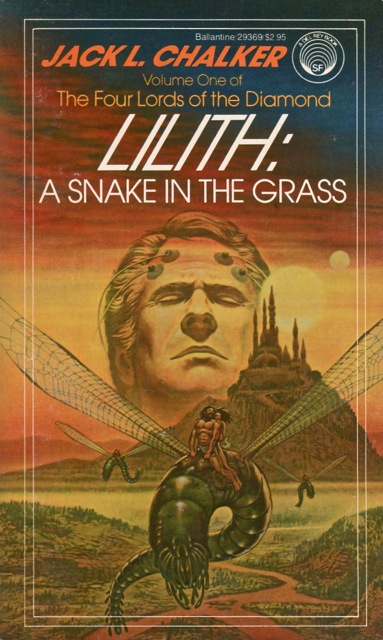
Jack L. Chalker's Four Lords of the Diamond sends a single infiltrator, reconstructed with a new identity each time, onto four different prison planets ruled by despotic 'Lords' within a star system called the Warden Diamond, hunting a traitor who could be hiding as any one of them. Each novel follows the same mission through a different one of the four worlds before the tetralogy's conclusion.