Loreful
HomeDiscover
Search series, authors…⌘K
Loreful

Reading orders for SF/F series and shared universes — with your place kept in every one.

Explore

UniversesSeriesWorksAuthorsAtlas

Help

FAQAboutSite map

Account & legal

Sign inCreate accountPrivacyTerms

Data

Built on ISFDB, Wikipedia, Wikidata and Open Library. Curated reading orders carry their reasoning on the page; the rest follow publication order. Data sources & licenses

© Loreful · data: ISFDB · CC BY

More like Lost Memory

anchored on:science fiction

but

Mood

The mood the book leaves you in.

  • The reading experience is propelled by journeys, exploration, and physical risk; excitement and forward momentum dominate over dread or introspection.
  • Joy and loss are deliberately mixed; the resolution grants characters something real while taking something else away, leaving warmth and sorrow together.
  • The book demands work from the reader — dense prose, difficult structure, unfamiliar ideas, or morally uncomfortable material — as part of its intended effect.
  • Grim events, cruelty, or despair dominate the atmosphere, and the book does not soften them with comfort or comic relief.
  • The atmosphere is quietly unsettling — wrongness, unease, and the uncanny pervade the book without necessarily escalating into overt horror.
  • The book is built to move the reader; character feeling is foregrounded and major scenes aim at a strong emotional response.
  • Humor is a primary aim and the prose plays for laughs — comic situations, wit, or dialogue produce sustained comedy, not occasional levity.
  • The book insists that things can improve; effort and decency are shown to matter, and the arc bends toward better outcomes even through hardship.
  • The book teaches as it goes — real facts, history, science, or craft are conveyed in enough depth that learning is part of the reading experience.
  • The book is designed to uplift and motivate, presenting perseverance or achievement in a way that invites the reader to aspire or act.
  • The overall register is cheerful and easygoing; stakes are kept gentle and the book avoids dwelling on pain or dread.
  • Withheld information drives the experience; the book sustains enigmas and secrets the reader wants resolved, whatever its genre.
  • The book is contemplative and inward-looking, giving more weight to thought, memory, and meaning than to external events.
  • The book works as comfort reading — low tension, a soothing pace, and an atmosphere the reader can unwind in.
  • Grief, loss, or melancholy set the dominant register, and the book lets sorrow stand rather than resolving it into comfort.
  • Sustained suspense is the point; the book keeps the reader braced for what happens next through danger, pressure, or impending revelation.
  • Playful invention and charm define the register — fanciful conceits, light absurdity, and a narration that delights in its own oddity.

About

What the story runs on.

  • Stories in which a machine intelligence — an AI, computer mind, or sentient program — is a central character or the story's driving problem.
  • Stories in which extraterrestrial beings are central — as characters, cultures, or the object of the plot.
  • Stories driven by deliberate modification of genomes — designer organisms, engineered humans, and the consequences of remaking life.
  • Stories about venturing into space to explore — survey missions, astronauts, and the frontier of the unknown beyond Earth.
  • Stories about settling other planets or habitats — founding, sustaining, and governing colonies off Earth.
  • Stories about minds with paranormal abilities — telepathy, telekinesis, precognition, empathy — and how societies handle those who have them.
  • Stories in which staying alive against nature, catastrophe, or scarcity is the central problem.
  • Stories of growing up — a young protagonist crossing from childhood into adult knowledge and responsibility.
  • Stories about who a character truly is — self-discovery, doubled lives, and the search for a self.
  • Stories driven by maneuvering for power — factions, conspiracies, and statecraft conducted in shadow.
  • Stories about rising against rulers — uprisings, resistance movements, and revolutions and their aftermaths.
  • Stories in which war itself is the subject — combat, occupation, and what warfare does to soldiers and civilians.

Shelf

Where it sits in the library.

    • Fiction built on magic or other supernatural elements that have no scientific explanation.
    • Secondary-world fantasy at large scale, where the fate of nations or the world turns on the protagonists' struggle.
    • Fantasy set in a recognizably modern city or contemporary world where the supernatural intrudes on everyday life.
    • Fantasy that blends in horror's atmosphere and imagery, keeping a fantastical frame around grim or frightening material.
    • Action-driven fantasy following warriors or rogues with personal stakes against sorcerous threats, rather than world-spanning conflicts.
    • Fantasy set in a real historical period or a close analogue of one, with magic woven into the era.
    • Fantasy in which protagonists cross from the ordinary world into another world through a portal or similar passage.
    • Fiction that retells or reworks a traditional fairy tale in a new form or setting.
    • Fantasy drawing directly on myths, legends, and folklore, retelling them or building on their figures and logic.
    • Fantasy of ghosts, vampires, shapeshifters, psychics, and similar phenomena, usually set in an otherwise ordinary world.
    • Fiction mixing science-fictional trappings with overtly magical or impossible elements in one setting.
    • Low-stakes fantasy emphasizing comfort, community, and everyday pleasures over conflict and peril.
    • Speculative fiction of pervasive moral ambiguity, violence, and cynicism that rejects heroic conventions — fantasy and SF alike.
      • Fiction that extrapolates from science and technology — future societies, space travel, or speculative inventions — within at least nominally natural laws.
      • Science fiction of interstellar scope — starships, galactic polities, and adventure across star systems.
      • Science fiction committed to scientific rigor, where technical plausibility constrains the story.
      • Science fiction centered on armed forces and warfare, told largely from a military point of view.
      • Science fiction of networked, corporate-dominated near futures, pairing high technology with social decay.
      • Science fiction styled on nineteenth-century steam-powered technology, often in a Victorian or pseudo-Victorian setting.
      • Fiction depicting an oppressive or catastrophic society, presented as a warning.
      • Fiction set after civilization's collapse, following survivors in the ruins of the old world.
      • Fiction in which characters move between past and future, and the mechanics or consequences of that travel drive the plot.
      • Fiction exploring a world where a historical event went differently and history diverged from ours.
      • Science fiction about humanity's first encounter and communication with an alien intelligence.
      • Science fiction in which extraterrestrial forces attack or occupy Earth and humanity resists.
      • Fiction whose primary aim is to frighten or unsettle the reader through dread, menace, or the monstrous.
      • Horror of vast, indifferent, incomprehensible entities before which humanity is insignificant, in the Lovecraft tradition.
      • Horror of decaying houses, buried family secrets, and oppressive atmosphere in the Gothic literary tradition.
      • Horror centered on hauntings and the returning dead.
      • Horror located in the mind — paranoia, obsession, and unreliable perception rather than external monsters.
      • Horror built around the reanimated dead and survival amid their outbreaks.
      • Horror defined by explicit, transgressive gore that refuses to cut away from violence.
      • Speculative fiction of the strange and uncanny that resists both natural explanation and standard genre categories.
      • Fiction organized around solving a crime or puzzle, typically following an investigator toward the identification of a culprit.
      • A puzzle-first mystery that lays out clues so the culprit's identity can be deduced before the reveal.
      • Crime fiction of moral ambiguity, fatalism, and hard-edged style, set among the corrupt and the doomed.
      • A mystery following the realistic routines of police work — forensics, interviews, and case-building.
      • A gentle mystery with an amateur sleuth, a small community, and violence kept off the page.
      • A mystery set in a past era, where the investigation works within that period's methods and society.
      • Fast-paced fiction driven by imminent danger, pursuit, or high-stakes conspiracy, built to sustain tension.
      • A thriller of espionage — agents, tradecraft, and intelligence services in conflict.
      • A thriller centered on lawyers and the courtroom, where litigation carries the suspense.
      • A thriller driven by detailed contemporary or near-future technology, often military or scientific.
      • A thriller whose tension comes from mental states and manipulation between characters rather than external action.
      • Fiction whose central plot is a romantic relationship and its development toward an emotionally satisfying resolution.
      • Romance in which one or both partners are supernatural beings, blending fantasy elements into the love story.
      • A fantasy-romance hybrid in which the romantic arc and the fantasy plot carry equal weight.
      • Romance set in a past era, with courtship shaped by the period's society and manners.
      • Romance set in the present day, without supernatural or historical elements.
      • Fiction set in a real past period, where the historical setting materially shapes characters and events.
        • General and literary fiction emphasizing prose style, character interiority, or formal ambition over genre plot conventions.
        • Fiction in a realistic world where magical events occur and are treated as ordinary, in the tradition of Latin American literature.
        • Fiction that ridicules people, institutions, or society in order to criticize them.
        • Fiction of dreamlike, irrational imagery and logic that breaks from realistic representation.
        • Fiction that plays with narrative convention through metafiction, fragmentation, and self-reference.
        • Fiction propelled by journeys, exploration, and physical peril, where action and survival carry the plot.
        • Adventure fiction of ships and seafaring — naval engagements, voyages, and life at sea.
        • Fiction of the American frontier West — gunmen, ranchers, and lawmen, typically in the late nineteenth century.
        • Fiction centered on soldiers, campaigns, and the experience of warfare, historical or imagined.
          • Fiction written primarily to amuse, using comedic situations, wit, or parody as its organizing principle.
            • Multi-generational fiction following a family or dynasty across decades, with inheritance and kinship as the through-line.
              • Fiction whose world runs on explicit game mechanics — levels, stats, and skills that characters can see and exploit.
                • Fiction about costumed or superpowered heroes and their conflicts with comparable villains.

                Practical

                How long a commitment, whether it stands alone, and whether it has finished.

                Tap a chip to ask for it · tap again to rule it out · once more to clear. Numbers show what would be left.

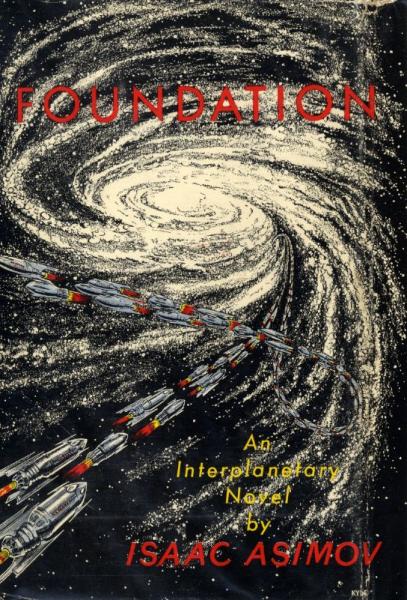
                • Cover of Foundation Universe
                  Foundation Universe

                  universe · 123 books · 1940

                  Start hereFoundation · Start here

                  similar byrobotsscience fiction

                  There is a science that reads the future of quadrillions the way an astronomer reads the orbits of stars. It is called psychohistory, and its equations foresee something the ruling Galactic Empire cannot admit: the throne is rotting, and thirty thousand years of barbarism are coming. One man, Hari Seldon, cannot stop the fall. He can only shorten it — by seeding a Foundation of scholars at the rim of the galaxy, a fragile institution built to carry knowledge across the dark and cut the interregnum to a single millennium. This is a universe told in the register of history itself: the long view, the calm of deep time, empires measured in centuries and men measured against them. The spine is Asimov's original trilogy — Foundation, Foundation and Empire, Second Foundation — followed decades later by the sequels Foundation's Edge and Foundation and Earth and the prequels Prelude to Foundation and Forward the Foundation. Late in life Asimov braided this in with his other future histories: the Robot novels of detective Elijah Baley and his humaniform partner R. Daneel Olivaw (The Caves of Steel, The Naked Sun, The Robots of Dawn, Robots and Empire) and the early Galactic Empire novels (Pebble in the Sky and its kin), until one continuous chronicle ran from the first thinking robots to the Second Empire. Other hands extend it — the Second Foundation Trilogy by Gregory Benford, Greg Bear, and David Brin, and shared-world spinoffs such as Robot City — so the corpus sprawls beyond a single author's tidy shelf. What distinguishes it is that the drama is intellectual: crises resolved by insight, nerve, and dialogue rather than fleets and blades, each turn hinging on the hidden logic of the Seldon Plan. Begin where readers have always begun — with Foundation, and the original trilogy in publication order. The rest opens outward from there.

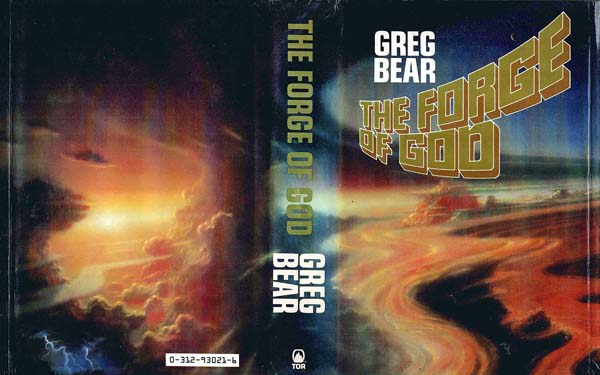
                • Cover of Forge of God
                  Forge of God

                  series · 2 books · 1987

                  completed

                  similar byscience fiction+2 more

                  The Forge of God (1987) is Greg Bear's science fiction novel about Earth's discovery that it is the target of an incomprehensible, overwhelming alien attack, following scientists and ordinary people as they try to understand what is destroying the planet. Its 1992 sequel, Anvil of Stars, follows a group of young survivors sent on a mission of interstellar retaliation, continuing directly from the first book's ending.

                • Cover of The City and the Stars
                  The City and the Stars

                  Arthur C. Clarke · standalone novel · 1956

                  similar byscience fiction+1 more

                  The City and the Stars is a science fiction novel by British writer Arthur C. Clarke, published in 1956. This novel is a complete rewrite of Clarke's earlier Against the Fall of Night, his first novel, which had been published in Startling Stories magazine in 1948 after being rejected by the editor of Astounding Science-Fiction, according to the author.

                • Cover of Blade Runner Universe
                  Blade Runner Universe

                  series · 6 books · 1968

                  similar byrobotsscience fiction

                  Philip K. Dick's 1968 novel Do Androids Dream of Electric Sheep? follows bounty hunter Rick Deckard as he tracks escaped androids through an irradiated, near-abandoned San Francisco, using the hunt to probe questions of empathy and what separates human from machine. The novel became the basis for Ridley Scott's 1982 film Blade Runner, and Marvel Comics later published an illustrated adaptation of that film. Together the two trace the story's path from prose original to screen and comic-page adaptation.

                • Cover of Tower of Glass
                  Tower of Glass

                  Robert Silverberg · standalone novel · 1970

                  similar byrobotsscience fiction+1 more

                  Tower of Glass is a science fiction novel by American writer Robert Silverberg, published in 1970. It was nominated for the Nebula Award in 1970, and for both the Hugo and Locus Awards in 1971.

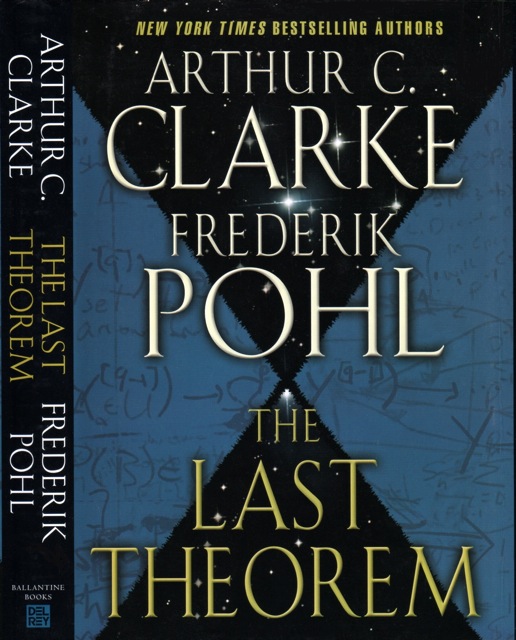
                • Cover of The Last Theorem
                  The Last Theorem

                  Arthur C. Clarke & Frederik Pohl · standalone novel · 2008

                  similar byscience fictionfirst contact+1 more

                  The Last Theorem is a 2008 science fiction novel by Arthur C. Clarke and Frederik Pohl. It was first published in the United Kingdom by HarperVoyager in July 2008, and in the United States by Del Rey Books in August 2008. The book is about a young Sri Lankan mathematician who finds a short proof of Fermat's Last Theorem, while an alien invasion of Earth is in progress.

                • Cover of The Door Into Summer
                  The Door Into Summer

                  Robert A. Heinlein · standalone novel · 1957

                  similar byrobotsscience fiction

                  From the first page of the Signet 6th printing: "An electronics engineer invents a wizard robot... only to find himself shanghaied by his ruthless partner and his gold-digging fiancee. The crafty pair forces him to submit to the "long sleep" - suspended animation for thirty years. But when he wakes up in the year 2000 A.D. the inventor makes a startling discovery. He learns that it is possible now to twist time forwards or backwards. And so he returns to the past bent on a mission... of revenge."

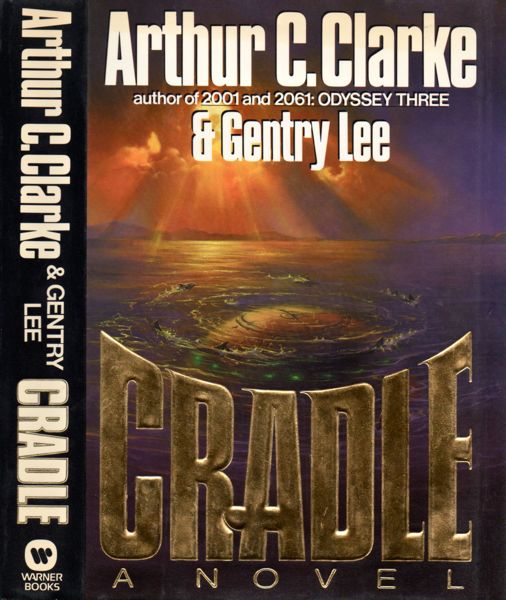
                • Cover of Cradle
                  Cradle

                  Arthur C. Clarke & Gentry Lee · standalone novel · 1988

                  similar byrobotsscience fictionfirst contact

                  Cradle is a 1988 science fiction novel by Arthur C. Clarke and Gentry Lee. The premise of the novel is the contact between a few humans from the Miami area in 1994 and the super robots of a damaged space ship submerged off the Florida coast. Telecommunication advances such as videotelephones and highly efficient underwater scanning equipment used in the story bridge from the everyday, real-life aspects of the setting toward the near future, bespeaking technological progress.

                • Cover of Shakespeare's Planet
                  Shakespeare's Planet

                  Clifford D. Simak · standalone novel · 1976

                  similar byrobotsscience fictionfirst contact

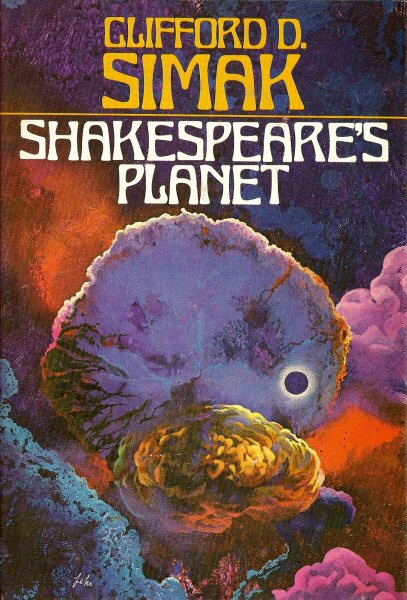
                  Woken after a thousand-year voyage meant to find humanity a new home, Carter Horton finds his ship stranded for good, tended by the disembodied minds of three volunteers who gave up their bodies to fly it. Outside waits a world already crowded with strangers: a robot named Nicodemus, and an alien called the Carnivore who claims to have known a human, once, called Shakespeare, and to have arrived here through a tunnel across time. As more travelers arrive through that same tunnel, Horton has to work out what kind of planet he has actually landed on. A standalone novel from Clifford D. Simak.

                • Cover of Nova
                  Nova

                  Samuel R. Delany · standalone novel · 1968

                  similar byscience fiction+1 more

                  Nоva is a science fiction novel by American writer Samuel R. Delany published in 1968. The plot concerns the spaceship captain Lorq Von Ray's search for a nova, which will produce the essential power source Illyrion, and his vendetta with the Red family, who seek to kill him. Nominally space opera, it explores the politics and culture of a future where cyborg technology is universal, yet making major decisions can involve using tarot cards. It has strong mythological overtones, relating to both the Grail Quest and Jason's quest for the Golden Fleece.

                • Cover of The Themis Files
                  The Themis Files

                  series · 3 books · 2015

                  similar byrobotsscience fiction+1 more

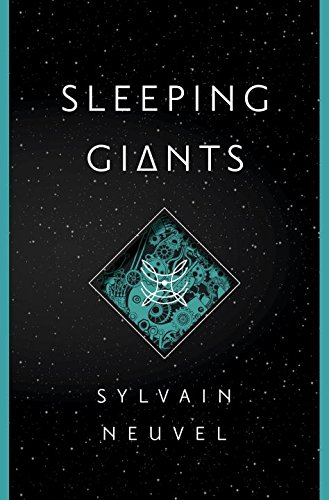
                  Sylvain Neuvel's Themis Files opens when a girl falls into a hole in South Dakota and lands on the palm of a giant metal hand buried underground; the trilogy picks up years later as she leads the team trying to determine what the hand is part of and why it's there. Sleeping Giants and its sequels are told almost entirely through interview transcripts conducted by an unnamed, evasive interrogator, giving the series a documentary, oral-history feel unusual for first-contact SF. The mystery escalates from an archaeological puzzle into a question of who else is looking for the same answer.

                • Cover of City
                  City

                  series · 19 books · 1944

                  completed

                  similar byscience fiction+1 more

                  City is Clifford D. Simak's fix-up novel, assembling eight linked stories originally published in Astounding Science Fiction during the 1940s and framed as legends dogs tell about a half-mythical creature called Man. It follows humanity's gradual abandonment of its cities and eventual departure from Earth, while the dogs left behind are surgically uplifted into a peaceable, speaking civilization of their own. The book won the International Fantasy Award in 1952.

                • Cover of The Eyes of Heisenberg
                  The Eyes of Heisenberg

                  Frank Herbert · standalone novel · 1966

                  similar byscience fiction+1 more

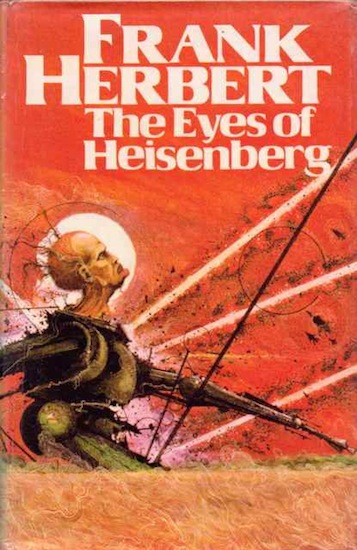
                  Tens of thousands of years in the future, Earth is ruled by the Optimen, a genetically engineered aristocracy that has made itself functionally immortal, while ordinary people, the Folk, live under strict reproductive control. When Harvey and Lizbeth Durant arrive to have their embryo genetically screened, the examining doctor finds something in the child no one has seen in a very long time: real potential for both fertility and life span, traits the Optimen have arrogated to themselves. Rather than destroy the embryo as policy demands, the doctor hesitates, setting off a chain of surveillance, suspicion and resistance. A tightly wound Frank Herbert thriller about genetic caste and rebellion.

                • Cover of Code of the Lifemaker
                  Code of the Lifemaker

                  series · 2 books · 1983

                  completed

                  similar byrobotsscience fiction+1 more

                  Code of the Lifemaker follows first contact between human explorers and the Taloids, self-replicating robotic beings who have built their own civilization on Saturn's moon Titan after their original programming drifted over generations. James P. Hogan drew direct inspiration from a real NASA feasibility study on self-replicating space automation for the premise. A sequel, The Immortality Option, followed in 1995.

                • Cover of Man Plus
                  Man Plus

                  series · 2 books · 1976

                  similar byrobotsscience fiction

                  Frederik Pohl's Man Plus follows Roger Torraway, who is surgically and cybernetically rebuilt into a post-human organism able to survive unprotected on the Martian surface, as part of a crash program to colonize Mars ahead of a predicted global crisis. The 1976 novel, which won the Nebula Award, is a clinical, unsentimental look at what such a transformation costs a person's sense of self. Thomas T. Thomas wrote the sequel Mars Plus, continuing the story of the Martian colony years later.

                • Cover of Roadmarks
                  Roadmarks

                  Roger Zelazny · standalone novel · 1979

                  similar byscience fiction+1 more

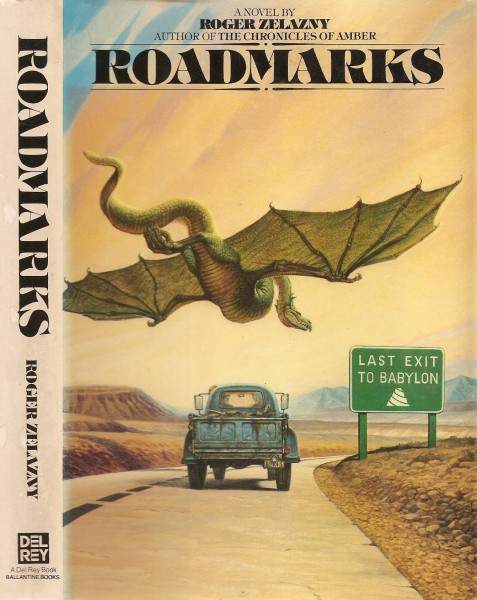
                  Roadmarks is a science fantasy novel by American author Roger Zelazny, written during the late 1970s and published in 1979.

                • Cover of 2312
                  2312

                  Kim Stanley Robinson · standalone novel · 2012

                  similar byscience fiction+1 more

                  In the eponymous year, when Earth's ecology is degraded and humanity has settled throughout the solar system by terraforming and genetic engineering, mysterious disasters strike some human communities and an assortment of human types from throughout the system seek to find and eliminate the cause.

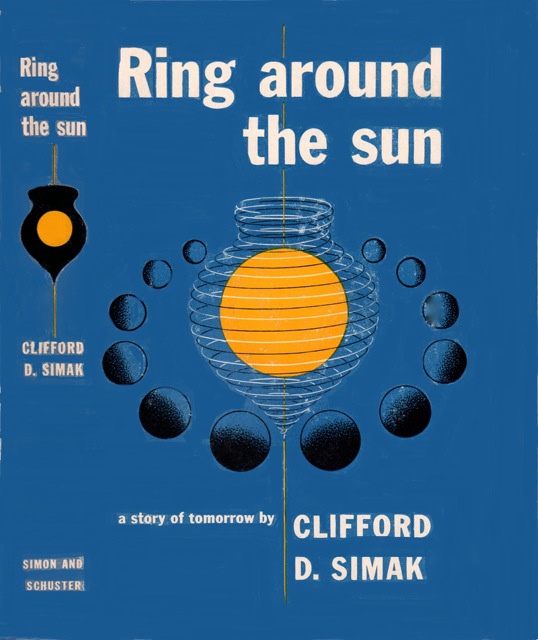
                • Cover of Ring Around the Sun
                  Ring Around the Sun

                  Clifford D. Simak · standalone novel · 1953

                  similar byscience fiction+1 more

                  Ring Around the Sun is a science fiction novel by American writer Clifford D. Simak. Its anti-urban and pro-agrarian sentiments are typical of much of Simak's work.

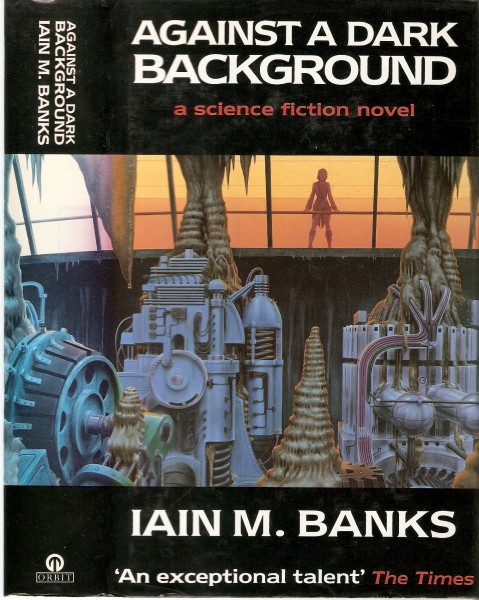
                • Cover of Against a Dark Background
                  Against a Dark Background

                  Iain M. Banks · standalone novel · 1993

                  similar byscience fiction+1 more

                  The daughter of an impoverished noble house and her squad of soldiers become thieves of antiquities; long after their retirement and separation she must assemble them again in order to find and steal the most powerful weapon ever created, or pay with her life.

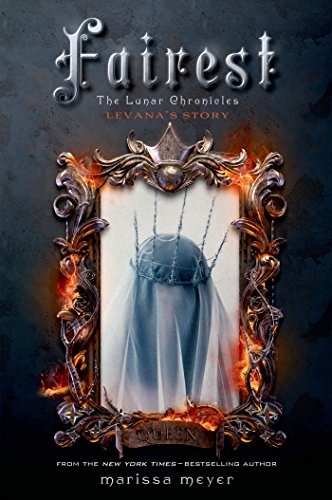
                • Cover of Lunar Chronicles
                  Lunar Chronicles

                  series · 15 books · 2011

                  similar byscience fiction+1 more

                  The Lunar Chronicles is a series of four young adult science fiction novels, a novella, and a short story collection written by American author Marissa Meyer and published by Feiwel & Friends. Each book entails a science fictional twist on a classic fairy tale, including "Cinderella", "Little Red Riding Hood", "Rapunzel", and "Snow White". Set in a futuristic world inhabited by various species and creatures, tensions are rising between Earth and its former colony Luna, while both attempt to manage an ongoing pandemic.

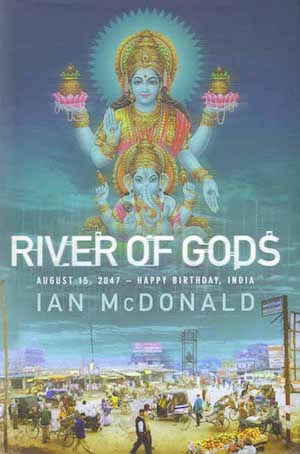
                • Cover of India 2047
                  India 2047

                  series · 9 books · 2004

                  similar byscience fiction+1 more

                  Set in an India a century after independence, this sequence follows the political and personal fallout of banned, illegally evolved artificial intelligences amid an India-Pakistan water war. River of Gods (2004) is the core novel; The Little Goddess and the linked stories collected in Cyberabad Days (2009) revisit the same Cyberabad setting from smaller, more intimate angles. Ian McDonald built it around near-future biotech, nanotech, and AI rather than a continuing cast of characters.

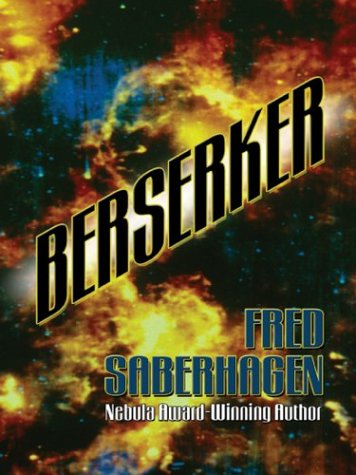
                • Cover of Berserker (Fred Saberhagen)
                  Berserker (Fred Saberhagen)

                  series · 59 books · 1963

                  similar byrobotsscience fiction

                  The Berserker series is a series of space opera science fiction short stories and novels by Fred Saberhagen, in which robotic self-replicating machines strive to destroy all life.

                • Cover of The Goblin Reservation
                  The Goblin Reservation

                  Clifford D. Simak · standalone novel · 1968

                  similar byscience fiction+1 more

                  The Goblin Reservation is a 1968 science fiction novel by American writer Clifford D. Simak, featuring an educated Neanderthal, a biomechanical sabertooth tiger, aliens that move about on wheels, a man who time-travels using an unreliable device implanted in his brain, meeting a ghost, trolls, banshees, goblins, a dragon and even Shakespeare himself. The Goblin Reservation was a Hugo Award nominee in 1969 and was originally serialized in Galaxy Science Fiction magazine.

                • Cover of Solar Lottery
                  Solar Lottery

                  Philip K. Dick · standalone novel · 1955

                  similar byscience fiction+1 more

                  Solar Lottery is a 1955 science fiction novel by American writer Philip K. Dick. It was his first published novel and contains many of the themes present in his later work. It was also published in altered form in the UK as World of Chance. The main story is about a man named Ted Benteley who lives in a strange world, dominated by percentages and the lottery. Lotteries are used to choose the next leader as well as a new assassin, whose job is to try to kill the leader or "Quizmaster". Everybody in society has the opportunity to be selected as a leader or an assassin. Benteley unexpectedly gets chosen to be a member of the committee trying to assassinate the new Quizmaster and he must decide what he is going to do.