More like Machine Learning
anchored on:science fictionfar futurespace operaspace
but
- Heechee
series19 books1972
completed
similar byfar futurescience fictionspacespace operaother star systems+1 more
The Heechee Saga, also known as the Gateway series, is a series of science fiction novels and short stories by Frederik Pohl. The Heechee are an advanced alien race that visited the Solar System hundreds of millennia ago and then mysteriously disappeared. They left behind bases containing artifacts, including working starships, which are discovered and exploited by humanity.
- Ian Cormac
series6 books2001
part of Polity
similar byartificial intelligencefar futurescience fictionspace operaspacetenseother star systems+1 more
Neal Asher's Ian Cormac novels (Gridlinked, The Line of Polity, Brass Man, Polity Agent, Line War, plus the earlier-set prequel Shadow of the Scorpion) follow Ian Cormac, an agent of Earth Central Security in Asher's Polity universe. Gridlinked opens with Cormac investigating a destroyed matter-transmitter on a remote colony while wrestling with the personality erosion caused by long-term neural linkage to the Polity's AI network; the following novels escalate into interstellar conflict with the alien Prador. Together they form the core action sequence of Asher's wider Polity series.
- Dune Universe
universe78 books1963
Start hereDune · Start here
similar byfar futurescience fictionspace operaother star systems+1 more
Arrakis. Dune. The desert planet, where empire runs on a single substance: the spice melange, which folds space, prolongs life, and unlocks prescience, and which exists nowhere else in the known universe. Frank Herbert's saga is a meditation dressed as an adventure — feudal houses and a secret sisterhood, engineered messiahs and the patient ecology of a world without water, all turning on the terrible gravity of who commands the spice. It reads like scripture and schemes like a war room, ten thousand years hence, among people who have outlawed the thinking machine and made instruments of themselves instead. At its heart stand Herbert's original six — Dune, Dune Messiah, Children of Dune, God Emperor of Dune, Heretics of Dune, Chapterhouse: Dune — a single deepening arc across millennia, arguing the whole way between prophecy and free will. Around that spine his son Brian Herbert and Kevin J. Anderson have raised a vast prequel architecture: Prelude to Dune, tracing the great houses a generation before Paul; Legends of Dune, reaching back to the crusade that broke the machines; the Schools of Dune cycle on the founding of Bene Gesserit, Mentat, and Navigator; the Caladan Trilogy and Heroes of Dune filling years the originals left in shadow. Many hands, dozens of volumes, one desert. What sets Dune apart is its refusal of the simple: religion is manufactured, heroes are hazards, and the sand itself — worm, water, ecology — acts as a political power. Begin where the universe did, with Frank Herbert's Dune (1965), and read the original six in order; you need nothing else to feel the full weight. The prequels are a country to explore afterward, taken by era. Beginnings are delicate times.
- Heaven Chronicles / Zones of Thought
series8 books1976
similar byfar futurescience fictionspace operaspace+3 more
- Commonwealth Saga
series2 books2004
part of Commonwealth Universe
similar byfar futurescience fictionspace operatense+4 more
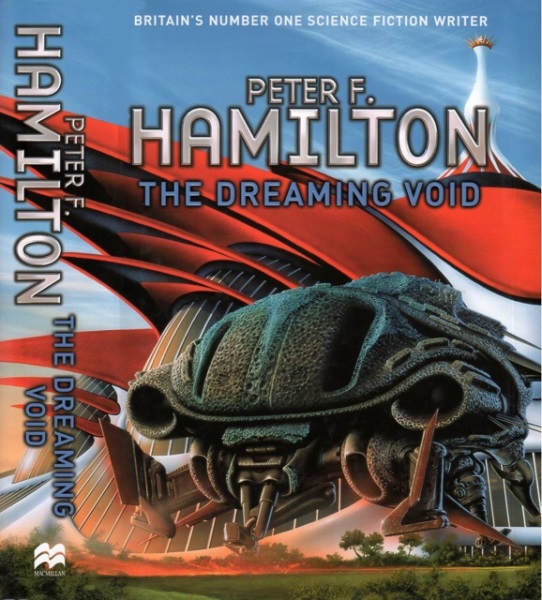
The Commonwealth Saga is a series of science fiction novels by British science fiction writer Peter F. Hamilton. This saga consists of the novels Pandora's Star (2004) and Judas Unchained (2005). Hamilton has also written several books set in the same literary universe. Misspent Youth (2002) takes place 340 years before the events of Pandora's Star. The Void Trilogy, consisting of The Dreaming Void (2008), The Temporal Void (2009), and The Evolutionary Void (2010), takes place 1,200 years after the events of Judas Unchained; several of the main characters from Judas Unchained and Pandora's Star also appear in the Void trilogy.
- Uplift
series5 books1980
part of Uplift Universe
similar byadventurousfar futurescience fictionspacespace operaother star systems+1 more
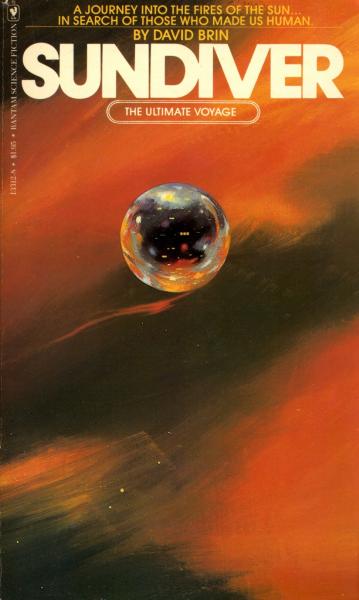
David Brin's Uplift trilogy opens with Sundiver, sending human explorers into the Sun itself, then follows a dolphin-crewed starship on the run from hostile aliens in Startide Rising and a fight over the colony world Garth in The Uplift War. The books sit inside Brin's wider Uplift Universe, built on the idea that spacefaring "patron" species genetically engineer younger "client" species into full sapience, with humanity an anomaly that reached the stars without a patron of its own.
- Fifth Imperium
series3 books1991
similar byartificial intelligenceadventurousfar futurescience fictionspace operaspacetense+1 more
David Weber's Fifth Imperium series opens with the discovery that Earth's Moon is in fact a disguised alien starship, the Dahak, that has orbited undetected for tens of thousands of years - a relic of the fallen Fourth Imperium, a multi-star civilization destroyed while defending against the genocidal Achuultani. Mutineers' Moon follows humanity's first contact with Dahak and the mutineers still aboard it; The Armageddon Inheritance and Heirs of Empire escalate from that discovery into interstellar war and dynastic politics as humanity inherits the old empire's legacy and its enemies. The three novels were later collected as the omnibus Empire from the Ashes.
- Starstream
series2 books1989
completed
similar byfar futurescience fictionspace operaspacetenseother star systems+2 more
Starstream groups Jeffrey A. Carver's two linked science-fiction novels, From a Changeling Star (1989) and its direct sequel Down the Stream of Stars (1990). The two were published within a year of each other under the same author.
- Culture
series15 books1987
completed
part of The Culture
similar byartificial intelligencescience fictionfar futurespace opera+3 more
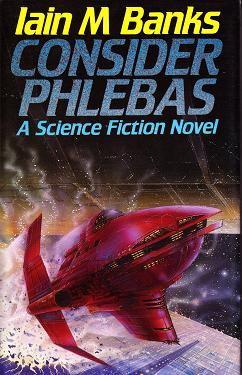
The Culture series is a science fiction series written by Scottish author Iain M. Banks and released from 1987 until 2012. The stories centre on The Culture, a utopian, post-scarcity space society of humanoid aliens and advanced superintelligent artificial intelligences living in artificial habitats spread across the Milky Way galaxy. The main themes of the series are the dilemmas that an idealistic, more-advanced civilization faces in dealing with smaller, less-advanced civilizations that do not share its ideals, and whose behaviour it sometimes finds barbaric. In some of the stories, action takes place mainly in non-Culture environments, and the leading characters are often on the fringes of the Culture, sometimes acting as agents of the Culture in its plans to civilize the galaxy. Each novel is a self-contained story with new characters, although reference is occasionally made to the events of previous novels.
- Void Trilogy
series4 books2007
part of Commonwealth Universe
similar byadventurousfar futurescience fictionspace opera+3 more
The Void Trilogy is a space opera series by British author Peter F. Hamilton. The series is set in the same universe as The Commonwealth Saga, 1,200 years after the end of Judas Unchained.
- Harvest of Stars
series5 books1993
completed
similar byfar futurescience fictionspace+5 more
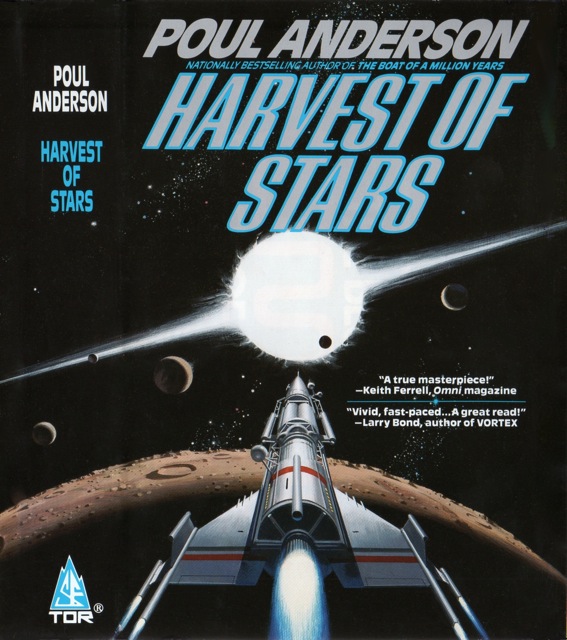
Harvest of Stars follows a spaceship captain and an interstellar power struggle across a near-future solar system where an authoritarian Earth government is losing its grip on off-world colonies and artificial intelligences with their own agendas. Poul Anderson's four-book sequence - Harvest of Stars, The Stars Are Also Fire, Harvest the Fire, The Fleet of Stars - was one of his last major works, extending across generations as its opening characters are succeeded by their descendants.
- Humanity's Fire
series5 books2009
similar byfar futurescience fictionspace operaspaceother star systems+3 more
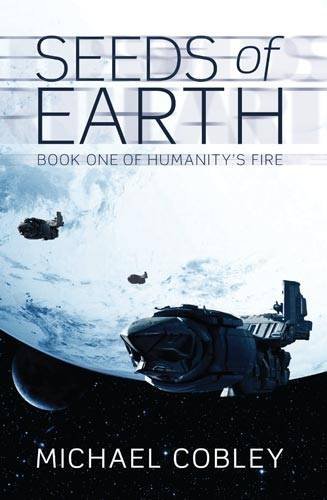
Michael Cobley's Humanity's Fire trilogy, opening with Seeds of Earth, follows the descendants of a human colony that lost contact with Earth generations earlier, who must contend with returning Earth authorities, alien empires, and a buried ancient danger beneath their adopted homeworld. Two further novels, Ancestral Machines and Splintered Suns, continue the setting afterward.
- 2312
Kim Stanley Robinsonstandalone novel2012
similar byfar futurescience fictionspaceother star systems+3 more
In the eponymous year, when Earth's ecology is degraded and humanity has settled throughout the solar system by terraforming and genetic engineering, mysterious disasters strike some human communities and an assortment of human types from throughout the system seek to find and eliminate the cause.
- Jak Rebo
series2 books2005
completed
similar byartificial intelligenceadventurousfar futurescience fictionspace operaspacetenseother star systems
- Spatterjay
series3 books2002
part of Polity
similar byfar futurescience fictionspace operaother star systems+3 more
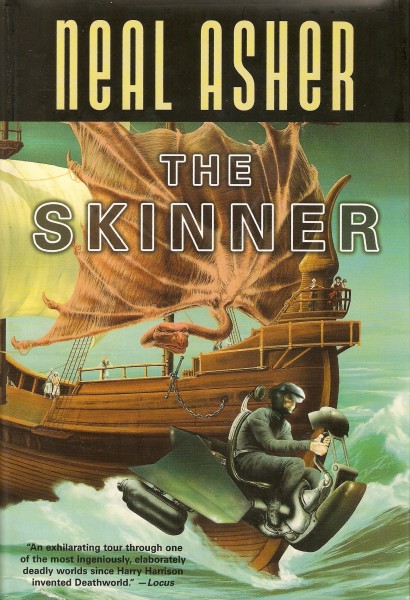
Spatterjay is set on the ocean world of the same name within Neal Asher's Polity future history: a planet whose ecology is uniquely dangerous, drawing soldiers, monsters, and old enemies of the Polity into its waters across the trilogy's three books (The Skinner, The Voyage of the Sable Keech, Orbus). It continues Asher's interest in body horror and extreme biology set against a backdrop of AI-run human space.
- Berserker (Fred Saberhagen)
series59 books1963
similar byartificial intelligencefar futurescience fictionspace operaspacetenseother star systems
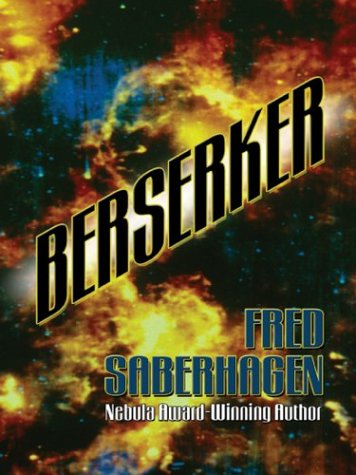
The Berserker series is a series of space opera science fiction short stories and novels by Fred Saberhagen, in which robotic self-replicating machines strive to destroy all life.
- Ender Wiggin
series14 books1977
part of Ender's Game Universe
similar byfar futurescience fictionother star systems+4 more
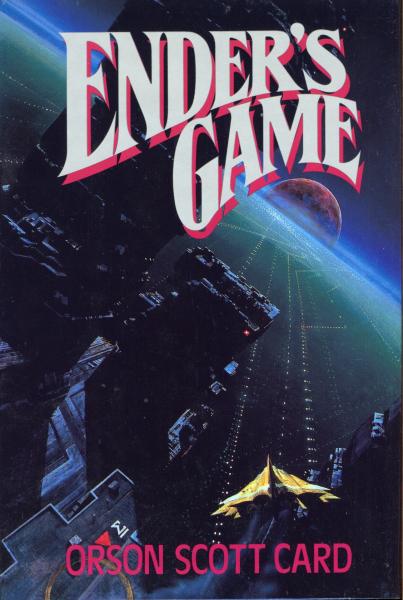
Orson Scott Card's Ender's Game (1985, expanded from his 1977 novella) follows child prodigy Andrew "Ender" Wiggin as he is recruited into a military training program built to prepare Earth's defenses for an anticipated third war against an insectoid alien species known as the Formics. The saga continues years later through Speaker for the Dead and Xenocide, following an older Ender as he confronts the moral weight of his role in that earlier conflict, and concludes the core arc in Children of the Mind, with Ender in Exile filling in the years between the first two books. Set within the wider Ender's Game universe, the series shifts from military coming-of-age story to slower, more philosophical science fiction as it progresses.
- Old Man's War
series16 books2005
similar byadventurousfar futurescience fictionspacespace operaother star systems+1 more
The Old Man's War series is a series of science fiction novels by John Scalzi. The first book in the series, Old Man's War, was first published in 2005 by Tor Books, and was nominated for the Hugo Award for Best Novel in 2006. In 2026 it was a finalist for the Hugo Award for Best Series.
- The Moon Is a Harsh Mistress
Robert A. Heinleinstandalone novel1966
similar byartificial intelligenceadventurousfar futurescience fiction+1 more
A technician discovers that the massive computer that operates everything on Luna (a prison colony) has become self-aware. He befriends it, but when he accompanied a beautiful girl to a dissident meeting, he encounters people who want to throw off the yoke of their Earth rulers.
- Newton's Wake
Ken MacLeodstandalone novel2004
similar byfar futurescience fictionspace operaspaceother star systems+2 more
Newton's Wake: A Space Opera is a science fiction novel by British writer Ken MacLeod, published in 2004. Set in the 24th century, it follows human life after a partially cataclysmic Singularity, and in particular a conflict on a far-flung planet that upsets the prevailing order. It has elements of both transhumanism and satire and is written using the printed versions of common translation stereotypes. The novel was nominated for the British Science Fiction Award in 2004, and the John W. Campbell Memorial Award for Best Science Fiction Novel in 2005.
- Uplift Universe
universe13 books1980
Start hereUplift · Start here
similar byadventurousfar futurescience fictionspacespace operaother star systems+1 more
No species, the Galactics insist, ever climbs to sapience alone. For a billion years the elder races have "uplifted" their chosen clients — reshaping some promising animal, gene by patient gene, into a thinking being, then binding it through long ages of indenture. Patron lifts client; client one day becomes patron; and every lineage traces back through the vast Galactic Library to the vanished Progenitors who began it all. Then a ragged band of primates arrives at the stars with no patron to claim them — wolflings, self-made, an affront to a hundred thousand years of law — and worse, these humans have already started uplifting neighbors of their own: the neo-dolphins and neo-chimpanzees of Earthclan. David Brin builds this galaxy across two trilogies. The first — Sundiver, the Hugo- and Nebula-winning Startide Rising, and the Hugo-winning The Uplift War — sends an expedition into the Sun, then follows the dolphin-crewed survey ship Streaker as it flees a discovery that sets fanatical star-clans at war, and a chimp-led resistance on an invaded colony world. The second sequence, Uplift Storm — Brightness Reef, Infinity's Shore, Heaven's Reach — descends to Jijo, a forbidden world where six fallen races hide as illegal settlers, and draws every loose thread toward a reckoning. Short fiction fills the margins. This is space opera with an ecologist's conscience: teeming with invented biologies, wry cross-species banter, and real unease about what we owe the minds we make. Begin with Startide Rising — the saga's beating heart, and readable on its own — or take Sundiver first and read straight through in publication order.
- The Rapture Effect
Jeffrey A. Carverstandalone novel1987
similar byfar futurescience fictionspacetenseother star systems+2 more
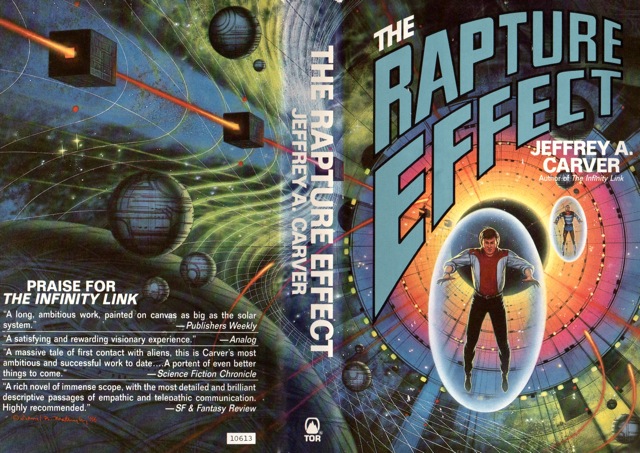
The Rapture Effect is a novel by Jeffrey A. Carver published by Tor Books in 1987.
- Jon & Lobo
series11 books1984
similar byfar futurescience fictionspacespace operaother star systems+3 more
- Debatable Space
series3 books2008
similar byfar futurescience fictionspace operaspaceother star systems+2 more