More like Magic-Borne
anchored on:epic fantasysecondary world
but
- Lightbringer
series5 books2010
similar byepic fantasysecondary world+5 more
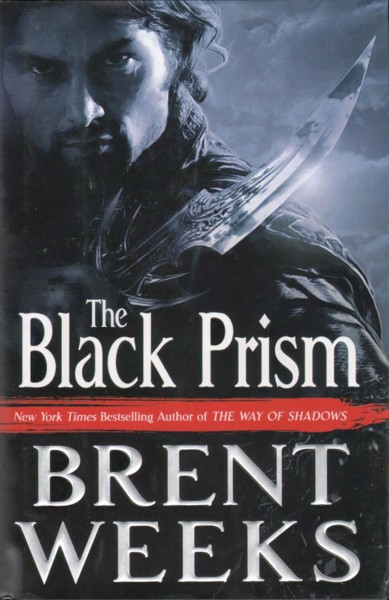
The Black Prism introduces Gavin Guile, the Prism — supreme religious and political authority over the Seven Satrapies, and the only person able to draft every color of magical light into solid, structural "luxin" — as an uprising and a hidden family secret both threaten to unravel the fragile peace he's built. Brent Weeks's five-book Lightbringer series pushes its chromaturgy magic system toward its physical and moral limits: drafters who overuse their color eventually "break the halo" and turn into monsters called wights.
- The Stormlight Archive
series15 books2010
part of Cosmere
similar byepic fantasysecondary worldadventurouswar+3 more
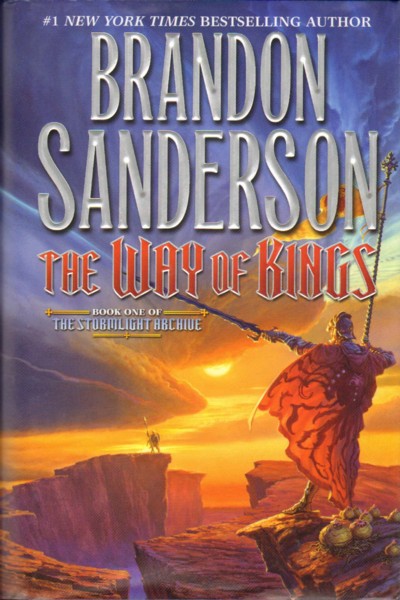
The Stormlight Archive is a high fantasy novel series written by American author Brandon Sanderson, planned to consist of ten novels. As of 2024, the series comprises five published novels and two novellas, set within Sanderson's broader Cosmere universe. The first novel, The Way of Kings, was published on August 31, 2010. The second novel, Words of Radiance, was published on March 4, 2014 and debuted at number one on The New York Times Best Seller List. This was repeated by Oathbringer and Rhythm of War. The fifth novel, Wind and Truth, was released December 6, 2024. Sanderson has indicated that he will start drafting the latter half of the series after he finishes writing the upcoming Era Three Mistborn trilogy and the two Elantris sequels. The series has been adapted as a VR Experience and a tabletop roleplaying game.
- Thomas Covenant the Unbeliever
series11 books1977
similar byepic fantasysecondary worlddark+1 more
The Chronicles of Thomas Covenant is a series of ten high fantasy novels written by American author Stephen R. Donaldson. The series began as a trilogy, The Chronicles of Thomas Covenant the Unbeliever. This was followed by another trilogy, The Second Chronicles of Thomas Covenant, and finally a tetralogy, The Last Chronicles of Thomas Covenant.
- The Licanius Trilogy
series3 books2014
similar byepic fantasysecondary worldchosen one+2 more
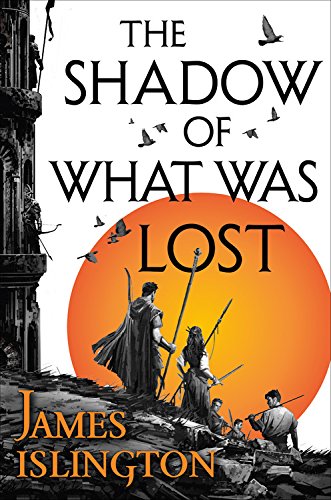
Twenty years after a war that toppled the god-like Augurs and stripped magic from the world, James Islington's Licanius Trilogy follows Davian, a young man bound by laws written to suppress the powers the Augurs once had, who discovers he can still reach forbidden abilities. His awakening coincides with the stirring of an ancient enemy and the appearance of an amnesiac stranger whose fate is bound to his. The three books trace how the old war's cover-up starts to unravel.
- The Lord of the Rings
series13 books1954
part of Tolkien's legendarium
similar byepic fantasysecondary world+2 more
The Lord of the Rings is an epic high fantasy novel written by the English author and scholar J. R. R. Tolkien. Set in Middle-earth, the story began as a sequel to Tolkien's 1937 children's book The Hobbit but eventually developed into a much larger work. Written in stages between 1937 and 1949, The Lord of the Rings is one of the best-selling books ever written, with over 150 million copies sold.
- Shannara
universe50 books1977
Start hereWord and the Void · The very beginning of the timeline
similar byepic fantasysecondary world+2 more
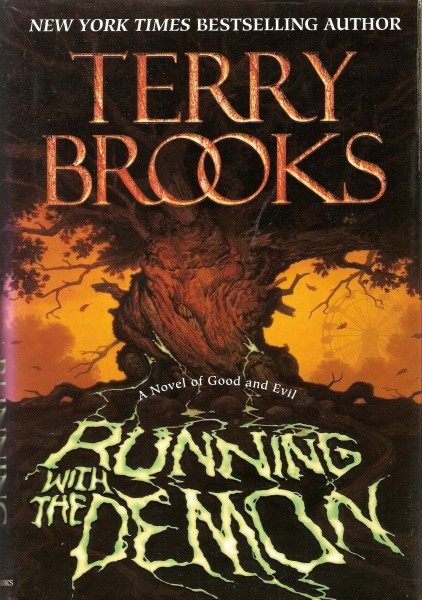
Long after the world we know has burned itself to slag in the Great Wars, the Four Lands rise green over the bones of the old age. Science is a forbidden memory; magic has come back into the world, and with it the old divisions — Men, Elves, Dwarves, Trolls, and Gnomes, each Race a splinter of what humanity became. This is the far-future Earth of Shannara, where the ruins buried beneath the soil are ours, and the only keepers of the vanished knowledge are the Druids of Paranor, who wake once a generation to meet the darkness rising again. Terry Brooks opened the Four Lands in 1977 with The Sword of Shannara and has charted its history for four decades since — a legendarium ordered not by throne but by a single bloodline, the Ohmsfords, each generation inheriting an Elfstone, a blade, or a wishsong when the age demands a hero. The original trilogy gives way to the Heritage of Shannara, the Voyage of the Jerle Shannara, the High Druid, Dark Legacy, Defenders, and the concluding Fall of Shannara; the Genesis of Shannara books reach back to the apocalypse itself, and the Word and the Void trilogy back further still, into a demon-haunted version of our own present that is the root of everything after. In 2025 Brooks passed the histories to Delilah S. Dawson to carry forward. What sets these books apart is their long memory: a world where every triumph is provisional, where the same evil returns wearing a fresh shape each age, and magic always exacts its price. The reading is warm and headlong — questing companies, old talismans, journeys across a mapped and named wilderness — shadowed by the knowledge that all of it stands on the wreckage of a former world. Enter as readers first did: with The Sword of Shannara, then onward in publication order. The chronological path, beginning with Word and the Void, rewards a second journey, once the Four Lands already feel like home.
- Richard and Kahlan
series9 books2011
completed
part of Sword of Truth
similar byepic fantasysecondary world+4 more
Terry Goodkind's Richard and Kahlan novels pick up the Sword of Truth's central couple after the conclusion of that eleven-book series, opening with The Omen Machine as a mysterious device begins issuing dire, unexplained prophecies that threaten to unravel the peace they fought for. The quartet continues their rule and their marriage under new, more localized threats.
- The Codex Alera
series6 books2004
similar byepic fantasysecondary worldadventuroustensewar+1 more
Furies of Calderon opens The Codex Alera in a Rome-flavored fantasy world where nearly everyone commands elemental spirits called furies, except Tavi, a teenager with none, whose resourcefulness becomes the series' recurring answer to raw magical power. Jim Butcher's six-book series, continuing through Academ's Fury, Cursor's Fury, Captain's Fury, Princeps' Fury, and First Lord's Fury, builds from small-scale political maneuvering into full-scale war.
- The Riftwar Universe
universe44 books1982
Start hereRiftwar Saga · Start here
similar byepic fantasysecondary world+3 more
On the world of Midkemia a tear opens in the air itself, a rift hung between stars, and through it march the armies of an empire from another world entirely. So begins the chronicle Raymond E. Feist has kept for three decades: the tale of Pug, a castle kitchen boy apprenticed to a magician on the very day the invasion lands, and of Tomas, his friend, who inherits the armor and the ancient fury of a dead dragon-lord. Around these two the Riftwar Cycle turns, widening book by book from one besieged frontier keep into the whole history of a world of kingdoms, guilds, thieves' dens and mage-towers. The cycle runs to roughly thirty novels, gathered into arcs a newcomer can enter and finish on their own. The founding Riftwar Saga (Magician, Silverthorn, A Darkness at Sethanon) sets the board; the Serpentwar Saga, Krondor's Sons and the Conclave of Shadows carry the story down the generations; the Darkwar, Demonwar and Chaoswar sagas bring it toward its close. Crossing the rift to the rival world of Kelewan, Feist and Janny Wurts wrote the Empire trilogy, opening with Daughter of the Empire, a court intrigue told wholly from the invaders' side and for many the finest thing here. Shorter Legends of the Riftwar and the game-born Riftwar Legacy fill the corners; later still, Feist opens an altogether new world in the Firemane books. Feist writes fantasy in its most companionable key: apprentices who grow into archmages, tavern boys who become spies and dukes, a world you return to the way you return to an old inn. The mood is adventure before dread, friendship and rank and hard-won craft, wars that cost something, all of it rendered plainly and at a gallop. Begin where it began, with Magician, then follow the arcs in the order they were written, and the rift will carry you the rest of the way.
- Legacy of Orisha
series3 books2018
similar byepic fantasysecondary world+6 more
Tomi Adeyemi's Legacy of Orïsha trilogy opens with Children of Blood and Bone, following Zélie, a girl from a persecuted caste of former magic-users, on a quest to restore magic to a kingdom that outlawed and hunted her people. Children of Virtue and Vengeance and Children of Anguish and Anarchy continue the fallout of that restoration as new factions fight over who gets to wield the returned power. The series draws on West African mythology and languages for its magic system and setting.
- Riftwar Saga
series7 books1982
part of The Riftwar Universe
similar byepic fantasysecondary worldadventurouswar+1 more
The Riftwar Saga is Raymond E. Feist's debut fantasy trilogy, opening with Magician, in which an orphaned apprentice named Pug is swept up when otherworldly invaders emerge through a dimensional rift into the frontier kingdom of Midkemia. Silverthorn and A Darkness at Sethanon carry the resulting war to its close, and the trilogy became the founding entry of Feist's much larger Riftwar Cycle.
- The Ancestor
series4 books2017
similar byepic fantasysecondary worldmagic schoolsdarkdark fantasy+4 more
The Book of the Ancestor trilogy is a series of three fantasy novels by Mark Lawrence. It comprises Red Sister (2017), Grey Sister (2018), and Holy Sister (2019). The three novels tell the story of Nona Grey, a peasant girl with mystical abilities. Red Sister was nominated for the 2018 David Gemmell Awards for Fantasy.
- The Hobbit
series2 books1937
completed
part of Tolkien's legendarium
similar bysecondary worldepic fantasyadventurous+1 more
The Hobbit (1937) is J. R. R. Tolkien's children's fantasy novel following the reluctant burglar Bilbo Baggins, who joins a company of dwarves and the wizard Gandalf on a journey to reclaim treasure guarded by the dragon Smaug. It stands as a complete adventure on its own, but shares its setting with the rest of Tolkien's legendarium and leads into the events of The Lord of the Rings.
- A Song of Ice and Fire
series14 books1996
part of World of Ice and Fire
similar byepic fantasysecondary worldwardark+2 more
A Song of Ice and Fire is a series of high fantasy novels by the American author George R. R. Martin. Martin began writing the first volume, A Game of Thrones, in 1991, and published it in 1996. Martin, who originally envisioned the series as a trilogy, has released five out of seven planned volumes. The most recent entry in the series, A Dance with Dragons, was published in 2011. Since then, Martin has been working on the sixth novel, titled The Winds of Winter. A seventh novel, A Dream of Spring, is planned to follow.
- Throne of Glass
series15 books2012
similar byepic fantasysecondary world+4 more
Throne of Glass is a epic fantasy novel series by American author Sarah J. Maas, beginning with the entry of the same name, released on August 2, 2012. The story follows the journey of Celaena Sardothien, a teenage assassin in a corrupt kingdom with a tyrannical ruler, the King of Adarlan. As the story progresses, Celaena forms unexpected bonds and uncovers a conspiracy amidst her adventures. The series concluded with the eighth book in October 2018.
- Dragon Trilogies
series6 books1988
similar byepic fantasysecondary worldtense+2 more
The Dragon Prince and Dragon Star trilogies comprise six connected fantasy novels written by Melanie Rawn. The Dragon Prince trilogy focuses on Prince Rohan of the Desert and his Sunrunner wife, Sioned, while the Dragon Star trilogy focuses on their son, Pol. The Dragon Prince trilogy consists of novels Dragon Prince, The Star Scroll, and Sunrunner's Fire. The books in the Dragon Star trilogy are Stronghold, The Dragon Token, and Skybowl.
- Pellinor
series5 books2002
similar byepic fantasysecondary worldchosen oneadventurous+1 more
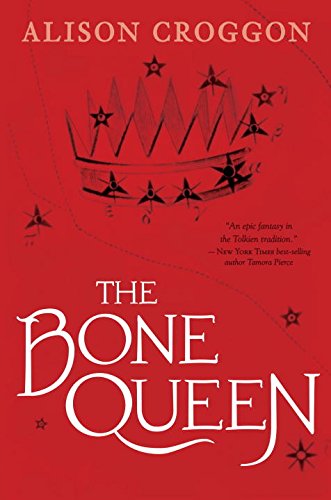
Maerad has spent most of her life enslaved on a remote farm, until the wandering Bard Cadvan recognizes in her the Gift -- a rare and powerful magical ability -- and takes her from captivity into training. Alison Croggon's Books of Pellinor follow Maerad across the world of Edil-Amarandh as she's drawn into a prophecy naming her the only one who might stop the Nameless One, an ancient and corrupting sorcerer, while she also searches for her lost family. The series runs through The Gift, The Riddle, The Crow, The Singing, and the later prequel The Bone Queen.
- Rigante
series4 books1998
completed
similar byepic fantasysecondary worldwardark+3 more
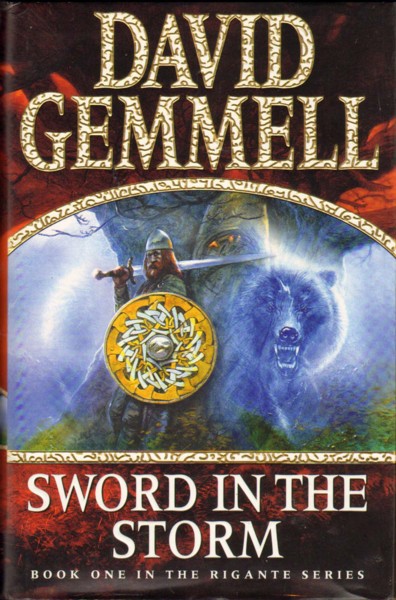
Sword in the Storm opens David Gemmell's Rigante sequence, following Connavar, a young tribesman of the Rigante people whose homeland faces both internal clan conflict and the looming threat of a technologically superior empire modeled on Rome. The series spans generations of the Rigante across four novels, mixing Gemmell's trademark heroic-fantasy action with Celtic-flavored history. It was published between 1998 and 2002.
- The Banned and the Banished
series5 books1998
similar byepic fantasysecondary worldchosen oneadventurous+1 more
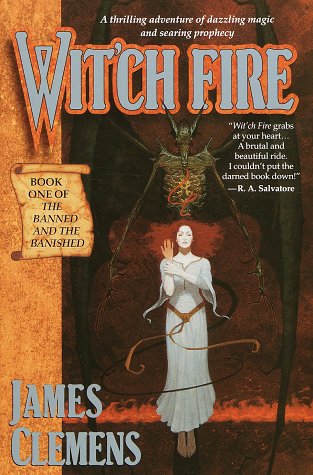
James Paul Czajkowski, better known by his pen name of James Rollins, is an American veterinarian and writer of action-adventure/thriller, mystery, and techno-thriller novels who gave up his veterinary practice in Sacramento, California to be a full-time author. Rollins' experiences and expertise as an amateur spelunker and a certified scuba diver have provided content for some of his novels, which are often set in underground or underwater locations. Under the pen name James Clemens, he has also published fantasy novels, such as Wit'ch Fire, Wit'ch Storm, Wit'ch War, Wit'ch Gate, Wit'ch Star, Shadowfall (2005), and Hinterland (2006).
- Age of Legends
series4 books2014
similar bysecondary worldepic fantasyadventurous+4 more
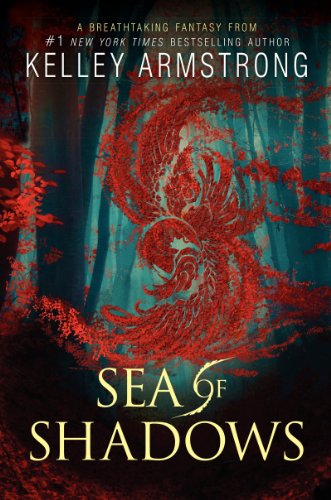
Age of Legends is a fantasy trilogy by Kelley Armstrong, comprising Sea of Shadows, Empire of Night, and Forest of Ruin (2014–2016), distinct from her contemporary paranormal Darkest Powers books.
- Realm Breaker
series3 books2021
similar byepic fantasysecondary world+3 more
Realm Breaker follows Corayne an-Amarat, an ordinary young woman living in a quiet coastal town, who learns she's the last of an ancient bloodline capable of standing against an immortal warlord raising an army to tear the world apart with a stolen, realm-breaking sword. Victoria Aveyard's trilogy, continuing through Blade Breaker and Fate Breaker, sends Corayne out with a small band of reluctant allies on a race against the warlord's forces.
- The Legend of Magda Searus
series1 book2012
part of Sword of Truth
similar byepic fantasysecondary worlddark+3 more
- Cosmere
universe54 books2005
Start hereThe Final Empire · Start here
similar byepic fantasysecondary world+3 more
Before the worlds, there was Adonalsium, and then there was not. A god shattered into sixteen Shards of raw creative power, and those who seized them carried their fragments across the void to seed new planets, new peoples, new ways of working the impossible. The Cosmere is the one universe those Shards made: a scattering of worlds that seem, at first, to share nothing but a sky, until you notice the same law running quietly beneath each of them, and the same silent traveler passing through their margins. Every world keeps its own book and its own magic. On Scadrial, the Mistborn cycle burns metals into power: a self-contained trilogy of thieves and tyranny, followed by a second era that drags the same world into gunslinging early industry. On storm-battered Roshar, The Stormlight Archive raises its vast, ongoing epic around knights, spren, and oaths spoken aloud. Elsewhere stand the shorter keystones: Elantris, a city of fallen gods; Warbreaker, a tale of returned dead and living color; White Sand, told in graphic-novel form under the twin suns of Taldain. Threaded between them run the novellas, from Tress of the Emerald Sea and Yumi and the Nightmare Painter to The Sunlit Man and the pieces gathered in Arcanum Unbounded, where the hidden connections surface most plainly. All of it is the design of one hand, Brandon Sanderson, working a single pattern across two decades. What sets this universe apart is its faith in rules: magic here is a system, lawful and learnable, so discovery feels less like wonder handed down than like physics worked out. The cross-connections reward the patient reader, a symbol here, a name there, one immortal wanderer everywhere, but no book demands you have read another first. Newcomers do best entering through Mistborn: The Final Empire, the most self-contained doorway, or the standalone Elantris or Warbreaker; readers who prefer their epics vast can begin with The Way of Kings. The deeper links, and the novellas that expose them, wait for whenever you are ready to look.