More like Magic Test
anchored on:science fictionnear future
but
- Blade Runner Universe
series6 books1968
similar byscience fictionnear future+2 more
Philip K. Dick's 1968 novel Do Androids Dream of Electric Sheep? follows bounty hunter Rick Deckard as he tracks escaped androids through an irradiated, near-abandoned San Francisco, using the hunt to probe questions of empathy and what separates human from machine. The novel became the basis for Ridley Scott's 1982 film Blade Runner, and Marvel Comics later published an illustrated adaptation of that film. Together the two trace the story's path from prose original to screen and comic-page adaptation.
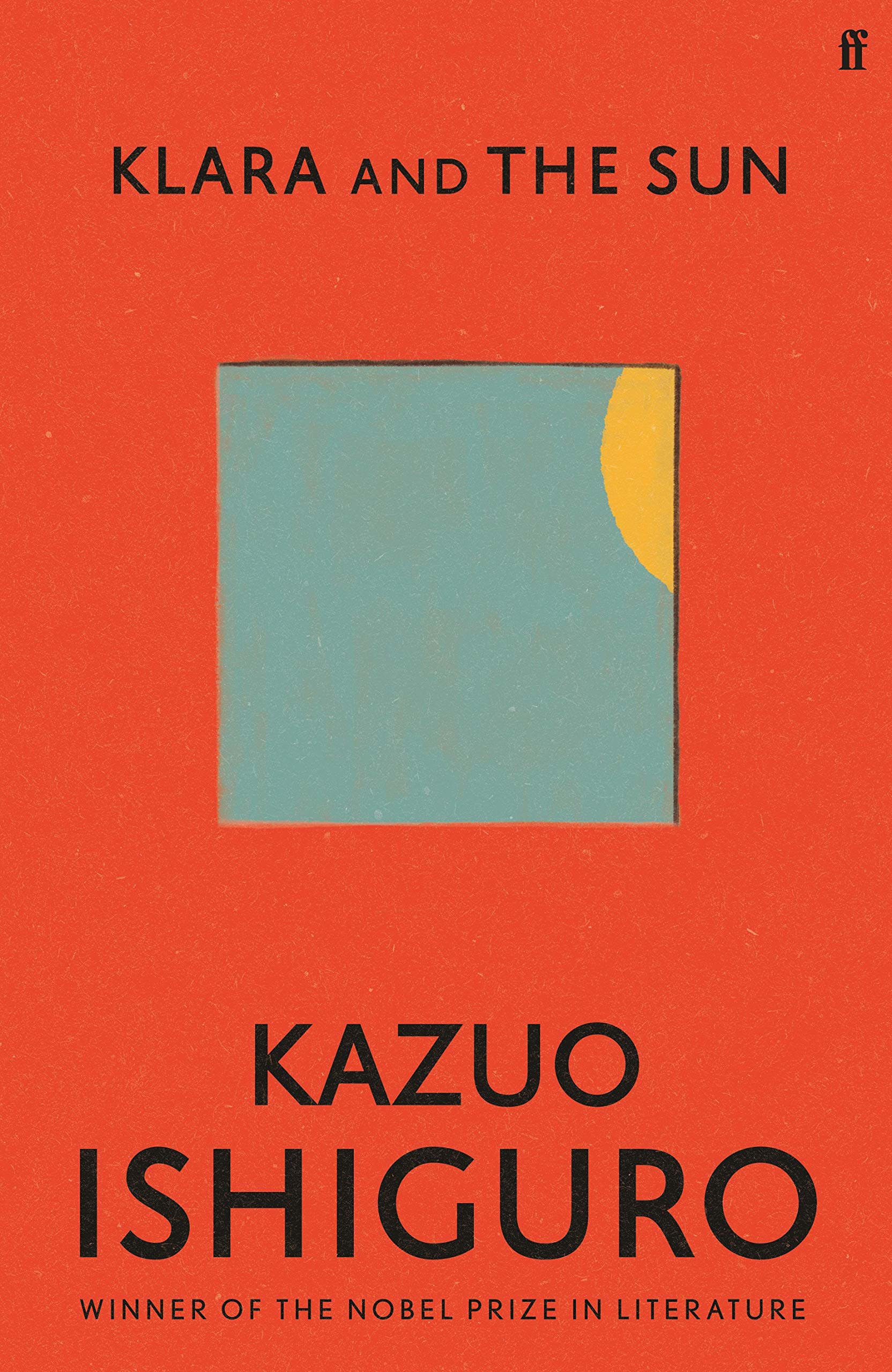
- Klara and the Sun
Kazuo Ishigurostandalone novel2021
similar byartificial intelligencescience fictionreflectiveour worldnear futurefirst person
Klara and the Sun is the eighth novel by the Japanese-British writer Kazuo Ishiguro, published on 2 March 2021. It is a dystopian science fiction story.
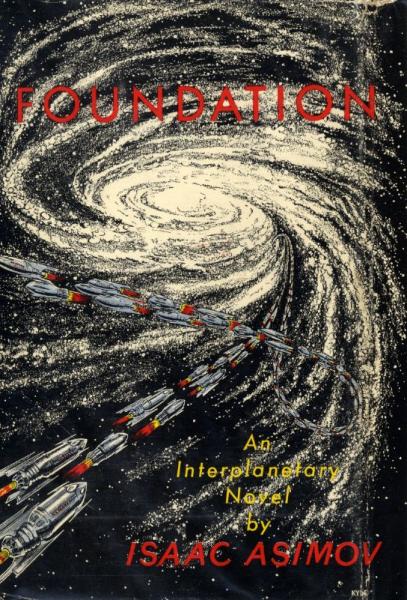
- Foundation Universe
universe123 books1940
Start hereFoundation · Start here
similar byscience fiction+2 more
There is a science that reads the future of quadrillions the way an astronomer reads the orbits of stars. It is called psychohistory, and its equations foresee something the ruling Galactic Empire cannot admit: the throne is rotting, and thirty thousand years of barbarism are coming. One man, Hari Seldon, cannot stop the fall. He can only shorten it — by seeding a Foundation of scholars at the rim of the galaxy, a fragile institution built to carry knowledge across the dark and cut the interregnum to a single millennium. This is a universe told in the register of history itself: the long view, the calm of deep time, empires measured in centuries and men measured against them. The spine is Asimov's original trilogy — Foundation, Foundation and Empire, Second Foundation — followed decades later by the sequels Foundation's Edge and Foundation and Earth and the prequels Prelude to Foundation and Forward the Foundation. Late in life Asimov braided this in with his other future histories: the Robot novels of detective Elijah Baley and his humaniform partner R. Daneel Olivaw (The Caves of Steel, The Naked Sun, The Robots of Dawn, Robots and Empire) and the early Galactic Empire novels (Pebble in the Sky and its kin), until one continuous chronicle ran from the first thinking robots to the Second Empire. Other hands extend it — the Second Foundation Trilogy by Gregory Benford, Greg Bear, and David Brin, and shared-world spinoffs such as Robot City — so the corpus sprawls beyond a single author's tidy shelf. What distinguishes it is that the drama is intellectual: crises resolved by insight, nerve, and dialogue rather than fleets and blades, each turn hinging on the hidden logic of the Seldon Plan. Begin where readers have always begun — with Foundation, and the original trilogy in publication order. The rest opens outward from there.
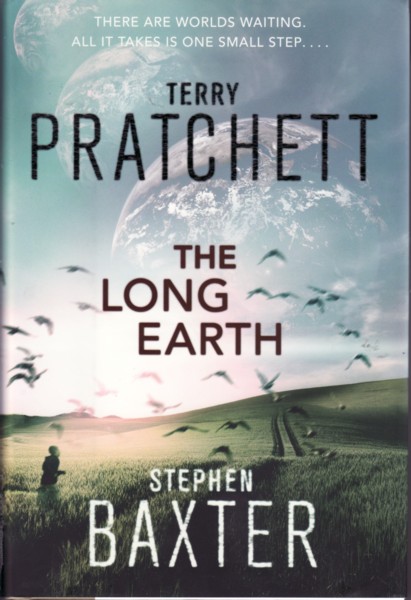
- The Long Earth
series7 books2012
similar byscience fictionnear future+2 more
Terry Pratchett and Stephen Baxter's Long Earth series (five novels, 2012-2016) begins when a cheap, simple device called a Stepper lets people step sideways into a vast, possibly infinite chain of parallel Earths, none of which developed human civilization. The books follow a natural stepper and an AI that believes itself the reincarnation of a Tibetan repairman as they travel millions of steps out along the chain, encountering other hominid species and the dangers, ecological and social, of an endless open frontier.
- Service Model
series3 books2024
similar byartificial intelligencescience fictionour worldnear futurefirst person+1 more
- Player Piano
Kurt Vonnegut & Jr.standalone novel1952
similar byartificial intelligencescience fictionnear future+1 more
In the near future, when cybernetic automation has effectively separated people into two castes, the "engineers and managers", and the remainder of the population who can find work only in "recycling and reclamation" or the largely useless military, an underground movement arises with the intention of rolling back those changes and giving the masses the dignity of owning their own, productive, work once more.
- The City and the Stars
Arthur C. Clarkestandalone novel1956
similar byscience fictionreflective+2 more
The City and the Stars is a science fiction novel by British writer Arthur C. Clarke, published in 1956. This novel is a complete rewrite of Clarke's earlier Against the Fall of Night, his first novel, which had been published in Startling Stories magazine in 1948 after being rejected by the editor of Astounding Science-Fiction, according to the author.
- Richard Forthrast
series2 books2011
similar byscience fictionour world+3 more
Neal Stephenson's Richard 'Dodge' Forthrast novels open with Reamde, a globe-spanning thriller that starts when ransomware inside an MMORPG economy pulls Richard's extended family into a real-world hostage crisis involving hackers, jihadists and Russian mobsters. The sequel Fall; or, Dodge in Hell shifts registers entirely, following Richard's digitally preserved mind after death into an afterlife simulation built from his scanned brain. The two books share a protagonist and family but differ sharply in genre and scale.
- Dogs of War (Adrian Tchaikovsky)
series3 books2017
similar byscience fictionour worldnear future+1 more
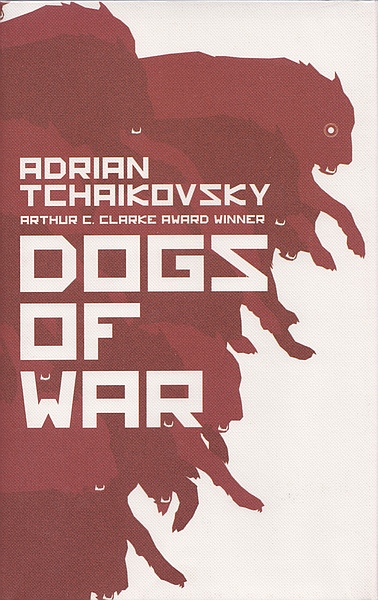
Adrian Tchaikovsky's Dogs of War follows Rex, a genetically engineered "Good Boy" - a hulking bioform supersoldier built for a private military contractor - as he begins to question the nature of his own obedience and personhood after his handler disappears. Dogs of War, Bear Head, and Bee Speaker widen from that first book's battlefield into questions of AI rights, corporate power, and non-human consciousness across a near-future Earth. The trilogy uses its engineered-animal soldiers to interrogate free will and loyalty rather than play them as straightforward action heroes.
- The Turing Option
Harry Harrison & Marvin Minskystandalone novel1992
similar byartificial intelligencescience fictionour worldnear future+1 more
Classic SF Harry Harrison enthralls with the discovery, loss and re-discovery of AI. Quaint but fairly accurate predictions of modern computing power. 24 style presentation.
- India 2047
series9 books2004
similar byscience fictionnear future+2 more
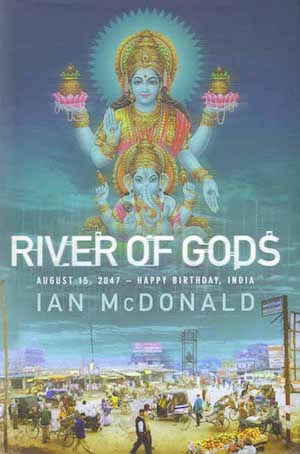
Set in an India a century after independence, this sequence follows the political and personal fallout of banned, illegally evolved artificial intelligences amid an India-Pakistan water war. River of Gods (2004) is the core novel; The Little Goddess and the linked stories collected in Cyberabad Days (2009) revisit the same Cyberabad setting from smaller, more intimate angles. Ian McDonald built it around near-future biotech, nanotech, and AI rather than a continuing cast of characters.
- The Collected Stories of Philip K. Dick
series11 books1987
completed
similar byscience fictionour world+3 more
The Collected Stories of Philip K. Dick is a collection of 118 science fiction stories by American writer Philip K. Dick. It was first published by Underwood-Miller in 1987 as a five volume set. See Philip K. Dick bibliography for information about the mass market reprints.
- Stranger in a Strange Land
Robert A. Heinleinstandalone novel1961
similar byscience fictionreflectiveour worldnear future
Stranger in a Strange Land is a 1961 science fiction novel by the American author Robert A. Heinlein. It tells the story of Valentine Michael Smith, a human who comes to Earth in early adulthood after being born on the planet Mars and raised by Martians, and explores his interaction with and eventual transformation of Terran culture.
- Ender Wiggin
series14 books1977
part of Ender's Game Universe
similar byscience fiction+2 more
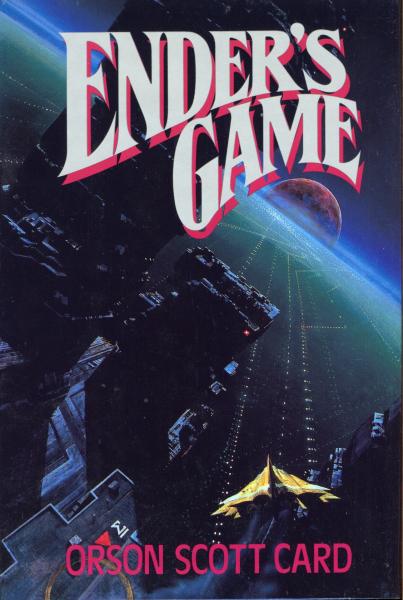
Orson Scott Card's Ender's Game (1985, expanded from his 1977 novella) follows child prodigy Andrew "Ender" Wiggin as he is recruited into a military training program built to prepare Earth's defenses for an anticipated third war against an insectoid alien species known as the Formics. The saga continues years later through Speaker for the Dead and Xenocide, following an older Ender as he confronts the moral weight of his role in that earlier conflict, and concludes the core arc in Children of the Mind, with Ender in Exile filling in the years between the first two books. Set within the wider Ender's Game universe, the series shifts from military coming-of-age story to slower, more philosophical science fiction as it progresses.
- Dune Universe
universe78 books1963
Start hereDune · Start here
similar byscience fiction
Arrakis. Dune. The desert planet, where empire runs on a single substance: the spice melange, which folds space, prolongs life, and unlocks prescience, and which exists nowhere else in the known universe. Frank Herbert's saga is a meditation dressed as an adventure — feudal houses and a secret sisterhood, engineered messiahs and the patient ecology of a world without water, all turning on the terrible gravity of who commands the spice. It reads like scripture and schemes like a war room, ten thousand years hence, among people who have outlawed the thinking machine and made instruments of themselves instead. At its heart stand Herbert's original six — Dune, Dune Messiah, Children of Dune, God Emperor of Dune, Heretics of Dune, Chapterhouse: Dune — a single deepening arc across millennia, arguing the whole way between prophecy and free will. Around that spine his son Brian Herbert and Kevin J. Anderson have raised a vast prequel architecture: Prelude to Dune, tracing the great houses a generation before Paul; Legends of Dune, reaching back to the crusade that broke the machines; the Schools of Dune cycle on the founding of Bene Gesserit, Mentat, and Navigator; the Caladan Trilogy and Heroes of Dune filling years the originals left in shadow. Many hands, dozens of volumes, one desert. What sets Dune apart is its refusal of the simple: religion is manufactured, heroes are hazards, and the sand itself — worm, water, ecology — acts as a political power. Begin where the universe did, with Frank Herbert's Dune (1965), and read the original six in order; you need nothing else to feel the full weight. The prequels are a country to explore afterward, taken by era. Beginnings are delicate times.
- Time Odyssey
series3 books2003
similar byscience fictionour world+1 more
A Time Odyssey is a trilogy of science fiction novels co-written by Arthur C. Clarke and Stephen Baxter. As of 2008, the series consists of:Vol. 1 – Time's Eye Vol. 2 – Sunstorm Vol. 3 – Firstborn
- Mockingbird
Walter Tevisstandalone novel1980
similar byartificial intelligencescience fictionreflectiveour world
WorldCat: In a future world where mankind is dying, humans wander through life in a drugged electronic bliss. Quick sex is the norm, and some people would rather commit suicide than live in hopelessness. Humanity's salvation rests with an android who has no desire to live, and a man and a woman who must discover love, hope, and dreams of a world reborn.
- 2312
Kim Stanley Robinsonstandalone novel2012
similar byscience fictionreflective+2 more
In the eponymous year, when Earth's ecology is degraded and humanity has settled throughout the solar system by terraforming and genetic engineering, mysterious disasters strike some human communities and an assortment of human types from throughout the system seek to find and eliminate the cause.
- Childhood's End
Arthur C. Clarkestandalone novel1953
similar byscience fictionreflectiveour worldnear future
Childhood's End is a 1953 science fiction novel by the British author Arthur C. Clarke. The story follows a peaceful alien invasion of Earth by mysterious Overlords, whose arrival begins decades of apparent utopia under indirect alien rule, at the cost of human identity and culture.