More like Mayfly
anchored on:science fiction
but
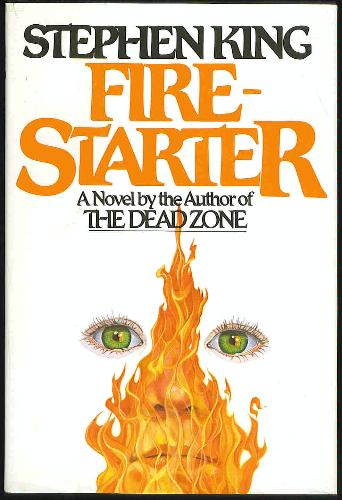
- Firestarter
Stephen Kingstandalone novel1980
similar byscience fictionparenthood+1 more
WorldCat: Innocence and beauty ignite with evil and terror... First, a man and a woman are subjects of a top-secret government experiment designed to produce extraordinary psychic powers. Then, they are married and have a child. A daughter. Early on the daughter shows signs of a wild and horrifying force growing within her. Desperately, her parents try to train her to keep that force in check, to 'act normal'. Now the government wants its brainchild back for its own insane ends.
- Blood Music
Greg Bearstandalone novel1985
similar byscience fictiongenetic engineering+1 more
Blood Music is a 1985 science fiction novel by American writer Greg Bear. It is an expanded version of a short story of the same title, originally published in the June 1983 issue of Analog and the winner of both the 1983 Nebula and 1984 Hugo awards for Best Novelette. The novel won the 1986 Prix Apollo Award, given to the best science fiction novel published in France during the preceding year, under the title La Musique du sang.
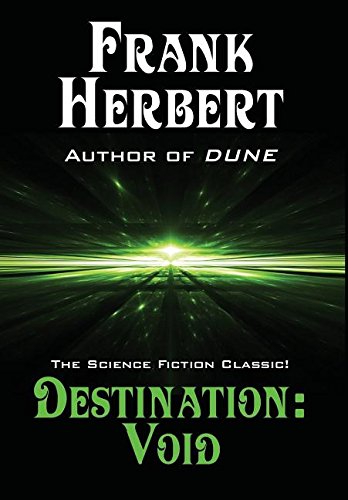
- Pandora
series4 books1966
similar byscience fictionartificial intelligence+1 more
The Pandora Sequence opens with Frank Herbert's solo novel Destination: Void, in which a starship crew must jury-rig a working artificial consciousness after their vessel's control systems fail. Bill Ransom co-writes the three novels that follow, carrying the survivors to the world Pandora, where they must contend with both a manipulative machine intelligence and the planet's own hostile ecology. Across its four books the series moves from a claustrophobic ship-bound crisis to a generations-long struggle over faith, control, and survival on a dangerous new world.
- 2312
Kim Stanley Robinsonstandalone novel2012
similar byscience fictiongenetic engineering+1 more
In the eponymous year, when Earth's ecology is degraded and humanity has settled throughout the solar system by terraforming and genetic engineering, mysterious disasters strike some human communities and an assortment of human types from throughout the system seek to find and eliminate the cause.
- Commonwealth Saga
series2 books2004
part of Commonwealth Universe
similar byscience fiction+2 more
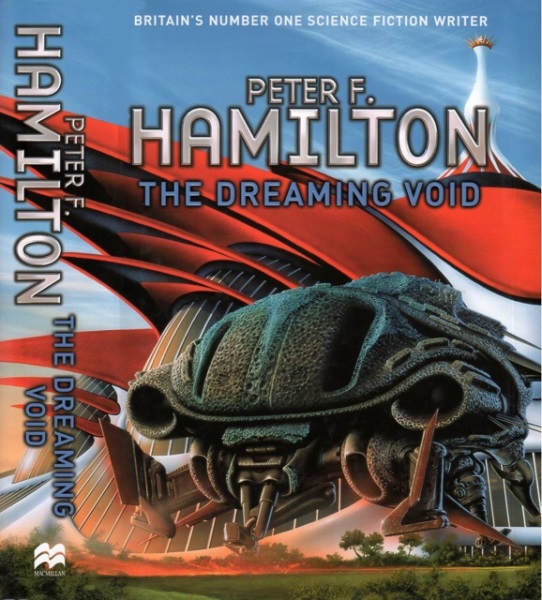
The Commonwealth Saga is a series of science fiction novels by British science fiction writer Peter F. Hamilton. This saga consists of the novels Pandora's Star (2004) and Judas Unchained (2005). Hamilton has also written several books set in the same literary universe. Misspent Youth (2002) takes place 340 years before the events of Pandora's Star. The Void Trilogy, consisting of The Dreaming Void (2008), The Temporal Void (2009), and The Evolutionary Void (2010), takes place 1,200 years after the events of Judas Unchained; several of the main characters from Judas Unchained and Pandora's Star also appear in the Void trilogy.
- Ender Wiggin
series14 books1977
part of Ender's Game Universe
similar byscience fiction+1 more
Orson Scott Card's Ender's Game (1985, expanded from his 1977 novella) follows child prodigy Andrew "Ender" Wiggin as he is recruited into a military training program built to prepare Earth's defenses for an anticipated third war against an insectoid alien species known as the Formics. The saga continues years later through Speaker for the Dead and Xenocide, following an older Ender as he confronts the moral weight of his role in that earlier conflict, and concludes the core arc in Children of the Mind, with Ender in Exile filling in the years between the first two books. Set within the wider Ender's Game universe, the series shifts from military coming-of-age story to slower, more philosophical science fiction as it progresses.
- MaddAddam
series3 books2003
similar byscience fictiongenetic engineering+1 more
Margaret Atwood's MaddAddam trilogy (Oryx and Crake, The Year of the Flood, MaddAddam, 2003-2013) is set around a genetically engineered pandemic unleashed deliberately by the brilliant, disillusioned scientist Crake, who intends the deadly 'BlyssPluss' pill to wipe out humanity and clear the way for the gentler, engineered Crakers he has designed to replace it. Told from the perspectives of survivors including Crake's old friend Jimmy (now calling himself Snowman), the trilogy pieces together the pandemic's causes and its aftermath from multiple, overlapping vantage points.
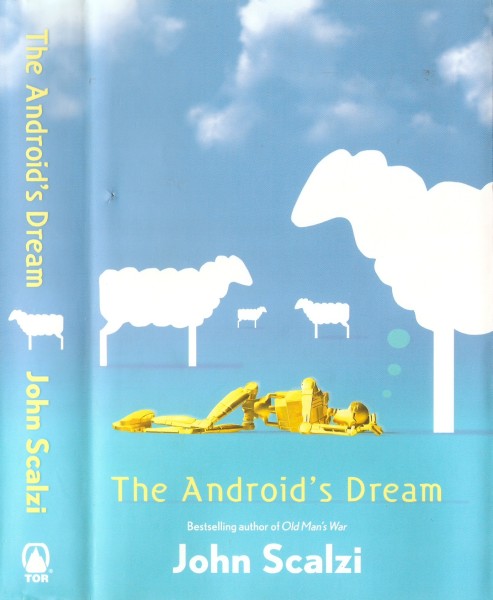
- The Android's Dream
series2 books2006
similar byscience fictionartificial intelligencegenetic engineering
A minor diplomatic insult with a genetically engineered sheep breed spirals into a full interstellar crisis when the last surviving specimen of the 'Android's Dream' breed, needed for a critical ceremony with the alien Nidu, turns out to have been hunted to extinction by a Nidu faction bent on provoking war. John Scalzi's The Android's Dream follows ex-soldier Harry Creek as the hunt for a replacement leads him to Robin Baker, an ordinary woman carrying hidden sheep DNA that makes her the key to avoiding a war. It's a standalone comic space opera rather than an ongoing series.
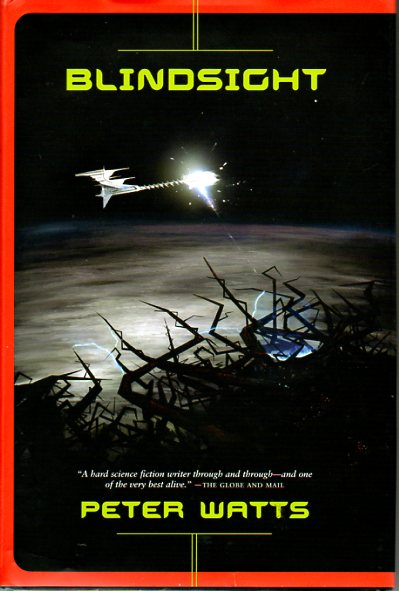
- Blindsight / Firefall
series3 books2006
similar byscience fictionartificial intelligence+1 more
Blindsight sends a crew of radically modified posthumans (including a resurrected, genetically restored vampire) out to the Oort cloud after humanity detects an alien signal, only to make contact with something intelligent, wildly capable, and possibly not conscious at all — a first-contact story built around the question of whether self-awareness is actually useful. Peter Watts's Echopraxia is a same-timeframe "sidequel" rather than a direct sequel, following different characters through the fallout of the same first-contact event.
- Void Trilogy
series4 books2007
part of Commonwealth Universe
similar byscience fiction+1 more
The Void Trilogy is a space opera series by British author Peter F. Hamilton. The series is set in the same universe as The Commonwealth Saga, 1,200 years after the end of Judas Unchained.
- Blade Runner Universe
series6 books1968
similar byscience fiction+1 more
Philip K. Dick's 1968 novel Do Androids Dream of Electric Sheep? follows bounty hunter Rick Deckard as he tracks escaped androids through an irradiated, near-abandoned San Francisco, using the hunt to probe questions of empathy and what separates human from machine. The novel became the basis for Ridley Scott's 1982 film Blade Runner, and Marvel Comics later published an illustrated adaptation of that film. Together the two trace the story's path from prose original to screen and comic-page adaptation.
- Dogs of War (Adrian Tchaikovsky)
series3 books2017
similar byscience fiction+2 more
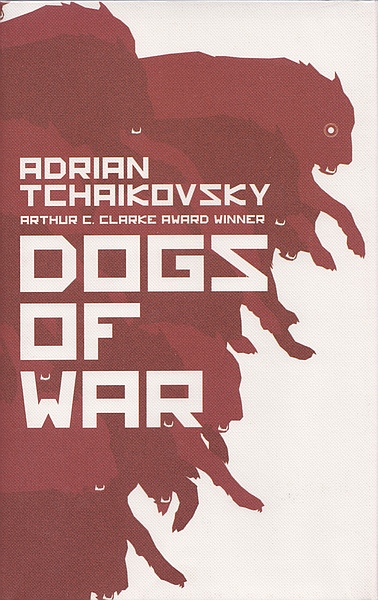
Adrian Tchaikovsky's Dogs of War follows Rex, a genetically engineered "Good Boy" - a hulking bioform supersoldier built for a private military contractor - as he begins to question the nature of his own obedience and personhood after his handler disappears. Dogs of War, Bear Head, and Bee Speaker widen from that first book's battlefield into questions of AI rights, corporate power, and non-human consciousness across a near-future Earth. The trilogy uses its engineered-animal soldiers to interrogate free will and loyalty rather than play them as straightforward action heroes.
- Prey
Michael Crichtonstandalone novel2002
similar byscience fictionartificial intelligencegenetic engineering
Prey is the thirteenth novel by Michael Crichton under his own name and his twenty-third novel overall. It was first published in November 2002, making it his first novel of the twenty-first century. An excerpt was first published in the January–February 2003 issue of Seed magazine. Prey brings together themes from two earlier Crichton best-selling novels, Jurassic Park and The Andromeda Strain, and serves as a cautionary tale about developments in science and technology: in particular, nanotechnology, genetic engineering, and distributed artificial intelligence.
- Sprawl Trilogy
series10 books1981
similar byscience fictionartificial intelligence
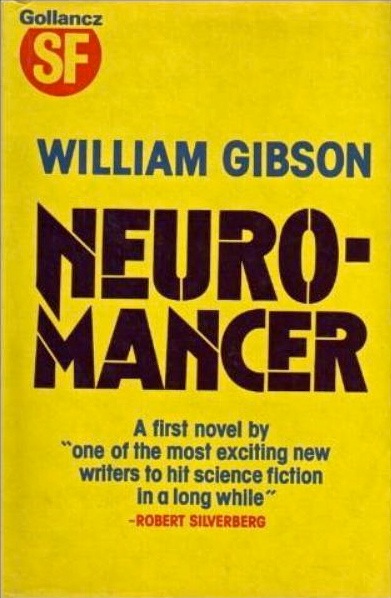
The Sprawl Trilogy is William Gibson's foundational cyberpunk sequence: Neuromancer (1984), in which hacker Case is drawn into a high-stakes heist alongside an artificial intelligence and a damaged ex-soldier, followed by Count Zero (1986) and Mona Lisa Overdrive (1988), which widen the same near-future world of corporate power and networked cyberspace to new characters. Johnny Mnemonic, an early short story set in the same fictional milieu, predates the novels and introduces the courier Molly Millions before her role in the trilogy. Together these works established much of cyberpunk's visual and thematic vocabulary.
- Brave New World
series8 books1932
similar byscience fiction+1 more
Aldous Huxley's 1932 novel imagines a future World State where reproduction, social caste, and desire are all engineered before birth, and the population is kept content through conditioning, sleep-hypnosis, and a mood-altering drug called soma. The story follows the disruption this seemingly stable order suffers when an outsider raised beyond its reach is brought into it, exposing what the society traded away for comfort and order. Some editions pair the novel with Huxley's own 1958 nonfiction essay collection, Brave New World Revisited, which reassesses the book's ideas rather than continuing its story.
- Children of Time
series6 books2015
similar byscience fiction+1 more
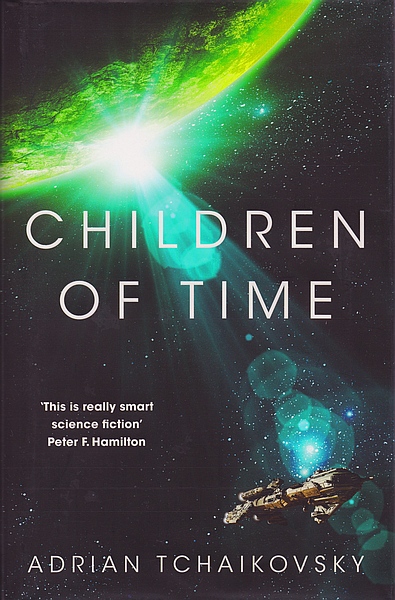
Adrian Tchaikovsky's Children of Time follows two threads: a terraformed planet where an experimental nanovirus meant to accelerate primate evolution instead uplifts a species of spiders into a technological civilization guided by the recorded personality of a human scientist, and the last survivors of Earth aboard a generation ark ship searching for a new home. The two threads collide across mismatched timescales as the ark ship's crew, cycling in and out of cryosleep, finally reach the spiders' world. It's the first of a loosely connected series that applies the same premise to different alien biologies in each subsequent book.
- Salvation
series3 books2018
similar byscience fiction+2 more
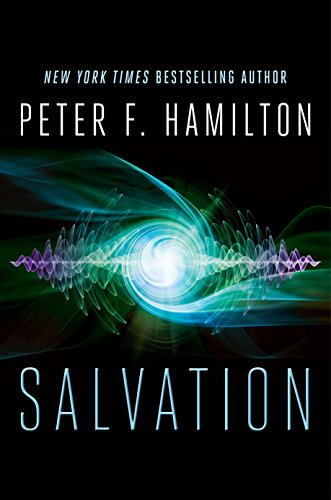
By 2204, instantaneous jump-gate travel has made distance nearly meaningless, connecting Earth to its scattered colonies in a single step -- until a crashed alien ship of unknown origin turns up on a world eighty-nine light years away, carrying something far more dangerous than wreckage. Peter F. Hamilton's Salvation follows the investigation team sent to assess the find, one of whom may not be who they claim, while a second timeline set generations later shows the far-future fallout of what they discover. The trilogy continues through Salvation Lost and The Saints of Salvation.
- Sorrowland
Rivers Solomonstandalone novel2021
similar byscience fictiongenetic engineeringparenthood
Sorrowland is a 2021 gothic science fiction novel by American writer Rivers Solomon.
- Frameshift
Robert J. Sawyerstandalone novel1997
similar byscience fictiongenetic engineering+1 more
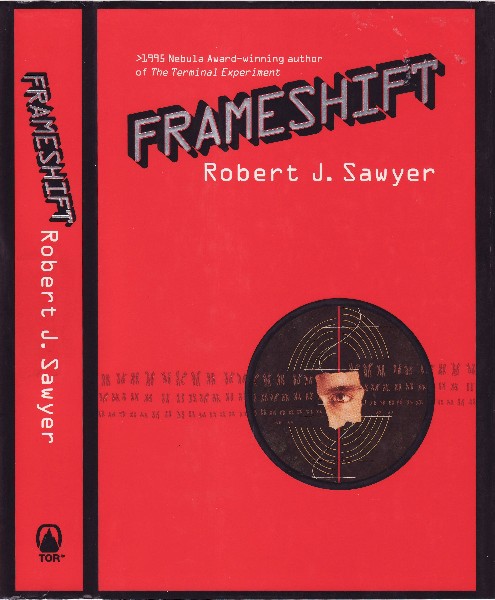
Winner of Japan's Seiun Award and Hugo Award finalist Pierre Tardivel is a scientist working on the Human Genome Project with the Nobel Prize winner, Dr. Burian Klimus. A driven man, Pierre works with the awareness that he may not have long to live: he has a fifty-fifty chance of dying from Huntington's disease, an incurable hereditary disorder of the central nervous system. While he still has his health, Pierre and his wife decide to have a child, and they search for a sperm donor. When Pierre informs Dr. Klimus of their plan, Klimus makes an odd but generous offer: to be the sperm donor as well as to pay for the expensive in vitro fertilization. Shortly thereafter it transpires that Klimus might be hiding a grim past: he may be Ivan Marchenko, the notorious Treblinka death-camp guard known as Ivan the Terrible. While digging into Klimus's past with the help of Nazi hunter Avi Meyer, Pierre and his wife discover that Pierre's insurance company has been illegally screening clients for genetic defects. The two lines of investigation begin to coverage in a sinister manner, while they worry about the possibility of bearing the child of an evil, sadistic killer.
- The Computer Connection
Alfred Besterstandalone novel1975
similar byscience fictionartificial intelligence+1 more
The Computer Connection is a science fiction novel by American writer Alfred Bester. It was originally published as a serial in Analog Science Fiction magazine in November and December 1974, and in January 1975 under the title The Indian Giver; the novel appeared in book form in 1975. Some editions use the title Extro. The novel was nominated for the Nebula Award for Best Novel in 1975 and the Hugo Award for Best Novel in 1976.
- Uplift
series5 books1980
part of Uplift Universe
similar byscience fiction+1 more
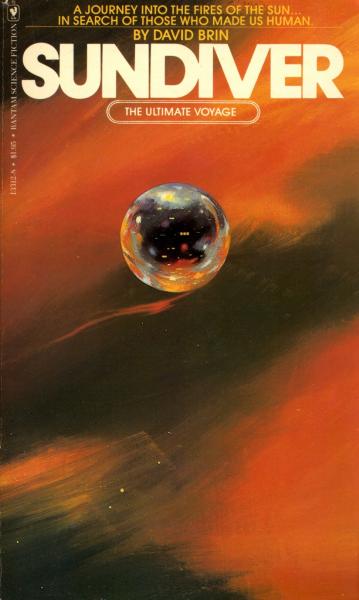
David Brin's Uplift trilogy opens with Sundiver, sending human explorers into the Sun itself, then follows a dolphin-crewed starship on the run from hostile aliens in Startide Rising and a fight over the colony world Garth in The Uplift War. The books sit inside Brin's wider Uplift Universe, built on the idea that spacefaring "patron" species genetically engineer younger "client" species into full sapience, with humanity an anomaly that reached the stars without a patron of its own.
- Nexus 5
series3 books2012
similar byscience fictionartificial intelligence+1 more
Nexus opens Ramez Naam's postcyberpunk trilogy in 2040 with scientist Kaden Lane, who works on Nexus, an experimental nano-drug that lets human minds be networked and reprogrammed, and finds himself caught between government and corporate interests once the technology's implications become clear. The trilogy continues through Crux and Apex, following the same central conflict over who controls the technology. Nexus tied for Best Novel at the 2014 Prometheus Awards and Apex won the 2015 Philip K. Dick Award.
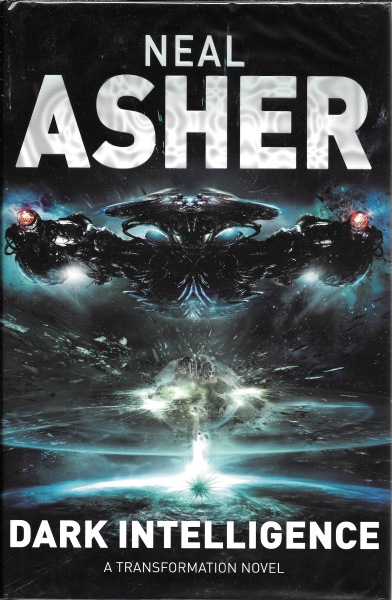
- Transformation
series3 books2015
part of Polity
similar byscience fictionartificial intelligence+1 more
Neal Asher's Transformation trilogy, set within his wider Polity universe, follows an AI mind investigating a black-ops project gone wrong, opening with Dark Intelligence. War Factory and Infinity Engine escalate the search into a hunt across a mechanized alien warzone left behind by an earlier conflict. As with Asher's other Polity fiction, the story favors large-scale, hard-edged space combat over character-driven drama.