Loreful
HomeDiscover
Search series, authors…⌘K
Loreful

Reading orders for SF/F series and shared universes — with your place kept in every one.

Explore

UniversesSeriesWorksAuthorsAtlas

Help

FAQAboutSite map

Account & legal

Sign inCreate accountPrivacyTerms

Data

Built on ISFDB, Wikipedia, Wikidata and Open Library. Curated reading orders carry their reasoning on the page; the rest follow publication order. Data sources & licenses

© Loreful · data: ISFDB · CC BY

More like Michael Strogoff

anchored on:adventureeastern europe19th centuryadventuroushistorical fictionquests+2 more

but

Mood

The mood the book leaves you in.

  • The reading experience is propelled by journeys, exploration, and physical risk; excitement and forward momentum dominate over dread or introspection.
  • Joy and loss are deliberately mixed; the resolution grants characters something real while taking something else away, leaving warmth and sorrow together.
  • The book demands work from the reader — dense prose, difficult structure, unfamiliar ideas, or morally uncomfortable material — as part of its intended effect.
  • Grim events, cruelty, or despair dominate the atmosphere, and the book does not soften them with comfort or comic relief.
  • The atmosphere is quietly unsettling — wrongness, unease, and the uncanny pervade the book without necessarily escalating into overt horror.
  • The book is built to move the reader; character feeling is foregrounded and major scenes aim at a strong emotional response.
  • Humor is a primary aim and the prose plays for laughs — comic situations, wit, or dialogue produce sustained comedy, not occasional levity.
  • The book insists that things can improve; effort and decency are shown to matter, and the arc bends toward better outcomes even through hardship.
  • The book teaches as it goes — real facts, history, science, or craft are conveyed in enough depth that learning is part of the reading experience.
  • The book is designed to uplift and motivate, presenting perseverance or achievement in a way that invites the reader to aspire or act.
  • The overall register is cheerful and easygoing; stakes are kept gentle and the book avoids dwelling on pain or dread.
  • Withheld information drives the experience; the book sustains enigmas and secrets the reader wants resolved, whatever its genre.
  • The book is contemplative and inward-looking, giving more weight to thought, memory, and meaning than to external events.
  • The book works as comfort reading — low tension, a soothing pace, and an atmosphere the reader can unwind in.
  • Grief, loss, or melancholy set the dominant register, and the book lets sorrow stand rather than resolving it into comfort.
  • Sustained suspense is the point; the book keeps the reader braced for what happens next through danger, pressure, or impending revelation.
  • Playful invention and charm define the register — fanciful conceits, light absurdity, and a narration that delights in its own oddity.

About

What the story runs on.

  • Stories in which extraterrestrial beings are central — as characters, cultures, or the object of the plot.
  • Stories structured as a quest — a journey undertaken to find, deliver, or destroy something of great import.
  • Stories in which staying alive against nature, catastrophe, or scarcity is the central problem.
  • Stories of lovers kept apart by law, family, faith, or station, where the obstacle to love is the plot.
  • Stories in which a friendship — its making, testing, or loss — is the emotional center.
  • Stories of growing up — a young protagonist crossing from childhood into adult knowledge and responsibility.
  • Stories about who a character truly is — self-discovery, doubled lives, and the search for a self.
  • Stories about mourning — living through the death of a loved one and what loss does to the survivors.
  • Stories in which a buried family truth — hidden parentage, crimes, or shames — surfaces and reorders the present.
  • Stories driven by maneuvering for power — factions, conspiracies, and statecraft conducted in shadow.
  • Stories in which war itself is the subject — combat, occupation, and what warfare does to soldiers and civilians.
  • Stories organized around investigating a killing — the case, the clues, and the pursuit of the killer, in any genre's clothing.

Shelf

Where it sits in the library.

    • Fiction built on magic or other supernatural elements that have no scientific explanation.
    • Secondary-world fantasy at large scale, where the fate of nations or the world turns on the protagonists' struggle.
    • Fantasy set in a recognizably modern city or contemporary world where the supernatural intrudes on everyday life.
    • Fantasy that blends in horror's atmosphere and imagery, keeping a fantastical frame around grim or frightening material.
    • Action-driven fantasy following warriors or rogues with personal stakes against sorcerous threats, rather than world-spanning conflicts.
    • Fantasy set in a real historical period or a close analogue of one, with magic woven into the era.
    • Fantasy in which protagonists cross from the ordinary world into another world through a portal or similar passage.
    • Fiction that retells or reworks a traditional fairy tale in a new form or setting.
    • Fantasy drawing directly on myths, legends, and folklore, retelling them or building on their figures and logic.
    • Fantasy of ghosts, vampires, shapeshifters, psychics, and similar phenomena, usually set in an otherwise ordinary world.
    • Fiction mixing science-fictional trappings with overtly magical or impossible elements in one setting.
    • Low-stakes fantasy emphasizing comfort, community, and everyday pleasures over conflict and peril.
    • Speculative fiction of pervasive moral ambiguity, violence, and cynicism that rejects heroic conventions — fantasy and SF alike.
      • Fiction that extrapolates from science and technology — future societies, space travel, or speculative inventions — within at least nominally natural laws.
      • Science fiction of interstellar scope — starships, galactic polities, and adventure across star systems.
      • Science fiction committed to scientific rigor, where technical plausibility constrains the story.
      • Science fiction centered on armed forces and warfare, told largely from a military point of view.
      • Science fiction of networked, corporate-dominated near futures, pairing high technology with social decay.
      • Science fiction styled on nineteenth-century steam-powered technology, often in a Victorian or pseudo-Victorian setting.
      • Fiction depicting an oppressive or catastrophic society, presented as a warning.
      • Fiction set after civilization's collapse, following survivors in the ruins of the old world.
      • Fiction in which characters move between past and future, and the mechanics or consequences of that travel drive the plot.
      • Fiction exploring a world where a historical event went differently and history diverged from ours.
      • Science fiction about humanity's first encounter and communication with an alien intelligence.
      • Science fiction in which extraterrestrial forces attack or occupy Earth and humanity resists.
      • Fiction whose primary aim is to frighten or unsettle the reader through dread, menace, or the monstrous.
      • Horror of vast, indifferent, incomprehensible entities before which humanity is insignificant, in the Lovecraft tradition.
      • Horror of decaying houses, buried family secrets, and oppressive atmosphere in the Gothic literary tradition.
      • Horror centered on hauntings and the returning dead.
      • Horror located in the mind — paranoia, obsession, and unreliable perception rather than external monsters.
      • Horror built around the reanimated dead and survival amid their outbreaks.
      • Horror defined by explicit, transgressive gore that refuses to cut away from violence.
      • Speculative fiction of the strange and uncanny that resists both natural explanation and standard genre categories.
      • Fiction organized around solving a crime or puzzle, typically following an investigator toward the identification of a culprit.
      • A puzzle-first mystery that lays out clues so the culprit's identity can be deduced before the reveal.
      • Crime fiction of moral ambiguity, fatalism, and hard-edged style, set among the corrupt and the doomed.
      • A mystery following the realistic routines of police work — forensics, interviews, and case-building.
      • A gentle mystery with an amateur sleuth, a small community, and violence kept off the page.
      • A mystery set in a past era, where the investigation works within that period's methods and society.
      • Fast-paced fiction driven by imminent danger, pursuit, or high-stakes conspiracy, built to sustain tension.
      • A thriller of espionage — agents, tradecraft, and intelligence services in conflict.
      • A thriller centered on lawyers and the courtroom, where litigation carries the suspense.
      • A thriller driven by detailed contemporary or near-future technology, often military or scientific.
      • A thriller whose tension comes from mental states and manipulation between characters rather than external action.
      • Fiction whose central plot is a romantic relationship and its development toward an emotionally satisfying resolution.
      • Romance in which one or both partners are supernatural beings, blending fantasy elements into the love story.
      • A fantasy-romance hybrid in which the romantic arc and the fantasy plot carry equal weight.
      • Romance set in a past era, with courtship shaped by the period's society and manners.
      • Romance set in the present day, without supernatural or historical elements.
      • Fiction set in a real past period, where the historical setting materially shapes characters and events.
        • General and literary fiction emphasizing prose style, character interiority, or formal ambition over genre plot conventions.
        • Fiction in a realistic world where magical events occur and are treated as ordinary, in the tradition of Latin American literature.
        • Fiction that ridicules people, institutions, or society in order to criticize them.
        • Fiction of dreamlike, irrational imagery and logic that breaks from realistic representation.
        • Fiction that plays with narrative convention through metafiction, fragmentation, and self-reference.
        • Fiction propelled by journeys, exploration, and physical peril, where action and survival carry the plot.
        • Adventure fiction of ships and seafaring — naval engagements, voyages, and life at sea.
        • Fiction of the American frontier West — gunmen, ranchers, and lawmen, typically in the late nineteenth century.
        • Fiction centered on soldiers, campaigns, and the experience of warfare, historical or imagined.
          • Fiction written primarily to amuse, using comedic situations, wit, or parody as its organizing principle.
            • Multi-generational fiction following a family or dynasty across decades, with inheritance and kinship as the through-line.
              • Fiction whose world runs on explicit game mechanics — levels, stats, and skills that characters can see and exploit.
                • Fiction about costumed or superpowered heroes and their conflicts with comparable villains.

                Practical

                How long a commitment, whether it stands alone, and whether it has finished.

                Tap a chip to ask for it · tap again to rule it out · once more to clear. Numbers show what would be left.

                • Cover of Airman
                  Airman

                  Eoin Colfer · standalone novel · 2008

                  similar by19th centuryadventureadventuroushistorical fictiontenseour world

                  Airman, by Eoin Colfer, is a best-selling historical adventure novel set in the 19th century. It was released in the UK, Ireland and US in January 2008. The novel was shortlisted for the 2009 Carnegie Medal.

                • Cover of Allan Quatermain
                  Allan Quatermain

                  series · 25 books · 1885

                  similar by19th centuryadventureadventurous+1 more

                  Allan Quatermain is the protagonist of H. Rider Haggard's 1885 novel King Solomon's Mines, its one sequel Allan Quatermain (1887), twelve prequel novels and four prequel short stories, totalling eighteen works. An English professional big game hunter and adventurer, in film and television he has been portrayed by Richard Chamberlain, Sean Connery, Cedric Hardwicke, Patrick Swayze and Stewart Granger among others.

                • Cover of The Grail Quest (Bernard Cornwell)
                  The Grail Quest (Bernard Cornwell)

                  series · 3 books · 2000

                  similar byquestswaradventuroushistorical fictiontense+1 more

                  The Grail Quest is a historical fiction novel series written by Bernard Cornwell dealing with a 14th-century search for the Holy Grail, set during the opening stage of the Hundred Years' War.

                • Cover of Felix
                  Felix

                  series · 3 books · 1977

                  completed

                  similar by19th centuryadventurousadventurehistorical fiction+3 more

                • Cover of The Outlaw of Torn
                  The Outlaw of Torn

                  Edgar Rice Burroughs · standalone novel · 1927

                  similar byadventureadventuroushistorical fictiontenseour world

                  Raised from childhood by a vengeful royal fencing master who wants him turned into a weapon against the English crown, Norman of Torn grows up in 13th-century England knowing only combat and contempt for the nobility. By nineteen he leads the kingdom's largest band of outlaws and carries a king's ransom on his head, yet a priest's influence has left him with a streak of chivalry. Amid rebellion against King Henry III, Norman joins Simon de Montfort's rebels, and finds himself drawn to de Montfort's daughter despite a startling resemblance to the crown prince. An early adventure novel from Edgar Rice Burroughs.

                • Cover of The Boundless
                  The Boundless

                  Kenneth Oppel · standalone novel · 2014

                  similar by19th centuryadventureadventuroushistorical fictiontense

                  Aboard "The Boundless," the greatest train ever built, on its maiden voyage across Canada, teenaged Will enlists the aid of a traveling circus to save the train from villains.

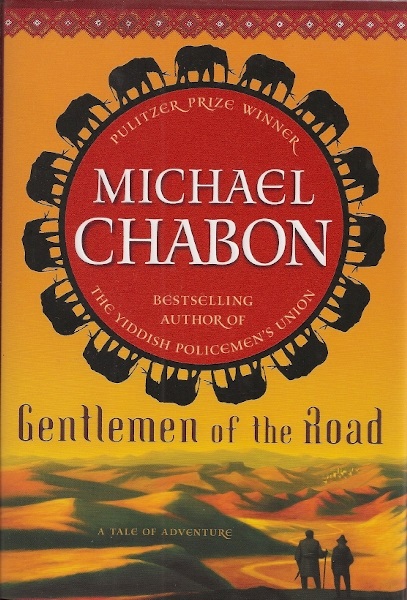
                • Cover of Gentlemen of the Road
                  Gentlemen of the Road

                  Michael Chabon · standalone novel · 2007

                  similar byquestsadventureadventuroushistorical fictionour world

                  Gentlemen of the Road is a 2007 serial novel by American author Michael Chabon. It is a "swashbuckling adventure" set in the khaganate of Khazaria around AD 950. It follows two Jewish bandits who become embroiled in a rebellion and a plot to restore a displaced Khazar prince to the throne.

                • Cover of Zulu Nation
                  Zulu Nation

                  series · 1 book · 1892

                  similar by19th centuryhistorical fictionadventureadventurous+1 more

                  H. Rider Haggard's Nada the Lily is set during the rise of the Zulu king Shaka, following Umslopogaas, Shaka's unacknowledged son, and his love for the celebrated beauty Nada. Haggard weaves real Zulu history and figures together with invented characters and supernatural elements, building a tragic story of forbidden love against a backdrop of war and court intrigue. It's a standalone 1892 novel rather than a series.

                • Cover of Terra Incognita (Kevin J. Anderson)
                  Terra Incognita (Kevin J. Anderson)

                  series · 4 books · 2009

                  similar byquestswaradventurous+2 more

                  Kevin J. Anderson's Terra Incognita trilogy is set in a fantasy world modeled on the Age of Exploration, following rival seafaring nations sending expeditions in opposite directions around their world's coastline, driven by religious conflict and the search for a fabled promised land. The Edge of the World opens the story, continuing through The Map of All Things and The Key to Creation.

                • Cover of Temeraire
                  Temeraire

                  series · 48 books · 2006

                  similar by19th centurywaradventurous+1 more

                  Temeraire is a series of nine alternate history fantasy novels written by American author Naomi Novik. The novels follow the adventures of Captain William Laurence and his dragon, the eponymous Temeraire, and reimagine events of the Napoleonic Wars with "an air force of dragons, manned by crews of aviators". His Majesty's Dragon, the first entry in the series, won the Compton Crook Award in 2007 and was nominated for the Hugo Award for Best Novel the same year. Temeraire: In the Service of the King, an omnibus volume collecting the first three novels, won the Locus Award for Best First Novel in 2007. Temeraire was nominated for the Hugo Award for Best Series in 2017.

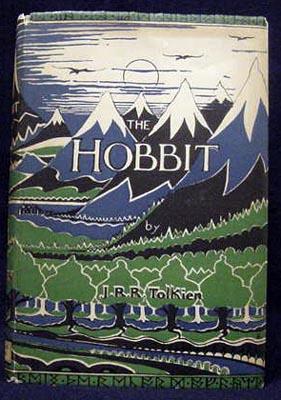
                • Cover of The Hobbit
                  The Hobbit

                  series · 2 books · 1937

                  completed

                  part of Tolkien's legendarium

                  similar byquestsadventurousadventure

                  The Hobbit (1937) is J. R. R. Tolkien's children's fantasy novel following the reluctant burglar Bilbo Baggins, who joins a company of dwarves and the wizard Gandalf on a journey to reclaim treasure guarded by the dragon Smaug. It stands as a complete adventure on its own, but shares its setting with the rest of Tolkien's legendarium and leads into the events of The Lord of the Rings.

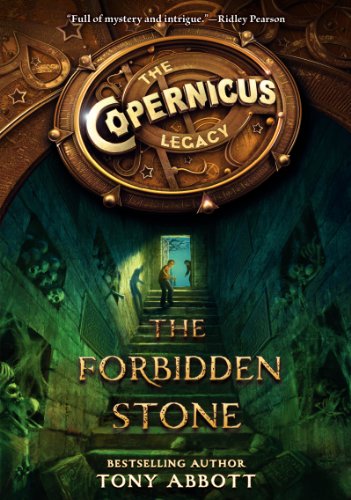
                • Cover of The Copernicus Legacy
                  The Copernicus Legacy

                  series · 6 books · 2014

                  similar byquestsadventureadventurous+2 more

                  The Copernicus Legacy is a book series written by Tony Abbott. It is about the adventures of Wade Kaplan, Darrell Kaplan, Lily, Becca Moore, Roald Kaplan, and Sara Kaplan, as they try to destroy a time machine made by Ptolemy but discovered and used by Nicolaus Copernicus, from the dangerous Teutonic Order of Ancient Prussia. It currently has four books in the main series, but two are in a series diverted from The Copernicus Legacy called Copernicus Archives. While a work of fiction, it does incorporate some facts about Copernicus's history.

                • Cover of Dodger
                  Dodger

                  Terry Pratchett · standalone novel · 2012

                  similar by19th centuryhistorical fictionadventureadventurousour world

                  Dodger is a novel written by Terry Pratchett, set in early Victorian London, and inspired by Charles Dickens's character the Artful Dodger. The book was released on 13 September 2012 in the UK.

                • Cover of Benita: An African Romance
                  Benita: An African Romance

                  H. Rider Haggard · standalone novel · 1906

                  similar by19th centuryadventureadventuroushistorical fictionour world

                  Benita: An African Romance is a novel by H. Rider Haggard.

                • Cover of Galápagos Regained
                  Galápagos Regained

                  James Morrow · standalone novel · 2015

                  similar by19th centuryquestshistorical fictionadventureadventurousour world

                  "Galapagos Regained centers on the fictional Chloe Bathurst, an unemployed Victorian actress who finds work on Charles Darwin's estate, nurturing the strange birds, exotic lizards, and giant tortoises he brought back from his trip around the world. When Chloe gets wind of the Great God Contest, sponsored by the Percy Bysshe Shelley Society--£10,000 to the first petitioner who can prove or disprove the existence of a Supreme Being--she decides that Mr. Darwin's materialist theory of speciation might just turn the trick. (If Nature gave God nothing to do, maybe He was never around in the first place.) Before she knows it, her ambitions send her off on a wild adventure--a voyage by brigantine to Brazil, a steamboat trip up the Amazon, a hot-air balloon flight across the Andes--bound for the Galapagos archipelago, where she intends to collect the live specimens through which she might demonstrate evolutionary theory to the contest judges"--

                • Cover of Wolves Chronicles
                  Wolves Chronicles

                  series · 12 books · 1962

                  completed

                  similar by19th centuryadventurousadventure+1 more

                  The Wolves Chronicles is Joan Aiken's long-running alternate-history series for young readers, set in a nineteenth-century England ruled by the Stuart dynasty and beset by wolves that have migrated across a Channel land-bridge. It opens with The Wolves of Willoughby Chase, in which two girls outwit a scheming governess sent to ruin them, and expands over twelve books into a sprawling saga of orphans, conspiracies, and journeys through a Britain quite unlike the real one. Aiken kept adding to the same timeline across more than four decades, including later prequels set before the first book.

                • Cover of The Werewolf of Paris
                  The Werewolf of Paris

                  Guy Endore · standalone novel · 1933

                  similar by19th centurywartense+1 more

                  The Werewolf of Paris (1933) is a Gothic horror novel by American writer Guy Endore. The novel follows Bertrand Caillet, the eponymous werewolf, throughout the tumultuous events of the Franco-Prussian War and the Paris Commune of 1870–71. Some literature experts have compared this book with Dracula by Bram Stoker and they have identified it as the Dracula of werewolf fiction.

                • Cover of Voyages extraordinaires
                  Voyages extraordinaires

                  series · 59 books · 1863

                  similar by19th centuryadventureadventurous+1 more

                  The Voyages extraordinaires is a collection or sequence of novels and short stories by the French writer Jules Verne. The cycle features some of Verne's best known titles, such as Journey to the Center of the Earth, From the Earth to the Moon, Twenty Thousand Leagues Under the Seas, Around the World in Eighty Days and The Mysterious Island.

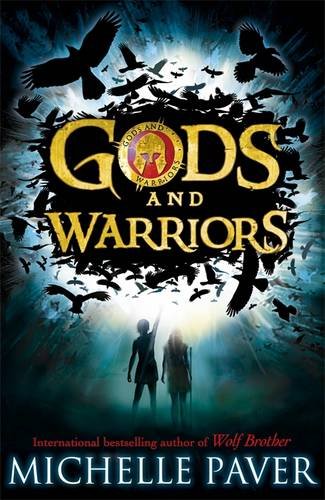
                • Cover of Gods and Warriors
                  Gods and Warriors

                  series · 5 books · 2012

                  similar byquestsadventurousadventuretense+1 more

                • Cover of Dragon Teeth
                  Dragon Teeth

                  Michael Crichton · standalone novel · 2017

                  similar by19th centuryadventuroushistorical fictionadventuretense

                  "William Johnson is a student at Yale college. Reckless and risk-taking, he makes a bet with his rival, a student named Marlin, that he will go west the following summer. Johnson then attempts to join Prof. Othniel Charles Marsh on his yearly expedition fossil hunting in the Badlands. Marsh is reluctant until Johnson lies, saying that he is a photographer. Johnson learns to take photographs and leaves with Marsh at the appointed time. However, upon learning of Johnson's Philadelphia background, Marsh begins to suspect that he is a spy for Edward Drinker Cope, a rival paleontologist. Marsh abandons Johnson in Cheyenne." (cited from the first paragraph of the Wikipedia synopsis)

                • Cover of Perfect Fire Trilogy
                  Perfect Fire Trilogy

                  series · 3 books · 2008

                  similar bywarquestshistorical fictiontense+2 more

                • Cover of Pirate Latitudes
                  Pirate Latitudes

                  Michael Crichton · standalone novel · 2009

                  similar byadventureadventuroushistorical fictiontense

                  Pirate Latitudes is an action-adventure novel by Michael Crichton, the sixteenth novel to be published under his own name and first to be published after his death, concerning 17th-century piracy in the Caribbean. HarperCollins published the book posthumously on November 26, 2009. The story stars the fictional privateer Captain Charles Hunter who, hired by Jamaica's governor Sir James Almont, plots to raid a Spanish galleon for its treasure.

                • Cover of The Wanderer's Necklace
                  The Wanderer's Necklace

                  H. Rider Haggard · standalone novel · 1914

                  similar byquestsadventureadventurousour world+1 more

                  The Wanderer's Necklace is a novel by English writer H. Rider Haggard.

                • Cover of The Spy
                  The Spy

                  James Fenimore Cooper · standalone novel · 1821

                  similar by19th centurywarhistorical fictiontense

                  Alternate history, U.S. Revolutionary War.