More like Midnight
anchored on:science fictionnanotechnologynorth americacontemporarytensehorror+4 more
but
- Under the Dome
Stephen Kingstandalone novel2009
similar bycontemporaryscience fictiontensehorrordarknorth americasurvivalsmall town
A small town in Maine finds itself suddenly cut off from the outside world by an impenetrable barrier, and the clash of personalities of the trapped people takes its inexorable devastating course.
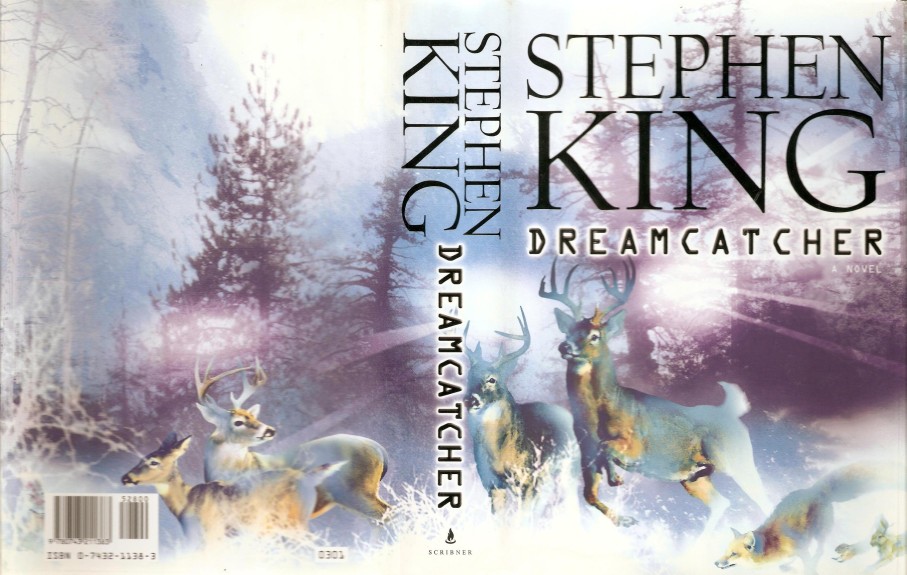
- Dreamcatcher
Stephen Kingstandalone novel2001
similar bycontemporaryscience fictiontensehorrordarksurvivalnorth america
Dreamcatcher is a 2001 science fiction horror novel by American writer Stephen King, featuring elements of body horror, suspense and alien invasion. The book, written in longhand, helped the author recuperate from a 1999 car crash, and was completed in half a year. According to the author in his afterword, the working title was Cancer. His wife, Tabitha King, persuaded him to change the title. A film adaptation was released in 2003.
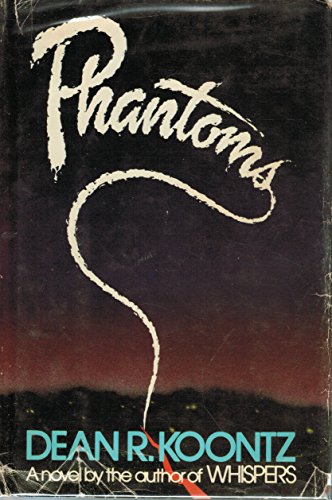
- Phantoms
Dean R. Koontzstandalone novel1983
similar bycontemporarytensescience fictionhorrordarknorth americasurvivalsmall town
A doctor and her young sister find all the residents of their town have been brutally slaughtered by a giant intelligent synctial organism millions of years old, whose periodic emergences from its underground lair to feed cause events ranging from mass disappearances to mass extinctions. In order to defeat it and save humanity, they must outwit it.
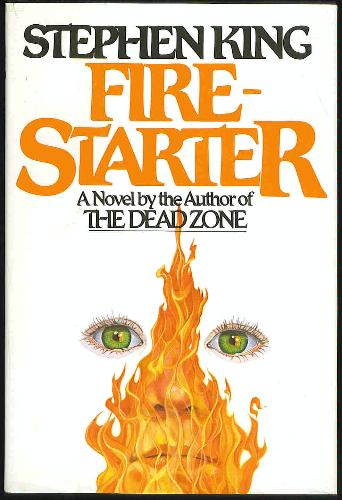
- Firestarter
Stephen Kingstandalone novel1980
similar bycontemporarytensescience fictiondarknorth america+3 more
WorldCat: Innocence and beauty ignite with evil and terror... First, a man and a woman are subjects of a top-secret government experiment designed to produce extraordinary psychic powers. Then, they are married and have a child. A daughter. Early on the daughter shows signs of a wild and horrifying force growing within her. Desperately, her parents try to train her to keep that force in check, to 'act normal'. Now the government wants its brainchild back for its own insane ends.
- Cell
Stephen Kingstandalone novel2006
similar bycontemporarytensescience fictionhorrordarksurvivalnorth america
In Cell, King taps into readers fears of technological warfare and terrorism. Mobile phones deliver the apocalypse to millions of unsuspecting humans by wiping their brains of any humanity, leaving only aggressive and destructive impulses behind. Those without cell phones, like illustrator Clayton Riddell and his small band of "normies," must fight for survival, and their journey to find Clayton's estranged wife and young son rockets the book toward resolution.
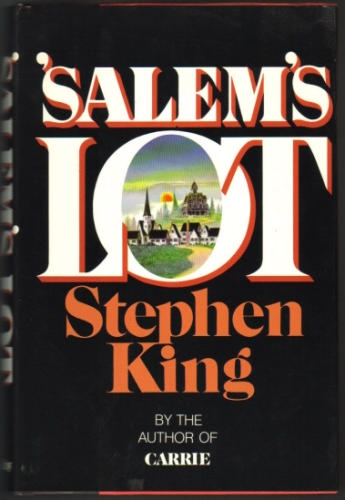
- Jerusalem's Lot
series3 books1975
similar bycontemporaryhorrordarktensenorth americasmall town+1 more
Stephen King's 1975 novel 'Salem's Lot follows writer Ben Mears as he returns to his childhood town of Jerusalem's Lot, Maine, only to discover that its residents are being turned into vampires by a newly arrived stranger. It transplants Gothic vampire horror into a small New England community, tracking that community's collapse under a supernatural siege. It is a single, self-contained novel.
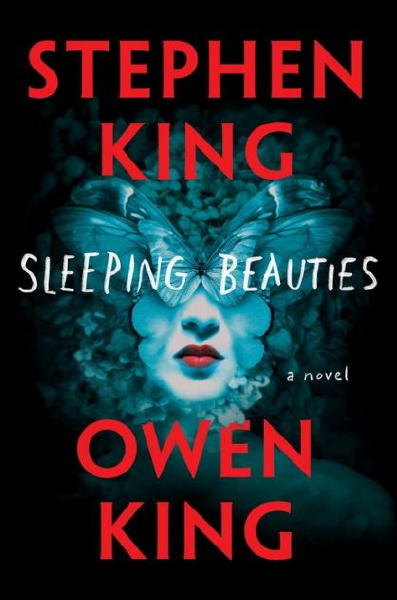
- Sleeping Beauties
Stephen King & Owen Kingstandalone novel2017
similar bycontemporaryscience fictionhorrordarktensesurvivalnorth americasmall town
Sleeping Beauties is a novel by Stephen King and his son Owen King, released on September 26, 2017. The book was first mentioned during a promotional appearance on the CBC radio program q. Of the novel, Stephen King stated, "Owen brought me this dynamite idea and I've collaborated a couple of times with Joe. I'm not going to say what the idea is because it's too good."
- The Andromeda Strain
series2 books1969
similar bycontemporaryscience fictiontensesurvival+3 more
Michael Crichton's 1969 novel The Andromeda Strain follows a team of scientists racing to contain a lethal extraterrestrial microorganism that crash-lands in Arizona, told in the clinical, document-driven style that helped establish the techno-thriller genre. Daniel H. Wilson's authorized 2019 sequel The Andromeda Evolution revisits the same threat five decades later. Together the two books form a two-part outbreak story separated by a fifty-year gap in publication.
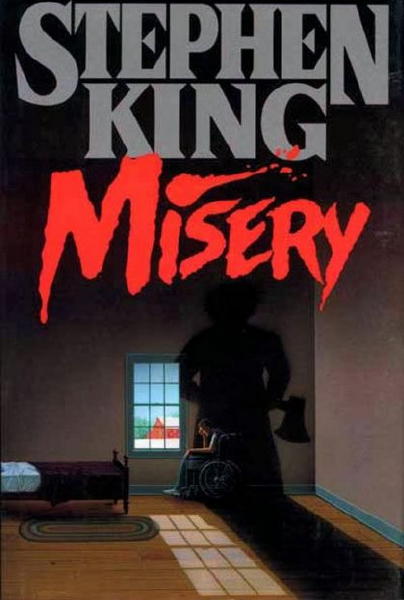
- Misery
Stephen Kingstandalone novel1987
similar bycontemporarytensehorrordarknorth americasurvival
Novelist Paul Sheldon finishes the manuscript that will finally kill off Misery Chastain, the heroine who made his career, when a snowstorm sends his car off a Colorado road. He wakes with both legs shattered, in the care of Annie Wilkes, a former nurse and 'number one fan' with no intention of taking him to a hospital. Annie manages his pain with drugs he comes to depend on, and her moods swing between doting and violent. When she learns Misery doesn't survive his new manuscript, her reaction makes clear Paul isn't just her patient, he's her hostage. A Stephen King novel about a writer at his most devoted fan's mercy.
- The Institute
Stephen Kingstandalone novel2019
similar bycontemporarytensescience fictionhorrordarknorth americasurvival
The Institute is a 2019 American science fiction-horror novel by Stephen King, published by Scribner. The book follows twelve-year-old genius Luke Ellis. When his parents are murdered, he is kidnapped by intruders and awakens in the Institute, a facility that houses other abducted children who have telepathy or telekinesis. The Institute was published on September 10, 2019, and met with generally positive reviews.
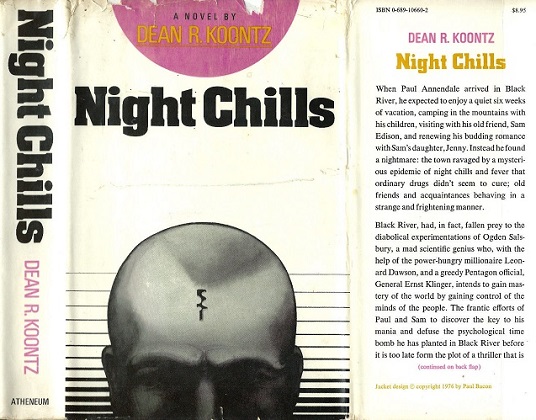
- Night Chills
Dean R. Koontzstandalone novel1976
similar bycontemporarytensescience fictiondarknorth americasurvival+1 more
A single father and his 2 children, along with the father's love interest and her father, stumble upon a plot to perfect mind control via scientific means and must stop it before it is extended to everyone in the world.
- Prey
Michael Crichtonstandalone novel2002
similar bycontemporaryscience fictiontensenanotechnologygenetic engineeringsurvival+1 more
Prey is the thirteenth novel by Michael Crichton under his own name and his twenty-third novel overall. It was first published in November 2002, making it his first novel of the twenty-first century. An excerpt was first published in the January–February 2003 issue of Seed magazine. Prey brings together themes from two earlier Crichton best-selling novels, Jurassic Park and The Andromeda Strain, and serves as a cautionary tale about developments in science and technology: in particular, nanotechnology, genetic engineering, and distributed artificial intelligence.
- The Tommyknockers
Stephen Kingstandalone novel1987
similar bycontemporaryscience fictionhorrordarknorth americasmall town+1 more
The Tommyknockers is a 1987 science fiction horror novel by Stephen King. The novel is an excursion into the realm of science fiction for King, as the residents of the Maine town of Haven gradually fall under the influence of a mysterious object buried in the woods. King has since soured on The Tommyknockers, describing it as "an awful book", due to his drug addiction while writing the novel, though acknowledges the story's potential: "There's really a good book in here, underneath all the sort of spurious energy that cocaine provides, and I ought to go back." A miniseries adaptation was released in 1993.
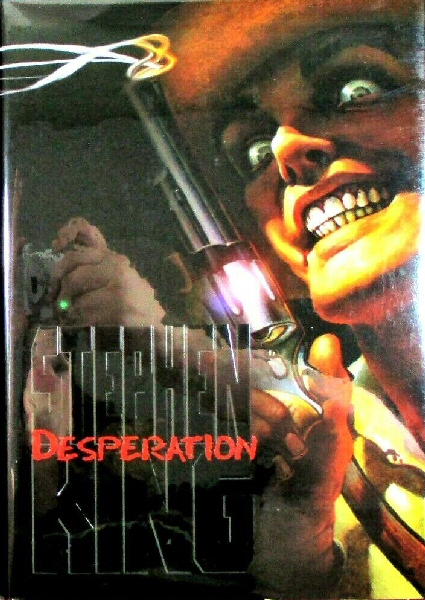
- Desperation/Regulators
series2 books1996
similar bycontemporaryhorrordarktensenorth americasurvivalsmall town
Stephen King published Desperation and The Regulators simultaneously in 1996, the first under his own name and the second under his Richard Bachman pseudonym. The two novels are mirror-universe companions: largely the same cast of characters appears in both, recast into different roles and circumstances, with each book's story driven by the same malevolent supernatural entity, Tak.
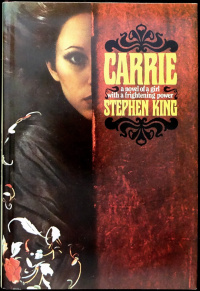
- Carrie
Stephen Kingstandalone novel1974
similar bycontemporaryhorrortensedarknorth americasmall town
In one way or another, everybody abused Carrie. This sixteen-year-old misfit was forbidden everything that was young and fun by her fanatical mother. She was teased and taunted by her classmates, misunderstood by her teachers, and given up as hopeless by almost everyone. But Carrie had a secret: She possessed terrifying telekinetic powers that could make inanimate objects move, a lighted candle fall, or a door lock. Carrie could make all kinds of startling bizarre, and malevolent things happen. (WorldCat)
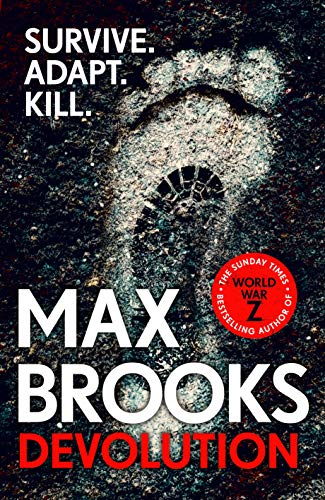
- Devolution
Max Brooksstandalone novel2020
similar bycontemporarytensehorrordarknorth americasurvivalsmall town+1 more
Devolution: A Firsthand Account of the Rainier Sasquatch Massacre is a fiction book by American author Max Brooks set in the Pacific Northwest. It chronicles the story of a small, isolated community of technology-dependent city dwellers who suddenly are cut off from the rest of the world after a volcanic eruption. In addition to lacking outdoor survival skills and resources, they find themselves under siege by a clan of Bigfoot. The book was optioned by Legendary Entertainment to become a film, around the same time the book began to be sold to the public in June 2020. It was also nominated for Locus Award's Best Horror Novel in 2021.
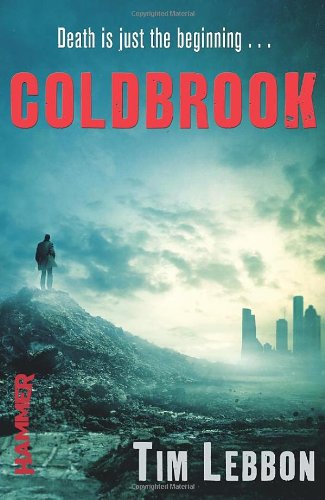
- Coldbrook
Tim Lebbonstandalone novel2012
similar bycontemporaryscience fictiontensehorrordarksurvivalnorth america
The world as we know it has changed forever. The reason is Coldbrook. The facility lay deep in Appalachian Mountains, a secret laboratory called Coldbrook. Its scientists had achieved the impossible: a gateway to a new world. Theirs was to be the greatest discovery in the history of mankind, but they had no idea what they were unleashing.
- Artifact
Jeremy Robinsonstandalone novel2025
similar bycontemporaryscience fictiontensehorrordarknorth americagenetic engineeringsurvival
In an isolated Alaskan town, the local sheriff uncovers a secret lab where generative A.I. and bioprinting have unleashed grotesque, living anomalies—and now, something monstrous is loose. Sheriff Colton Graves prefers the quiet life in Raven’s Rest, Alaska, a remote town accessible only by tunnel and home to a hardy mix of locals and secrets buried in the ice. But when a camel wanders down Main Street—its head grotesquely sprouting a dozen eyes—Colton knows his quiet days are over. The bizarre incident leads him to NovaGen, a nearby research facility constructed inside a Cold War bunker, buried in the mountains above town. There, a trail of blood and eerie silence hints at something far more sinister than an escaped animal experiment. With his deputies—the sharp-witted Tali and rookie Ethan—Colton recruits a few trusted locals, including the unshakable Marit, Tali’s sister, the intimidating ‘Grizz’ Norval, and Edgar ‘Old Red’ Rydell, an aging man plagued by demons from when he worked at the bunker during its covert cold war days. Together, they investigate the abandoned lab. What begins as a search for missing scientists soon reveals chilling pools of blood without bodies, cryptic warnings left behind, a bloody six-fingered handprint, and the revelation of a new a generative A.I. capable of printing living organisms. As they descend deeper into the lab, it becomes clear that the answers they seek may come at a terrifying cost—and that what was made in the dark may not be content to stay there.
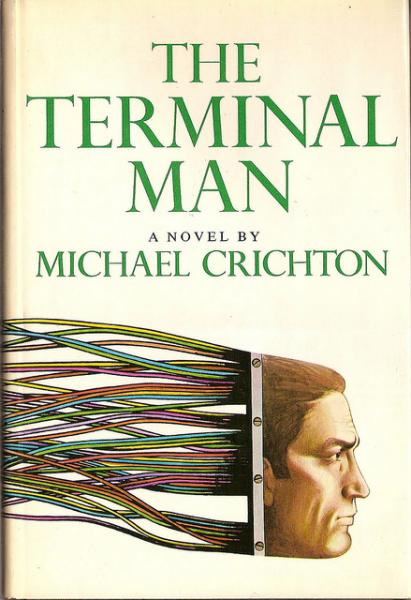
- The Terminal Man
Michael Crichtonstandalone novel1972
similar bycontemporaryscience fictiontensedarknorth america
The Terminal Man is a novel by American writer Michael Crichton. It is his second novel under his own name, his 12th overall, and is about the dangers of mind control. It was published in April 1972 and also serialized in Playboy in March, April, and May 1972. In 1974, it was made into a film of the same name.
- Watchers
Dean R. Koontzstandalone novel1987
similar bycontemporaryscience fictiontensenorth americagenetic engineeringsurvival+1 more
This probably qualifies as a science-based adventure rather than a science fiction novel. The premise, and only speculative fiction element, is that a U.S. government funded laboratory creates a golden retriever that's as intelligent as a human for use in intelligence gathering and also creates a monkey hybrid that's intended for a military police dog role and as a killing machine on battlefields. The animals escape and the story plays out as a straight adventure novel with a good chunk of romance thrown in.
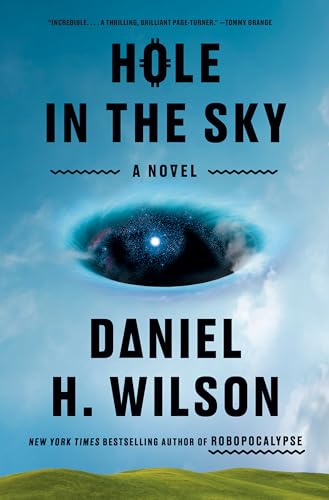
- Hole in the Sky
Daniel H. Wilsonstandalone novel2025
similar bycontemporaryscience fictiontensehorrordarknorth americasurvival
Hole in the Sky is a 2025 science fiction and horror novel by Cherokee writer Daniel H. Wilson. It was first published in the United States in October 2025 by Doubleday. The novel is about an alien first contact that takes place on a Cherokee reservation in Oklahoma.
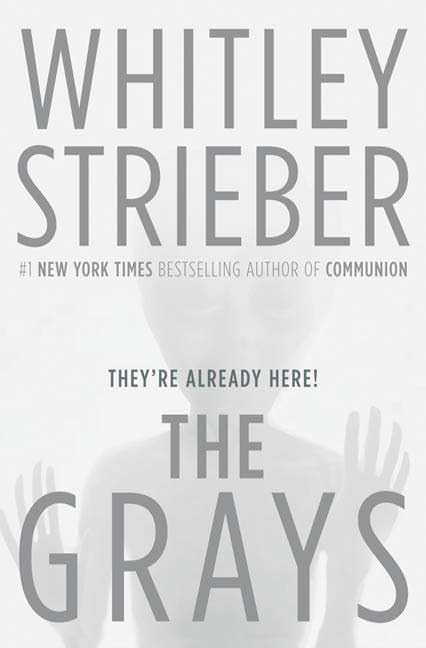
- The Grays
Whitley Strieberstandalone novel2006
similar bycontemporaryscience fictiontensedarknorth americagenetic engineeringsmall town
Millions of people are confronting aliens that authorities say do not exist. Whitley Strieber -- author of the legendary, #1 bestseller Communion, which detailed his own close encounters -- now returns to the riddle of aliens with The Grays. Drawing on a lifetime of research, Strieber offers up a fictional account of the conspiracy behind alien presence on Earth while also giving us a startling look inside the alien mind that will astound, frighten, and enthrall readers. Meet the Three Thieves, a group of Grays assigned to duty in a small Kentucky town. For decades, they have abducted its residents and manipulated bloodlines trying to create an ultra-intelligent human being. Nine year-old Conner Callahan will face the ultimate terror as he struggles to understand who he has been bred to be, and what he must do to save humanity. Meet Colonel Michael Wilkes, the head of a select group of government and military officials who have been monitoring the Grays for years. Wilkes has done everything in his power to keep the secret of the Grays from the public. But when the Grays begin to reveal themselves, Wilkess fear of occupation forces him to set in motion his own sinister plan to ensure the survival of humanity, but at what cost? The fate of the human race lies with one woman, Lauren Glass, whose unique ability to communicate with the last remaining captive Gray, known as A for Adam, may be the only way humans can truly unravel the Grays ultimate plan. The Grays is a mind-bending journey behind the curtain of secrecy that surrounds the subject of aliens, written by the fields great master. This book will make you think deeply, not only about the mystery of who the Grays are, but who exactly we are.
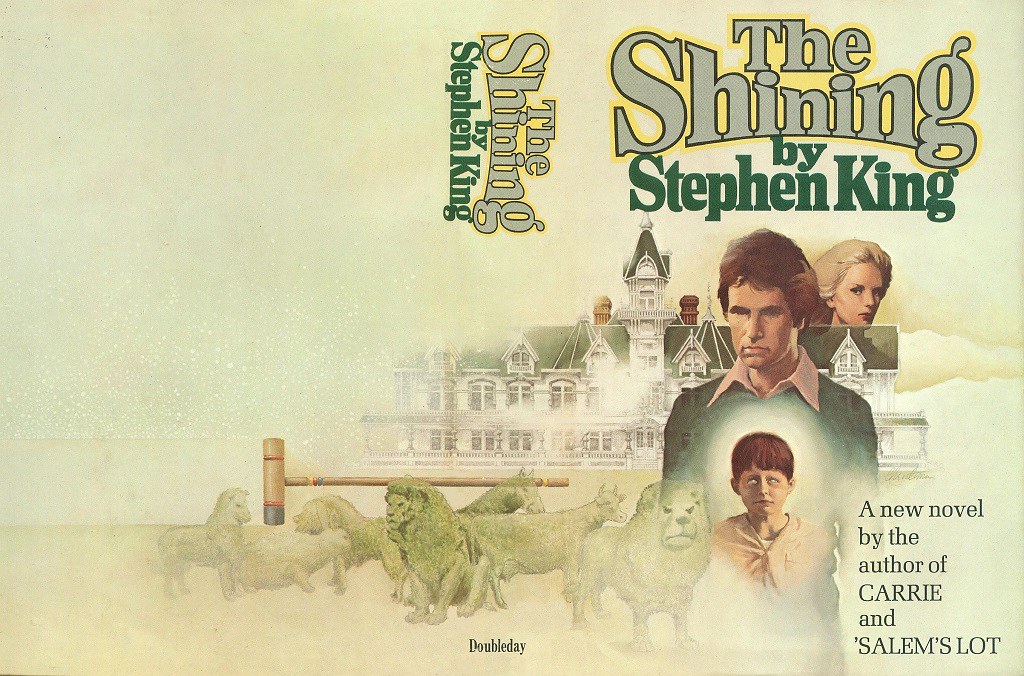
- The Shining
series5 books1977
similar bycontemporaryhorrordarktensenorth america+1 more
Stephen King's 1977 novel The Shining follows the Torrance family as winter caretakers of the isolated, malevolent Overlook Hotel, where father Jack is gradually consumed by the hotel's influence while his young son Danny's psychic "shining" draws its attention. Doctor Sleep (2013) picks up the story decades later, following Danny as an adult still marked by that childhood ordeal. Together the two form a horror duology spanning nearly forty years of real-world publication.