More like Migration
anchored on:science fictionaliensspace operaspace explorationsurvivalspace+2 more
but
- Have Space Suit - Will Travel
Robert A. Heinleinstandalone novel1958
similar byscience fictiontensespace operaspacealiensspace explorationsurvival
From the back cover of the Del Rey 9th printing: "Skyjacked - Everything happened at once. One minute Kip Russell was walking about in his own backyard, testing out an old space suit and dreaming about going to the moon - and the next he was out cold and the captive of an insidious space pirate. The whole thing seemed like a very bad dream until he discovered he wasn't the only prisoner on board. Then the reality of the situation became inescapable. He - along with the daughter of a world-renowned scientist and a beautiful creature from an alien planet - had been skyjacked by a monstrous extraterrestrial and they were on their way to the Moon... a journey toward a fate worse than death!"
- Space Beagle
series5 books1939
completed
similar byscience fictiontensealiensspacespace operaspace exploration+1 more
The Voyage of the Space Beagle is a 1950 fix-up novel by A. E. van Vogt, stitched together from four previously published pulp stories into a single continuous account of the exploration ship Space Beagle's encounters with a series of dangerous alien life forms. Its episodic, crew-versus-monster structure reads as a loose sequence of adventures rather than one continuous plot.
- Forge of God
series2 books1987
completed
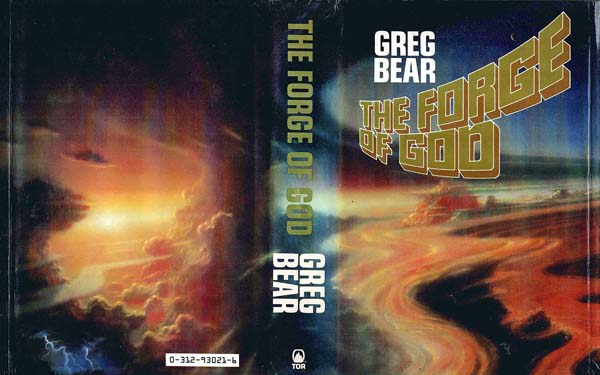
similar byscience fictiontensealienssurvival+4 more
The Forge of God (1987) is Greg Bear's science fiction novel about Earth's discovery that it is the target of an incomprehensible, overwhelming alien attack, following scientists and ordinary people as they try to understand what is destroying the planet. Its 1992 sequel, Anvil of Stars, follows a group of young survivors sent on a mission of interstellar retaliation, continuing directly from the first book's ending.
- Heechee
series19 books1972
completed
similar byscience fictionaliensspacespace operaspace exploration+1 more
The Heechee Saga, also known as the Gateway series, is a series of science fiction novels and short stories by Frederik Pohl. The Heechee are an advanced alien race that visited the Solar System hundreds of millennia ago and then mysteriously disappeared. They left behind bases containing artifacts, including working starships, which are discovered and exploited by humanity.
- The Black Cloud
Fred Hoylestandalone novel1957
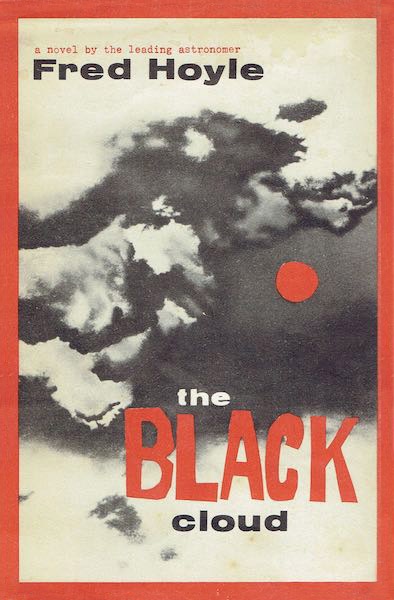
similar byscience fictiontensealienssurvivalour world+3 more
The Black Cloud is a 1957 science fiction novel by British astrophysicist Fred Hoyle. It details the arrival of an enormous cloud of gas that enters the Solar System and appears about to destroy most of the life on Earth by blocking the Sun's radiation.
- Pushing Ice
Alastair Reynoldsstandalone novel2005
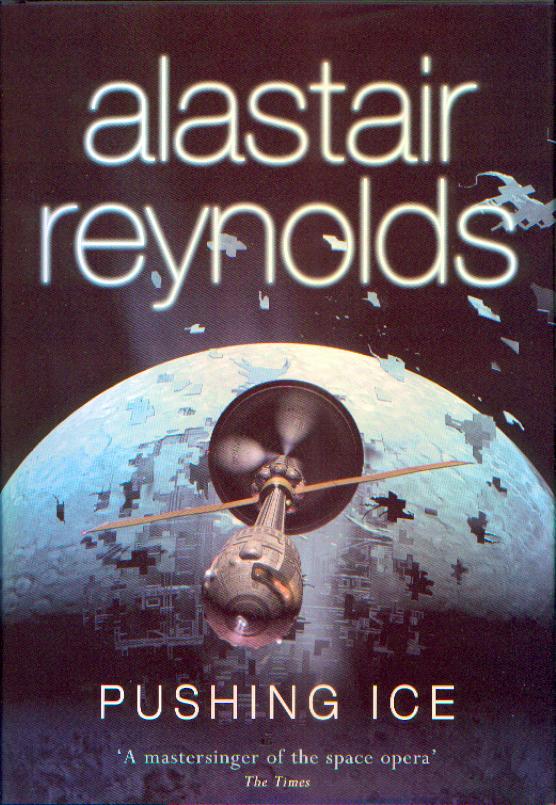
similar byscience fictiontensespacealiensspace explorationsurvival+1 more
When Saturn's moon Janus suddenly takes off into interstellar space, an ice mining spaceship sent to investigate finds itself swept along into distant space until it ends up trapped in a gigantic alien structure, wherein the crew must prepare to reside for the foreseeable future.
- The Colors of Space
Marion Zimmer Bradleystandalone novel1963
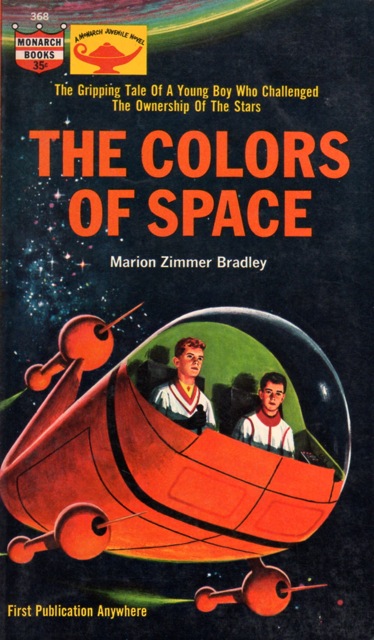
similar byscience fictionmysteriousaliensspace operaspacespace exploration
The Lhari seem peaceful and friendly, but they go to some lengths to protect their monopoly on faster-than-light travel. One young man is sent to discover their secrets.
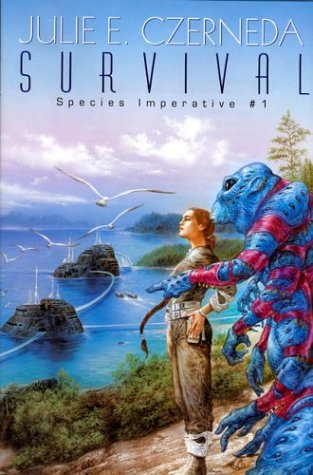
- Species Imperative
series3 books2004
similar byscience fictiontensealiensspace operaspacespace explorationsurvival+1 more
- Starplex
Robert J. Sawyerstandalone novel1996
similar byscience fictionmysterioustensespace operaspacealiensspace exploration
The only novel of its year to be nominated for both the Hugo and Nebula Awards. Starplex won Canada's Aurora Award for best novel of the year. For nearly twenty years Earth's space exploration had exploded outward, thanks to a series of mysterious, artificial wormholes. No one knows who created these interstellar passages, yet they have brought the far reaches of space immediately close. For Starplex Director Keith Lansing, too close. Discovery is superseding understanding. And when an unknown vessel — with no windows, no seams, and no visible means of propulsion — arrives through a new wormhole, an already battle-scarred Starplex could be the starting point of a new interstellar war . . . ROBERT J. SAWYER has won the Hugo, Nebula, John W. Campbell Memorial, Seiun, and Aurora Awards, all for best science fiction novel of the year. His novels include Hominids, Rollback, Wake, and FlashForward (basis for the TV series).
- The Final Architecture
series6 books2021
similar byscience fictiontensealiensspace operaspacespace exploration+1 more
The Final Architecture is a series of science fiction novels by British writer Adrian Tchaikovsky. It contains the books Shards of Earth, Eyes of the Void, and Lords of Uncreation. The series focuses on a group of humans fighting against the mysterious Architects, who destroy inhabited planets. The series has been well-received critically, with Shards of Earth winning the 2021 BSFA Award for Best Novel. The entire series was a finalist for the 2024 Hugo Award for Best Series.
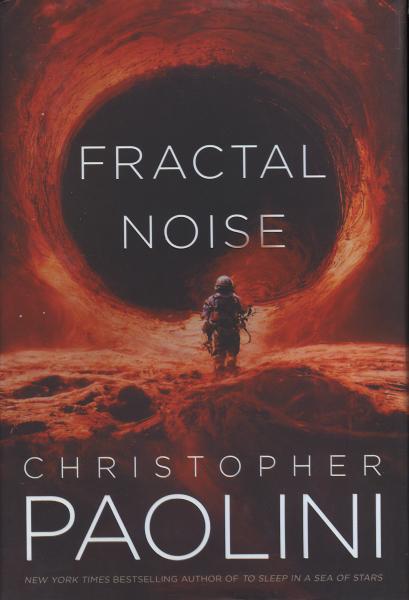
- Fractalverse
series2 books2020
similar byscience fictiontensespacealiensspace operaspace explorationsurvival
To Sleep in a Sea of Stars opens Christopher Paolini's Fractalverse with Kira Navárez, a xenobiologist whose survey of an unexplored planet triggers first contact with an ancient alien intelligence, dragging her and the wider human Alliance into a wider interstellar conflict for survival. Fractal Noise, a parallel entry, follows a separate crew investigating a mysterious signal-emitting structure on another world within the same universe. Both books were published between 2020 and 2023.
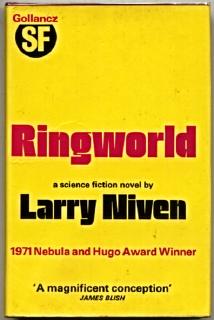
- Ringworld
series5 books1970
part of Known Space
similar byscience fictionspace operaspacespace explorationaliens+1 more
The Ringworld series is a series of science fiction novels written by American author Larry Niven. It is part of his Known Space series of stories. Its backdrop is the Ringworld, a giant artifact 3 million times the surface area of Earth circling a star. The series is composed of four standalone science fiction novels, the original award-winning book and its three sequels:1970: Ringworld 1979: The Ringworld Engineers 1996: The Ringworld Throne 2004: Ringworld's Children
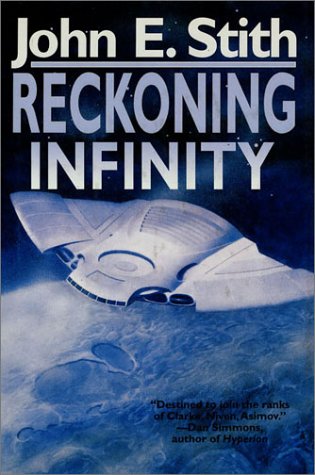
- Reckoning Infinity
John E. Stithstandalone novel1997
similar byscience fictionmysterioustensealiensspacespace explorationsurvival
A team of explorers is sent to explore the interior of an organic, moon-sized alien arrival.
- Quadrail
series5 books2005
similar byscience fictionmysteriousspace operaspacealiens+2 more
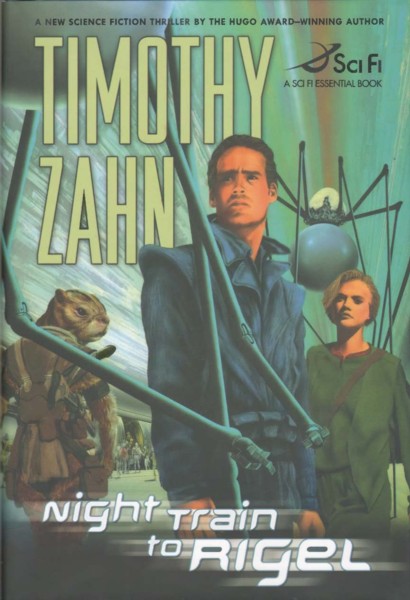
Timothy Zahn's Quadrail series follows ex-intelligence operative Frank Compton, recruited by the enigmatic Spider caretakers of the Quadrail, an interstellar train network that lets a dozen alien empires travel between worlds at a light-year a minute. Paired with the telepathically gifted Bayta, Compton investigates and fights the Modhri, a parasitic group-mind quietly seizing control of galactic leaders from within. The five novels, published 2005-2012, follow one continuous investigation from first contact with the threat to its final confrontation.
- Moties
series4 books1974
part of CoDominium
similar byscience fictionspace operaspacealiens+2 more
Larry Niven and Jerry Pournelle's The Mote in God's Eye (1974) depicts humanity's first contact with an alien species, the Moties, set within the far-future interstellar setting of Pournelle's codominium future history. The Gripping Hand continues that first-contact crisis years later, and Outies, written by J. R. Pournelle, carries the story forward into a new generation. Together the three books trace an escalating encounter between human and Motie civilizations within the codominium universe.
- Space Winners
Gordon R. Dicksonstandalone novel1965
similar byscience fictiontensespace operaspacealiensspace explorationsurvival
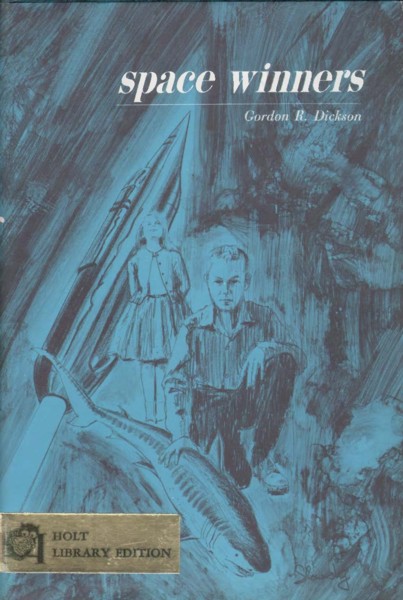
They were humanity's hope - the first young people selected to leave Earth for study in the Galactic Federation. But something went wrong in deep space. Terribly wrong. Suddenly Jim Rawlins, Ellen Bouvier, Curt Harrington, and the squirrel-like Alien philosopher Peep were castaways, stranded on the Quarantined World of Quebahr - with no training, and little hope of rescue. Between them and the Federation's emergency beacon were primitive Mauregs, aggressive Walats, lizard-like Noifs - plus danger, conspiracy, and the mystery of an impending high-tech war on a backward, peaceful planet. Without warning, the future of two worlds - Earth and Quebahr - depended on three young humans' ability to adopt and survive.
- The Avatar
Poul Andersonstandalone novel1978
similar byscience fictionmysteriousspace operaspacealiensspace exploration
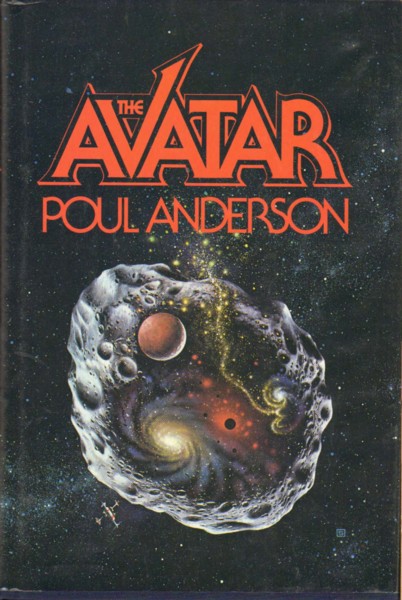
After humanity discovers portals that transport a space vessel through time and space, a crew which has visited the planet of another species returns to Earth, only to find a political faction in power which seeks to conceal this knowledge in the name of social stability. With the aid of the political opposition, they escape and journey through the portal in search of knowledge, and perhaps even to meet those who created the portal system.
- The Visitors
Clifford D. Simakstandalone novel1980
similar byscience fictionmysterioustensealienssurvivalour world
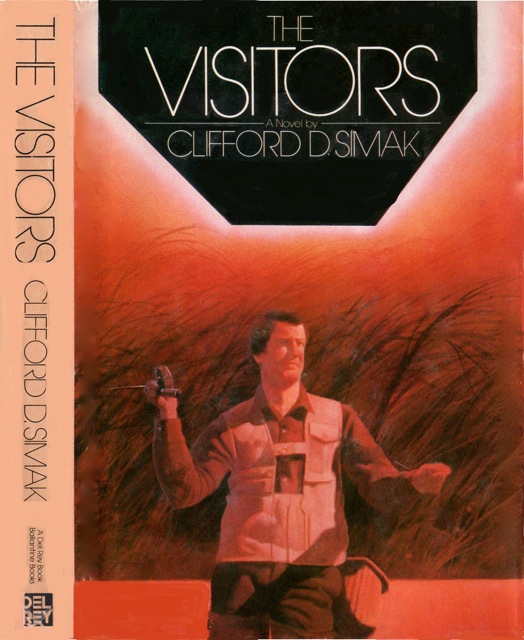
WorldCat: Intelligent, alien creatures arrive on Earth from outer space, threatening world stability and presaging the destruction of civilization.
- Endless Blue
Wen Spencerstandalone novel2007
similar byscience fictiontensespace operaspacealiensspace explorationsurvival
The appearance of the warp drive from a long lost spaceship, the Fenrir, triggers an epic quest fort he rest oft the ship, a mission led by Captain Mikhail Volkov. According to the drive’s computers, Fenrir had been lost to a hypothetical “nowhere” of subspace, but since the drive’s housing is covered with coral and sea life, obviously Fenrir has gone somewhere. Faced with genocide at the hands of aliens known as the nefrim, humans need a miracle to survive. On the chance that Fenrir’s mysterious location holds such a miracle, Mikhail jumps into the unknown and crashes into the endless blue of the Sargasso. (from the cover)
- All Judgment Fled
James Whitestandalone novel1968
similar byscience fictionmysterioustensealiensspacespace exploration
From the front flap of the Rapp first edition: It is the spring of 1978 and a gigantic alien spaceship has entered the solar system and taken up an orbit some sixty million miles from the Sun. The Ship neither signals nor replies in any detectable fashion to signals directed towards it. Silently and, some think, implacably, it orbits like some tremendous battleship cruising off the coast of a tiny, backward island. Inevitably there are natives on the island whose curiosity outweighs their fear and six men in two tiny sophisticated dug-out canoes go out to satisfy their curiosity... All Judgment Fled is not another story about super heroes solving alien communications problems with the aid of super scientific and infallible translation devices. Instead it concerns the reactions of six very ordinary people to what is probably the most extraordinary situation of all - the first meeting with an extraterrestrial race.
- Deadman Switch
Timothy Zahnstandalone novel1988
similar byscience fictionmysterioustensespace operaspacesurvival
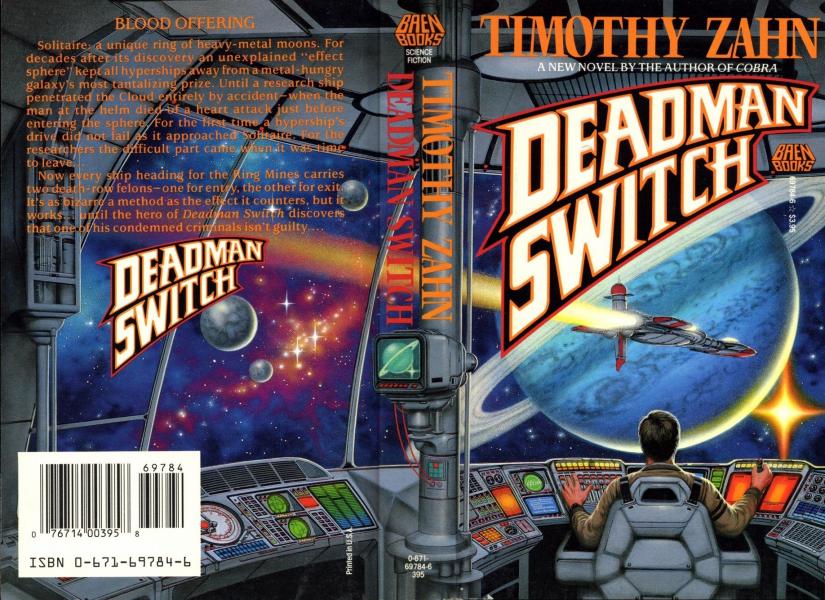
From the back cover of the Baen second printing: "Blood offering - Solitaire: a unique ring of heavy-metal moons. For decades after its discovery and unexplained "effect sphere" kept all hyperships away from a metal-hungry galaxy's most tantalizing prize. Until a research ship penetrated the Cloud entirely by accident - when the man at the helm died of a heart attack just before entering the sphere. For the first time, a hypership's drive did not fail as it approached Solitaire. For the researchers the difficult part came when it was time to leave... Now, every ship heading for the Ring Mines carries two death-row felons - one for entry, the other for exit. It's as bizarre a method as the effect it counters, but it works... until the hero of Deadman Switch discovers that one of his condemned criminals isn't guilty..."
- The Wanderer
Fritz Leiberstandalone novel1964
similar byscience fictiontensespacealienssurvivalour world
The Wanderer is a science fiction novel by American writer Fritz Leiber, published as a paperback original by Ballantine Books in 1964. It won the 1965 Hugo Award for Best Novel.
- Chanur
series7 books1982
part of Alliance-Union Universe
similar byscience fictiontensealiensspace operaspace
The Chanur novels are a series of five science fiction novels, forming three separate stories, written by American author C. J. Cherryh and published by DAW Books between 1982 and 1992. The first novel in the series is The Pride of Chanur (1982), which was nominated for both the Hugo and Locus Awards in 1983. The Pride of Chanur, originally a stand-alone story, was followed by the Chanur's Venture trilogy, Chanur's Venture (1984), which was shortlisted for a Locus Award in 1985; The Kif Strike Back (1985) and Chanur's Homecoming (1986). These were followed by a later sequel, Chanur's Legacy (1992). The five novels were also published in two omnibus editions: the first three in The Chanur Saga in 2000 and the next two in Chanur's Endgame in 2007.
- The Companions
Sheri S. Tepperstandalone novel2003
similar byscience fictionmysteriousspace operaspacealiensspace exploration+1 more
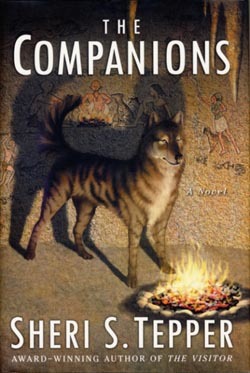
Three planets in deep space were named by their human discoverers to reflect their environments: lush and foreboding Jungle, which swallowed up an exploratory team; Stone, phenomenally rich in rare ore; and Moss, the most enigmatic -- and dangerous -- of the trio.Joining her half-brother Paul, the famed linguist, on a two-person scientific expedition, Jewel Delis has come to Moss to observe the phenomenon of dancing light and to help decipher the strange musical "language" that accompanies it. But there are other mysteries alive on this exotic world covered in ever-shifting vegetation -- and something more than illuminations has enticed her away from a disastrously overpopulated homeworld to seek answers at the universe's unexplored edge. For Jewel herself is a question mark with a radical agenda that will put her at perilous odds with her planet's ruling powers -- and with the inscrutable alien races she encounters -- as she risks all for justice for the endangered beasts of the Earth.