More like Millenium
anchored on:science fiction
but
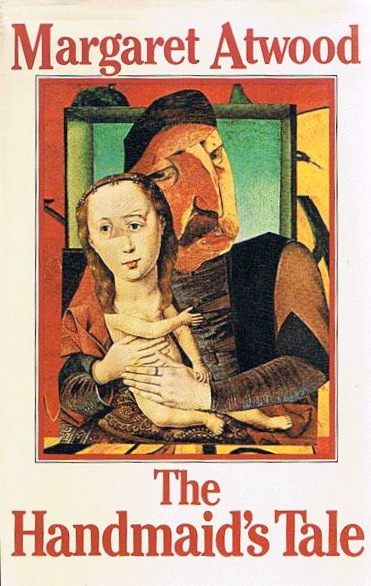
- The Handmaid's Tale
series3 books1985
similar bytensescience fictionnear futurenorth america+2 more
The Handmaid's Tale is Margaret Atwood's 1985 novel set in Gilead, a totalitarian theocracy that has overthrown the United States and forces fertile women into reproductive servitude as Handmaids; it is narrated by one such woman, Offred. Atwood returned to the world in her 2019 sequel The Testaments, set fifteen years later and narrated by three women, including the regime's Aunt Lydia. Together the two novels move from Gilead's grip on power toward the first cracks in it.
- Blade Runner Universe
series6 books1968
similar byscience fictionnear future+3 more
Philip K. Dick's 1968 novel Do Androids Dream of Electric Sheep? follows bounty hunter Rick Deckard as he tracks escaped androids through an irradiated, near-abandoned San Francisco, using the hunt to probe questions of empathy and what separates human from machine. The novel became the basis for Ridley Scott's 1982 film Blade Runner, and Marvel Comics later published an illustrated adaptation of that film. Together the two trace the story's path from prose original to screen and comic-page adaptation.
- Dune
series20 books1963
part of Dune Universe
similar byscience fictionpolitical intriguefaith and religion+2 more
Frank Herbert's Dune Chronicles opens with 1965's Dune, set on the desert planet Arrakis where House Atreides takes control of the only source of the vital spice melange and young Paul Atreides is pulled into a struggle over its politics and religion. Herbert carried the story forward across five further novels — Dune Messiah, Children of Dune, God Emperor of Dune, Heretics of Dune, and Chapterhouse: Dune — following Paul's line over the following millennia, before Brian Herbert and Kevin J. Anderson later extended the saga. Many other editions of these six novels are omnibus and box-set repackagings rather than separate stories.
- Stranger in a Strange Land
Robert A. Heinleinstandalone novel1961
similar byscience fictionnear futurefaith and religionnorth americareflectiveour world
Stranger in a Strange Land is a 1961 science fiction novel by the American author Robert A. Heinlein. It tells the story of Valentine Michael Smith, a human who comes to Earth in early adulthood after being born on the planet Mars and raised by Martians, and explores his interaction with and eventual transformation of Terran culture.
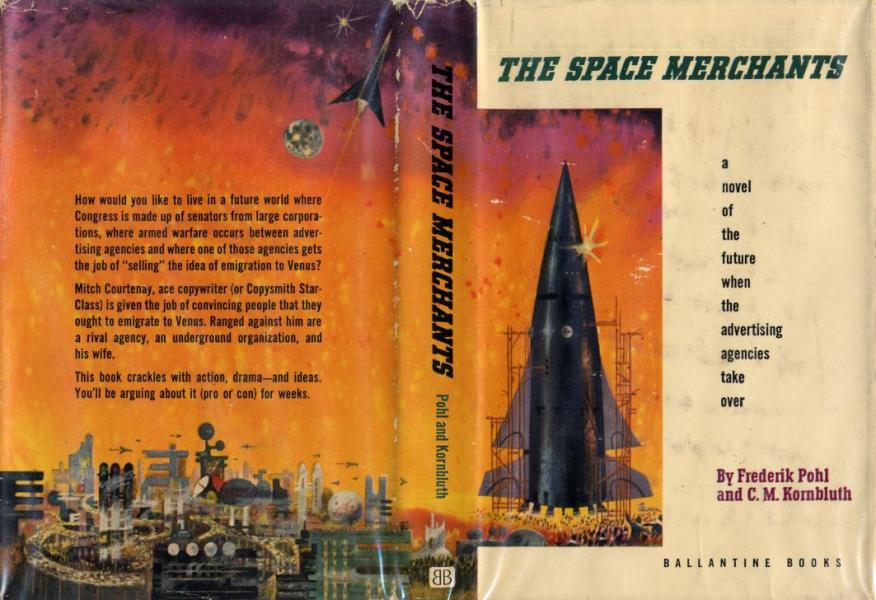
- Space Merchants
series2 books1953
completed
similar byscience fictionnear future+3 more
The Space Merchants (1953) is a satirical science fiction novel by Frederik Pohl and C. M. Kornbluth that follows an advertising executive navigating a future where aggressive consumer capitalism has swallowed politics and daily life. The authors reunited three decades later for a direct sequel, The Merchants' War (1984), returning to the same satirical world. Together the two books form a compact bookend pair rather than an ongoing series.
- Library of America P. K. Dick Collection
series9 books1962
completed
similar byscience fictionnear future+2 more
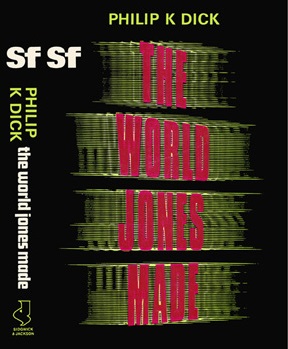
- The World Jones Made
Philip K. Dickstandalone novel1956
similar byscience fictiontensepolitical intriguenear futurenorth america+1 more
The World Jones Made is a 1956 science fiction novel by American writer Philip K. Dick, examining notions of precognition, humanity, and politics. It was first published by Ace Books as one half of Ace Double D-150, bound dos-à-dos with Agent of the Unknown by Margaret St. Clair.The story takes place after a nuclear war in which society is dominated by relativism, which rejects absolute truths and preaches tolerance as the highest principle. The mutant Floyd Jones, who can see into the future, plans to overthrow the system and colonise space. The story ends with the defeat of Jones, whose plans fail despite his ability to see the future due to the immutability of fate.
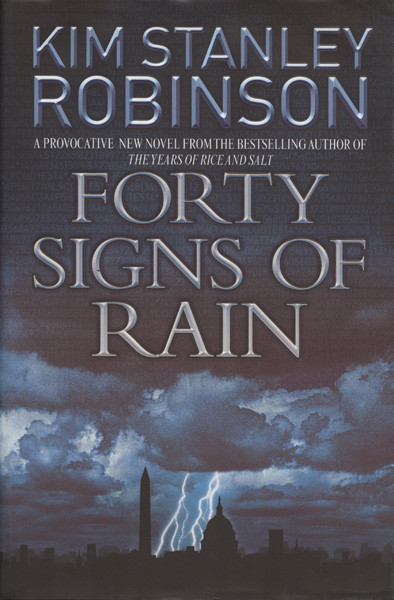
- Science in the Capital
series5 books2004
similar byscience fictionpolitical intriguenear futurenorth america+2 more
Kim Stanley Robinson's Science in the Capital trilogy follows scientists and staff at the National Science Foundation in Washington, D.C. as they try to get a paralyzed government to act on accelerating climate change, while catastrophic storms on both American coasts turn the crisis undeniable. Forty Signs of Rain introduces biomathematician Frank Vanderwal, the Quibler family, and a delegation of Buddhist monks from a low-lying island nation threatened by rising seas; Fifty Degrees Below and Sixty Days and Counting follow the same characters through worsening disaster and the slow mechanics of policy change. Robinson later revised the trilogy into a single volume, Green Earth.
- Future History
series42 books1939
completed
similar byscience fiction+2 more
The Future History is a series of science fiction stories written by American author Robert A. Heinlein (1907–1988). It describes a projected future of the human race from the middle of the 20th century through the early 23rd century. The term Future History was coined by John W. Campbell Jr. in the February 1941 issue of Astounding Science Fiction. Campbell published an early draft of Heinlein's chart of the series in the May 1941 issue.
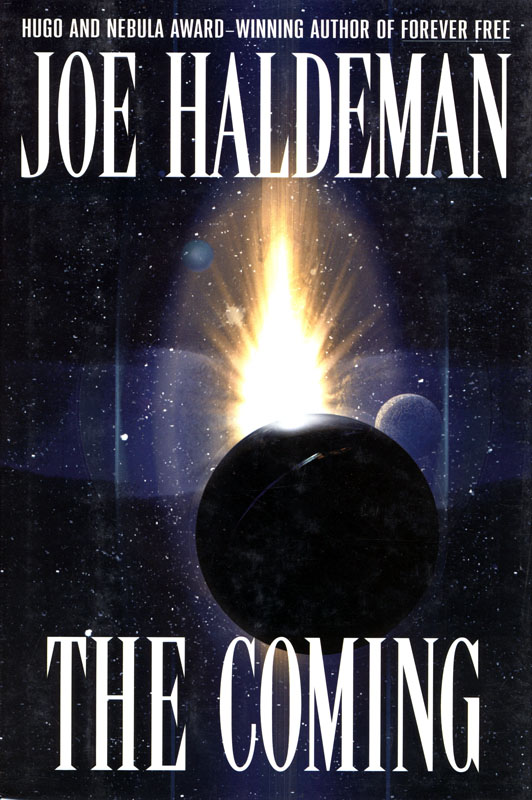
- The Coming
Joe Haldemanstandalone novel2000
similar byscience fictiontensepolitical intriguenear futurenorth americaour world+1 more
An astronomy professor in Florida in a mid-21st century suffering from climate change and international hostilities detects an apparent interstellar vehicle headed directly for earth at near light speed but decelerating dramatically; it transmits the message "We're coming". The effect this discovery has on her, those close to her, and the surrounding circles of contacts is followed, as the impending event plays out on the larger stage of national and international affairs until it comes to an unpredictable ending. The dedication page says in part "The author gratefully acknowledges the influence of James Gunn's beautiful novel The Listeners, on this book."
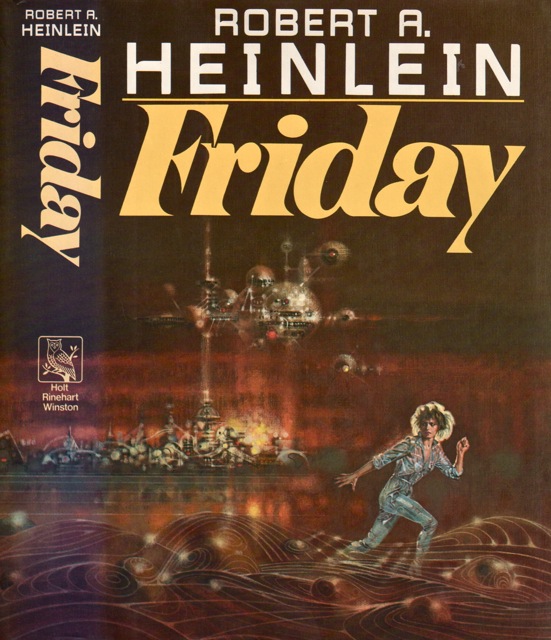
- Friday
Robert A. Heinleinstandalone novel1982
similar byscience fictiontensenear futurenorth america+1 more
Friday is a 1982 science fiction novel by American writer Robert A. Heinlein. It is the story of a female "artificial person", the eponymous Friday, genetically engineered to be stronger, faster, smarter, and generally better than normal humans. Artificial humans are widely resented, and much of the story deals with Friday's struggle both against prejudice and to conceal her enhanced attributes from other humans. The story is set in a Balkanized 21st century, in which the nations of the North American continent have been split up into a number of smaller states.
- Termination Shock
Neal Stephensonstandalone novel2021
similar byscience fictiontensepolitical intriguenear futurenorth americaour world
Termination Shock is a science fiction novel by American writer Neal Stephenson, published in 2021. The book is set in a near-future when climate change has significantly altered human society and follows the attempts of a solar geoengineering scheme. The novel focuses on the geopolitical and social consequences of the rogue fix for climate change, themes common in the growing climate fiction genre.
- Dune Universe
universe78 books1963
Start hereDune · Start here
similar byscience fictionpolitical intrigue+1 more
Arrakis. Dune. The desert planet, where empire runs on a single substance: the spice melange, which folds space, prolongs life, and unlocks prescience, and which exists nowhere else in the known universe. Frank Herbert's saga is a meditation dressed as an adventure — feudal houses and a secret sisterhood, engineered messiahs and the patient ecology of a world without water, all turning on the terrible gravity of who commands the spice. It reads like scripture and schemes like a war room, ten thousand years hence, among people who have outlawed the thinking machine and made instruments of themselves instead. At its heart stand Herbert's original six — Dune, Dune Messiah, Children of Dune, God Emperor of Dune, Heretics of Dune, Chapterhouse: Dune — a single deepening arc across millennia, arguing the whole way between prophecy and free will. Around that spine his son Brian Herbert and Kevin J. Anderson have raised a vast prequel architecture: Prelude to Dune, tracing the great houses a generation before Paul; Legends of Dune, reaching back to the crusade that broke the machines; the Schools of Dune cycle on the founding of Bene Gesserit, Mentat, and Navigator; the Caladan Trilogy and Heroes of Dune filling years the originals left in shadow. Many hands, dozens of volumes, one desert. What sets Dune apart is its refusal of the simple: religion is manufactured, heroes are hazards, and the sand itself — worm, water, ecology — acts as a political power. Begin where the universe did, with Frank Herbert's Dune (1965), and read the original six in order; you need nothing else to feel the full weight. The prequels are a country to explore afterward, taken by era. Beginnings are delicate times.
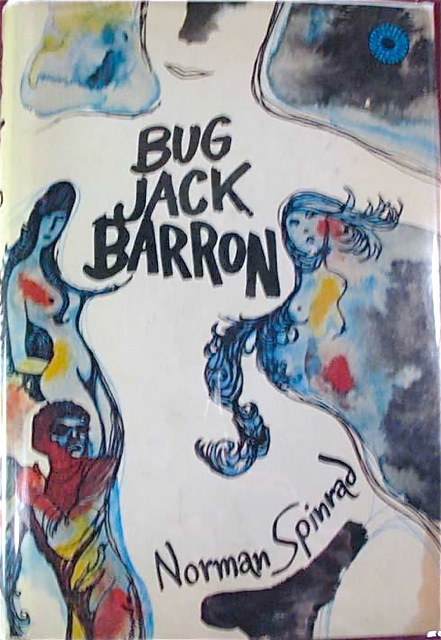
- Bug Jack Barron
Norman Spinradstandalone novel1969
similar byscience fictiontensepolitical intriguenear futurenorth america
Bug Jack Barron is a 1969 science fiction novel by American writer Norman Spinrad, first serialized in the New Worlds magazine under the editorship of Michael Moorcock. It was nominated for the 1970 Hugo Award. The novel is notable for its lyrical style and unique use of cut-up phrases. In this regard, Spinrad has cited the influence of Beat writers William S. Burroughs, Allen Ginsberg, and Jack Kerouac.
- The Zap Gun
Philip K. Dickstandalone novel1967
similar byscience fictionnear futurenorth americaour world+2 more
The Zap Gun is a 1967 science fiction novel by American writer Philip K. Dick. It was first published as the two-part serial Project Plowshare in Worlds of Tomorrow in 1965 and 1966, before Pyramid Books issued it in paperback under its present title. The novel originated in a title-first commission devised by Pyramid editor Don Bensen and was written in 1964 during a period of rapid production in Dick's career.
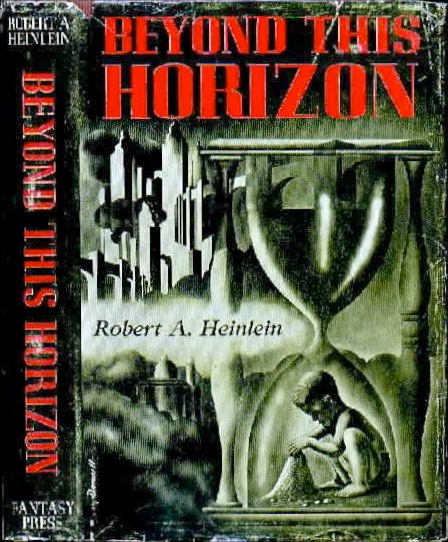
- Beyond This Horizon
Robert A. Heinleinstandalone novel1948
similar byscience fictionnorth americareflectiveour world+2 more
From the front flap of a 2001 Baen reprint: "Utopia has been achieved. For centuries, disease, hunger, poverty, and war have been things found only in the history tapes. And applied genetics has given men and women the bodies of athletes and a lifespan of over a century. They should all have been very happy... But Hamilton Felix is bored. And he is the culmination of a star line, each of his last thirty ancestors chosen for superior genes. Hamilton is, as far as genetics can produce one, the ultimate man. And this ultimate man can see no reason why the human race should survive, and has no intention of continuing the pointless comedy. However, Hamilton's life is about to become less boring. A secret cabal of revolutionaries who find utopia not just boring, but desperately in need of leaders who know just What Needs to be Done, are planning to revolt and put themselves in charge. Knowing of Hamilton's disenchantment with the modern world, they have recruited him to join their Glorious Revolution. Big mistake! The revolutionaries are about to find out that recruiting a superman was definitely not a good idea..."
- Mother of Storms
John Barnesstandalone novel1994
similar byscience fictiontensepolitical intriguenear futureour world+1 more
From the flaps of the Tor first edition: "It is 2028. A strike to destroy an illegal Arctic weapons cache has a catastrophic side effect. Massive amounts of energy are liberated from the polar ice, suddenly warming the Earth's climate. In the middle of the Pacific, a gigantic hurricane thousands of miles across is forming, larger than any in human history. A storm with winds of supersonic speed. A storm that changes direction at whim. A storm that refuses to die. A storm so vast it spawns dozens more in its wake... Blinded by intrigue, expedience, and greed, the world's politicians and power brokers have ignored the killer storms threat until it is too late. Already the death toll is in the tens of millions, as it savages the Pacific coast, while its devil's brood of smaller storms are wreaking havoc across the face of the planet. While the survivors scramble for advantage, a handful of courageous men and women undertake a daring, desperate plan to save humanity from total destruction - a plan so visionary it may alter forever the future of the human race."
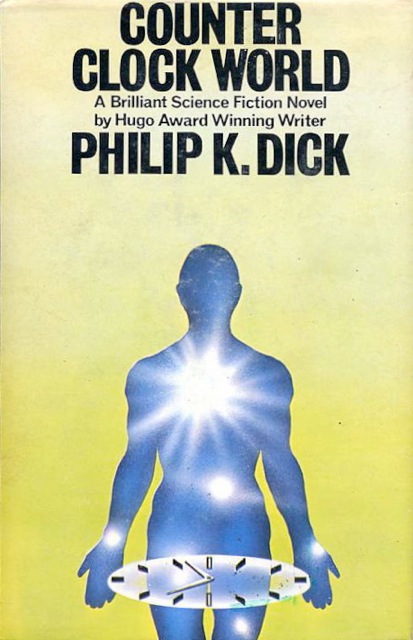
- Counter-Clock World
Philip K. Dickstandalone novel1967
similar byscience fictionpolitical intriguenear futurefaith and religionnorth americaour world
In a near future, after time has reversed itself in some ways and the dead are being resurrected and grow younger until they vanish in a reverse conception, the imminent resurrection of the founder of a new religion which has spread through African-Americans causes a power struggle between factions who vie to possess him.
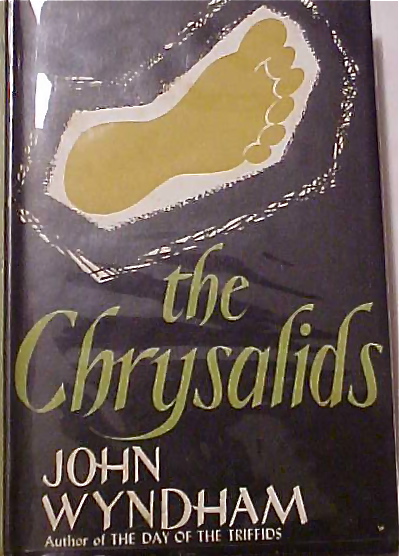
- The Chrysalids
John Wyndhamstandalone novel1955
similar byscience fictiontensereflective+2 more
The Chrysalids is a science fiction novel by British writer John Wyndham, first published in 1955 by Michael Joseph. It is the least typical of Wyndham's major novels, but regarded by some as his best. An early manuscript version was entitled Time for a Change.
- Forge of God
series2 books1987
completed
similar byscience fictiontense+3 more
The Forge of God (1987) is Greg Bear's science fiction novel about Earth's discovery that it is the target of an incomprehensible, overwhelming alien attack, following scientists and ordinary people as they try to understand what is destroying the planet. Its 1992 sequel, Anvil of Stars, follows a group of young survivors sent on a mission of interstellar retaliation, continuing directly from the first book's ending.
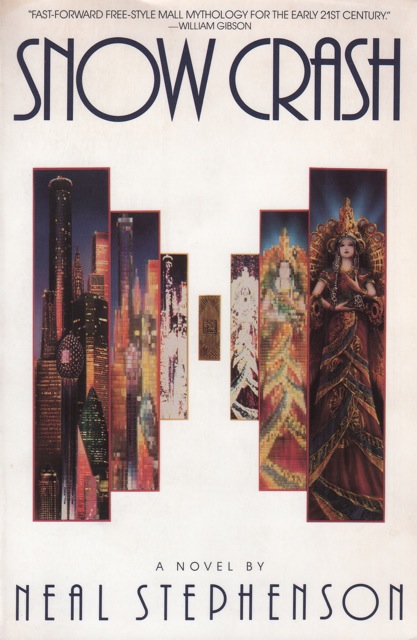
- Snow Crash
Neal Stephensonstandalone novel1992
similar byscience fictiontensepolitical intriguenear future
Snow Crash is a 1992 science fiction novel by Neal Stephenson. Like many of Stephenson's novels, its themes include history, linguistics, anthropology, archaeology, religion, computer science, politics, cryptography, memetics, and philosophy.
- Nexus 5
series3 books2012
similar byscience fictiontensenear futureour world+2 more
Nexus opens Ramez Naam's postcyberpunk trilogy in 2040 with scientist Kaden Lane, who works on Nexus, an experimental nano-drug that lets human minds be networked and reprogrammed, and finds himself caught between government and corporate interests once the technology's implications become clear. The trilogy continues through Crux and Apex, following the same central conflict over who controls the technology. Nexus tied for Best Novel at the 2014 Prometheus Awards and Apex won the 2015 Philip K. Dick Award.
- Julian West
series7 books1888
similar byscience fictionnorth america+2 more
Julian West is the time-displaced narrator of Edward Bellamy's Looking Backward, 2000-1887 (1888), a utopian novel in which a nineteenth-century Bostonian wakes from a mesmeric sleep to find his city transformed into a cooperative society more than a century later. Bellamy followed it with Equality (1897), a direct sequel that returns to Julian West's perspective to further elaborate the ideas only sketched in the first book, functioning more as an extended argument than a plotted story. Together the two novels were highly influential on turn-of-the-century utopian and socialist thought.