More like Missile Gap
anchored on:science fictionmid 20th centuryalternate historyspace explorationpolitical intriguespace+1 more
but
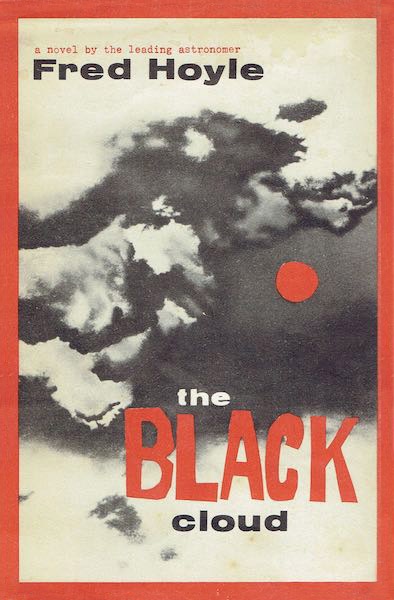
- The Black Cloud
Fred Hoylestandalone novel1957
similar bytensemid 20th centuryscience fictionaliens+3 more
The Black Cloud is a 1957 science fiction novel by British astrophysicist Fred Hoyle. It details the arrival of an enormous cloud of gas that enters the Solar System and appears about to destroy most of the life on Earth by blocking the Sun's radiation.
- Take Them to the Stars
series3 books2021
similar bytensescience fictionspace explorationalternate historymid 20th centuryaliens+1 more
- NASA Trilogy
series4 books1996
similar bytensescience fictionspace explorationalternate history+4 more
The NASA Trilogy consists of three hard science fiction novels written by British science fiction author Stephen Baxter. They were published from 1996 to 1998. These books explore the possibilities of the American space program if the circumstances had been different. They have generally darker tones than his other books and are critical of NASA. They consist of:
- Moties
series4 books1974
part of CoDominium
similar byspacescience fictionpolitical intriguealiens+2 more
Larry Niven and Jerry Pournelle's The Mote in God's Eye (1974) depicts humanity's first contact with an alien species, the Moties, set within the far-future interstellar setting of Pournelle's codominium future history. The Gripping Hand continues that first-contact crisis years later, and Outies, written by J. R. Pournelle, carries the story forward into a new generation. Together the three books trace an escalating encounter between human and Motie civilizations within the codominium universe.
- The Apollo Murders
Chris Hadfieldstandalone novel2021
similar bytensemid 20th centuryspacespace explorationpolitical intriguealternate history
The Apollo Murders is a 2021 alternate history, thriller novel by Canadian retired astronaut and writer Chris Hadfield. It was first published in October 2021 in the United States by Little, Brown and Company, and in the United Kingdom by Quercus. The book is Hadfield's debut novel, and is the first in his Apollo Murders series, followed later by The Defector in 2023 and Final Orbit in 2025. Hadfield had previously published three non-fiction books, his first being his autobiography, An Astronaut's Guide to Life on Earth (2013).
- Have Space Suit - Will Travel
Robert A. Heinleinstandalone novel1958
similar bytensespacescience fictionspace explorationaliens
From the back cover of the Del Rey 9th printing: "Skyjacked - Everything happened at once. One minute Kip Russell was walking about in his own backyard, testing out an old space suit and dreaming about going to the moon - and the next he was out cold and the captive of an insidious space pirate. The whole thing seemed like a very bad dream until he discovered he wasn't the only prisoner on board. Then the reality of the situation became inescapable. He - along with the daughter of a world-renowned scientist and a beautiful creature from an alien planet - had been skyjacked by a monstrous extraterrestrial and they were on their way to the Moon... a journey toward a fate worse than death!"
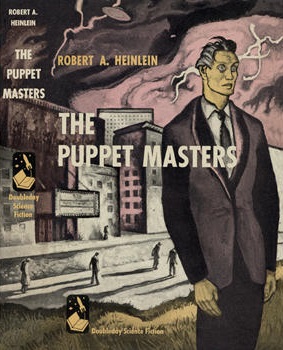
- The Puppet Masters
Robert A. Heinleinstandalone novel1951
similar bytensemid 20th centuryscience fictionaliens+1 more
Parasitical aliens attach themselves to human hosts and take over their bodies. Two spies are sent to find out what's happening, but the extent is much farther than they knew. With access to the humans' memories, the aliens quietly invade the government and start taking over.
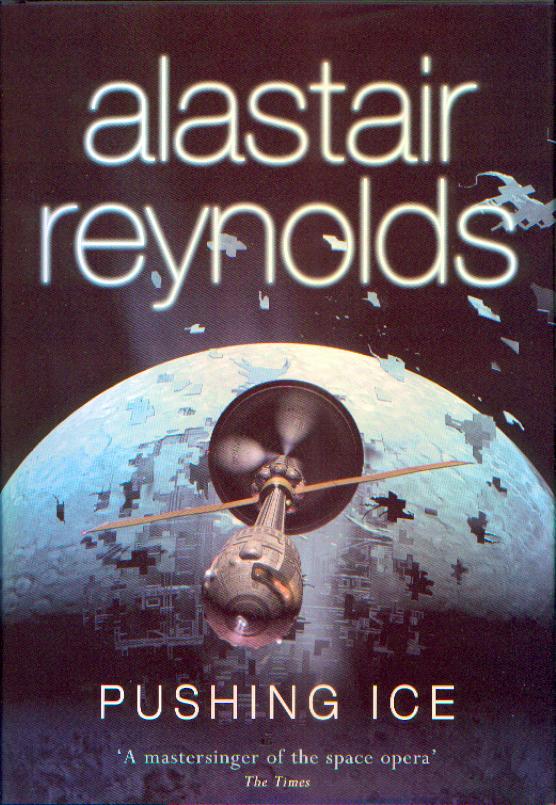
- Pushing Ice
Alastair Reynoldsstandalone novel2005
similar bytensespacescience fictionspace explorationaliens
When Saturn's moon Janus suddenly takes off into interstellar space, an ice mining spaceship sent to investigate finds itself swept along into distant space until it ends up trapped in a gigantic alien structure, wherein the crew must prepare to reside for the foreseeable future.
- Chanur
series7 books1982
part of Alliance-Union Universe
similar bytensespacescience fictionpolitical intriguealiens
The Chanur novels are a series of five science fiction novels, forming three separate stories, written by American author C. J. Cherryh and published by DAW Books between 1982 and 1992. The first novel in the series is The Pride of Chanur (1982), which was nominated for both the Hugo and Locus Awards in 1983. The Pride of Chanur, originally a stand-alone story, was followed by the Chanur's Venture trilogy, Chanur's Venture (1984), which was shortlisted for a Locus Award in 1985; The Kif Strike Back (1985) and Chanur's Homecoming (1986). These were followed by a later sequel, Chanur's Legacy (1992). The five novels were also published in two omnibus editions: the first three in The Chanur Saga in 2000 and the next two in Chanur's Endgame in 2007.
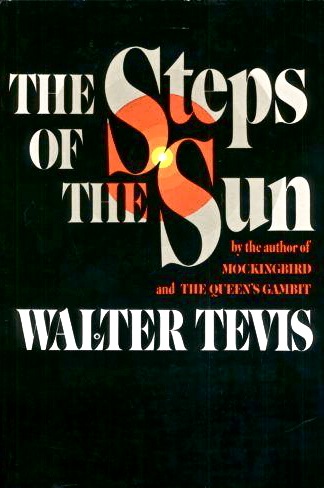
- The Steps of the Sun
Walter Tevisstandalone novel1983
similar bytensespacescience fictionspace explorationpolitical intrigue
The Steps of the Sun is a 1983 science fiction novel by the American author Walter Tevis. It is about a future energy crisis, and a world in which China has become the leading superpower.
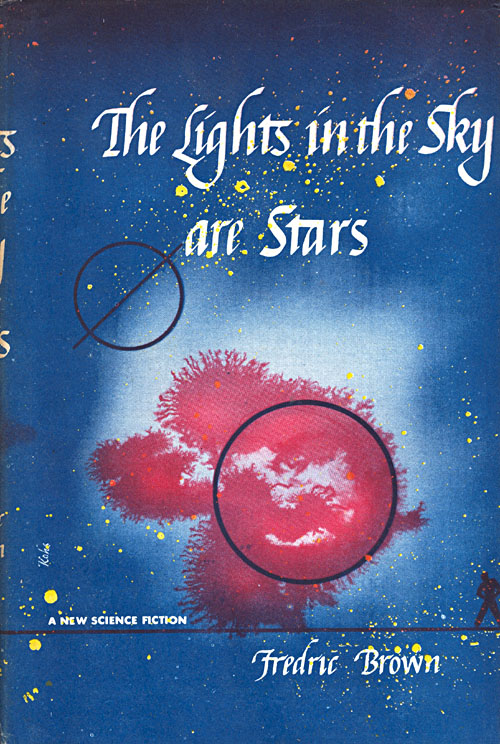
- The Lights in the Sky Are Stars
Fredric Brownstandalone novel1953
similar bytensemid 20th centuryspacescience fictionspace exploration
From the Author's Website: "Starduster - Yes, I'm Max Andrews. I'm one of the guys who fought and bled and worked to get to Mars. I figure what I gave up in those early years gave me the right to pilot the next big jump. I've lied and stolen for that right. I'd have killed, too, but I didn't have to. Instead, I let a woman give her life so I could have my chance, my door to space. You think I'd stop at anything, now? I'll be on that rocket, blasting away on America's biggest adventure, the hop out into the stars themselves."
- Space Beagle
series5 books1939
completed
similar bytensespacescience fictionspace explorationaliens
The Voyage of the Space Beagle is a 1950 fix-up novel by A. E. van Vogt, stitched together from four previously published pulp stories into a single continuous account of the exploration ship Space Beagle's encounters with a series of dangerous alien life forms. Its episodic, crew-versus-monster structure reads as a loose sequence of adventures rather than one continuous plot.
- Company Wars
series7 books1981
part of Alliance-Union Universe
similar bytensespacescience fictionpolitical intrigue
Company Wars gathers the novels C. J. Cherryh set during the breakaway conflict between Earth's colonial Company and the newly independent Union, within her wider Alliance-Union future history. Anchored by the Hugo Award-winning Downbelow Station, the books follow different ships, stations, and crews caught on either side, from merchanter traders to military spacers, rather than a single continuing cast. Read in any order, they build up a picture of the political and economic pressure that reshapes Cherryh's larger Alliance-Union universe.
- Sentinels from Space
Eric Frank Russellstandalone novel1953
similar bytensemid 20th centuryspacescience fictionaliens+1 more
Sentinels From Space is a science fiction novel by English writer Eric Frank Russell, first published in 1952 by American company Bouregy & Curl, Inc.. It was adapted from a story that appeared in the November 1951 issue of Startling Stories.
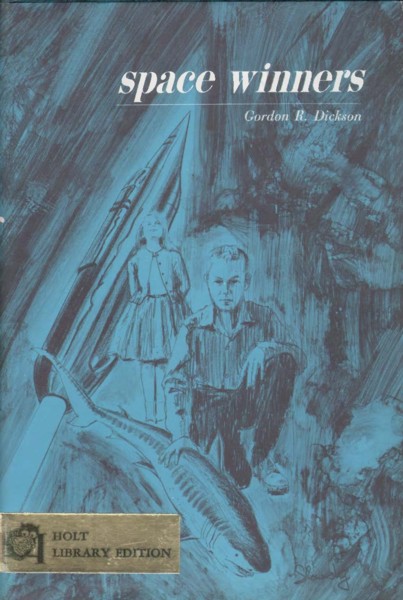
- Space Winners
Gordon R. Dicksonstandalone novel1965
similar bytensespacescience fictionspace explorationaliens+1 more
They were humanity's hope - the first young people selected to leave Earth for study in the Galactic Federation. But something went wrong in deep space. Terribly wrong. Suddenly Jim Rawlins, Ellen Bouvier, Curt Harrington, and the squirrel-like Alien philosopher Peep were castaways, stranded on the Quarantined World of Quebahr - with no training, and little hope of rescue. Between them and the Federation's emergency beacon were primitive Mauregs, aggressive Walats, lizard-like Noifs - plus danger, conspiracy, and the mystery of an impending high-tech war on a backward, peaceful planet. Without warning, the future of two worlds - Earth and Quebahr - depended on three young humans' ability to adopt and survive.
- Starplex
Robert J. Sawyerstandalone novel1996
similar bytensespacescience fictionspace explorationaliens+1 more
The only novel of its year to be nominated for both the Hugo and Nebula Awards. Starplex won Canada's Aurora Award for best novel of the year. For nearly twenty years Earth's space exploration had exploded outward, thanks to a series of mysterious, artificial wormholes. No one knows who created these interstellar passages, yet they have brought the far reaches of space immediately close. For Starplex Director Keith Lansing, too close. Discovery is superseding understanding. And when an unknown vessel — with no windows, no seams, and no visible means of propulsion — arrives through a new wormhole, an already battle-scarred Starplex could be the starting point of a new interstellar war . . . ROBERT J. SAWYER has won the Hugo, Nebula, John W. Campbell Memorial, Seiun, and Aurora Awards, all for best science fiction novel of the year. His novels include Hominids, Rollback, Wake, and FlashForward (basis for the TV series).
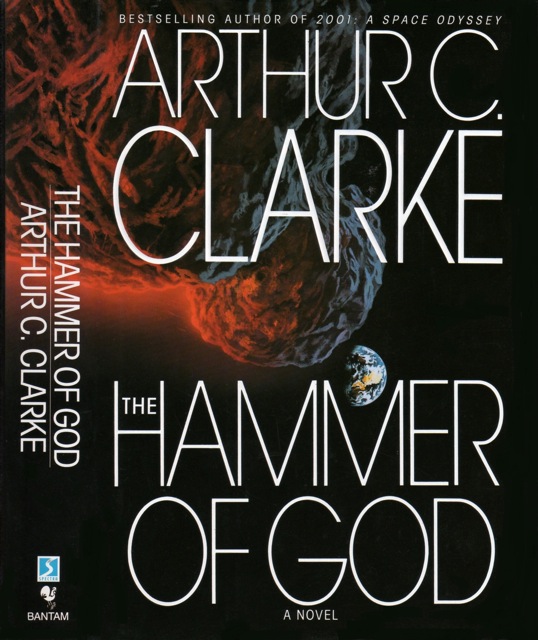
- The Hammer of God
Arthur C. Clarkestandalone novel1993
similar bytensespacescience fictionspace exploration+1 more
The Hammer of God is a science fiction novel by Arthur C. Clarke originally published in 1993. Set in the year 2109, it deals with the discovery of an asteroid to be on course to collide with Earth and depicts the mission for deflecting the asteroid by using fusion thermal rockets.
- Janissaries
series4 books1979
similar bytensescience fictionpolitical intrigue+2 more
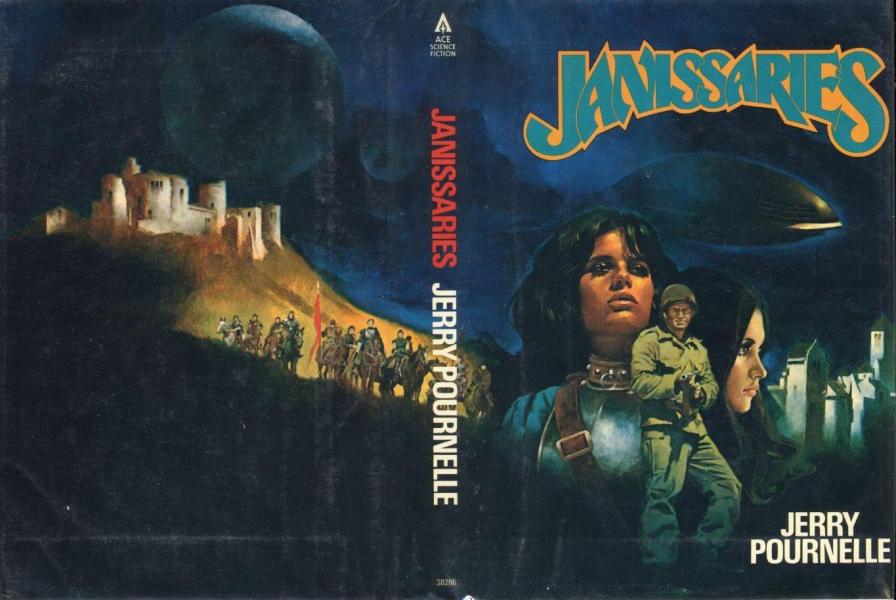
Janissaries are an American series of military and political-based science fiction novels are set in an interstellar confederation of races, in which humans are a slave race entrusted with military affairs and law enforcement. They were written by Jerry Pournelle, with Roland J. Green co-authoring the second two books.
- Wolfling
Gordon R. Dicksonstandalone novel1969
similar bytensespacescience fictionpolitical intriguealiens
From the flaps of the Baen/SFBC edition: "Is Earth merely the lost colony of a superior race? - She was well over six feet tall, and beautiful in a sculpted, abstract way. She had skin the color of white onyx, and her eyes... her eyes were large and feline - a startling lemon yellow in color. She was the Princess Afuan, one of the High-born, and she had chosen the Earthman Kim Keil to return to the Throne World with her - for she had decided that his performance in the bull-ring might amuse the Emperor. She didn't know that Jim was a bull-fighter only by virtue of six months' intensive training, nor that the bull was programmed - his behavior following and impressively fierce but unswerving pattern. Jim was just another wolfling to Afuan - a lesser being from a backward colony world. Jim, however, was keenly aware that he was playing a role, one which might prove to be extremely dangerous. Up until 10 years earlier, when their first ship had reached Alpha Centauri, the people of Earth hadn't even known that the vast Empire of human-occupied worlds existed. The discovery had been a profound shock. Had we evolved independently? Or were we merely descendants of the Empire's first space pioneers - a lost colony found at last, perhaps with devastating consequences? That's what Jim Keil had to find out. Chosen from among numerous highly qualified candidates - an anthropologist trained, mentally and physically, beyond the limits of his profession - it was his mission to observe the Throne World and the High-born... to determine whether or not they posed a threat to Earth. One thing was apparent from the start. The High-born were superior beings - physically taller and stronger than other humans, endowed with faster reflexes, superior mental capacity... and extraordinary technological resources. Their contempt for the new wolfling in their midst was open, their intrigues complex. An enormous gulf separated the people of the Throne World from Earthlings. But that gulf was not so wide that Jim couldn't recognize an enemy when he met one. Clearly, if he remained merely a passive observer of the High-born, he'd never survive among them."
- Fleet of Worlds
series5 books2007
part of Known Space
similar byspacescience fictionspace explorationpolitical intriguealiens+1 more
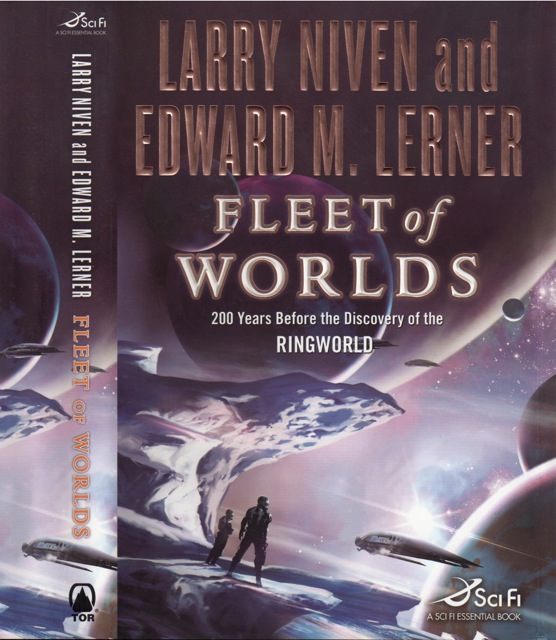
Fleet of Worlds opens a run of Known Space prequels co-written by Larry Niven and Edward M. Lerner, centered on the liberation of the human colony New Terra from the control of the Pierson's Puppeteers — the famously cowardly aliens who steer their fleet of five worlds away from any hint of danger. The series introduces a new Known Space species, the Gw'oth, across its run and eventually catches up to and continues past the original Ringworld novel in its fifth book, Fate of Worlds.
- Commonwealth Saga
series2 books2004
part of Commonwealth Universe
similar bytensescience fictionpolitical intriguealiens+2 more
The Commonwealth Saga is a series of science fiction novels by British science fiction writer Peter F. Hamilton. This saga consists of the novels Pandora's Star (2004) and Judas Unchained (2005). Hamilton has also written several books set in the same literary universe. Misspent Youth (2002) takes place 340 years before the events of Pandora's Star. The Void Trilogy, consisting of The Dreaming Void (2008), The Temporal Void (2009), and The Evolutionary Void (2010), takes place 1,200 years after the events of Judas Unchained; several of the main characters from Judas Unchained and Pandora's Star also appear in the Void trilogy.
- Shoal Sequence
series4 books2007
similar bytensespacescience fictionaliens+2 more
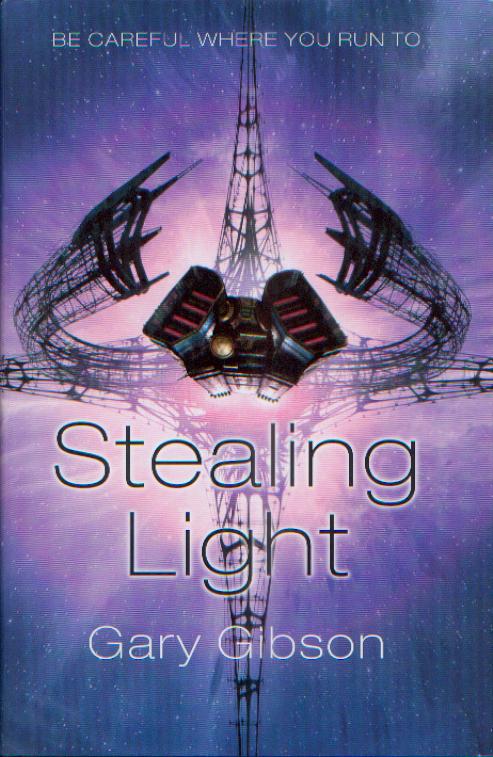
Gary Gibson's Shoal Sequence opens with Stealing Light, set two centuries into humanity's uneasy dependence on the Shoal, an alien race that alone holds the secret of faster-than-light travel. Military pilot Dakota Merrick, having witnessed the Shoal's atrocities, is drawn into events around a derelict starship that threaten to upend that arrangement across the four-book series.
- Saturn Run
Ctein & John Sandfordstandalone novel2015
similar bytensespacescience fictionspace explorationpolitical intriguealiens
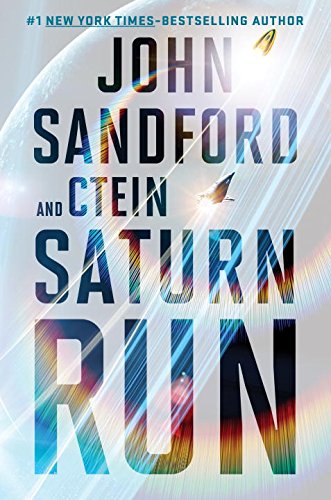
"The year is 2066. A Caltech intern inadvertently notices an anomaly from a space telescope--something is approaching Saturn, and decelerating. Space objects don't decelerate. Spaceships do. A flurry of top-level government meetings produces the inescapable conclusion: Whatever built that ship is at least one hundred years ahead in hard and soft technology, and whoever can get their hands on it exclusively and bring it back will have an advantage so large, no other nation can compete. A conclusion the Chinese definitely agree with when they find out. The race is on, and a remarkable adventure begins..."--