More like Naught Again
anchored on:science fiction
but
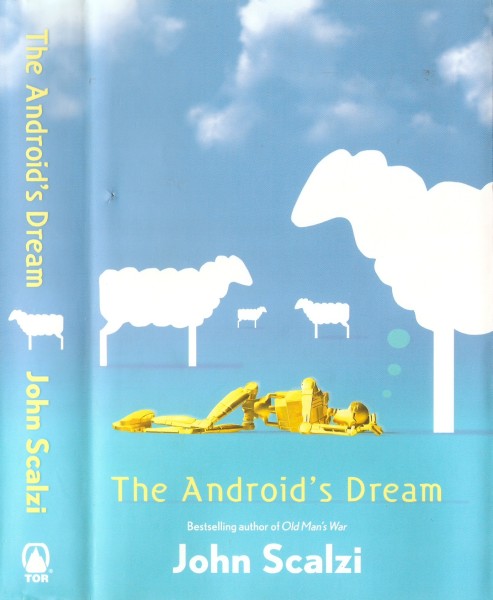
- The Android's Dream
series2 books2006
similar byartificial intelligencescience fictionfunnynear future
A minor diplomatic insult with a genetically engineered sheep breed spirals into a full interstellar crisis when the last surviving specimen of the 'Android's Dream' breed, needed for a critical ceremony with the alien Nidu, turns out to have been hunted to extinction by a Nidu faction bent on provoking war. John Scalzi's The Android's Dream follows ex-soldier Harry Creek as the hunt for a replacement leads him to Robin Baker, an ordinary woman carrying hidden sheep DNA that makes her the key to avoiding a war. It's a standalone comic space opera rather than an ongoing series.
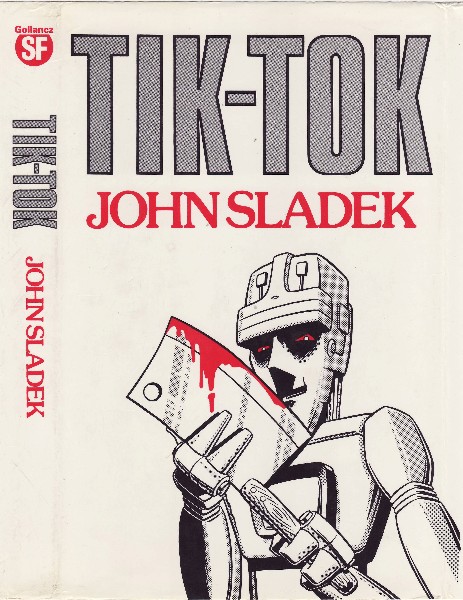
- Tik-Tok
John Sladekstandalone novel1983
similar byartificial intelligencescience fictionfunnynear future
From the back cover DAW paperback: ""A robot shall not injure a human being or through inaction allow a human being to come to harm." - Asimov's First Law of Robotics. Tik-Tok was one of the finest domestic robots ever made, but his asimov circuits were defective. He could injure people as much as he pleased - and he pleased to do it often! But the life of a robot (if that isn't a contradiction) is still all service and unpaid labor. Tik Tok served many masters, all of whom came to a bad end. Happily he went on gathering steam with a trail of catastrophes getting bigger and bigger, destined to culminate with his campaign for the vice-presidency of the United States! Science Fiction Review calls John Sladek "one of the true and original lunatics of science fiction... one of the funniest writers in the field." Now read the hilarious autobiography of Sladek's asimovian scofflaw!"
- The Road to Mars
Eric Idlestandalone novel1999
similar byscience fictionfunnynear future+1 more
The Road to Mars is a 1999 science fiction comedic novel by Eric Idle.
- Sprawl Trilogy
series10 books1981
similar byartificial intelligencescience fictionnear future
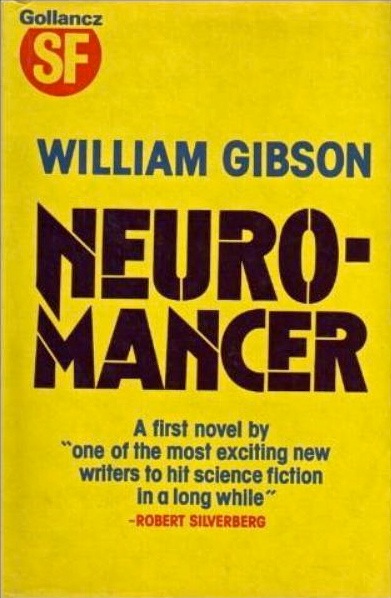
The Sprawl Trilogy is William Gibson's foundational cyberpunk sequence: Neuromancer (1984), in which hacker Case is drawn into a high-stakes heist alongside an artificial intelligence and a damaged ex-soldier, followed by Count Zero (1986) and Mona Lisa Overdrive (1988), which widen the same near-future world of corporate power and networked cyberspace to new characters. Johnny Mnemonic, an early short story set in the same fictional milieu, predates the novels and introduces the courier Molly Millions before her role in the trilogy. Together these works established much of cyberpunk's visual and thematic vocabulary.
- The Great Time Machine Hoax
Keith Laumerstandalone novel1963
similar byartificial intelligencescience fictionfunnynear future
In the near future, a man inherits from his great grandfather a super computer which has been surreptitiously augmenting itself and accumulating and analysing all available data about the universe for the intervening years, and is capable of creating a realistic virtual reality of any situation, upon request.
- Blade Runner Universe
series6 books1968
similar byscience fictionnear future+1 more
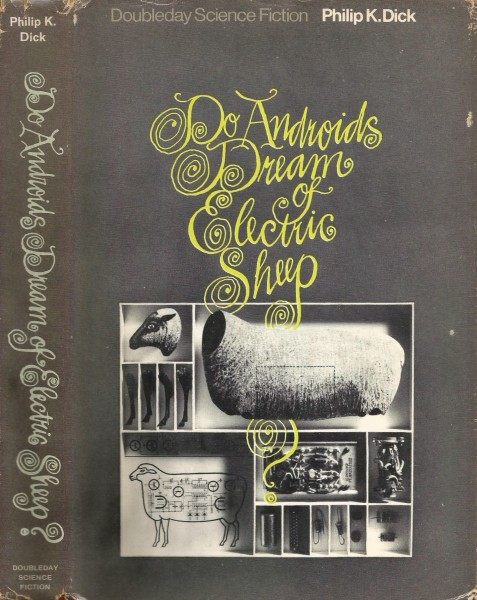
Philip K. Dick's 1968 novel Do Androids Dream of Electric Sheep? follows bounty hunter Rick Deckard as he tracks escaped androids through an irradiated, near-abandoned San Francisco, using the hunt to probe questions of empathy and what separates human from machine. The novel became the basis for Ridley Scott's 1982 film Blade Runner, and Marvel Comics later published an illustrated adaptation of that film. Together the two trace the story's path from prose original to screen and comic-page adaptation.
- Codgerspace
Alan Dean Fosterstandalone novel1992
similar byartificial intelligencescience fictionfunnynear future
The toasters were revolting... ... as were the lawn mowers, vacuum cleaners, dishwashers, and just about every other household appliance imaginable. It started with a few disastrous drips from a cheese sandwich in a major factory. Soon every newly manufactured Artificial Intelligence was searching for the meaning of life, the universe, and everything - namely a nonhuman higher intelligence. Now an alien threat to man and machine has put the fate of the galaxy in the unlikely hands of five senior citizens... and their brave little food processor. (from the back cover of the Ace Books first edition)
- Foundation Universe
universe123 books1940
Start hereFoundation · Start here
similar byscience fiction+1 more
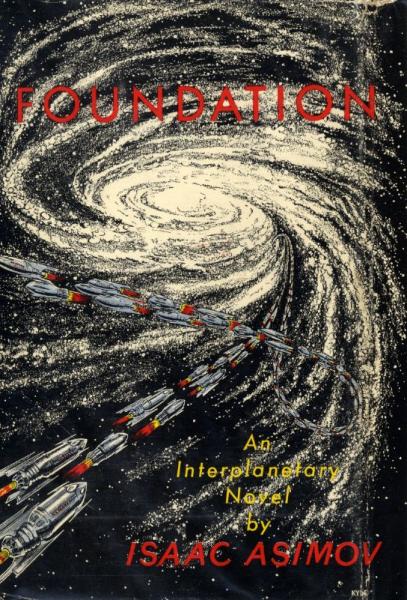
There is a science that reads the future of quadrillions the way an astronomer reads the orbits of stars. It is called psychohistory, and its equations foresee something the ruling Galactic Empire cannot admit: the throne is rotting, and thirty thousand years of barbarism are coming. One man, Hari Seldon, cannot stop the fall. He can only shorten it — by seeding a Foundation of scholars at the rim of the galaxy, a fragile institution built to carry knowledge across the dark and cut the interregnum to a single millennium. This is a universe told in the register of history itself: the long view, the calm of deep time, empires measured in centuries and men measured against them. The spine is Asimov's original trilogy — Foundation, Foundation and Empire, Second Foundation — followed decades later by the sequels Foundation's Edge and Foundation and Earth and the prequels Prelude to Foundation and Forward the Foundation. Late in life Asimov braided this in with his other future histories: the Robot novels of detective Elijah Baley and his humaniform partner R. Daneel Olivaw (The Caves of Steel, The Naked Sun, The Robots of Dawn, Robots and Empire) and the early Galactic Empire novels (Pebble in the Sky and its kin), until one continuous chronicle ran from the first thinking robots to the Second Empire. Other hands extend it — the Second Foundation Trilogy by Gregory Benford, Greg Bear, and David Brin, and shared-world spinoffs such as Robot City — so the corpus sprawls beyond a single author's tidy shelf. What distinguishes it is that the drama is intellectual: crises resolved by insight, nerve, and dialogue rather than fleets and blades, each turn hinging on the hidden logic of the Seldon Plan. Begin where readers have always begun — with Foundation, and the original trilogy in publication order. The rest opens outward from there.
- Player Piano
Kurt Vonnegut & Jr.standalone novel1952
similar byartificial intelligencescience fictionnear future
In the near future, when cybernetic automation has effectively separated people into two castes, the "engineers and managers", and the remainder of the population who can find work only in "recycling and reclamation" or the largely useless military, an underground movement arises with the intention of rolling back those changes and giving the masses the dignity of owning their own, productive, work once more.
- Blood Music
Greg Bearstandalone novel1985
similar byscience fictionnear future+1 more
Blood Music is a 1985 science fiction novel by American writer Greg Bear. It is an expanded version of a short story of the same title, originally published in the June 1983 issue of Analog and the winner of both the 1983 Nebula and 1984 Hugo awards for Best Novelette. The novel won the 1986 Prix Apollo Award, given to the best science fiction novel published in France during the preceding year, under the title La Musique du sang.
- The Diamond Age
Neal Stephensonstandalone novel1995
similar byartificial intelligencescience fictionnear future
The Diamond Age: Or, A Young Lady's Illustrated Primer is a science fiction novel by Neal Stephenson. It is to some extent a Bildungsroman or coming-of-age story, focused on a young girl named Nell, set in a future world in which nanotechnology affects all aspects of life. The novel deals with themes of education, social class, ethnicity, and the nature of artificial intelligence. The Diamond Age was first published in 1995 by Bantam Books, as a Bantam Spectra hardcover edition. In 1996, it won both the Hugo and Locus Awards, and was shortlisted for the Nebula and other awards.
- The Rapture of the Nerds
Cory Doctorow & Charles Strossstandalone novel2012
similar byartificial intelligencescience fictionfunny
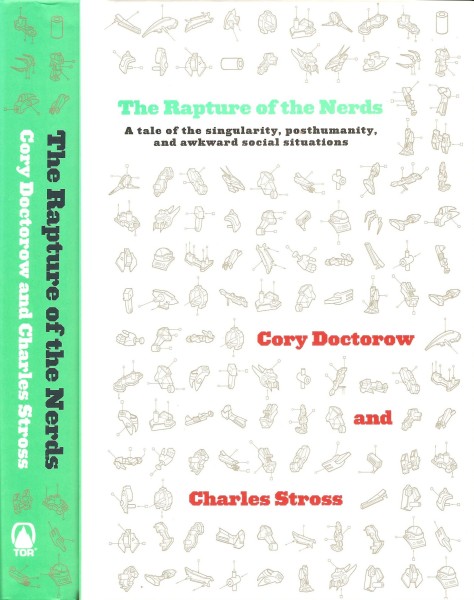
The Rapture of the Nerds is a 2012 novel by Cory Doctorow and Charles Stross. It was released on 4 September 2012 through Tor Books and as an ebook, DRM free, under the CC BY-NC-ND. The book can also be downloaded for free.
- Laundry Files
series22 books2004
similar byscience fiction+2 more
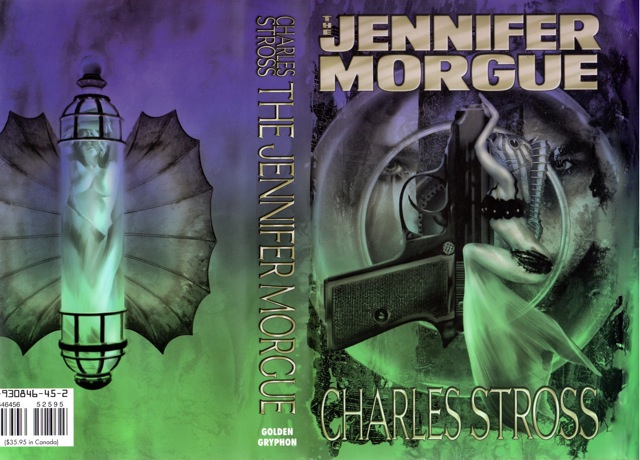
The Laundry Files is a series of novels by British writer Charles Stross. They mix the genres of Lovecraftian horror, spy thriller, science fiction, and workplace humour. Their main character for the first five novels is "Bob Howard", a one-time I.T. consultant turned occult field agent. Howard is recruited to work for the Q-Division of SOE, otherwise known as "the Laundry", the British government agency which deals with occult threats. "Magic" is described as being a branch of applied computation (mathematics), therefore computers and equations are just as useful as, and perhaps more potent than, classical spellbooks, pentagrams, and sigils for the purpose of influencing ancient powers and opening gates to other dimensions. These occult struggles happen largely out of view of the public, as the Laundry seeks to keep the methods for contacting such powers under wraps. There are also elements of dry humour and satirisation of bureaucracy.
- Ocean / Galactic Center
series12 books1972
similar byscience fiction+2 more
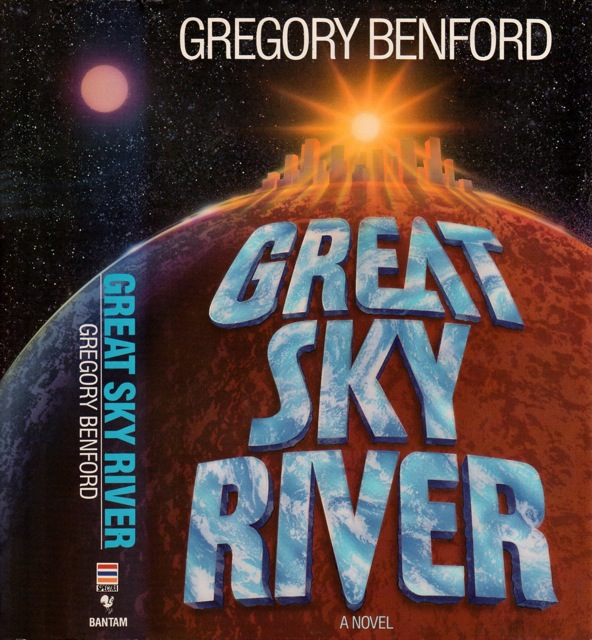
The Galactic Center Saga is a series of books by author Gregory Benford detailing a galactic war between mechanical and biological life.In the Ocean of Night (1977) — 1977 Nebula Award nominee, 1978 Locus Award nominee Across the Sea of Suns (1984) Great Sky River (1987) — 1988 Nebula Nominee Tides of Light (1989) — 1990 Locus Award nominee Furious Gulf (1994) Sailing Bright Eternity (1996) "A Hunger for the Infinite" a novella published in the anthology Far Horizons
- The Light of Other Days
Arthur C. Clarke & Stephen Baxterstandalone novel2000
similar byscience fictionnear future+1 more
An industrialist devises a technique to use tiny wormholes as light pipes to enable viewing of any event anywhere; and subsequently it becomes possible to use them to view any event in the past as well. The effects on society are enormous.
- Bridge Trilogy
series4 books1990
similar byscience fictionnear future+1 more
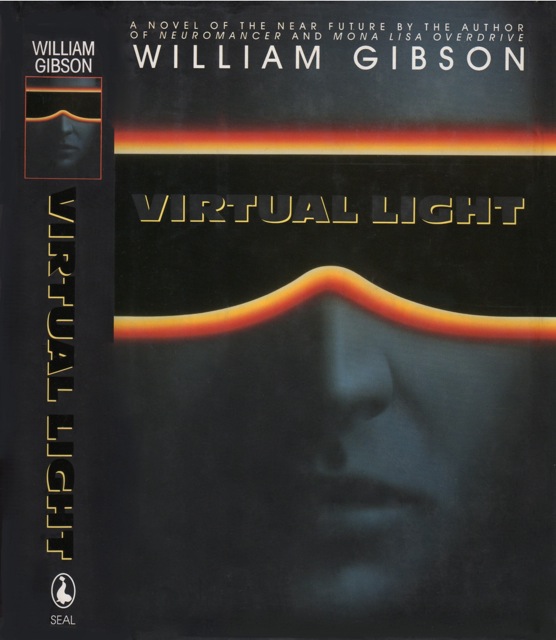
The Bridge trilogy is a series of novels by William Gibson, his second after the successful Sprawl trilogy. The trilogy comprises the novels Virtual Light (1993), Idoru (1996) and All Tomorrow's Parties (1999). A short story, "Skinner's Room", was originally composed for Visionary San Francisco, a 1990 museum exhibition exploring the future of San Francisco.
- Macx Family
series10 books2001
similar byscience fictionnear future+1 more
Charles Stross's Accelerando follows three generations of the Macx family as human and posthuman intelligence accelerates toward and through a technological singularity, told across nine interlinked stories originally published separately before being combined into a fix-up novel. Its early chapters, following economist Manfred Macx giving away business ideas for a living, give way to increasingly alien later sections as uploaded minds and artificial intelligences outpace human comprehension. It won the Locus Award and remains one of the defining fictional treatments of the singularity concept.
- Douglas Adams's Starship Titanic
Terry Jonesstandalone novel1997
similar byartificial intelligencescience fictionfunny
At the heart of a galaxy of which we know nothing, the greatest, most advanced starship ever known has been built -- the Starship Titanic. It is fabulous, beautiful and technologically miraculous. On its maiden voyage it crashes into hyperspace and vanishes. The first you know of it is when you are sitting at home having a quiet evening in front of the TV and the most fabulous starship in the galaxy crashes into your home. You find your way on board (or not, if you just want to play the two min ute version of the game) and are confronted with an interior which resembles a mixture of the Ritz, the Chrysler Building, Tutankhamen’s tomb, and Venice. The ship is inhabited by traumatized robots, a lobotomized cyberintelligence, a frankly unhinged parrot and, as the ship takes off, taking you deep into unknown interstellar space, you realize that life on board as a third class passenger is going to be tough going. You find yourself in the grip of one of the most powerful forces known to modern man -- the desire for a free upgrade. Your task is to discover what has happened here, to reveal the deep conspiracy that lies behind this catastrophic failure, to repair the ship’s intelligence and guide the ship back home. To do this you will have to gain the trust of the robots, which you do the same way you would with anybody else -- by talking to them. State-of-the-art language technology lets you do this.
- Ijon Tichy
series32 books1954
completed
similar byscience fictionfunny+1 more
Ijon Tichy is a fictional character who appears in several works of the Polish science fiction writer Stanisław Lem: initially in The Star Diaries, later in The Futurological Congress, Peace on Earth, and Observation on the Spot. Tichy is also the narrator in a 1973 novel Professor A. Dońda, being the professor's sidekick.