More like Next Step
but
- Dracula
universe144 books1897
Start hereDracula · Start here
"Come freely. Go safely. And leave something of the happiness you bring" — so the Count greets his guest at the threshold of the Carpathians, and the great door shuts behind. Bram Stoker's Dracula (1897) is the wellspring of the modern vampire: the account of a centuries-old Transylvanian nobleman who quits his crumbling castle for the crowded lodging-houses of London, and the handful of ordinary people — a young solicitor, a doctor of the mad, a professor of stranger learning — who must piece together what he is before he makes the whole city his fold. It is told wholly in fragments: journal entries, letters, telegrams, ships' logs, phonograph cylinders, each hand recording only its own sliver of the dark. Around that single novel a whole crypt of continuations has grown, raised by many writers across a century. Fred Saberhagen's Dracula Sequence hands the Count the microphone, retelling the old events from his own wry, aggrieved lips and following him into later intrigues. Robert Lory's brisk 1970s Dracula Horror Series revives him as a reluctant weapon turned against fouler things; Peter Tremayne's trilogy reaches back along his bloodline; and further sequels, a Quincey Morris spin-off, and Dracula's Children carry the shadow onward. This is a loose shared world built upon a public-domain figure, not one governed continuity — each author remakes him as villain, antihero, or sympathetic narrator. Begin, always, with Stoker's original; the letters and the mounting dread stand entirely on their own. From there follow whichever door tempts you — Saberhagen's The Dracula Tape for the monster's own confession, Lory or Tremayne for tales that never glance back at the Borgo Pass again.
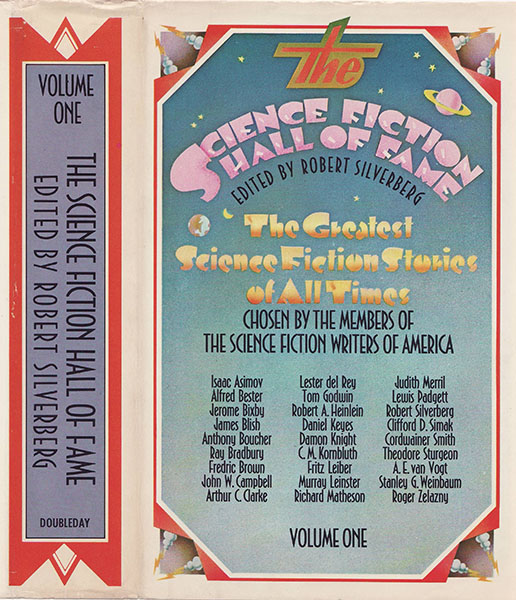
- The Science Fiction Hall of Fame
series11 books1895
- H. G. Wells' War of the Worlds
universe65 books1898
Start hereThe War of the Worlds · Start here
similar by+1 more
No one would have believed, in the closing years of the nineteenth century, that human affairs were being watched keenly and closely from the timeless worlds of space. And then the cylinders fell. H. G. Wells' War of the Worlds opens in the quiet of the Surrey commons, where a falling star proves to be the first Martian craft — and from the pit rise the towering tripods, the Heat-Ray, the choking Black Smoke and the creeping red weed, wielded by minds that regard mankind much as we regard the creatures we boil for supper. This is invasion rendered as natural disaster: cold, methodical, and vast beyond argument. Wells' 1898 novel is the seed; everything else grows from that Martian soil. The catalogue gathers direct sequels and continuations alongside a wide field of other hands. In War of the Worlds: Global Dispatches the invasion is retold across the whole planet through the eyes of Twain, Verne, Tolstoy, Lowell and Kipling; in the Manly Wade and Wade Wellman crossover, Sherlock Holmes, Watson and Professor Challenger take the field against the machines; and Scott Washburn's Great Martian War stretches the fighting into a decades-long alternate history of steam, artillery and grinding attrition. It is a loose shared world — no single decreed sequence, many voices answering one calamity. What sets this world apart is its refusal of heroics: the invaders fall not to generals but to the smallest things of Earth, humbling and indifferent. Begin, always, with Wells' original novel — it is short, and it is the ground every later book stands upon. From there follow your appetite: Global Dispatches for the panorama, the Holmes campaign for adventure, Washburn for the long war.
- Stranger in a Strange Land
Robert A. Heinleinstandalone novel1961
similar byour world
Stranger in a Strange Land is a 1961 science fiction novel by the American author Robert A. Heinlein. It tells the story of Valentine Michael Smith, a human who comes to Earth in early adulthood after being born on the planet Mars and raised by Martians, and explores his interaction with and eventual transformation of Terran culture.
- Foundation Universe
universe123 books1940
Start hereFoundation · Start here
similar by+1 more
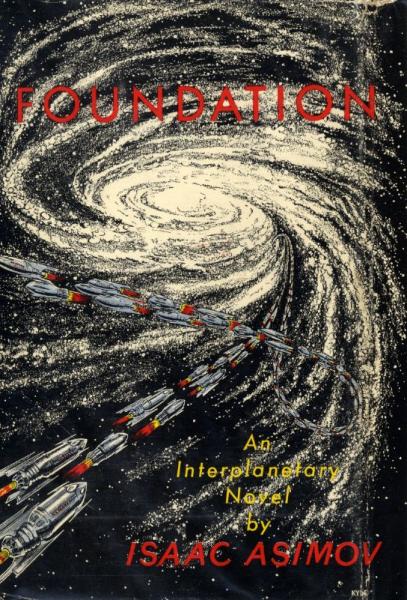
There is a science that reads the future of quadrillions the way an astronomer reads the orbits of stars. It is called psychohistory, and its equations foresee something the ruling Galactic Empire cannot admit: the throne is rotting, and thirty thousand years of barbarism are coming. One man, Hari Seldon, cannot stop the fall. He can only shorten it — by seeding a Foundation of scholars at the rim of the galaxy, a fragile institution built to carry knowledge across the dark and cut the interregnum to a single millennium. This is a universe told in the register of history itself: the long view, the calm of deep time, empires measured in centuries and men measured against them. The spine is Asimov's original trilogy — Foundation, Foundation and Empire, Second Foundation — followed decades later by the sequels Foundation's Edge and Foundation and Earth and the prequels Prelude to Foundation and Forward the Foundation. Late in life Asimov braided this in with his other future histories: the Robot novels of detective Elijah Baley and his humaniform partner R. Daneel Olivaw (The Caves of Steel, The Naked Sun, The Robots of Dawn, Robots and Empire) and the early Galactic Empire novels (Pebble in the Sky and its kin), until one continuous chronicle ran from the first thinking robots to the Second Empire. Other hands extend it — the Second Foundation Trilogy by Gregory Benford, Greg Bear, and David Brin, and shared-world spinoffs such as Robot City — so the corpus sprawls beyond a single author's tidy shelf. What distinguishes it is that the drama is intellectual: crises resolved by insight, nerve, and dialogue rather than fleets and blades, each turn hinging on the hidden logic of the Seldon Plan. Begin where readers have always begun — with Foundation, and the original trilogy in publication order. The rest opens outward from there.
- Childhood's End
Arthur C. Clarkestandalone novel1953
similar byour world
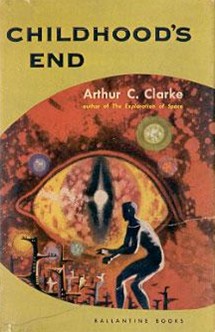
Childhood's End is a 1953 science fiction novel by the British author Arthur C. Clarke. The story follows a peaceful alien invasion of Earth by mysterious Overlords, whose arrival begins decades of apparent utopia under indirect alien rule, at the cost of human identity and culture.
- Brave New World
series8 books1932
similar by+1 more
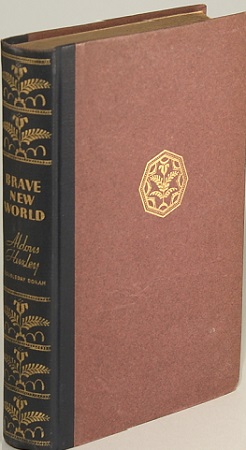
Aldous Huxley's 1932 novel imagines a future World State where reproduction, social caste, and desire are all engineered before birth, and the population is kept content through conditioning, sleep-hypnosis, and a mood-altering drug called soma. The story follows the disruption this seemingly stable order suffers when an outsider raised beyond its reach is brought into it, exposing what the society traded away for comfort and order. Some editions pair the novel with Huxley's own 1958 nonfiction essay collection, Brave New World Revisited, which reassesses the book's ideas rather than continuing its story.
- The Triffids
series3 books1951
similar byour world
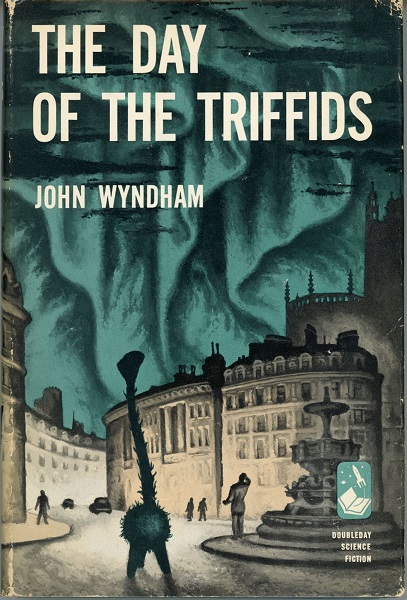
John Wyndham's The Day of the Triffids (1951) opens with a meteor-shower-like event that leaves most of Britain's population blind, throwing civilization into collapse just as triffids, an aggressive and mobile species of poisonous plant, become free to hunt the helpless survivors. Simon Clark's authorized sequel The Night of the Triffids (2001) picks up a generation later, narrated by the original protagonist's son as he confronts a new triffid-dominated world, and John Whitbourn's The Age of the Triffids extends the shared setting further still. Together the three novels form a loose post-apocalyptic trilogy built on Wyndham's original premise rather than a tightly plotted single story.
- Cavor
series2 books1901
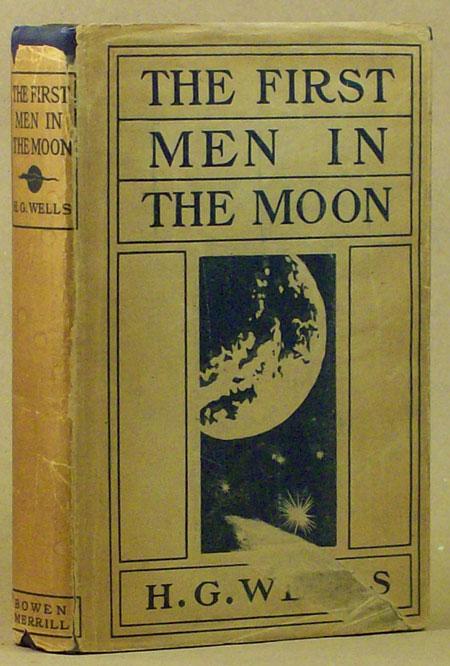
H. G. Wells's 1901 novel The First Men in the Moon is narrated by the businessman Bedford, who joins the reclusive scientist Cavor after Cavor invents cavorite, a gravity-blocking substance that carries the two men to the Moon. There they discover a vast underground civilization of insect-like Selenites, and the expedition that began as a hunt for lunar minerals turns into an encounter with an alien society. It is a standalone novel; later editions crediting Stephen Baxter add an introduction or afterword rather than a continuing story.
- Kairos
series11 books1962
completed
similar by+1 more
The Time Quintet is a science fantasy series of five young adult novels written by American author Madeleine L'Engle and made up of A Wrinkle in Time (1962), A Wind in the Door (1973), A Swiftly Tilting Planet (1978), Many Waters (1986), and An Acceptable Time (1989).
- A Clockwork Orange
series4 books1962
completed
similar byour world
Anthony Burgess's 1962 novel is narrated by Alex, a teenage gang leader in a near-future Britain gripped by a youth subculture of extreme violence, recounting his crimes in Nadsat, an invented slang blending English with Russian-derived words. After his crimes catch up with him, Alex is made the subject of a controversial state program meant to forcibly reform his behavior, and the novel uses his ordeal to question whether imposed goodness is worth the loss of free will. It is a standalone novel.
- Hitchhiker's Guide to the Galaxy
series16 books1979
part of The Hitchhiker's Guide to the Galaxy Universe
similar by+1 more
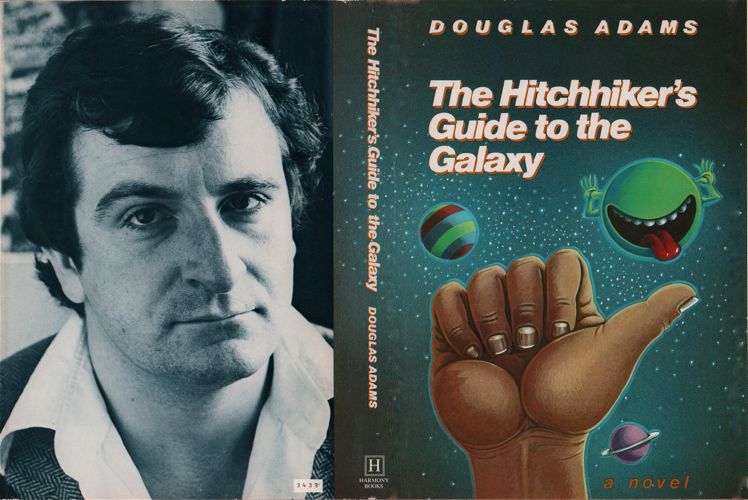
The Hitchhiker's Guide to the Galaxy is a comedy science fiction franchise created by Douglas Adams. Originally a radio sitcom broadcast over two series on BBC Radio 4 between 1978 and 1980, it was soon adapted to other formats, including both novels and comic books, a 1981 BBC television series, a 1984 text adventure game, stage shows and a 2005 feature film.
- Frankenstein
universe128 books1818
Start hereFrankenstein, or, The Modern Prometheus · Start here
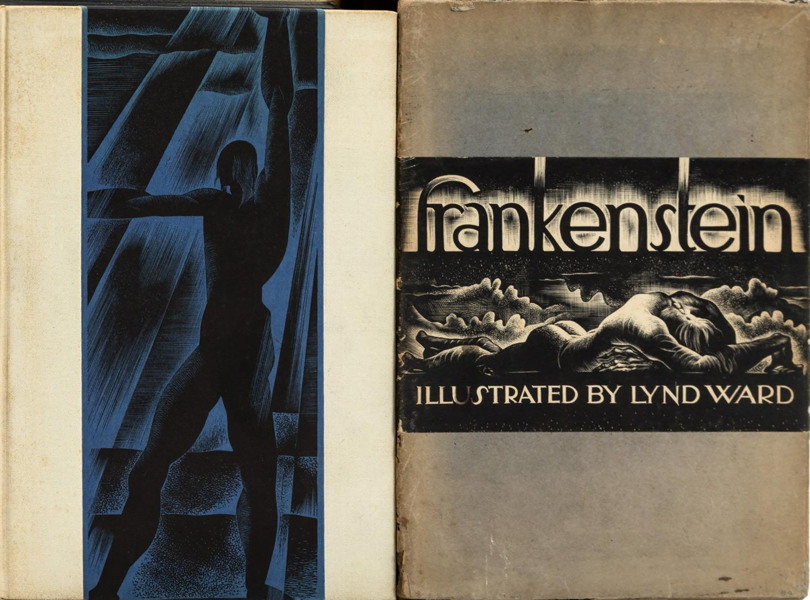
Light a candle against the November dark and consider what a single spark, rightly applied to dead matter, might wake. In a laboratory at Ingolstadt a student named Victor Frankenstein learns the secret of animating lifeless flesh, assembles a being from the harvest of charnel houses and graves, and, at the moment it draws breath, flees the thing he has made. What he abandons does not stay abandoned. This is the world Mary Shelley opened in 1818 with Frankenstein; or, The Modern Prometheus: the story of a maker and his unmothered creation, and the long ruin each works upon the other. Shelley's novel arrives as a nest of confessions, an explorer's letters from the frozen north enclosing Victor's account, which in turn encloses the Creature's own, an articulate and wounded voice that has read Milton and wants only not to be alone. From that single volume two centuries of other hands have built outward, not as one continuity but as a gathering of independent returns to the same fire. Dean Koontz transplants the myth to modern New Orleans across a five-book cycle, Prodigal Son through The Dead Town, where the original Creature, now called Deucalion, hunts a Victor who never died. Donald F. Glut's New Adventures and Frank Schildiner's Quest of Frankenstein run the monster through pulp adventure; the mid-century French novels published as Benoit Becker chase him across a ruined Europe; Scott Sonneborn's Frankenstein Journals and the comic Frankenstein's Aunt turn the legend toward younger and lighter readers. What binds them is the question the book asks and never settles: which is the monster, the forsaken creature who kills, or the man whose ambition and cowardice made and abandoned him? Expect little comfort and few clean villains; the abiding note is grief, sublime and articulate, set against Alpine ice and candlelit hubris. Begin where it began, with Shelley's own novel; the later cycles reward you only once you have heard the Creature speak for himself.
- Five Children Universe
series27 books1902
completed
similar by+1 more
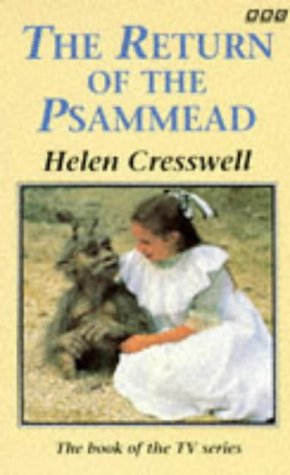
Two separate modern continuations of E. Nesbit's Psammead stories were written decades apart by different authors: Helen Cresswell's The Return of the Psammead (1992) brings the wish-granting sand fairy back for a new set of children, while Kate Saunders's Five Children on the Western Front (2014) follows the now-grown Lamb and his siblings as the First World War arrives, in a more somber sequel to Nesbit's original trilogy. Neither book is by Nesbit herself, and the two have no direct connection to each other beyond both drawing on her creation. Later writers have kept returning to Nesbit's premise long after her own trilogy ended.
- Julian West
series7 books1888
similar by+1 more
Julian West is the time-displaced narrator of Edward Bellamy's Looking Backward, 2000-1887 (1888), a utopian novel in which a nineteenth-century Bostonian wakes from a mesmeric sleep to find his city transformed into a cooperative society more than a century later. Bellamy followed it with Equality (1897), a direct sequel that returns to Julian West's perspective to further elaborate the ideas only sketched in the first book, functioning more as an extended argument than a plotted story. Together the two novels were highly influential on turn-of-the-century utopian and socialist thought.
- Allan Quatermain
series25 books1885
Allan Quatermain is the protagonist of H. Rider Haggard's 1885 novel King Solomon's Mines, its one sequel Allan Quatermain (1887), twelve prequel novels and four prequel short stories, totalling eighteen works. An English professional big game hunter and adventurer, in film and television he has been portrayed by Richard Chamberlain, Sean Connery, Cedric Hardwicke, Patrick Swayze and Stewart Granger among others.
- Jerusalem's Lot
series3 books1975
similar byour world
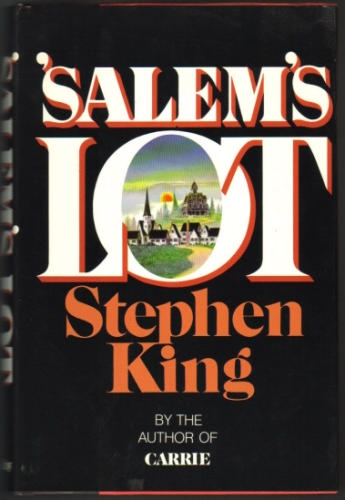
Stephen King's 1975 novel 'Salem's Lot follows writer Ben Mears as he returns to his childhood town of Jerusalem's Lot, Maine, only to discover that its residents are being turned into vampires by a newly arrived stranger. It transplants Gothic vampire horror into a small New England community, tracking that community's collapse under a supernatural siege. It is a single, self-contained novel.
- The City and the Stars
Arthur C. Clarkestandalone novel1956
similar by+1 more
The City and the Stars is a science fiction novel by British writer Arthur C. Clarke, published in 1956. This novel is a complete rewrite of Clarke's earlier Against the Fall of Night, his first novel, which had been published in Startling Stories magazine in 1948 after being rejected by the editor of Astounding Science-Fiction, according to the author.
- Blade Runner Universe
series6 books1968
similar by+1 more
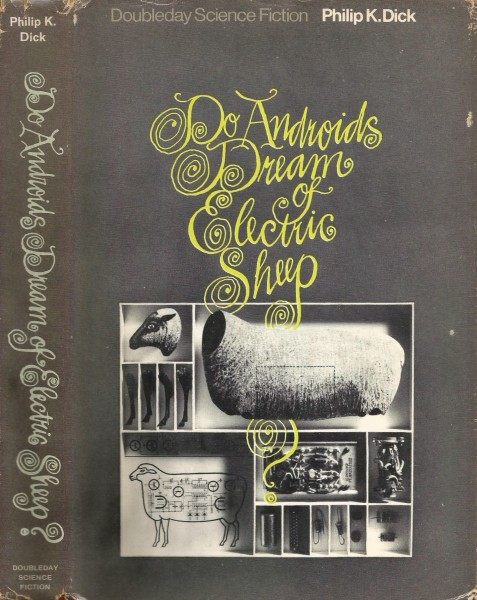
Philip K. Dick's 1968 novel Do Androids Dream of Electric Sheep? follows bounty hunter Rick Deckard as he tracks escaped androids through an irradiated, near-abandoned San Francisco, using the hunt to probe questions of empathy and what separates human from machine. The novel became the basis for Ridley Scott's 1982 film Blade Runner, and Marvel Comics later published an illustrated adaptation of that film. Together the two trace the story's path from prose original to screen and comic-page adaptation.
- The Andromeda Strain
series2 books1969
similar by+1 more
Michael Crichton's 1969 novel The Andromeda Strain follows a team of scientists racing to contain a lethal extraterrestrial microorganism that crash-lands in Arizona, told in the clinical, document-driven style that helped establish the techno-thriller genre. Daniel H. Wilson's authorized 2019 sequel The Andromeda Evolution revisits the same threat five decades later. Together the two books form a two-part outbreak story separated by a fifty-year gap in publication.
- The Shining
series5 books1977
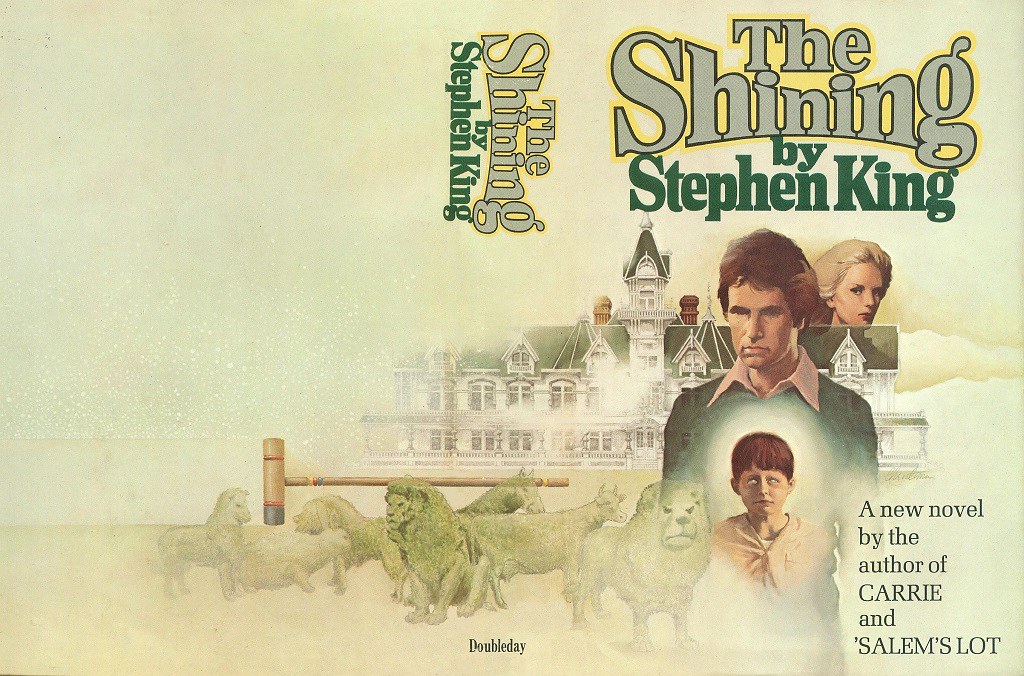
Stephen King's 1977 novel The Shining follows the Torrance family as winter caretakers of the isolated, malevolent Overlook Hotel, where father Jack is gradually consumed by the hotel's influence while his young son Danny's psychic "shining" draws its attention. Doctor Sleep (2013) picks up the story decades later, following Danny as an adult still marked by that childhood ordeal. Together the two form a horror duology spanning nearly forty years of real-world publication.
- The Invisible Man
series6 books1897
The Invisible Man is H. G. Wells's 1897 science fiction novel about Griffin, a scientist who works out how to make living tissue invisible and tests the process on himself, only to discover he has no way to reverse it. Unseen and increasingly cut off from other people, he turns to theft and violence while trying to survive and find a cure, making the book as much about his moral collapse as about the invisibility premise itself. It's a single self-contained novel; the two listed titles here are duplicate editions rather than separate books.
- More Than Human
Theodore Sturgeonstandalone novel1953
similar byour world
More Than Human is a 1953 science fiction fix-up novel by American writer Theodore Sturgeon. It is a revision and expansion of his 1952 novella Baby Is Three, which is bracketed by two additional parts written for the novel, "The Fabulous Idiot" and "Morality". It won the 1954 International Fantasy Award, which was also given to works in science fiction. It was additionally nominated in 2004 for a "Retro Hugo" award for the year 1954. Science fiction critic and editor David Pringle included it in his book Science Fiction: The 100 Best Novels.