Loreful
HomeDiscover
Search series, authors…⌘K
Loreful

Reading orders for SF/F series and shared universes — with your place kept in every one.

Explore

UniversesSeriesWorksAuthorsAtlas

Help

FAQAboutSite map

Account & legal

Sign inCreate accountPrivacyTerms

Data

Built on ISFDB, Wikipedia, Wikidata and Open Library. Curated reading orders carry their reasoning on the page; the rest follow publication order. Data sources & licenses

© Loreful · data: ISFDB · CC BY

More like Night Raid

anchored on:our worldcontemporaryadventurousmiddle gradespy thrilleradventure+2 more

but

Mood

The mood the book leaves you in.

  • The reading experience is propelled by journeys, exploration, and physical risk; excitement and forward momentum dominate over dread or introspection.
  • Joy and loss are deliberately mixed; the resolution grants characters something real while taking something else away, leaving warmth and sorrow together.
  • The book demands work from the reader — dense prose, difficult structure, unfamiliar ideas, or morally uncomfortable material — as part of its intended effect.
  • Grim events, cruelty, or despair dominate the atmosphere, and the book does not soften them with comfort or comic relief.
  • The atmosphere is quietly unsettling — wrongness, unease, and the uncanny pervade the book without necessarily escalating into overt horror.
  • The book is built to move the reader; character feeling is foregrounded and major scenes aim at a strong emotional response.
  • Humor is a primary aim and the prose plays for laughs — comic situations, wit, or dialogue produce sustained comedy, not occasional levity.
  • The book insists that things can improve; effort and decency are shown to matter, and the arc bends toward better outcomes even through hardship.
  • The book teaches as it goes — real facts, history, science, or craft are conveyed in enough depth that learning is part of the reading experience.
  • The book is designed to uplift and motivate, presenting perseverance or achievement in a way that invites the reader to aspire or act.
  • The overall register is cheerful and easygoing; stakes are kept gentle and the book avoids dwelling on pain or dread.
  • Withheld information drives the experience; the book sustains enigmas and secrets the reader wants resolved, whatever its genre.
  • The book is contemplative and inward-looking, giving more weight to thought, memory, and meaning than to external events.
  • The book works as comfort reading — low tension, a soothing pace, and an atmosphere the reader can unwind in.
  • Grief, loss, or melancholy set the dominant register, and the book lets sorrow stand rather than resolving it into comfort.
  • Sustained suspense is the point; the book keeps the reader braced for what happens next through danger, pressure, or impending revelation.
  • Playful invention and charm define the register — fanciful conceits, light absurdity, and a narration that delights in its own oddity.

About

What the story runs on.

  • Stories in which extraterrestrial beings are central — as characters, cultures, or the object of the plot.
  • Stories structured as a quest — a journey undertaken to find, deliver, or destroy something of great import.
  • Stories in which staying alive against nature, catastrophe, or scarcity is the central problem.
  • Stories of lovers kept apart by law, family, faith, or station, where the obstacle to love is the plot.
  • Stories in which a friendship — its making, testing, or loss — is the emotional center.
  • Stories of growing up — a young protagonist crossing from childhood into adult knowledge and responsibility.
  • Stories about who a character truly is — self-discovery, doubled lives, and the search for a self.
  • Stories about mourning — living through the death of a loved one and what loss does to the survivors.
  • Stories in which a buried family truth — hidden parentage, crimes, or shames — surfaces and reorders the present.
  • Stories driven by maneuvering for power — factions, conspiracies, and statecraft conducted in shadow.
  • Stories in which war itself is the subject — combat, occupation, and what warfare does to soldiers and civilians.
  • Stories organized around investigating a killing — the case, the clues, and the pursuit of the killer, in any genre's clothing.

Shelf

Where it sits in the library.

    • Fiction built on magic or other supernatural elements that have no scientific explanation.
    • Secondary-world fantasy at large scale, where the fate of nations or the world turns on the protagonists' struggle.
    • Fantasy set in a recognizably modern city or contemporary world where the supernatural intrudes on everyday life.
    • Fantasy that blends in horror's atmosphere and imagery, keeping a fantastical frame around grim or frightening material.
    • Action-driven fantasy following warriors or rogues with personal stakes against sorcerous threats, rather than world-spanning conflicts.
    • Fantasy set in a real historical period or a close analogue of one, with magic woven into the era.
    • Fantasy in which protagonists cross from the ordinary world into another world through a portal or similar passage.
    • Fiction that retells or reworks a traditional fairy tale in a new form or setting.
    • Fantasy drawing directly on myths, legends, and folklore, retelling them or building on their figures and logic.
    • Fantasy of ghosts, vampires, shapeshifters, psychics, and similar phenomena, usually set in an otherwise ordinary world.
    • Fiction mixing science-fictional trappings with overtly magical or impossible elements in one setting.
    • Low-stakes fantasy emphasizing comfort, community, and everyday pleasures over conflict and peril.
    • Speculative fiction of pervasive moral ambiguity, violence, and cynicism that rejects heroic conventions — fantasy and SF alike.
      • Fiction that extrapolates from science and technology — future societies, space travel, or speculative inventions — within at least nominally natural laws.
      • Science fiction of interstellar scope — starships, galactic polities, and adventure across star systems.
      • Science fiction committed to scientific rigor, where technical plausibility constrains the story.
      • Science fiction centered on armed forces and warfare, told largely from a military point of view.
      • Science fiction of networked, corporate-dominated near futures, pairing high technology with social decay.
      • Science fiction styled on nineteenth-century steam-powered technology, often in a Victorian or pseudo-Victorian setting.
      • Fiction depicting an oppressive or catastrophic society, presented as a warning.
      • Fiction set after civilization's collapse, following survivors in the ruins of the old world.
      • Fiction in which characters move between past and future, and the mechanics or consequences of that travel drive the plot.
      • Fiction exploring a world where a historical event went differently and history diverged from ours.
      • Science fiction about humanity's first encounter and communication with an alien intelligence.
      • Science fiction in which extraterrestrial forces attack or occupy Earth and humanity resists.
      • Fiction whose primary aim is to frighten or unsettle the reader through dread, menace, or the monstrous.
      • Horror of vast, indifferent, incomprehensible entities before which humanity is insignificant, in the Lovecraft tradition.
      • Horror of decaying houses, buried family secrets, and oppressive atmosphere in the Gothic literary tradition.
      • Horror centered on hauntings and the returning dead.
      • Horror located in the mind — paranoia, obsession, and unreliable perception rather than external monsters.
      • Horror built around the reanimated dead and survival amid their outbreaks.
      • Horror defined by explicit, transgressive gore that refuses to cut away from violence.
      • Speculative fiction of the strange and uncanny that resists both natural explanation and standard genre categories.
      • Fiction organized around solving a crime or puzzle, typically following an investigator toward the identification of a culprit.
      • A puzzle-first mystery that lays out clues so the culprit's identity can be deduced before the reveal.
      • Crime fiction of moral ambiguity, fatalism, and hard-edged style, set among the corrupt and the doomed.
      • A mystery following the realistic routines of police work — forensics, interviews, and case-building.
      • A gentle mystery with an amateur sleuth, a small community, and violence kept off the page.
      • A mystery set in a past era, where the investigation works within that period's methods and society.
      • Fast-paced fiction driven by imminent danger, pursuit, or high-stakes conspiracy, built to sustain tension.
      • A thriller of espionage — agents, tradecraft, and intelligence services in conflict.
      • A thriller centered on lawyers and the courtroom, where litigation carries the suspense.
      • A thriller driven by detailed contemporary or near-future technology, often military or scientific.
      • A thriller whose tension comes from mental states and manipulation between characters rather than external action.
      • Fiction whose central plot is a romantic relationship and its development toward an emotionally satisfying resolution.
      • Romance in which one or both partners are supernatural beings, blending fantasy elements into the love story.
      • A fantasy-romance hybrid in which the romantic arc and the fantasy plot carry equal weight.
      • Romance set in a past era, with courtship shaped by the period's society and manners.
      • Romance set in the present day, without supernatural or historical elements.
      • Fiction set in a real past period, where the historical setting materially shapes characters and events.
        • General and literary fiction emphasizing prose style, character interiority, or formal ambition over genre plot conventions.
        • Fiction in a realistic world where magical events occur and are treated as ordinary, in the tradition of Latin American literature.
        • Fiction that ridicules people, institutions, or society in order to criticize them.
        • Fiction of dreamlike, irrational imagery and logic that breaks from realistic representation.
        • Fiction that plays with narrative convention through metafiction, fragmentation, and self-reference.
        • Fiction propelled by journeys, exploration, and physical peril, where action and survival carry the plot.
        • Adventure fiction of ships and seafaring — naval engagements, voyages, and life at sea.
        • Fiction of the American frontier West — gunmen, ranchers, and lawmen, typically in the late nineteenth century.
        • Fiction centered on soldiers, campaigns, and the experience of warfare, historical or imagined.
          • Fiction written primarily to amuse, using comedic situations, wit, or parody as its organizing principle.
            • Multi-generational fiction following a family or dynasty across decades, with inheritance and kinship as the through-line.
              • Fiction whose world runs on explicit game mechanics — levels, stats, and skills that characters can see and exploit.
                • Fiction about costumed or superpowered heroes and their conflicts with comparable villains.

                Practical

                How long a commitment, whether it stands alone, and whether it has finished.

                Tap a chip to ask for it · tap again to rule it out · once more to clear. Numbers show what would be left.

                • Cover of Watership Down
                  Watership Down

                  series · 21 books · 1972

                  completed

                  similar bysurvivaladventurousour worldcontemporary+2 more

                  Watership Down is Richard Adams's 1972 novel following a group of rabbits who flee the destruction of their warren and cross the English countryside of Hampshire in search of a new home, developing over the journey a full rabbit culture of language, proverbs, and mythology. Adams returned to the same world in 1996 with Tales from Watership Down, a collection of nineteen short stories mixing rabbit folklore with further adventures of characters from the novel.

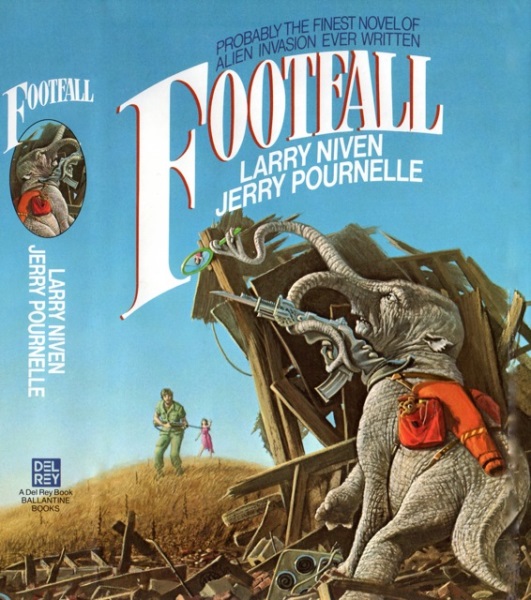
                • Cover of Footfall
                  Footfall

                  Larry Niven & Jerry Pournelle · standalone novel · 1985

                  similar bysurvivalour worldcontemporarytense+1 more

                  When aliens travel to Earth from Alpha Centauri, differences between alien and human psychology result in an unprovoked invasion, and the resulting resistance results in the aliens' use of a devastating weapon.

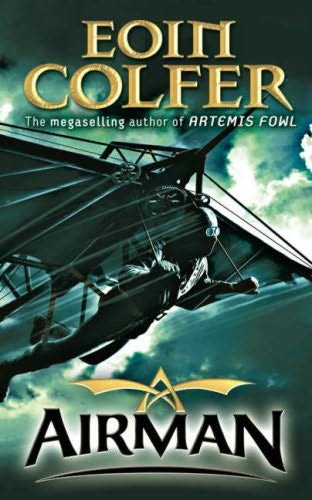
                • Cover of Airman
                  Airman

                  Eoin Colfer · standalone novel · 2008

                  similar bysurvivalour worldadventurousadventuretense

                  Airman, by Eoin Colfer, is a best-selling historical adventure novel set in the 19th century. It was released in the UK, Ireland and US in January 2008. The novel was shortlisted for the 2009 Carnegie Medal.

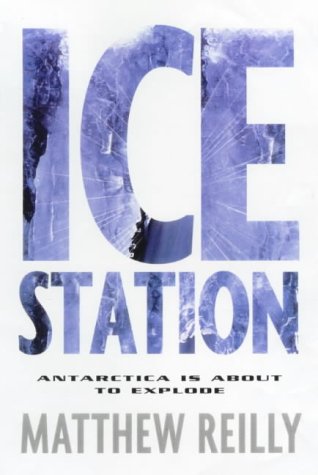
                • Cover of Shane Schofield
                  Shane Schofield

                  series · 5 books · 1998

                  similar bysurvivalcontemporaryadventuroustenseour world+1 more

                  Shane 'Scarecrow' Schofield is a US Marine captain who leads his unit through single-location, high-body-count action thrillers set in an Antarctic ice station, a disputed Pacific island, and a maximum-security prison built into a mountain, among others. Matthew Reilly's series opens with Ice Station (1998) and keeps escalating its set-pieces across Area 7, Scarecrow, Hell Island, and Scarecrow and the Army of Thieves. It's fast, gleefully over-the-top military action rather than realistic technothriller territory.

                • Cover of Watchers
                  Watchers

                  Dean R. Koontz · standalone novel · 1987

                  similar bysurvivalcontemporaryadventurousadventuretense

                  This probably qualifies as a science-based adventure rather than a science fiction novel. The premise, and only speculative fiction element, is that a U.S. government funded laboratory creates a golden retriever that's as intelligent as a human for use in intelligence gathering and also creates a monkey hybrid that's intended for a military police dog role and as a killing machine on battlefields. The animals escape and the story plays out as a straight adventure novel with a good chunk of romance thrown in.

                • Cover of Rats of NIMH
                  Rats of NIMH

                  series · 3 books · 1971

                  similar bysurvivalour worldcontemporaryadventurousmiddle grade

                  Robert C. O'Brien's Mrs. Frisby and the Rats of NIMH follows a widowed mouse seeking help to save her sick son and her home from a farmer's plow, turning to a colony of rats who escaped laboratory experiments at the National Institute of Mental Health with enhanced intelligence and a literate, technological society of their own. After O'Brien's death, his daughter Jane Leslie Conly continued the story in Racso and the Rats of NIMH, in which a city rat joins the colony ahead of a flood, and R-T, Margaret, and the Rats of NIMH, in which the rats rescue and are helped by lost human children. All three carry forward the original's interest in community, responsibility, and the costs of intelligence.

                • Cover of Micro
                  Micro

                  Michael Crichton & Richard Preston · standalone novel · 2011

                  similar bysurvivalour worldcontemporarytense+1 more

                  Micro is a techno-thriller novel by Michael Crichton, the seventeenth under his own name and second to be published after his death, published in 2011. Upon his death in 2008, an untitled, unfinished manuscript was found on his computer, which would become Micro. Publisher HarperCollins chose science writer Richard Preston to complete the novel from Crichton's remaining notes and research, and it was finally published in 2011. Micro followed the historical thriller Pirate Latitudes, which was also found on his computer and published posthumously in 2009.

                • Cover of Cell
                  Cell

                  Stephen King · standalone novel · 2006

                  similar bysurvivalour worldcontemporarytense

                  In Cell, King taps into readers fears of technological warfare and terrorism. Mobile phones deliver the apocalypse to millions of unsuspecting humans by wiping their brains of any humanity, leaving only aggressive and destructive impulses behind. Those without cell phones, like illustrator Clayton Riddell and his small band of "normies," must fight for survival, and their journey to find Clayton's estranged wife and young son rockets the book toward resolution.

                • Cover of The Andromeda Strain
                  The Andromeda Strain

                  series · 2 books · 1969

                  similar bysurvivalcontemporarytense+1 more

                  Michael Crichton's 1969 novel The Andromeda Strain follows a team of scientists racing to contain a lethal extraterrestrial microorganism that crash-lands in Arizona, told in the clinical, document-driven style that helped establish the techno-thriller genre. Daniel H. Wilson's authorized 2019 sequel The Andromeda Evolution revisits the same threat five decades later. Together the two books form a two-part outbreak story separated by a fifty-year gap in publication.

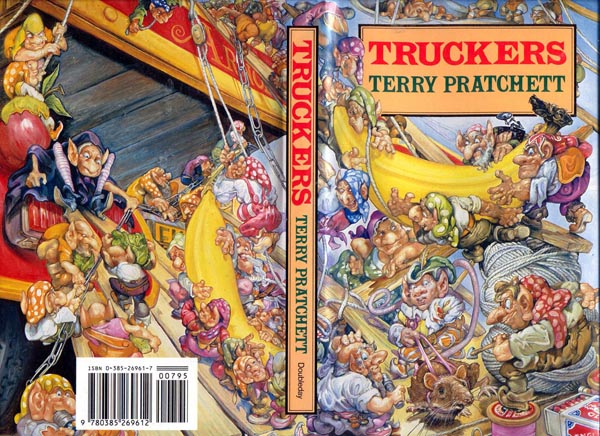
                • Cover of Bromeliad
                  Bromeliad

                  series · 3 books · 1989

                  completed

                  similar bysurvivalour worldcontemporaryadventurous

                  The Nome Trilogy, also known as The Bromeliad, is a trilogy of children's books by British writer Terry Pratchett, consisting of the books Truckers (1989), Diggers (1990) and Wings (1990). The trilogy tells the story of the Nomes, a race of tiny people from another world who now live hidden among humans. Through the books they struggle to survive in the human world and, once they learn of their history from an artefact known as "The Thing", make plans to return home.

                • Cover of Whalefall
                  Whalefall

                  Daniel Kraus · standalone novel · 2023

                  similar bysurvivalour worldcontemporaryadventuretense

                  Whalefall is a 2023 novel by Daniel Kraus about a teenage scuba diver who is swallowed by a sperm whale. Its cover art is by Will Staehle.

                • Cover of The Fog
                  The Fog

                  James Herbert · standalone novel · 1975

                  similar bysurvivalour worldcontemporarytense

                  The Fog is a horror novel by English writer James Herbert, published in 1975. It is about a deadly fog that drives its victims insane when they come into contact with it.

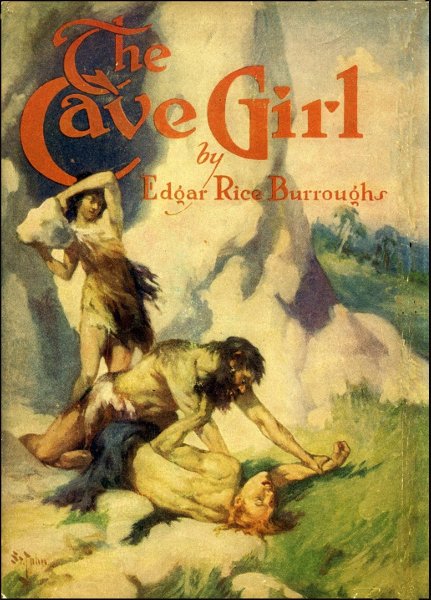
                • Cover of The Cave Girl
                  The Cave Girl

                  Edgar Rice Burroughs · standalone novel · 1925

                  similar bysurvivaladventurousadventureour world

                  The Cave Girl is a lost world novel by American writer Edgar Rice Burroughs. Originally published in two separate stories, The Cave Girl begun in February 1913 and published by "All-Story" in July, August, and September 1913; and The Cave Man begun in 1914 and published by "All-Story Weekly" throughout March and April 1917. The book version was first published by A. C. McClurg on 1925-03-21. In August 1949, Dell Paperback published a version with a map captioned "Wild Island Home of Nadara the Cave Girl Where Violence and Bloodshed Rule."

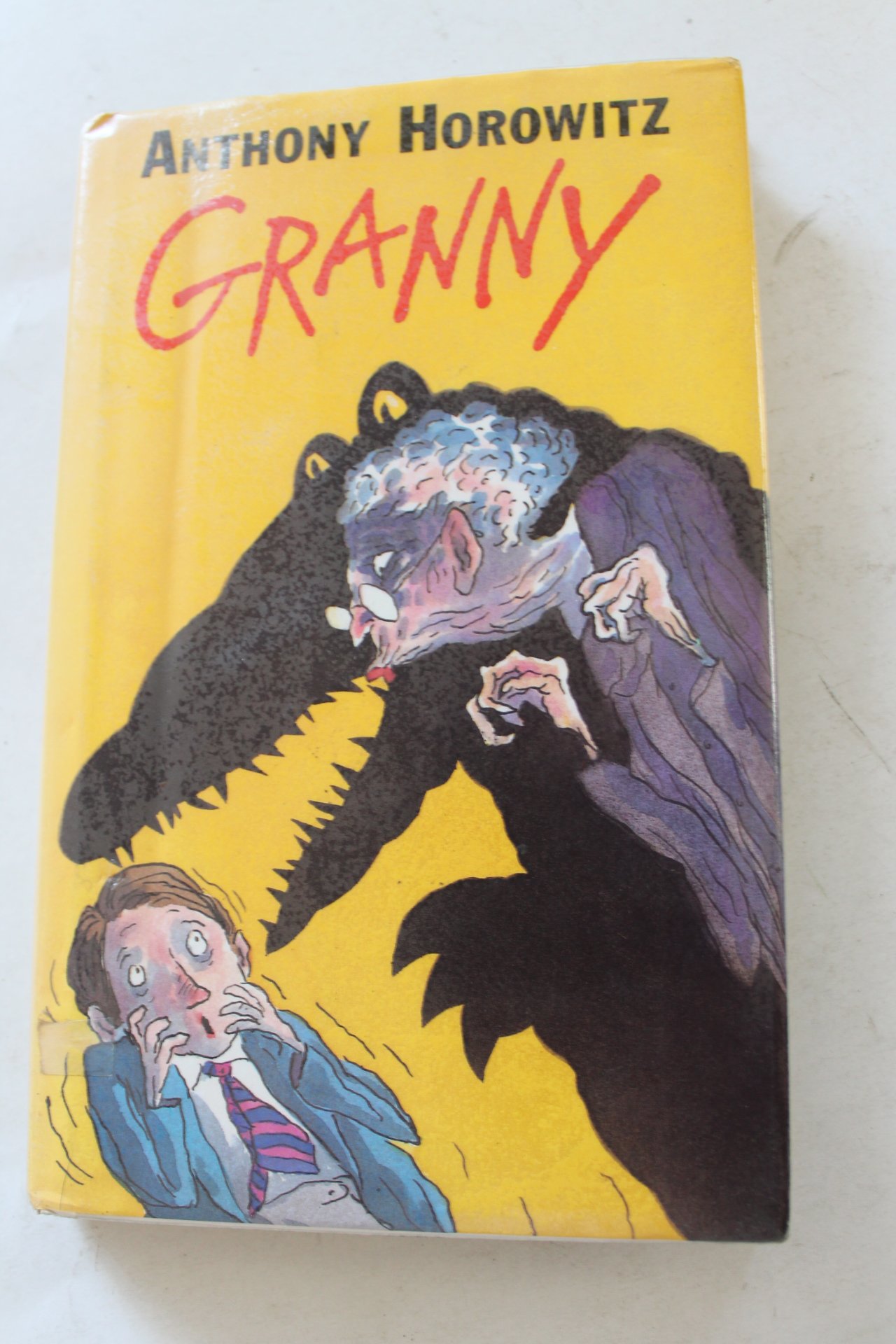
                • Cover of Granny
                  Granny

                  Anthony Horowitz · standalone novel · 1994

                  similar bysurvivalour worldcontemporarytensemiddle grade

                  Twelve-year-old Joe Warden isn't happy. Sure, he's rich, but his parents don't care about him. His grandmother should make everything better, except that Joe's granny is a nightmare. She's not just physically repulsive, she's horribly mean. Everyone thinks she's just a dotty old woman, but Joe knows the truth. He's seen behind her mask and glimpsed the wicked glimmer in her eyes—she is pure evil. And now she's out to get Joe, unless he can stop her and her band of nasty grannies first.

                • Cover of Animals of Farthing Wood
                  Animals of Farthing Wood

                  series · 11 books · 1979

                  similar bysurvivalcontemporaryadventureour worldmiddle grade+2 more

                  The Animals of Farthing Wood is a series of books about a group of woodland animals. It originated with the 1979 book, The Animals of Farthing Wood, by Colin Dann, and was followed by six sequels and a prequel by Dann. An animated Animals of Farthing Wood television series based on the books aired in the 1990s, created by the European Broadcasting Union.

                • Cover of The Wanderer
                  The Wanderer

                  Fritz Leiber · standalone novel · 1964

                  similar bysurvivalcontemporaryour worldtense

                  The Wanderer is a science fiction novel by American writer Fritz Leiber, published as a paperback original by Ballantine Books in 1964. It won the 1965 Hugo Award for Best Novel.

                • Cover of The Visitors
                  The Visitors

                  Clifford D. Simak · standalone novel · 1980

                  similar bysurvivalour worldcontemporarytense

                  WorldCat: Intelligent, alien creatures arrive on Earth from outer space, threatening world stability and presaging the destruction of civilization.

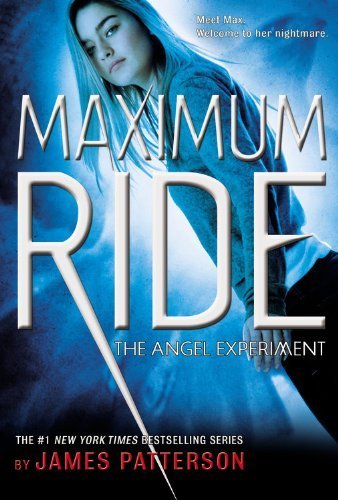
                • Cover of Maximum Ride
                  Maximum Ride

                  series · 12 books · 2005

                  similar bysurvivalour worldadventurous+3 more

                  Maximum Ride is a series of young adult science fantasy novels by American author James Patterson. The series centers on the adventures of Maximum "Max" Ride and her family, called the Flock, who are winged human-avian hybrids created at a lab called The School. The series was inspired by Patterson's earlier novels When the Wind Blows and The Lake House, which were intended for older readers.

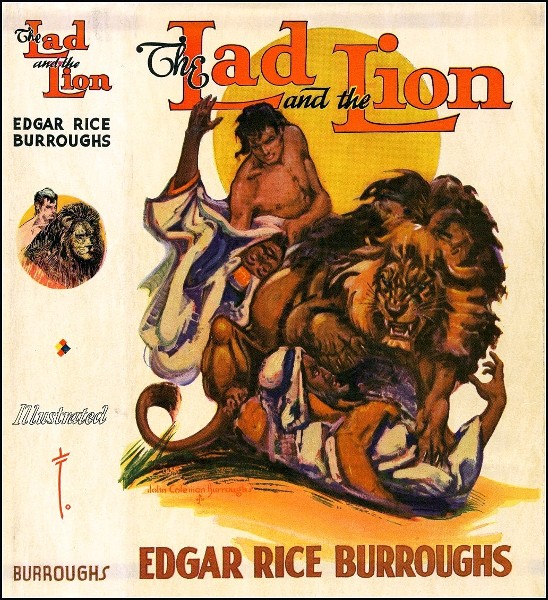
                • Cover of The Lad and the Lion
                  The Lad and the Lion

                  Edgar Rice Burroughs · standalone novel · 1938

                  similar bysurvivalour worldadventurousadventure

                  The Lad and the Lion is an adventure novel by American writer Edgar Rice Burroughs, written in February 1914. His working title for the piece was "Men and Beasts." It was first published as a three-part serial in All-Story Weekly in the issues for June 30, July 7, and July 14, 1917. The story was the first by Burroughs adapted to film, the movie appearing about the same time as the print serial. Despite this distinction, the story did not appear in book form for over twenty years; only after a remake of the film appeared was the first book edition published, by Burroughs's own publishing firm, Edgar Rice Burroughs, Inc., in February 1938. The text was apparently expanded for book publication, as certain incidentals of the story reflect the political situation of Europe in the late 1930s rather than the mid-1910s. The book was reprinted by Grosset & Dunlap in 1939 and Canaveral Press in 1964. The first paperback edition was issued by Ballantine Books in September 1964, with a second appearing from Ace Books in May 1974, reprinted in June 1982.

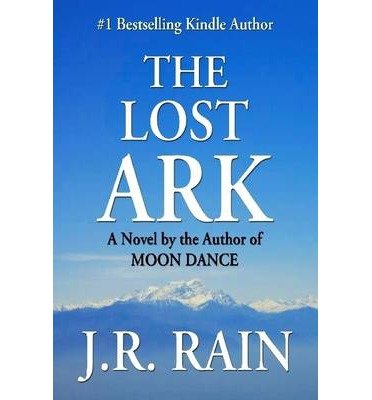
                • Cover of The Lost Ark
                  The Lost Ark

                  J. R. Rain · standalone novel · 2010

                  similar bysurvivalcontemporaryadventurousadventuretense

                  In a lonely bar in eastern Turkey, ex-National Geographic photojournalist Sam Ward is hired to find an eccentric professor who disappeared high atop Mount Ararat, fabled resting spot of Noah's Ark. Accompanied by the professor's beautiful daughter, archaeologist Faye Roberts, Sam soon stumbles upon a secret stronghold—a base of operation for unleashing hell on earth. Now running for their lives, Sam and company are about to come face-to-face with the greatest archaeological discovery of all tiime...

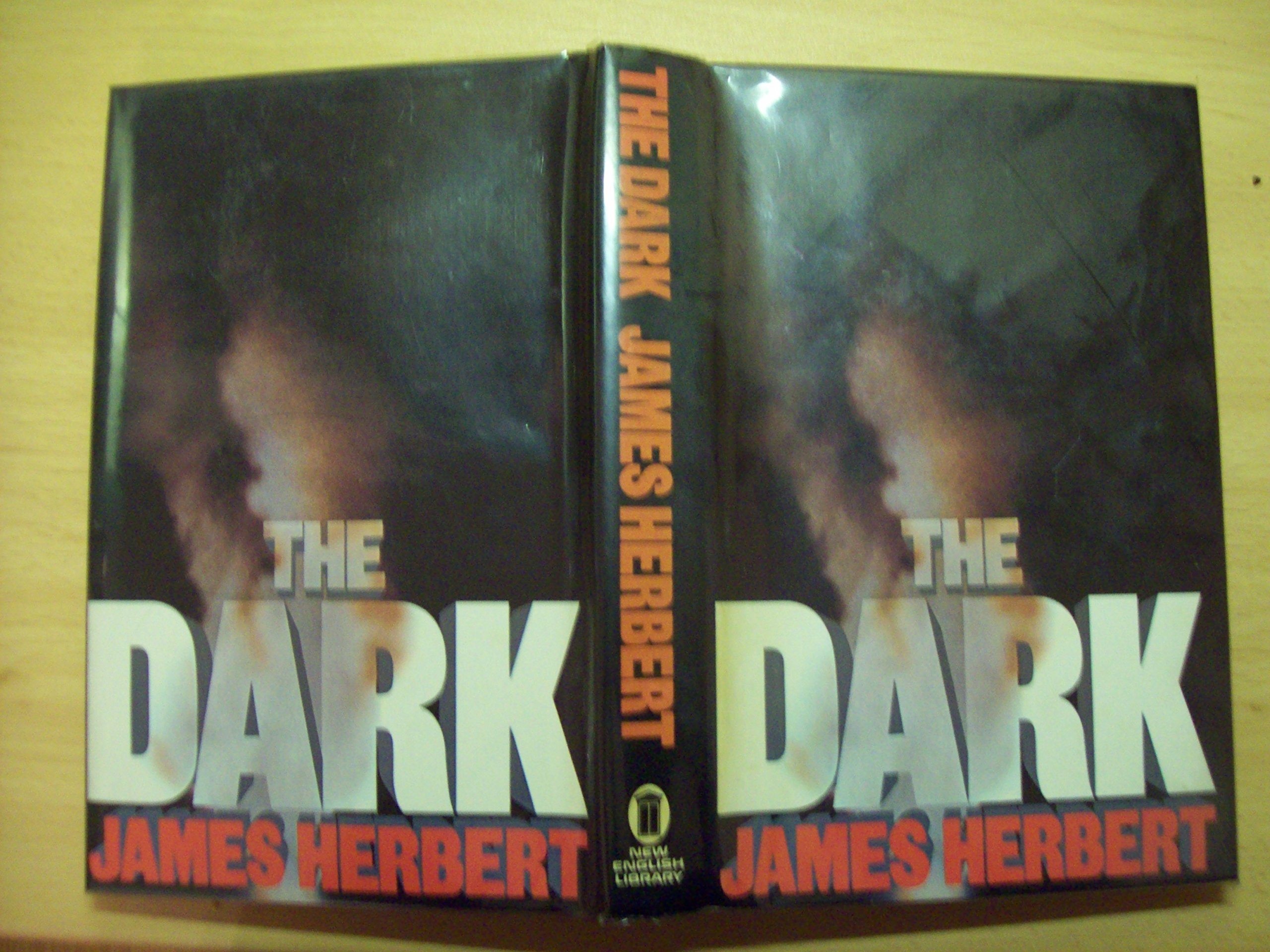
                • Cover of The Dark
                  The Dark

                  James Herbert · standalone novel · 1980

                  similar bysurvivalour worldcontemporarytense

                  WorldCat: It came like a malignant shadow with seductive promises of power. And somewhere in the night, a small girl smiled as her mother burned. Asylum inmates slaughtered their attendants. In slimy tunnels, once-human creatures gathered. Madness raged as the lights began to fade and humanity was attacked by an ancient, unstoppable evil.

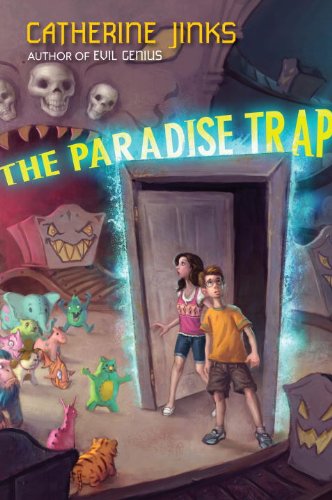
                • Cover of The Paradise Trap
                  The Paradise Trap

                  Catherine Jinks · standalone novel · 2011

                  similar bysurvivalcontemporaryadventuroustensemiddle grade+1 more

                  Eleven-year-old Marcus is spending a week at the beach with his mother in a tiny old travel trailer, but boredom turns to terror when a new friend discovers a cellar that has magical doors through which people keep disappearing.

                • Cover of Sunshine
                  Sunshine

                  Robin McKinley · standalone novel · 2003

                  similar bysurvivalour worldcontemporarytense

                  From the front flap of the Berkley HB first edition: "There are places in the world where darkness rules, where it's unwise to walk. Sunshine knew that. But there hadn't been any trouble out at the lake for years, and she needed a place to be alone for a while. Unfortunately, she wasn't alone. She never heard them coming. Of course you don't, when they're vampires. They took her clothes and sneakers. They dressed her in a long red gown. And they shackled her to the wall of an abandoned mansion - within easy reach of a figure stirring in the moonlight. She knows that he is a vampire. She knows that she's to be his dinner, and that when he is finished with her, she will be dead. Yet, as dawn breaks, she finds that he has not attempted to harm her. And now it is he who needs her to help him survive the day..."

                • Cover of The Kaiju Preservation Society
                  The Kaiju Preservation Society

                  John Scalzi · standalone novel · 2022

                  similar bysurvivalcontemporaryadventurousadventure

                  Covid lands Jamie with no job, no money and a lot of obligations. She'll take pretty much any job. After a detour through pizza deliveries, she says yes to a job handling large animals, that need protection. But when it comes to further details, everybody's very secretive. First stop: Greenland.