More like No Future
anchored on:science fictionfar futurespace operarebellion and revolutionparallel universespace+2 more
but
- The Moon Is a Harsh Mistress
Robert A. Heinleinstandalone novel1966
similar byrebellion and revolutionfar futurescience fictionadventurous+1 more
A technician discovers that the massive computer that operates everything on Luna (a prison colony) has become self-aware. He befriends it, but when he accompanied a beautiful girl to a dissident meeting, he encounters people who want to throw off the yoke of their Earth rulers.
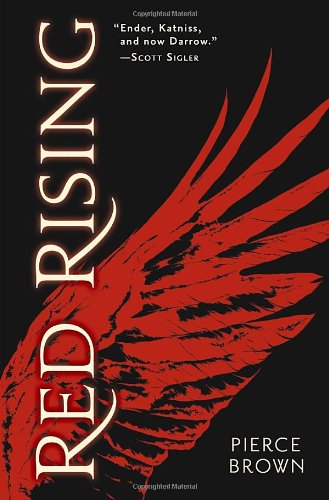
- Red Rising
series13 books2014
similar byrebellion and revolutionfar futurescience fictiontensespace opera+1 more
Pierce Brown's Red Rising follows Darrow, a lowborn 'Red' miner on a colonized Mars who discovers his caste's suffering is a lie sustained by the ruling Gold elite, and infiltrates their ranks to destroy the system from within. The series expands from a single-protagonist revenge story into a sprawling multi-book war across the solar system, eventually following an ensemble cast beyond Darrow alone, and combines Roman-inspired factional politics with brutal, competition-driven action set pieces.
- Closed System
Zach Hughesstandalone novel1986
similar byrebellion and revolutionfar futurescience fictionadventuroustensespace operaspace
Pat Howe, skipper and sole crew member of the space tug Skimmer, sensed trouble as soon as he accepted the commission from the Zede businessman. Why were they willing to pay so much for him to transport medicine to Taratwo? And why did they insist on having Skimmer, a fully armed and notoriously fast tug, bring an unnamed passenger back from Taratwo? But Pat never dreamed when he blasted off that he'd taken the first step on a journey that would bring him to an unknown corner of the universe, where the flames of a millennium-old rebellion were about to be fanned into a threat to the entire civilized universe. (from the back cover of the first edition)
- The Sardonyx Net
Elizabeth A. Lynnstandalone novel1981
similar byrebellion and revolutionfar futurescience fictiontensespace operaspace
From the flaps of the Putnam first edition: "The Sardonyx Net, also known as the Yago Net: a vast starship owned and operated by the Family Yago, captained by Zed Yago. It visits all planets in the Sardonyx Sector of space, picking up special cargo - convicted felons who will serve our their terms as dorazine-drugged slaves to the wealthy land and factory owners on the planet Chabad. But often their ordeal begins even before the are sold, for Zed Yago is a man with a taste for sadism. The slave trade is the most lucrative business on Chabad. It is controlled totally by the Family Yago, headed by Zed's older sister Rhani, who is the only woman Zed has truly loved. Rhani is a shrewd businesswoman with only one weakness: a heart as compassionate as her brother's is perverse. While the authorities of the Sector's other planets look away, the Families of Chabad purchase dorazine from representatives of a secret, unlocatable source known as The Pharmacy, and use it to keep their slave-based economy healthy. Not one protests, for Chabad's illegal and inhumane activities keep prisons empty, criminals under control, and Chabad's valuable exports flowing. Despite constant underground revolutionary activity, the situation has maintained. But he long-lived stability of this sanctioned trade in illegal drugs and human beings is now threatened by two unexpected events: a worsening shortage of dorazine which is sparking more rebellion, and the arrival of Starcaptain Dana Ikoro. Dana, as drug smuggler, is captured by the Net and delivered from Zed's hands to Rhani. He is to be her bodyguard, but becomes much more. Against this incredible background, Lynn tells an irresistible story of adventure, intrigue, revolution and romance. It is a story of people snared in a net of warring passions, a net which will prove to be even stronger than the power of the Sardonyx Net."
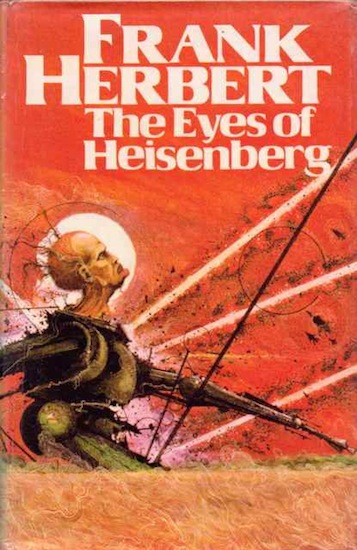
- The Eyes of Heisenberg
Frank Herbertstandalone novel1966
similar byrebellion and revolutionfar futurescience fictiontense+1 more
Tens of thousands of years in the future, Earth is ruled by the Optimen, a genetically engineered aristocracy that has made itself functionally immortal, while ordinary people, the Folk, live under strict reproductive control. When Harvey and Lizbeth Durant arrive to have their embryo genetically screened, the examining doctor finds something in the child no one has seen in a very long time: real potential for both fertility and life span, traits the Optimen have arrogated to themselves. Rather than destroy the embryo as policy demands, the doctor hesitates, setting off a chain of surveillance, suspicion and resistance. A tightly wound Frank Herbert thriller about genetic caste and rebellion.
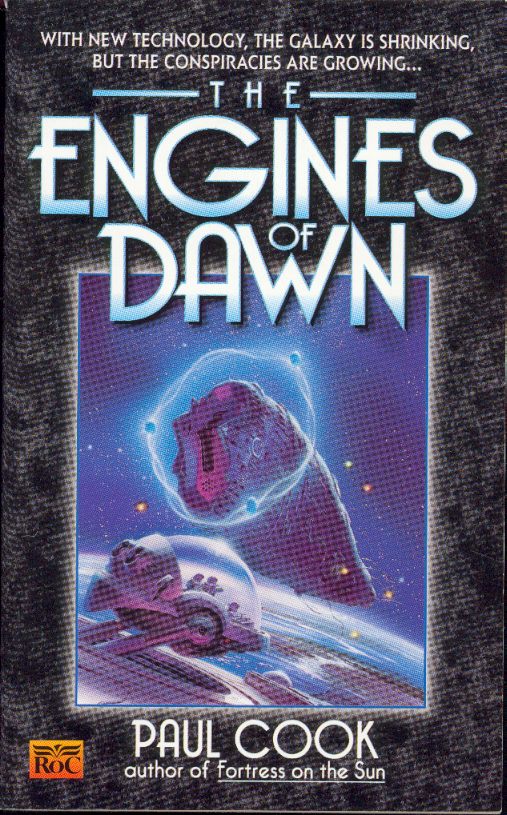
- The Engines of Dawn
Paul Cookstandalone novel1999
similar byrebellion and revolutionfar futurescience fictionadventurousspace operaspace+1 more
From the back cover of the Roc first edition: "Dawn in space comes from the fire within... For hundreds of years, humans have used the great engines of the alien Enamorati to propel their biggest starships, enabling millions to travel - and live - among the stars. As part of this alliance, the Enamorati jealously guard the secrets of their Engines' power. And a complacent humanity becomes dependent on their alien benefactors for survival. But when an Engine fails on a university ship - stranding it in space - physics lecturer Ben Bennet and a small group of students and professors rise up to fight the status quo. Theirs is the first shot in a growing rebellion against the aliens. And their probes into the inner reaches of the Enamorati culture and mind will uncover the shocking secret of the aliens' technology - and set the stage for revolution..."
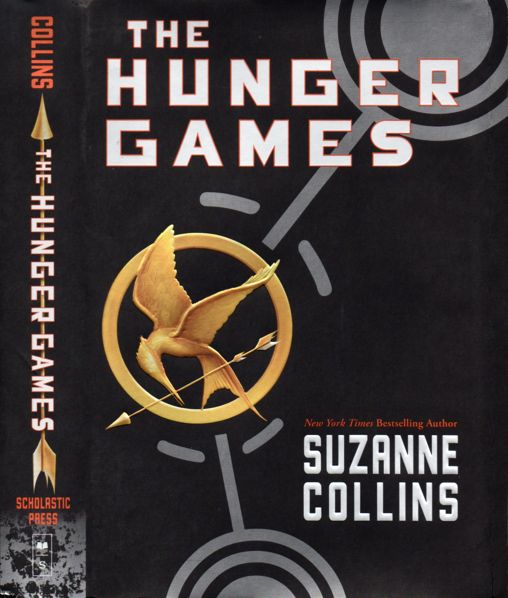
- The Hunger Games
series3 books2008
part of The Hunger Games Universe
similar byrebellion and revolutionfar futurescience fictiontense
The Hunger Games is a series of young adult dystopian novels written by American author Suzanne Collins. The series consists of a trilogy that follows teenage protagonist Katniss Everdeen, as well as two prequels. The Hunger Games universe is a dystopia set in Panem, a post-apocalyptic North American country consisting of the wealthy Capitol and 12 districts in varying states of poverty. As punishment for rebellion, the Capitol hosts an annual battle royale competition called The Hunger Games. Each of the 12 districts must send two children between the ages of 12 and 18 to participate, and the last surviving child is dubbed the victor.
- The Hunger Games Universe
universe5 books2008
Start hereThe Hunger Games · Start here
similar byrebellion and revolutionfar futurescience fictiontense
Panem, they call it now — a nation raised on the drowned bones of North America, a glittering Capitol ringed by twelve districts it once starved into obedience. Every year the Capitol collects its debt in children: two tributes from each district, drawn by lottery, dropped into an engineered arena, and made to kill one another on live television while the whole country is required to watch. This is the Hunger Games — entertainment, punishment, and government at once. Suzanne Collins tells it in a compact, unified body of work. The founding trilogy — The Hunger Games, Catching Fire, and Mockingjay — follows Katniss Everdeen, a girl from the coal-mining District 12 who volunteers in her sister's place and becomes something the Capitol never scripted. Two prequels reach back into the same machinery: The Ballad of Songbirds and Snakes traces a young Coriolanus Snow long before he is President, and Sunrise on the Reaping returns to District 12 a generation ahead of Katniss. Begin with the trilogy, in order — it is Katniss's voice, close and present-tense, that makes Panem breathe, and the prequels land hardest once you know how her story ends. Beneath the spectacle sits one steady, uncomfortable question: who profits when we agree to look away.
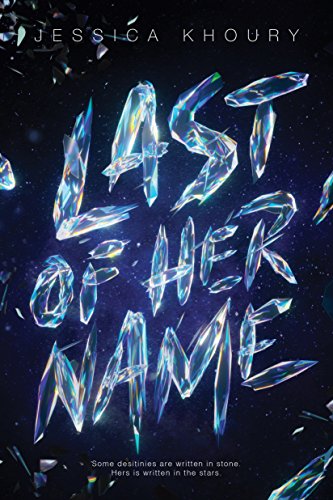
- Last of Her Name
Jessica Khourystandalone novel2019
similar byrebellion and revolutionfar futurescience fictionadventuroustensespace operaspace
Sixteen years ago, rebellion swept the galaxy known as the Belt of Jewels. Every member of the Leonov royal family was murdered--down to their youngest child, Princess Anya--making way for the Union government to seize power. But Stacia doesn't think much about politics. She spends her days half-wild, rambling her father's vineyard with her friends, Clio and Pol. That all changes when a Union ship appears burning through the sky, bearing the leader of the Union, the Direktor Eminent himself, who declares that Stacia's sleepy village is a den of empire loyalists. Even more shocking, the Direktor claims that Princess Anya Leonova is alive--and Stacia is the lost princess. As their home explodes into chaos, Pol smuggles Stacia to a hidden escape ship, leaving Clio in the hands of the Union. With everything she knows threading away into the stars, Stacia sets her heart on a single mission: She will find and rescue Clio, even with the whole galaxy on her trail.
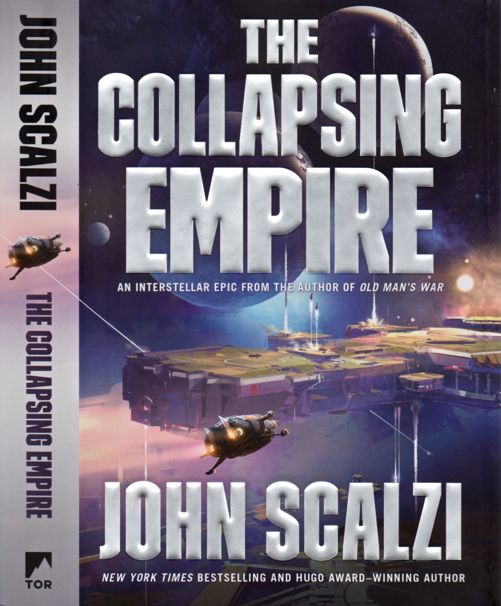
- The Interdependency
series3 books2017
similar byfar futurescience fictionadventuroustensespace opera+2 more
The Interdependency follows the collapse of a wormhole-linked network called the Flow that connects humanity's scattered, otherwise-uninhabitable colonies, forcing an emperox, a scientist studying the collapse, and a scheming trading family to confront a looming interstellar crisis. John Scalzi's trilogy, beginning with The Collapsing Empire, follows the political and personal fallout as the empire's foundations unravel.
- Prince of Sunset
series2 books1998
similar byrebellion and revolutionfar futurescience fictionadventurousspace operaspace+1 more
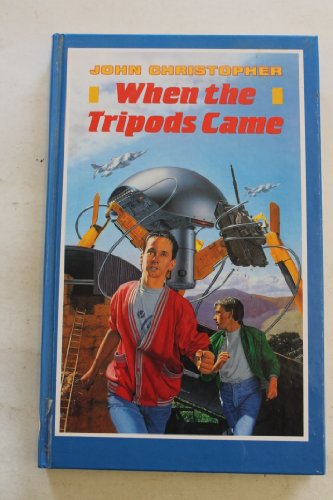
- Tripods
series4 books1967
completed
similar byrebellion and revolutionscience fictiontense+2 more
The Tripods is a series of young adult science fiction novels by John Christopher. The series takes place in a post-apocalyptic world where humanity is enslaved by "Tripods"—gigantic three-legged walking machines piloted by an alien race later identified as the "Masters". The first two books were the basis of a science fiction TV series, produced in the United Kingdom in the 1980s.
- Fifth Imperium
series3 books1991
similar byfar futurescience fictionadventuroustensespace operaspace
David Weber's Fifth Imperium series opens with the discovery that Earth's Moon is in fact a disguised alien starship, the Dahak, that has orbited undetected for tens of thousands of years - a relic of the fallen Fourth Imperium, a multi-star civilization destroyed while defending against the genocidal Achuultani. Mutineers' Moon follows humanity's first contact with Dahak and the mutineers still aboard it; The Armageddon Inheritance and Heirs of Empire escalate from that discovery into interstellar war and dynastic politics as humanity inherits the old empire's legacy and its enemies. The three novels were later collected as the omnibus Empire from the Ashes.
- Sten
series11 books1982
completed
similar byfar futurescience fictionadventurousspace operaspace+2 more
The Sten Chronicles, also called The Sten Adventures, are a series of eight military science fiction and space opera novels by Chris Bunch and Allan Cole published from 1982 to 1993. The series was originally published by Del Rey and then re-released by Orbit.
- Moties
series4 books1974
part of CoDominium
similar byfar futurescience fictionspace operaspace+2 more
Larry Niven and Jerry Pournelle's The Mote in God's Eye (1974) depicts humanity's first contact with an alien species, the Moties, set within the far-future interstellar setting of Pournelle's codominium future history. The Gripping Hand continues that first-contact crisis years later, and Outies, written by J. R. Pournelle, carries the story forward into a new generation. Together the three books trace an escalating encounter between human and Motie civilizations within the codominium universe.
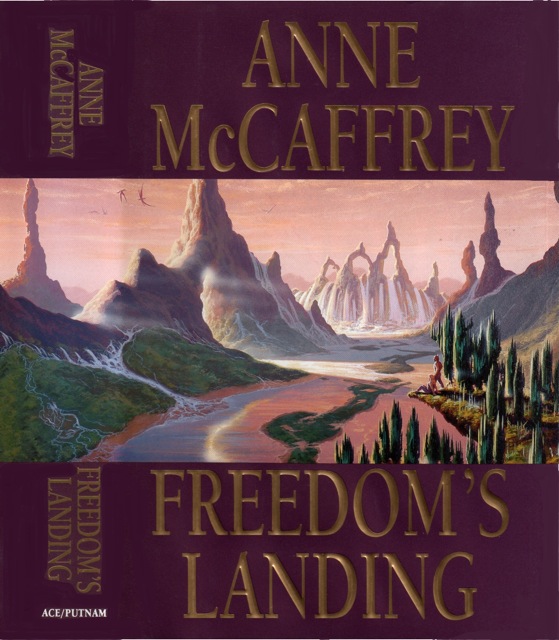
- Catteni Sequence
series5 books1970
completed
similar byfar futurescience fictionadventurousspace opera+3 more
The Catteni series is a tetralogy of science fiction novels by American writer Anne McCaffrey. In this universe, humans are slaves of aliens, the humanoid Catteni. Woven through all four of the books are details of the relationship between Kristin Bjornsen, a former slave, and Zainal, a renegade Catteni.
- The Kindom Trilogy
series3 books2023
similar byrebellion and revolutionfar futurescience fictiontensespace operaspace
- When the Sleeper Wakes
H. G. Wellsstandalone novel1899
similar byrebellion and revolutionfar futurescience fictiontense
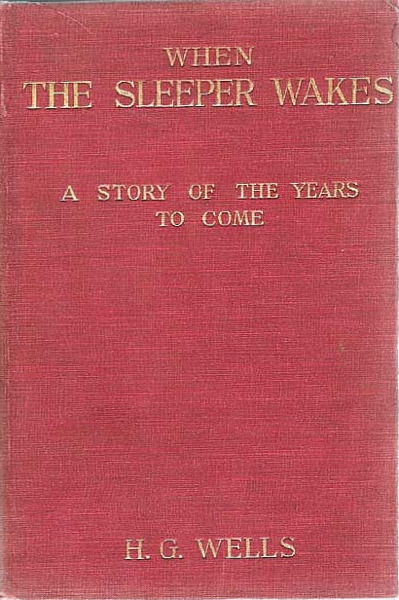
Graham, an insomniac Englishman in 1890s London, takes a course of sleep-inducing drugs and falls into a coma that lasts two centuries. He wakes in the year 2100 to find his investments have compounded, through a ruling body called the White Council, into effective ownership of most of the world's wealth and power, making him, on paper, humanity's master, and in practice, its prisoner, held under guard while the Council governs in his name. A rebel faction led by a man named Ostrog frees him, hoping to use his symbolic authority to spark an uprising against the Council. An early H. G. Wells dystopia about inherited power and manufactured consent.
- Outpassage
Janet Morris & Chris Morrisstandalone novel1988
similar byrebellion and revolutionfar futurescience fictiontensespace operaspace
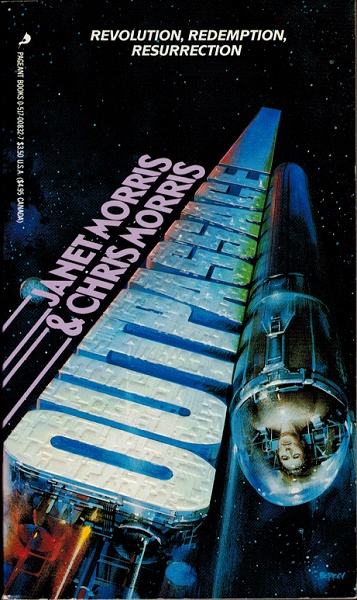
A female corporate executive and a male Space Ranger become caught up in a revolutionary struggle when reports of reanimation among indentured laborers terraforming planets rattle the management of the corporation which operates them.
- Swardheld's Adventures
series1 book1988
part of Diadem
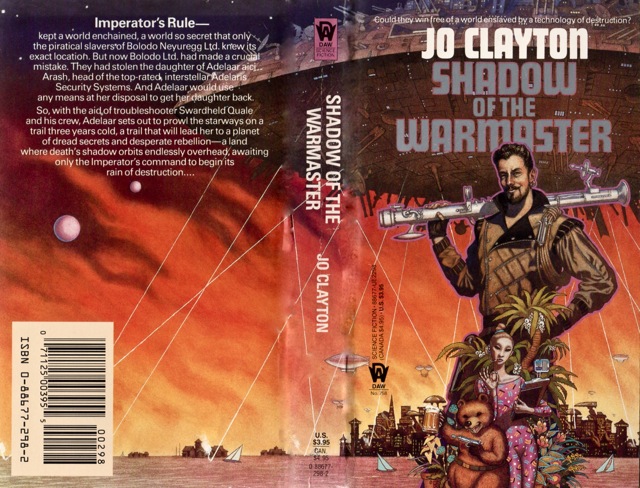
similar byrebellion and revolutionfar futurescience fictionadventuroustensespace operaspace
- Beyond This Horizon
Robert A. Heinleinstandalone novel1948
similar byrebellion and revolutionfar futurescience fiction+1 more
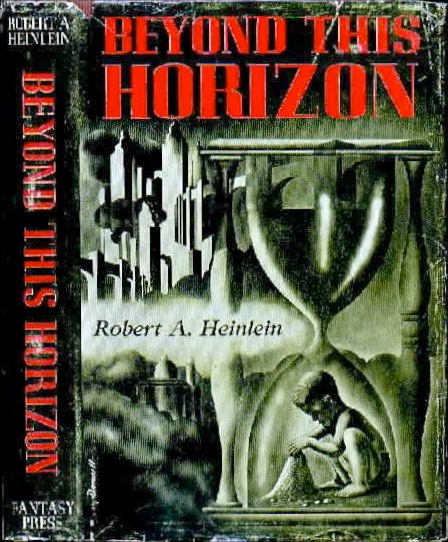
From the front flap of a 2001 Baen reprint: "Utopia has been achieved. For centuries, disease, hunger, poverty, and war have been things found only in the history tapes. And applied genetics has given men and women the bodies of athletes and a lifespan of over a century. They should all have been very happy... But Hamilton Felix is bored. And he is the culmination of a star line, each of his last thirty ancestors chosen for superior genes. Hamilton is, as far as genetics can produce one, the ultimate man. And this ultimate man can see no reason why the human race should survive, and has no intention of continuing the pointless comedy. However, Hamilton's life is about to become less boring. A secret cabal of revolutionaries who find utopia not just boring, but desperately in need of leaders who know just What Needs to be Done, are planning to revolt and put themselves in charge. Knowing of Hamilton's disenchantment with the modern world, they have recruited him to join their Glorious Revolution. Big mistake! The revolutionaries are about to find out that recruiting a superman was definitely not a good idea..."
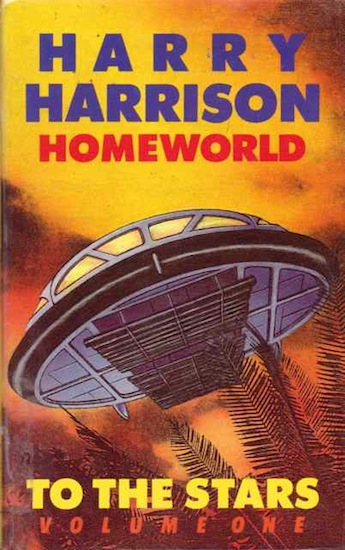
- To the Stars (Harrison)
series3 books1980
completed
similar byrebellion and revolutionscience fictiontensefar future+2 more
The To the Stars trilogy is a series of science fiction novels by Harry Harrison, first published in 1980 (Homeworld) and 1981. The three books were re-published in an omnibus edition in 1981.
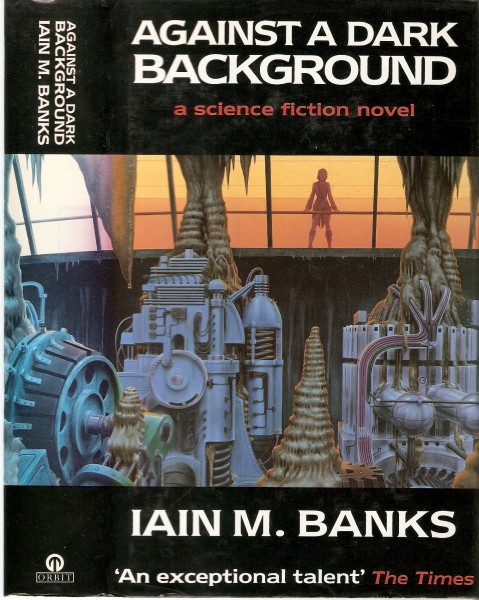
- Against a Dark Background
Iain M. Banksstandalone novel1993
similar byfar futurescience fictionadventuroustensespace operaspace
The daughter of an impoverished noble house and her squad of soldiers become thieves of antiquities; long after their retirement and separation she must assemble them again in order to find and steal the most powerful weapon ever created, or pay with her life.
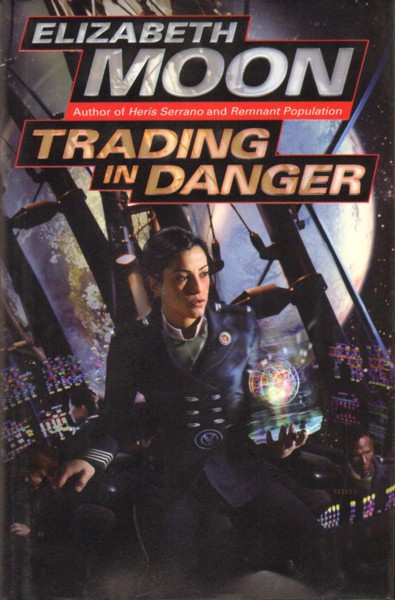
- Vatta's War
series6 books2003
part of Vatta
similar byfar futurescience fictionadventuroustensespace operaspace
Vatta's War is a science fiction series by American writer Elizabeth Moon, comprising five books: Trading in Danger (2003), Marque and Reprisal, Engaging the Enemy (2006), Command Decision (2007), and Victory Conditions (2008). They have been characterized as military science fiction similar in style to the works of Lois McMaster Bujold, David Weber and Walter Jon Williams.