More like Nova
anchored on:science fictionspace operaquestsspacefar futureadventurous+2 more
but
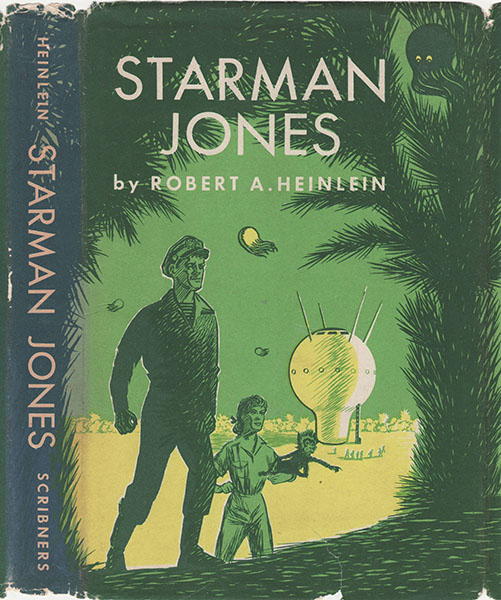
- Starman Jones
Robert A. Heinleinstandalone novel1953
similar byadventurousfar futurescience fictionspace operaspaceother star systemsspace exploration
Starman Jones, a 1953 science fiction novel by Robert A. Heinlein, features a farm boy who wants to go to the stars. Charles Scribner's Sons published the book as part of the Heinlein juveniles series.
- The Stars My Destination
Alfred Besterstandalone novel1956
similar byadventurousfar futurescience fictionspace operaspacerevengeother star systems+1 more
When a passing spaceship refuses to rescue the lone survivor from the drifting wreck of another ship, he dedicates his life to discovering who made that decision and exacting his revenge, in the process altering human history and his own character.
- Ringworld
series5 books1970
part of Known Space
similar byadventurousfar futurescience fictionspace operaspaceother star systemsspace exploration
The Ringworld series is a series of science fiction novels written by American author Larry Niven. It is part of his Known Space series of stories. Its backdrop is the Ringworld, a giant artifact 3 million times the surface area of Earth circling a star. The series is composed of four standalone science fiction novels, the original award-winning book and its three sequels:1970: Ringworld 1979: The Ringworld Engineers 1996: The Ringworld Throne 2004: Ringworld's Children
- Pip & Flinx
series18 books1972
part of Humanx Commonwealth
similar byadventurousfar futurescience fictionspace operaspaceother star systems+1 more
The Pip & Flinx novels follow Flinx, a young man with an unusual, mysterious origin, and his ever-present animal companion Pip, across Alan Dean Foster's Humanx Commonwealth setting. Beginning with The Tar-Aiym Krang (1972) — chronologically the second entry, since Foster later filled in Flinx's earlier life — the series grew to fifteen novels published between 1972 and 2017, mixing planetary adventure with a slowly unfolding personal mystery.
- Legion of Space
series7 books1947
completed
similar byadventurousfar futurescience fictionspace operaspaceother star systems+1 more
The Legion of Space is a space opera science fiction series by American writer Jack Williamson. The story takes place in an era when humans have colonized the Solar System but dare not go farther, as the first extra-solar expedition to Barnard's Star failed and the survivors came back as babbling, grotesque, diseased madmen. They spoke of a gigantic planet, populated by ferocious animals and the single city left of the evil "Medusae". The Medusae bear a vague resemblance to jellyfish, but are actually elephant-sized, four-eyed, flying beings with hundreds of tentacles. The Medusae cannot speak, and communicate with one another via a microwave code.
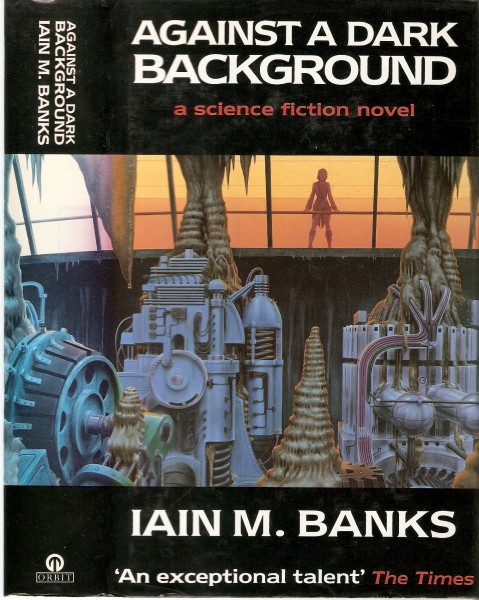
- Against a Dark Background
Iain M. Banksstandalone novel1993
similar byadventurousfar futurescience fictionspace operaspaceother star systems+3 more
The daughter of an impoverished noble house and her squad of soldiers become thieves of antiquities; long after their retirement and separation she must assemble them again in order to find and steal the most powerful weapon ever created, or pay with her life.
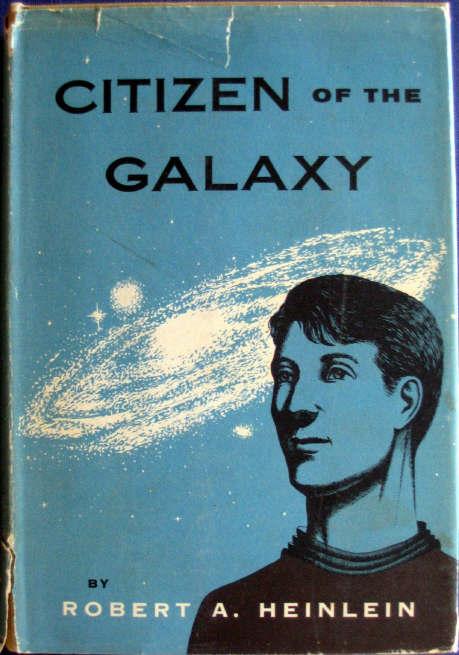
- Citizen of the Galaxy
Robert A. Heinleinstandalone novel1957
similar byadventurousfar futurescience fictionspace operaspaceother star systems+1 more
On a planet far distant from Earth, a lame beggar buys a young boy slave who has forgotten his origins. The beggar is more than he seems, and gives the boy an extensive education while employing him as an observer of activity in their city. Years later, the beggar is captured by the government, and the youth must escape the planet.
- Dumarest
series35 books1967
completed
similar byadventurousfar futurescience fictionspace operaspaceother star systems+2 more
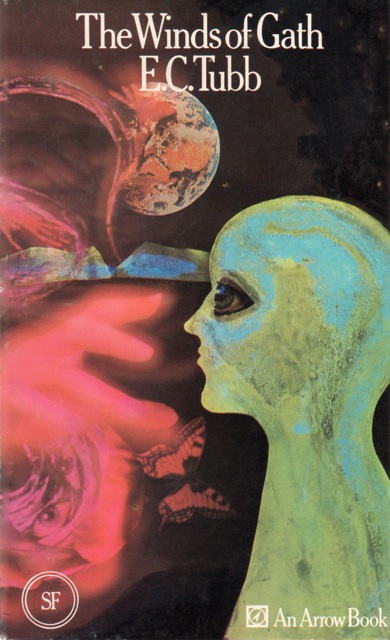
Dumarest of Terra is a 33-volume series of science fiction novels by Edwin Charles Tubb. Each story is a self-contained adventure, but throughout the series, Earl Dumarest, the protagonist, searches for clues to the location of his home world, Earth.
- Vatta's War
series6 books2003
part of Vatta
similar byadventurousfar futurescience fictionspace operaspaceother star systems+1 more
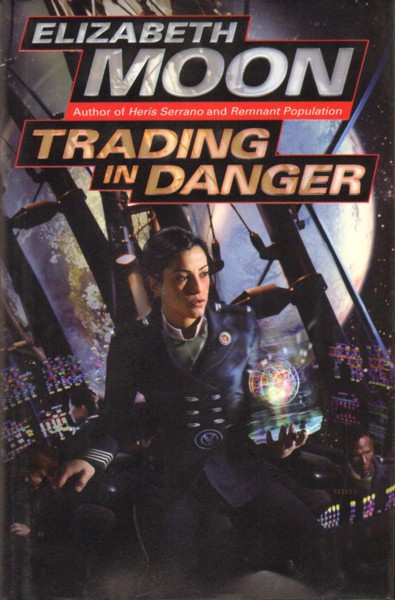
Vatta's War is a science fiction series by American writer Elizabeth Moon, comprising five books: Trading in Danger (2003), Marque and Reprisal, Engaging the Enemy (2006), Command Decision (2007), and Victory Conditions (2008). They have been characterized as military science fiction similar in style to the works of Lois McMaster Bujold, David Weber and Walter Jon Williams.
- Arcot, Morey and Wade
series7 books1930
completed
similar byadventurousfar futurescience fictionspace operaspaceother star systemsspace exploration
Arcot, Morey and Wade collects John W. Campbell Jr.'s pulp-era stories, starting with The Black Star Passes, a fixup built from stories originally serialized in Amazing Stories during the early 1930s. The books follow the same trio of scientist-adventurers through escalating, gadget-driven space adventures typical of early Golden Age SF, continuing through Islands of Space and Invaders from the Infinite. It's foundational pulp science fiction, heavier on speculative engineering than characterization by later standards.
- Endless Blue
Wen Spencerstandalone novel2007
similar byadventurousfar futurescience fictionspace operaspacequestsother star systemsspace exploration
The appearance of the warp drive from a long lost spaceship, the Fenrir, triggers an epic quest fort he rest oft the ship, a mission led by Captain Mikhail Volkov. According to the drive’s computers, Fenrir had been lost to a hypothetical “nowhere” of subspace, but since the drive’s housing is covered with coral and sea life, obviously Fenrir has gone somewhere. Faced with genocide at the hands of aliens known as the nefrim, humans need a miracle to survive. On the chance that Fenrir’s mysterious location holds such a miracle, Mikhail jumps into the unknown and crashes into the endless blue of the Sargasso. (from the cover)
- Fifth Imperium
series3 books1991
similar byadventurousfar futurescience fictionspace operaspace+1 more
David Weber's Fifth Imperium series opens with the discovery that Earth's Moon is in fact a disguised alien starship, the Dahak, that has orbited undetected for tens of thousands of years - a relic of the fallen Fourth Imperium, a multi-star civilization destroyed while defending against the genocidal Achuultani. Mutineers' Moon follows humanity's first contact with Dahak and the mutineers still aboard it; The Armageddon Inheritance and Heirs of Empire escalate from that discovery into interstellar war and dynastic politics as humanity inherits the old empire's legacy and its enemies. The three novels were later collected as the omnibus Empire from the Ashes.
- Earthblood
Keith Laumer & Rosel George Brownstandalone novel1966
similar byadventurousfar futurescience fictionspace operaspaceother star systemsspace exploration
From the flaps of the BCE Dust Jacket: "A thundering "space opera" in the old fashioned tradition of Science Fiction: redolent with people who vault across galactic distances, villainous engines of destruction, and a universe populated by humans, humanoids, monsters - tailed, scaled, and proper tentacled. The story begins in the year 13,000 A.D. The central character is Roan, a pure-strain human, who, as a boy, is kidnapped by the owner of a freak show and sent on a "summer stock" tour by means of spaceship. This weird interplanetary circus troupe is suddenly pirated by another vessel. But its outlaw Commander, the dashing Henry Dread, turns out to be a pure-strain human and he instantly takes a liking to our youthful hero. From her on out, Earthblood explodes with wild cascades of pure adventure and excitement - the reader follows Dread and Roan as they wander through the universe, sacking planets, keeping a sharp look-out for errant pure-strains, landing at last on the planet Terra, where - to their endless horror - the two realize exactly who the broken-down, corrupt, and decadent inhabitants are: their fellow human-beings."
- Uplift Universe
universe13 books1980
Start hereUplift · Start here
similar byadventurousfar futurescience fictionspace operaspaceother star systems+1 more
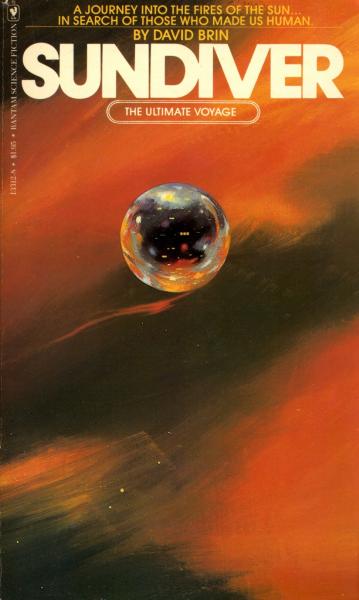
No species, the Galactics insist, ever climbs to sapience alone. For a billion years the elder races have "uplifted" their chosen clients — reshaping some promising animal, gene by patient gene, into a thinking being, then binding it through long ages of indenture. Patron lifts client; client one day becomes patron; and every lineage traces back through the vast Galactic Library to the vanished Progenitors who began it all. Then a ragged band of primates arrives at the stars with no patron to claim them — wolflings, self-made, an affront to a hundred thousand years of law — and worse, these humans have already started uplifting neighbors of their own: the neo-dolphins and neo-chimpanzees of Earthclan. David Brin builds this galaxy across two trilogies. The first — Sundiver, the Hugo- and Nebula-winning Startide Rising, and the Hugo-winning The Uplift War — sends an expedition into the Sun, then follows the dolphin-crewed survey ship Streaker as it flees a discovery that sets fanatical star-clans at war, and a chimp-led resistance on an invaded colony world. The second sequence, Uplift Storm — Brightness Reef, Infinity's Shore, Heaven's Reach — descends to Jijo, a forbidden world where six fallen races hide as illegal settlers, and draws every loose thread toward a reckoning. Short fiction fills the margins. This is space opera with an ecologist's conscience: teeming with invented biologies, wry cross-species banter, and real unease about what we owe the minds we make. Begin with Startide Rising — the saga's beating heart, and readable on its own — or take Sundiver first and read straight through in publication order.
- Mission to Universe
Gordon R. Dicksonstandalone novel1965
similar byadventurousfar futurescience fictionspace operaspaceother star systemsspace exploration
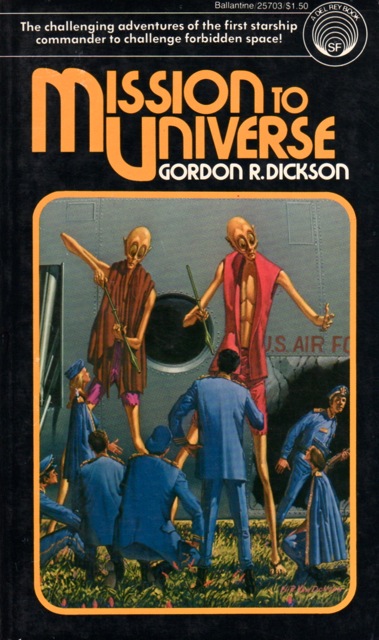
Forever and a day - Brigadier General Benjamin Shore ignores a Presidential command and launches a revolutionary phase ship and its crew on an incredible journey deep into uncharted regions toward Galactic Centerpoint... Investigating one planet after another in search of a habitable world, they encounter: the vicious vine-tigers, weasel-like pre-men, who live on an innocent looking planet lit by the sun of Polaris; the slim Gray-furs, a race possessing fantastic knowledge, yet strangely inept; and the giant conquerers, the Golden People, with their magnificent cities, and their deadly javelin guns... With half his crew lost, General Shore prepares to return to Earth, only to find his most formidable foe aboard the phase ship itself... (from the back cover of the Berkley first edition)
- The Stainless Steel Rat
series21 books1957
completed
similar byadventurousfar futurescience fictionspace operaspace+1 more
James Bolivar diGriz, alias "Slippery Jim" and "The Stainless Steel Rat", is a fictional character and a series of comic science fiction novels written by Harry Harrison.
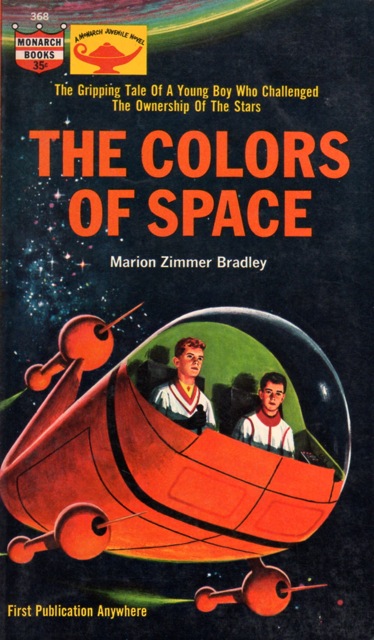
- The Colors of Space
Marion Zimmer Bradleystandalone novel1963
similar byadventurousfar futurescience fictionspace operaspaceother star systemsspace exploration
The Lhari seem peaceful and friendly, but they go to some lengths to protect their monopoly on faster-than-light travel. One young man is sent to discover their secrets.
- The Final Architecture
series6 books2021
similar byadventurousfar futurescience fictionspace operaspaceother star systemsspace exploration
The Final Architecture is a series of science fiction novels by British writer Adrian Tchaikovsky. It contains the books Shards of Earth, Eyes of the Void, and Lords of Uncreation. The series focuses on a group of humans fighting against the mysterious Architects, who destroy inhabited planets. The series has been well-received critically, with Shards of Earth winning the 2021 BSFA Award for Best Novel. The entire series was a finalist for the 2024 Hugo Award for Best Series.
- Old Man's War
series16 books2005
similar byadventurousfar futurescience fictionspace operaspaceother star systems
The Old Man's War series is a series of science fiction novels by John Scalzi. The first book in the series, Old Man's War, was first published in 2005 by Tor Books, and was nominated for the Hugo Award for Best Novel in 2006. In 2026 it was a finalist for the Hugo Award for Best Series.
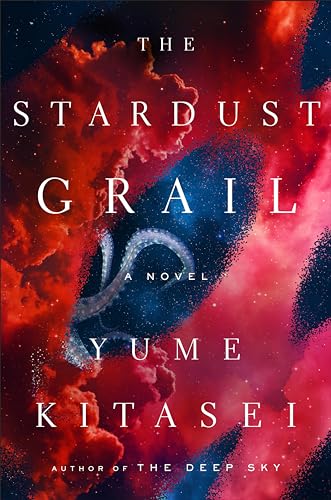
- The Stardust Grail
Yume Kitaseistandalone novel2024
similar byadventurousfar futurescience fictionspace operaspaceother star systemsspace exploration
The Stardust Grail is a 2024 science fiction novel by Yume Kitasei. It tells the story of Maya, a retired art thief who embarks upon one last heist in order to save an alien species.
- Moties
series4 books1974
part of CoDominium
similar byfar futurescience fictionspace operaspaceother star systems+2 more
Larry Niven and Jerry Pournelle's The Mote in God's Eye (1974) depicts humanity's first contact with an alien species, the Moties, set within the far-future interstellar setting of Pournelle's codominium future history. The Gripping Hand continues that first-contact crisis years later, and Outies, written by J. R. Pournelle, carries the story forward into a new generation. Together the three books trace an escalating encounter between human and Motie civilizations within the codominium universe.
- Wolfling
Gordon R. Dicksonstandalone novel1969
similar byadventurousfar futurescience fictionspace operaspaceother star systems
From the flaps of the Baen/SFBC edition: "Is Earth merely the lost colony of a superior race? - She was well over six feet tall, and beautiful in a sculpted, abstract way. She had skin the color of white onyx, and her eyes... her eyes were large and feline - a startling lemon yellow in color. She was the Princess Afuan, one of the High-born, and she had chosen the Earthman Kim Keil to return to the Throne World with her - for she had decided that his performance in the bull-ring might amuse the Emperor. She didn't know that Jim was a bull-fighter only by virtue of six months' intensive training, nor that the bull was programmed - his behavior following and impressively fierce but unswerving pattern. Jim was just another wolfling to Afuan - a lesser being from a backward colony world. Jim, however, was keenly aware that he was playing a role, one which might prove to be extremely dangerous. Up until 10 years earlier, when their first ship had reached Alpha Centauri, the people of Earth hadn't even known that the vast Empire of human-occupied worlds existed. The discovery had been a profound shock. Had we evolved independently? Or were we merely descendants of the Empire's first space pioneers - a lost colony found at last, perhaps with devastating consequences? That's what Jim Keil had to find out. Chosen from among numerous highly qualified candidates - an anthropologist trained, mentally and physically, beyond the limits of his profession - it was his mission to observe the Throne World and the High-born... to determine whether or not they posed a threat to Earth. One thing was apparent from the start. The High-born were superior beings - physically taller and stronger than other humans, endowed with faster reflexes, superior mental capacity... and extraordinary technological resources. Their contempt for the new wolfling in their midst was open, their intrigues complex. An enormous gulf separated the people of the Throne World from Earthlings. But that gulf was not so wide that Jim couldn't recognize an enemy when he met one. Clearly, if he remained merely a passive observer of the High-born, he'd never survive among them."
- Vatta
universe10 books2003
Start hereVatta's War · Start here
similar byfar futureadventurousscience fictionspace operaspaceother star systems+1 more
Get kicked out of the Academy and the family still hands you a ship. That is the arithmetic Kylara Vatta lives by. Born into Vatta Transport, Ltd. — a dynasty of interstellar traders who reckon their honor in delivered cargo and honored contracts — Ky wants a soldier's commission and gets a merchant hull instead. Then someone starts murdering her relatives and burning the ledgers, and the daughter learns that a trade fleet, armed and angry, is its own kind of war. This is military science fiction run on a merchant's books. The core cycle, Vatta's War, moves in five volumes — Trading in Danger, Marque and Reprisal, Engaging the Enemy, Command Decision, Victory Conditions — as piracy, a sabotaged faster-than-light communications network, and a scattered family push Ky from cautious captain to fleet commander. The later duology Vatta's Peace (Cold Welcome, Into the Fire) drops her, older and decorated, into a colder survival ordeal on her own homeworld. Moon writes clean, competent, procedural: supply lines and boarding actions, chains of command, the cost of a signature on a bad contract. Expect capable women, hard decisions costed to the last credit, and space combat that respects physics and paperwork alike. Begin at the beginning — Trading in Danger — and read straight through in publication order; the arc is chronological and cumulative, no side doors required.
- Chanur
series7 books1982
part of Alliance-Union Universe
similar byadventurousfar futurescience fictionspace operaspaceother star systems
The Chanur novels are a series of five science fiction novels, forming three separate stories, written by American author C. J. Cherryh and published by DAW Books between 1982 and 1992. The first novel in the series is The Pride of Chanur (1982), which was nominated for both the Hugo and Locus Awards in 1983. The Pride of Chanur, originally a stand-alone story, was followed by the Chanur's Venture trilogy, Chanur's Venture (1984), which was shortlisted for a Locus Award in 1985; The Kif Strike Back (1985) and Chanur's Homecoming (1986). These were followed by a later sequel, Chanur's Legacy (1992). The five novels were also published in two omnibus editions: the first three in The Chanur Saga in 2000 and the next two in Chanur's Endgame in 2007.