More like Null-A Continuum
anchored on:science fiction
but
- Galactic Milieu
series10 books1981
completed
similar byscience fictionpsychic powers+3 more
Galactic Milieu is a series of science fiction novels by Julian May. It is linked to her previously published series, the Saga of Pliocene Exile; and through the fantastical device of time-travel, acts as both a prequel and a sequel to this earlier series. The "Galactic Milieu" of the title is an interplanetary federation, and Earth's membership of it is a central plot concern.
- Foundation Universe
universe123 books1940
Start hereFoundation · Start here
similar byscience fiction+3 more
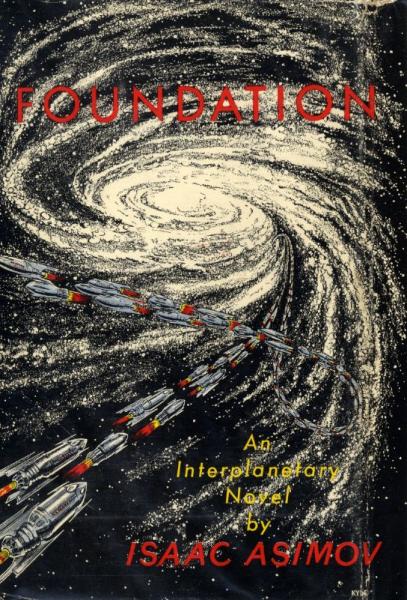
There is a science that reads the future of quadrillions the way an astronomer reads the orbits of stars. It is called psychohistory, and its equations foresee something the ruling Galactic Empire cannot admit: the throne is rotting, and thirty thousand years of barbarism are coming. One man, Hari Seldon, cannot stop the fall. He can only shorten it — by seeding a Foundation of scholars at the rim of the galaxy, a fragile institution built to carry knowledge across the dark and cut the interregnum to a single millennium. This is a universe told in the register of history itself: the long view, the calm of deep time, empires measured in centuries and men measured against them. The spine is Asimov's original trilogy — Foundation, Foundation and Empire, Second Foundation — followed decades later by the sequels Foundation's Edge and Foundation and Earth and the prequels Prelude to Foundation and Forward the Foundation. Late in life Asimov braided this in with his other future histories: the Robot novels of detective Elijah Baley and his humaniform partner R. Daneel Olivaw (The Caves of Steel, The Naked Sun, The Robots of Dawn, Robots and Empire) and the early Galactic Empire novels (Pebble in the Sky and its kin), until one continuous chronicle ran from the first thinking robots to the Second Empire. Other hands extend it — the Second Foundation Trilogy by Gregory Benford, Greg Bear, and David Brin, and shared-world spinoffs such as Robot City — so the corpus sprawls beyond a single author's tidy shelf. What distinguishes it is that the drama is intellectual: crises resolved by insight, nerve, and dialogue rather than fleets and blades, each turn hinging on the hidden logic of the Seldon Plan. Begin where readers have always begun — with Foundation, and the original trilogy in publication order. The rest opens outward from there.
- Null-A
series4 books1948
similar byscience fictionpsychic powers+2 more
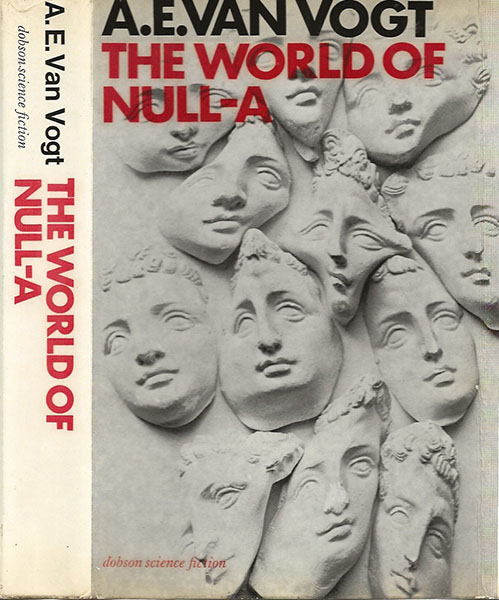
A. E. van Vogt's Null-A novels follow Gilbert Gosseyn, a man whose memories keep proving false, through a future society organized around the non-Aristotelian logic ('Null-A') of General Semantics. The World of Null-A and The Pawns of Null-A form the classic 1940s-50s core, with Null-A Three added decades later; John C. Wright's Null-A Continuum closes out the storyline after van Vogt's death. It's dense, puzzle-box science fiction built around identity and perception.
- Library of America P. K. Dick Collection
series9 books1962
completed
similar byscience fictionnear future+3 more
- Jumper
series6 books1992
similar byscience fictionadventurouspsychic powers+2 more
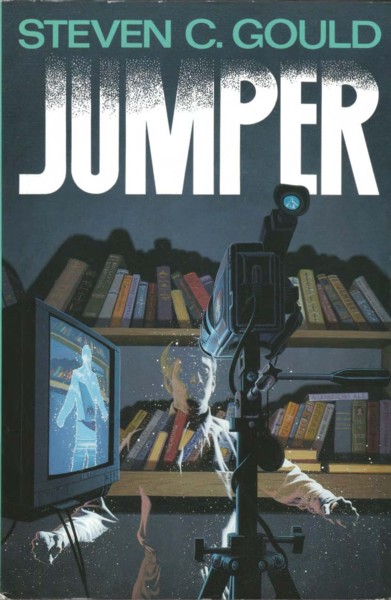
Jumper follows David Rice, a teenager who discovers he can teleport anywhere he's been and uses the power to escape an abusive home, only to find that ability alone doesn't solve the harder problems of finding his absent mother, building an honest relationship, or staying off the radar of people who'd exploit him. Steven Gould's series continues across Reflex, Impulse, and Exo, later following his and his wife's daughter as a second-generation jumper. A 2008 film loosely adapted the first novel.
- H. G. Wells' War of the Worlds
universe65 books1898
Start hereThe War of the Worlds · Start here
similar byscience fiction+1 more
No one would have believed, in the closing years of the nineteenth century, that human affairs were being watched keenly and closely from the timeless worlds of space. And then the cylinders fell. H. G. Wells' War of the Worlds opens in the quiet of the Surrey commons, where a falling star proves to be the first Martian craft — and from the pit rise the towering tripods, the Heat-Ray, the choking Black Smoke and the creeping red weed, wielded by minds that regard mankind much as we regard the creatures we boil for supper. This is invasion rendered as natural disaster: cold, methodical, and vast beyond argument. Wells' 1898 novel is the seed; everything else grows from that Martian soil. The catalogue gathers direct sequels and continuations alongside a wide field of other hands. In War of the Worlds: Global Dispatches the invasion is retold across the whole planet through the eyes of Twain, Verne, Tolstoy, Lowell and Kipling; in the Manly Wade and Wade Wellman crossover, Sherlock Holmes, Watson and Professor Challenger take the field against the machines; and Scott Washburn's Great Martian War stretches the fighting into a decades-long alternate history of steam, artillery and grinding attrition. It is a loose shared world — no single decreed sequence, many voices answering one calamity. What sets this world apart is its refusal of heroics: the invaders fall not to generals but to the smallest things of Earth, humbling and indifferent. Begin, always, with Wells' original novel — it is short, and it is the ground every later book stands upon. From there follow your appetite: Global Dispatches for the panorama, the Holmes campaign for adventure, Washburn for the long war.
- Stranger in a Strange Land
Robert A. Heinleinstandalone novel1961
similar byscience fictionour worldnear futurepsychic powersidentity
Stranger in a Strange Land is a 1961 science fiction novel by the American author Robert A. Heinlein. It tells the story of Valentine Michael Smith, a human who comes to Earth in early adulthood after being born on the planet Mars and raised by Martians, and explores his interaction with and eventual transformation of Terran culture.
- Future History
series42 books1939
completed
similar byscience fiction+2 more
The Future History is a series of science fiction stories written by American author Robert A. Heinlein (1907–1988). It describes a projected future of the human race from the middle of the 20th century through the early 23rd century. The term Future History was coined by John W. Campbell Jr. in the February 1941 issue of Astounding Science Fiction. Campbell published an early draft of Heinlein's chart of the series in the May 1941 issue.
- Talents (Anne McCaffrey)
series9 books1969
completed
part of The Talents
similar byscience fiction+3 more
The Talent series opens with To Ride Pegasus (1973), a linked collection of stories introducing people born with parapsychic gifts such as telepathy, telekinesis, and precognition, as society first learns to organize and rely on them. Pegasus in Flight (1990) and Pegasus in Space (2000) complete the trilogy, following the training and growing use of these Talents through near-Earth crises. Anne McCaffrey set the series earlier in the same Talents universe that her later Tower and Hive novels continue.
- Cas Russell / Russell's Attic
series5 books2014
similar byscience fictionadventurousour worldnear futurepsychic powersidentity+1 more
- Project Hail Mary
Andy Weirstandalone novel2021
similar byscience fictionadventurousour worldnear futureamnesia
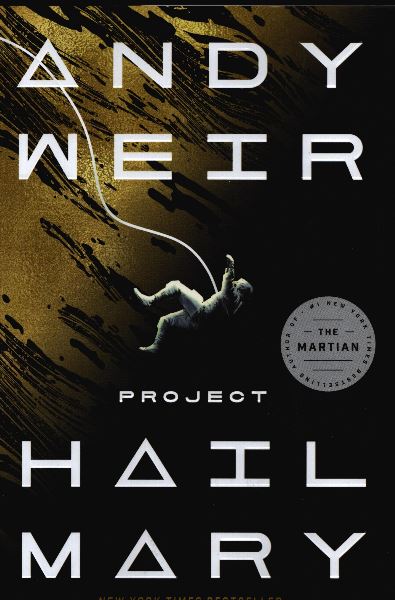
Project Hail Mary is a 2021 hard science fiction novel by American writer Andy Weir. It centers on science teacher and former biologist Ryland Grace, who wakes up aboard a spacecraft, afflicted with amnesia.
- Childhood's End
Arthur C. Clarkestandalone novel1953
similar byscience fictionour worldnear futureidentity+1 more
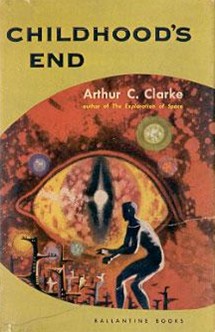
Childhood's End is a 1953 science fiction novel by the British author Arthur C. Clarke. The story follows a peaceful alien invasion of Earth by mysterious Overlords, whose arrival begins decades of apparent utopia under indirect alien rule, at the cost of human identity and culture.
- Childe Cycle
series19 books1957
similar byscience fiction+2 more
The Childe Cycle is an unfinished series of science fiction novels by American writer Gordon R. Dickson. The name Childe Cycle is an allusion to "Childe Roland to the Dark Tower Came", a poem by Robert Browning, which provided inspiration for elements in the work. The series is sometimes referred to as the Dorsai series, after the Dorsai people who are central to it. The related short stories and novellas all center on the Dorsai, primarily members of the Graeme and Morgan families.
- Ready Player One
series3 books2011
similar byscience fictionadventurousnear future+1 more
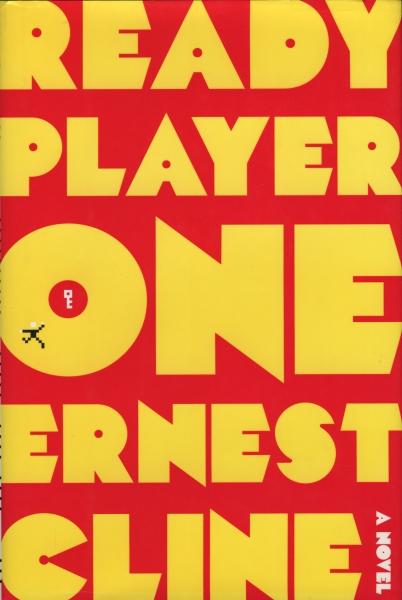
Ernest Cline's Ready Player One (2011) is set in a near-future dystopia where much of humanity escapes into the OASIS, a vast virtual-reality universe, and follows teenager Wade Watts as he chases an Easter egg hidden by the OASIS's late creator in a puzzle-based hunt worth a fortune. The 2020 sequel, Ready Player Two, picks up after Wade has gained control of the OASIS and follows him and his friends into a new quest built around a brain-computer interface the creator left behind.
- H. I. V. E.
series10 books2006
similar byscience fictionnear future+3 more
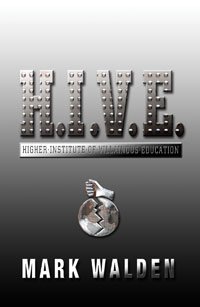
Mark Walden's series is set at H.I.V.E. (the Higher Institute of Villainous Education), a hidden academy training the next generation of criminal masterminds, following orphan genius Otto and fellow students Wing, Laura, and Shelby as they navigate the school's twisted curriculum while plotting to escape it. The premise plays school-story conventions against a supervillain backdrop across more than a dozen books.
- Tripods
series4 books1967
completed
similar byscience fictionour worldnear future+1 more
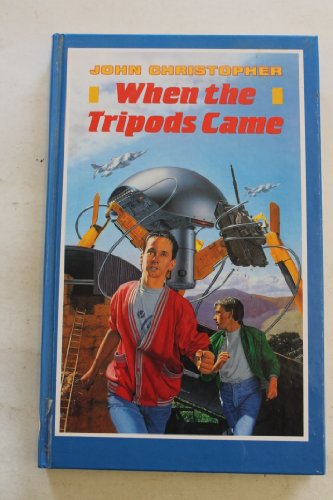
The Tripods is a series of young adult science fiction novels by John Christopher. The series takes place in a post-apocalyptic world where humanity is enslaved by "Tripods"—gigantic three-legged walking machines piloted by an alien race later identified as the "Masters". The first two books were the basis of a science fiction TV series, produced in the United Kingdom in the 1980s.
- Podkayne of Mars
Robert A. Heinleinstandalone novel1963
similar byscience fictionadventurousnear futurepolitical intrigue
From the back cover of the Baen 1995 edition: "Meet Podkayne Fries, a thoroughly modern Martian Ms. who thinks that Earth is not really fit for habitation and that humanity evolved in the now-exploded Fifth Planet. Poddy has one goal in life, to be the first female starship captain. She has her strategy all scoped out, and with her determination, looks and I.Q. she'll get there, never you doubt! But all work and no play would make Poddy a Dull Girl, so when a chance comes her way to travel to distant Earth via Venus with her elderly uncle, Poddy jumps at it, even if it does mean having her loathsome little brother along for the trip: Travel, Adventure, the chance to cuddle up (in a nice way) with real spaceship officers and ruthlessly pump their brains - she'll have it all. What Poddy doesn't know is that "Unca Tom" is more than her warmly supportive relative: he is also the Ambassador Plenipotentiary from Mars to the Three Planets Conference (travelling not quite incognito enough) and that certain people will stop at nothing to gain control of his vote - including kidnapping and doing terrible things to sweetly innocent Poddy Fries..."
- The Themis Files
series3 books2015
similar byscience fictionour worldmysterious+3 more
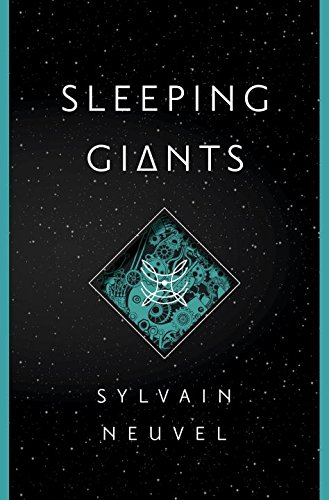
Sylvain Neuvel's Themis Files opens when a girl falls into a hole in South Dakota and lands on the palm of a giant metal hand buried underground; the trilogy picks up years later as she leads the team trying to determine what the hand is part of and why it's there. Sleeping Giants and its sequels are told almost entirely through interview transcripts conducted by an unnamed, evasive interrogator, giving the series a documentary, oral-history feel unusual for first-contact SF. The mystery escalates from an archaeological puzzle into a question of who else is looking for the same answer.
- Cavor
series2 books1901
similar byscience fictionadventurous+1 more
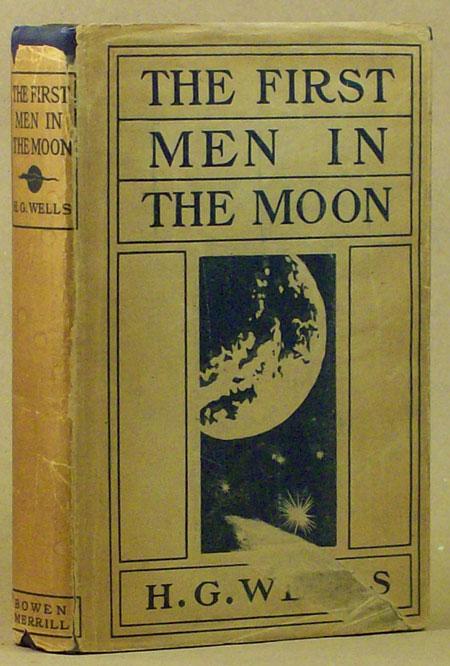
H. G. Wells's 1901 novel The First Men in the Moon is narrated by the businessman Bedford, who joins the reclusive scientist Cavor after Cavor invents cavorite, a gravity-blocking substance that carries the two men to the Moon. There they discover a vast underground civilization of insect-like Selenites, and the expedition that began as a hunt for lunar minerals turns into an encounter with an alien society. It is a standalone novel; later editions crediting Stephen Baxter add an introduction or afterword rather than a continuing story.
- Ender's Shadow
series5 books1999
part of Ender's Game Universe
similar byscience fictionpolitical intrigue
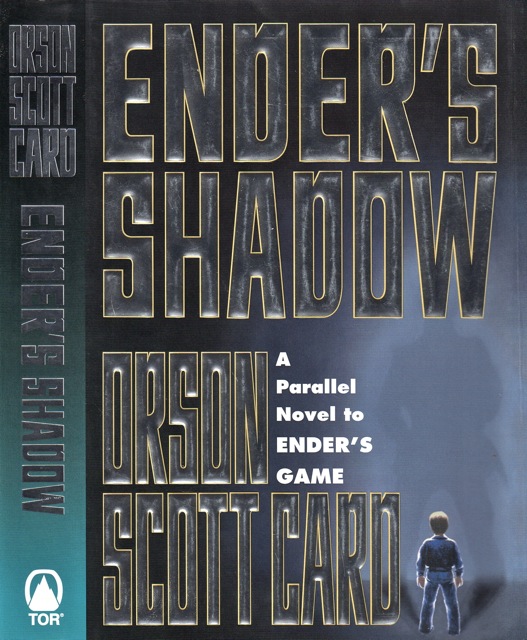
Orson Scott Card's Ender's Shadow retells the events of Ender's Game from the perspective of Bean, a physically stunted but ferociously intelligent street child recruited into the same Battle School program as Ender Wiggin. It launches the Shadow series, which follows Bean and other secondary Battle School characters into the political aftermath of the Formic Wars back on Earth, running parallel to and eventually past the timeline of Card's main Ender Quintet.
- Renegades (Marissa Meyer)
series3 books2017
similar byscience fictionour worldnear futureidentity+2 more
Renegades is set in Gatlon City after a civil war between the superheroic Renegades and the villainous Anarchists, and follows Nova, a young woman with the power to put people to sleep by touch, as she infiltrates the Renegades as a spy for her uncle's Anarchists and falls for Adrian, the adopted son of the Renegades' leaders. Marissa Meyer's trilogy, continuing through Archenemies and Supernova, plays the two factions' history against the leads' divided loyalties; Meyer has said she doesn't plan to extend the series further.
- Friday
Robert A. Heinleinstandalone novel1982
similar byscience fictionadventurousnear futureidentity+1 more
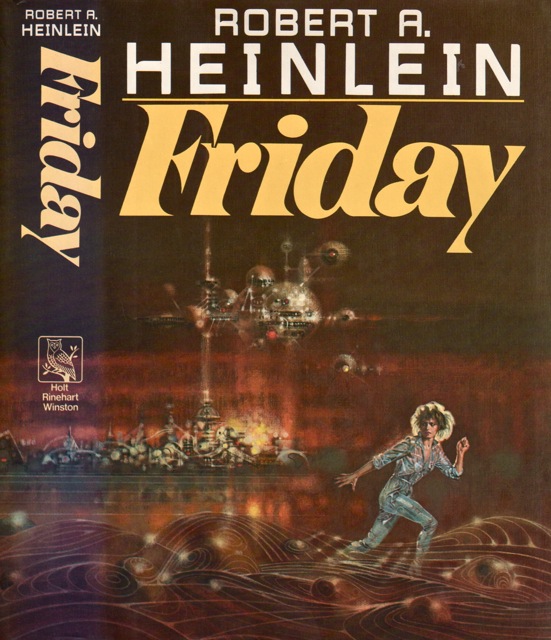
Friday is a 1982 science fiction novel by American writer Robert A. Heinlein. It is the story of a female "artificial person", the eponymous Friday, genetically engineered to be stronger, faster, smarter, and generally better than normal humans. Artificial humans are widely resented, and much of the story deals with Friday's struggle both against prejudice and to conceal her enhanced attributes from other humans. The story is set in a Balkanized 21st century, in which the nations of the North American continent have been split up into a number of smaller states.
- Blade Runner Universe
series6 books1968
similar byscience fictionnear futureidentity+2 more
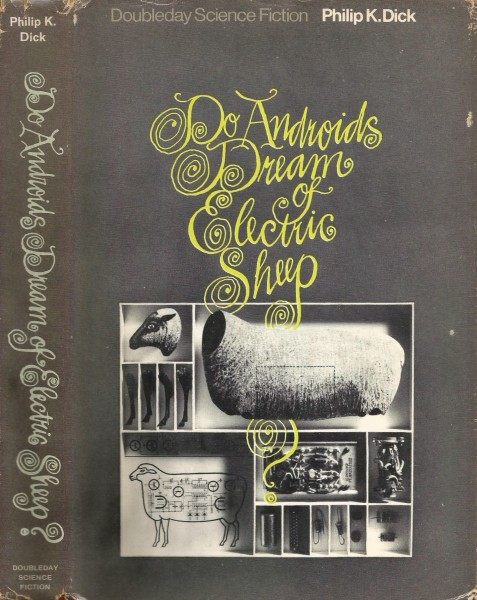
Philip K. Dick's 1968 novel Do Androids Dream of Electric Sheep? follows bounty hunter Rick Deckard as he tracks escaped androids through an irradiated, near-abandoned San Francisco, using the hunt to probe questions of empathy and what separates human from machine. The novel became the basis for Ridley Scott's 1982 film Blade Runner, and Marvel Comics later published an illustrated adaptation of that film. Together the two trace the story's path from prose original to screen and comic-page adaptation.
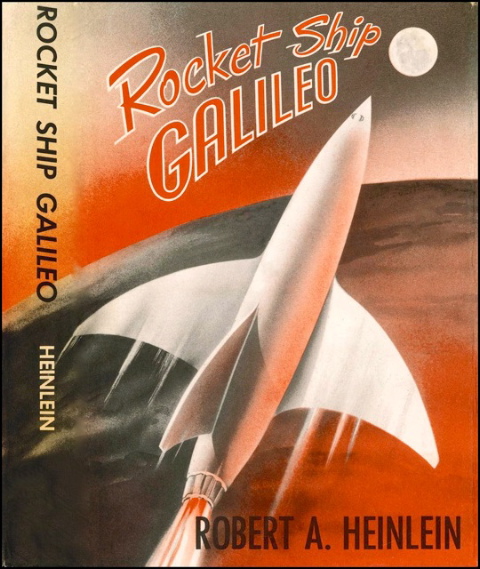
- Rocket Ship Galileo
Robert A. Heinleinstandalone novel1947
similar byscience fictionadventurousnear future+1 more
Three teenage boys do backyard experiments on powerful model rockets. An uncle who is an atomic engineer enlists them to make and fly the first rocket to the moon.