More like Odd Interlude
anchored on:horrorpsychic powersnorth americacontemporaryghost storiespsychological horror+3 more
but
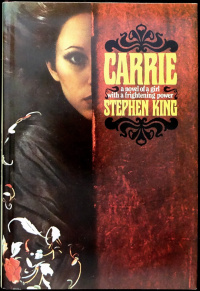
- Carrie
Stephen Kingstandalone novel1974
similar bypsychic powerscontemporarynorth americatensehorrorpsychological horror+1 more
In one way or another, everybody abused Carrie. This sixteen-year-old misfit was forbidden everything that was young and fun by her fanatical mother. She was teased and taunted by her classmates, misunderstood by her teachers, and given up as hopeless by almost everyone. But Carrie had a secret: She possessed terrifying telekinetic powers that could make inanimate objects move, a lighted candle fall, or a door lock. Carrie could make all kinds of startling bizarre, and malevolent things happen. (WorldCat)
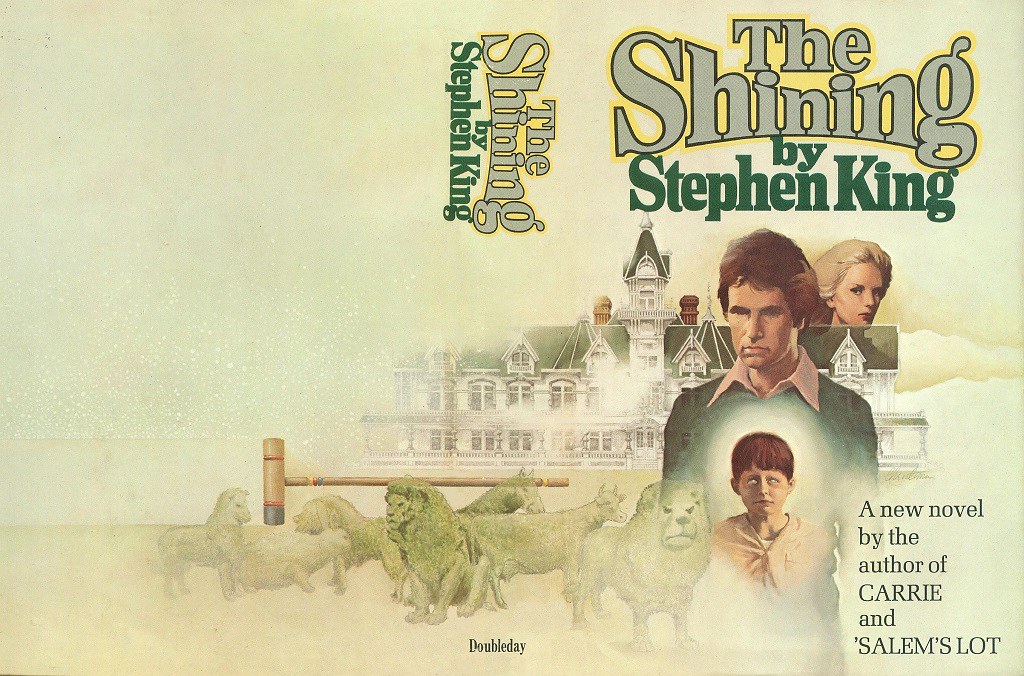
- The Shining
series5 books1977
similar bynorth americacontemporarypsychic powerstensehorror+3 more
Stephen King's 1977 novel The Shining follows the Torrance family as winter caretakers of the isolated, malevolent Overlook Hotel, where father Jack is gradually consumed by the hotel's influence while his young son Danny's psychic "shining" draws its attention. Doctor Sleep (2013) picks up the story decades later, following Danny as an adult still marked by that childhood ordeal. Together the two form a horror duology spanning nearly forty years of real-world publication.
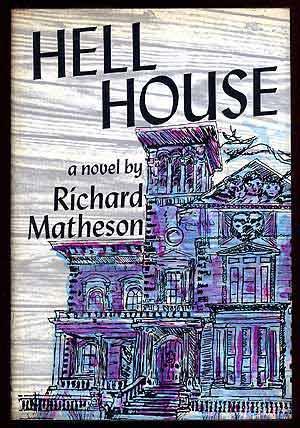
- Hell House
Richard Mathesonstandalone novel1971
similar bynorth americacontemporaryeerietensehorrorghost storiesmadness+1 more
A dying millionaire wants proof, once and for all, of what happens after death, and hires physicist-turned-parapsychologist Dr. Lionel Barrett to spend a week investigating the Belasco House in Maine -- a mansion so thoroughly associated with atrocity that it's known simply as Hell House, where every previous investigation has ended in death or madness. Barrett brings his wife Edith along with two mediums, the spiritualist Florence Tanner and Benjamin Franklin Fischer, survivor of an earlier disastrous visit, whose scientific skepticism and spiritualist convictions clash from the first night inside. Richard Matheson's haunted-house novel, later filmed as The Legend of Hell House.
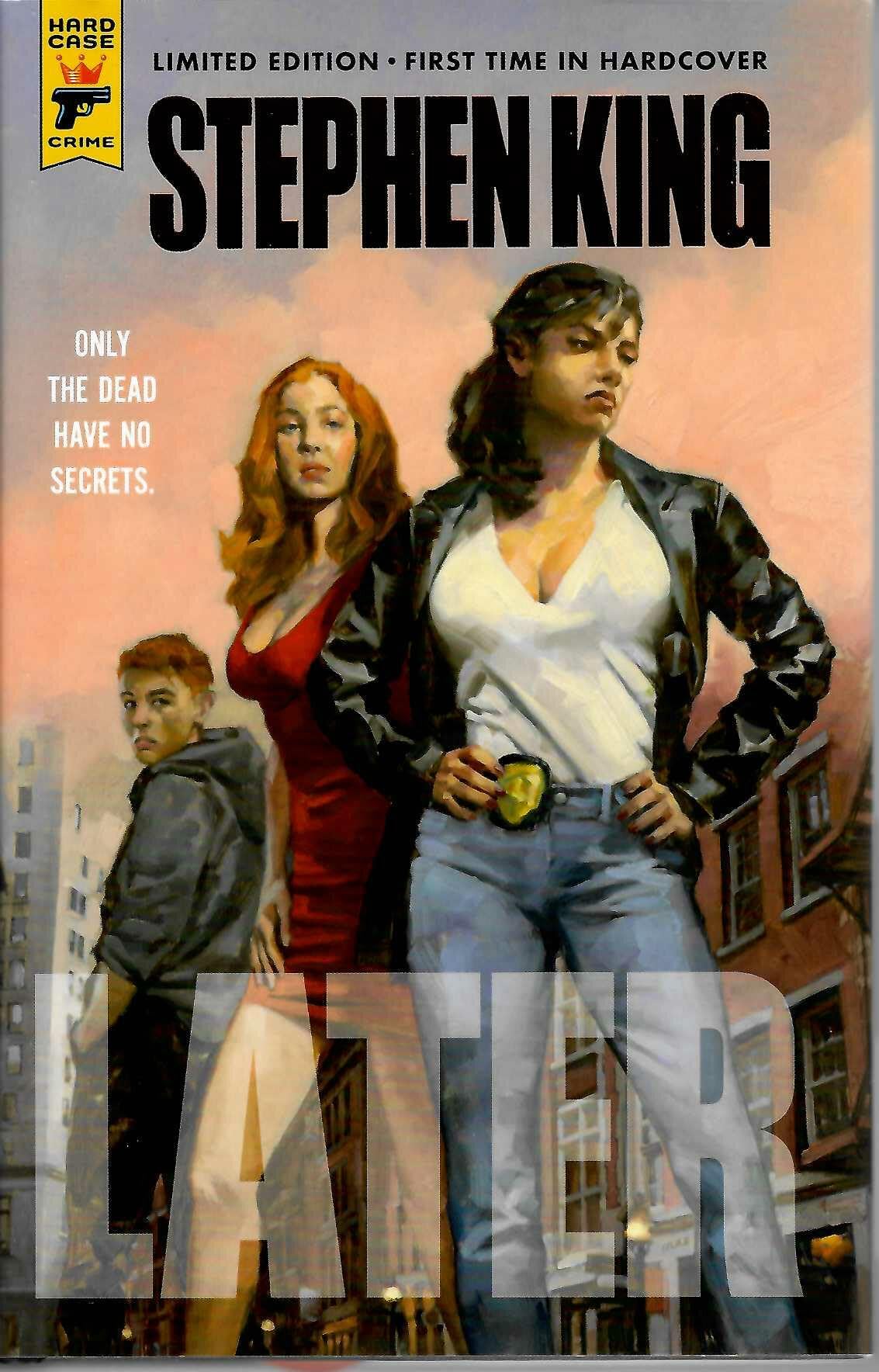
- Later
Stephen Kingstandalone novel2021
similar bypsychic powersnorth americacontemporaryeerietensehorrorghost stories
A young boy, with the power of seeing and talking with the recently deceased, and his single mother try to avoid personal and financial disasters.
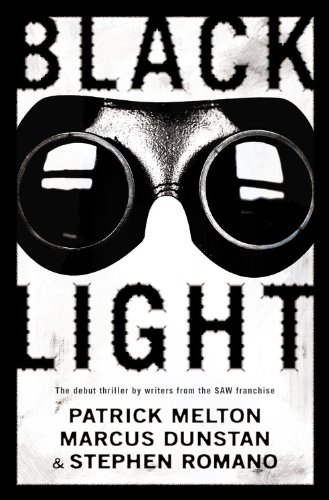
- Black Light
Patrick Melton, Marcus Dunstan & Stephen Romanostandalone novel2011
similar bypsychic powersnorth americacontemporaryeerietensehorrorghost stories
A psychic for hire, who disposes of malignant ghosts by absorbing them then excreting them, in the process experiences enhanced spiritual vision, the "Black light". He is hired by an enormously wealthy and powerful industrialist to defend the trial run of a bullet train from Los Angeles to Las Vegas, which passes through an area of the desert particularly notorious for powerfully evil ghost presences; the same area which took the lives of his father and mother when he was a child.
- Insomnia
Stephen Kingstandalone novel1994
similar bynorth americacontemporaryeerietensehorrormadness
When an elderly widower in Maine finds himself with sleep maintenance insomnia, awakening early every morning, this state of exhaustion allows him to perceive a higher state of reality, where he learns of an impending disaster which will shake not just the Earthly reality. but all the higher realities, and which he has been recruited to prevent.
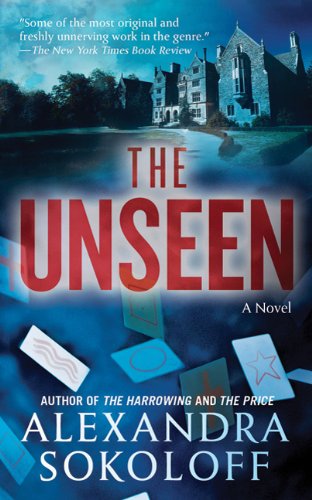
- The Unseen
Alexandra Sokoloffstandalone novel2009
similar bynorth americacontemporarypsychic powerseerietensehorrorpsychological horrormadness+1 more
After experiencing a precognitive dream that ends her engagement and changes her life forever, a young psychology professor from California decides to get a fresh start by taking a job at Duke University in North Carolina. She soon becomes obsessed with the files from the world-famous Rhine parapsychology lab experiments, which attempted to prove ESP really exists. Along with a handsome professor, she uncovers troubling cases, including one about a house supposedly haunted by a poltergeist, investigated by another research team in 1965. Unaware that the entire original team ended up insane or dead, the two professors and two exceptionally gifted Duke students move into the abandoned mansion to replicate the investigation, with horrifying results.
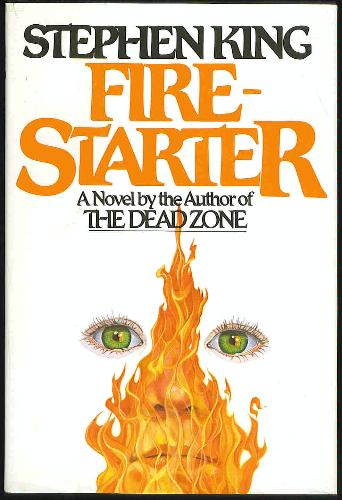
- Firestarter
Stephen Kingstandalone novel1980
similar bypsychic powersnorth americacontemporarytense+1 more
WorldCat: Innocence and beauty ignite with evil and terror... First, a man and a woman are subjects of a top-secret government experiment designed to produce extraordinary psychic powers. Then, they are married and have a child. A daughter. Early on the daughter shows signs of a wild and horrifying force growing within her. Desperately, her parents try to train her to keep that force in check, to 'act normal'. Now the government wants its brainchild back for its own insane ends.
- The Harrowing
Alexandra Sokoloffstandalone novel2006
similar bynorth americacontemporaryeerietensehorrorpsychological horrormadness
The Harrowing is a horror novel by American writer Alexandra Sokoloff. It was first published in 2006 by St. Martin's Press, and is the author's debut book, following a screenwriting career. According to Sokoloff's website, she was inspired to write the novel because of her experiences teaching to troubled teenagers in the Los Angeles County prison system. The Harrowing was nominated for the Bram Stoker Award for Best First Novel.
- A Stir of Echoes
Richard Mathesonstandalone novel1958
similar bypsychic powerseerietensenorth americahorrorghost stories
A Stir of Echoes is a supernatural novel by American writer Richard Matheson, published in 1958. It served as the inspiration for the 1999 film Stir of Echoes.
- White Smoke
Tiffany D. Jacksonstandalone novel2021
similar bynorth americacontemporaryeerietensehorrorghost stories+1 more
Marigold is running from ghosts. The phantoms of her old life keep haunting her, but a move with her newly blended family from their small California beach town to the embattled Midwestern city of Cedarville might be the fresh start she needs. Her mom has accepted a new job with the Sterling Foundation that comes with a free house, one that Mari now has to share with her bratty ten-year-old stepsister, Piper. The renovated picture-perfect home on Maple Street, sitting between dilapidated houses, surrounded by wary neighbors has its... secrets. That’s only half the problem: household items vanish, doors open on their own, lights turn off, shadows walk past rooms, voices can be heard in the walls, and there’s a foul smell seeping through the vents only Mari seems to notice. Worse: Piper keeps talking about a friend who wants Mari gone. But "running from ghosts" is just a metaphor, right? As the house closes in, Mari learns that the danger isn’t limited to Maple Street. Cedarville has its secrets, too. And secrets always find their way through the cracks.
- Jerusalem's Lot
series3 books1975
similar bycontemporarytensenorth americahorroreerie
Stephen King's 1975 novel 'Salem's Lot follows writer Ben Mears as he returns to his childhood town of Jerusalem's Lot, Maine, only to discover that its residents are being turned into vampires by a newly arrived stranger. It transplants Gothic vampire horror into a small New England community, tracking that community's collapse under a supernatural siege. It is a single, self-contained novel.
- The House on Moon Creek Avenue
E. Reyesstandalone novel2020
similar bycontemporaryeerietensenorth americahorrorghost storiesmadness
● "Cindy is a twenty-one-year-old single mother, retail worker, and college student. She inherits her grandmother's home on Moon Creek Avenue after she passes away. At first, the home is comfortable, nostalgic of Cindy's childhood at nana's, and her daughter enjoys the home, too. But soon, ghosts randomly appear day and night, doors open and close, a streak of bad luck begins, Cindy and her daughter have unsettling nightmares, and Cindy's mental state is pushed to the edge. When Cindy's video recording of paranormal activity goes viral on social media, she gets the attention of famous ghost hunters. Without anywhere else to turn, Cindy accepts their help." ― paraphrased from this book's product page on Amazon.com as of 2024-09-26.
- Abandon
Blake Crouchstandalone novel2023
similar bynorth americacontemporaryeerietensehorrorghost stories+1 more
On Christmas Day in 1893, every man, woman, and child in a remote mining town will disappear, belongings forsaken, meals left to freeze in vacant cabins, and not a single bone will be found -- not even the gold that was rumored to have been the pride of this town. One hundred and thirteen years later, two backcountry guides are hired by a leading history professor and his journalist daughter to lead them into the abandoned mining town so they can learn what happened. This has been done once before, but the people who went in did not come out. Joining them are a psychic and a paranormal photographer -- the town is rumored to be haunted. They've come to see a ghost town, but what they are about to discover is that twenty miles from civilization, with a blizzard bearing down upon them, they are not alone, and the past is very much alive.
- Duma Key
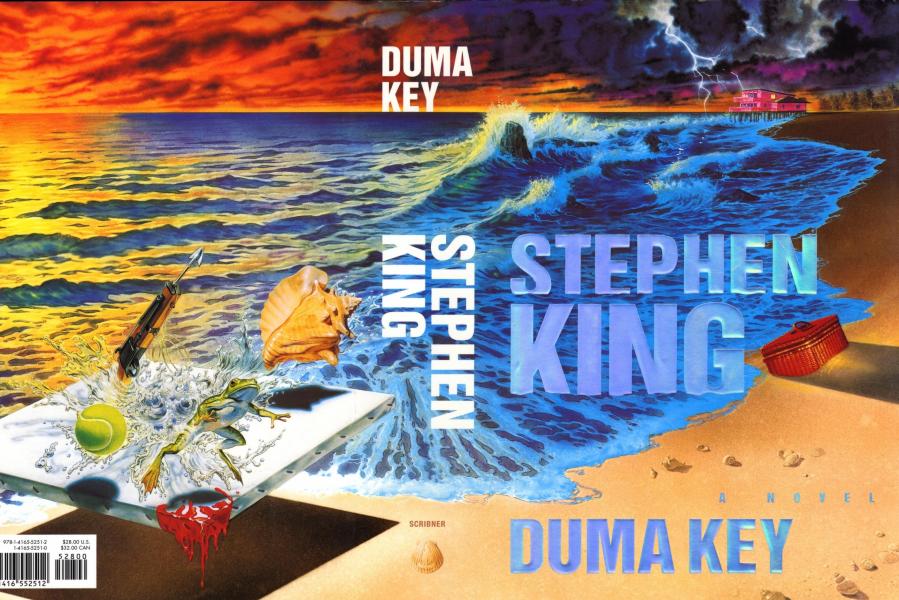
Stephen Kingstandalone novel2008
similar bynorth americacontemporaryeeriehorrorpsychological horror+1 more
A workplace accident crushes Edgar Freemantle's truck, costs him his right arm, and leaves him with brain damage that scrambles his speech and memory -- severe enough that his marriage doesn't survive. On his psychologist's advice, Edgar relocates alone to a beach house on Duma Key, a quiet stretch of Florida's Gulf coast, taking up sketching as therapy, hiring a local student as an assistant and befriending an elderly heiress with dementia and her caretaker. But the drawings that pour out of him start showing things he has no way of knowing -- secrets about the people he loves, and the island itself. A standalone novel by Stephen King.
- Burnt Offerings
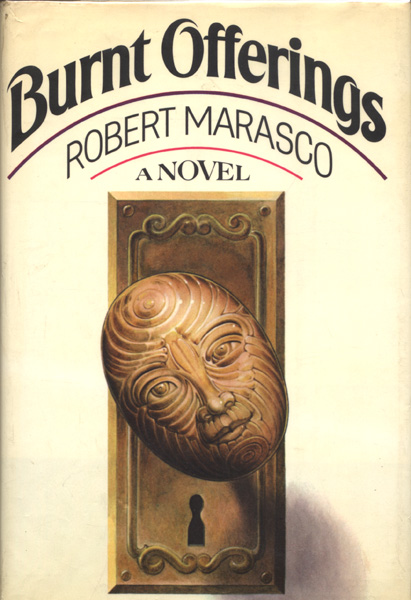
Robert Marascostandalone novel1973
similar bynorth americacontemporaryeerietensehorrormadness
Burnt Offerings is a 1973 American horror novel by Robert Marasco. Its plot follows a family who move into a summer home where each member is plagued by unusual experiences and personality changes. Published by Delacorte Press, the novel had originally been conceived as a screenplay before Marasco rewrote it into a novel. It was adapted into a film of the same name in 1976. The novel was reprinted in 2015 by Valancourt Press.
- Dead Lines
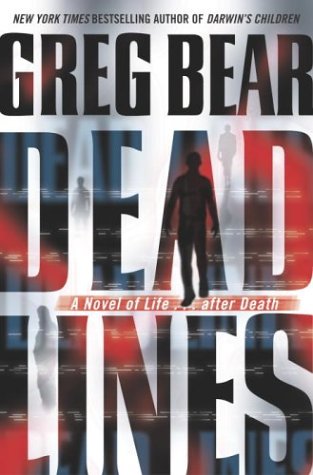
Greg Bearstandalone novel2004
similar bycontemporaryeerienorth americahorrorghost storiesmadness+1 more
From the flaps of the Ballantine first edition: "For the last two years, Peter Russell has mourned the death of one of his twin daughters - who was just ten when she was murdered. Recent news of his best friend's fatal heart attack has now come as another devastating blow. Divorced, despondent, and going nowhere in his career, Peter fears his life is circling the drain. Then Trans comes along. The brainchild of an upstart telecom company, Trans is (as its name suggests) a transcendent marvel, a sleek, handheld interpersonal communication device capable of flawless operation anywhere in the world, at any time. "A cell phone, but not" - transmitting with crystal clarity across a newly discovered, never-utilized bandwidth... and poised to spark a new-technology revolution. When its creators offer Peter a position on their team, it should be a golden opportunity for him. If only he wasn't seemingly going mad. Everywhere Peter turns, inexplicable apparitions are walking before him or reaching out in torment. After a chilling encounter with his own lost child he begins to grasp the terrifying truth: Trans is a Pandora's box that has tapped into a frequency not of this world... but of the next. And now, via this open channel to oblivion, the dead have gained access to the living. For Peter, and for humankind, a long shadowy night of the soul has descended, bringing with it the stuff of a horrifying nightmare from which they may never awaken."
- Stranger with My Face
Lois Duncanstandalone novel1981
similar bypsychic powersnorth americaeerietensehorrorpsychological horror
Stranger with My Face is a young adult horror novel by Lois Duncan, first published in 1981. The novel is about the Native American Laurie Stratton, who is seen by others in places which she knows she could not be. She discovers that she has an identical twin sister named Lia who has been visiting her town using astral projection, which involves sending her soul outside her body. Laurie learns astral projection and uses it to look for her sister. During this time, Lia's spirit takes control of Laurie's body. The story describes Laurie's struggle to take back control of her body. The novel explores themes of appearance versus true self and the idea of a double, someone similar but not quite the same as someone else. Duncan got the idea for the book after hearing about the concept of astral projection, which she thought would make a great plot for a novel. In 2011, the novel was updated with text to modernize the content.
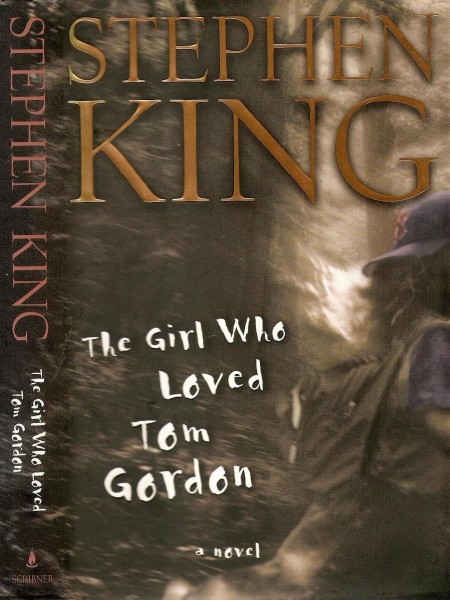
- The Girl Who Loved Tom Gordon
Stephen Kingstandalone novel1999
similar bynorth americacontemporarytensehorrorpsychological horror+1 more
A nine year old girl becomes lost in the Maine forest while on a day hike with her family, and finds the strength to survive in her idolizing of the Red Sox closing pitcher.
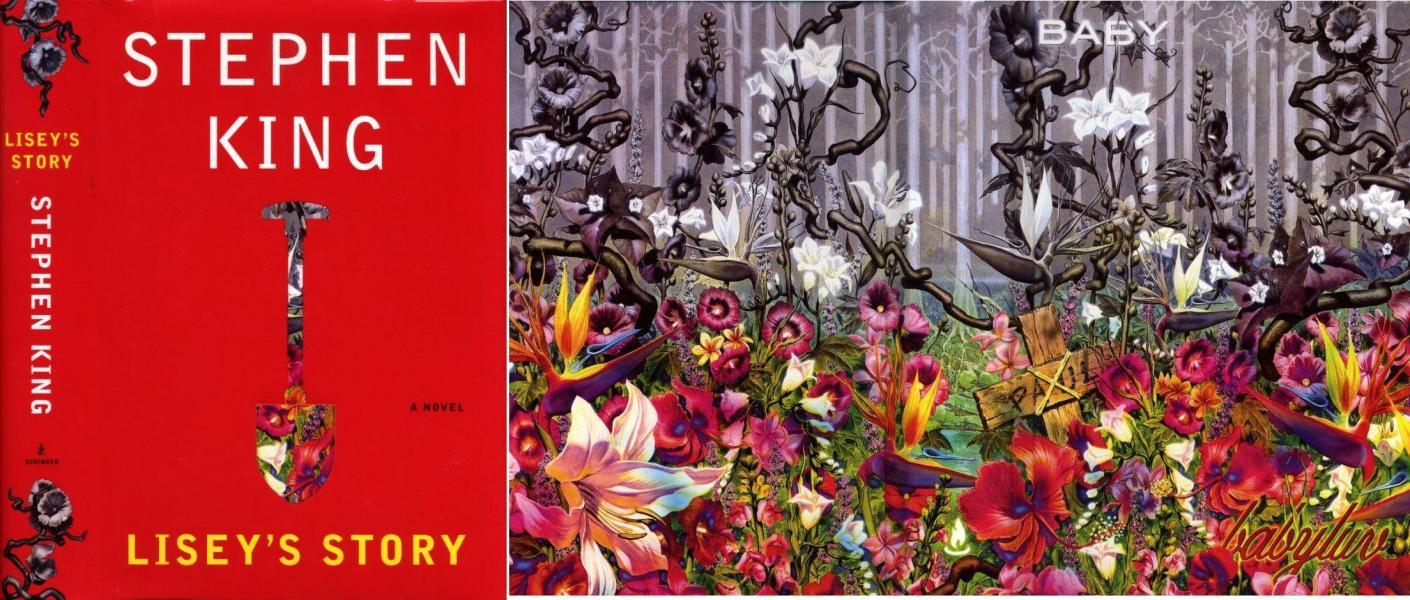
- Lisey's Story
Stephen Kingstandalone novel2006
similar bycontemporaryeerienorth americahorrorpsychological horror+2 more
When the widow of a successful author is targeted by a psychopath, she must make use of the ability to shift to a parallel world, which she learned from her husband.
- Wildwood Road
Christopher Goldenstandalone novel2005
similar bycontemporaryeerietensenorth americahorrorghost stories+1 more
Michael and Jillian Dansky seemed to have it all--a happy marriage, two successful careers, a bright future. But late one October evening, all that changed. Driving home from a Halloween masquerade, Michael momentarily nods off behind the wheel--and wakes to find nothing is the same.Standing by his car is the little girl he came within a breath of running down. She leads Michael to her "home," an empty house haunted by whispers, and sends him away with a haunting whisper of her own: "come find me." But in the weeks to follow, it's clear that someone--or some thing--doesn't want Michael to find her: ominous figures in grey coats with misshapen faces are following him everywhere. And then Jillian wakes one morning replaced by a cold, cruel, vindictive woman Michael hardly recognizes as his wife. Michael must now search not only for the lost girl, but for a way to find the Jillian he's always loved, and to do so he must return to where the nightmare began. Down an isolated lane where he'll find them, or die trying.From the Trade Paperback edition.
- Harvest Home
Thomas Tryonstandalone novel1973
similar bynorth americacontemporaryeerietensehorror
What is the dark secret the people (especially the women!) of Harvest Home are hiding? A family tries to get out of the City and finds the perfect home for their young daughter complete with folk remedies for her allergies and sensitivities in the local wisewoman. But is there something sinister under the surface of the charming little town?
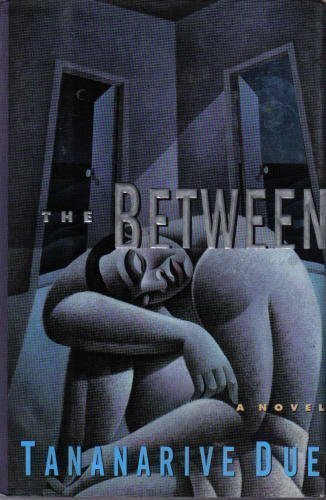
- The Between
Tananarive Duestandalone novel1995
similar bynorth americacontemporaryeeriehorrorpsychological horrormadness
The Between is a 1995 horror novel by Tananarive Due and her debut novel. It follows a middle-class African-American husband and father who has lived with the belief that he cheated death as a child. When his family becomes the target of racist threats, he suffers a psychological breakdown intertwined with supernatural elements that blur the boundary between reality and death. It was nominated for the 1996 Bram Stoker Award.
- The Institute
Stephen Kingstandalone novel2019
similar bypsychic powersnorth americacontemporarytensehorror
The Institute is a 2019 American science fiction-horror novel by Stephen King, published by Scribner. The book follows twelve-year-old genius Luke Ellis. When his parents are murdered, he is kidnapped by intruders and awakens in the Institute, a facility that houses other abducted children who have telepathy or telekinesis. The Institute was published on September 10, 2019, and met with generally positive reviews.