More like Omen
anchored on:science fictionspace operagalactic scalefar futurepsychic powersadventurous+1 more
but
- The Saga of Seven Suns Universe
series16 books2002
similar byfar futurescience fictionspace operagalactic scaletenseadventurouswar+1 more
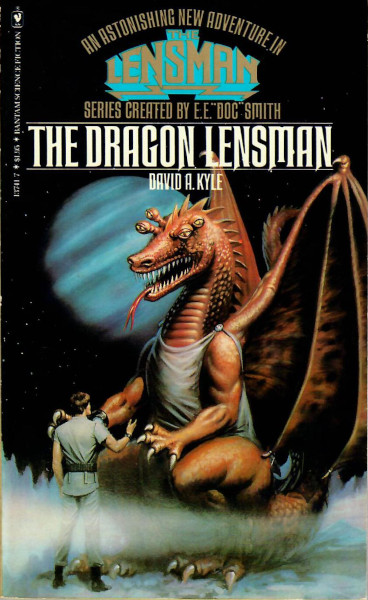
- Authorized Lensmen Trilogy
series3 books1980
completed
part of Lensman
similar byfar futurepsychic powersscience fictionspace operaadventurousgalactic scale+3 more
- Dune
series20 books1963
part of Dune Universe
similar byfar futurescience fictionpolitical intriguespace opera+2 more
Frank Herbert's Dune Chronicles opens with 1965's Dune, set on the desert planet Arrakis where House Atreides takes control of the only source of the vital spice melange and young Paul Atreides is pulled into a struggle over its politics and religion. Herbert carried the story forward across five further novels — Dune Messiah, Children of Dune, God Emperor of Dune, Heretics of Dune, and Chapterhouse: Dune — following Paul's line over the following millennia, before Brian Herbert and Kevin J. Anderson later extended the saga. Many other editions of these six novels are omnibus and box-set repackagings rather than separate stories.
- Mistworld Universe
series12 books1992
similar byfar futurescience fictionspace operagalactic scaleadventurouswar+2 more
- Vatta's War
series6 books2003
part of Vatta
similar byfar futurescience fictionadventuroustensespace operapolitical intriguewar
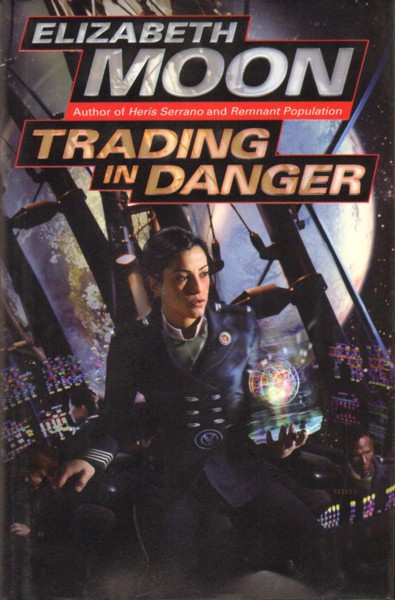
Vatta's War is a science fiction series by American writer Elizabeth Moon, comprising five books: Trading in Danger (2003), Marque and Reprisal, Engaging the Enemy (2006), Command Decision (2007), and Victory Conditions (2008). They have been characterized as military science fiction similar in style to the works of Lois McMaster Bujold, David Weber and Walter Jon Williams.
- Dune Universe
universe78 books1963
Start hereDune · Start here
similar byfar futurescience fictionspace operapolitical intrigue+1 more
Arrakis. Dune. The desert planet, where empire runs on a single substance: the spice melange, which folds space, prolongs life, and unlocks prescience, and which exists nowhere else in the known universe. Frank Herbert's saga is a meditation dressed as an adventure — feudal houses and a secret sisterhood, engineered messiahs and the patient ecology of a world without water, all turning on the terrible gravity of who commands the spice. It reads like scripture and schemes like a war room, ten thousand years hence, among people who have outlawed the thinking machine and made instruments of themselves instead. At its heart stand Herbert's original six — Dune, Dune Messiah, Children of Dune, God Emperor of Dune, Heretics of Dune, Chapterhouse: Dune — a single deepening arc across millennia, arguing the whole way between prophecy and free will. Around that spine his son Brian Herbert and Kevin J. Anderson have raised a vast prequel architecture: Prelude to Dune, tracing the great houses a generation before Paul; Legends of Dune, reaching back to the crusade that broke the machines; the Schools of Dune cycle on the founding of Bene Gesserit, Mentat, and Navigator; the Caladan Trilogy and Heroes of Dune filling years the originals left in shadow. Many hands, dozens of volumes, one desert. What sets Dune apart is its refusal of the simple: religion is manufactured, heroes are hazards, and the sand itself — worm, water, ecology — acts as a political power. Begin where the universe did, with Frank Herbert's Dune (1965), and read the original six in order; you need nothing else to feel the full weight. The prequels are a country to explore afterward, taken by era. Beginnings are delicate times.
- Honor Harrington
series14 books1993
part of Honorverse
similar byfar futurescience fictiontensespace operapolitical intriguewar+1 more
David Weber's Honor Harrington novels follow the title character's rise through the Manticoran navy in the 'Honorverse,' a space-opera setting built around Age-of-Sail-style naval combat, interstellar politics and a decades-long war between rival star nations. Beginning with On Basilisk Station, the core series runs to fourteen books, alongside spin-off subseries, prequels and shared-world anthologies also set in the Honorverse. It's one of the longest-running modern military science fiction series, published by Baen.
- Hellhole
series3 books2011
similar byfar futurescience fictionadventurousspace operatensepolitical intrigue+2 more
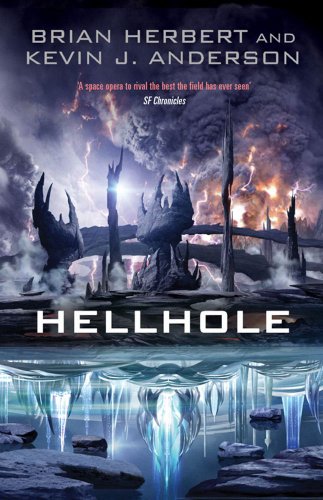
Brian Herbert and Kevin J. Anderson's Hellhole trilogy follows the settlers of a harsh penal-colony planet who discover it hides a far stranger secret beneath its surface, even as a former general turned governor plots rebellion against the ruling Constellation. Hellhole: Awakening and Hellhole: Inferno escalate both the political revolt and the planet's own hidden nature. It's an original setting for the two authors, separate from their Dune continuation work.
- Azean Empire
series2 books1987
similar byfar futurescience fictiontensespace operapolitical intriguewar+2 more
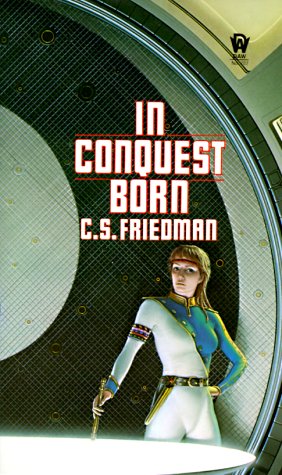
C. S. Friedman's Azean Empire novels are set in a distant-future conflict between two competing human societies, the Azeans and the Braxins, contesting interstellar dominance. In Conquest Born, her debut, works as space opera and military SF with an anthropological bent, using the two societies' opposed cultures and reproductive philosophies as the real engine of the conflict rather than just the battles themselves. The Wilding continues the same interstellar rivalry.
- Void Trilogy
series4 books2007
part of Commonwealth Universe
similar byfar futuregalactic scalescience fictionspace operaadventurous+2 more
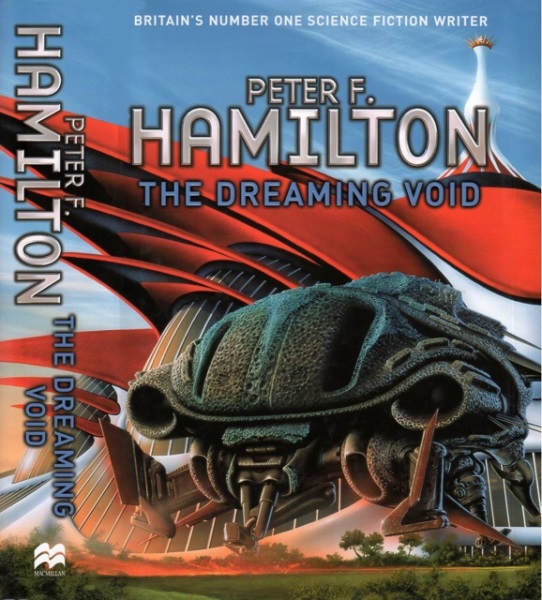
The Void Trilogy is a space opera series by British author Peter F. Hamilton. The series is set in the same universe as The Commonwealth Saga, 1,200 years after the end of Judas Unchained.
- Sten
series11 books1982
completed
similar byfar futurescience fictionadventurousspace operapolitical intriguewar+2 more
The Sten Chronicles, also called The Sten Adventures, are a series of eight military science fiction and space opera novels by Chris Bunch and Allan Cole published from 1982 to 1993. The series was originally published by Del Rey and then re-released by Orbit.
- Exordium
series5 books1993
similar byfar futurescience fictionspace operaadventurousgalactic scaletensepolitical intriguewar
- Culture
series15 books1987
completed
part of The Culture
similar byfar futuregalactic scalescience fictionspace opera+3 more
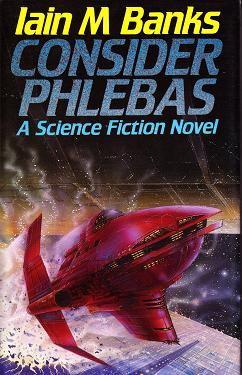
The Culture series is a science fiction series written by Scottish author Iain M. Banks and released from 1987 until 2012. The stories centre on The Culture, a utopian, post-scarcity space society of humanoid aliens and advanced superintelligent artificial intelligences living in artificial habitats spread across the Milky Way galaxy. The main themes of the series are the dilemmas that an idealistic, more-advanced civilization faces in dealing with smaller, less-advanced civilizations that do not share its ideals, and whose behaviour it sometimes finds barbaric. In some of the stories, action takes place mainly in non-Culture environments, and the leading characters are often on the fringes of the Culture, sometimes acting as agents of the Culture in its plans to civilize the galaxy. Each novel is a self-contained story with new characters, although reference is occasionally made to the events of previous novels.
- Whipping Star
Frank Herbertstandalone novel1970
similar bygalactic scalefar futurescience fictionadventurousspace operapolitical intrigue
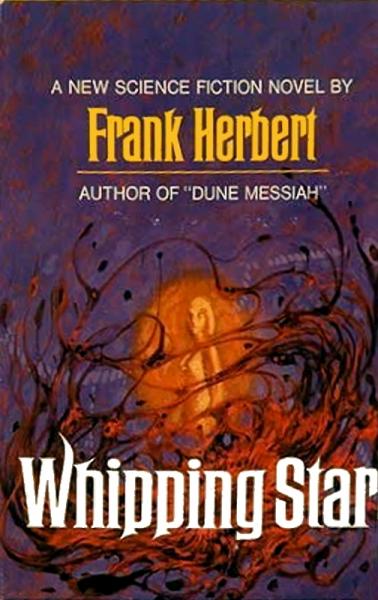
From Amazon: In the far future, humankind has made contact with numerous other species: Gowachin, Laclac, Wreaves, Pan Spechi, Taprisiots, and Caleban, and has helped to form the ConSentiency to govern among the species. After suffering under a tyrannous pure democracy, the sentients of the galaxy find the need for a Bureau of Sabotage (BuSab) to slow the wheels of government, thereby preventing it from legislating recklessly. BuSab is allowed to sabotage and harass the governmental, administrative, and economic powers in the ConSentiency. Private citizens must not be harassed, and vital functions of society are also exempt. Jorj X. McKie is a born troublemaker who has become one of BuSab's best agents. Drafted for the impossible task of establishing meaningful communication with an utterly alien entity who defies understanding, McKie finds himself racing against time to prevent a mad billionairess from wiping out all life in the ConSentiency.
- Vatta
universe10 books2003
Start hereVatta's War · Start here
similar byfar futurescience fictionspace operaadventuroustense+2 more
Get kicked out of the Academy and the family still hands you a ship. That is the arithmetic Kylara Vatta lives by. Born into Vatta Transport, Ltd. — a dynasty of interstellar traders who reckon their honor in delivered cargo and honored contracts — Ky wants a soldier's commission and gets a merchant hull instead. Then someone starts murdering her relatives and burning the ledgers, and the daughter learns that a trade fleet, armed and angry, is its own kind of war. This is military science fiction run on a merchant's books. The core cycle, Vatta's War, moves in five volumes — Trading in Danger, Marque and Reprisal, Engaging the Enemy, Command Decision, Victory Conditions — as piracy, a sabotaged faster-than-light communications network, and a scattered family push Ky from cautious captain to fleet commander. The later duology Vatta's Peace (Cold Welcome, Into the Fire) drops her, older and decorated, into a colder survival ordeal on her own homeworld. Moon writes clean, competent, procedural: supply lines and boarding actions, chains of command, the cost of a signature on a bad contract. Expect capable women, hard decisions costed to the last credit, and space combat that respects physics and paperwork alike. Begin at the beginning — Trading in Danger — and read straight through in publication order; the arc is chronological and cumulative, no side doors required.
- Commonwealth Saga
series2 books2004
part of Commonwealth Universe
similar byfar futurescience fictionspace operatensepolitical intrigue+2 more
The Commonwealth Saga is a series of science fiction novels by British science fiction writer Peter F. Hamilton. This saga consists of the novels Pandora's Star (2004) and Judas Unchained (2005). Hamilton has also written several books set in the same literary universe. Misspent Youth (2002) takes place 340 years before the events of Pandora's Star. The Void Trilogy, consisting of The Dreaming Void (2008), The Temporal Void (2009), and The Evolutionary Void (2010), takes place 1,200 years after the events of Judas Unchained; several of the main characters from Judas Unchained and Pandora's Star also appear in the Void trilogy.
- Janissaries
series4 books1979
similar byfar futurescience fictionadventuroustensepolitical intriguewar+1 more
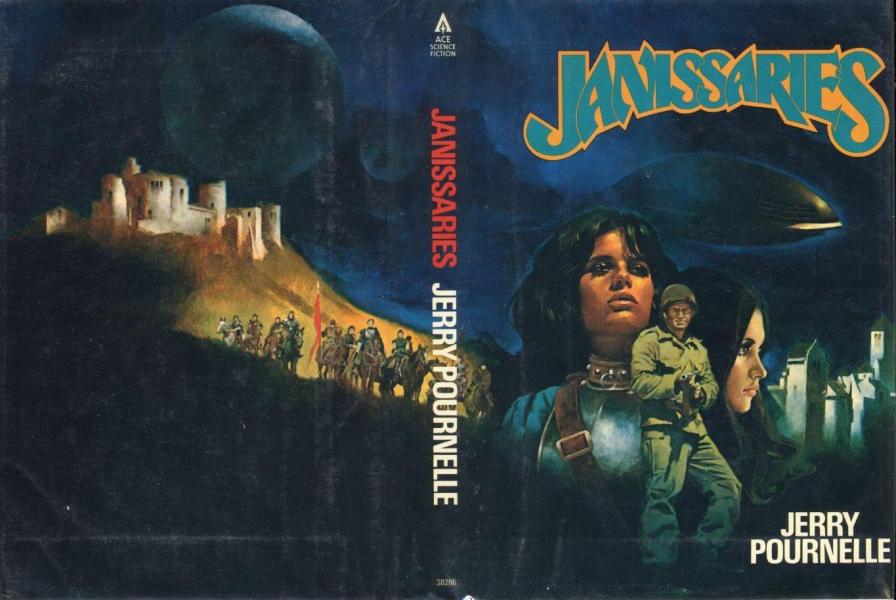
Janissaries are an American series of military and political-based science fiction novels are set in an interstellar confederation of races, in which humans are a slave race entrusted with military affairs and law enforcement. They were written by Jerry Pournelle, with Roland J. Green co-authoring the second two books.
- Tower and the Hive
series7 books1959
completed
part of The Talents
similar bypsychic powersfar futurescience fictionspace opera+3 more
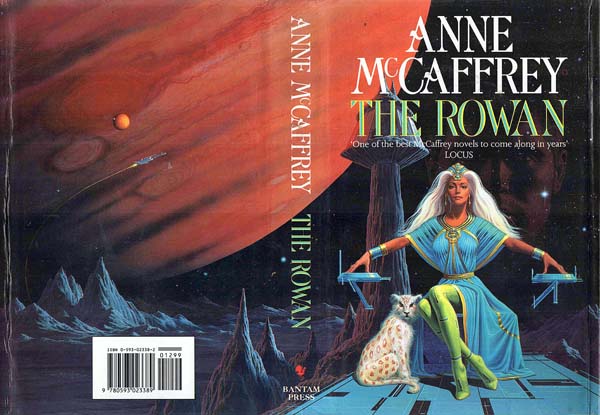
The Tower and the Hive series opens with The Rowan (1990), following an isolated but powerful telepath who is drawn out of her loneliness by a psychic call for help from a distant Talent facing an alien threat. Anne McCaffrey continued the story across four more novels, Damia, Damia's Children, Lyon's Pride, and the concluding The Tower and the Hive (1999), following later generations of a telepathic family staffing the Prime Towers that give a starfaring human civilization instant communication. The series is set later in the same Talents universe as McCaffrey's earlier Pegasus books.
- Fifth Imperium
series3 books1991
similar byfar futurescience fictionspace operaadventuroustensewar+1 more
David Weber's Fifth Imperium series opens with the discovery that Earth's Moon is in fact a disguised alien starship, the Dahak, that has orbited undetected for tens of thousands of years - a relic of the fallen Fourth Imperium, a multi-star civilization destroyed while defending against the genocidal Achuultani. Mutineers' Moon follows humanity's first contact with Dahak and the mutineers still aboard it; The Armageddon Inheritance and Heirs of Empire escalate from that discovery into interstellar war and dynastic politics as humanity inherits the old empire's legacy and its enemies. The three novels were later collected as the omnibus Empire from the Ashes.
- The Interdependency
series3 books2017
similar byfar futurescience fictionspace operaadventuroustensegalactic scalepolitical intrigue
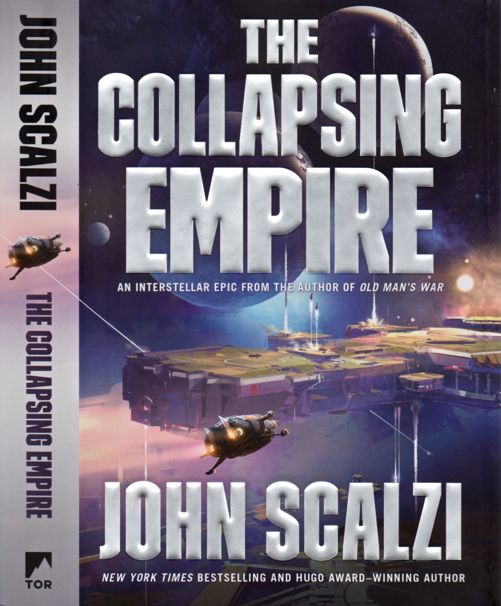
The Interdependency follows the collapse of a wormhole-linked network called the Flow that connects humanity's scattered, otherwise-uninhabitable colonies, forcing an emperox, a scientist studying the collapse, and a scheming trading family to confront a looming interstellar crisis. John Scalzi's trilogy, beginning with The Collapsing Empire, follows the political and personal fallout as the empire's foundations unravel.
- Moties
series4 books1974
part of CoDominium
similar byfar futurescience fictionspace operapolitical intrigue+3 more
Larry Niven and Jerry Pournelle's The Mote in God's Eye (1974) depicts humanity's first contact with an alien species, the Moties, set within the far-future interstellar setting of Pournelle's codominium future history. The Gripping Hand continues that first-contact crisis years later, and Outies, written by J. R. Pournelle, carries the story forward into a new generation. Together the three books trace an escalating encounter between human and Motie civilizations within the codominium universe.
- Old Man's War
series16 books2005
similar byfar futurescience fictionadventurouswarspace opera+2 more
The Old Man's War series is a series of science fiction novels by John Scalzi. The first book in the series, Old Man's War, was first published in 2005 by Tor Books, and was nominated for the Hugo Award for Best Novel in 2006. In 2026 it was a finalist for the Hugo Award for Best Series.
- Chanur
series7 books1982
part of Alliance-Union Universe
similar byfar futurescience fictionadventuroustensespace operapolitical intrigue
The Chanur novels are a series of five science fiction novels, forming three separate stories, written by American author C. J. Cherryh and published by DAW Books between 1982 and 1992. The first novel in the series is The Pride of Chanur (1982), which was nominated for both the Hugo and Locus Awards in 1983. The Pride of Chanur, originally a stand-alone story, was followed by the Chanur's Venture trilogy, Chanur's Venture (1984), which was shortlisted for a Locus Award in 1985; The Kif Strike Back (1985) and Chanur's Homecoming (1986). These were followed by a later sequel, Chanur's Legacy (1992). The five novels were also published in two omnibus editions: the first three in The Chanur Saga in 2000 and the next two in Chanur's Endgame in 2007.
- RCN
series15 books1998
completed
similar byfar futurescience fictionadventurousspace operatensepolitical intriguewar
David Drake's RCN series follows Daniel Leary, an officer in the Republic of Cinnabar Navy, and Adele Mundy, a librarian who moonlights as a spy, across a run of standalone-but-connected novels beginning with With the Lightnings. Drake and reviewers alike have framed it as an SF version of Patrick O'Brian's Aubrey/Maturin novels, and it plays that way: political intrigue and shipboard command dynamics carry as much weight as the space battles. It's more character-driven than Drake's harder-edged Hammer's Slammers work.