Loreful
HomeDiscover
Search series, authors…⌘K
Loreful

Reading orders for SF/F series and shared universes — with your place kept in every one.

Explore

UniversesSeriesWorksAuthorsAtlas

Help

FAQAboutSite map

Account & legal

Sign inCreate accountPrivacyTerms

Data

Built on ISFDB, Wikipedia, Wikidata and Open Library. Curated reading orders carry their reasoning on the page; the rest follow publication order. Data sources & licenses

© Loreful · data: ISFDB · CC BY

More like Operation Snake

anchored on:thriller & suspensespy thrillermid 20th centurytenseassassinssouth asia+1 more

but

Mood

The mood the book leaves you in.

  • The reading experience is propelled by journeys, exploration, and physical risk; excitement and forward momentum dominate over dread or introspection.
  • Joy and loss are deliberately mixed; the resolution grants characters something real while taking something else away, leaving warmth and sorrow together.
  • The book demands work from the reader — dense prose, difficult structure, unfamiliar ideas, or morally uncomfortable material — as part of its intended effect.
  • Grim events, cruelty, or despair dominate the atmosphere, and the book does not soften them with comfort or comic relief.
  • The atmosphere is quietly unsettling — wrongness, unease, and the uncanny pervade the book without necessarily escalating into overt horror.
  • The book is built to move the reader; character feeling is foregrounded and major scenes aim at a strong emotional response.
  • Humor is a primary aim and the prose plays for laughs — comic situations, wit, or dialogue produce sustained comedy, not occasional levity.
  • The book insists that things can improve; effort and decency are shown to matter, and the arc bends toward better outcomes even through hardship.
  • The book teaches as it goes — real facts, history, science, or craft are conveyed in enough depth that learning is part of the reading experience.
  • The book is designed to uplift and motivate, presenting perseverance or achievement in a way that invites the reader to aspire or act.
  • The overall register is cheerful and easygoing; stakes are kept gentle and the book avoids dwelling on pain or dread.
  • Withheld information drives the experience; the book sustains enigmas and secrets the reader wants resolved, whatever its genre.
  • The book is contemplative and inward-looking, giving more weight to thought, memory, and meaning than to external events.
  • The book works as comfort reading — low tension, a soothing pace, and an atmosphere the reader can unwind in.
  • Grief, loss, or melancholy set the dominant register, and the book lets sorrow stand rather than resolving it into comfort.
  • Sustained suspense is the point; the book keeps the reader braced for what happens next through danger, pressure, or impending revelation.
  • Playful invention and charm define the register — fanciful conceits, light absurdity, and a narration that delights in its own oddity.

About

What the story runs on.

  • Stories in which extraterrestrial beings are central — as characters, cultures, or the object of the plot.
  • Stories about venturing into space to explore — survey missions, astronauts, and the frontier of the unknown beyond Earth.
  • Stories structured as a quest — a journey undertaken to find, deliver, or destroy something of great import.
  • Stories in which staying alive against nature, catastrophe, or scarcity is the central problem.
  • Stories of lovers kept apart by law, family, faith, or station, where the obstacle to love is the plot.
  • Stories in which a friendship — its making, testing, or loss — is the emotional center.
  • Stories of growing up — a young protagonist crossing from childhood into adult knowledge and responsibility.
  • Stories about who a character truly is — self-discovery, doubled lives, and the search for a self.
  • Stories in which a buried family truth — hidden parentage, crimes, or shames — surfaces and reorders the present.
  • Stories driven by maneuvering for power — factions, conspiracies, and statecraft conducted in shadow.
  • Stories in which war itself is the subject — combat, occupation, and what warfare does to soldiers and civilians.
  • Stories organized around investigating a killing — the case, the clues, and the pursuit of the killer, in any genre's clothing.

Shelf

Where it sits in the library.

    • Fiction built on magic or other supernatural elements that have no scientific explanation.
    • Secondary-world fantasy at large scale, where the fate of nations or the world turns on the protagonists' struggle.
    • Fantasy set in a recognizably modern city or contemporary world where the supernatural intrudes on everyday life.
    • Fantasy that blends in horror's atmosphere and imagery, keeping a fantastical frame around grim or frightening material.
    • Action-driven fantasy following warriors or rogues with personal stakes against sorcerous threats, rather than world-spanning conflicts.
    • Fantasy set in a real historical period or a close analogue of one, with magic woven into the era.
    • Fantasy in which protagonists cross from the ordinary world into another world through a portal or similar passage.
    • Fiction that retells or reworks a traditional fairy tale in a new form or setting.
    • Fantasy drawing directly on myths, legends, and folklore, retelling them or building on their figures and logic.
    • Fantasy of ghosts, vampires, shapeshifters, psychics, and similar phenomena, usually set in an otherwise ordinary world.
    • Fiction mixing science-fictional trappings with overtly magical or impossible elements in one setting.
    • Low-stakes fantasy emphasizing comfort, community, and everyday pleasures over conflict and peril.
    • Speculative fiction of pervasive moral ambiguity, violence, and cynicism that rejects heroic conventions — fantasy and SF alike.
      • Fiction that extrapolates from science and technology — future societies, space travel, or speculative inventions — within at least nominally natural laws.
      • Science fiction of interstellar scope — starships, galactic polities, and adventure across star systems.
      • Science fiction committed to scientific rigor, where technical plausibility constrains the story.
      • Science fiction centered on armed forces and warfare, told largely from a military point of view.
      • Science fiction of networked, corporate-dominated near futures, pairing high technology with social decay.
      • Science fiction styled on nineteenth-century steam-powered technology, often in a Victorian or pseudo-Victorian setting.
      • Fiction depicting an oppressive or catastrophic society, presented as a warning.
      • Fiction set after civilization's collapse, following survivors in the ruins of the old world.
      • Fiction in which characters move between past and future, and the mechanics or consequences of that travel drive the plot.
      • Fiction exploring a world where a historical event went differently and history diverged from ours.
      • Science fiction about humanity's first encounter and communication with an alien intelligence.
      • Science fiction in which extraterrestrial forces attack or occupy Earth and humanity resists.
      • Fiction whose primary aim is to frighten or unsettle the reader through dread, menace, or the monstrous.
      • Horror of vast, indifferent, incomprehensible entities before which humanity is insignificant, in the Lovecraft tradition.
      • Horror of decaying houses, buried family secrets, and oppressive atmosphere in the Gothic literary tradition.
      • Horror centered on hauntings and the returning dead.
      • Horror located in the mind — paranoia, obsession, and unreliable perception rather than external monsters.
      • Horror built around the reanimated dead and survival amid their outbreaks.
      • Horror defined by explicit, transgressive gore that refuses to cut away from violence.
      • Speculative fiction of the strange and uncanny that resists both natural explanation and standard genre categories.
      • Fiction organized around solving a crime or puzzle, typically following an investigator toward the identification of a culprit.
      • A puzzle-first mystery that lays out clues so the culprit's identity can be deduced before the reveal.
      • Crime fiction of moral ambiguity, fatalism, and hard-edged style, set among the corrupt and the doomed.
      • A mystery following the realistic routines of police work — forensics, interviews, and case-building.
      • A gentle mystery with an amateur sleuth, a small community, and violence kept off the page.
      • A mystery set in a past era, where the investigation works within that period's methods and society.
      • Fast-paced fiction driven by imminent danger, pursuit, or high-stakes conspiracy, built to sustain tension.
      • A thriller of espionage — agents, tradecraft, and intelligence services in conflict.
      • A thriller centered on lawyers and the courtroom, where litigation carries the suspense.
      • A thriller driven by detailed contemporary or near-future technology, often military or scientific.
      • A thriller whose tension comes from mental states and manipulation between characters rather than external action.
      • Fiction whose central plot is a romantic relationship and its development toward an emotionally satisfying resolution.
      • Romance in which one or both partners are supernatural beings, blending fantasy elements into the love story.
      • A fantasy-romance hybrid in which the romantic arc and the fantasy plot carry equal weight.
      • Romance set in a past era, with courtship shaped by the period's society and manners.
      • Romance set in the present day, without supernatural or historical elements.
      • Fiction set in a real past period, where the historical setting materially shapes characters and events.
        • General and literary fiction emphasizing prose style, character interiority, or formal ambition over genre plot conventions.
        • Fiction in a realistic world where magical events occur and are treated as ordinary, in the tradition of Latin American literature.
        • Fiction that ridicules people, institutions, or society in order to criticize them.
        • Fiction of dreamlike, irrational imagery and logic that breaks from realistic representation.
        • Fiction that plays with narrative convention through metafiction, fragmentation, and self-reference.
        • Fiction propelled by journeys, exploration, and physical peril, where action and survival carry the plot.
        • Adventure fiction of ships and seafaring — naval engagements, voyages, and life at sea.
        • Fiction of the American frontier West — gunmen, ranchers, and lawmen, typically in the late nineteenth century.
        • Fiction centered on soldiers, campaigns, and the experience of warfare, historical or imagined.
          • Fiction written primarily to amuse, using comedic situations, wit, or parody as its organizing principle.
            • Multi-generational fiction following a family or dynasty across decades, with inheritance and kinship as the through-line.
              • Fiction whose world runs on explicit game mechanics — levels, stats, and skills that characters can see and exploit.
                • Fiction about costumed or superpowered heroes and their conflicts with comparable villains.

                Practical

                How long a commitment, whether it stands alone, and whether it has finished.

                Tap a chip to ask for it · tap again to rule it out · once more to clear. Numbers show what would be left.

                • Cover of The Manchurian Candidate
                  The Manchurian Candidate

                  Richard Condon · standalone novel · 1959

                  similar byassassinsmid 20th centurytensethriller & suspensespy thriller

                  The Manchurian Candidate (1959), by Richard Condon, is a political thriller about the son of a prominent U.S. political family who is brainwashed into being an unwitting assassin for a Communist conspiracy. The novel has been adapted into a feature film twice; the first is The Manchurian Candidate (1962), which deals with anti-communist hysteria in U.S. politics, and the second is The Manchurian Candidate (2004), which deals with corporate interference in the U.S. government.

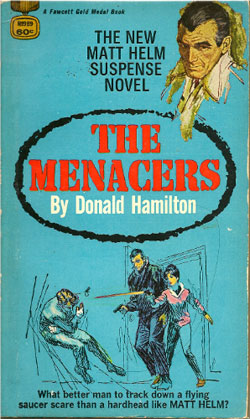
                • Cover of The Menacers
                  The Menacers

                  Donald Hamilton · standalone novel · 1968

                  similar byassassinsmid 20th centurytensethriller & suspensespy thriller+1 more

                  The Menacers, first published in 1968, was the eleventh novel in the Matt Helm spy series by Donald Hamilton and the first published since the launch of the Matt Helm film series starring Dean Martin.

                • Cover of Libra
                  Libra

                  Don DeLillo · standalone novel · 1988

                  similar byassassinsmid 20th centurytensethriller & suspense

                  Two disgruntled CIA agents decide that an unsuccessful assassination attempt on John F. Kennedy's life, one that can be linked to Fidel Castro, is the only way to put Cuba back into geopolitical play. They choose Lee Harvey Oswald as the instrument to put their plot in motion.

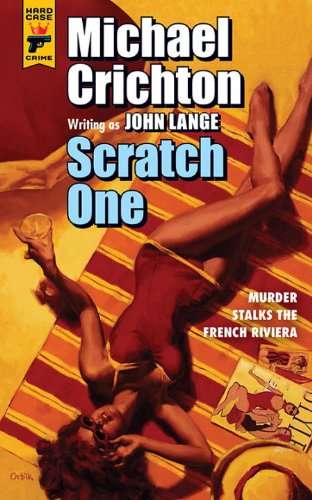
                • Cover of Scratch One
                  Scratch One

                  Michael Crichton · standalone novel · 1967

                  similar byassassinsmid 20th centurytensethriller & suspensespy thriller

                  Scratch One is Michael Crichton's second novel to be published, as well as the second novel to be under his pseudonym John Lange. It was released in 1967 under the pseudonym of John Lange. It is a short 192-page paperback novel. Hard Case Crime republished the novel under Crichton's name on October 29, 2013.

                • Cover of Mitchell Gant
                  Mitchell Gant

                  series · 3 books · 1977

                  similar bymid 20th centurytensethriller & suspensespy thrilleradventurous

                • Cover of 11/22/63
                  11/22/63

                  Stephen King · standalone novel · 2011

                  similar byassassinsmid 20th centurytense

                  11/22/63 is a novel by American author Stephen King about a time traveler who attempts to prevent the assassination of United States President John F. Kennedy, which occurred on November 22, 1963. It is the 60th book published by Stephen King, his 49th novel, and the 42nd under his own name. The novel required considerable research to accurately portray the late 1950s and early 1960s. King commented on the amount of research it required, saying, "I've never tried to write anything like this before. It was really strange at first, like breaking in a new pair of shoes."

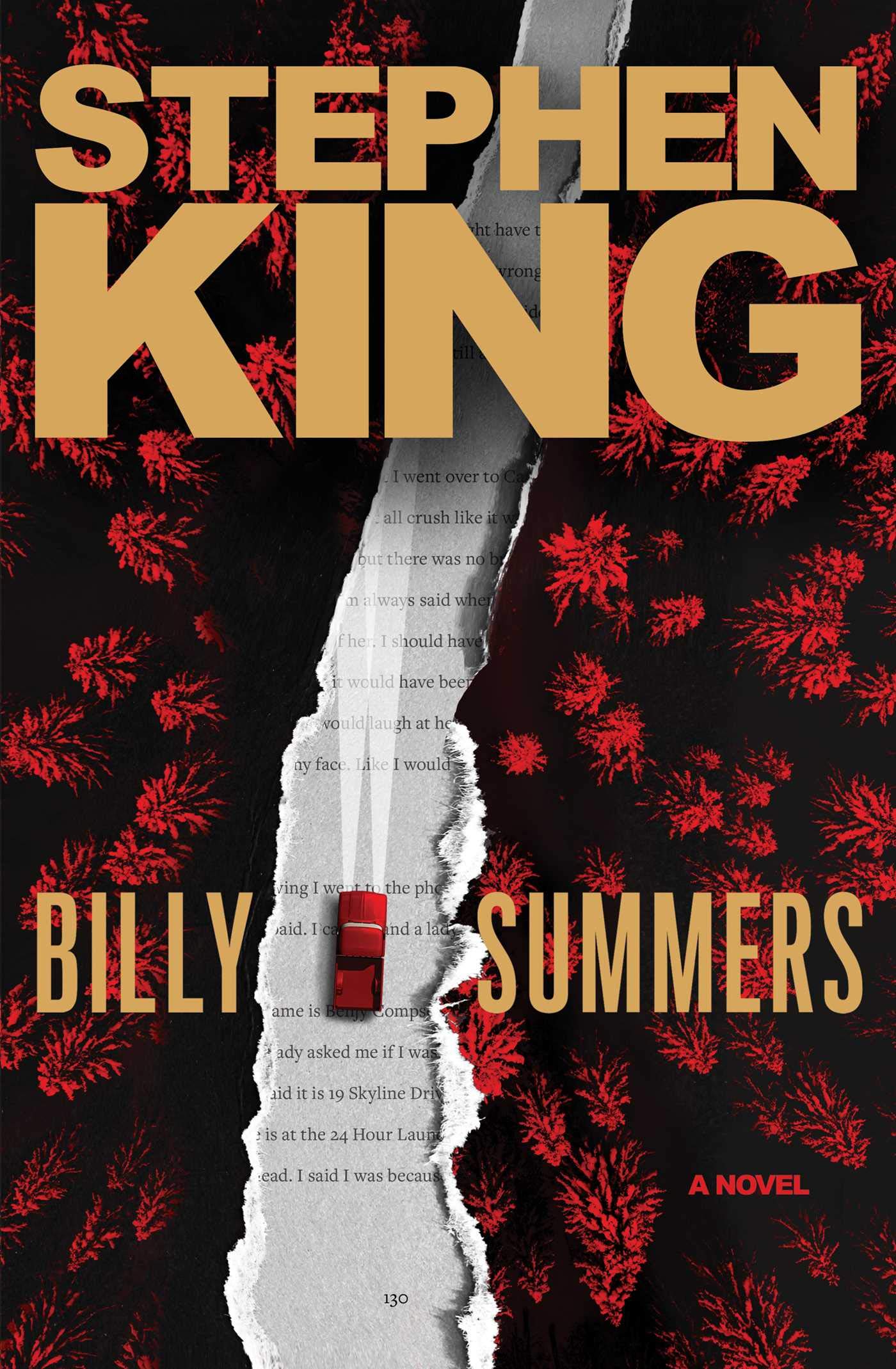
                • Cover of Billy Summers
                  Billy Summers

                  Stephen King · standalone novel · 2021

                  similar byassassinstensethriller & suspense

                  Billy Summers is a crime novel written by American author Stephen King, published by Scribner on August 3, 2021.

                • Cover of The Spook Who Sat by the Door
                  The Spook Who Sat by the Door

                  Sam Greenlee · standalone novel · 1969

                  similar bymid 20th centuryspy thrillertensethriller & suspense

                  The Spook Who Sat by the Door (1969), by Sam Greenlee, is the fictional story of Dan Freeman, the first black CIA officer, and of the CIA's history of training persons and political groups who later used their specialised training in gathering intelligence, political subversion, and guerrilla warfare against the CIA. The novel has been characterised as "part thriller, part satire and part social commentary". As described by The New Yorker, the title "alludes to the conspicuous deployment of the agency's one black officer to display its phony integration".

                • Cover of Jimmy Coates
                  Jimmy Coates

                  series · 6 books · 2005

                  similar bytensethriller & suspenseadventurous+1 more

                  Jimmy Coates is a series of children's books written by the English author Joe Craig. The books have been published in many countries and became widely available in the United States for the first time in 2013.

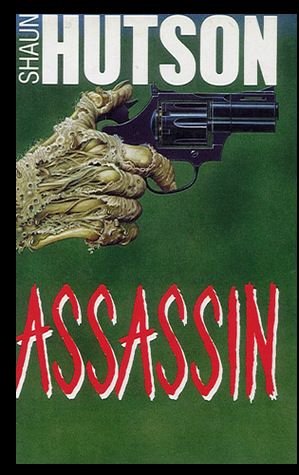
                • Cover of Assassin
                  Assassin

                  Shaun Hutson · standalone novel · 1988

                  similar byassassinsthriller & suspensetense

                  London was in the grip of its bloodiest bout of gang warfare for two years. Shootings in the street. Car chases and torture. Into this world of corruption, violence, madness and death came the Assassin. A force more powerful than vengeance, more lethal than a lorry full of high-velocity weapons and more terryfying than any nightmare..... Shock horror at its best.

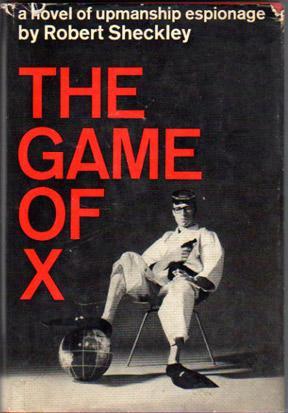
                • Cover of The Game of X
                  The Game of X

                  Robert Sheckley · standalone novel · 1965

                  similar bymid 20th centuryspy thriller+2 more

                  The Game of X was loosely adapted as the 1981 Disney film, Condorman: Sheckley also wrote the novelization of this film. Say "gesundheit" to the spy who came in from the cold & get set for the intrigue novel to end all. "Combines ironic wit with suspense to remarkable effect."--John Le Carre Here is a spy-tangled novel of undercover misadventure that goes from Paris to Venice by ways of intrigue that 007 never dreamed of--with semi-professional killers, submissive subversives & a swinging Mata Hari from Hunter College. This is upmanship espionage at its funniest--& all in The Game of X

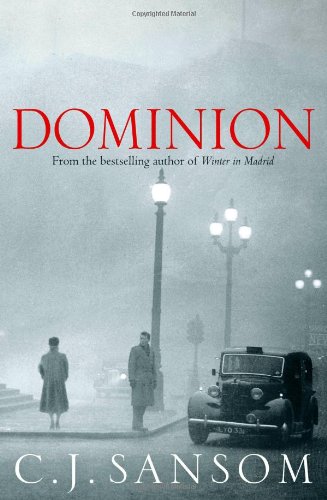
                • Cover of Dominion
                  Dominion

                  C. J. Sansom · standalone novel · 2012

                  similar bymid 20th centurytensethriller & suspensespy thriller

                  Dominion is a 2012 alternative history novel by British author C. J. Sansom. It is a political thriller set in the early 1950s against the backdrop of a Britain that has become a satellite state of Nazi Germany. The point of divergence from actual history is that Lord Halifax, rather than Winston Churchill, succeeded Neville Chamberlain as Prime Minister in May 1940 leading to an armistice with Germany.

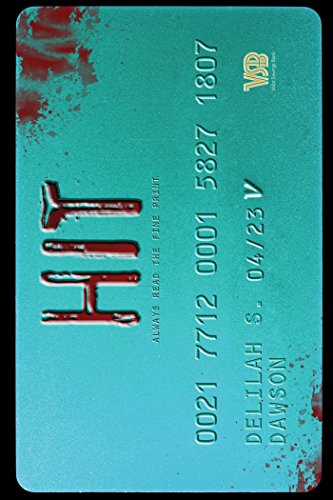
                • Cover of Hit
                  Hit

                  series · 2 books · 2015

                  similar byassassinstensethriller & suspense

                • Cover of The Apollo Murders
                  The Apollo Murders

                  Chris Hadfield · standalone novel · 2021

                  similar bymid 20th centurytensethriller & suspenseadventurous

                  The Apollo Murders is a 2021 alternate history, thriller novel by Canadian retired astronaut and writer Chris Hadfield. It was first published in October 2021 in the United States by Little, Brown and Company, and in the United Kingdom by Quercus. The book is Hadfield's debut novel, and is the first in his Apollo Murders series, followed later by The Defector in 2023 and Final Orbit in 2025. Hadfield had previously published three non-fiction books, his first being his autobiography, An Astronaut's Guide to Life on Earth (2013).

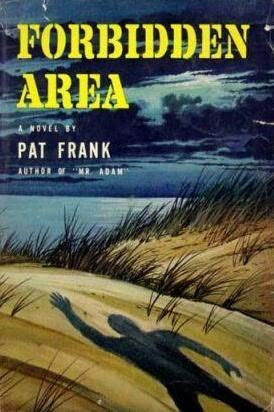
                • Cover of Forbidden Area
                  Forbidden Area

                  Pat Frank · standalone novel · 1956

                  similar bymid 20th centurytensethriller & suspensespy thriller

                  Forbidden Area is a 1956 Cold War thriller novel by Pat Frank. Its plot involves Soviet sleeper agents intended to sabotage the U.S. war effort, who have been trained by classical conditioning to have an American "cover identity" that they can remember as well as their own.

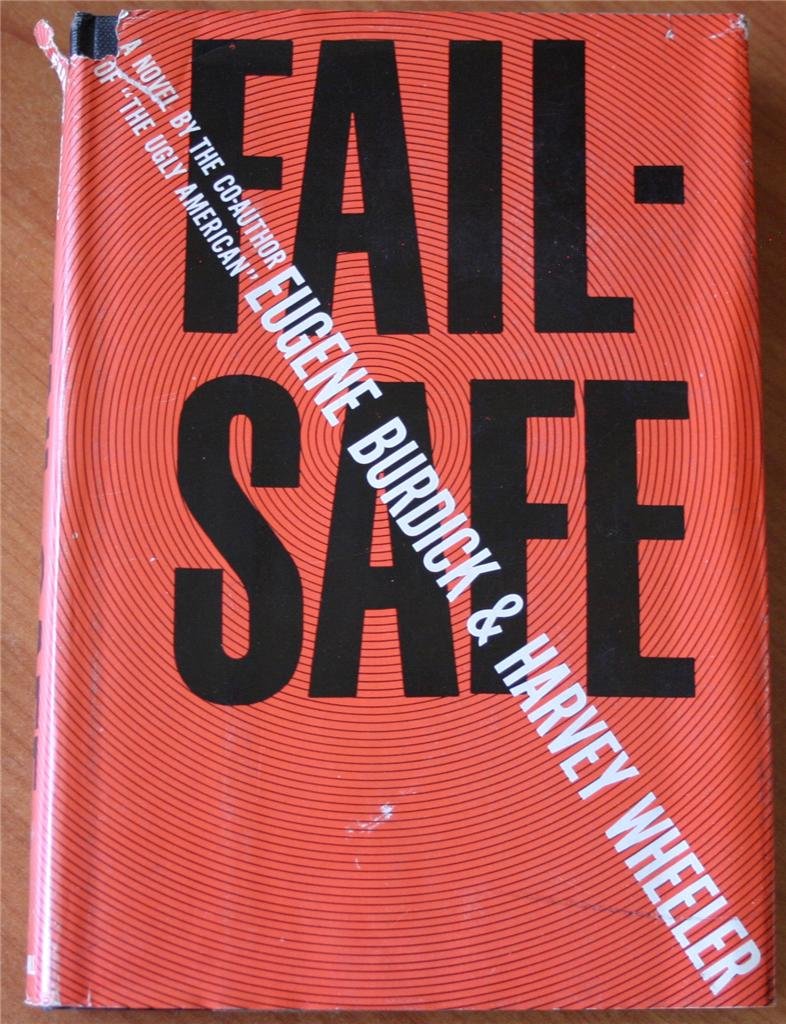
                • Cover of Fail-Safe
                  Fail-Safe

                  Harvey Wheeler & Eugene Burdick · standalone novel · 1962

                  similar bymid 20th centurytensethriller & suspense

                  Fail-Safe is a bestselling American novel by Eugene Burdick and Harvey Wheeler. Expanded from Wheeler's short story "Abraham '59", it was initially serialized in three installments in the Saturday Evening Post on October 13, 20, and 27, 1962, during the Cuban Missile Crisis.

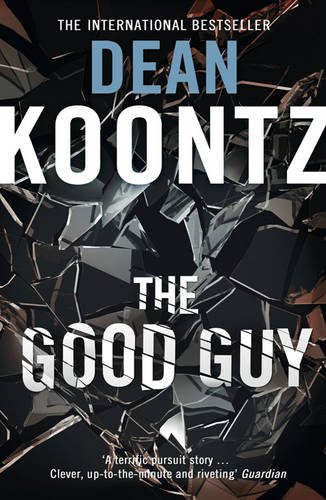
                • Cover of The Good Guy
                  The Good Guy

                  Dean R. Koontz · standalone novel · 2007

                  similar byassassinstensethriller & suspense+1 more

                  Publisher's description: "Timothy Carrier is sitting in a bar when the man next to him mistakes him for someone else and hands him an envelope with $10,000. The man leaves after handing Tim a photo of a woman marked for death and her address. Soon the killer arrives believing Tim is the one who wants to hire him."

                • Cover of Tad Anders
                  Tad Anders

                  series · 1 book · 1975

                  similar bymid 20th centurytensethriller & suspensespy thriller

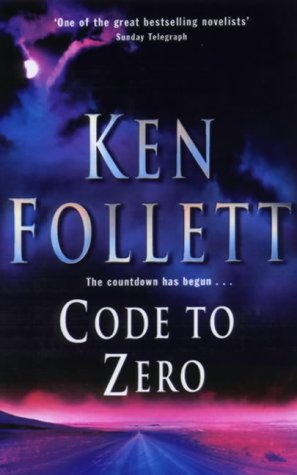
                • Cover of Code to Zero
                  Code to Zero

                  Ken Follett · standalone novel · 2000

                  similar bymid 20th centurytensethriller & suspensespy thriller

                  Code to Zero is a novel by the British author Ken Follett, published by Pan Macmillan. The story follows Luke, an amnesic who spends the duration of the book learning of his life, and slowly uncovering secrets of a conspiracy to hold the United States back in the space race.

                • Cover of Assassin (Robert Ferrigno)
                  Assassin (Robert Ferrigno)

                  series · 3 books · 2006

                  similar byassassinstensethriller & suspense

                • Cover of Solar Lottery
                  Solar Lottery

                  Philip K. Dick · standalone novel · 1955

                  similar byassassinstense

                  Solar Lottery is a 1955 science fiction novel by American writer Philip K. Dick. It was his first published novel and contains many of the themes present in his later work. It was also published in altered form in the UK as World of Chance. The main story is about a man named Ted Benteley who lives in a strange world, dominated by percentages and the lottery. Lotteries are used to choose the next leader as well as a new assassin, whose job is to try to kill the leader or "Quizmaster". Everybody in society has the opportunity to be selected as a leader or an assassin. Benteley unexpectedly gets chosen to be a member of the committee trying to assassinate the new Quizmaster and he must decide what he is going to do.

                • Cover of Deadly Memoir
                  Deadly Memoir

                  Ardath Mayhar · standalone novel · 2009

                  similar byassassinstensethriller & suspense

                  When Margaret Thackrey, ex-government agent and writer, decides to pen her memoirs, she unwittingly gets the attention of a vicious assassin - a man whose nefarious deeds she'd nearly uncovered during her service. Now he must stop the publication of her book before his true character is revealed. He murders Margaret's husband, and stalks her from Oregon to Texas, where she must finally confront her past - and a determined, stone-cold killer!

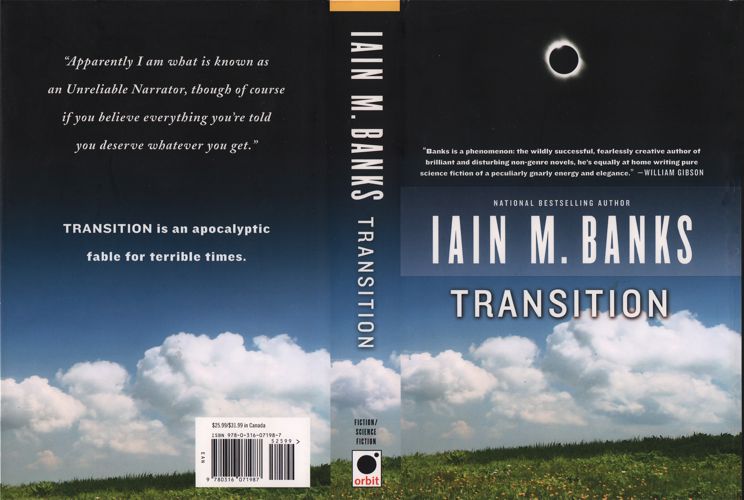
                • Cover of Transition
                  Transition

                  Iain M. Banks · standalone novel · 2009

                  similar byassassinstensethriller & suspense

                  A man with the ability to transfer between parallel worlds is employed as an assassin by a Council regulating those with the same ability, but becomes embroiled in a secret struggle between factions with clashing goals.

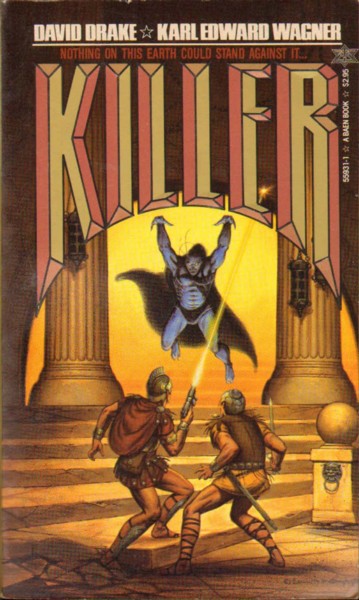
                • Cover of Killer
                  Killer

                  Karl Edward Wagner & David Drake · standalone novel · 1985

                  similar byassassinstensethriller & suspense

                  Roman arenas, famous for pitting man against man, beast against beast and man against beast. Good performers were always in demand - even on other planets. One such survived a shuttlecraft being destroyed on an landing attempt, this creature escaped, and began a savage killing spree. The Galactic civilization knew that if the intelligent, killing machine creature (called a Phile) survived, it could cover our planet with its kind, which would necessitate the destruction of our Earth. So they sent an emissary to destroy the creature, unaware that he was the power behind capturing the killing machine Phile to start with, with an eye for creating more of them for the galaxy blood arenas. Meanwhile, a crazed Roman emperor wants the beast captured for his own arena, and the crooked emissary wants to do just that for Phile breeding purposes, Only a hero could stop either of them, the Phile or the crooked emissary, which Master Author David Drake masterly provides - not a magical hero - just a hard man who has only survived by being smarter and tougher than the things he has had to deal with. A great read. gmb 12/12/2019