More like Pendrake
anchored on:science fiction
but
- Foundation Universe
universe123 books1940
Start hereFoundation · Start here
similar byscience fiction+2 more
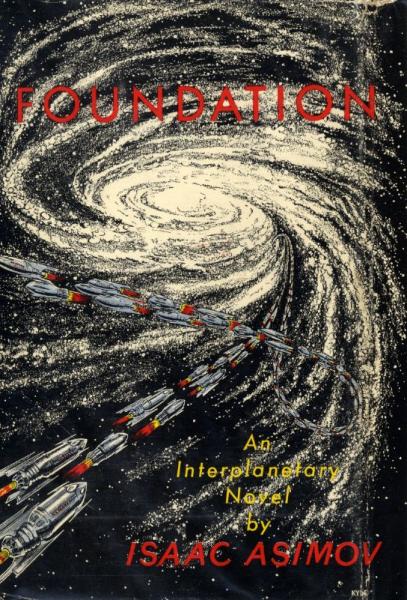
There is a science that reads the future of quadrillions the way an astronomer reads the orbits of stars. It is called psychohistory, and its equations foresee something the ruling Galactic Empire cannot admit: the throne is rotting, and thirty thousand years of barbarism are coming. One man, Hari Seldon, cannot stop the fall. He can only shorten it — by seeding a Foundation of scholars at the rim of the galaxy, a fragile institution built to carry knowledge across the dark and cut the interregnum to a single millennium. This is a universe told in the register of history itself: the long view, the calm of deep time, empires measured in centuries and men measured against them. The spine is Asimov's original trilogy — Foundation, Foundation and Empire, Second Foundation — followed decades later by the sequels Foundation's Edge and Foundation and Earth and the prequels Prelude to Foundation and Forward the Foundation. Late in life Asimov braided this in with his other future histories: the Robot novels of detective Elijah Baley and his humaniform partner R. Daneel Olivaw (The Caves of Steel, The Naked Sun, The Robots of Dawn, Robots and Empire) and the early Galactic Empire novels (Pebble in the Sky and its kin), until one continuous chronicle ran from the first thinking robots to the Second Empire. Other hands extend it — the Second Foundation Trilogy by Gregory Benford, Greg Bear, and David Brin, and shared-world spinoffs such as Robot City — so the corpus sprawls beyond a single author's tidy shelf. What distinguishes it is that the drama is intellectual: crises resolved by insight, nerve, and dialogue rather than fleets and blades, each turn hinging on the hidden logic of the Seldon Plan. Begin where readers have always begun — with Foundation, and the original trilogy in publication order. The rest opens outward from there.
- Kairos
series11 books1962
completed
similar byscience fiction+3 more
The Time Quintet is a science fantasy series of five young adult novels written by American author Madeleine L'Engle and made up of A Wrinkle in Time (1962), A Wind in the Door (1973), A Swiftly Tilting Planet (1978), Many Waters (1986), and An Acceptable Time (1989).
- Twilight Zone
universe40 books1960
Start hereStories from the Twilight Zone · Start here
similar byscience fictionour world+4 more
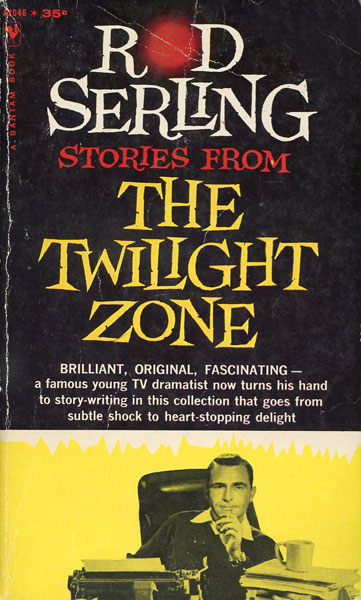
Picture, if you will, an ordinary person on an ordinary afternoon: a tired salesman, a frightened child, a man who wants only to be left alone. Somewhere between the streetlight and the front door, the rules quietly change. This is the Twilight Zone — not a place on any map but a middle ground between light and shadow, science and superstition, the pit of our fears and the summit of our knowledge. There is no continuing saga here, no cast to follow across the years. There is only the door, and the parable waiting on the far side of it. What the shelf holds is Rod Serling's anthology given the permanence of print. Serling turned his own teleplays into prose, the collections that open with Stories from the Twilight Zone, and the scripts survive alongside them — his and Richard Matheson's, the two hands that set the show's pulse. Around that core gather the story-collections of Walter B. Gibson, the volumes of new tales assembled by Carol Serling, standalone novels, and paired reissues: dozens of self-contained pieces, many writers under one banner. Read one or read forty. Each closes its own circle. The machinery is always the same and never predictable — a reasonable premise, a moral squeeze, a final turn that lands like a tap on the shoulder, sometimes cruel, sometimes merciful, always earned. Beneath the twist runs Serling's true subject: ordinary conscience under strain — prejudice, vanity, loneliness, the wish to go back. Begin where he began, with his own Stories from the Twilight Zone, then follow Matheson. There is no order to keep. You unlock this door with the key of imagination.
- Fantastic Voyage
series2 books1966
completed
similar byscience fiction+3 more
Fantastic Voyage (1966) is Isaac Asimov's novelization of the film about a submarine crew shrunk to microscopic size and injected into an injured scientist's body to repair damage from the inside. Asimov returned to the same premise of medical miniaturization in the unrelated 1987 novel Fantastic Voyage II: Destination Brain, which follows a different cast and plot rather than continuing the first book's story.
- Chocky
series2 books1968
similar byscience fictionmysteriouscontemporaryaliens+2 more
Chocky (1968) is John Wyndham's science fiction novel about an eleven-year-old boy, Matthew, whose parents grow alarmed by his conversations with an unseen presence that feeds him unsettling insights into mathematics and human progress, building toward the reveal of what, or who, Chocky really is. Mark Daniel's Chocky's Challenge (1986), published after Wyndham's death, is an authorized continuation that carries the story forward.
- Time Traders
series7 books1958
similar byscience fictionadventurous+3 more
The Time Traders opens Andre Norton's Cold War-flavored science fiction series, following an American agent recruited to travel into the past and counter a Soviet operation built around ancient technology unearthed from a vanished civilization. Norton, later joined by collaborators Sherwood Smith and P. M. Griffin, expanded the sequence to seven novels published between 1958 and 2002, and revised the opening book herself in 2000. Like several of Norton's other series, it treats leftover technology from a long-gone ancient culture as its central plot engine.
- Null-A
series4 books1948
similar byscience fictionpsychic powers+1 more
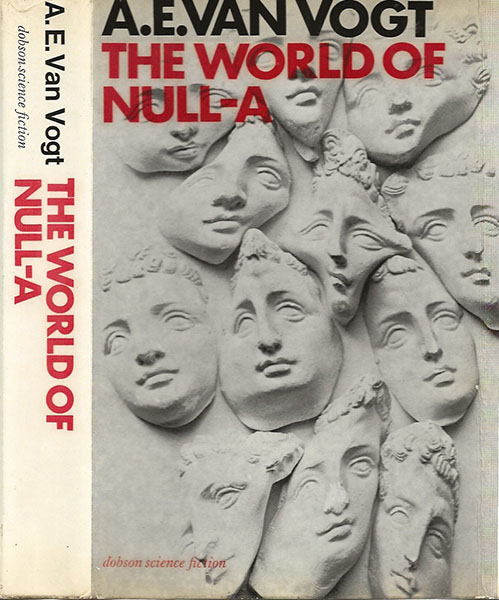
A. E. van Vogt's Null-A novels follow Gilbert Gosseyn, a man whose memories keep proving false, through a future society organized around the non-Aristotelian logic ('Null-A') of General Semantics. The World of Null-A and The Pawns of Null-A form the classic 1940s-50s core, with Null-A Three added decades later; John C. Wright's Null-A Continuum closes out the storyline after van Vogt's death. It's dense, puzzle-box science fiction built around identity and perception.
- Heechee
series19 books1972
completed
similar byscience fictionaliens+3 more
The Heechee Saga, also known as the Gateway series, is a series of science fiction novels and short stories by Frederik Pohl. The Heechee are an advanced alien race that visited the Solar System hundreds of millennia ago and then mysteriously disappeared. They left behind bases containing artifacts, including working starships, which are discovered and exploited by humanity.
- Twilight Zone Collections
series8 books1960
part of Twilight Zone
similar byour worldscience fictionmid 20th century+2 more
- Cavor
series2 books1901
similar byscience fictionadventurousaliens+1 more
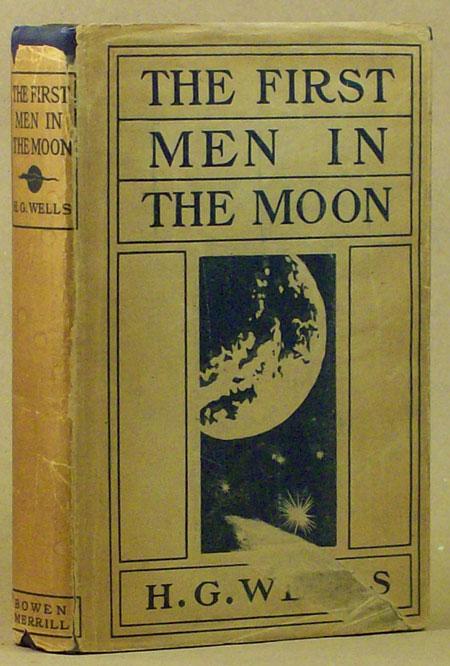
H. G. Wells's 1901 novel The First Men in the Moon is narrated by the businessman Bedford, who joins the reclusive scientist Cavor after Cavor invents cavorite, a gravity-blocking substance that carries the two men to the Moon. There they discover a vast underground civilization of insect-like Selenites, and the expedition that began as a hunt for lunar minerals turns into an encounter with an alien society. It is a standalone novel; later editions crediting Stephen Baxter add an introduction or afterword rather than a continuing story.
- The Mind Cage
A. E. van Vogtstandalone novel1957
similar byscience fictionour worldpsychic powers+2 more
The Mind Cage is a 1957 science fiction novel by American writer A. E. van Vogt, adapted from the short story "The Great Judge" (1948).
- Bridge of Ashes
Roger Zelaznystandalone novel1976
similar byscience fictionmysteriousour worldidentitycontemporary+2 more
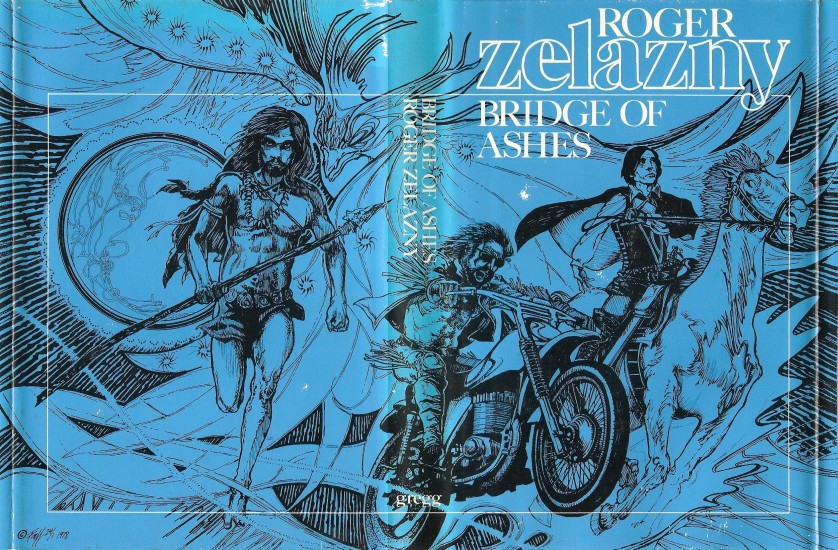
Bridge of Ashes is an experimental science fiction novel by American writer Roger Zelazny. The paperback edition was published in 1976 and the hardcover in 1979. Zelazny describes the book as one of five books from which he learned things "that have borne me through thirty or so others". He states that he "felt that if I could pull it off I could achieve some powerful effects. What I learned from this book is something of the limits of puzzlement in that no man’s land between suspense and the weakening of communication".
- Time Travelers Never Die
series2 books1996
similar byscience fictionour worldcontemporary+3 more
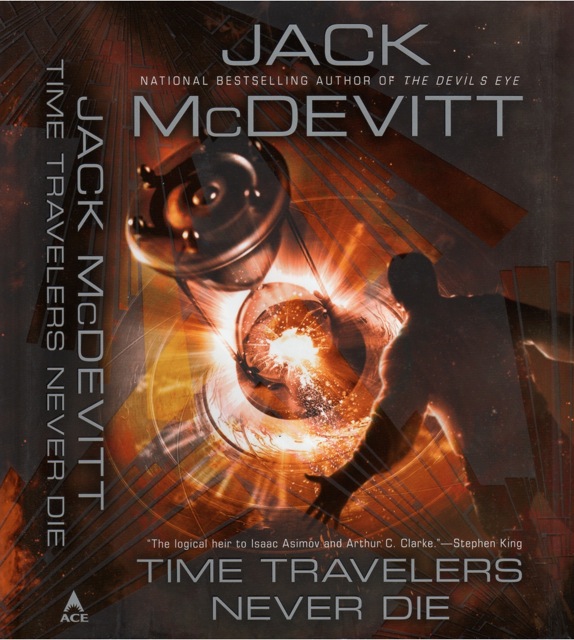
Time Travelers Never Die started life as a Jack McDevitt novella in the mid-1990s (Hugo- and Nebula-nominated) before he expanded it into a full novel over a decade later; the novella and novel are two forms of the same story rather than a sequel. It follows a small circle of people who gain access to working time travel and use it to step into the past, in McDevitt's characteristic register of curious, history-minded science fiction.
- Legion / Stephen Leeds
series5 books2012
similar byscience fictionmysteriousour worldpsychic powersidentitycontemporary
Legion, or the Stephen Leeds series, is a series of science fiction novellas created by American author Brandon Sanderson. Sanderson authored the first three stories : Legion, first published on August 31, 2012, Legion: Skin Deep in November 2014, and Legion: Lies of the Beholder in September 2018. Death and Faxes, co-authored by Max Epstein, David Pace, and Michael Harkins, was released in June 2022. The books have received favorable reviews.
- Flashforward
Robert J. Sawyerstandalone novel1999
similar byscience fictionmysteriousour worldidentity+1 more
Flashforward is a science fiction novel by Canadian author Robert J. Sawyer first published in 1999. The novel is set in 2009. At CERN, the Large Hadron Collider accelerator is performing a run to search for the Higgs boson. The experiment has a unique side effect; the entire human race loses their consciousness for about two minutes. During that time, nearly everyone sees themselves roughly twenty-one years and six months in the future. Each individual experiences the future through the senses of their future self. This "flashforward" results in countless deaths and accidents involving vehicles, aircraft, and any other device needing human control at the time of the experiment. The novel was adapted into the 2009 television series FlashForward.
- Galactic Milieu
series10 books1981
completed
similar byscience fictionpsychic powersaliens+2 more
Galactic Milieu is a series of science fiction novels by Julian May. It is linked to her previously published series, the Saga of Pliocene Exile; and through the fantastical device of time-travel, acts as both a prequel and a sequel to this earlier series. The "Galactic Milieu" of the title is an interplanetary federation, and Earth's membership of it is a central plot concern.
- The House That Stood Still
A. E. van Vogtstandalone novel1950
similar byscience fictionmysteriousour worldmid 20th century
A California estate lawyer takes a case involving a decaying mansion built atop a pre-Toltec stone structure, and discovers, following a secretive cult in the house, that the ancient foundation confers immortality on those who know how to use it. Drawn in through his attraction to a cult member, the lawyer learns the group possesses technology beyond its disguise, including spacecraft, and is preparing to relocate the house's stones off-world to escape a coming war. He finds himself trying to stop a catastrophe, expose an ancient secret, and win the woman's trust, all at once. A. E. van Vogt's blend of hardboiled mystery and cosmic science fiction.
- Time Out of Joint
Philip K. Dickstandalone novel1959
similar byscience fictionmysteriousour worldidentity
Time Out of Joint is a science fiction novel by American writer Philip K. Dick, first published in novel form in the United States in 1959. An abridged version was also serialised in the British science fiction magazine New Worlds Science Fiction in several installments from December 1959 to February 1960.
- Change War
series16 books1958
completed
similar byscience fiction+1 more
The Big Time is Fritz Leiber's Hugo Award-winning novel set in his Change War future history, where two rival powers called the Spiders and the Snakes recruit soldiers out of history to fight by altering past events, with the novel itself confined to a neutral recovery station suspended outside normal time. Leiber followed it with a string of shorter Change War stories, later gathered into collections such as Changewar, exploring other soldiers and other flashpoints in the same endless, mutable conflict.
- Ormingat Trilogy
series3 books2000
completed
similar byscience fictionour worldcontemporaryaliens+3 more