Loreful
HomeDiscover
Search series, authors…⌘K
Loreful

Reading orders for SF/F series and shared universes — with your place kept in every one.

Explore

UniversesSeriesWorksAuthorsAtlas

Help

FAQAboutSite map

Account & legal

Sign inCreate accountPrivacyTerms

Data

Built on ISFDB, Wikipedia, Wikidata and Open Library. Curated reading orders carry their reasoning on the page; the rest follow publication order. Data sources & licenses

© Loreful · data: ISFDB · CC BY

More like Phantom Lagoon

anchored on:science fictionadventureour worldmid 20th centuryadventurousorganized crime+3 more

but

Mood

The mood the book leaves you in.

  • The reading experience is propelled by journeys, exploration, and physical risk; excitement and forward momentum dominate over dread or introspection.
  • Joy and loss are deliberately mixed; the resolution grants characters something real while taking something else away, leaving warmth and sorrow together.
  • The book demands work from the reader — dense prose, difficult structure, unfamiliar ideas, or morally uncomfortable material — as part of its intended effect.
  • Grim events, cruelty, or despair dominate the atmosphere, and the book does not soften them with comfort or comic relief.
  • The atmosphere is quietly unsettling — wrongness, unease, and the uncanny pervade the book without necessarily escalating into overt horror.
  • The book is built to move the reader; character feeling is foregrounded and major scenes aim at a strong emotional response.
  • Humor is a primary aim and the prose plays for laughs — comic situations, wit, or dialogue produce sustained comedy, not occasional levity.
  • The book insists that things can improve; effort and decency are shown to matter, and the arc bends toward better outcomes even through hardship.
  • The book teaches as it goes — real facts, history, science, or craft are conveyed in enough depth that learning is part of the reading experience.
  • The book is designed to uplift and motivate, presenting perseverance or achievement in a way that invites the reader to aspire or act.
  • The overall register is cheerful and easygoing; stakes are kept gentle and the book avoids dwelling on pain or dread.
  • Withheld information drives the experience; the book sustains enigmas and secrets the reader wants resolved, whatever its genre.
  • The book is contemplative and inward-looking, giving more weight to thought, memory, and meaning than to external events.
  • The book works as comfort reading — low tension, a soothing pace, and an atmosphere the reader can unwind in.
  • Grief, loss, or melancholy set the dominant register, and the book lets sorrow stand rather than resolving it into comfort.
  • Sustained suspense is the point; the book keeps the reader braced for what happens next through danger, pressure, or impending revelation.
  • Playful invention and charm define the register — fanciful conceits, light absurdity, and a narration that delights in its own oddity.

About

What the story runs on.

  • Stories in which extraterrestrial beings are central — as characters, cultures, or the object of the plot.
  • Stories structured as a quest — a journey undertaken to find, deliver, or destroy something of great import.
  • Stories in which staying alive against nature, catastrophe, or scarcity is the central problem.
  • Stories of lovers kept apart by law, family, faith, or station, where the obstacle to love is the plot.
  • Stories in which a friendship — its making, testing, or loss — is the emotional center.
  • Stories of growing up — a young protagonist crossing from childhood into adult knowledge and responsibility.
  • Stories about who a character truly is — self-discovery, doubled lives, and the search for a self.
  • Stories about mourning — living through the death of a loved one and what loss does to the survivors.
  • Stories in which a buried family truth — hidden parentage, crimes, or shames — surfaces and reorders the present.
  • Stories driven by maneuvering for power — factions, conspiracies, and statecraft conducted in shadow.
  • Stories in which war itself is the subject — combat, occupation, and what warfare does to soldiers and civilians.
  • Stories organized around investigating a killing — the case, the clues, and the pursuit of the killer, in any genre's clothing.

Shelf

Where it sits in the library.

    • Fiction built on magic or other supernatural elements that have no scientific explanation.
    • Secondary-world fantasy at large scale, where the fate of nations or the world turns on the protagonists' struggle.
    • Fantasy set in a recognizably modern city or contemporary world where the supernatural intrudes on everyday life.
    • Fantasy that blends in horror's atmosphere and imagery, keeping a fantastical frame around grim or frightening material.
    • Action-driven fantasy following warriors or rogues with personal stakes against sorcerous threats, rather than world-spanning conflicts.
    • Fantasy set in a real historical period or a close analogue of one, with magic woven into the era.
    • Fantasy in which protagonists cross from the ordinary world into another world through a portal or similar passage.
    • Fiction that retells or reworks a traditional fairy tale in a new form or setting.
    • Fantasy drawing directly on myths, legends, and folklore, retelling them or building on their figures and logic.
    • Fantasy of ghosts, vampires, shapeshifters, psychics, and similar phenomena, usually set in an otherwise ordinary world.
    • Fiction mixing science-fictional trappings with overtly magical or impossible elements in one setting.
    • Low-stakes fantasy emphasizing comfort, community, and everyday pleasures over conflict and peril.
    • Speculative fiction of pervasive moral ambiguity, violence, and cynicism that rejects heroic conventions — fantasy and SF alike.
      • Fiction that extrapolates from science and technology — future societies, space travel, or speculative inventions — within at least nominally natural laws.
      • Science fiction of interstellar scope — starships, galactic polities, and adventure across star systems.
      • Science fiction committed to scientific rigor, where technical plausibility constrains the story.
      • Science fiction centered on armed forces and warfare, told largely from a military point of view.
      • Science fiction of networked, corporate-dominated near futures, pairing high technology with social decay.
      • Science fiction styled on nineteenth-century steam-powered technology, often in a Victorian or pseudo-Victorian setting.
      • Fiction depicting an oppressive or catastrophic society, presented as a warning.
      • Fiction set after civilization's collapse, following survivors in the ruins of the old world.
      • Fiction in which characters move between past and future, and the mechanics or consequences of that travel drive the plot.
      • Fiction exploring a world where a historical event went differently and history diverged from ours.
      • Science fiction about humanity's first encounter and communication with an alien intelligence.
      • Science fiction in which extraterrestrial forces attack or occupy Earth and humanity resists.
      • Fiction whose primary aim is to frighten or unsettle the reader through dread, menace, or the monstrous.
      • Horror of vast, indifferent, incomprehensible entities before which humanity is insignificant, in the Lovecraft tradition.
      • Horror of decaying houses, buried family secrets, and oppressive atmosphere in the Gothic literary tradition.
      • Horror centered on hauntings and the returning dead.
      • Horror located in the mind — paranoia, obsession, and unreliable perception rather than external monsters.
      • Horror built around the reanimated dead and survival amid their outbreaks.
      • Horror defined by explicit, transgressive gore that refuses to cut away from violence.
      • Speculative fiction of the strange and uncanny that resists both natural explanation and standard genre categories.
      • Fiction organized around solving a crime or puzzle, typically following an investigator toward the identification of a culprit.
      • A puzzle-first mystery that lays out clues so the culprit's identity can be deduced before the reveal.
      • Crime fiction of moral ambiguity, fatalism, and hard-edged style, set among the corrupt and the doomed.
      • A mystery following the realistic routines of police work — forensics, interviews, and case-building.
      • A gentle mystery with an amateur sleuth, a small community, and violence kept off the page.
      • A mystery set in a past era, where the investigation works within that period's methods and society.
      • Fast-paced fiction driven by imminent danger, pursuit, or high-stakes conspiracy, built to sustain tension.
      • A thriller of espionage — agents, tradecraft, and intelligence services in conflict.
      • A thriller centered on lawyers and the courtroom, where litigation carries the suspense.
      • A thriller driven by detailed contemporary or near-future technology, often military or scientific.
      • A thriller whose tension comes from mental states and manipulation between characters rather than external action.
      • Fiction whose central plot is a romantic relationship and its development toward an emotionally satisfying resolution.
      • Romance in which one or both partners are supernatural beings, blending fantasy elements into the love story.
      • A fantasy-romance hybrid in which the romantic arc and the fantasy plot carry equal weight.
      • Romance set in a past era, with courtship shaped by the period's society and manners.
      • Romance set in the present day, without supernatural or historical elements.
      • Fiction set in a real past period, where the historical setting materially shapes characters and events.
        • General and literary fiction emphasizing prose style, character interiority, or formal ambition over genre plot conventions.
        • Fiction in a realistic world where magical events occur and are treated as ordinary, in the tradition of Latin American literature.
        • Fiction that ridicules people, institutions, or society in order to criticize them.
        • Fiction of dreamlike, irrational imagery and logic that breaks from realistic representation.
        • Fiction that plays with narrative convention through metafiction, fragmentation, and self-reference.
        • Fiction propelled by journeys, exploration, and physical peril, where action and survival carry the plot.
        • Adventure fiction of ships and seafaring — naval engagements, voyages, and life at sea.
        • Fiction of the American frontier West — gunmen, ranchers, and lawmen, typically in the late nineteenth century.
        • Fiction centered on soldiers, campaigns, and the experience of warfare, historical or imagined.
          • Fiction written primarily to amuse, using comedic situations, wit, or parody as its organizing principle.
            • Multi-generational fiction following a family or dynasty across decades, with inheritance and kinship as the through-line.
              • Fiction whose world runs on explicit game mechanics — levels, stats, and skills that characters can see and exploit.
                • Fiction about costumed or superpowered heroes and their conflicts with comparable villains.

                Practical

                How long a commitment, whether it stands alone, and whether it has finished.

                Tap a chip to ask for it · tap again to rule it out · once more to clear. Numbers show what would be left.

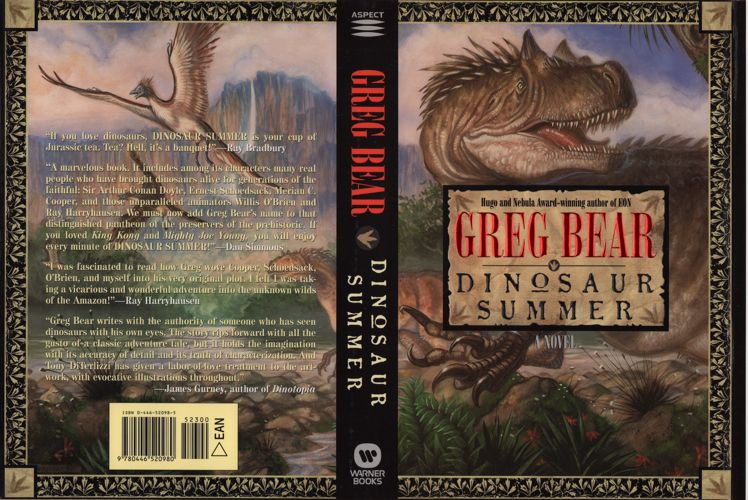
                • Cover of Dinosaur Summer
                  Dinosaur Summer

                  Greg Bear · standalone novel · 1998

                  similar bymid 20th centuryadventurousadventureexpeditionstensescience fiction

                  From the flaps of the Warner first edition: "It's the year 1947, and nobody's interested in dinosaurs anymore. Less than fifty years after Professor Challenger's famed journey to the Lost World, America's last dinosaur circus is closing down... but the adventure of a lifetime is about to begin. In a dramatic change of pace, multiple Hugo and Nebula award-winning science fiction master Greg Bear, ... presents a lavishly illustrated thriller that is certain to become a new classic adventure beyond time... Peter Belzoni is dreading summer in Manhattan. Then his father, photojournalist Anthony Belzoni, offers the youth a job, a byline in National Geographic... and a trip to South America. For the Lothar Gluck Circus, once the world's foremost dinosaur attraction, had gone bankrupt. Left behind is a menagerie of avisaurs, centrosaurs, and ankylosaurs, as well as one large predatory raptor named Dagger. And now two filmmakers and the circus trainer plan to return the giants to the wild - with Peter and his dad chronicling the odyssey for Geographic. The task seems impossible. Many have died trying to bring beasts our of the Lost World, the plateau of El Grande in Venezuela, but nobody has ever attempted to transport nearly a dozen full-grown, multiton prehistoric creatures across continents, down rivers, through jungles, and up mountains that has been isolated for 70,000,000 years... The trek will strain the technologies of trains, cargo ships, barges, trucks... en route lurk robbers and hostile, trigger-happy soldiers... and each mile toward freedom excites Dagger toward an unstoppable primal killing frenzy. When the unthinkable threatens to strand Peter and the rest of the crew in an uncharted realm, four modern Americans will face all the unknown dangers, mysteries, and terrors of El Grande..."

                • Cover of Snow Crash
                  Snow Crash

                  Neal Stephenson · standalone novel · 1992

                  similar byorganized crimescience fictionadventuroustense

                  Snow Crash is a 1992 science fiction novel by Neal Stephenson. Like many of Stephenson's novels, its themes include history, linguistics, anthropology, archaeology, religion, computer science, politics, cryptography, memetics, and philosophy.

                • Cover of The Puppet Masters
                  The Puppet Masters

                  Robert A. Heinlein · standalone novel · 1951

                  similar bymid 20th centuryscience fictiontensenorth america+1 more

                  Parasitical aliens attach themselves to human hosts and take over their bodies. Two spies are sent to find out what's happening, but the extent is much farther than they knew. With access to the humans' memories, the aliens quietly invade the government and start taking over.

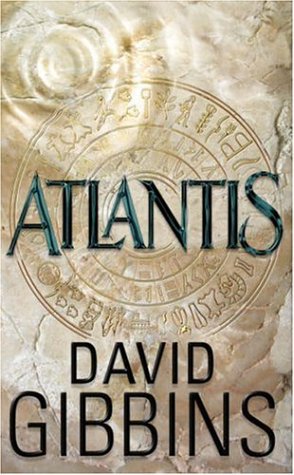
                • Cover of Attack from Atlantis
                  Attack from Atlantis

                  Lester del Rey · standalone novel · 1953

                  similar bymid 20th centuryadventurousscience fictionexpeditions+1 more

                  Attack from Atlantis (1953) is a science fiction novel written by Lester del Rey. The story follows the new U.S.S. Triton submarine on her maiden voyage, but trouble happens when the crew comes face to face with the inhabitants of the underwater city Atlantis.

                • Cover of The Kraken Wakes
                  The Kraken Wakes

                  John Wyndham · standalone novel · 1953

                  similar bymid 20th centuryscience fictiontenseour worldat sea

                  " Behind a spectacular meteor shower actually hides the beginning of an invasion by a mysterious and powerful alien race. Earth's life is disrupted by the attacks of extraterrestrials whose war machines, emerging from the depths of the oceans, seem indestructible. The coalitioned forces of the whole world are worthless, powerless in the face of the indecipherable and deadly plans of a superior intelligence, capable of bringing the entire planet to the brink of catastrophe" Goodreads May 20, 2022

                • Cover of The Rose of Tibet
                  The Rose of Tibet

                  Lionel Davidson · standalone novel · 1962

                  similar bymid 20th centuryadventurousadventureexpeditionstense

                  The Rose of Tibet is a 1962 adventure novel by Lionel Davidson.

                • Cover of Dirk Pitt
                  Dirk Pitt

                  series · 12 books · 1973

                  completed

                  similar byadventurousexpeditionstenseadventureour world+1 more

                  Clive Cussler's Dirk Pitt novels follow the title character, a two-fisted marine engineer and de facto field agent for the fictional National Underwater and Marine Agency, through globe-spanning adventures mixing undersea salvage, historical mystery, and international conspiracy. The run collected here spans The Mediterranean Caper (1973) through Valhalla Rising (2001), the earlier stretch of a series Cussler continued for decades with later co-authors.

                • Cover of I Am Legend
                  I Am Legend

                  Richard Matheson · standalone novel · 1954

                  similar bymid 20th centurytensescience fictionour worldnorth america

                  The last human survivor of the vampire epidemic has to maintain his defences against their onslaught, while attempting to research the cause and possibly solution to the plague. Robert Neville is the last living man on Earth... but he is not alone. Every other man, woman and child on the planet has become a vampire, and they are hungry for Neville's blood. By day he is the hunter, stalking the undead through the ruins of civilization. By night, he barricades himself in his home and prays for the dawn. How long can a man survive like this?

                • Cover of Rick Brant Science Adventure
                  Rick Brant Science Adventure

                  series · 24 books · 1947

                  completed

                  similar bymid 20th centuryadventurousadventure+4 more

                • Cover of The Lincoln Hunters
                  The Lincoln Hunters

                  Wilson Tucker · standalone novel · 1958

                  similar bymid 20th centuryscience fictionadventurousour worldnorth america+1 more

                  The Lincoln Hunters is a 1958 science fiction novel by American writer Wilson Tucker.

                • Cover of Congo
                  Congo

                  Michael Crichton · standalone novel · 1980

                  similar byadventureexpeditionsadventuroustense+1 more

                  WorldCat: On an expedition to return Amy, his talking gorilla, to her home in the Congo, Professor Peter Elliot is joined by others who hope to find a legendary diamond mine guarded by mutant gorillas.

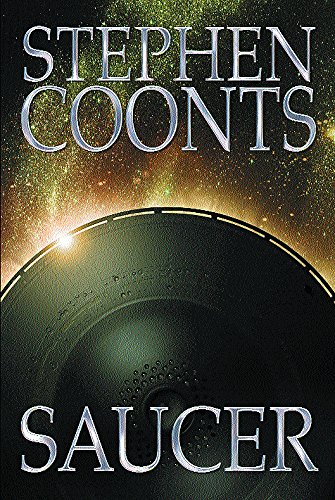
                • Cover of Saucer
                  Saucer

                  series · 3 books · 2002

                  similar byadventurousscience fictiontenseour world+1 more

                  Saucer is Stephen Coonts's techno-thriller trilogy beginning with Saucer (2002), continued in Saucer: The Conquest and Saucer: Savage Planet. It follows the discovery of a functioning craft buried for millennia in the Sahara desert and the test pilots and adventurers who end up flying, and fighting over, it, escalating from a buried desert secret toward wider stakes involving hostile outside interests.

                • Cover of The Black Cloud
                  The Black Cloud

                  Fred Hoyle · standalone novel · 1957

                  similar bymid 20th centuryscience fictiontenseour world

                  The Black Cloud is a 1957 science fiction novel by British astrophysicist Fred Hoyle. It details the arrival of an enormous cloud of gas that enters the Solar System and appears about to destroy most of the life on Earth by blocking the Sun's radiation.

                • Cover of Timeline
                  Timeline

                  Michael Crichton · standalone novel · 1999

                  similar byadventurousscience fictionexpeditionstense

                  Timeline is a science fiction novel by American writer Michael Crichton, his twelfth under his own name and twenty-second overall, published in November 1999. It tells the story of a group of history students who travel to 14th-century France to rescue their professor. The book follows in Crichton's long history of combining science, technical details, and action in his books, this time addressing quantum and multiverse theory.

                • Cover of Danny Dunn
                  Danny Dunn

                  series · 15 books · 1956

                  completed

                  similar byadventurousscience fictionmid 20th centuryadventure+2 more

                  Danny Dunn is the young protagonist of a long-running mid-century American juvenile science fiction series by Raymond Abrashkin and Jay Williams, starting in 1956. Each book sends Danny and his friends into an adventure built around a specific piece of speculative technology — anti-gravity paint, a homework machine, weather control — that goes predictably wrong or is misused by someone else. Aimed squarely at young readers, the fifteen-book run treats gadget-driven science fiction as a springboard for comic mishap and light moralizing rather than hard extrapolation.

                • Cover of Alas, Babylon
                  Alas, Babylon

                  Pat Frank · standalone novel · 1959

                  similar bymid 20th centuryscience fictiontensenorth america

                  Classic novel of nuclear war and aftermath in rural Florida. From the back cover of a Bantam Pathfinder edition: "The day that the bomb dropped the thousands of years of "progress" that had covered the treacheries and weaknesses of ordinary man with a thin veneer of civilization were dissolved and melted like snow on the desert's dusty face. Then - the law of the jungle reigned but in the wreckage a few courageous survivors, men and women with the guts to have hope, were determined to build a new and better world on the ruins of the old. This is their story."

                • Cover of Three to Conquer
                  Three to Conquer

                  Eric Frank Russell · standalone novel · 1956

                  similar bymid 20th centuryscience fictiontenseour worldnorth america+1 more

                  Three to Conquer is a novel by Eric Frank Russell published in 1956.

                • Cover of Jack Howard
                  Jack Howard

                  series · 8 books · 2005

                  similar byadventurousadventureexpeditionstenseour world

                • Cover of Watchers
                  Watchers

                  Dean R. Koontz · standalone novel · 1987

                  similar byadventurousscience fictiontenseadventurenorth america

                  This probably qualifies as a science-based adventure rather than a science fiction novel. The premise, and only speculative fiction element, is that a U.S. government funded laboratory creates a golden retriever that's as intelligent as a human for use in intelligence gathering and also creates a monkey hybrid that's intended for a military police dog role and as a killing machine on battlefields. The animals escape and the story plays out as a straight adventure novel with a good chunk of romance thrown in.

                • Cover of Allan Quatermain
                  Allan Quatermain

                  series · 25 books · 1885

                  similar byadventurousadventureexpeditions

                  Allan Quatermain is the protagonist of H. Rider Haggard's 1885 novel King Solomon's Mines, its one sequel Allan Quatermain (1887), twelve prequel novels and four prequel short stories, totalling eighteen works. An English professional big game hunter and adventurer, in film and television he has been portrayed by Richard Chamberlain, Sean Connery, Cedric Hardwicke, Patrick Swayze and Stewart Granger among others.

                • Cover of The Final Countdown
                  The Final Countdown

                  Martin Caidin · standalone novel · 1980

                  similar bymid 20th centuryscience fictionadventuroustenseour worldnorth americaat sea

                  Amazon: December 7th, 1980. The United States Naval Carrier Nimitz is the finest warship in the world. She is carrying a nuclear payload that can level a continent. And a fleet of fighter jets that can deliver it. Her crew is a handpicked one - like Captain Matthew Yelland, who endured the torture of the Viet Cong and did not break. And Warren Lasky, the civilian "think-tank" who designed the warship to weather any battle. But a nightmare journey has brought her to a place where no amount of brains or courage can help. To a battle no man can win: Pearl Harbor December 7th, 1941.

                • Cover of Dian of the Lost Land
                  Dian of the Lost Land

                  Edison Marshall · standalone novel · 1935

                  similar byadventurousadventureexpeditionsscience fiction+1 more

                  Adam knew that the creatures who surrounded him had vanished from the earth five million years ago. Their beautiful art, their terrible weaponry, their religion, customs and language, even the animals they hunted and the alien dark tribe against whom they waged eternal war, all belonged to a time before the great glaciers had retreated and man had assumed control of the globe. But Adam was in no position to deny their reality. For now he and his companion, the renowned Professor Karl Belgrade, were being led to their ruler-the young and beautiful Queen who would decide whether the intruders would live or die. The last ravings of a man dying from a mysterious fever and the haunting hypothesis of a brilliant and obsessed scientist were all that the two explorers had to go on as their tiny plane winged high over the menacing Antarctic ice. They find a secret valley that only one human being had ever visited and lived to tell about it, a lost world ruled by creatures from the darkest depths of time, who even now might be playing out a gigantic contest between good and evil to its strange and terrible conclusion. (adapted from the texts published with the 1972 edition)

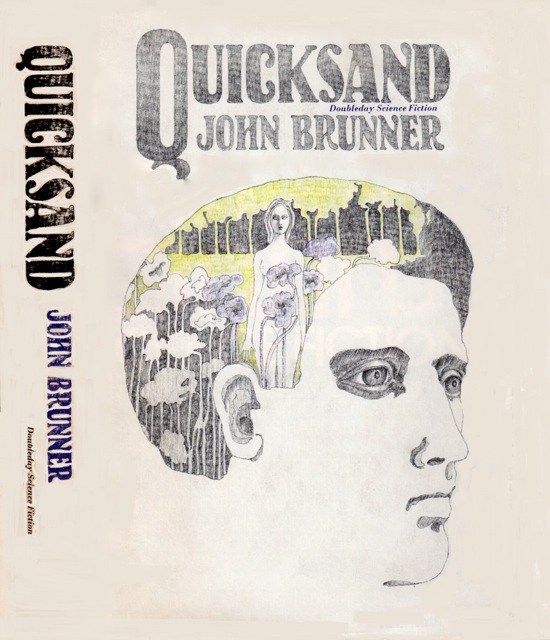
                • Cover of Quicksand
                  Quicksand

                  John Brunner · standalone novel · 1967

                  similar bymid 20th centuryscience fictiontenseour world+1 more

                  A British psychiatrist in a deadening job and a deadening marriage gets a mysterious patient; a petite young woman who speaks an unrecognizable language and is unfamiliar with the common objects, sights, and behaviors of normal life, yet who is able to quickly and easily cripple or kill a large man with her bare hands when she feels threatened. He feels more than professional concern for the woman, who he believes is not actually mentally ill but is in fact a more unusual case.
                • RS
                  Roland Smith's Cryptid Series

                  series · 5 books · 1998

                  similar byadventurousadventureexpeditionstense+1 more