Loreful
HomeDiscover
Search series, authors…⌘K
Loreful

Reading orders for SF/F series and shared universes — with your place kept in every one.

Explore

UniversesSeriesWorksAuthorsAtlas

Help

FAQAboutSite map

Account & legal

Sign inCreate accountPrivacyTerms

Data

Built on ISFDB, Wikipedia, Wikidata and Open Library. Curated reading orders carry their reasoning on the page; the rest follow publication order. Data sources & licenses

© Loreful · data: ISFDB · CC BY

More like Pirates!

but

Mood

The mood the book leaves you in.

  • The reading experience is propelled by journeys, exploration, and physical risk; excitement and forward momentum dominate over dread or introspection.
  • Joy and loss are deliberately mixed; the resolution grants characters something real while taking something else away, leaving warmth and sorrow together.
  • The book demands work from the reader — dense prose, difficult structure, unfamiliar ideas, or morally uncomfortable material — as part of its intended effect.
  • Grim events, cruelty, or despair dominate the atmosphere, and the book does not soften them with comfort or comic relief.
  • The atmosphere is quietly unsettling — wrongness, unease, and the uncanny pervade the book without necessarily escalating into overt horror.
  • The book is built to move the reader; character feeling is foregrounded and major scenes aim at a strong emotional response.
  • Humor is a primary aim and the prose plays for laughs — comic situations, wit, or dialogue produce sustained comedy, not occasional levity.
  • The book insists that things can improve; effort and decency are shown to matter, and the arc bends toward better outcomes even through hardship.
  • The book teaches as it goes — real facts, history, science, or craft are conveyed in enough depth that learning is part of the reading experience.
  • The overall register is cheerful and easygoing; stakes are kept gentle and the book avoids dwelling on pain or dread.
  • Withheld information drives the experience; the book sustains enigmas and secrets the reader wants resolved, whatever its genre.
  • The book is contemplative and inward-looking, giving more weight to thought, memory, and meaning than to external events.
  • Grief, loss, or melancholy set the dominant register, and the book lets sorrow stand rather than resolving it into comfort.
  • Sustained suspense is the point; the book keeps the reader braced for what happens next through danger, pressure, or impending revelation.
  • Playful invention and charm define the register — fanciful conceits, light absurdity, and a narration that delights in its own oddity.

About

What the story runs on.

  • Stories in which extraterrestrial beings are central — as characters, cultures, or the object of the plot.
  • Stories about venturing into space to explore — survey missions, astronauts, and the frontier of the unknown beyond Earth.
  • Stories structured as a quest — a journey undertaken to find, deliver, or destroy something of great import.
  • Stories in which staying alive against nature, catastrophe, or scarcity is the central problem.
  • Stories in which a friendship — its making, testing, or loss — is the emotional center.
  • Stories of growing up — a young protagonist crossing from childhood into adult knowledge and responsibility.
  • Stories driven by the pursuit of vengeance for a wrong, and what the pursuit costs the avenger.
  • Stories driven by maneuvering for power — factions, conspiracies, and statecraft conducted in shadow.
  • Stories about rising against rulers — uprisings, resistance movements, and revolutions and their aftermaths.
  • Stories in which war itself is the subject — combat, occupation, and what warfare does to soldiers and civilians.
  • Stories about piracy — outlaw crews raiding shipping on the high seas or the space lanes.
  • Stories organized around investigating a killing — the case, the clues, and the pursuit of the killer, in any genre's clothing.

Shelf

Where it sits in the library.

    • Fiction built on magic or other supernatural elements that have no scientific explanation.
    • Secondary-world fantasy at large scale, where the fate of nations or the world turns on the protagonists' struggle.
    • Fantasy set in a recognizably modern city or contemporary world where the supernatural intrudes on everyday life.
    • Fantasy that blends in horror's atmosphere and imagery, keeping a fantastical frame around grim or frightening material.
    • Action-driven fantasy following warriors or rogues with personal stakes against sorcerous threats, rather than world-spanning conflicts.
    • Fantasy set in a real historical period or a close analogue of one, with magic woven into the era.
    • Fantasy in which protagonists cross from the ordinary world into another world through a portal or similar passage.
    • Fiction that retells or reworks a traditional fairy tale in a new form or setting.
    • Fantasy drawing directly on myths, legends, and folklore, retelling them or building on their figures and logic.
    • Fantasy of ghosts, vampires, shapeshifters, psychics, and similar phenomena, usually set in an otherwise ordinary world.
    • Fiction mixing science-fictional trappings with overtly magical or impossible elements in one setting.
    • Low-stakes fantasy emphasizing comfort, community, and everyday pleasures over conflict and peril.
    • Speculative fiction of pervasive moral ambiguity, violence, and cynicism that rejects heroic conventions — fantasy and SF alike.
      • Fiction that extrapolates from science and technology — future societies, space travel, or speculative inventions — within at least nominally natural laws.
      • Science fiction of interstellar scope — starships, galactic polities, and adventure across star systems.
      • Science fiction committed to scientific rigor, where technical plausibility constrains the story.
      • Science fiction centered on armed forces and warfare, told largely from a military point of view.
      • Science fiction of networked, corporate-dominated near futures, pairing high technology with social decay.
      • Science fiction styled on nineteenth-century steam-powered technology, often in a Victorian or pseudo-Victorian setting.
      • Fiction depicting an oppressive or catastrophic society, presented as a warning.
      • Fiction set after civilization's collapse, following survivors in the ruins of the old world.
      • Fiction in which characters move between past and future, and the mechanics or consequences of that travel drive the plot.
      • Fiction exploring a world where a historical event went differently and history diverged from ours.
      • Science fiction about humanity's first encounter and communication with an alien intelligence.
      • Science fiction in which extraterrestrial forces attack or occupy Earth and humanity resists.
      • Fiction whose primary aim is to frighten or unsettle the reader through dread, menace, or the monstrous.
      • Horror of decaying houses, buried family secrets, and oppressive atmosphere in the Gothic literary tradition.
      • Horror centered on hauntings and the returning dead.
      • Horror built around the reanimated dead and survival amid their outbreaks.
      • Speculative fiction of the strange and uncanny that resists both natural explanation and standard genre categories.
      • Fiction organized around solving a crime or puzzle, typically following an investigator toward the identification of a culprit.
      • A gentle mystery with an amateur sleuth, a small community, and violence kept off the page.
      • A mystery set in a past era, where the investigation works within that period's methods and society.
      • Fast-paced fiction driven by imminent danger, pursuit, or high-stakes conspiracy, built to sustain tension.
      • A thriller of espionage — agents, tradecraft, and intelligence services in conflict.
      • A thriller centered on lawyers and the courtroom, where litigation carries the suspense.
      • A thriller driven by detailed contemporary or near-future technology, often military or scientific.
      • Fiction whose central plot is a romantic relationship and its development toward an emotionally satisfying resolution.
      • Romance in which one or both partners are supernatural beings, blending fantasy elements into the love story.
      • A fantasy-romance hybrid in which the romantic arc and the fantasy plot carry equal weight.
      • Romance set in a past era, with courtship shaped by the period's society and manners.
      • Romance set in the present day, without supernatural or historical elements.
      • Fiction set in a real past period, where the historical setting materially shapes characters and events.
        • General and literary fiction emphasizing prose style, character interiority, or formal ambition over genre plot conventions.
        • Fiction that ridicules people, institutions, or society in order to criticize them.
        • Fiction of dreamlike, irrational imagery and logic that breaks from realistic representation.
        • Fiction that plays with narrative convention through metafiction, fragmentation, and self-reference.
        • Fiction propelled by journeys, exploration, and physical peril, where action and survival carry the plot.
        • Adventure fiction of ships and seafaring — naval engagements, voyages, and life at sea.
        • Fiction of the American frontier West — gunmen, ranchers, and lawmen, typically in the late nineteenth century.
        • Fiction centered on soldiers, campaigns, and the experience of warfare, historical or imagined.
          • Fiction written primarily to amuse, using comedic situations, wit, or parody as its organizing principle.
            • Fiction whose world runs on explicit game mechanics — levels, stats, and skills that characters can see and exploit.
              • Fiction about costumed or superpowered heroes and their conflicts with comparable villains.

              Practical

              How long a commitment, whether it stands alone, and whether it has finished.

              Tap a chip to ask for it · tap again to rule it out · once more to clear. Numbers show what would be left.

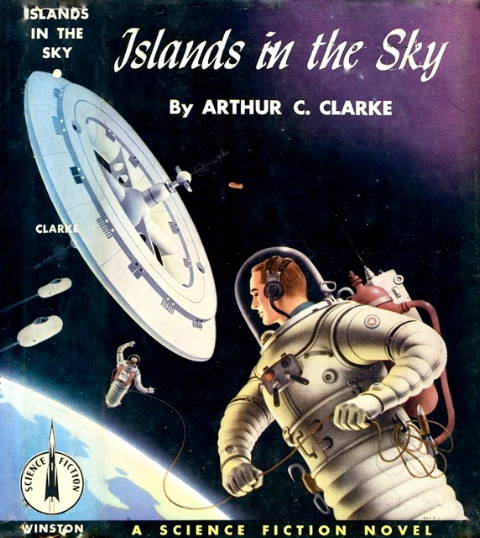
              • Cover of Islands in the Sky
                Islands in the Sky

                Arthur C. Clarke · standalone novel · 1952

                similar by+1 more

                Islands in the Sky is a 1952 science fiction novel by British writer Arthur C. Clarke. It is one of his earliest works. Clarke wrote the story as a travelogue of human settlement of cislunar space in the last half of the twenty-first century.

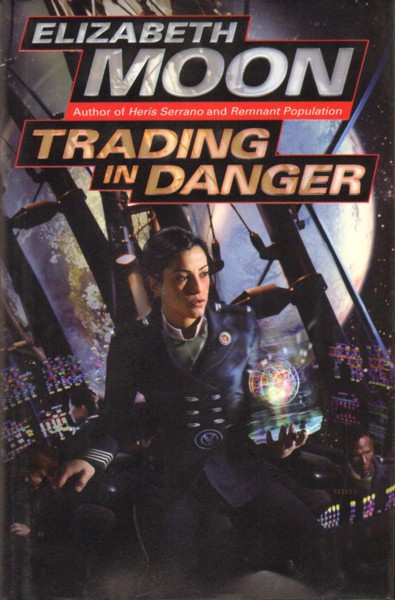
              • Cover of Vatta's War
                Vatta's War

                series · 6 books · 2003

                part of Vatta

                similar by+1 more

                Vatta's War is a science fiction series by American writer Elizabeth Moon, comprising five books: Trading in Danger (2003), Marque and Reprisal, Engaging the Enemy (2006), Command Decision (2007), and Victory Conditions (2008). They have been characterized as military science fiction similar in style to the works of Lois McMaster Bujold, David Weber and Walter Jon Williams.

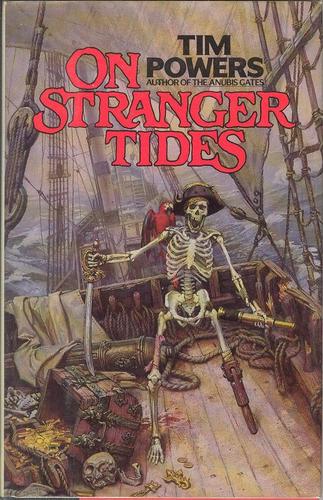
              • Cover of On Stranger Tides
                On Stranger Tides

                Tim Powers · standalone novel · 1987

                similar bypirates

                On Stranger Tides is a 1987 historical fantasy supernatural novel by American writer Tim Powers. It was nominated for the World Fantasy Award for Best Novel, and placed second in the annual Locus poll for best fantasy novel.

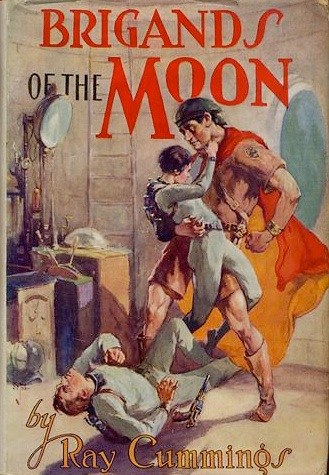
              • Cover of Gregg Haljan
                Gregg Haljan

                series · 2 books · 1931

                completed

                similar by+1 more

                Brigands of the Moon follows Gregg Haljan, an officer aboard the spaceship Planetara, after Martian pirates seize the ship to steal a rare cargo of moon ore vital to Earth's technology, forcing Gregg to turn pirate himself to win it back. Ray Cummings, an early pulp SF writer who counted Thomas Edison among his personal acquaintances, continued Gregg's adventures in Wandl the Invader; both novels date from the early 1930s heyday of interplanetary pulp adventure.

              • Cover of Pirate Latitudes
                Pirate Latitudes

                Michael Crichton · standalone novel · 2009

                similar bypirates

                Pirate Latitudes is an action-adventure novel by Michael Crichton, the sixteenth novel to be published under his own name and first to be published after his death, concerning 17th-century piracy in the Caribbean. HarperCollins published the book posthumously on November 26, 2009. The story stars the fictional privateer Captain Charles Hunter who, hired by Jamaica's governor Sir James Almont, plots to raid a Spanish galleon for its treasure.

              • Cover of Lumar
                Lumar

                series · 1 book · 2023

                part of Cosmere

                similar by+1 more

                Tress of the Emerald Sea follows Tress, a young woman from a small island in a sea of deadly spores, who sets out on a rescue voyage across a corner of Brandon Sanderson's Cosmere. It was written for Sanderson's 2022 Kickstarter campaign and released as one of his 'secret novels,' narrated by his recurring wanderer character Hoid, whom Sanderson later folded into a specific sub-series called Hoid's Travails. Lumar is the name of the world within the wider Cosmere where Tress's story takes place.

              • Cover of Crimson Sails
                Crimson Sails

                series · 3 books · 2023

                similar bypirates

              • Cover of Revenger
                Revenger

                series · 3 books · 2016

                similar bypirates

              • Cover of The Ghost in the Noonday Sun
                The Ghost in the Noonday Sun

                Sid Fleischman · standalone novel · 1965

                similar bypirates

                "Because Captain Scratch thinks Oliver Finch can see ghosts, he shanghais the boy abroad a pirate ship bound from Nantucket in search of buried treasure. Devious methods enable Oliver to outwit Scratch." --summary, Worldcat library record {{OCLC|429575904}} "firmly rooted in fantasy and exaggeration" --Mark Taylor LA Times 1965-12-26 m25 "this rollicking tale has more than enough humor and suspense" --Robert Berkvist NY Times 1965-10-24 pBR34

              • Cover of Autonomous
                Autonomous

                Annalee Newitz · standalone novel · 2017

                similar by+1 more

                Autonomous is a 2017 science fiction novel by Annalee Newitz. It is Newitz's debut novel and was published by Tor Books on September 19, 2017. Set in a near future Earth, the book describes a world where both humans and intelligent robots can be owned as property. The events of the novel follow Jack, a "drug pirate" who manufactures illegal versions of patented drugs, and Paladin, a combat robot who is owned by the law enforcement agency searching for Jack after one of the drugs she reverse-engineered turns out to have dangerous side effects.

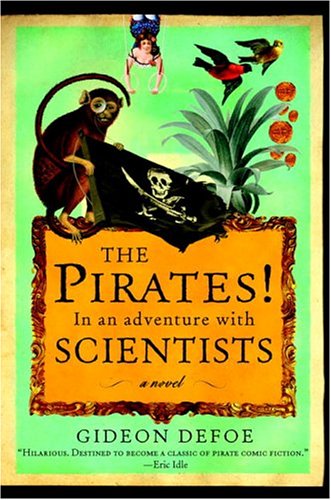
              • Cover of The Pirates!
                The Pirates!

                series · 5 books · 2004

                similar bypirates

                The Pirates! is a series of five comedy books following a group of pirates on their adventures. It is written by British author Gideon Defoe and was published starting in 2004 by Weidenfeld & Nicolson. The fifth book, The Pirates! in an Adventure with the Romantics was released in 2012, and was published by Bloomsbury Publishing.

              • Cover of The Pirates of Zan
                The Pirates of Zan

                Murray Leinster · standalone novel · 1959

                similar bypirates

                The Pirates of Zan is a science fiction novel by Murray Leinster, originally serialized in Astounding Science Fiction in 1959 as "The Pirates of Ersatz". It was nominated for the 1960 Hugo Award for Best Novel. It first appeared in book form in 1959 as one component of an Ace Double, bound with Leinster's The Mutant Weapon; this edition was reissued in 1971. A German translation was issued in hardcover in 1962, an Italian translation appeared in 1968, and a Dutch translation was published in 1972. Bart Books published a stand-alone American paperback edition in 1989. and Baen Books included Pirates in a Leinster omnibus, A Logic Named Joe, in 2005.

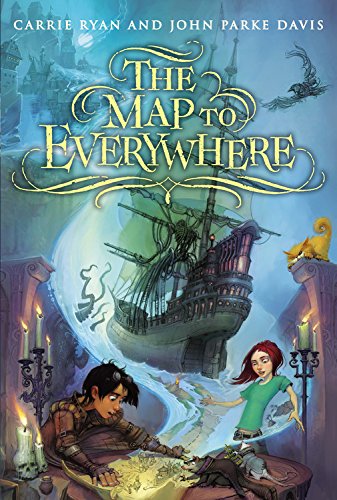
              • Cover of The Map to Everywhere / Pirate Stream
                The Map to Everywhere / Pirate Stream

                series · 4 books · 2014

                similar by+1 more

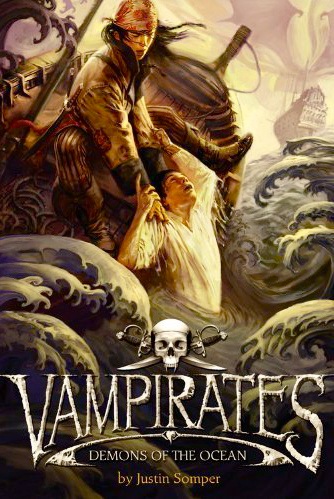
              • Cover of Vampirates
                Vampirates

                series · 7 books · 2005

                similar bypirates

                Vampirates is a series of books by British author Justin Somper about a set of twin children, Connor and Grace Tempest, who get separated at sea and are picked up by two very different ships. The term Vampirate refers to a vampire living on the pirate ship Nocturne, later changed to Nocturnal to differentiate themselves from rebellious and uncontrolled Vampirates.

              • Cover of Once a Pirate
                Once a Pirate

                Susan Grant · standalone novel · 2000

                similar bypirates

                Rescued from the freezing Atlantic by a pirate who has lived to plunder merchant vessels, downed fighter pilot Carly Callahan is soon falling for this unlikely hero as well. Time Travel Romance

              • Cover of Piratica
                Piratica

                series · 3 books · 2004

                completed

                similar bypirates

                The Piratica Series is a series of young adult fantasy novels by Tanith Lee.

              • Cover of Corsair
                Corsair

                Chris Bunch · standalone novel · 2001

                similar bypirates

                Christopher R. Bunch was an American science fiction, fantasy and television writer, who wrote and co-wrote about thirty novels.

              • Cover of Vandals of the Void
                Vandals of the Void

                Jack Vance · standalone novel · 1953

                similar by+1 more

                Vandals of the Void is a young adult science fiction novel by American writer Jack Vance, published in 1953. It was his first novel, although he was already known for his many short stories.

              • Cover of You Sexy Thing / The Disco Space Opera
                You Sexy Thing / The Disco Space Opera

                series · 3 books · 2021

                similar by+1 more

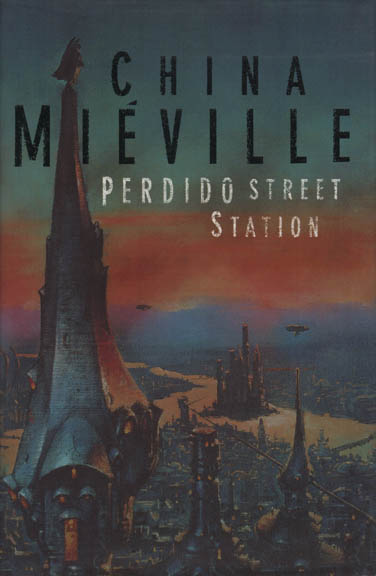
              • Cover of New Crobuzon
                New Crobuzon

                series · 4 books · 2000

                similar by+1 more

                The New Crobuzon books are three standalone novels by China Miéville set in and around New Crobuzon, a vast, corrupt industrial city in his invented world of Bas-Lag where magic, biopunk technology, and several sentient species coexist. Perdido Street Station follows a renegade scientist and his lover after an experiment unleashes something monstrous on the city, while The Scar and Iron Council return to the same setting with different casts and only loose continuity between books.

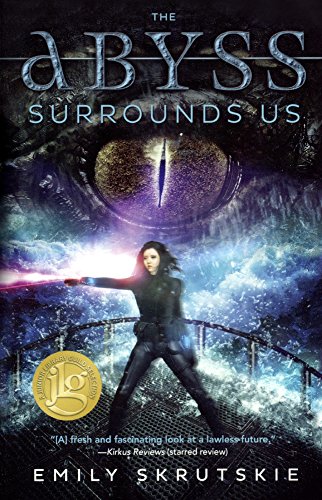
              • Cover of The Abyss (Emily Skrutskie)
                The Abyss (Emily Skrutskie)

                series · 3 books · 2016

                similar by+1 more

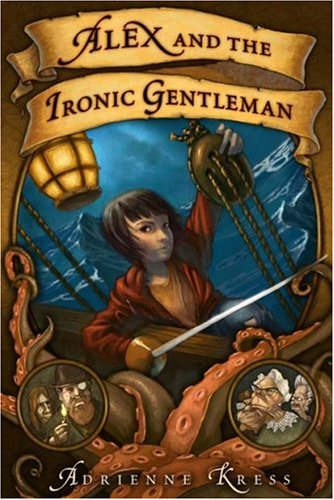
              • Cover of Ironic Gentleman
                Ironic Gentleman

                series · 2 books · 2007

                similar bypirates

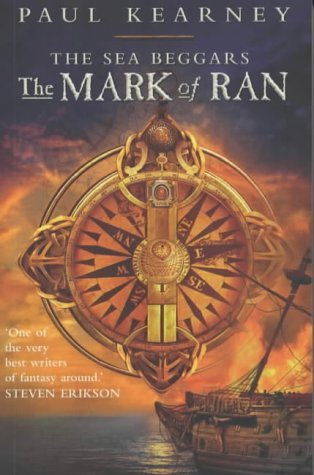
              • Cover of Sea Beggars
                Sea Beggars

                series · 2 books · 2004

                similar by+1 more

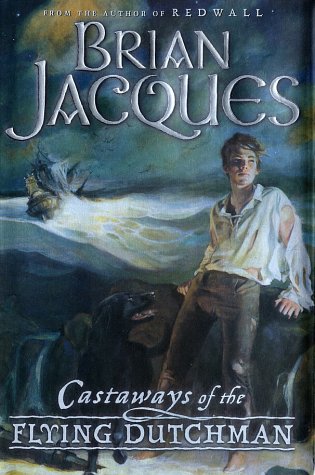
              • Cover of Castaways of the Flying Dutchman
                Castaways of the Flying Dutchman

                series · 3 books · 2001

                completed

                similar by+1 more

                Brian Jacques's Castaways of the Flying Dutchman follows Neb and his dog Denmark, the sole survivors of the cursed ghost ship's crew, condemned to eternal youth and wandering the world to help people in trouble wherever they land. The trilogy continues through The Angel's Command and Voyage of Slaves.