More like Planetfall
anchored on:science fictionspace colonizationother star systemsfar futuremysteriousfaith and religion+2 more
but
- Dune
series20 books1963
part of Dune Universe
similar byscience fictionfar futureother star systemsfaith and religion+1 more
Frank Herbert's Dune Chronicles opens with 1965's Dune, set on the desert planet Arrakis where House Atreides takes control of the only source of the vital spice melange and young Paul Atreides is pulled into a struggle over its politics and religion. Herbert carried the story forward across five further novels — Dune Messiah, Children of Dune, God Emperor of Dune, Heretics of Dune, and Chapterhouse: Dune — following Paul's line over the following millennia, before Brian Herbert and Kevin J. Anderson later extended the saga. Many other editions of these six novels are omnibus and box-set repackagings rather than separate stories.
- Dune Universe
universe78 books1963
Start hereDune · Start here
similar byscience fictionfar futureother star systems+1 more
Arrakis. Dune. The desert planet, where empire runs on a single substance: the spice melange, which folds space, prolongs life, and unlocks prescience, and which exists nowhere else in the known universe. Frank Herbert's saga is a meditation dressed as an adventure — feudal houses and a secret sisterhood, engineered messiahs and the patient ecology of a world without water, all turning on the terrible gravity of who commands the spice. It reads like scripture and schemes like a war room, ten thousand years hence, among people who have outlawed the thinking machine and made instruments of themselves instead. At its heart stand Herbert's original six — Dune, Dune Messiah, Children of Dune, God Emperor of Dune, Heretics of Dune, Chapterhouse: Dune — a single deepening arc across millennia, arguing the whole way between prophecy and free will. Around that spine his son Brian Herbert and Kevin J. Anderson have raised a vast prequel architecture: Prelude to Dune, tracing the great houses a generation before Paul; Legends of Dune, reaching back to the crusade that broke the machines; the Schools of Dune cycle on the founding of Bene Gesserit, Mentat, and Navigator; the Caladan Trilogy and Heroes of Dune filling years the originals left in shadow. Many hands, dozens of volumes, one desert. What sets Dune apart is its refusal of the simple: religion is manufactured, heroes are hazards, and the sand itself — worm, water, ecology — acts as a political power. Begin where the universe did, with Frank Herbert's Dune (1965), and read the original six in order; you need nothing else to feel the full weight. The prequels are a country to explore afterward, taken by era. Beginnings are delicate times.
- Safehold
series11 books2006
similar byscience fictionother star systemsfar futurefaith and religiontense+1 more
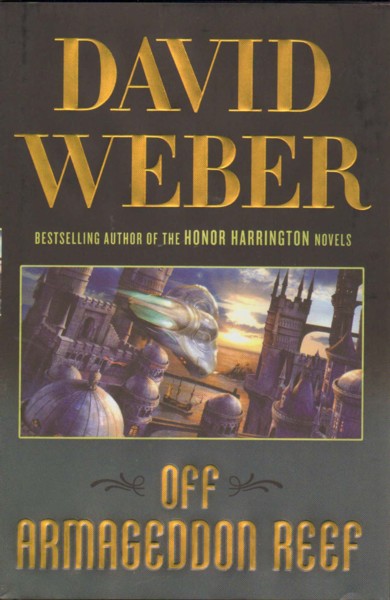
Safehold is a science fiction book series by David Weber, currently consisting of ten titles, the latest released in January 2019. The series is mostly set around the 31st century, on a distant world dubbed "Safehold" where a group of humans are in hiding from the Gbaba, an alien enemy responsible for the end of all other human civilization.
- Embassytown
China Miévillestandalone novel2011
similar byscience fictionother star systemsfar futurespace colonizationmysteriousfirst person
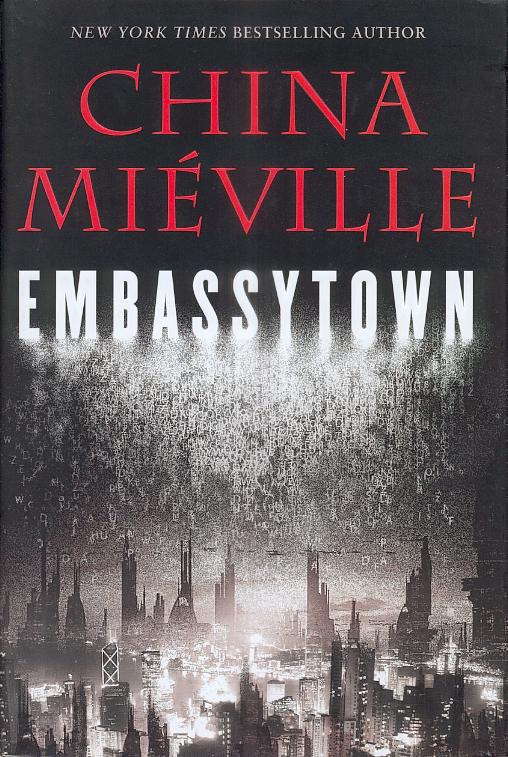
In the far future, humans have colonized a distant planet, home to the enigmatic Ariekei, sentient beings famed for a language unique in the universe, one that only a few altered human ambassadors can speak. Avice Benner Cho, a human colonist, has returned to Embassytown after years of deep-space adventure. She cannot speak the Ariekei tongue, but she is an indelible part of it, having long ago been made a figure of speech, a living simile in their language. When distant political machinations deliver a new ambassador to Arieka, the fragile equilibrium between humans and aliens is violently upset. Catastrophe looms, and Avice is torn between competing loyalties—to a husband she no longer loves, to a system she no longer trusts, and to her place in a language she cannot speak yet speaks through her.
- Embedded
Dan Abnettstandalone novel2011
similar byscience fictionother star systemsfar futurespace colonizationtensefirst person
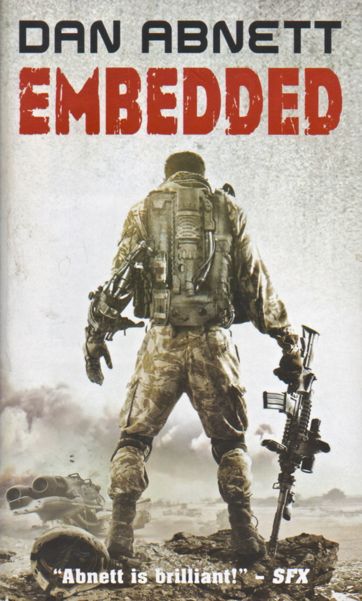
The colony planet of Eighty-Six looks as dull as all its fellow new worlds to veteran journalist Lex Falk. But when a local squabble turns violent, and the media get the runaround from the military high command, his interest is seriously piqued. Forbidden from approaching the battlezone, Falk gets himself chipped inside the head of a combat veteran - and uncovers the story of a lifetime.
- The Outposter
Gordon R. Dicksonstandalone novel1972
similar byscience fictionother star systemsfar futurespace colonizationtense
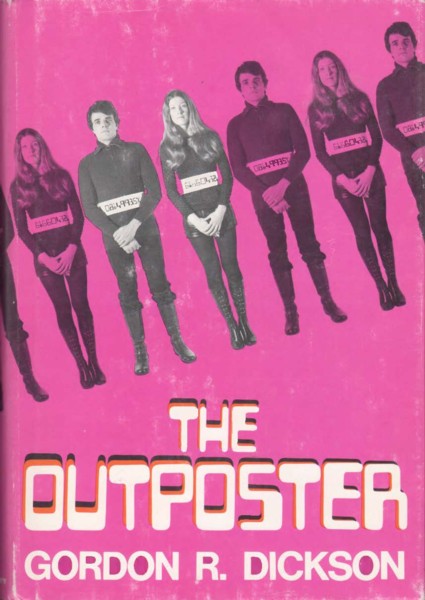
From the flap of the Lippincott first edition: "Rich man, poor man, beggarman, thief - the lottery played no favorites. If your number came up, you joined the rest of the losers marked for exile from overcrowded Earth. Shipped to a raw new outpost in space, you were officially called a colonist. But your whispered name was "garbage," your destination was oblivion, and you had few illusions about your chances of survival. The Outposters - a token band of specially trained personnel - were given the impossible task of guiding and protecting these outcasts in their harsh new environment. Will indifferent support from Earth, supply lines ran thin and raids by hostile aliens were increasing unchecked. Only one young Outposter, Mark Ten Roos, dared to challenge the system and change the odds. To help him, Mark hand-picked a strange assortment of allies from the new shipment of colonists: a brash opportunist, every instinct honed for personal survival; a midget woman with a professorship in philosophy; a widowed mathematician, expert in position astrophysics; an ex-marine with a dishonorable discharge. And help came to Mark from a source he had not expected - the daughter of the Outer Navy's ranking officer. When Mark Ten Roo put his plan into action, he knew he was also putting his life on the line."
- Homecoming (Orson Scott Card)
series5 books1992
similar byscience fictionfar futureother star systemsfaith and religion+2 more
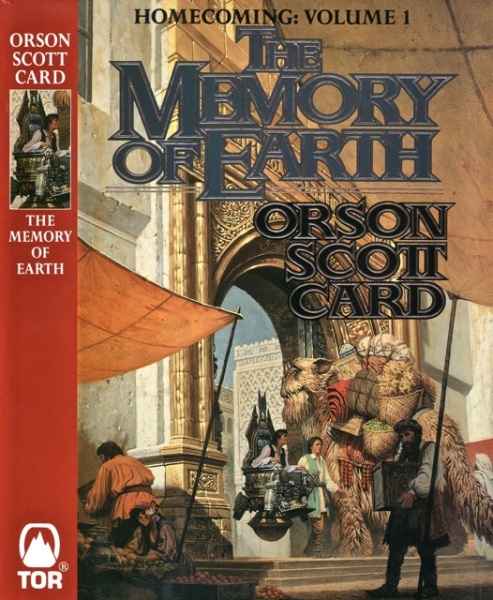
The Homecoming Saga is a science fiction series by Orson Scott Card. The series is patterned on the Book of Mormon. Some of the names also come from the Book of Mormon.
- A Time of Changes
Robert Silverbergstandalone novel1971
similar byscience fictionother star systemsfar futurefaith and religionfirst person
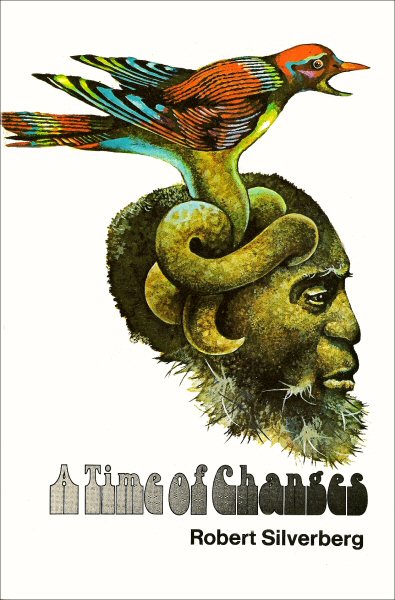
A Time of Changes is a 1971 science fiction novel by American writer Robert Silverberg. It won the Nebula Award for that year, and was also nominated for the 1972 Hugo and Locus Awards.
- Riverworld
series37 books1965
similar byscience fictionfar futureother star systemsfaith and religion+1 more
The Riverworld series consists of five science fiction novels (1971–1983) by American author Philip José Farmer (1918–2009). The Riverworld is an artificial, or heavily terraformed, planet where all humans who ever lived throughout history have been resurrected. The novels explore interactions of resurrected individuals from many different cultures and time periods. The underlying theme is quasi-religious. The motivations and ethics of the unknown intelligences that created the Riverworld and its inhabitants are explored.
- Moties
series4 books1974
part of CoDominium
similar byscience fictionfar futureother star systems+1 more
Larry Niven and Jerry Pournelle's The Mote in God's Eye (1974) depicts humanity's first contact with an alien species, the Moties, set within the far-future interstellar setting of Pournelle's codominium future history. The Gripping Hand continues that first-contact crisis years later, and Outies, written by J. R. Pournelle, carries the story forward into a new generation. Together the three books trace an escalating encounter between human and Motie civilizations within the codominium universe.
- Heorot
series4 books1987
similar byscience fictionother star systemsfar futurespace colonization+1 more
Larry Niven, Jerry Pournelle and Steven Barnes's The Legacy of Heorot strands human colonists on an idyllic-seeming alien world where they discover apex predators -- grendels -- hidden beneath the surface, forcing them to fight for survival. Beowulf's Children continues the colony a generation later as the children born on the planet clash with their parents over how to live alongside the grendels, and a fourth book, Starborn and Godsons, returns to the settlement decades further on. It's hard-SF creature-horror crossed with generational colony drama.
- Armor
John Steakleystandalone novel1984
similar byscience fictionother star systemsfar futuretensemadness
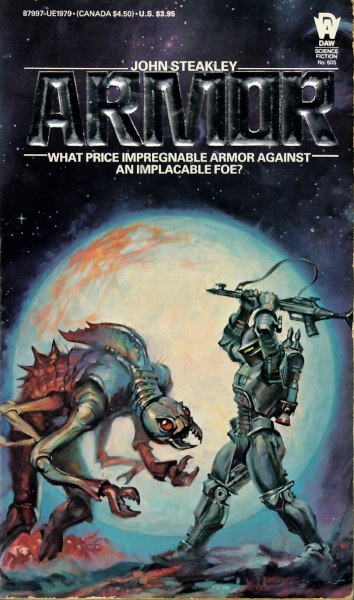
Armor is a military science fiction novel by John Steakley. It features the military use of exoskeletons and insect-like alien enemies but concentrates on the psychological effects of violence on human beings.
- Bedlam Planet
John Brunnerstandalone novel1968
similar byscience fictionother star systemsfar futurespace colonizationtensemadness
A story about colonists on an alien world, and the psychological effects thereof.
- Hair Carpet Makers Universe
series2 books1985
similar byscience fictionother star systemsfar futurespace colonizationmysterious+1 more
- The Face of the Waters
Robert Silverbergstandalone novel1991
similar byscience fictionother star systemsfar futurespace colonization+1 more
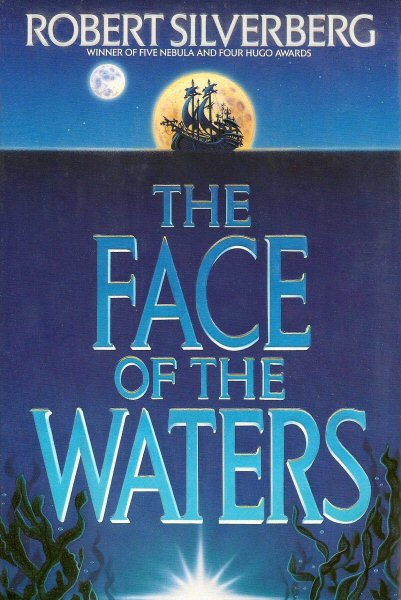
On the ocean world of Hydros -- a planet with no land beyond a scatter of artificial floating islands -- the human settlers of Sorve commit an offense against the native aquatic Hydrans serious enough to get their community banished, forbidden from settling on any other island. With nowhere else to go, Sorve's people set out across the water in a makeshift flotilla, chasing rumors of a mythical island called the Face of the Waters that may or may not exist, forced to reckon with what they owe the world they've spent generations treating as theirs. A Robert Silverberg novel of exile and search, told through Sorve's displaced islanders.
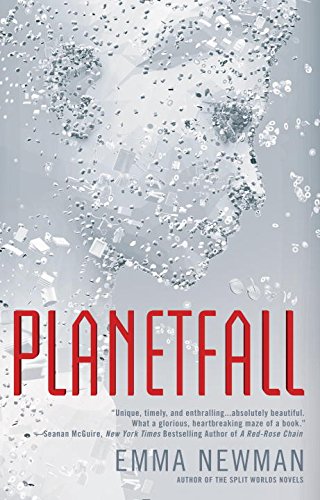
- Planetfall (Emma Newman)
series15 books2015
similar byscience fictionother star systemsfar futuretensespace colonization+2 more
Emma Newman's Planetfall series opens with a colony ship's arrival on an alien world in the shadow of a mysterious alien structure that drew them there, and the secrets its leadership has kept from the rest of the colonists ever since landing. Each of the four books shifts to a different point-of-view character connected to the colony, using personal trauma and unreliable narration as much as the science-fictional setting to drive the story. It's colonization SF more interested in psychological fallout than the mechanics of settling a new world.
- Masters of Everon
Gordon R. Dicksonstandalone novel1979
similar byscience fictionother star systemsfar futurespace colonizationmysterious
Jef Robini was heading for Everon with a highly controversial cargo. For eight years on Earth Jef had tried to rear the maolot cub which was the final legacy from his brother. But the maolot had failed to grow into the giant cat that was Everon's largest and most dangerous life-form. And now Jef was returning the creature to its natural home, the colonized planet of Everon. He knew the planet was barren. And that he'd have to fight to survive. But nothing had prepared him for the incomprehensible strangeness, the mind-blasting wonder of the true Masters of Everon.
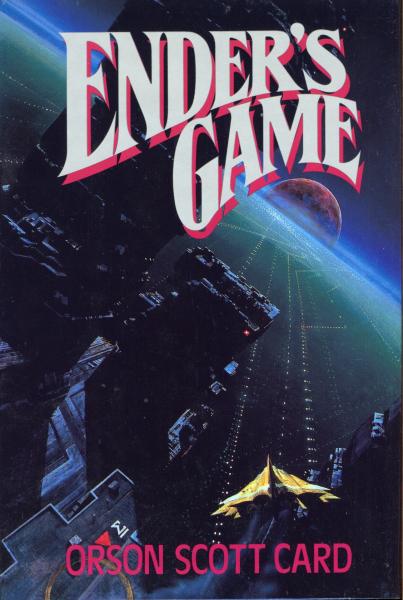
- Ender Wiggin
series14 books1977
part of Ender's Game Universe
similar byscience fictionfar futureother star systems+1 more
Orson Scott Card's Ender's Game (1985, expanded from his 1977 novella) follows child prodigy Andrew "Ender" Wiggin as he is recruited into a military training program built to prepare Earth's defenses for an anticipated third war against an insectoid alien species known as the Formics. The saga continues years later through Speaker for the Dead and Xenocide, following an older Ender as he confronts the moral weight of his role in that earlier conflict, and concludes the core arc in Children of the Mind, with Ender in Exile filling in the years between the first two books. Set within the wider Ender's Game universe, the series shifts from military coming-of-age story to slower, more philosophical science fiction as it progresses.
- West of the Sun
Edgar Pangbornstandalone novel1953
similar byscience fictionother star systemsfar futurespace colonization+1 more
From the back cover of the Dell first paperback printing: "After eleven years in space the Argo landed... West of the Sun ... on the dangerous planet Lucifer. The crew faced and untamed world of huge carnivorous birds with wolverine heads and flashing black teeth; furred, ten-foot tall men; red-skinned man-eating pygmies. They fought for mere survival but - their duty was to colonize and populate the planet - four men and only two women."
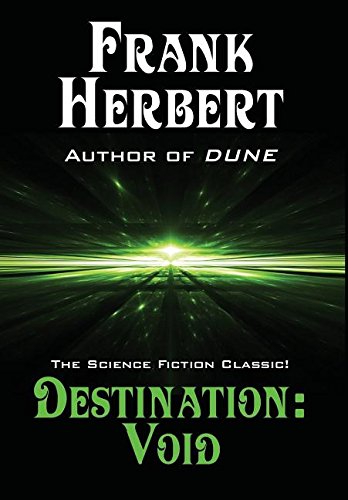
- Pandora
series4 books1966
similar byscience fictionfar futureother star systems+3 more
The Pandora Sequence opens with Frank Herbert's solo novel Destination: Void, in which a starship crew must jury-rig a working artificial consciousness after their vessel's control systems fail. Bill Ransom co-writes the three novels that follow, carrying the survivors to the world Pandora, where they must contend with both a manipulative machine intelligence and the planet's own hostile ecology. Across its four books the series moves from a claustrophobic ship-bound crisis to a generations-long struggle over faith, control, and survival on a dangerous new world.
- Naked to the Stars
Gordon R. Dicksonstandalone novel1961
similar byscience fictionother star systemsfar futuremysterioustense
The subject of the cosmic soldier has become a matter of concern for the science fiction reader. With the award-winning success of The Forever War, and with the great classic novels of Gordon R. Dickson's genetically bred mercenaries, the Dorsai, it is clear that the role of a fighter in a universe of expanding technology and competing alien intelligences is on science fiction's orders of the day. Gordon R. Dickson has been the master of that field, and his novel, Naked to the Stars, is one of his masterpieces. Long out of print, it is the story of a star soldier who, during a battle against a non-human foe on a far planet, somehow lost sixteen hours from his memory. Discharged for the potential danger those lost hours might have programmed, Cal Truant made it his fixation to uncover the mystery buried in his mind - to find out what had happened in those missing hours - and block the peril it might present to his fellow troopers, to his war command, and to the planet for which they fought - Earth.
- Mickey7
series2 books2022
similar byscience fictionother star systemsfar futuretensefirst person+1 more
- Old Man's War
series16 books2005
similar byscience fictionfar futureother star systems+3 more
The Old Man's War series is a series of science fiction novels by John Scalzi. The first book in the series, Old Man's War, was first published in 2005 by Tor Books, and was nominated for the Hugo Award for Best Novel in 2006. In 2026 it was a finalist for the Hugo Award for Best Series.
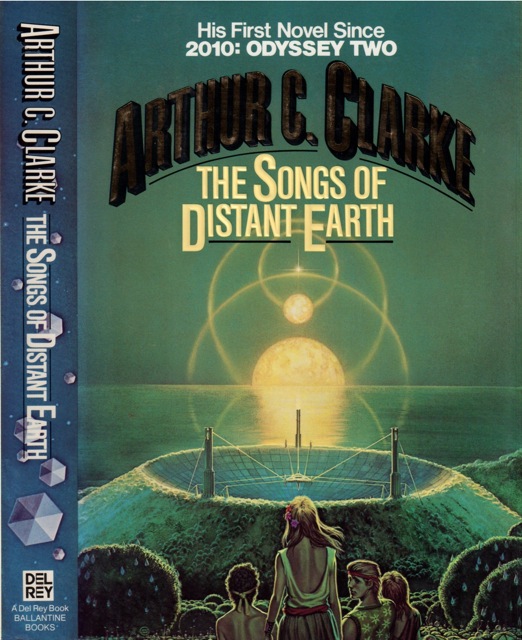
- The Songs of Distant Earth
Arthur C. Clarkestandalone novel1986
similar byscience fictionother star systemsfar futurespace colonization
The Songs of Distant Earth is a 1986 science fiction novel by British writer Arthur C. Clarke, based upon his 1958 short story of the same title. Of all of his novels, Clarke stated that this was his favourite. Prior to the publishing of the novel, Clarke also wrote a short step outline with the same title, published in Omni magazine and anthologised in The Sentinel in 1983.