More like Plasm
anchored on:science fictionother star systemsfar futurespace operasurvivalredemption+2 more
but
- The Stars My Destination
Alfred Besterstandalone novel1956
similar bydarkfar futurescience fictionsurvivalspace operaidentityspaceother star systems+1 more
When a passing spaceship refuses to rescue the lone survivor from the drifting wreck of another ship, he dedicates his life to discovering who made that decision and exacting his revenge, in the process altering human history and his own character.
- Dune
series20 books1963
part of Dune Universe
similar byfar futurescience fictionspace operaother star systems+2 more
Frank Herbert's Dune Chronicles opens with 1965's Dune, set on the desert planet Arrakis where House Atreides takes control of the only source of the vital spice melange and young Paul Atreides is pulled into a struggle over its politics and religion. Herbert carried the story forward across five further novels — Dune Messiah, Children of Dune, God Emperor of Dune, Heretics of Dune, and Chapterhouse: Dune — following Paul's line over the following millennia, before Brian Herbert and Kevin J. Anderson later extended the saga. Many other editions of these six novels are omnibus and box-set repackagings rather than separate stories.
- The Margarets
Sheri S. Tepperstandalone novel2007
similar bydarkfar futurescience fictionspace operaidentityspaceother star systems+1 more
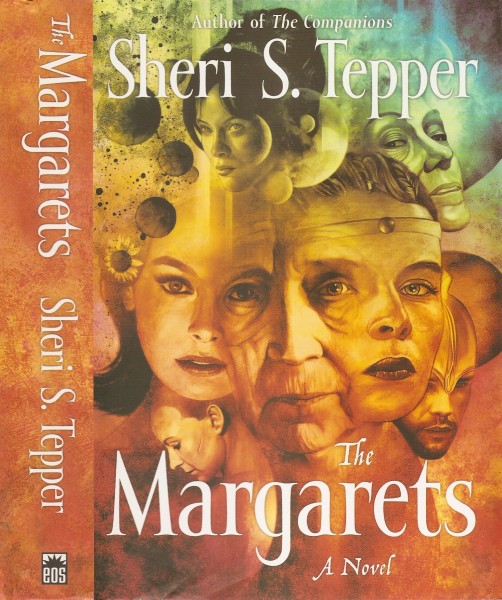
The Margarets marks the long-awaited return of one of the most respected authors in the sf community; a writer who has earned accolades and the admiration of every true aficionado of bold, brilliant, risk-taking speculative fiction. Sheri S. Tepper dazzles yet again with a powerful tale of ingenious survival and strange destiny.The only human child living in a human work colony on the Martian satellite Phobos, little Margaret Bain has devised a system for keeping the suffocating demons of boredom and loneliness at bay: She invents six imaginary companions, each an extension of her own personality, to play with. When the unproductive Phobos project is shut down, and after Margaret is forced to return to Earth with her parents, the child's other selves are lost to her. But they are not gone. Left behind, each one flourishes—refining its own persona, acquiring its own history—before ultimately dispersing to far-flung destinations throughout the universe.On a near-barren homeworld denuded by thoughtless-ness and chemistry, Margaret grows to adulthood and marries, despite the seemingly utter hopelessness of humanity's future. The Earth is so impoverished that its inhabitants must import water and other basic necessities of life—trading the only viable product the planet has left to offer . . . slaves. The time will come when Margaret must leave this world as well, expelled as part of a desperate survival plan millennia in the making—an astonishing scheme that will require her to gather together the many Margarets who are now scattered throughout the galaxy. The creator of the Margarets must now bring all her selves home . . . or watch her race perish.
- Dune Universe
universe78 books1963
Start hereDune · Start here
similar byfar futurescience fictionspace operaother star systems+1 more
Arrakis. Dune. The desert planet, where empire runs on a single substance: the spice melange, which folds space, prolongs life, and unlocks prescience, and which exists nowhere else in the known universe. Frank Herbert's saga is a meditation dressed as an adventure — feudal houses and a secret sisterhood, engineered messiahs and the patient ecology of a world without water, all turning on the terrible gravity of who commands the spice. It reads like scripture and schemes like a war room, ten thousand years hence, among people who have outlawed the thinking machine and made instruments of themselves instead. At its heart stand Herbert's original six — Dune, Dune Messiah, Children of Dune, God Emperor of Dune, Heretics of Dune, Chapterhouse: Dune — a single deepening arc across millennia, arguing the whole way between prophecy and free will. Around that spine his son Brian Herbert and Kevin J. Anderson have raised a vast prequel architecture: Prelude to Dune, tracing the great houses a generation before Paul; Legends of Dune, reaching back to the crusade that broke the machines; the Schools of Dune cycle on the founding of Bene Gesserit, Mentat, and Navigator; the Caladan Trilogy and Heroes of Dune filling years the originals left in shadow. Many hands, dozens of volumes, one desert. What sets Dune apart is its refusal of the simple: religion is manufactured, heroes are hazards, and the sand itself — worm, water, ecology — acts as a political power. Begin where the universe did, with Frank Herbert's Dune (1965), and read the original six in order; you need nothing else to feel the full weight. The prequels are a country to explore afterward, taken by era. Beginnings are delicate times.
- The Dosadi Experiment
Frank Herbertstandalone novel1977
similar byfar futurescience fictionsurvivalspace operaother star systems+1 more
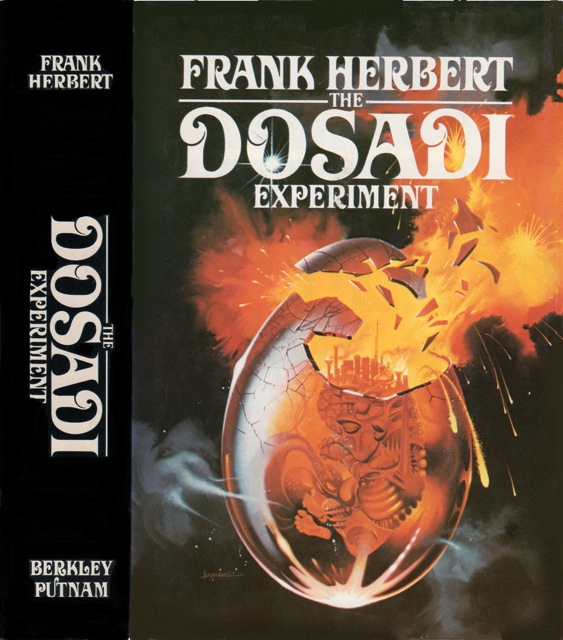
From the flaps of the Berkley Putnam first edition: "In his first new work of science fiction since the best-selling Children of Dune, Frank Herbert returns to his world of Whipping Star, and involves Jorj X. McKie, Saboteur Extraordinary, in a new intrigue. In Whipping Star, McKie discovered that some of the stars in the universe are actually intelligent, super-powerful beings, and was able to befriend one of them, the star Alcyone - affectionately known as Fannie Mae. As The Dosadi Experiment opens, McKie is assigned to investigate the planet Dosadi, which is isolated from the rest of the galaxy by a "god-wall," a barrier set up by one of the intelligent stars. Dosadi is rumored to be an experimental planet, and the experimenters are the froglike Gowachin, whose culture is founded upon a strange legal system in which McKie is the only human ever trained. He learns that humans and Gowachin have been placed on Dosadi, without their consent, for an experiment that could last centuries: an experiment in extreme overcrowding. But this monstrous plot is apparently out of control, and it seems the Gowachin may be prepared to destroy Dosadi rather than expose its secret, thus breaking the peace among the races, and starting the first interstellar war. But this is just the beginning. When McKie finally reaches Dosadi he discovers that the Dosadis have taken control of their own evolution and produced a competitive, highly evolved elite, of both humans and Gowachin, who have been able to extrapolate the existence of a universe beyond the god-wall and hate whoever has imprisoned them like this. They plan to break out and avenge themselves on the galaxy."
- Hunter's Run
Gardner Dozois, George R. R. Martin & Daniel Abrahamstandalone novel2007
similar byfar futurescience fictionsurvivalspace operaother star systems+2 more
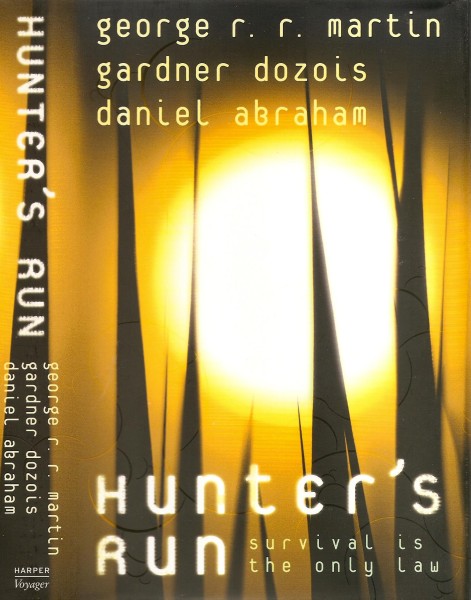
Hunter's Run is a 2007 science fiction novel written by Daniel Abraham, Gardner Dozois and George R. R. Martin. It is a heavily rewritten and expanded version of an earlier novella called Shadow Twin.
- Kefahuchi Tract Trilogy
series3 books2002
similar byfar futurescience fictionspace operachallengingother star systemsspace+2 more
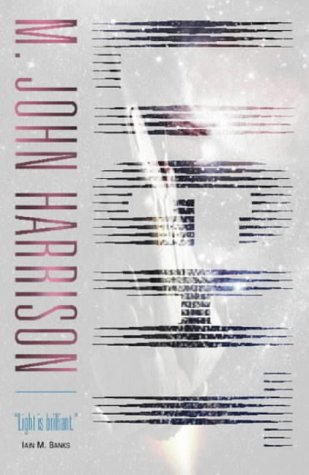
M. John Harrison's Kefahuchi Tract trilogy circles a strange, physics-breaking anomaly in deep space that draws scientists, smugglers, and drifters into its pull across different eras. Light moves between a near-future timeline and a far-future one drawn to the Tract itself; its sequel Nova Swing stays within one future period, where a fragment of the anomaly's altered space bleeds into the run-down port city of Saudade, giving the book a noir, Roadside-Picnic-like atmosphere; Empty Space concludes the sequence. The three novels share a setting and mood more than a continuous plot or cast.
- Thorns
Robert Silverbergstandalone novel1967
similar bydarkfar futurescience fictionspace operaspaceother star systems
From the back cover of the Ballantine first edition: "Lona Kelvin - naive orphan. And at seventeen, mother of one hundred children. Minner Burris - starman. Whose butchered body had been put together by aliens, with artificial and alien replacements. Horror stalked just beneath the surface of these two lonely creatures. Duncan Chalk - a vulture, carrion eater of other people's emotions, feeding on pain, fear, anger, hatred, jealousy, terror; typifying in the appetites of his vast body the sick delight that millions took in the tragedies he skillfully arranged. Lona Kelvin - Minner Burris - Duncan Chalk - Surely the strangest triangle the worlds had ever seen."
- Berserker (Fred Saberhagen)
series59 books1963
similar byfar futurescience fictionspace operaspaceother star systems+2 more
The Berserker series is a series of space opera science fiction short stories and novels by Fred Saberhagen, in which robotic self-replicating machines strive to destroy all life.
- Aton/Piers Anthony's Worlds of Chthon
series4 books1967
similar bydarkfar futurescience fiction+2 more
Piers Anthony's Chthon (1967) follows Aton Five, imprisoned in a sentient underground mineral world after his obsession with a beautiful, dangerous woman leads him to attempted murder; escaping, he pursues the truth about her and about his own mixed human and alien nature across the galaxy. Its sequel Phthor continues Aton's story and the mythology of the living prison-planet Chthon.
- The Stars Are Legion
Kameron Hurleystandalone novel2017
similar bydarkfar futurescience fictionsurvivalspace operaspace
396 pages ; 20 cm
- Citizen of the Galaxy
Robert A. Heinleinstandalone novel1957
similar byfar futurescience fictionspace operaother star systemsidentityspace
On a planet far distant from Earth, a lame beggar buys a young boy slave who has forgotten his origins. The beggar is more than he seems, and gives the boy an extensive education while employing him as an observer of activity in their city. Years later, the beggar is captured by the government, and the youth must escape the planet.
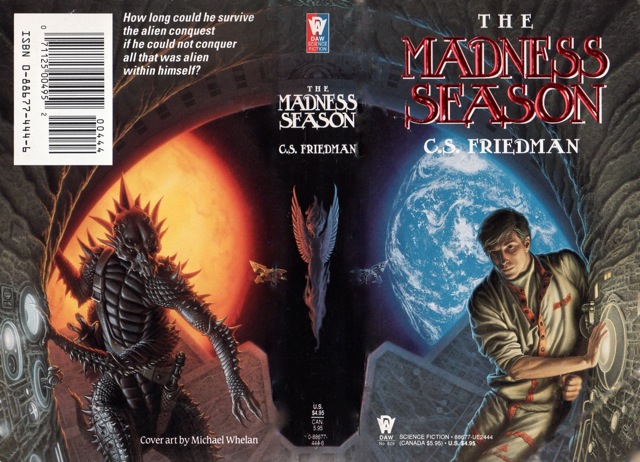
- The Madness Season
C. S. Friedmanstandalone novel1990
similar byfar futurescience fictionspace operaother star systemsidentityspace+2 more
The alien within - He'd had so many names over the centuries, so many new identities that he could scarcely remember who he had originally been. Now his name was Daetrin, a name given by the alien conquerors of humankind, the Tyr. Three hundred years had passed since the Tyr conquered the people of Earth as they had previously overcome numerous races throughout the galaxy. In their victory they had taken the very heart out of the human race, isolating the true individualists, the geniuses, all the people who represented the hopes, dreams, and discoveries of the future, and imprisoning them in dome colonies on planets hostile to human life. There the Tyr, a race which itself shared a unified gestalt mind, had left these gifted individuals to work on projects which would, the conquerors hoped, reveal all of human kind's secrets to them. Yet Daetrin's secret was one no scientist had ever uncovered, for down through the years he had succeeded in burying it so well that he had even hidden his real nature from himself. But, taken into custody by the Tyr, there was no longer any place left for Daetrin to run, no new name and life for him to assume. Now he would at last be forced to confront the truth about himself - and if he failed, not just Daetrin but all humans would pay the price... (from the first page of the DAW Books first edition)
- Mickey7
series2 books2022
similar byfar futurescience fictionsurvivalother star systemsidentityspace+1 more
- We Who Are About to ...
Joanna Russstandalone novel1977
similar bydarkfar futurescience fictionsurvivalother star systemschallenging
We Who Are About To... is a feminist science fiction novella by Joanna Russ. It first appeared in magazine form in the January 1976 and February 1976 issues of Galaxy Science Fiction and was first published in book form by Dell Publishing in July 1977.
- Pandora
series4 books1966
similar byfar futurescience fictionsurvivalother star systems+2 more
The Pandora Sequence opens with Frank Herbert's solo novel Destination: Void, in which a starship crew must jury-rig a working artificial consciousness after their vessel's control systems fail. Bill Ransom co-writes the three novels that follow, carrying the survivors to the world Pandora, where they must contend with both a manipulative machine intelligence and the planet's own hostile ecology. Across its four books the series moves from a claustrophobic ship-bound crisis to a generations-long struggle over faith, control, and survival on a dangerous new world.
- Deus Irae
Philip K. Dick & Roger Zelaznystandalone novel1976
similar bydarkfar futurescience fictionsurvival+1 more
Deus Irae is a post-apocalyptic science fiction novel written by two American authors; it was started by Philip K. Dick and finished with the help of Roger Zelazny. It was published in 1976. The novel's title, Deus irae, means 'God of Wrath' in Latin; the title is a play on words on the phrase Dies Irae, meaning 'Day of Wrath' or 'Judgment Day'. The novel was based on Dick's short stories "The Great C" and "Planet for Transients".
- Falcon
Emma Bullstandalone novel1989
similar bydarkfar futurescience fictionsurvivalspace operaspaceother star systems
FOR NIKI FALCON, LIFE IS A RACE AGAINST TIME. AND TIME IS WINNING His planet was stolen, besieged by agents of the Central Worlds Concorde. His family was destroyed, and his world shattered before his eyes... Now Niki Falcon must fight his way to glory living on the cutting edge of danger to become one of the great star-pilots. And he's the last. For behind the young pilot's fighting power lies a deadly drug that systematically destroys his body's defenses. That gives him the strength to defend a planet—and renders him helpless to save himself.
- Riddley Walker
Russell Hobanstandalone novel1980
similar bydarkfar futurescience fictionsurvivalchallenging
WorldCat: Composed in an English which has never been spoken and laced with a storytelling tradition that predates the written word, RIDDLEY WALKER is the world waiting for us at the bitter end of the nuclear road. It is desolate, dangerous and harrowing, and a modern masterpiece.
- The Status Civilization
Robert Sheckleystandalone novel1960
similar bydarkfar futurescience fictionsurvivalother star systems
"Will Barrent had no memory of his crime ... but he found himself shipped across space to a brutal prison-planet. On Omega, his only chance to advance himself -- and stay alive -- is to commit an endless series of violent crimes. The average inmate's life expectancy from time of arrival is three years. Can Barrett survive, escape, and return to Earth to clear his name?" - From the cover of the 2007 Wildside paperback edition.
- Spatterjay
series3 books2002
part of Polity
similar byfar futurescience fictiondarkspace operaother star systems+2 more
Spatterjay is set on the ocean world of the same name within Neal Asher's Polity future history: a planet whose ecology is uniquely dangerous, drawing soldiers, monsters, and old enemies of the Polity into its waters across the trilogy's three books (The Skinner, The Voyage of the Sable Keech, Orbus). It continues Asher's interest in body horror and extreme biology set against a backdrop of AI-run human space.
- Forge of God
series2 books1987
completed
similar bydarkscience fictionsurvival+4 more
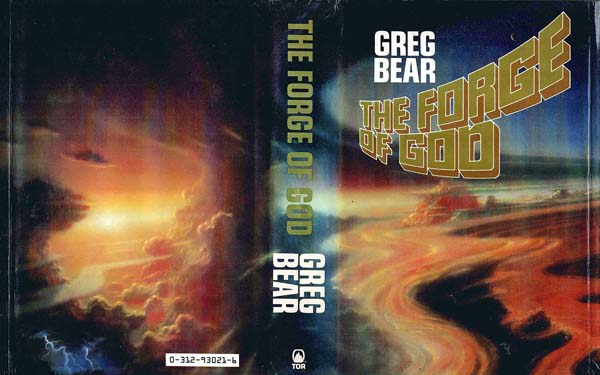
The Forge of God (1987) is Greg Bear's science fiction novel about Earth's discovery that it is the target of an incomprehensible, overwhelming alien attack, following scientists and ordinary people as they try to understand what is destroying the planet. Its 1992 sequel, Anvil of Stars, follows a group of young survivors sent on a mission of interstellar retaliation, continuing directly from the first book's ending.
- Xan-Sskarn War
series1 book2010
similar bydarkfar futurescience fictionspace operaspaceother star systems+1 more
- The Outposter
Gordon R. Dicksonstandalone novel1972
similar byfar futurescience fictionsurvivalspace operaother star systemsspace
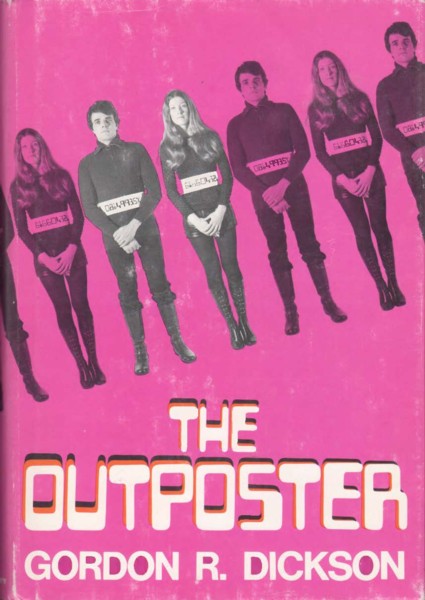
From the flap of the Lippincott first edition: "Rich man, poor man, beggarman, thief - the lottery played no favorites. If your number came up, you joined the rest of the losers marked for exile from overcrowded Earth. Shipped to a raw new outpost in space, you were officially called a colonist. But your whispered name was "garbage," your destination was oblivion, and you had few illusions about your chances of survival. The Outposters - a token band of specially trained personnel - were given the impossible task of guiding and protecting these outcasts in their harsh new environment. Will indifferent support from Earth, supply lines ran thin and raids by hostile aliens were increasing unchecked. Only one young Outposter, Mark Ten Roos, dared to challenge the system and change the odds. To help him, Mark hand-picked a strange assortment of allies from the new shipment of colonists: a brash opportunist, every instinct honed for personal survival; a midget woman with a professorship in philosophy; a widowed mathematician, expert in position astrophysics; an ex-marine with a dishonorable discharge. And help came to Mark from a source he had not expected - the daughter of the Outer Navy's ranking officer. When Mark Ten Roo put his plan into action, he knew he was also putting his life on the line."