Loreful
HomeDiscover
Search series, authors…⌘K
Loreful

Reading orders for SF/F series and shared universes — with your place kept in every one.

Explore

UniversesSeriesWorksAuthorsAtlas

Help

FAQAboutSite map

Account & legal

Sign inCreate accountPrivacyTerms

Data

Built on ISFDB, Wikipedia, Wikidata and Open Library. Curated reading orders carry their reasoning on the page; the rest follow publication order. Data sources & licenses

© Loreful · data: ISFDB · CC BY

More like Poor Pumpkin

but

Mood

The mood the book leaves you in.

  • The reading experience is propelled by journeys, exploration, and physical risk; excitement and forward momentum dominate over dread or introspection.
  • Joy and loss are deliberately mixed; the resolution grants characters something real while taking something else away, leaving warmth and sorrow together.
  • The book demands work from the reader — dense prose, difficult structure, unfamiliar ideas, or morally uncomfortable material — as part of its intended effect.
  • Grim events, cruelty, or despair dominate the atmosphere, and the book does not soften them with comfort or comic relief.
  • The atmosphere is quietly unsettling — wrongness, unease, and the uncanny pervade the book without necessarily escalating into overt horror.
  • The book is built to move the reader; character feeling is foregrounded and major scenes aim at a strong emotional response.
  • Humor is a primary aim and the prose plays for laughs — comic situations, wit, or dialogue produce sustained comedy, not occasional levity.
  • The book insists that things can improve; effort and decency are shown to matter, and the arc bends toward better outcomes even through hardship.
  • The book teaches as it goes — real facts, history, science, or craft are conveyed in enough depth that learning is part of the reading experience.
  • The book is designed to uplift and motivate, presenting perseverance or achievement in a way that invites the reader to aspire or act.
  • The overall register is cheerful and easygoing; stakes are kept gentle and the book avoids dwelling on pain or dread.
  • Withheld information drives the experience; the book sustains enigmas and secrets the reader wants resolved, whatever its genre.
  • The book is contemplative and inward-looking, giving more weight to thought, memory, and meaning than to external events.
  • Grief, loss, or melancholy set the dominant register, and the book lets sorrow stand rather than resolving it into comfort.
  • Sustained suspense is the point; the book keeps the reader braced for what happens next through danger, pressure, or impending revelation.
  • Playful invention and charm define the register — fanciful conceits, light absurdity, and a narration that delights in its own oddity.

About

What the story runs on.

  • Stories in which extraterrestrial beings are central — as characters, cultures, or the object of the plot.
  • Stories about beings who change form at will — skinwalkers, selkies, and other shape-changers beyond the werewolf.
  • Stories structured as a quest — a journey undertaken to find, deliver, or destroy something of great import.
  • Stories in which staying alive against nature, catastrophe, or scarcity is the central problem.
  • Stories of lovers kept apart by law, family, faith, or station, where the obstacle to love is the plot.
  • Stories of growing up — a young protagonist crossing from childhood into adult knowledge and responsibility.
  • Stories about who a character truly is — self-discovery, doubled lives, and the search for a self.
  • Stories driven by the pursuit of vengeance for a wrong, and what the pursuit costs the avenger.
  • Stories that turn on an act of treachery by someone trusted — an ally, friend, or mentor revealed as false.
  • Stories driven by maneuvering for power — factions, conspiracies, and statecraft conducted in shadow.
  • Stories about rising against rulers — uprisings, resistance movements, and revolutions and their aftermaths.
  • Stories in which war itself is the subject — combat, occupation, and what warfare does to soldiers and civilians.

Shelf

Where it sits in the library.

    • Fiction built on magic or other supernatural elements that have no scientific explanation.
    • Secondary-world fantasy at large scale, where the fate of nations or the world turns on the protagonists' struggle.
    • Fantasy set in a recognizably modern city or contemporary world where the supernatural intrudes on everyday life.
    • Fantasy that blends in horror's atmosphere and imagery, keeping a fantastical frame around grim or frightening material.
    • Action-driven fantasy following warriors or rogues with personal stakes against sorcerous threats, rather than world-spanning conflicts.
    • Fantasy set in a real historical period or a close analogue of one, with magic woven into the era.
    • Fantasy in which protagonists cross from the ordinary world into another world through a portal or similar passage.
    • Fiction that retells or reworks a traditional fairy tale in a new form or setting.
    • Fantasy drawing directly on myths, legends, and folklore, retelling them or building on their figures and logic.
    • Fantasy of ghosts, vampires, shapeshifters, psychics, and similar phenomena, usually set in an otherwise ordinary world.
    • Fiction mixing science-fictional trappings with overtly magical or impossible elements in one setting.
    • Low-stakes fantasy emphasizing comfort, community, and everyday pleasures over conflict and peril.
    • Speculative fiction of pervasive moral ambiguity, violence, and cynicism that rejects heroic conventions — fantasy and SF alike.
      • Fiction that extrapolates from science and technology — future societies, space travel, or speculative inventions — within at least nominally natural laws.
      • Science fiction of interstellar scope — starships, galactic polities, and adventure across star systems.
      • Science fiction committed to scientific rigor, where technical plausibility constrains the story.
      • Science fiction centered on armed forces and warfare, told largely from a military point of view.
      • Science fiction of networked, corporate-dominated near futures, pairing high technology with social decay.
      • Science fiction styled on nineteenth-century steam-powered technology, often in a Victorian or pseudo-Victorian setting.
      • Fiction depicting an oppressive or catastrophic society, presented as a warning.
      • Fiction set after civilization's collapse, following survivors in the ruins of the old world.
      • Fiction in which characters move between past and future, and the mechanics or consequences of that travel drive the plot.
      • Fiction exploring a world where a historical event went differently and history diverged from ours.
      • Science fiction about humanity's first encounter and communication with an alien intelligence.
      • Science fiction in which extraterrestrial forces attack or occupy Earth and humanity resists.
      • Fiction whose primary aim is to frighten or unsettle the reader through dread, menace, or the monstrous.
      • Horror of vast, indifferent, incomprehensible entities before which humanity is insignificant, in the Lovecraft tradition.
      • Horror of decaying houses, buried family secrets, and oppressive atmosphere in the Gothic literary tradition.
      • Horror centered on hauntings and the returning dead.
      • Horror located in the mind — paranoia, obsession, and unreliable perception rather than external monsters.
      • Horror built around the reanimated dead and survival amid their outbreaks.
      • Horror defined by explicit, transgressive gore that refuses to cut away from violence.
      • Speculative fiction of the strange and uncanny that resists both natural explanation and standard genre categories.
      • Fiction organized around solving a crime or puzzle, typically following an investigator toward the identification of a culprit.
      • A puzzle-first mystery that lays out clues so the culprit's identity can be deduced before the reveal.
      • Crime fiction of moral ambiguity, fatalism, and hard-edged style, set among the corrupt and the doomed.
      • A mystery following the realistic routines of police work — forensics, interviews, and case-building.
      • A gentle mystery with an amateur sleuth, a small community, and violence kept off the page.
      • A mystery set in a past era, where the investigation works within that period's methods and society.
      • Fast-paced fiction driven by imminent danger, pursuit, or high-stakes conspiracy, built to sustain tension.
      • A thriller of espionage — agents, tradecraft, and intelligence services in conflict.
      • A thriller centered on lawyers and the courtroom, where litigation carries the suspense.
      • A thriller driven by detailed contemporary or near-future technology, often military or scientific.
      • A thriller whose tension comes from mental states and manipulation between characters rather than external action.
      • Fiction whose central plot is a romantic relationship and its development toward an emotionally satisfying resolution.
      • Romance in which one or both partners are supernatural beings, blending fantasy elements into the love story.
      • A fantasy-romance hybrid in which the romantic arc and the fantasy plot carry equal weight.
      • Romance set in a past era, with courtship shaped by the period's society and manners.
      • Romance set in the present day, without supernatural or historical elements.
      • Fiction set in a real past period, where the historical setting materially shapes characters and events.
        • General and literary fiction emphasizing prose style, character interiority, or formal ambition over genre plot conventions.
        • Fiction in a realistic world where magical events occur and are treated as ordinary, in the tradition of Latin American literature.
        • Fiction that ridicules people, institutions, or society in order to criticize them.
        • Fiction of dreamlike, irrational imagery and logic that breaks from realistic representation.
        • Fiction that plays with narrative convention through metafiction, fragmentation, and self-reference.
        • Fiction propelled by journeys, exploration, and physical peril, where action and survival carry the plot.
        • Adventure fiction of ships and seafaring — naval engagements, voyages, and life at sea.
        • Fiction of the American frontier West — gunmen, ranchers, and lawmen, typically in the late nineteenth century.
        • Fiction centered on soldiers, campaigns, and the experience of warfare, historical or imagined.
          • Fiction written primarily to amuse, using comedic situations, wit, or parody as its organizing principle.
            • Multi-generational fiction following a family or dynasty across decades, with inheritance and kinship as the through-line.
              • Fiction whose world runs on explicit game mechanics — levels, stats, and skills that characters can see and exploit.
                • Fiction about costumed or superpowered heroes and their conflicts with comparable villains.

                Practical

                How long a commitment, whether it stands alone, and whether it has finished.

                Tap a chip to ask for it · tap again to rule it out · once more to clear. Numbers show what would be left.

                • Cover of The Kiesha'ra
                  The Kiesha'ra

                  series · 5 books · 2003

                  similar byshapeshifters+1 more

                  The Kiesha'ra Series is a set of five fantasy novels written by American young adult author Amelia Atwater-Rhodes, which focus on several races of shapeshifters, including the avians, the serpiente, and the shm'Ahnmik. The series includes the following novels: Hawksong (2003), Snakecharm (2004), Falcondance (2005), Wolfcry (2006), and Wyvernhail (2007).

                • Cover of Wereworld
                  Wereworld

                  series · 6 books · 2011

                  similar byshapeshifters+1 more

                • Cover of The Crucible
                  The Crucible

                  series · 3 books · 2000

                  completed

                  similar by+2 more

                  Sara Douglass' The Crucible trilogy follows an English friar and nobleman, Thomas Neville, drawn into a war between heavenly and infernal forces across England and Europe during the late Middle Ages. It comprises The Nameless Day, The Wounded Hawk, and The Crippled Angel.

                • Cover of Bel Dame Apocrypha
                  Bel Dame Apocrypha

                  series · 11 books · 2011

                  similar by+2 more

                  Kameron Hurley's God's War opens the Bel Dame Apocrypha on a ravaged, contaminated planet where a centuries-old holy war grinds on, fought by mercenaries, magicians and conscripted soldiers. Nyx, a former government assassin, takes on a dangerous job brokering a deal between her government and an alien gene pirate — one that could end the war, if it doesn't kill her first. Infidel and Rapture continue Nyx's story, with further novellas extending the same world.

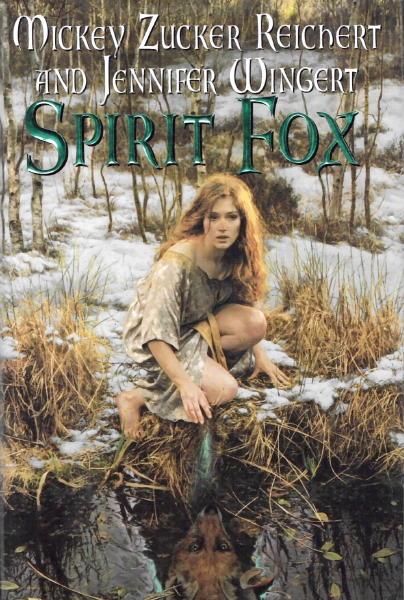
                • Cover of Spirit Fox
                  Spirit Fox

                  Mickey Zucker Reichert & Jennifer Wingert · standalone novel · 1998

                  similar byshapeshifterswar

                  From the flaps of the DAW first edition: "In Spirit Fox, Mickey Zucker Reichert, ..., joins with talented newcomer Jennifer Wingert to open the way into a fascinating new fantasy universe - a magic-laced land where a war between god and goddess has led to a war among mortals, and where the reconciliation of immortals has brought all the benefits of the "Joyous Reunion" to the people of both the River and the Marchlands. With weapons stored away and learning the art of warfare now forbidden, it seems that peace is assured for eternity. But even in peace there is peril. And in a land no longer able to defend itself, the arrival of a well-trained foreign army complete with Mages who practice the forbidden sixth magic - the magic of destruction - may well spell the death of an entire civilization. At greatest risk are the magic-gifted healers, and the spirit-linked - those men and women blessed by the gods to be linked at birth with an animal who shares their thoughts, emotions, and even physical sensations. For these are the people the Mages have marked for total annihilation. Perhaps most in danger is Kiarda, a young woman of noble lineage who was destined at birth to be spirit-linked to a fox. But when the fox kit was destroyed at the time of Kiarda's birth - before the two had a chance to bond in the normal way - its spirit had nowhere to go but into the infant's own body. This unfortunate event, kept secret by the girl's father leaves Kiarda ill-prepared for the moment when her link claims her completely, literally transforming her into the companion whose spirit is so totally entwined with her own. The resulting misunderstanding will leave an innocent man condemned to death, and send Kiarda and her closest companions on an odyssey into the very heart of danger - and into a deadly confrontation with the invaders who have sworn to conquer the Marchlands. For these enemy forces are determined to wipe out all the spirit-linked, whom they consider cursed with the Abomination - as well as anyone who possesses the least talent for magic. Targeted for destruction and with only one trained warrior in her party, what chance does Kiarda have of surviving to carry the warning home before it's too late?"

                • Cover of The Circle Trilogy
                  The Circle Trilogy

                  series · 3 books · 2006

                  similar by+2 more

                • Cover of Feral (Cynthia Leitich Smith)
                  Feral (Cynthia Leitich Smith)

                  series · 3 books · 2013

                  similar byshapeshifters+1 more

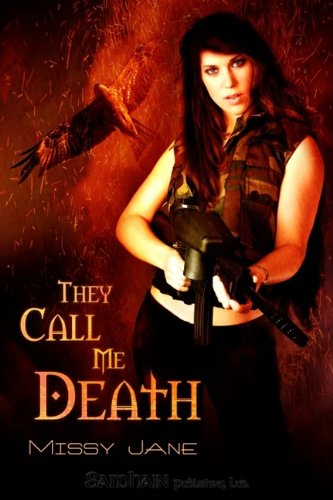
                • Cover of They Call Me Death
                  They Call Me Death

                  Missy Jane · standalone novel · 2009

                  similar byshapeshifterswar

                  "Humans are no longer at the top of the food chain... My name is Alexia Williams, and I'm nothing more than a human soldier trying to live one day at a time. After losing my family to shape-shifters, I joined the Combined Human States Army. Now I find myself on the front lines, defending the wall between my species and theirs. My mission is simple: keep the animals on their side by whatever means necessary, don't talk to them, don't sympathize with them, don't let them in. But then one of them saves my life. Andor isn't like any shifter I've ever met. He's a three-hundred-year-old golden eagle asking for help finding missing shifters who may be on my side of the wall. Now I'm helping the animals and seeing signs that my fellow humans aren't what I thought they were. Nothing is what it seems, but one fact remains...in the land of the shifters, they call me Death." — from this book's product page on Samhain's website as of 2016-11-08.

                • Cover of Elementals (Amie Kaufman)
                  Elementals (Amie Kaufman)

                  series · 3 books · 2018

                  similar by+2 more

                • Cover of The Shaper Exile
                  The Shaper Exile

                  series · 3 books · 1987

                  similar bywar+1 more

                • Cover of Brother Dust
                  Brother Dust

                  series · 1 book · 2017

                  similar byshapeshifterswar

                • Cover of Myth World (K. Aten)
                  Myth World (K. Aten)

                  series · 1 book · 2021

                  similar byshapeshifters+1 more

                • Cover of Dragonbards
                  Dragonbards

                  series · 3 books · 1985

                  completed

                  similar by+2 more

                • Cover of Darkwing
                  Darkwing

                  series · 2 books · 2006

                  similar by+2 more

                • Cover of SEAL Team 666
                  SEAL Team 666

                  series · 4 books · 2012

                  completed

                  similar by+2 more

                • Cover of Shades of Fury
                  Shades of Fury

                  series · 3 books · 2010

                  similar byshapeshifters+1 more

                • Cover of Brytewood
                  Brytewood

                  series · 3 books · 2009

                  similar byshapeshifterswar

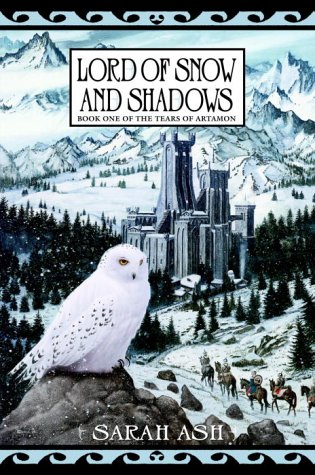
                • Cover of The Tears of Artamon
                  The Tears of Artamon

                  series · 4 books · 2003

                  similar by+1 more

                  The Tears of Artamon is Sarah Ash's epic fantasy tetralogy: Lord of Snow and Shadows (2003), Prisoner of Ironsea Tower, Children of the Serpent Gate and The Arkhel Conundrum. It follows a young ruler cursed with a dragon-warrior's nature, caught between rival kingdoms and an ancient, malevolent bloodline he is bound to. The series follows one continuous royal conflict across its four volumes.

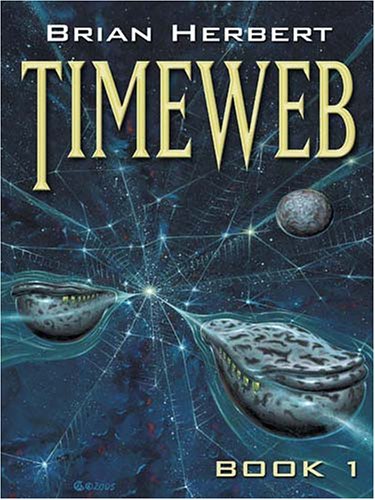
                • Cover of Timeweb Chronicles
                  Timeweb Chronicles

                  series · 3 books · 2006

                  similar by+2 more

                • HD
                  Highland Dragon Universe

                  series · 6 books · 2013

                  similar by+1 more

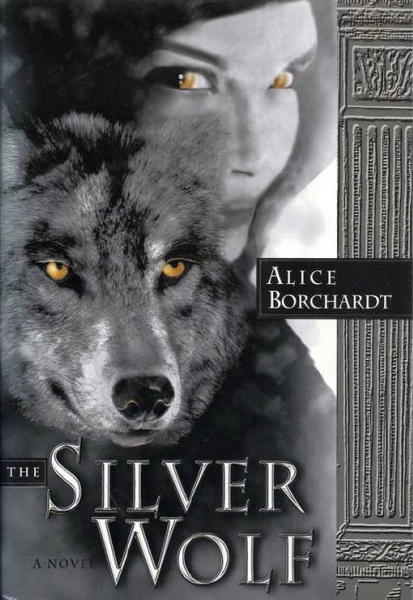
                • Cover of Legends of the Wolves
                  Legends of the Wolves

                  series · 3 books · 1998

                  completed

                  similar byshapeshifters

                • DS
                  Drinker of Souls Universe

                  series · 6 books · 1986

                  completed

                  similar by+1 more

                • Cover of The Lord of the Rings
                  The Lord of the Rings

                  series · 13 books · 1954

                  part of Tolkien's legendarium

                  similar by+1 more

                  The Lord of the Rings is an epic high fantasy novel written by the English author and scholar J. R. R. Tolkien. Set in Middle-earth, the story began as a sequel to Tolkien's 1937 children's book The Hobbit but eventually developed into a much larger work. Written in stages between 1937 and 1949, The Lord of the Rings is one of the best-selling books ever written, with over 150 million copies sold.

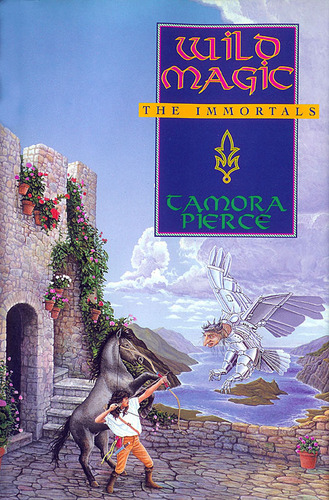
                • Cover of The Immortals
                  The Immortals

                  series · 6 books · 1992

                  part of Tortall

                  Tamora Pierce's Immortals quartet follows Daine, a young woman whose 'wild magic' lets her communicate with and shapeshift among animals, as she's drawn into the kingdom of Tortall's defense against immortal creatures -- griffins, dragons and darker things -- released back into the world after centuries sealed away. Beginning with Wild Magic, the four books pair Daine's personal coming-of-age with an escalating magical threat, and connect to Pierce's earlier Song of the Lioness quartet through several shared characters.