More like Power & Light
anchored on:science fictionfantasyartificial intelligencegodsfar futurereflective+1 more
but
- The City and the Stars
Arthur C. Clarkestandalone novel1956
similar byreflectiveother star systemsfar futurescience fiction+1 more
The City and the Stars is a science fiction novel by British writer Arthur C. Clarke, published in 1956. This novel is a complete rewrite of Clarke's earlier Against the Fall of Night, his first novel, which had been published in Startling Stories magazine in 1948 after being rejected by the editor of Astounding Science-Fiction, according to the author.
- Aurora
Kim Stanley Robinsonstandalone novel2015
similar byreflectiveartificial intelligenceother star systemsfar futurescience fiction
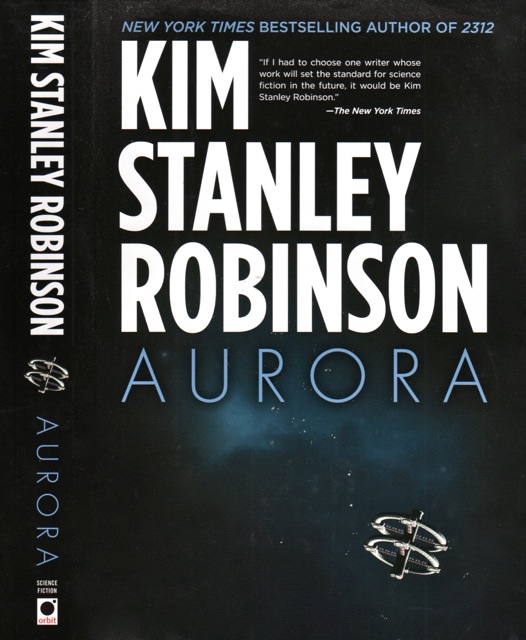
Aurora is a 2015 novel by American science fiction author Kim Stanley Robinson. The novel concerns a generation ship built in the style of a Stanford torus, traveling to Tau Ceti to start a human colony. The novel's primary narrative voice is that of the starship's artificial intelligence. Aurora was well received by critics.
- Kingdoms of the Wall
Robert Silverbergstandalone novel1992
similar byreflectivegodsother star systemsfar futurescience fiction
Kingdoms of the Wall is a 1992 science fiction novel by American writer Robert Silverberg. It is set on a faraway planet inhabited by an alien race and in an undefined future. Its subject is the perpetual communal quest for knowledge in the face of hardship and wonders, which through the revelation of an unexpected and devastating truth results in the deconstruction and slaying of gods.
- Imperial Radch
series7 books2012
part of Radchaai Universe
similar byother star systemsfar futureartificial intelligencescience fiction+1 more
Ann Leckie's Imperial Radch trilogy (Ancillary Justice, Ancillary Sword, Ancillary Mercy, 2013-2015) follows Breq, the sole surviving fragment of an AI that once inhabited both a troop-transport starship and dozens of soldier bodies, now alone and hunting for revenge inside the vast, expansionist Radch empire. Breq's quest widens across the trilogy into a conflict with the empire's own fractured ruler, and the books use her alien difficulty perceiving gender to unsettle the space-opera conventions around her.
- 2312
Kim Stanley Robinsonstandalone novel2012
similar byreflectiveother star systemsfar futurescience fiction+1 more
In the eponymous year, when Earth's ecology is degraded and humanity has settled throughout the solar system by terraforming and genetic engineering, mysterious disasters strike some human communities and an assortment of human types from throughout the system seek to find and eliminate the cause.
- Project Pope
Clifford D. Simakstandalone novel1981
similar byreflectiveartificial intelligenceother star systemsfar futurescience fiction
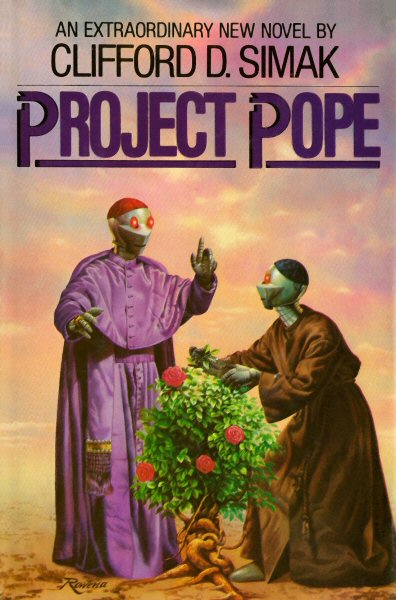
Project Pope is a science fiction novel by the American author Clifford Simak, published in 1981 by Ballantine Books. The novel is about a group of robots and humans living on a planet called the End of Nothing. Their mission is to search the universe and other dimensions to seek out true religion and knowledge. They add the information they gather to their Pope, a robotic supercomputer, in order to make an infallible authority of all knowledge and religion. The novel was nominated for both a Hugo Award for Best Novel and a Locus Award for Best SF novel in 1982.
- Hainish
series33 books1964
completed
similar byreflectiveother star systemsfar futurescience fiction
The Hainish Cycle consists of a number of science fiction novels and stories by Ursula K. Le Guin. The cycle is set in a future history that features civilizations of human beings on planets orbiting a number of nearby stars, including Terra ("Earth"); these humans are contacting each other for the first time and establishing diplomatic relations, as well as setting up a confederacy under the guidance of the oldest of the human worlds, the peaceful planet Hain. In this history, human beings did not evolve on Earth, but they were instead the result of interstellar colonies planted by Hain in the distant past, after which interstellar travel ceased for an extended period. Some of the human races have new genetic traits, a result of ancient Hainish experiments in genetic engineering; this includes people who can dream while awake, and a world of hermaphroditic people who only enter active sexuality once per month, not knowing which sex will manifest in them. In keeping with Le Guin's narrative approach, she uses varied social and environmental settings to explore the anthropological and sociological outcomes of human evolution in those environments. The author often discounted the characterization of a so-called "Hainish Cycle".
- Culture
series15 books1987
completed
part of The Culture
similar byfar futurescience fictionartificial intelligence+2 more
The Culture series is a science fiction series written by Scottish author Iain M. Banks and released from 1987 until 2012. The stories centre on The Culture, a utopian, post-scarcity space society of humanoid aliens and advanced superintelligent artificial intelligences living in artificial habitats spread across the Milky Way galaxy. The main themes of the series are the dilemmas that an idealistic, more-advanced civilization faces in dealing with smaller, less-advanced civilizations that do not share its ideals, and whose behaviour it sometimes finds barbaric. In some of the stories, action takes place mainly in non-Culture environments, and the leading characters are often on the fringes of the Culture, sometimes acting as agents of the Culture in its plans to civilize the galaxy. Each novel is a self-contained story with new characters, although reference is occasionally made to the events of previous novels.
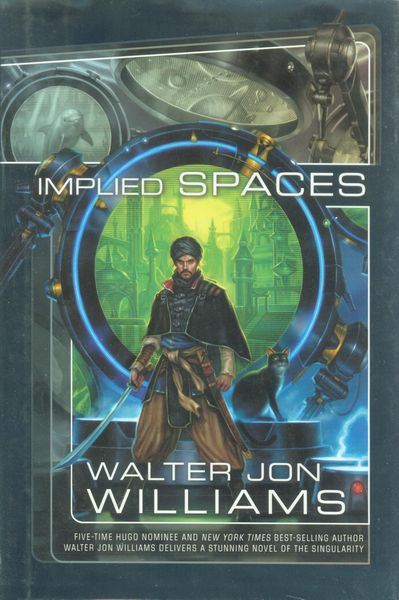
- Implied Spaces
Walter Jon Williamsstandalone novel2008
similar byreflectiveartificial intelligenceother star systemsfar futurescience fiction
Implied Spaces is a 2008 space opera novel by American author Walter Jon Williams. It explores themes of transhumanism, artificial intelligence and ontology.
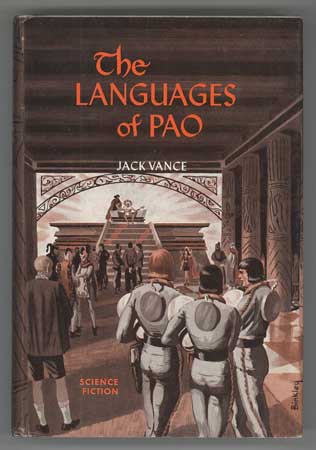
- The Languages of Pao
Jack Vancestandalone novel1958
similar byreflectiveother star systemsfar futurescience fiction+1 more
The Languages of Pao is a science fiction novel by American writer Jack Vance, first published in 1958, based on the Sapir–Whorf hypothesis, which asserts that a language's structure and grammar construct the perception and consciousness of its speakers. In the novel, the placid people from the planet Pao rely on other planets for technological innovations and manufactured goods and they do not resist when an invading force occupies the land and levies heavy taxes. To expel the aggressors and make the planet more independent, three new languages are introduced. A scientific language induces its speakers to innovate more; a well-ordered language encourages its speakers to be industrious; and a warlike language induces competitiveness and aggression. The new languages change the culture and Pao ousts their overlords and develops a sophisticated modern economy.
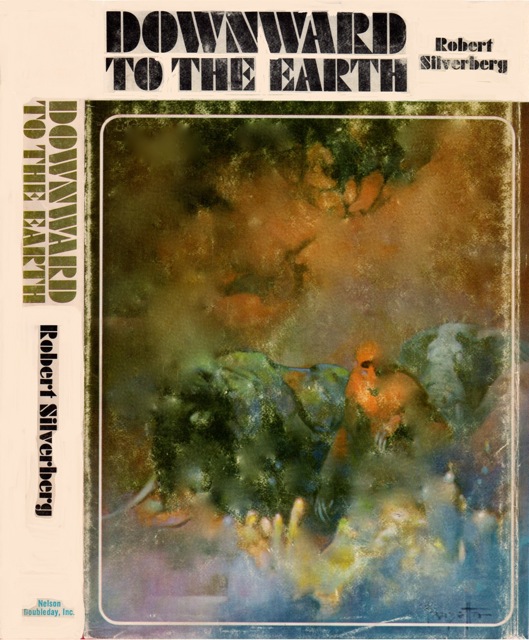
- Downward to the Earth
Robert Silverbergstandalone novel1969
similar byreflectiveother star systemsfar futurescience fiction
Edmund Gunderson was the Terran administrator of the colony world of Belzagor, and he returns to it after it has gained independence, feeling a sense of guilt for the way he has treated its dominant species, the elephant-like nildoror, whose animalistic appearance had kept Gunderson from taking them seriously as sentient beings. On his return, he feels a new sense of kinship with the natives, perhaps more than for the Terran tourists. The nildoror undergo a process of rebirth, and Gunderson's greatest guilt comes from having denied rebirth to seven nildoror to make them help him repair flood damage.(From Wikipedia)
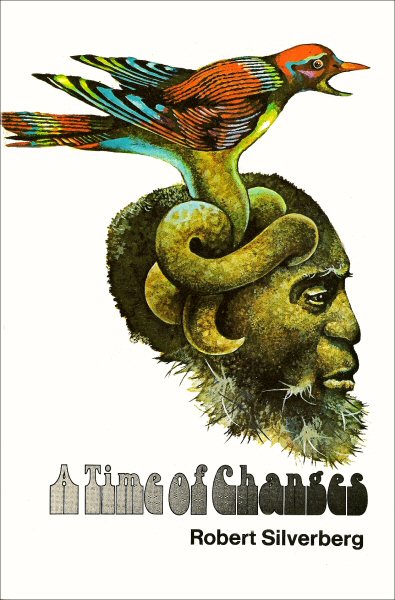
- A Time of Changes
Robert Silverbergstandalone novel1971
similar byreflectiveother star systemsfar futurescience fiction
A Time of Changes is a 1971 science fiction novel by American writer Robert Silverberg. It won the Nebula Award for that year, and was also nominated for the 1972 Hugo and Locus Awards.
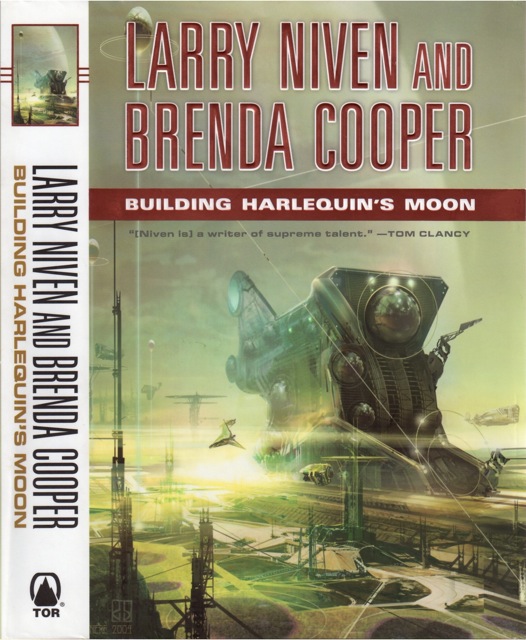
- Building Harlequin's Moon
Larry Niven & Brenda Cooperstandalone novel2005
similar byreflectiveother star systemsfar futurescience fiction+1 more
The first interstellar starship, John Glenn, fled a Solar System populated by rogue AIs and machine/human hybrids, threatened by too much nanotechnology and rife with political dangers. The John Glenn’s crew intended to terraform the nearly pristine planet Ymir, in hopes of creating a utopian society that will limit intelligent technology. But by some miscalculation they have landed in another solar system, and extremely low on the antimatter needed to continue to Ymir, they must shape the nearby planet Harlequin’s moon, Selene, into a new, temporary home. Their only hope of ever reaching Ymir is to rebuild their store of antimatter through decades of terraforming the moon. Gabriel, the head terraformer, must lead this nearly impossible task, with all the wrong materials. His primary tools are the uneducated and nearly illiterate children of the original colonists, born and bred to build Harlequin’s moon into a virtual antimatter factory. With no concept of the future and with life defined as duty, one girl, Rachel Vanowen, begins to ask herself the question: what will become of the children of Selene once the terraforming is complete.
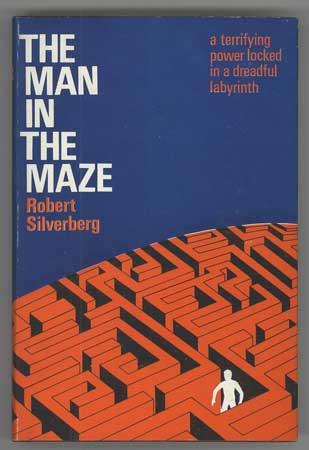
- The Man in the Maze
Robert Silverbergstandalone novel1969
similar byreflectiveother star systemsfar futurescience fiction
The Man in the Maze is a science fiction novel by American writer Robert Silverberg, originally serialized in the magazine Worlds of If in April and May 1968, and published in bookstores the following year. It tells the tale of a man rendered incapable of interacting normally with other human beings by his uncontrollable psychic abilities. The novel is inspired by Sophocles' play Philoctetes, with the roles of Odysseus, Neoptolemus and Philoctetes played by Boardman, Rawlins, and Muller, respectively.
- Creatures of Light and Darkness
Roger Zelaznystandalone novel1969
similar bygodsother star systemsfar futurescience fictionfantasy
Creatures of Light and Darkness is a 1969 science fiction novel by American writer Roger Zelazny. Long out of print, it was reissued in April 2010. The novel is set in the far future, with humans on many worlds. Some humans have god-like powers or perhaps are actually gods—the names and aspects of various Egyptian gods are used. Elements of horror and technology are mixed, and the novel shares elements with cyberpunk.
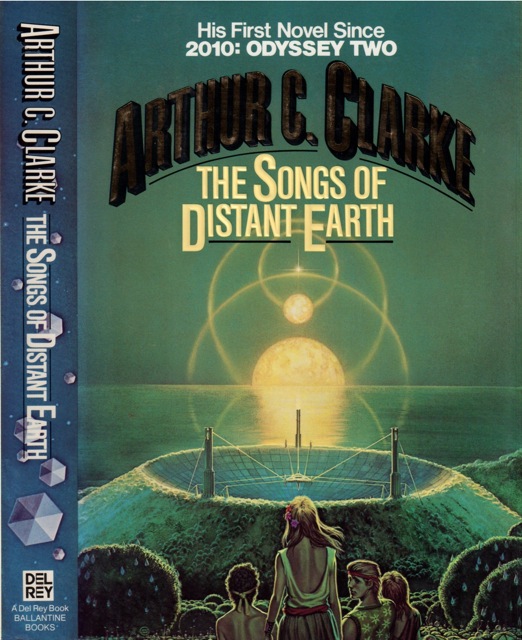
- The Songs of Distant Earth
Arthur C. Clarkestandalone novel1986
similar byreflectiveother star systemsfar futurescience fiction
The Songs of Distant Earth is a 1986 science fiction novel by British writer Arthur C. Clarke, based upon his 1958 short story of the same title. Of all of his novels, Clarke stated that this was his favourite. Prior to the publishing of the novel, Clarke also wrote a short step outline with the same title, published in Omni magazine and anthologised in The Sentinel in 1983.
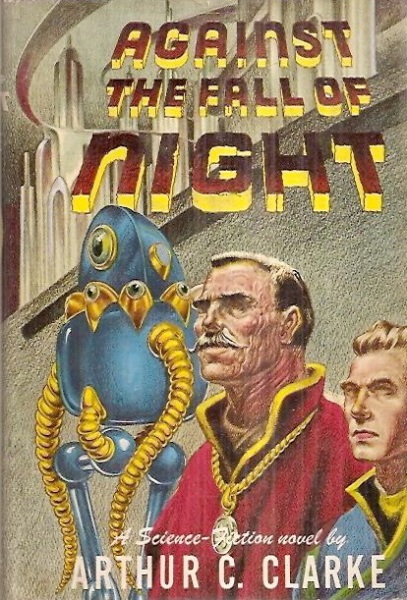
- Against the Fall of Night
series2 books1953
similar byreflectiveother star systemsfar futurescience fiction
Against the Fall of Night is Arthur C. Clarke's 1953 novel of a stagnant, climate-controlled city called Diaspar a billion years in Earth's future, where a young man named Alvin becomes the first in living memory to want to leave it. Clarke later rewrote the book more expansively as The City and the Stars, and in 1990 Gregory Benford wrote Beyond the Fall of Night, an authorized sequel continuing on from this original, shorter version's ending.
- Ilium
series2 books2003
completed
similar bygodsfar futurescience fictionartificial intelligence+1 more
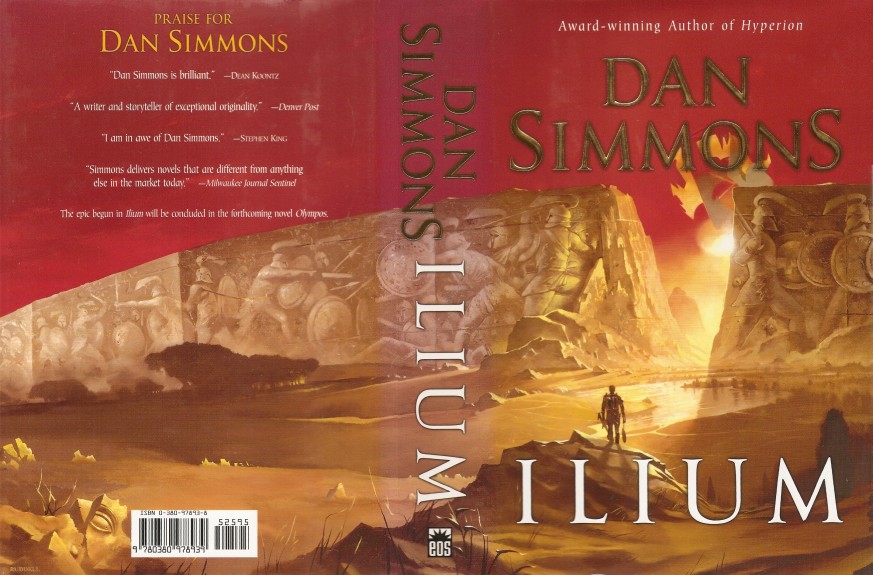
Ilium/Olympos is a series of two science fiction novels by Dan Simmons. The events are set in motion by beings who appear to be ancient Greek gods. Like Simmons' earlier series, the Hyperion Cantos, it is a form of "literary science fiction"; it relies heavily on intertextuality, in this case with Homer and Shakespeare as well as references to Marcel Proust's À la recherche du temps perdu and Vladimir Nabokov's novel Ada or Ardor: A Family Chronicle.
- The Hugo Winners
series15 books1962
similar byfar futurescience fictionshort story cycle+2 more
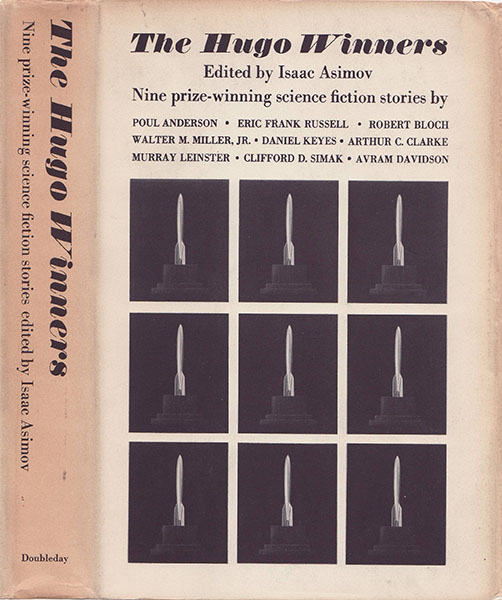
The Hugo Winners was a series of books which collected science fiction and fantasy stories that won a Hugo Award for Short Story, Novelette or Novella at the World Science Fiction Convention between 1955 and 1982. Each volume was edited by American writer Isaac Asimov, who wrote the introduction and a short essay about each author featured in the book. Through these essays, Asimov shared personal anecdotes, revealing the authors he was jealous of, and how other writers winning awards ahead of him made him angry. Additionally, he discussed his political beliefs, friendships, and his affinity for writers of "hard science fiction". The first two volumes were collected by Doubleday into a single book, which lacks a publishing date and ISBN.
- Mockingbird
Walter Tevisstandalone novel1980
similar byreflectiveartificial intelligencefar futurescience fiction
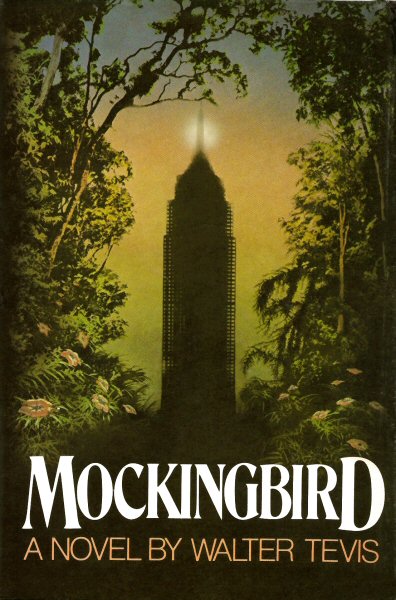
WorldCat: In a future world where mankind is dying, humans wander through life in a drugged electronic bliss. Quick sex is the norm, and some people would rather commit suicide than live in hopelessness. Humanity's salvation rests with an android who has no desire to live, and a man and a woman who must discover love, hope, and dreams of a world reborn.
- Ender Wiggin
series14 books1977
part of Ender's Game Universe
similar byother star systemsfar futurescience fiction+2 more
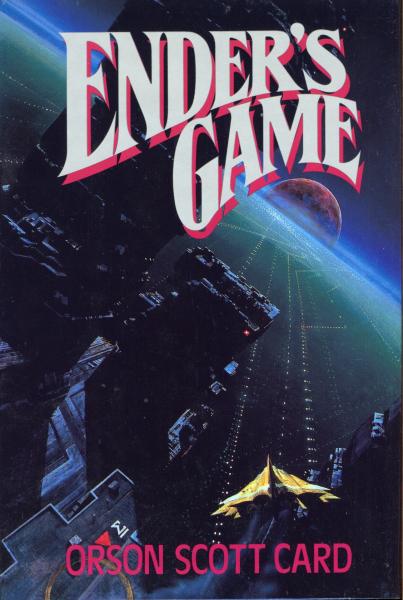
Orson Scott Card's Ender's Game (1985, expanded from his 1977 novella) follows child prodigy Andrew "Ender" Wiggin as he is recruited into a military training program built to prepare Earth's defenses for an anticipated third war against an insectoid alien species known as the Formics. The saga continues years later through Speaker for the Dead and Xenocide, following an older Ender as he confronts the moral weight of his role in that earlier conflict, and concludes the core arc in Children of the Mind, with Ender in Exile filling in the years between the first two books. Set within the wider Ender's Game universe, the series shifts from military coming-of-age story to slower, more philosophical science fiction as it progresses.
- Triton
Samuel R. Delanystandalone novel1976
similar byreflectiveother star systemsfar futurescience fiction
Trouble on Triton: An Ambiguous Heterotopia (1976) is a science fiction novel by American writer Samuel R. Delany. It was nominated for the 1976 Nebula Award for Best Novel, and was shortlisted for a retrospective James Tiptree, Jr. Award in 1995. It was originally published under the shorter title Triton.
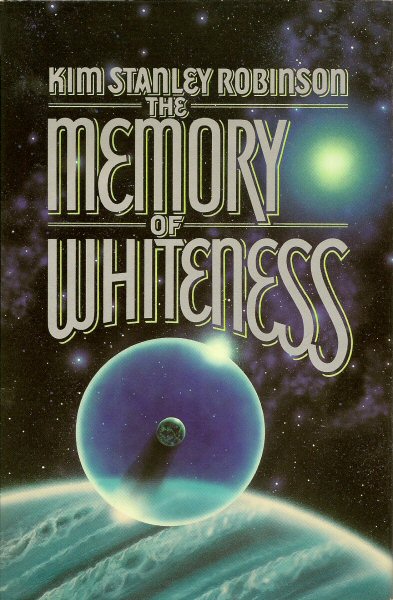
- The Memory of Whiteness
Kim Stanley Robinsonstandalone novel1985
similar byreflectivefar futurescience fiction+2 more
The Memory of Whiteness is a science fiction novel by Kim Stanley Robinson, published in September 1985.
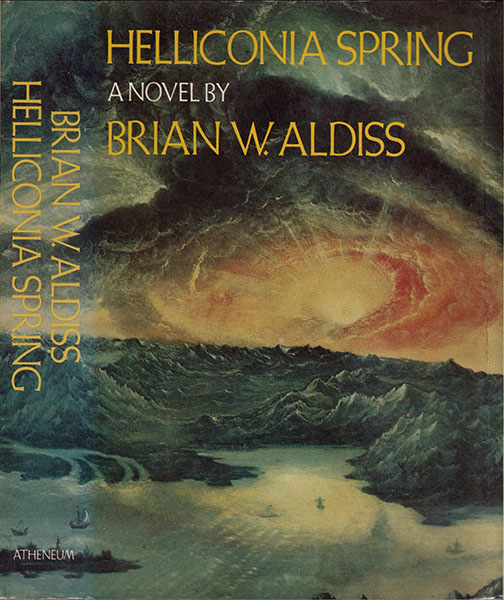
- Helliconia
series4 books1982
completed
similar byreflectiveother star systemsfar futurescience fiction
The Helliconia trilogy is a series of science fiction books by British writer Brian W. Aldiss, set on the Earth-like planet Helliconia. It is an epic chronicling the rise and fall of a civilisation over thousands of years as the planet progresses through its incredibly long seasons, which last for centuries.