More like Preserver
anchored on:science fiction
but
- Ender Wiggin
series14 books1977
part of Ender's Game Universe
similar byscience fictionother star systemsfar future
Orson Scott Card's Ender's Game (1985, expanded from his 1977 novella) follows child prodigy Andrew "Ender" Wiggin as he is recruited into a military training program built to prepare Earth's defenses for an anticipated third war against an insectoid alien species known as the Formics. The saga continues years later through Speaker for the Dead and Xenocide, following an older Ender as he confronts the moral weight of his role in that earlier conflict, and concludes the core arc in Children of the Mind, with Ender in Exile filling in the years between the first two books. Set within the wider Ender's Game universe, the series shifts from military coming-of-age story to slower, more philosophical science fiction as it progresses.
- Patternist
series6 books1976
completed
similar byscience fictiongenetic engineering+2 more
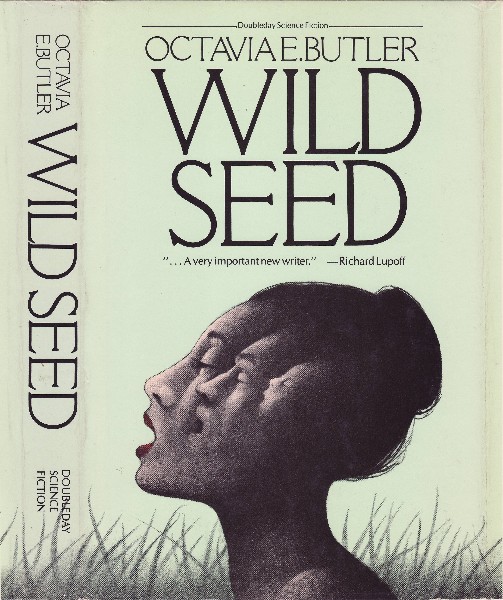
The Patternist series is a group of science fiction novels by Octavia E. Butler that detail a secret history continuing from the Ancient Egyptian period to the far future that involves telepathic mind control and an extraterrestrial plague. A profile of Butler in Black Women in America notes that the themes of the series include "racial and gender-based animosity, the ethical implications of biological engineering, the question of what it means to be human, ethical and unethical uses of power, and how the assumption of power changes people."
- Dune
series20 books1963
part of Dune Universe
similar byscience fictionother star systemsfar future
Frank Herbert's Dune Chronicles opens with 1965's Dune, set on the desert planet Arrakis where House Atreides takes control of the only source of the vital spice melange and young Paul Atreides is pulled into a struggle over its politics and religion. Herbert carried the story forward across five further novels — Dune Messiah, Children of Dune, God Emperor of Dune, Heretics of Dune, and Chapterhouse: Dune — following Paul's line over the following millennia, before Brian Herbert and Kevin J. Anderson later extended the saga. Many other editions of these six novels are omnibus and box-set repackagings rather than separate stories.
- Childe Cycle
series19 books1957
similar byscience fictionother star systemsfar future
The Childe Cycle is an unfinished series of science fiction novels by American writer Gordon R. Dickson. The name Childe Cycle is an allusion to "Childe Roland to the Dark Tower Came", a poem by Robert Browning, which provided inspiration for elements in the work. The series is sometimes referred to as the Dorsai series, after the Dorsai people who are central to it. The related short stories and novellas all center on the Dorsai, primarily members of the Graeme and Morgan families.
- Old Man's War
series16 books2005
similar byscience fictionother star systemsfar future
The Old Man's War series is a series of science fiction novels by John Scalzi. The first book in the series, Old Man's War, was first published in 2005 by Tor Books, and was nominated for the Hugo Award for Best Novel in 2006. In 2026 it was a finalist for the Hugo Award for Best Series.
- Vorkosigan
universe27 books1986
Start hereShards of Honor · Chronological start
similar byscience fictionother star systemsfar future
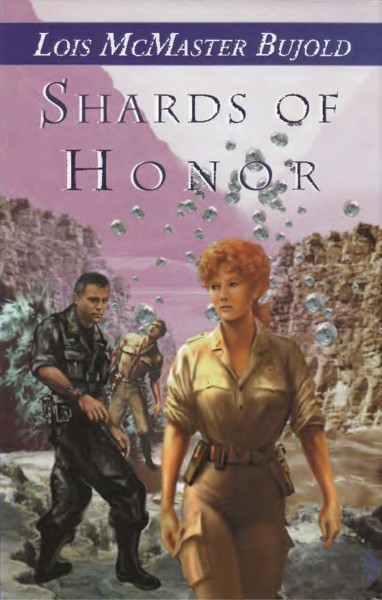
On Barrayar they will tell you that a man is measured by his forebears and the straightness of his spine — which is a difficulty for Miles Vorkosigan, born brittle-boned and half-height into the highest military caste of a planet that not long ago left such infants on the hillside to die. Beyond his backwater lies the wormhole nexus: a scatter of human worlds strung along unstable jump-routes, where a blood-and-honor warrior aristocracy, a coolly egalitarian utopia, and a hundred lesser polities trade, spy, and go to war. Miles cannot pass the physicals. So he builds himself a fleet, a false name, and a career out of sheer talky brilliance and a constitutional refusal to sit still. Lois McMaster Bujold has spent decades on this future, and it reads as one long life more than a franchise. It opens a generation early with Miles's mother, Cordelia — a level-headed survey captain from Beta Colony who marries into Barrayaran politics — before handing the saga to Miles himself, from teenage con-artist admiral to Imperial troubleshooter, and eventually to the next generation. Around that spine stand companion novels set elsewhere in the nexus: Falling Free, among the engineered zero-gee "quaddies"; Ethan of Athos; and the later books. Many volumes are gathered into omnibuses; several have taken Hugo Awards. The pleasure is voice and heart more than hardware — comedies of intrigue that turn, without warning, into hard questions about disability, ambition, biology as destiny, and what honor costs the people who keep it. Newcomers have two clean doors: Shards of Honor (paired with Barrayar as Cordelia's Honor) for the chronological start, or The Warrior's Apprentice to meet Miles at full velocity.
- Xenogenesis / Lilith's Brood
series4 books1987
completed
similar byscience fictiongenetic engineeringfar future+2 more
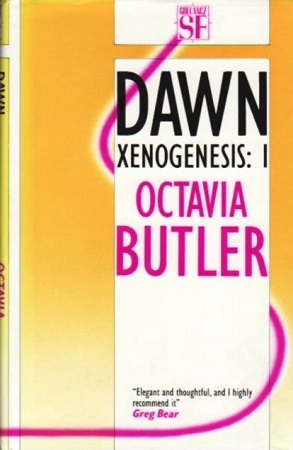
Lilith's Brood, previously known as the Xenogenesis Trilogy, is a collection of three science fiction works by Octavia E. Butler: Dawn, Adulthood Rites, and Imago.
- Last and First Men
series14 books1930
completed
part of Last Men Universe
similar byscience fictionfar future+2 more
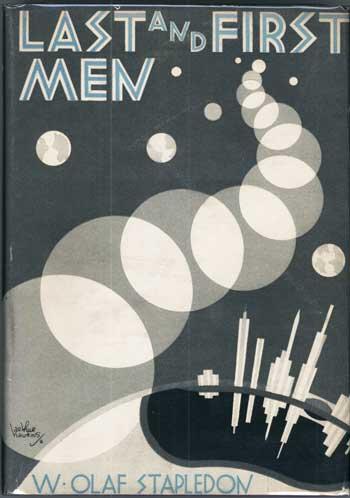
Olaf Stapledon's Last and First Men (1930) traces two billion years of human evolution through eighteen successive species, framed as a text somehow dictated back to the author by the last of those species; civilizations rise and fall across the span, marked by genetic engineering and interplanetary colonization, before the final humans are wiped out by a supernova. Stapledon followed it with the more obscure Last Men in London (1932), which revisits similar far-future material from a narrower, more personal angle.
- Aton/Piers Anthony's Worlds of Chthon
series4 books1967
similar byscience fictionfar future+2 more
Piers Anthony's Chthon (1967) follows Aton Five, imprisoned in a sentient underground mineral world after his obsession with a beautiful, dangerous woman leads him to attempted murder; escaping, he pursues the truth about her and about his own mixed human and alien nature across the galaxy. Its sequel Phthor continues Aton's story and the mythology of the living prison-planet Chthon.
- Brave New World
series8 books1932
similar byscience fictionfar future+2 more
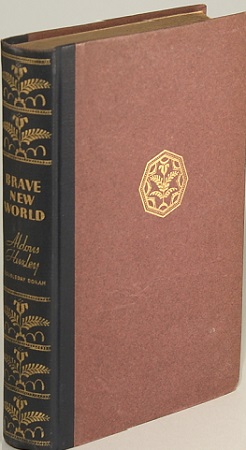
Aldous Huxley's 1932 novel imagines a future World State where reproduction, social caste, and desire are all engineered before birth, and the population is kept content through conditioning, sleep-hypnosis, and a mood-altering drug called soma. The story follows the disruption this seemingly stable order suffers when an outsider raised beyond its reach is brought into it, exposing what the society traded away for comfort and order. Some editions pair the novel with Huxley's own 1958 nonfiction essay collection, Brave New World Revisited, which reassesses the book's ideas rather than continuing its story.
- Hainish
series33 books1964
completed
similar byscience fictionother star systemsfar future
The Hainish Cycle consists of a number of science fiction novels and stories by Ursula K. Le Guin. The cycle is set in a future history that features civilizations of human beings on planets orbiting a number of nearby stars, including Terra ("Earth"); these humans are contacting each other for the first time and establishing diplomatic relations, as well as setting up a confederacy under the guidance of the oldest of the human worlds, the peaceful planet Hain. In this history, human beings did not evolve on Earth, but they were instead the result of interstellar colonies planted by Hain in the distant past, after which interstellar travel ceased for an extended period. Some of the human races have new genetic traits, a result of ancient Hainish experiments in genetic engineering; this includes people who can dream while awake, and a world of hermaphroditic people who only enter active sexuality once per month, not knowing which sex will manifest in them. In keeping with Le Guin's narrative approach, she uses varied social and environmental settings to explore the anthropological and sociological outcomes of human evolution in those environments. The author often discounted the characterization of a so-called "Hainish Cycle".
- Children of Time
series6 books2015
similar byscience fictionother star systemsfar future
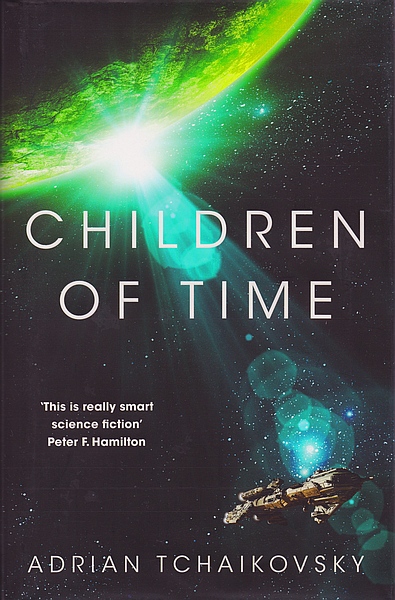
Adrian Tchaikovsky's Children of Time follows two threads: a terraformed planet where an experimental nanovirus meant to accelerate primate evolution instead uplifts a species of spiders into a technological civilization guided by the recorded personality of a human scientist, and the last survivors of Earth aboard a generation ark ship searching for a new home. The two threads collide across mismatched timescales as the ark ship's crew, cycling in and out of cryosleep, finally reach the spiders' world. It's the first of a loosely connected series that applies the same premise to different alien biologies in each subsequent book.
- Elysium Cycle
series5 books1986
similar byscience fictionother star systemsfar future
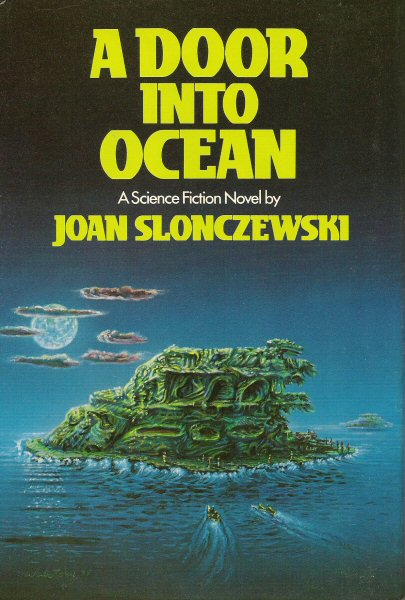
On the ocean-covered moon Shora, the Sharers -- an all-female society skilled in genetic engineering and committed to strict nonviolence -- face invasion by the militaristic Patriarchy, which cannot fathom a people who refuse to fight back with force. Joan Slonczewski's A Door into Ocean opens the Elysium Cycle by testing whether a philosophy built on the idea that 'to hurt is to be hurt' can actually survive violent occupation. Later books in the cycle, including Daughter of Elysium, The Children Star, and Brain Plague, carry the same interest in biology, pacifism, and alien societies into new settings.
- Blindsight / Firefall
series3 books2006
similar byscience fictionfar future+3 more
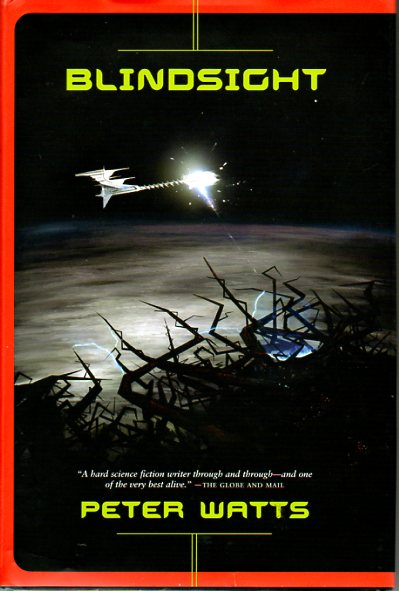
Blindsight sends a crew of radically modified posthumans (including a resurrected, genetically restored vampire) out to the Oort cloud after humanity detects an alien signal, only to make contact with something intelligent, wildly capable, and possibly not conscious at all — a first-contact story built around the question of whether self-awareness is actually useful. Peter Watts's Echopraxia is a same-timeframe "sidequel" rather than a direct sequel, following different characters through the fallout of the same first-contact event.
- Radix Tetrad
series4 books1981
similar byscience fictionfar future+2 more
The Radix Tetrad is a group of four science fiction books by A. A. Attanasio. The first novel, the Nebula Award-nominated Radix, was published in 1981, and the last novel, The Last Legends of Earth, was published in 1989.
- Takeshi Kovacs
series3 books2002
similar byscience fictionidentityother star systemsfar future
Takeshi Kovacs is a former elite soldier turned freelance troubleshooter in a future where human consciousness can be digitized and transferred between bodies, or sleeves, making death an inconvenience for those who can afford new ones. Richard Morgan's trilogy - Altered Carbon, Broken Angels, Woken Furies - moves Kovacs through noir-inflected mysteries on different worlds, using the resleeving premise to interrogate class, violence, and what, if anything, survives a person's original body. It became the basis for a Netflix series.
- Moties
series4 books1974
part of CoDominium
similar byscience fictionother star systemsfar future
Larry Niven and Jerry Pournelle's The Mote in God's Eye (1974) depicts humanity's first contact with an alien species, the Moties, set within the far-future interstellar setting of Pournelle's codominium future history. The Gripping Hand continues that first-contact crisis years later, and Outies, written by J. R. Pournelle, carries the story forward into a new generation. Together the three books trace an escalating encounter between human and Motie civilizations within the codominium universe.
- Alliance-Union Universe
universe173 books1976
Start hereCompany Wars · The central sequence
similar byscience fictionfar future+1 more
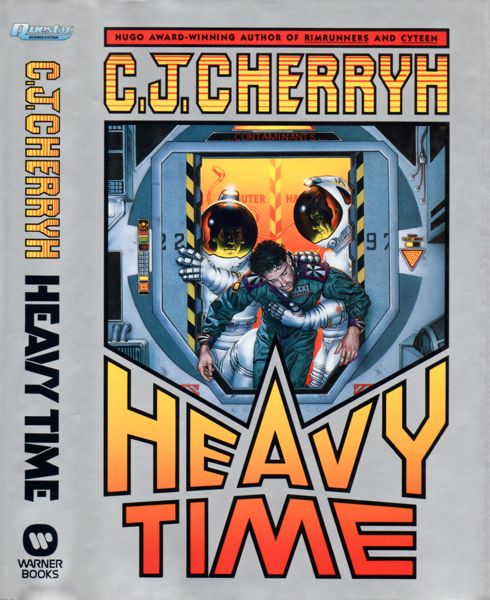
The dark between the stars belongs to no one, and everyone who lives out here knows it: the merchanter Families hauling cargo between stations that cannot feed themselves, the Earth Company clutching at colonies it can no longer supply, the Union breeding its cloned azi to settle worlds faster than birth allows. C. J. Cherryh's Alliance-Union is a future history of humankind's spread across the third and fourth millennia, told from inside the pressure — no clean empires, only stations, ships, treaties, and the people caught in the machinery of who holds the jump-points. The sequence runs from the first laborious pre-FTL stations through the Company Wars, the independence struggle that breaks over Pell in Downbelow Station (Hugo, 1981), to the genetics and cold politics of Union's homeworld in Cyteen (Hugo, 1988) and its sequel Regenesis. Around that spine cluster the merchanter novels of trader Families, the Faded Sun trilogy of human envoys among the martial alien Mri, and the Chanur books, narrated from the hierarchical, whiskered viewpoint of the hani. On the isolated world of Merovin, the Merovingen Nights anthologies open the setting to other hands — Mercedes Lackey, Janet and Chris Morris, Nancy Asire — a shared world braided into the whole. What sets it apart is intimacy at scale. Cherryh drops you without a map into a single skull and lets you assemble the politics from what that person fears and bargains for; the aliens are genuinely alien, loyalty is always provisional, and the real antagonist is usually logistics. Most books stand alone, in her words, "like real history." The surest way in is Downbelow Station — the war seen from one besieged station — then Cyteen, for the mind that shaped the other side.
- The Gods Themselves
Isaac Asimovstandalone novel1972
similar byscience fictionother star systemsfar future+1 more
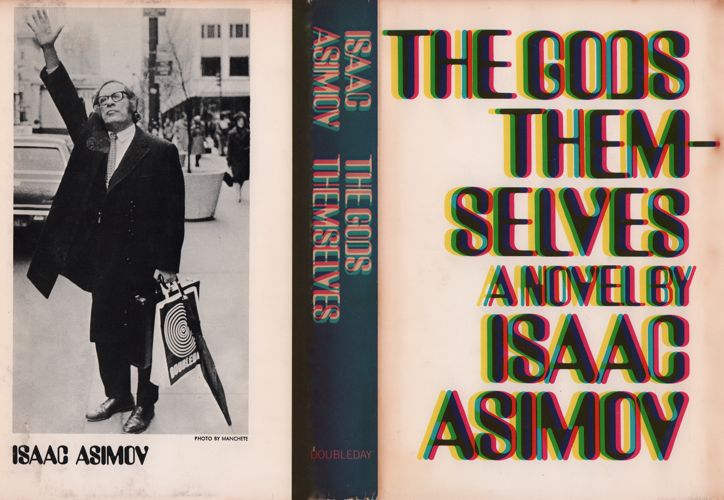
The Gods Themselves is a 1972 science fiction novel written by Isaac Asimov, and his first original novel in fifteen years. It won the Nebula Award for Best Novel in 1972, and the Hugo Award for Best Novel in 1973.
- Paratwa Saga
series4 books1987
similar byscience fictionfar future+1 more
Christopher Hinz's Paratwa Saga is set in orbital colonies built above a devastated, abandoned Earth, opening with Liege-Killer as those colonies confront the return of a genetically engineered assassin race, the Paratwa, thought long eliminated. The trilogy (continued in Ash Ock and The Paratwa) plays out as a blend of post-apocalyptic SF and thriller, with the colonies' survival resting on hunting down a threat their ancestors created and thought they'd destroyed. A later fourth book returned to the setting decades after the original trilogy closed.
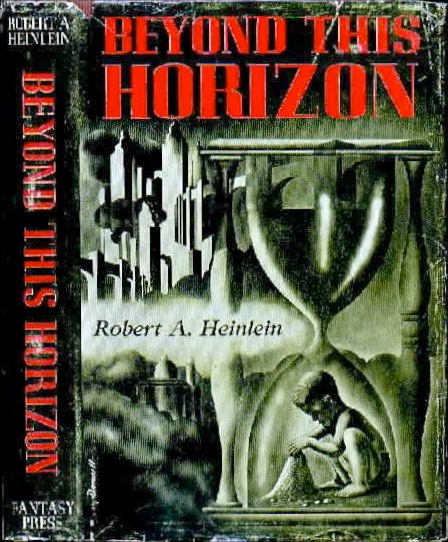
- Beyond This Horizon
Robert A. Heinleinstandalone novel1948
similar byscience fictiongenetic engineeringfar future+1 more
From the front flap of a 2001 Baen reprint: "Utopia has been achieved. For centuries, disease, hunger, poverty, and war have been things found only in the history tapes. And applied genetics has given men and women the bodies of athletes and a lifespan of over a century. They should all have been very happy... But Hamilton Felix is bored. And he is the culmination of a star line, each of his last thirty ancestors chosen for superior genes. Hamilton is, as far as genetics can produce one, the ultimate man. And this ultimate man can see no reason why the human race should survive, and has no intention of continuing the pointless comedy. However, Hamilton's life is about to become less boring. A secret cabal of revolutionaries who find utopia not just boring, but desperately in need of leaders who know just What Needs to be Done, are planning to revolt and put themselves in charge. Knowing of Hamilton's disenchantment with the modern world, they have recruited him to join their Glorious Revolution. Big mistake! The revolutionaries are about to find out that recruiting a superman was definitely not a good idea..."