More like Probing
anchored on:contemporary
but
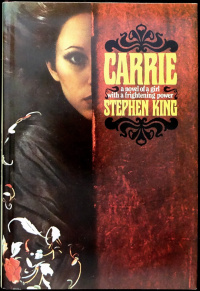
- Carrie
Stephen Kingstandalone novel1974
similar bytensepsychic powersfaith and religioncontemporary
In one way or another, everybody abused Carrie. This sixteen-year-old misfit was forbidden everything that was young and fun by her fanatical mother. She was teased and taunted by her classmates, misunderstood by her teachers, and given up as hopeless by almost everyone. But Carrie had a secret: She possessed terrifying telekinetic powers that could make inanimate objects move, a lighted candle fall, or a door lock. Carrie could make all kinds of startling bizarre, and malevolent things happen. (WorldCat)
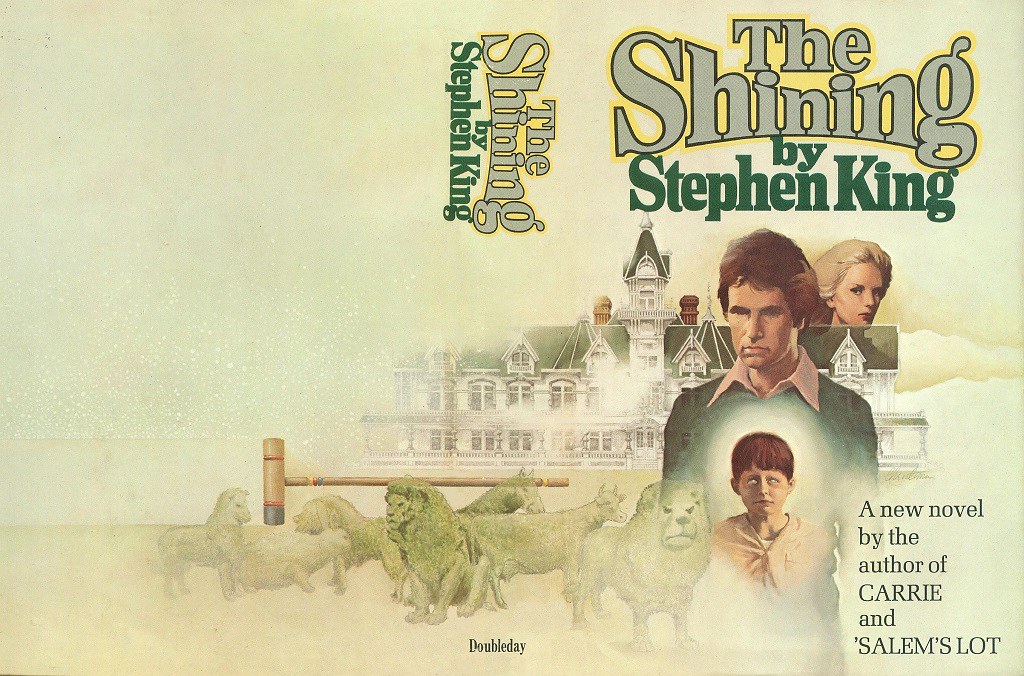
- The Shining
series5 books1977
similar bytensepsychic powerscontemporary
Stephen King's 1977 novel The Shining follows the Torrance family as winter caretakers of the isolated, malevolent Overlook Hotel, where father Jack is gradually consumed by the hotel's influence while his young son Danny's psychic "shining" draws its attention. Doctor Sleep (2013) picks up the story decades later, following Danny as an adult still marked by that childhood ordeal. Together the two form a horror duology spanning nearly forty years of real-world publication.
- Otherworld (Kelley Armstrong)
series100 books1996
similar byour worldcontemporary+1 more
Women of the Otherworld is Kelley Armstrong's long-running urban fantasy series about werewolves, witches, sorcerers, and other supernatural beings trying to pass as ordinary people in the contemporary world, told across thirteen novels plus assorted novellas published between 2001 and 2012. Each book tends to follow a different member of this hidden community while slowly building a shared, continuing world.
- Dune Universe
universe78 books1963
Start hereDune · Start here
similar by+1 more
Arrakis. Dune. The desert planet, where empire runs on a single substance: the spice melange, which folds space, prolongs life, and unlocks prescience, and which exists nowhere else in the known universe. Frank Herbert's saga is a meditation dressed as an adventure — feudal houses and a secret sisterhood, engineered messiahs and the patient ecology of a world without water, all turning on the terrible gravity of who commands the spice. It reads like scripture and schemes like a war room, ten thousand years hence, among people who have outlawed the thinking machine and made instruments of themselves instead. At its heart stand Herbert's original six — Dune, Dune Messiah, Children of Dune, God Emperor of Dune, Heretics of Dune, Chapterhouse: Dune — a single deepening arc across millennia, arguing the whole way between prophecy and free will. Around that spine his son Brian Herbert and Kevin J. Anderson have raised a vast prequel architecture: Prelude to Dune, tracing the great houses a generation before Paul; Legends of Dune, reaching back to the crusade that broke the machines; the Schools of Dune cycle on the founding of Bene Gesserit, Mentat, and Navigator; the Caladan Trilogy and Heroes of Dune filling years the originals left in shadow. Many hands, dozens of volumes, one desert. What sets Dune apart is its refusal of the simple: religion is manufactured, heroes are hazards, and the sand itself — worm, water, ecology — acts as a political power. Begin where the universe did, with Frank Herbert's Dune (1965), and read the original six in order; you need nothing else to feel the full weight. The prequels are a country to explore afterward, taken by era. Beginnings are delicate times.
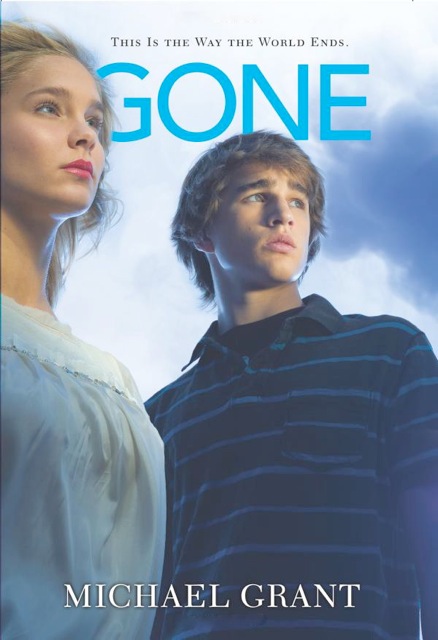
- Gone
series9 books2008
similar bytensecontemporary+1 more
Michael Grant's Gone series begins when everyone aged fifteen and older vanishes without warning from a swath of the California coast, trapping the town of Perdido Beach inside an impenetrable barrier the survivors call the FAYZ. As children develop strange powers and food and order break down, Sam Temple and his rival, his twin brother Caine, become central to the fight for survival against human threats and the monstrous Gaiaphage. Six books (Gone through Light) close the original story; a follow-up Monster trilogy, set years later, follows a new outbreak of mutation-causing powers and a new generation of characters.
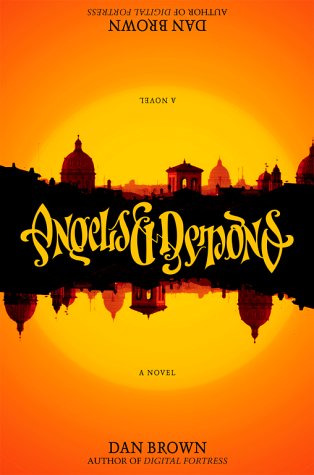
- Robert Langdon
series6 books2000
similar bytensefaith and religioncontemporary
The Robert Langdon novel series is named after Robert Langdon, the protagonist of the novels by American author Dan Brown. Langdon is portrayed as a Harvard University professor of religious iconology and symbology, a fictional field related to the study of historic symbols, which is not methodologically connected to the actual discipline of semiotics. Brown's novels that feature the lead character also include historical themes and Christianity as motifs, and as a result have generated controversy. Brown states on his website that his novels are not anti-Christian, and that he is on a "constant spiritual journey" himself.
- Fallen
series7 books2009
similar byour worldcontemporary
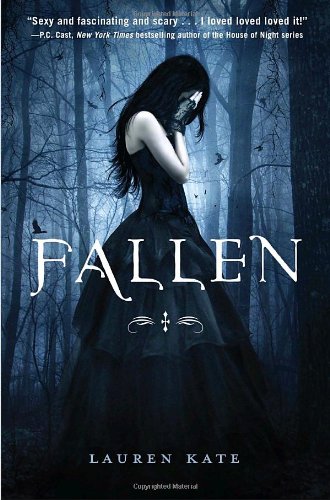
Lauren Kate's Fallen opens with Luce Price, sent to a reform school in Savannah after a fire she can't explain, where she meets Daniel, a boy she is certain she has met before. The series follows Luce's growing entanglement with fallen angels and a curse of repeated lifetimes across several sequels running through 2015.
- Necroscope
series26 books1982
completed
similar bytensecontemporary+2 more
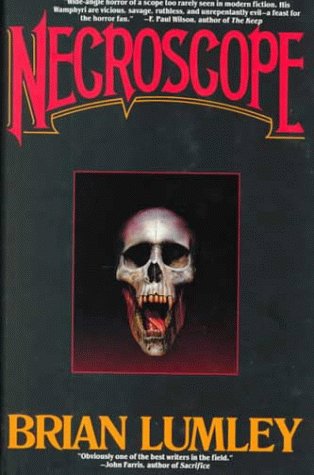
Brian Lumley's Necroscope opens an eighteen-book horror saga (1982-2017) centered on Harry Keogh, a man who can speak with the dead. Harry turns that gift against Thibor Ferenczy, a vampire buried since the Middle Ages, and against Ferenczy's agent Boris Dragosani, a Soviet spy who has learned to tear secrets from corpses in pursuit of world domination. Later volumes follow Harry's descendants and successors through further wars against the vampiric Wamphyri, across sequel trilogies and story collections.
- Dune
series20 books1963
part of Dune Universe
similar byfaith and religion+2 more
Frank Herbert's Dune Chronicles opens with 1965's Dune, set on the desert planet Arrakis where House Atreides takes control of the only source of the vital spice melange and young Paul Atreides is pulled into a struggle over its politics and religion. Herbert carried the story forward across five further novels — Dune Messiah, Children of Dune, God Emperor of Dune, Heretics of Dune, and Chapterhouse: Dune — following Paul's line over the following millennia, before Brian Herbert and Kevin J. Anderson later extended the saga. Many other editions of these six novels are omnibus and box-set repackagings rather than separate stories.
- Maps in a Mirror: The Short Fiction of Orson Scott Card
series9 books1979
similar bycontemporaryshort story cycle+1 more
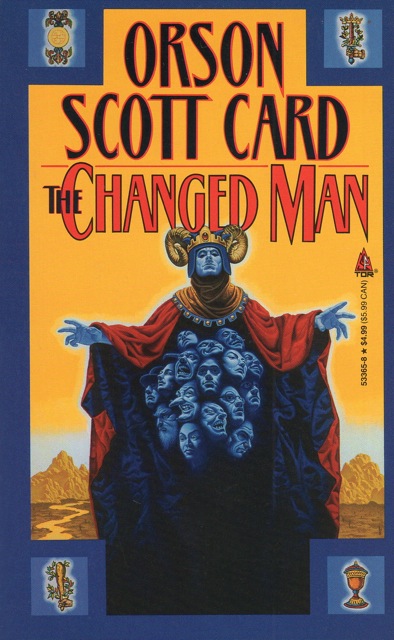
Maps in a Mirror (1990) is a collection of short stories by American writer Orson Scott Card. Like Card's novels, most of the stories have a science fiction or fantasy theme. Some of the stories, such as "Ender's Game", "Lost Boys", and "Mikal's Songbird" were later expanded into novels. Each of the smaller volumes that make up the larger collection as a whole are centered on a theme or genre. For instance, Volume 1, The Changed Man, reprints several of Card's horror stories. The collection won the Locus Award for Best Collection in 1991.
- Fire of Heaven (Bill Myers)
series3 books1996
similar byfaith and religionour worldcontemporary+2 more
- Hell House
Richard Mathesonstandalone novel1971
similar bytensecontemporary+2 more
A dying millionaire wants proof, once and for all, of what happens after death, and hires physicist-turned-parapsychologist Dr. Lionel Barrett to spend a week investigating the Belasco House in Maine -- a mansion so thoroughly associated with atrocity that it's known simply as Hell House, where every previous investigation has ended in death or madness. Barrett brings his wife Edith along with two mediums, the spiritualist Florence Tanner and Benjamin Franklin Fischer, survivor of an earlier disastrous visit, whose scientific skepticism and spiritualist convictions clash from the first night inside. Richard Matheson's haunted-house novel, later filmed as The Legend of Hell House.
- Finders Keepers (Stephen King)
series7 books2014
similar bytensecontemporary
The books gathered here follow Holly Gibney, who first appeared as a supporting character in Stephen King's Bill Hodges trilogy (Mr. Mercedes, Finders Keepers, End of Watch) before graduating into her own strand of stories: a major role in The Outsider, then top billing in the novella If It Bleeds and the novels Holly and Never Flinch, where she works as a private investigator taking on cases with a supernatural edge. The mix of true-crime procedural instincts and creeping horror is a hallmark of King's later work with the character.
- The Fury
series4 books1976
similar bytensepsychic powerscontemporary+1 more
John Farris's The Fury centers on a teenage girl and boy with escalating psychic and telekinetic powers who become targets of a covert government program trying to weaponize them. The 1976 novel, adapted into Brian De Palma's 1978 film, gave rise to a string of later sequels following the same family's psychic bloodline across decades. Farris writes it as paranoid conspiracy thriller as much as horror, with the powers themselves treated as a violent, destabilizing force.
- The Resurrection Wager
Christopher Coatesstandalone novel2018
similar bytensefaith and religionour worldcontemporary
• "When a man of science and a man of faith develop the ability to go back in time, there is only one place for them to go to demonstrate their new technology. After they make a wager about whether or not the resurrection of Jesus really happened, the two set out to prove it one way or the other. Along the way, they face obstacles and challenges from those who want to use their technology for personal gain." ― quoted from this book's product page on Goodreads.com as of 2020-05-28.
- Alex Verus
series14 books2012
similar bycontemporary+3 more
Benedict Jacka's urban fantasy series follows Alex Verus, a diviner - a mage who can see probable futures - running a small magic shop in London while trying to stay independent of the Light and Dark mage councils that both distrust him for his past as apprentice to a dark mage. Starting with Fated, the series escalates from small jobs and favors into open conflict with the Council structure and Alex's own former master, as his precognitive gift proves more dangerous to wield than it first appears. It is a long-running, tightly serialized series rather than standalone urban-fantasy cases.
- Our Children's Children
Clifford D. Simakstandalone novel1974
similar bytenseour worldcontemporary+1 more
From the back cover of the first DAW printing: "They were our children's children, and they came one day from nowhere - walking through holes in the air into our world. By means of one-way time tunnels, they fled the ravening beasts with teeth, claws and tentacles, that reproduced like bacteria and were intelligent. They fled to escape the uncontrolled horror of their own far future, and we, their distant ancestors, housed and fed and comforted them, content in their assurance that the tunnel was securely guarded from the beasts, whatever or whoever they were. But then somebody up there slipped and the beasts were abroad..."
- Jumper
series6 books1992
similar bytensepsychic powerscontemporary+1 more
Jumper follows David Rice, a teenager who discovers he can teleport anywhere he's been and uses the power to escape an abusive home, only to find that ability alone doesn't solve the harder problems of finding his absent mother, building an honest relationship, or staying off the radar of people who'd exploit him. Steven Gould's series continues across Reflex, Impulse, and Exo, later following his and his wife's daughter as a second-generation jumper. A 2008 film loosely adapted the first novel.
- Legion / Stephen Leeds
series5 books2012
similar bypsychic powersour worldcontemporary+1 more
Legion, or the Stephen Leeds series, is a series of science fiction novellas created by American author Brandon Sanderson. Sanderson authored the first three stories : Legion, first published on August 31, 2012, Legion: Skin Deep in November 2014, and Legion: Lies of the Beholder in September 2018. Death and Faxes, co-authored by Max Epstein, David Pace, and Michael Harkins, was released in June 2022. The books have received favorable reviews.