More like Profession
anchored on:science fictionour worldfar futureartificial intelligenceidentity
but
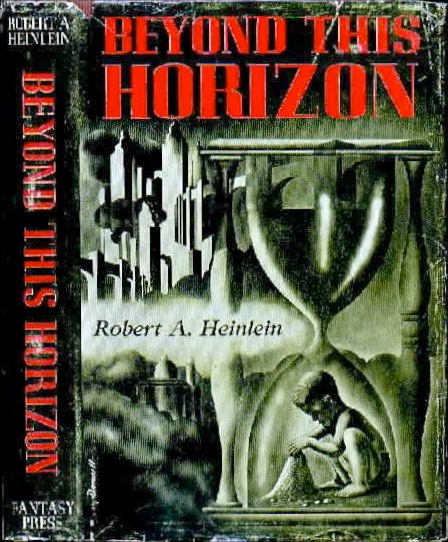
- Beyond This Horizon
Robert A. Heinleinstandalone novel1948
similar byscience fictionour worldfar future+1 more
From the front flap of a 2001 Baen reprint: "Utopia has been achieved. For centuries, disease, hunger, poverty, and war have been things found only in the history tapes. And applied genetics has given men and women the bodies of athletes and a lifespan of over a century. They should all have been very happy... But Hamilton Felix is bored. And he is the culmination of a star line, each of his last thirty ancestors chosen for superior genes. Hamilton is, as far as genetics can produce one, the ultimate man. And this ultimate man can see no reason why the human race should survive, and has no intention of continuing the pointless comedy. However, Hamilton's life is about to become less boring. A secret cabal of revolutionaries who find utopia not just boring, but desperately in need of leaders who know just What Needs to be Done, are planning to revolt and put themselves in charge. Knowing of Hamilton's disenchantment with the modern world, they have recruited him to join their Glorious Revolution. Big mistake! The revolutionaries are about to find out that recruiting a superman was definitely not a good idea..."
- The Werewolf Principle
Clifford D. Simakstandalone novel1967
similar byscience fictionour worldfar futureidentity
From the back cover of the first DAW printing: "Andrew Blake, found in a space capsule on a distant planet, was brought back to an unfamiliar Earth, where antigravity devices had replaced the wheel and houses talk and even fly! Yet nothing was as strange as Blake's own feelings. Tormented by eerie sensations and a loss of memory, he didn't know who he really was nor exactly where he came from. His destiny only began to grow frighteningly clear when he met a weird, tassel-eared creature who darkly hinted at the truth about Blake's origins. Slowly Blake became aware of the long hushed-up "Werewolf Principle," a scientific theory buried in the past, which held the key to Blake's own fate - and the future of the human race..."
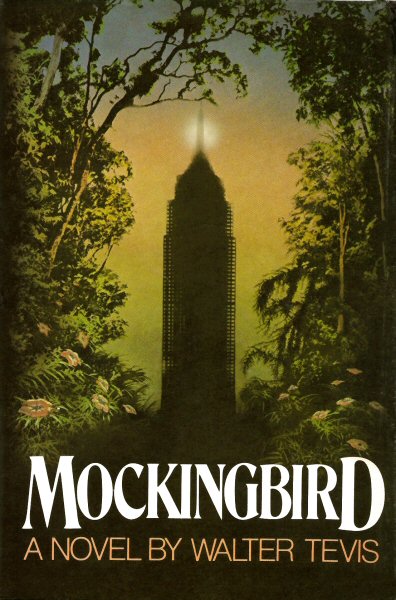
- Mockingbird
Walter Tevisstandalone novel1980
similar byscience fictionour worldfar futureartificial intelligence
WorldCat: In a future world where mankind is dying, humans wander through life in a drugged electronic bliss. Quick sex is the norm, and some people would rather commit suicide than live in hopelessness. Humanity's salvation rests with an android who has no desire to live, and a man and a woman who must discover love, hope, and dreams of a world reborn.
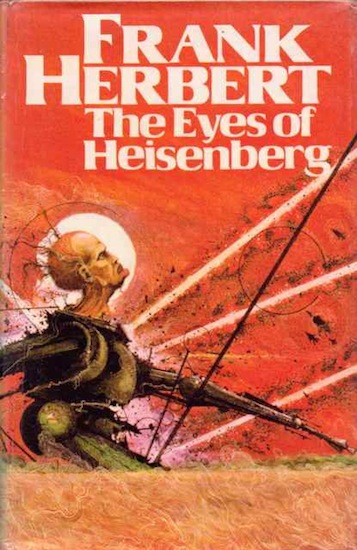
- The Eyes of Heisenberg
Frank Herbertstandalone novel1966
similar byscience fictionour worldfar futureclass conflict
Tens of thousands of years in the future, Earth is ruled by the Optimen, a genetically engineered aristocracy that has made itself functionally immortal, while ordinary people, the Folk, live under strict reproductive control. When Harvey and Lizbeth Durant arrive to have their embryo genetically screened, the examining doctor finds something in the child no one has seen in a very long time: real potential for both fertility and life span, traits the Optimen have arrogated to themselves. Rather than destroy the embryo as policy demands, the doctor hesitates, setting off a chain of surveillance, suspicion and resistance. A tightly wound Frank Herbert thriller about genetic caste and rebellion.
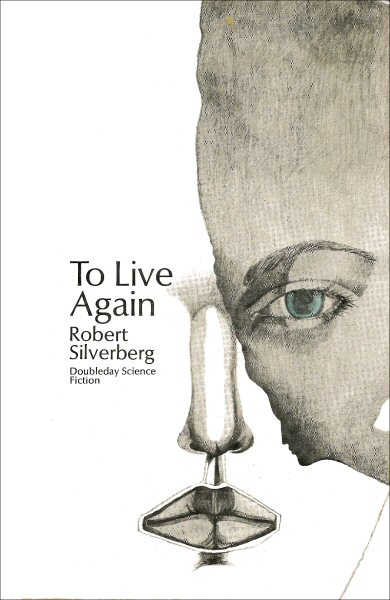
- To Live Again
Robert Silverbergstandalone novel1969
similar byscience fictionour worldfar futureidentity
In a future where the very rich can have their personalities recorded before death and then implanted into a living host to share, or dominate, that person's mind and body, owning a recorded soul becomes the ultimate status symbol among the powerful. The practice carries real risk: a strong enough recorded personality can overwhelm its host entirely, a fate the novel calls going dybbuk. Robert Silverberg builds a society around this trade in secondhand immortality, and the people who profit, or don't survive, dealing in it. A standalone novel from Silverberg's prolific late-1960s run.
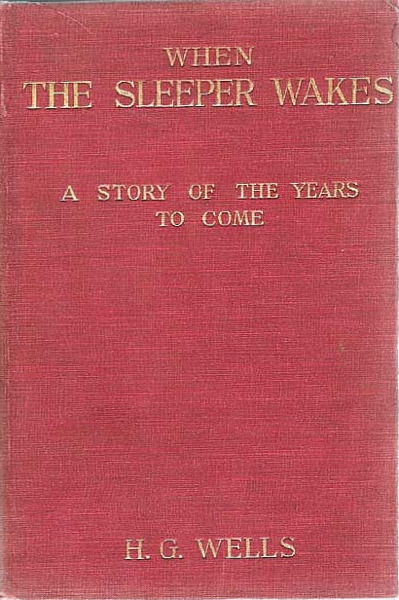
- When the Sleeper Wakes
H. G. Wellsstandalone novel1899
similar byscience fictionour worldfar future+1 more
Graham, an insomniac Englishman in 1890s London, takes a course of sleep-inducing drugs and falls into a coma that lasts two centuries. He wakes in the year 2100 to find his investments have compounded, through a ruling body called the White Council, into effective ownership of most of the world's wealth and power, making him, on paper, humanity's master, and in practice, its prisoner, held under guard while the Council governs in his name. A rebel faction led by a man named Ostrog frees him, hoping to use his symbolic authority to spark an uprising against the Council. An early H. G. Wells dystopia about inherited power and manufactured consent.
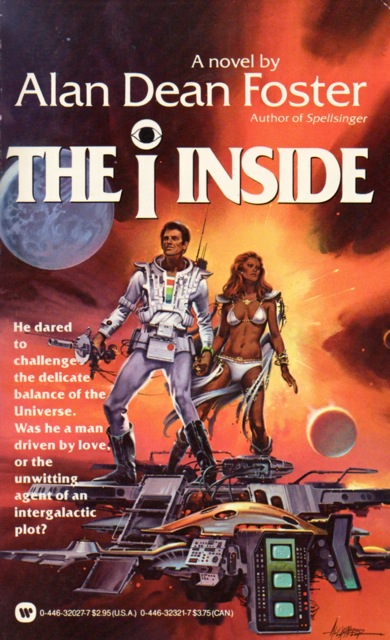
- The I Inside
Alan Dean Fosterstandalone novel1984
similar byscience fictionour worldfar futureartificial intelligenceidentity
Earth has advanced a considerable amount of time from today. It is reliant upon a world wide sentient computer to handle it's affairs. One day a young man casually sees an extremely beautiful woman in the back of an expensive vehicle and is smitten and deeply in love with her. So starts a journey where their humanity is called into question and personal revelations that are remarkable with abilities even more remarkable are discovered. A vey good read. gmb 10-1-20
- This Perfect Day
Ira Levinstandalone novel1970
similar byscience fictionfar futureour worldidentity
This Perfect Day is a science fiction novel by American writer Ira Levin, about a technocratic dystopia. Levin won a Prometheus Award in 1992 for this novel. This Perfect Day is one of two Levin novels yet to be adapted to film.
- WWW Trilogy
series3 books2009
similar byscience fictionour worldartificial intelligence+2 more
The WWW Trilogy is a trilogy of science-fiction novels by Canadian science fiction author Robert J. Sawyer. The first book, Wake, was originally serialized in four parts in Analog Science Fiction and Fact from November 2008 to March 2009, published in book form through Ace on April 7, 2009, and was followed by the second book, Watch, on April 6, 2010. Wonder was published in 2011.
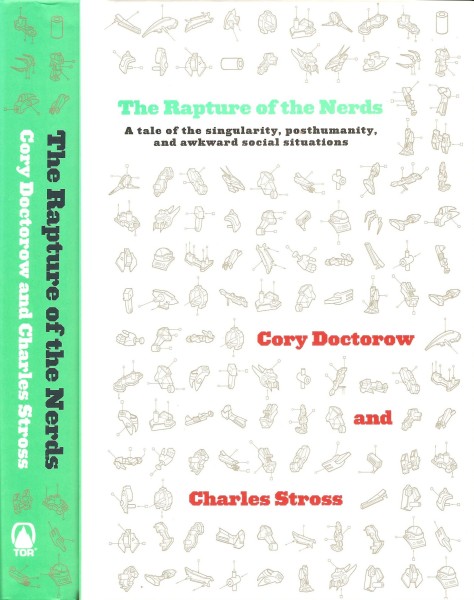
- The Rapture of the Nerds
Cory Doctorow & Charles Strossstandalone novel2012
similar byscience fictionour worldfar futureartificial intelligence
The Rapture of the Nerds is a 2012 novel by Cory Doctorow and Charles Stross. It was released on 4 September 2012 through Tor Books and as an ebook, DRM free, under the CC BY-NC-ND. The book can also be downloaded for free.
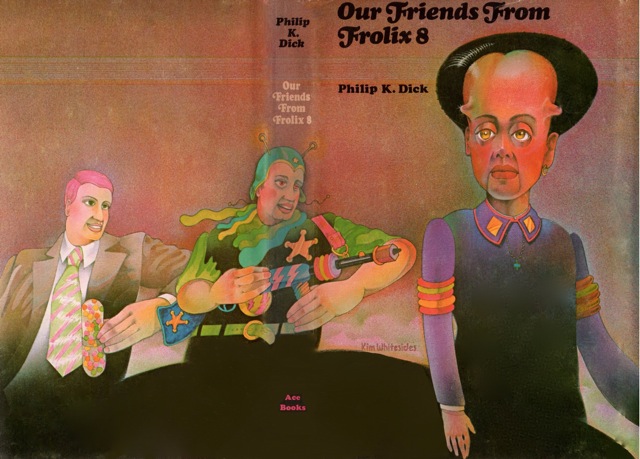
- Our Friends from Frolix 8
Philip K. Dickstandalone novel1970
similar byscience fictionour worldfar futureclass conflict
Our Friends from Frolix 8 is a science fiction novel by American writer Philip K. Dick. It was written from 1968 to 1969 and was published in 1970 by Ace Books. The novel is set in the 22nd century, when humanity is ruled by mutated humans, "New Men" and "Unusuals", while normal "Old Men" are discriminated against. The story follows Nick Appleton, a low-class Old Man worker who becomes a subversive to the system, and Willis Gram, the Unusual ruler of the Earth. Separately, resistance leader Thors Provoni has left the planet to find an ally to the Old Men, finally returning with an alien from far away in space. The novel is best known for a single scene where the characters discuss the dead body of God having been found in space.
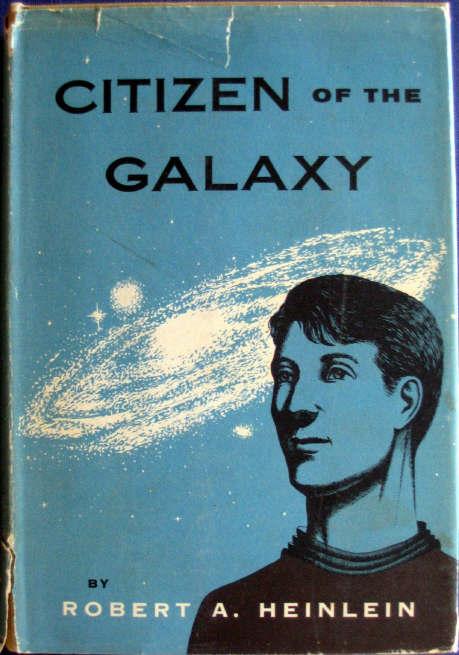
- Citizen of the Galaxy
Robert A. Heinleinstandalone novel1957
similar byscience fictionfar futureidentitycoming of age
On a planet far distant from Earth, a lame beggar buys a young boy slave who has forgotten his origins. The beggar is more than he seems, and gives the boy an extensive education while employing him as an observer of activity in their city. Years later, the beggar is captured by the government, and the youth must escape the planet.
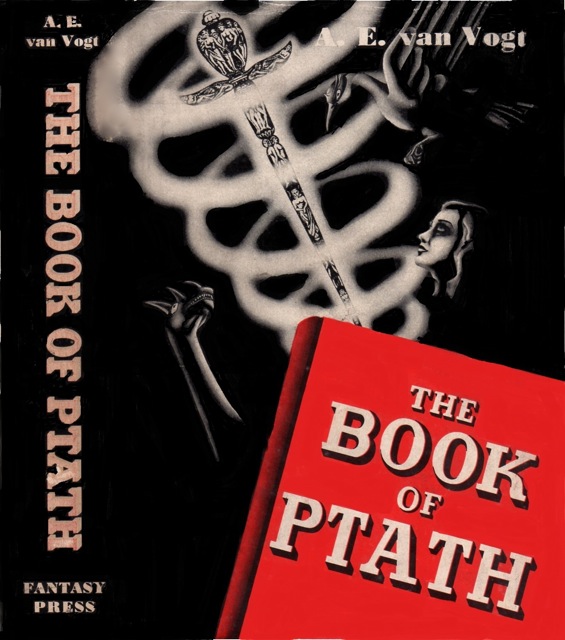
- The Book of Ptath
A. E. van Vogtstandalone novel1947
similar byscience fictionour worldfar future+1 more
Ptath, a very powerful god, is throwing by his deadly rival, the goddess Ineznia, on Earth, around 200,000,000 AD, in the form of a mortal, where he has to face numerous dangers to survive.
- The City and the Stars
Arthur C. Clarkestandalone novel1956
similar byscience fictionfar future+3 more
The City and the Stars is a science fiction novel by British writer Arthur C. Clarke, published in 1956. This novel is a complete rewrite of Clarke's earlier Against the Fall of Night, his first novel, which had been published in Startling Stories magazine in 1948 after being rejected by the editor of Astounding Science-Fiction, according to the author.
- Childhood's End
Arthur C. Clarkestandalone novel1953
similar byscience fictionour worldidentity
Childhood's End is a 1953 science fiction novel by the British author Arthur C. Clarke. The story follows a peaceful alien invasion of Earth by mysterious Overlords, whose arrival begins decades of apparent utopia under indirect alien rule, at the cost of human identity and culture.
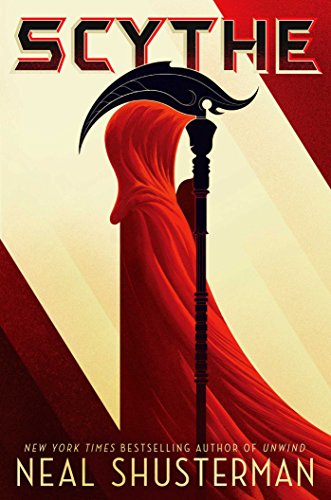
- Arc of a Scythe
series17 books2016
similar byscience fictionour worldfar futureartificial intelligence
Neal Shusterman's Arc of a Scythe opens with Scythe (2016), set in a future where the AI Thunderhead has ended death and disease — except for a designated order of Scythes tasked with killing to control population. Thunderhead and The Toll continue the trilogy, joined by companion material collected as Gleanings.
- Brave New World
series8 books1932
similar byscience fictionfar futureclass conflict+2 more
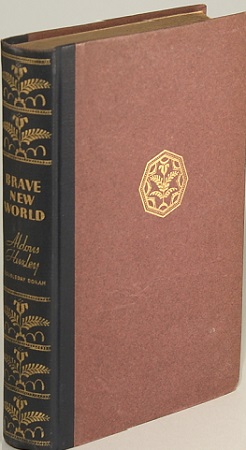
Aldous Huxley's 1932 novel imagines a future World State where reproduction, social caste, and desire are all engineered before birth, and the population is kept content through conditioning, sleep-hypnosis, and a mood-altering drug called soma. The story follows the disruption this seemingly stable order suffers when an outsider raised beyond its reach is brought into it, exposing what the society traded away for comfort and order. Some editions pair the novel with Huxley's own 1958 nonfiction essay collection, Brave New World Revisited, which reassesses the book's ideas rather than continuing its story.
- Stranger in a Strange Land
Robert A. Heinleinstandalone novel1961
similar byscience fictionidentityour worldcoming of age
Stranger in a Strange Land is a 1961 science fiction novel by the American author Robert A. Heinlein. It tells the story of Valentine Michael Smith, a human who comes to Earth in early adulthood after being born on the planet Mars and raised by Martians, and explores his interaction with and eventual transformation of Terran culture.
- This Immortal
series2 books1966
similar byscience fictionour worldfar future
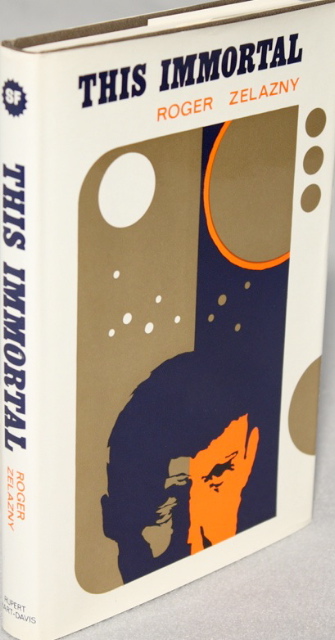
This Immortal is a single science fiction novel by Roger Zelazny, expanded from his 1965 serial ...And Call Me Conrad. In a depopulated future Earth largely toured by an alien race, its long-lived, secretive protagonist Conrad Nomikos is assigned to guide and protect a visiting alien across the ruins of Greece and Egypt, uncovering old grudges and assassination plots along the way. The novel shared the 1966 Hugo Award for Best Novel with Frank Herbert's Dune.
- Riddley Walker
Russell Hobanstandalone novel1980
similar byscience fictionour worldfar futurecoming of age
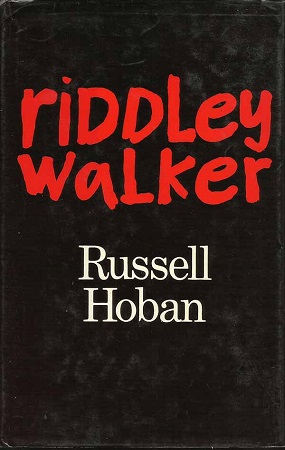
WorldCat: Composed in an English which has never been spoken and laced with a storytelling tradition that predates the written word, RIDDLEY WALKER is the world waiting for us at the bitter end of the nuclear road. It is desolate, dangerous and harrowing, and a modern masterpiece.
- To Live Forever
Jack Vancestandalone novel1956
similar byscience fictionour worldfar futureclass conflict
To Live Forever is a science fiction novel by American writer Jack Vance, first published in 1956. In the Vance Integral Edition, it was retitled Clarges.
- Imperial Radch
series7 books2012
part of Radchaai Universe
similar byscience fictionfar futureartificial intelligenceidentity
Ann Leckie's Imperial Radch trilogy (Ancillary Justice, Ancillary Sword, Ancillary Mercy, 2013-2015) follows Breq, the sole surviving fragment of an AI that once inhabited both a troop-transport starship and dozens of soldier bodies, now alone and hunting for revenge inside the vast, expansionist Radch empire. Breq's quest widens across the trilogy into a conflict with the empire's own fractured ruler, and the books use her alien difficulty perceiving gender to unsettle the space-opera conventions around her.
- The Moon Is a Harsh Mistress
Robert A. Heinleinstandalone novel1966
similar byscience fictionfar futureartificial intelligence
A technician discovers that the massive computer that operates everything on Luna (a prison colony) has become self-aware. He befriends it, but when he accompanied a beautiful girl to a dissident meeting, he encounters people who want to throw off the yoke of their Earth rulers.
- The Boat of a Million Years
Poul Andersonstandalone novel1989
similar byscience fictionour worldidentity+1 more
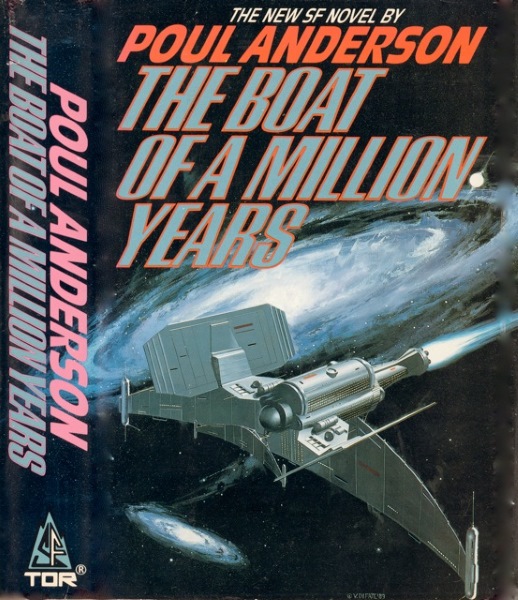
The Boat of a Million Years is a science fiction novel by American writer Poul Anderson, first published in 1989 and nominated for the Nebula Award for Best Novel that same year. It was also nominated for the Hugo Award for Best Novel and the Prometheus Award in 1990.