More like Project Berlin
anchored on:thriller & suspenseeurope
but
- Robert Langdon
series6 books2000
similar bytensethriller & suspenseeuropecontemporary+1 more
The Robert Langdon novel series is named after Robert Langdon, the protagonist of the novels by American author Dan Brown. Langdon is portrayed as a Harvard University professor of religious iconology and symbology, a fictional field related to the study of historic symbols, which is not methodologically connected to the actual discipline of semiotics. Brown's novels that feature the lead character also include historical themes and Christianity as motifs, and as a result have generated controversy. Brown states on his website that his novels are not anti-Christian, and that he is on a "constant spiritual journey" himself.
- Deception Point
Dan Brownstandalone novel2001
similar bypolitical intriguetensethriller & suspensecontemporary
Deception Point is a 2001 mystery-thriller novel by American author Dan Brown. It is Brown's third novel. It was published by Simon & Schuster.
- The Blue Ant Trilogy
series3 books2003
similar bycontemporarythriller & suspense+3 more
Hubertus Bigend is a fictional character appearing in the third trilogy of novels of science fiction and literary author William Gibson. Bigend is the antihero of Gibson's Pattern Recognition (2003), Spook Country (2007) and Zero History (2010). In an interview Gibson says "I've always had a sense of Bigend as someone who presents himself as though he knows what's going on, but who in fact doesn't. It's just my sense of the subtext of the character: he's bullshitting himself, at the same time as he's bullshitting all of us."
- Duke de Richleau
series4 books1933
completed
similar bytensethriller & suspense+1 more
The Duke de Richleau novels follow Dennis Wheatley's aristocratic adventurer and occultist across four decades of twentieth-century intrigue, moving from a 1930s rescue thriller in The Forbidden Territory into Satanist set-pieces such as The Devil Rides Out and Strange Conflict, then a later case in Gateway to Hell. Wheatley wrote the books out of order over nearly forty years, but their internal chronology matches the order they were published in.
- His Dark Materials Universe
universe13 books1995
Start hereHis Dark Materials · Start here
similar byyoung adult+2 more
In a world like ours and unlike it, every human soul walks outside the body in the shape of an animal — a daemon, who speaks, who cannot be lied to, and who settles into one fixed form only when childhood ends. This is the country of His Dark Materials: a company of parallel worlds across which an invisible dust of consciousness drifts down upon the waking mind; where a Church that calls itself the Magisterium would sooner sever a child's soul than let that Dust be understood; and where a golden instrument, the alethiometer, answers true questions for anyone with the patience to read it. Philip Pullman's design stands in two trilogies and a scatter of shorter tales. His Dark Materials — Northern Lights (published in America as The Golden Compass), The Subtle Knife, and The Amber Spyglass — carries Lyra Belacqua from the rooftops of a shadow Oxford across the borders between worlds. The Book of Dust returns to that same territory: La Belle Sauvage looks back to Lyra as an infant carried through a great flood, while The Secret Commonwealth follows her grown and less certain into adulthood, with a concluding volume closing the arc. Around them sit slim companion books — Lyra's Oxford, Once Upon a Time in the North, Serpentine — and Nicholas Wright's stage adaptation, made with Pullman's blessing. The register is grave and luminous at once, its title lifted from Milton and its quarrel drawn from Blake: a story that takes the side of curiosity, love, and the physical world against any authority that would forbid them. It reads as adventure — armoured bears, aeronauts, knife-cut windows between skies — yet reasons like philosophy. Begin with Northern Lights / The Golden Compass and read the first trilogy through before turning to The Book of Dust, which deepens everything the first has already made you feel.
- Ignition
Kevin J. Anderson & Doug Beasonstandalone novel1996
similar bytensethriller & suspensecontemporary+1 more
From the front flap of the Forge first edition: "The launch of the shuttle Atlantis will make history. Another triumph for the space program and a political coup: a Russian cosmonaut is scheduled to perform the first spacewalk from an American unit. The checkout fail-safes are all go. The mission is proceeding like clockwork. The team of American and Russian astronauts are strapped in, the mission specialists in Houston see no hitches. No one knows the real danger... For as millions of viewers tune in to watch the countdown, there's nothing to indicate that what they're seeing is a prerecorded show. Terrorists have take over Launch Control at Cape Canaveral and are threatening to blow up the Atlantis in less than three hours - unless their demands are met. Only Colonel "Iceberg" Friese, the mission's former commander, invalided out with a broken foot, knows about the danger to his crew. Unknown to anyone, he's sneaked into the restricted zone. And now it's up to him to stop the clock before the countdown reaches... Ignition."
- The NUMA Files
series6 books2004
similar bytensethriller & suspensecontemporary+1 more
Clive Cussler's NUMA Files novels follow Kurt Austin, leader of the National Underwater and Marine Agency's Special Assignments Team, and his colleague Joe Zavala, through globe-spanning adventure-thrillers mixing action, exotic locations and speculative science. Lost City finds them investigating a life-extending enzyme discovered deep in the North Atlantic, and the string of deaths and disappearances surrounding its discovery. Zero Hour, Nighthawk and the following novels continue Austin's missions, later written with Graham Brown after original co-author Paul Kemprecos.
- Jack McClure
series1 book2008
similar bypolitical intriguetensethriller & suspensecontemporary
First Daughter opens Eric Van Lustbader's Jack McClure thrillers with a troubled ATF agent pulled into the President-elect's inner circle after the President-elect's daughter is kidnapped, forcing McClure to work the case in Washington while his own past complicates the investigation. Later novels keep McClure entangled in national-security conspiracies at the edges of American power. It is a contemporary political thriller rather than fantasy or SF.
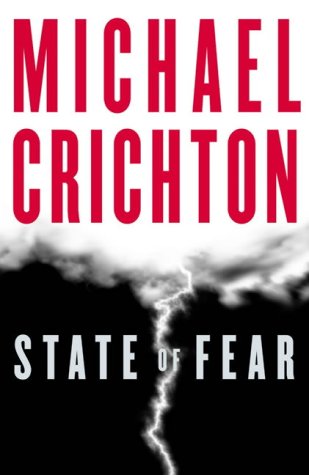
- State of Fear
Michael Crichtonstandalone novel2004
similar bypolitical intriguetensethriller & suspensecontemporary
State of Fear is a 2004 techno-thriller novel by Michael Crichton, his fourteenth under his own name and twenty-fourth overall, in which eco-terrorists plot mass murder to publicize the danger of global warming.
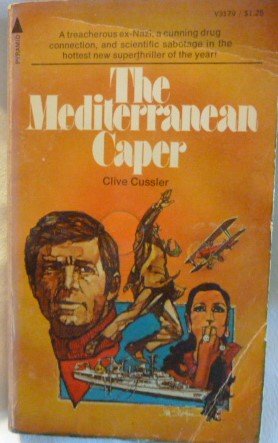
- Dirk Pitt
series12 books1973
completed
similar bytensethriller & suspensecontemporary
Clive Cussler's Dirk Pitt novels follow the title character, a two-fisted marine engineer and de facto field agent for the fictional National Underwater and Marine Agency, through globe-spanning adventures mixing undersea salvage, historical mystery, and international conspiracy. The run collected here spans The Mediterranean Caper (1973) through Valhalla Rising (2001), the earlier stretch of a series Cussler continued for decades with later co-authors.
- Digital Fortress
Dan Brownstandalone novel1998
similar bypolitical intriguetensethriller & suspensecontemporary
Digital Fortress is a techno-thriller novel written by American author Dan Brown and published in 1998 by St. Martin's Press. The book explores the theme of government surveillance of electronically stored information on the private lives of citizens, and the possible civil liberties and ethical implications of using such technology.
- Tom Broadbent / Wyman Ford
series6 books2003
similar bytensethriller & suspensecontemporary
Douglas Jerome Preston is an American journalist and author. Although he is best known for his thrillers in collaboration with Lincoln Child, he has also written six solo novels, including the Wyman Ford series and a novel titled Jennie, which was made into a movie by Disney called The Jennie Project. Preston has authored a half-dozen nonfiction books on science and exploration and writes occasionally for The New Yorker, Smithsonian, and other magazines.
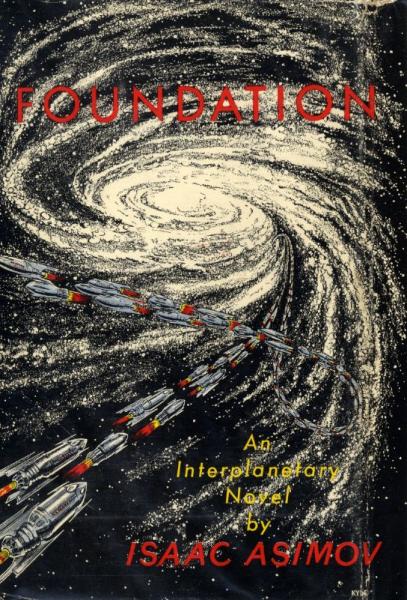
- Foundation Universe
universe123 books1940
Start hereFoundation · Start here
similar by+1 more
There is a science that reads the future of quadrillions the way an astronomer reads the orbits of stars. It is called psychohistory, and its equations foresee something the ruling Galactic Empire cannot admit: the throne is rotting, and thirty thousand years of barbarism are coming. One man, Hari Seldon, cannot stop the fall. He can only shorten it — by seeding a Foundation of scholars at the rim of the galaxy, a fragile institution built to carry knowledge across the dark and cut the interregnum to a single millennium. This is a universe told in the register of history itself: the long view, the calm of deep time, empires measured in centuries and men measured against them. The spine is Asimov's original trilogy — Foundation, Foundation and Empire, Second Foundation — followed decades later by the sequels Foundation's Edge and Foundation and Earth and the prequels Prelude to Foundation and Forward the Foundation. Late in life Asimov braided this in with his other future histories: the Robot novels of detective Elijah Baley and his humaniform partner R. Daneel Olivaw (The Caves of Steel, The Naked Sun, The Robots of Dawn, Robots and Empire) and the early Galactic Empire novels (Pebble in the Sky and its kin), until one continuous chronicle ran from the first thinking robots to the Second Empire. Other hands extend it — the Second Foundation Trilogy by Gregory Benford, Greg Bear, and David Brin, and shared-world spinoffs such as Robot City — so the corpus sprawls beyond a single author's tidy shelf. What distinguishes it is that the drama is intellectual: crises resolved by insight, nerve, and dialogue rather than fleets and blades, each turn hinging on the hidden logic of the Seldon Plan. Begin where readers have always begun — with Foundation, and the original trilogy in publication order. The rest opens outward from there.
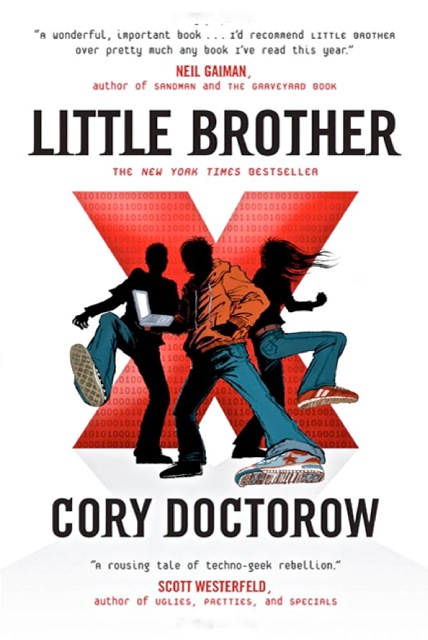
- Little Brother
series7 books2008
similar bytensecontemporary+3 more
Cory Doctorow's Little Brother follows Marcus, a San Francisco teenager who builds a covert mesh network, the Xnet, to organize resistance after the Department of Homeland Security uses a terrorist attack as pretext for mass surveillance and civil-rights violations. Homeland continues Marcus's fight years later, and Attack Surface completes the trilogy; a companion story, 'Lawful Interception,' and other short pieces extend the same near-future world. Throughout, the series doubles as a working explanation of the surveillance and cryptography tools its characters use.
- Barney Custer
series3 books1914
completed
similar bypolitical intriguetensethriller & suspenseeurope
Barney Custer is an American farmer from Nebraska who travels to the small European kingdom of Lutha only to discover he's the spitting image of its unstable ruler, King Leopold. Edgar Rice Burroughs's The Mad King drops him into court intrigue on the eve of World War I, as a scheming uncle's plot for the throne and a budding romance with a princess force Barney to impersonate the king he resembles. It's a standalone Ruritanian adventure rather than an ongoing series.
- Fatherland
Robert Harrisstandalone novel1992
similar bypolitical intriguetensethriller & suspenseeurope
Twenty years after Nazi Germany won the Second World War, Berlin is preparing to celebrate Adolf Hitler's seventy-fifth birthday when detective Xavier March is called to investigate a body pulled from a lake, ostensibly an accident, but one that leads him to a string of suspiciously staged deaths among senior Nazi officials. Ordered off the case by the Gestapo but quietly told to keep going by his own superior, March teams up with an American journalist, Charlie Maguire, and starts following a trail toward Swiss bank accounts and a secret the regime has spent two decades burying. Robert Harris's alternate-history debut novel.
- The Fury
series4 books1976
similar bytensecontemporarythriller & suspense
John Farris's The Fury centers on a teenage girl and boy with escalating psychic and telekinetic powers who become targets of a covert government program trying to weaponize them. The 1976 novel, adapted into Brian De Palma's 1978 film, gave rise to a string of later sequels following the same family's psychic bloodline across decades. Farris writes it as paranoid conspiracy thriller as much as horror, with the powers themselves treated as a violent, destabilizing force.
- The Doubt Factory
Paolo Bacigalupistandalone novel2014
similar bypolitical intriguetensethriller & suspensecontemporaryyoung adult
The Doubt Factory is a novel by Paolo Bacigalupi, published on October 14, 2014, by Little, Brown for Young Readers. The novel chronicles the adventures of youths and young adults intent on exposing corporate malfeasance. The title describes the efforts of corporate public relations efforts to cast doubt on scientific findings in order to prolong the life of a product. The book has been characterized as didactic, "backed up with references to actual front groups, lawsuits, warning labels, and literature on the subject". In another review, Cory Doctorow praises the work as both a polemic and a novel.
- Westwind
Ian Rankinstandalone novel1990
similar bypolitical intriguetensethriller & suspenseeuropespy thriller
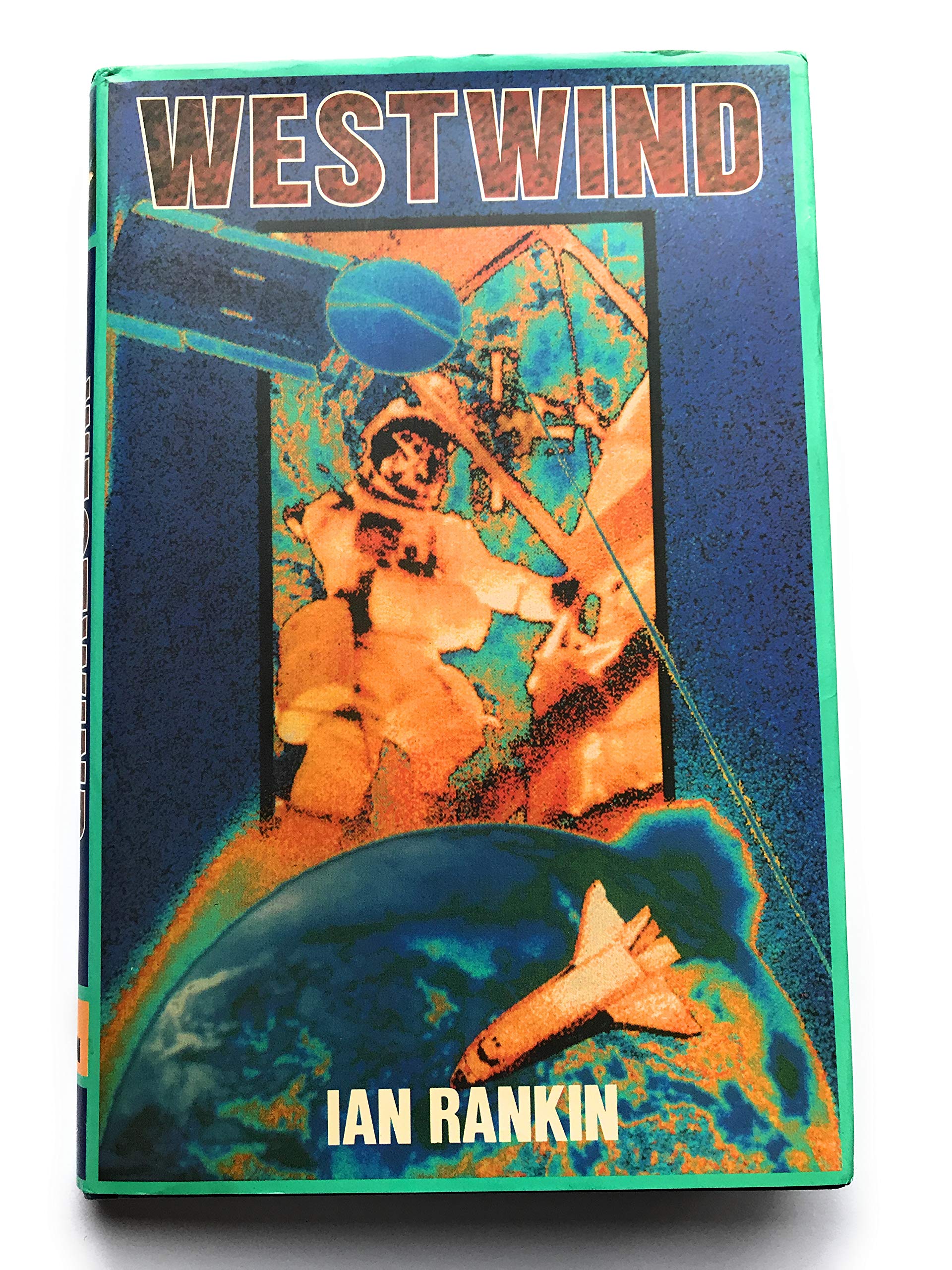
Westwind is a 1990 thriller novel written by Ian Rankin. It is one of the author's earliest works.
- Jack West, Jr.
series7 books2005
similar bythriller & suspensecontemporary+1 more
Matthew Reilly's Jack West Jr. series opens with Seven Ancient Wonders (2005), an action-adventure thriller sending Jack West Jr. on a globe-spanning hunt tied to the ancient wonders of the world. The series continues its countdown structure through The Six Sacred Stones and five further novels, ending with The One Impossible Labyrinth (2021).
- Shane Schofield
series5 books1998
similar bytensethriller & suspensecontemporary
Shane 'Scarecrow' Schofield is a US Marine captain who leads his unit through single-location, high-body-count action thrillers set in an Antarctic ice station, a disputed Pacific island, and a maximum-security prison built into a mountain, among others. Matthew Reilly's series opens with Ice Station (1998) and keeps escalating its set-pieces across Area 7, Scarecrow, Hell Island, and Scarecrow and the Army of Thieves. It's fast, gleefully over-the-top military action rather than realistic technothriller territory.